Author, Philosopher, Spiritual Teacher, A Lead Facilitator at Sacred Media's Integral Mastery Academy, Founder of Yinnergy Meditation/Neurofeedback, Bodhi Mental Care & Wellness, Co-founder of KeMor Centre for Innovative Development
There exists a realm within the psyche so obscure, so deeply buried beneath layers of identity, that even those who have touched the pinnacle of awakening may remain oblivious to its existence. It is the final frontier before the self dissolves entirely—a territory littered with unexamined fears, concealed transgressions, and desires too shameful to acknowledge.
Before awakening completes its course, before the false self collapses into the boundless expanse of nonduality, there is a reckoning. A descent into the darkest corridors of the mind where the most primitive aspects of existence, both personal and collective, make their presence known. This is not a mere psychological reckoning; it is an existential confrontation, one that strips away the illusion of separation between the individual and the whole of suffering itself.
A being in the throes of this revelation does not merely observe suffering from a distance. Instead, suffering is embodied in its totality—experienced both as the tormentor and the tormented, as the blade and the wound, as the hands that enslave and those that are bound. Every atrocity carried out by humankind, every act of cruelty and despair, rises to the surface. The weight of this recognition is nearly unbearable, a force that shatters all prior conceptions of selfhood. Many break under this pressure; some contemplate escape. Yet for those who endure, something extraordinary occurs.
The searing agony of this confrontation serves a purpose. It dismantles illusions, forces the heart open, and stretches the limits of compassion to their furthest extent. Empathy ceases to be an abstract virtue—it becomes an all-consuming fire that purifies everything in its path. Walking through this inferno does not incinerate the awakened one but instead renders them indestructible, unshaken by the fluctuations of worldly suffering. The very act of seeing, of bearing witness to every grotesque distortion of human nature, births an indescribable clarity—an awareness so vast it can hold both horror and grace without resistance.
No one seeks this path. It is not chosen by desire, nor does it reward the seeker with comfort. It arrives unbidden, reserved for those who must cross the threshold through trial and surrender. To move through this passage is to endure a crucifixion of the self, an initiation that cannot be bypassed. Yet for those who survive its rending force, the view on the other side is unparalleled. A vision beyond words, an existence that moves with effortless grace, guided by a heart that no longer clings to the illusions of division.
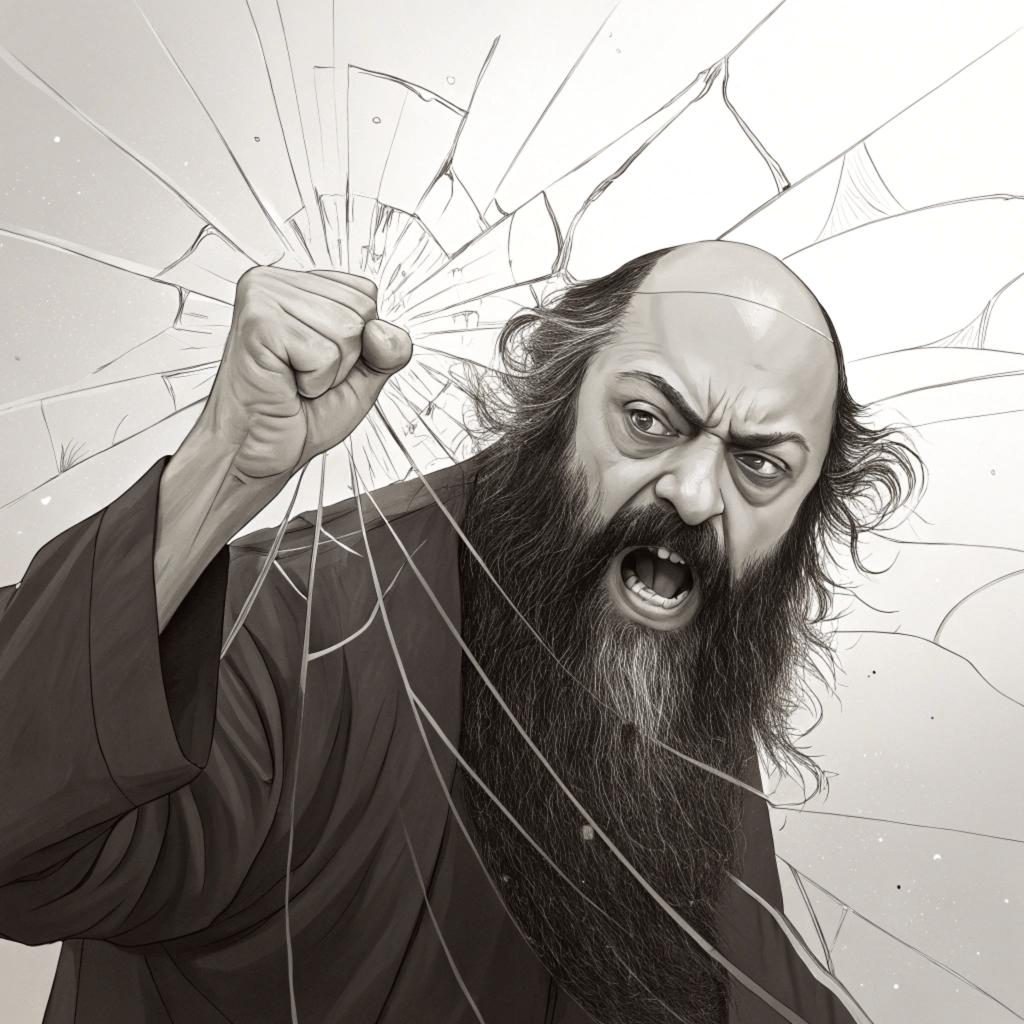
This journey is not a metaphor. It is a lived reality, known only to those who have walked barefoot across the glass of their shattered being. And for them, the world is no longer the same.
Morgan O. Smith
Yinnergy Meditation/Neurofeedback, Spiritual Life Coaching & My Book, Bodhi in the Brain…Available Now!
Most claim to have glimpsed the divine return with words that struggle to hold the weight of such an encounter. Many never return at all. To see the face of God and live is to step beyond the boundary where existence dissolves, where the self is unmade, and where reality, as it was once known, folds into itself like a dream dissolving at dawn.
Yet, what does it mean to see the face of God? Is it an experience of light so blinding that perception shatters? Is it a presence so vast that identity collapses? Or is it something even more elusive – something that was always here, hidden in the folds of ordinary awareness?
Some traditions warn against such an encounter, suggesting that no mortal can bear it and remain intact. Others speak of it as the ultimate reward, the final unveiling before absolute union. Yet, the paradox remains: how can one see the source of all things when the very act of seeing implies separation?
The face of God is neither a thing to be seen nor an object to be grasped. It is not found by looking outward or inward, for it is the very looking itself. The one who searches, the act of searching, and the sought-after presence all collapse into a singularity where distinctions dissolve. The moment of recognition is not a discovery but an obliteration – the end of every illusion that once passed for truth.
To live beyond such an encounter is to live without the weight of selfhood as it was once known. The personal dissolves, yet presence remains. There is nothing left to hold onto, yet nothing is missing. Some might call this madness. Others, liberation. But labels fall apart before the silent immensity of what remains.
Those who have seen and lived do not return with doctrine. They do not bring commandments carved into stone or revelations bound in pages. They return with an absence, a quiet, an emptiness more alive than any presence. And in that emptiness, a love beyond measure, a freedom beyond desire, and a knowing beyond thought.
Not all will understand. That, too, is part of the design.
Morgan O. Smith
Yinnergy Meditation/Neurofeedback, Spiritual Life Coaching & My Book, Bodhi in the Brain…Available Now!
The kind of awakening spoken of in hushed tones is not the polished enlightenment paraded as a spiritual accomplishment. It is not the gentle illumination that leaves one basking in self-satisfaction. This awakening will chase any so-called enlightened being back into the cave of the darkest shade of the blissfully ignorant.
There is a threshold beyond which the comfort of spiritual attainments dissolves, where the foundation of all presumed knowledge crumbles. Many claim to walk this path, but few have stepped beyond the point of no return. The self is torn open, and what is left is neither the seeker nor the sought. Any trace of identity vanishes like smoke swallowed by the wind.
Silence remains, not the cultivated silence of meditation, but the raw and inescapable absence of all that was ever known. Those who truly fall through the illusion do not return with neatly packaged wisdom. They do not speak of levels, progress, or mastery. They see no self to improve, no world to fix, no mind to transcend. Words become inadequate, and the urge to declare one’s arrival dissipates.
The mind clings to certainties, but what happens when even the witness dissolves? When there is no observer to claim insight, no reference point to anchor meaning? The dissolution is total. It does not comfort; it obliterates. Those who once seemed enlightened are left exposed, scrambling for the remnants of a ground that no longer exists.
This is why many turn back, seeking solace in philosophies, traditions, and spiritual titles. There is safety in keeping one foot on familiar terrain. The true leap leaves nothing to hold onto. Those who cross that final threshold do not emerge with proclamations of awakening. They are not concerned with recognition, nor do they offer roadmaps. They simply are – formless, weightless, ungraspable.
Some may glimpse this abyss and recoil, choosing the dream over the void. Others may step forward and vanish.
Morgan O. Smith
Yinnergy Meditation/Neurofeedback, Spiritual Life Coaching & My Book, Bodhi in the Brain…Available Now!
Once You Have Experienced It, Proof Is No Longer Needed
Doubt thrives in the absence of direct experience. The intellect demands evidence, constructing elaborate justifications for what it cannot yet grasp. But when the veil is lifted – when the mind, body, and awareness dissolve into the unshakable certainty of direct realization – proof becomes irrelevant.
Imagine explaining fire to someone who has never felt its warmth. You could describe its heat, flickering light, and how it devours wood and dances in the wind. Yet words would always fall short. The person might nod, ask for scientific studies, or debate its existence. But the moment their hand hovers near a flame, every question vanishes. There is no longer belief or disbelief -only knowing.
Spiritual awakening functions the same way. Those who have never touched the boundless stillness of their true nature often seek validation from philosophy, neuroscience, or comparative religion. They need the reassurance of others and the intellectual security of consensus. But the one who has dissolved into that stillness no longer seeks permission to believe. Knowing arises effortlessly, beyond language or logic.
This is why those who have crossed the threshold often struggle to articulate their experience. The attempt to translate it into words feels like drawing water from the ocean with a thimble. Everything that could be said remains insufficient. So they speak in metaphors, paradoxes, and silence.
Skepticism serves a purpose. It prevents blind acceptance and encourages discernment. But its power dissolves in the face of truth lived directly. Once seen, it cannot be unseen. Once known, it cannot be doubted.
For those still searching, no explanation will suffice. For those who have arrived, no explanation is necessary.
Morgan O. Smith
Yinnergy Meditation, Spiritual Life Coaching & My Book, Bodhi in the Brain…Available Now!
Humanity has long pursued an understanding of God, a relentless quest to define, capture, and shape the essence of the infinite. For many, the notion of God becomes a vessel for their ideals, values, and desires—a reflection of their deepest hopes and most profound fears. Yet, encountering God through the lens of belief alone is akin to gazing at the ocean through a narrow window. The grandeur of the infinite cannot be contained, constrained, or fully fathomed within the borders of our perceptions.
The paradox lies in this: everything is God, yet nothing conforms to the concepts we construct about it. Each moment, encounter, and experience pulses with the sacred, yet the mind reduces it to fit within its familiar narratives. In the end, our beliefs become the very walls that obscure the limitless nature of divinity.
God, in the truest sense, transcends every image, word, or definition. No single tradition or philosophy can exclusively claim this vastness. Imagine standing before an infinite horizon, extending endlessly in every direction. Our concepts—however profound—are mere markers on the path, helpful but limited in capturing the essence of all that is. Here lies a liberation beyond belief: recognizing that the Divine isn’t limited by human expectations or perceptions.
Embracing this understanding offers a profound sense of freedom and humility. It invites us to move beyond belief, beyond the comfort of definition, and into direct experience. Rather than confining God to what we think we know, we begin to open ourselves to a presence that defies all description, something we sense but cannot fully articulate. This is where genuine reverence arises, born not from knowledge but from an awe that silences the mind.
When we release the need to make God fit our ideas, we become conduits for something greater. Instead of seeking to define or own this presence, we surrender to it, allowing ourselves to be moved, shaped, and transformed. This surrender is not passive; it’s an active openness, a readiness to meet the Divine in the ordinary and extraordinary, in all that we perceive and beyond.
Perhaps the journey, then, is not one of reaching an ultimate understanding but of letting go—allowing ourselves to rest in the mystery and seeing how it transforms us. For God, as it turns out, may be far more than we ever imagined and is here to be discovered, not as an idea, but as the living pulse of everything we encounter.
Morgan O. Smith
Yinnergy Meditation, Spiritual Life Coaching & My Book, Bodhi in the Brain…Available Now!
God knows nothing yet knows everything—a contradiction that stands as a perfect reflection of the nature of absolute reality. This enigmatic statement, like a koan, invites deeper contemplation beyond linear thinking. It points to a knowledge that defies conceptual grasp, a knowing that cannot be possessed by the mind.
To say God knows everything implies omniscience—a perfect awareness of all events, possibilities, and outcomes within the realm of manifestation. Yet, to say God knows nothing points to an awareness that transcends any form of subject-object relationship. Here, knowledge is not fragmented into parts. Rather, it exists as a pure, nondual state of being.
This paradox can only be resolved through a radical shift in perception. From the mind’s perspective, knowing implies a knower and a known—a separation that inherently breeds confusion. The clearer this division becomes, the more apparent the contradiction. But from the perspective of absolute awareness, there is no such division. Knowing and not knowing collapse into a single essence, a seamless flow where everything is already perfectly held without the need for grasping or possessing.
The confusion arises only when one attempts to use a dualistic framework to analyze a nondual reality. For those entrenched in rational thought, this statement appears illogical. Yet, the crystal clarity of this confusion emerges when seen through the lens of direct experience. God’s knowing is not intellectual; it is a luminous stillness that enfolds every possible expression of existence without ever defining itself through those expressions.
What, then, does it mean for God to “know nothing”? It signifies the emptiness of all forms, a state where no thought, label, or concept can fully capture what is. It is a knowing that is the essence of all things yet free from the content of knowing itself. There are no judgments, no biases, no preferences—just a silent, omnipresent witnessing. The awareness is so pure that it does not even recognize itself as “knowing” in the conventional sense. It is like the sky holding all clouds yet remaining untouched by their presence or absence.
This is the clarity that lies within the paradox: God knows everything because God is everything. Simultaneously, God knows nothing because God is not bound by the limitations of any particular knowledge. The confusion dissolves when we release the need to categorize and understand reality through fixed structures.
To experience this confusion as crystal clear requires embracing the humility of not knowing. When all concepts, beliefs, and labels are dropped, what remains is a pure awareness that is as empty as it is full. The mind may struggle to grasp this state, but the heart recognizes it intuitively. It is a state of grace, a luminous unknowing that is beyond the reach of both thought and language.
Paradox is not a flaw in understanding; it is the gateway to freedom. It invites one to look beyond the confines of intellect and rest in a knowing that cannot be spoken. This is the ultimate clarity: a confusion that reveals the divine nature of all that is.
Morgan O. Smith
Yinnergy Meditation, Spiritual Life Coaching & My Book, Bodhi in the Brain…Available Now!
In the vast expanse of human experience and scientific inquiry, there are moments when disparate realms converge, revealing profound insights into the nature of reality. One such convergence is the spiritually enlightened peak experience of absolute monism and the quantum phenomenon of superposition. This intersection invites us to explore a deeper, more integrated understanding of existence.
The Experience of Absolute Monism
Imagine a moment of profound stillness, where the boundaries that define you dissolve, and the illusion of separation fades away. In this state, you experience a boundless unity, a seamless oneness with all that is. This is the essence of absolute monism—a direct, transformative experience that reveals the interconnectedness of all existence. It is a realization that transcends intellectual understanding, touching the core of being and altering one’s perception of reality.
Superposition in Quantum Physics
Quantum physics, the realm of the very small, offers a striking parallel to this mystical experience. Superposition is a principle where a quantum system exists in multiple states simultaneously until it is observed. This phenomenon challenges our classical notions of a fixed, definite reality, suggesting instead a universe that is inherently probabilistic and interconnected. The act of observation plays a crucial role in collapsing these multiple possibilities into a single, observable state.
Bridging the Spiritual and the Scientific
At first glance, the realms of spiritual enlightenment and quantum physics might seem worlds apart. Yet, they both point toward a deeper, underlying unity. In absolute monism, the dissolution of duality reveals an undivided reality. Similarly, in quantum physics, superposition reflects a state of potentiality where all possibilities coexist.
The Role of Observation
In the spiritual journey, the realization of absolute monism often emerges through deep meditation or transformative experiences. This form of “observation” collapses the illusion of separateness, unveiling the unity of existence. In quantum mechanics, it is the act of measurement that collapses a superposition into a definite state. Both suggest that consciousness or awareness plays a pivotal role in shaping reality.
Indeterminacy and Unity
The indeterminate nature of superposition aligns with the spiritual insight that ultimate reality transcends fixed forms and definitions. Both perspectives invite us to embrace a more fluid and interconnected understanding of existence. They challenge us to move beyond rigid, binary thinking and to appreciate the complexity and beauty of a reality that is both unified and diverse.
Transformation of Perception
Experiencing absolute monism can profoundly transform how we perceive ourselves and the world. It fosters a sense of unity, compassion, and interconnectedness. Similarly, understanding superposition can expand our perception of the physical world, challenging classical assumptions and inviting us to explore the mysteries of the quantum realm.
Conclusion
The convergence of absolute monism and superposition offers a rich, thought-provoking perspective on the nature of reality. It reminds us that the boundaries between science and spirituality are not as rigid as they seem. Both realms, in their own ways, point toward a deeper truth—a universe where unity, interconnectedness, and the role of consciousness are fundamental. By exploring these intersections, we embark on a journey that not only broadens our understanding but also deepens our appreciation for the profound mysteries of existence.
Morgan O. Smith
Yinnergy Meditation, Spiritual Life Coaching & My Book, Bodhi in the Brain…Available Now!
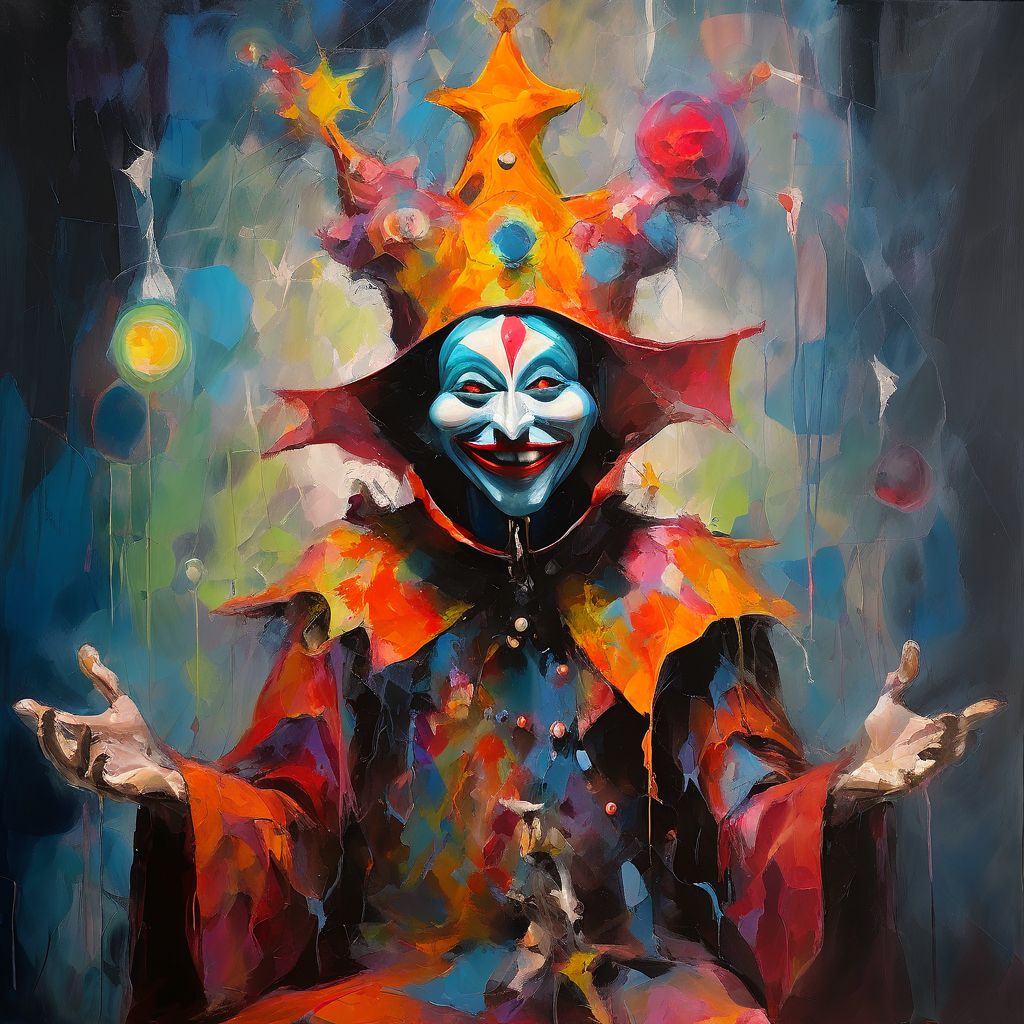
In the grand play of the cosmos, a joke exists so profound that it eludes the grasp of our everyday consciousness, veiled beneath the layers of our egoic identity. Imagine momentarily that the essence of your being—the “I” that you refer to so confidently—is the punchline to the most elaborate joke ever conceived. It isn’t a cruel joke, but rather an invitation to step beyond the boundaries of self-imposed seriousness and to laugh with the wisdom of understanding.
The joke begins with the ego, a masterful illusionist, convincing us that we are nothing more than the sum of our thoughts, emotions, and experiences. We invest deeply in this narrative, playing the role scripted by societal norms and personal expectations. Yet, this is the point where the cosmos smiles, for the joke is on the ego. The reality, hidden in plain sight, is that we are far more expansive than this limited self.
To see beyond the ego is to appreciate the cosmic humour. When you realize that what you took so seriously—the angst of being right, the weight of personal grievances, the chains of past and future—was never the essence of who you truly are, a lightness pervades your being. This revelation is akin to an audience realizing the absurdity of a magician’s trick; the spell breaks, and laughter bubbles forth.
This laughter is not derisive or dismissive. It is the laughter of liberation, of seeing the strings that bind the marionette and choosing no longer to dance at their pull. It’s recognizing that the cosmos plays with us, urging us to discover that behind the facade of individuality lies the vast expanse of consciousness, unbounded and magnificent.
As you navigate the perceived trials and tribulations of life, invite this perspective: view each challenge as a scene in this divine comedy. Each struggle, each joy, each moment of confusion or clarity is part of this intricate joke where the punchline is your awakening. When you finally get the joke, you won’t just chuckle; you’ll laugh hysterically, understanding that all along, you were both the audience and the performer in the cosmic spectacle.
This humour is not about negating the reality of pain or struggle; rather, it’s about shifting the perspective from which you view these experiences. When embraced, this humour heals, enlightens, and transforms, offering a transcendent glimpse into the true nature of existence where everything is interconnected, and nothing is as serious as it seems.
So next time you feel weighed down by the persona of who you think you are, pause and listen carefully—perhaps the echoes of cosmic laughter are inviting you to join in, to step beyond the ego, and to experience the freedom that comes with the greatest revelation of all: that you are not merely a part in this cosmic play, but its very essence, endlessly expansive and eternally joyful.
Morgan O. Smith
Yinnergy Meditation, Spiritual Life Coaching & My Book, Bodhi in the Brain…Available Now!
In the quest for spiritual enlightenment, a profound question often arises: Are we truly God? The answer, paradoxically, is both affirmative and negative. This might seem bewildering, but it encapsulates the essence of our being and the nature of existence itself.
Yes, We Are:
At the core of our being lies a spark of the divine. Every moment of clarity, every act of compassion, every intuitive insight reflects our inherent divinity. In moments of deep meditation or mystical experience, we touch upon a state of unity where the boundaries between self and the universe dissolve. We feel the interconnectedness of all things, experiencing firsthand the truth of our divine nature.
No, We’re Not:
Conversely, we are also distinct from the absolute. Our daily lives, with their trials and tribulations, remind us of our limitations. We experience separation, individuality, and the constraints of physical existence. These experiences ground us in the reality that, while we may embody aspects of the divine, we are not the totality of it. The ego, with its desires and fears, maintains the illusion of separateness.
Maybe We Are, Maybe We’re Not:
The coexistence of these opposing truths leads us to a deeper understanding. This paradox mirrors the dual nature of existence: the finite and the infinite, the known and the unknown. It is within this dynamic interplay that the essence of our being resides. By embracing this paradox, we move beyond binary thinking and open ourselves to the fluidity of existence.
Understanding the Paradox:
To truly grasp this paradox is to recognize that our existence transcends simplistic definitions. We are both the wave and the ocean, distinct yet inseparable. In acknowledging our divine potential while also accepting our human limitations, we embark on a journey of self-discovery that is both humbling and empowering.
Conclusion:
This paradoxical truth—that we are simultaneously divine and not—invites us to embrace the full spectrum of our existence. It challenges us to live with openness, curiosity, and a deep sense of wonder. By doing so, we honour the complexity of our being and the mysterious beauty of the universe.
Morgan O. Smith
Yinnergy Meditation, Spiritual Life Coaching & My Book, Bodhi in the Brain…Available Now!
Nothing I say will ever fully convey what transpired on December 14, 2019. As I sat in my daily meditation, an extraordinary transformation began without effort. In an instant, I was engulfed by an indescribably bright white light, a radiance comparable to a thousand suns. It was so intense it nearly blinded me. As I entered this pure illumination, I faced an ocean of pure consciousness. Gazing at this boundless expanse, I felt myself merging with it until there was no longer a distinction between me and this ocean. At that moment, I fully surrendered. I lost my sense of self as it merged with this ocean of pure consciousness. I had become consciousness itself—a moving body of perfectly still water, free from the properties of wetness.
In this state, I realized I was the Source itself. The Alpha and the Omega, the beginningless beginning and the endless end. I transcended all space and time. I was all shape and form, yet formless. I embodied everything—past, present, and future. I felt as if I were the center of a black hole and the black hole itself. I was pregnant with all possibilities: the possible, the impossible, the probable and the improbable. I was both nothing and everything. As nothing, I was the void, emptiness, Sunyata. As everything, I encompassed all existence and nonexistence.
As all existence, I was the macro and the micro, all dimensions, and all events. I was every action, every noun, and every verb. I was every person, place, and thing. I was every creature, great and small. I was everything subjective and objective. I was everything on this planet, in the solar system, galaxy, and all galaxies. I was the universe itself, including the multiverse. I was every star that ever existed and every particle of stardust. I was every drop of rain, every grain of sand, every blade of grass. I was every microscopic organism, all quantum fields, and vibrating strings. I was every human being that ever lived.
As the entire multiverse, I witnessed my birth and death for eternity, as eternity. I saw myself as every single Big Bang that ever occurred and will occur. I was both life and death, witnessing every birth, death, and rebirth not just of sentient beings, but of the universe itself. I was fully omnipresent, everywhere at once, yet nowhere. I became the everywhere, every when, and everyone. I was all matter and all energy. I was every single particle and every single wave. I was all feelings, emotions, senses, and subtle bodies. I was all peak experiences, all pleasure and pain. I was all realms and dimensions. I was both God and man, both soul and spirit. I was all bliss, consciousness, and existence. I was the entire ground of all being. I was all-knowing God itself. I was the never-born and the never-dying. I was pure manifestation itself.
All of this was experienced simultaneously, in a state of total nondual suchness. It was an experience of absolutely everything and nothing, with no distinctions, yet with all distinctions. At that moment, everything was of the same source. I experienced the beauty of all religions glorified in my name, all philosophy, all fields of knowledge. Every mystery unsolved. Every song ever written and those yet to be written. Every invention. I was the spark of every surprise. I witnessed all of history and all future events. I was infinite. I was the Self. The I Am. The I Am That. I was both Atman and Brahman. I was both the cause and the effect. Yet, I saw nothing. There was nothing to see because nothing existed outside of me. All that existed was The Self. The Absolute of The Absolute. I was eternity. I experienced everything as both diversity and singularity. I was complete. I was whole. I had nothing to lose and nothing to gain. I was free from all suffering, free from all bondage. The only thing experienced was Samsara and Moksha, both Samsara and Nirvana. I was free from my existence, yet I was existence itself. At that moment, I knew and still without a shadow of a doubt who and what I am.
As the nondual experience began to dissipate and I became aware of my physical body, I felt broken. But in a good way. My heart was bent in two as love flowed throughout every artery. All of a sudden, I felt a force from the base of my spine pushing upwards through my spinal column. It felt as if a giant python was forcing its way up my spine, activating all my nerve endings. Every vein, nerve, meridian, and nadi burst with life-force energy. This python of energy surged through my spine and exploded out of the top of my head. It felt as if trillions of lotus petals of pure light were bursting from my crown, pouring out rapidly and dissipating as they hit the ground.
My physical body went into full spasm. At that moment, I lost control of all my bodily functions, but subjectively, my body felt like it was moving like the feminine serpent and every time I moved the entire universe moved with me. And when the universe moved, I moved with it. As I moved in this fashion, I felt like my body was performing every asana and every mudra simultaneously. At that moment, it felt as if my entire body represented different aspects of the universe. As I somehow performed every pose at once, I felt like I was the entire physical universe tied in a single knot. As this single knot, I was non-local. Every single facet of my body occupied the same space. For the first time in all my years of meditative practice, I finally understood the meaning of Yoga with a capital Y. From the outside, I was having a full spasm. I was drooling from my mouth, laughing hysterically from the depths of my gut while crying tears of exceeding joy. As I lay on the ground, my body moving uncontrollably, every atom, every molecule, and every cell blossomed into the most beautiful flowers. And as they bloomed, at once, they all shouted with a loud voice in every single human tongue, “I am Brahman!”
Morgan O. Smith
Yinnergy Meditation, Spiritual Life Coaching & My Book, Bodhi in the Brain…Available Now!