The Paradox of Understanding

Embracing the Ground of All Being

As we embark on the journey of understanding the essence of our existence, we often find ourselves entangled in a paradoxical quest. The profound pursuit of comprehending the ‘ground of all being’ – the foundational reality that underpins our very existence – is a path treaded by philosophers, mystics, and thinkers alike. Yet, this quest often comes to a halt, not because of a lack of effort, but because of the nature of what we seek to understand.

The ground of all being, by its very definition, transcends the boundaries of human comprehension. It is an entity or a state that exists beyond the limits of our cognitive abilities. We, as beings limited by our perceptions and understanding, often find this concept elusive. It’s akin to asking a fish to describe water; the fish knows it exists within water, but cannot perceive it as something separate from its existence.

However, the journey doesn’t end here. There’s a transformative realization that emerges when we stop trying to intellectually grasp this foundational reality. It’s when we let go of the need to understand and become one with the comprehension itself. This shift in perspective is profound. We move from a state of trying to ‘know’ to a state of ‘being’ in knowledge.

This transformation leads to a profound understanding of ourselves. We are not merely what we appear to be – physical entities navigating through life’s complexities. Instead, we are embodiments of comprehension, part of the vast, interconnected web of existence. We are both the seekers and the embodiment of what is sought.

Upon this realization, the world transforms before our eyes. Everything we perceive becomes imbued with an intrinsic beauty. This beauty is not a superficial aesthetic; it’s a deeper recognition of the interconnectedness and the sacredness of all that is. In comprehending our place in this grand tapestry, we find beauty in the mundane, the ordinary, and even the chaotic.

In conclusion, the quest to comprehend the ground of all being leads us back to ourselves. It’s a journey from seeking understanding outside to finding it within. As we embrace this journey, we find that beauty lies not just in what we see, but in the eyes of the comprehensive – in our newfound ability to perceive the world through the lens of interconnectedness and oneness.

Morgan O. Smith

Yinnergy Meditation, Spiritual Life Coaching & My Book, Bodhi in the Brain…Available Now!
https://linktr.ee/morganosmith

Understanding God

A Tapestry of Perspectives

The quest to understand and comprehend the Divine has been a central theme across all human cultures and epochs, a pursuit that intertwines with our very essence. To fathom God is to reach into the depths of our consciousness and the cosmos alike, embarking on a journey that stretches the fabric of our understanding. Every culture, every religion, and every individual offers a unique lens through which we can view the Infinite, like a multifaceted gem reflecting a spectrum of light.

From the analytical philosopher dissecting arguments for God’s existence to the mystic experiencing an ineffable union with the divine, the panorama of understanding is vast. The philosopher seeks to tame the transcendent with logic, while the mystic relinquishes the grasp of reason for the embrace of the ineffable. Both, however, are moved by a shared sense of wonder and an insatiable thirst for the ultimate truth.

The theologian pores over ancient texts, seeking to understand God through the prism of religious doctrine. At the same time, the scientist looks to the natural world for signs of intelligent design and purpose. Where the theologian finds solace in faith, the scientist finds awe in the elegance of the universe’s laws. Their paths may differ, but their horizon is the same: to make sense of the Great Mystery that envelops our existence.

In the diversity of human experience, we find a common thread: the recognition of a reality greater than ourselves that calls to us, challenging us to grow in wisdom and compassion. The devout may experience God through service and love, embodying the divine through acts of kindness and mercy. Meanwhile, the skeptic keeps the conversation alive, ensuring that our understanding remains dynamic and open to new insights.

To comprehend God from all human perspectives is to accept that our individual experiences are threads in a larger tapestry. Each thread adds colour and texture to the whole, and while no single perspective can capture the entirety of the Divine, together they create a richer, more inclusive picture.

The journey to understand God is ultimately a journey into the human heart and mind. It is a quest that calls us to transcend our limited perspectives, learn from each other, and grow beyond our imagined boundaries. In the symphony of human understanding, each voice has a part to play, and it is only through the harmony of our combined voices that we may inch closer to the divine harmony that orchestrates the universe.

Morgan O.  Smith

Yinnergy Meditation & My Book, Bodhi in the Brain…Available Now!

https://linktr.ee/morganosmith

Beyond the Infinite

Contemplating the Vastness Beyond Para-Brahman

In the profound depths of Hindu philosophy, the concept of Para-Brahman represents the ultimate, unchanging reality, the absolute existence that transcends all forms and phenomena. It is an entity beyond human perception, beyond all attributes, the substratum of both the manifest and the unmanifest. But the human mind, insatiably curious and inherently uncontent with limits, dares to ponder—what, if anything, lies beyond Para-Brahman?

To consider what is beyond Para-Brahman is to engage in a philosophical exercise that stretches the boundaries of thought and existence. It is like trying to illuminate the space beyond the edge of the universe’s observable horizon. Para-Brahman itself is defined as the highest Brahman, beyond which nothing further can be conceptualized within the traditional frameworks of Hindu philosophy. However, this does not deter the most adventurous minds from speculating on the nature of the absolute’s transcendence.

In attempting to name that which is beyond the ultimate, we delve into a realm of thought that precedes language and form. Such a pursuit may lead us to the Sanskrit term “Anirvachaniya,” meaning that which cannot be expressed or described. In this context, the term acknowledges the limitations of human language and understanding when faced with the immensity of the infinite.

Yet, it is in the silence of meditation and the stillness of contemplation that Hindu tradition often finds its deepest insights. Here, the individual soul (Atman) comes into direct experience with Brahman, and it is perhaps in the dissolution of the self where one might fleetingly encounter the hint of something even more profound than Para-Brahman—something that, by its very nature, cannot be encapsulated by any concept or word.

We might then call this speculative beyond “Ananta,” the infinite, a term that suggests an endlessness that extends even beyond the ultimate expanse of Para-Brahman. It is not a place, entity, or state that can be reached or understood; it is the possibility of infinity within infinity, the essence of boundlessness that permeates every aspect of the cosmos and yet is apart from it, untouched and untouchable.

To ponder what lies beyond Para-Brahman is to embrace the essence of the Upanishadic inquiry, “Neti, neti,” not this, not this. By negating all that can be known, we are left with silent wonder, an acknowledgment that the truth is ever beyond the grasp of our finest conceptions. It is a journey not toward another concept, but towards an ever-deepening mystery that invites us to find peace in the acceptance of the unknown.

The spiritual endeavour to reach beyond even the concept of Para-Brahman invites us to a profound humility, an understanding that what we know and experience is only a fragment of the vastness of reality. It is a cosmic reminder that the journey is not just about seeking answers, but also about appreciating the beauty of the questions themselves.

In this exploration, we are not just students of Hindu philosophy but of the universe itself, engaged in a ceaseless dialogue with the essence of existence. And perhaps, in that very dialogue, we come to realize that the ultimate truth is not a distant reality to be pursued but an ever-present mystery to be lived.

Morgan O.  Smith

Yinnergy Meditation & My Book, Bodhi in the Brain…Available Now!

https://linktr.ee/morganosmith


The Luminous Path

Shaktipat and Darshan in the Quest for Enlightenment

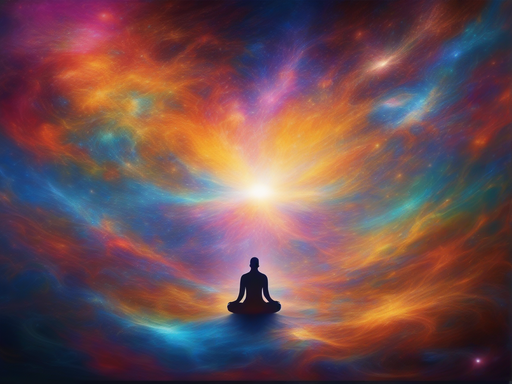
In the rich tapestry of spiritual traditions, the concepts of Shaktipat and Darshan emerge as profound mechanisms of grace, each offering a unique conduit to the divine. These terms are often encountered in the lexicon of Indian spirituality, particularly within the paths of yoga and tantra, where the pursuit of enlightenment takes a form as varied as the seekers themselves.

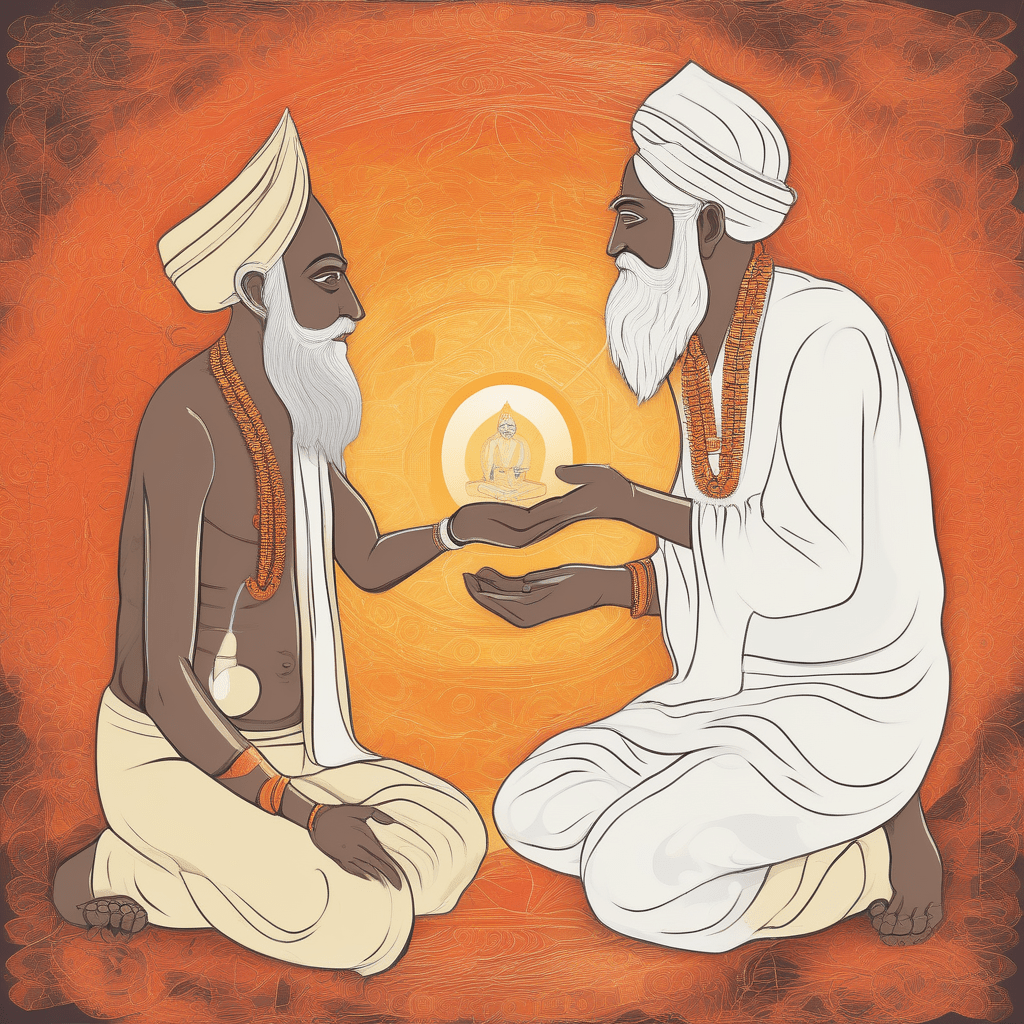
Shaktipat, often translated as the “descent of grace,” is a spiritual act where a guru or enlightened master transmits spiritual energy to a seeker. This transmission can catalyze a profound transformation, initiating or deepening the spiritual awakening process. It is an act of unlocking, a key turned in the lock of latent spiritual potential, often without the necessity of the seeker’s understanding or effort. It is said to be a direct intervention by the divine through the guru, whereby the seeker’s energy is awakened and the journey towards self-realization is accelerated.

Conversely, Darshan translates to “sight” or “a glimpse” in Sanskrit. It refers to the auspicious seeing or beholding of a holy person, deity, or sacred object. Darshan is not merely a passive observation; it is an active engagement, a reciprocal act where the seer is seen, where the act of viewing is saturated with spiritual significance. In darshan, the barriers between the divine and the devotee dissolve in the act of sacred viewing, and it is in this mutual encounter that blessings are believed to flow.

While Shaktipat can be considered an active transmission of spiritual energy, Darshan is a more passive receipt of divine presence. Yet, both hold the common thread of divine grace as central to their efficacy. They differ not in their ultimate aim—liberation and enlightenment—but in their operation. Shaktipat is akin to the wind that stirs the still waters of a lake, while Darshan is like the sun that is reflected upon it.

In contemplating Shaktipat and Darshan, one realizes that they are not mere practices but experiences that lie at the heart of the mystical relationship between the individual and the absolute. They embody the dual aspects of the spiritual journey: Shaktipat represents the inner transformation through direct intervention, and Darshan symbolizes the outer reflection of the divine in the world.

Ultimately, both Shaktipat and Darshan remind us that enlightenment is not a solitary pursuit; it involves a profound interconnectedness with the divine and the world. They encourage the seeker to remain open to the myriad ways grace manifests and recognize that each moment holds the potential for a deeper awakening.

In the spiritual odyssey, Shaktipat and Darshan are not merely destinations or methods; they are living dialogues with the divine, where each seeker is both a witness and a participant in the eternal dance of consciousness. As we embrace the mystery and beauty of these encounters, we find ourselves woven into the very fabric of spiritual unfolding, a journey that is as unique as it is universal.

Morgan O.  Smith

Yinnergy Meditation & My Book, Bodhi in the Brain…Available Now!
https://linktr.ee/morganosmith

Illuminating the Mind

The Dual Paths of Enlightenment and Spiritual Awakening

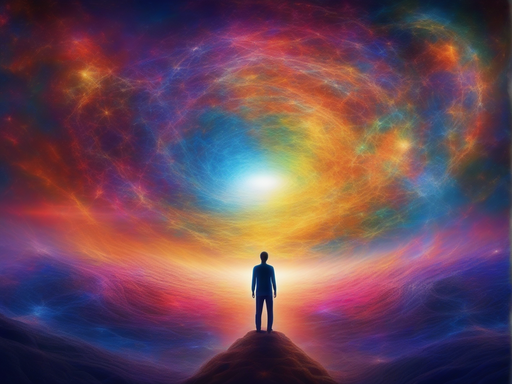
The quest for Enlightenment has been the pinnacle of human aspiration in various domains—intellectual, ethical, and spiritual. At the heart of this quest lies the promise of awakening, a transformative experience that propels an individual beyond the ordinary perception of existence. Yet, despite the shared terminology, Enlightenment and Spiritual Enlightenment diverge on fundamental grounds, embodying distinct trajectories in the pursuit of truth and self-realization.

Enlightenment, in its classic Western sense, refers to the age of reason that dawned in the 17th and 18th centuries. This period was marked by a surge in philosophical thinking, scientific discovery, and the push for political and individual freedoms. It was an era where human intellect, armed with skepticism and inquiry, sought to dispel the shadows of ignorance and dogma. The Enlightenment’s legacy is one of empowered rationality, urging humanity to harness knowledge as the light to guide society toward progress and civilization.

In contrast, Spiritual Enlightenment is an Eastern siren call that echoes through the annals of various religious and metaphysical traditions. It is not merely an expansion of knowledge but a profound transformation of consciousness. Spiritual Enlightenment implies an experiential realization of oneness with the ultimate reality. It is often depicted as the dissolution of the individual ego, a leap into the boundless ocean of divine essence, which exists beyond the material plane and the constructs of intellectual thought.

The distinction between these two is as significant as it is subtle. The Enlightenment champions the mind’s ability to question, to deduce, and to construct, seeking freedom from external tyranny. Meanwhile, Spiritual Enlightenment seeks liberation from the internal chains of desire, ego, and illusion, focusing on transcending the self rather than actualizing it.

One could argue that the paths are not mutually exclusive but are rather complementary. The enlightened mind that questions and reasons can pave the way for a deeper spiritual quest by clearing the underbrush of superstition and prejudice. Conversely, a spiritually awakened soul may view the dance of creation with a profound sense of peace and interconnectedness, bringing a compassionate perspective to the rational world.

In a broader sense, both forms of enlightenment are beacons of human aspiration. Whether it is the light of reason or the glow of spiritual wisdom, each seeks to illuminate the human experience profoundly. It is perhaps in the convergence of these paths that one may find the truest sense of enlightenment—a holistic awakening that marries the mind’s brilliance with the heart’s intuitive depths.

In conclusion, while the Enlightenment speaks to the power of human intellect and the value of empirical truth, Spiritual Enlightenment invites us to explore the mystical depths of our being and the universe. Together, they form a bidirectional odyssey of enlightenment that continues to inspire and challenge humanity to rise above its primal origins and embrace a more illuminated state of existence.

Morgan O.  Smith

Yinnergy Meditation & My Book, Bodhi in the Brain…Available Now!
https://linktr.ee/morganosmith

The Uncharted Horizons Beyond Enlightenment

In the profound silence that follows the cacophony of seeking, what remains when the concept of spiritual enlightenment dissipates like mist at the rise of the sun? We often perceive enlightenment as the ultimate destination, a summit where the flag of our deepest self-inquiry plants its roots. But perhaps this pinnacle is not an end but a gateway, an opening to a landscape more expansive than the binary of enlightened or unenlightened.

Beyond enlightenment, the journey does not cease; it transforms. The seeker, who once scaled the mountain of self, now realizes that the mountain itself is but a wave in an ocean of consciousness. Here, in the boundless vista beyond enlightenment, the distinction between the seeker and the sought blurs and vanishes. The notion of spiritual progress, which implies time and measurement, becomes irrelevant in the face of a timeless being.

This post-enlightenment terrain is not about acquiring more spiritual knowledge or experiencing more profound states of meditation. It is a surrender to the simplicity of presence, where each moment is complete in itself, untethered from the ambition of reaching another. It’s an unlearning of the spiritual concepts that once seemed indispensable.

What awaits is a life lived in the fullness of emptiness, a paradoxical state where the wisdom of uncertainty is embraced. This is the wisdom that knows itself beyond forms and practices, identities and histories. In this realm, the very questions that once fueled our inner quests lose their grip: “Who am I?” becomes an echo without a source, a playful dance of consciousness without a questioner or an answer.

Here, the individual soul’s melody harmonizes with the universal symphony, and action arises from stillness, not strategy. The duality of self and other, spirit and matter, sacred and mundane, no longer confines. Everything is seen as an expression of the divine, and the divine is seen in everything.

The concept of “beyond enlightenment” invites us to explore a state where life is lived with an openness that requires no label, no status, and no fixed point of reference. It is a call to live deeply rooted in the mystery, to become the living expression of the question mark rather than the period at the end of a sentence.

In this sacred space beyond maps, we are each on an uncharted journey, a unique expression of life that never was before and never will be again. It is in this boundless realm that the enlightened mind, now free from the pursuit of enlightenment, can truly engage with the full spectrum of existence.

This is not a territory of more or better, but of true freedom—a freedom that comes not from reaching a destination, but from the realization that there was never anywhere to reach in the first place.

Morgan O.  Smith

Yinnergy Meditation & My Book, Bodhi in the Brain…Available Now!
https://linktr.ee/morganosmith

Embracing the Shadows

The Transformative Power of the Dark Night of the Soul

In the depths of human experience, where the light of understanding seems but a distant memory, we find ourselves in the midst of what Saint John of the Cross coined the “dark night of the soul.” This phrase has transcended its religious origins to signify a period of profound personal turmoil and existential crisis that, paradoxically, can lead to the most profound spiritual awakening.

The dark night of the soul is not simply a period of trouble or depression. It is a crucible in which the very foundations of identity, belief, and understanding are melted down. It is the unsettling void where the familiar dissolves, and we are left seemingly alone, wrestling with the most fundamental questions of our existence. Why am I here? What is my purpose? Is there any meaning to my suffering?

However, within this darkness lies a peculiar grace. The darkness, dense and impenetrable, confronts us with our deepest fears and insecurities. Stripped of all pretense, the ego is humbled, and the spirit becomes pliable. It is here, in the surrender to the unknown, that the light of awakening begins to seep through. As the Persian poet Rumi once said, “The wound is the place where the Light enters you.” Our wounds and our darkness become the very openings through which a new understanding can emerge.

The transformation that follows is often not one that pulls us out of the dark, but rather one that illuminates the night itself. We find that this darkness was not the absence of light, but the very medium through which a deeper, subtler light could be perceived—a light of truth that the glaring sun of our previously held certainties and convictions could never reveal.

In the embrace of the dark night, the soul learns the language of paradox. The loss of everything that once seemed sure becomes the freedom to explore truth without constraint. In letting go of what we thought we knew, we become open to an entirely new way of being. This is not the light of day with its clear boundaries and definitions, but the soft glow of twilight that admits to mysteries we can never fully grasp or articulate.

This spiritual awakening is not a destination but a continual unfolding. As dawn follows the darkest hour, our awakening is an ever-evolving process where new challenges and understandings emerge. The dark night becomes a passage, a womb of rebirth. Like the phoenix arising from the ashes, our spirits are reborn from the very trials that seemed to threaten our undoing.

And so, the dark night of the soul is not to be feared or avoided but embraced as an essential passage to a deeper, more authentic spiritual life. The darkness is not the end of the journey but a vital, indeed crucial, part of it—a passage that refines, teaches, and ultimately enlightens, granting us wisdom that shines all the brighter for having known the depths of shadow.

Morgan O.  Smith

Yinnergy Meditation & My Book, Bodhi in the Brain…Available Now!

https://linktr.ee/morganosmith

Brahman Through a Christian Lens

Exploring the Divine Tapestry

In the lush gardens of spiritual thought, there exist concepts that, at first glance, may appear to belong to entirely different landscapes. Yet, upon closer examination, one finds threads that weave them together into a grand tapestry of the divine. Such is the case when one seeks to understand the Hindu concept of Brahman from a Christian perspective.

At the heart of Hindu philosophy lies Brahman, the ultimate reality, the absolute existence, knowledge, and bliss. Brahman is not merely a god among many but the ineffable ground of all being, beyond form, beyond limits, the essence of everything that was, is or will be. It is an ocean of consciousness, infinite and eternal, from which the universe springs forth like waves from a boundless sea.

How, then, can a Christian approach this concept? Christianity speaks of God in terms of a personal deity, a Trinity of Father, Son, and Holy Spirit, yet also affirms that God is beyond all comprehension, omnipresent, and the source of all that exists. The Christian mystical tradition, with its contemplative gaze, has long sought union with the divine, echoing the Hindu pursuit of realizing one’s oneness with Brahman.

In the Christian mystical experience, one might glimpse parallels to the understanding of Brahman. The Apostle Paul, in his letter to the Colossians, speaks of Christ as the one “in whom all things hold together.” This echoes the sense of Brahman as the underlying reality that upholds the universe. Theologians like St. Augustine have described God as being closer to us than we are to ourselves, resonating with the Hindu notion of Atman, the innermost self, ultimately one with Brahman.

Furthermore, the Christian concept of agape, or self-giving love, can be seen as a reflection of the blissful aspect of Brahman. In creation, God pours out love, which might be understood as a movement from the fullness of divine bliss. The Incarnation, the event of God becoming human in the person of Jesus, is a profound expression of this divine self-outpouring, analogous to the way Brahman manifests as the universe.

Yet, there are also profound differences. Christianity insists on a personal relationship with God, while the realization of Brahman is often described in impersonal terms. The Christian God enters into history and suffers with humanity, whereas Brahman is often seen as beyond all duality and unaffected by the play of cosmic forces.

In exploring Brahman from a Christian standpoint, we tread a path of mystery and paradox, where words falter and concepts blur. It is a journey that calls for humility, for what we encounter is the divine mystery, which, whether named Brahman or God, ultimately eludes all attempts at definition.

As we reflect on Brahman through a Christian lens, we are invited not to a debate but to a dance of understanding, where diverse beliefs can enrich each other. It is a reminder that our grasp of the Infinite is always incomplete and that perhaps, in the silent spaces between our words and concepts, there might be more that unites than divides.

Morgan O.  Smith

Yinnergy Meditation & My Book, Bodhi in the Brain…Available Now!

https://linktr.ee/morganosmith

The Quantum Resonance of Enlightenment

Exploring Turiyatitta and Cosmic Entanglement

As the silent veil of ignorance lifts, a momentous spark of enlightenment ignites within the seeker, unfurling its tendrils across the boundless cosmos. It is said in ancient texts that the rare nondual state of Turiyatitta represents a zenith of spiritual awakening, where the perceived separation between self and the universe dissolves into a serene ocean of oneness. A hypothesis resonating within the modern quantum paradigm posits that this transcendent state mirrors quantum entanglement at its pinnacle, orchestrating a cosmic dance of interconnectedness.

At the juncture of enlightenment, it is conjectured that every particle within the brain, the body, across terrestrial beings, and through the inanimate, entwines in a profound network of entanglement. Like notes in a grand symphony, all entities, all matter, and perhaps even the ephemeral dance of thoughts and consciousness, become orchestrated in a divine, harmonious rhythm that underpins the entire multiverse.

This notion elevates our understanding of Turiyatitta from a mere inner experience to a cosmic event, suggesting that enlightenment transcends the corporeal, resonating across the quantum fabric of reality. Such a realization steers the human spirit towards a profound acknowledgement: as we seek inner illumination, we are, in essence, yearning for a union with the cosmos, a sublime harmony that exists beyond the veil of duality.

The curious intersection of ancient spiritual insight and quantum mechanics unfurls a rich tapestry of exploration. It beckons us to transcend the superficial boundaries of empirical investigation and delve into the metaphysical, to meditate upon the profound interconnectedness that weaves the human experience into the cosmic narrative.

This quest for a deeper understanding of Turiyatitta and quantum entanglement does not merely reside in the realms of philosophical musings; it echoes the ancient call for a universal communion, a unifying essence that seeds within us the potential to transcend the illusory veil of separateness. And as science inches closer to the bosom of mysticism, we find a poetic elegance in the pursuit of truth, a whisper of the cosmos that hums the ancient melody of oneness.

Morgan O.  Smith

Yinnergy Meditation & My Book, Bodhi in the Brain…Available Now!

https://linktr.ee/morganosmith

The Paradox of Enlightenment

The Trap Within Belief

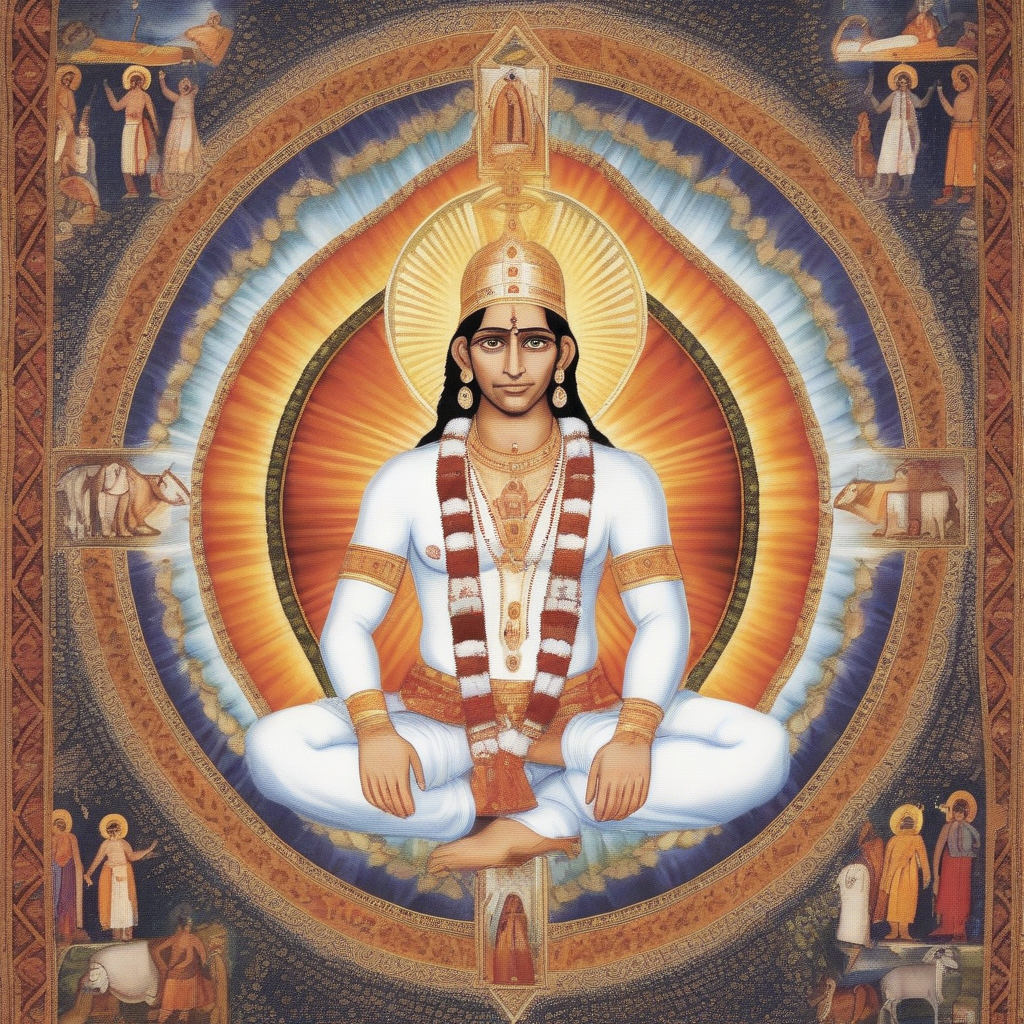
The quest for enlightenment is as old as human consciousness itself. Philosophers, mystics, and seekers from all walks of life have grappled with the concept, attempting to pin it down, describe it, and ultimately attain it. However, the journey toward enlightenment presents an inherent paradox: the more we try to define and understand it using fixed terms, the further we may be pushing ourselves away from its true essence.

Imagine a bird in flight. If we try to describe its movement using a series of static images, we will inevitably fail to capture the fluidity and grace of its motion. Similarly, when we attempt to describe enlightenment using fixed terms and concepts, we risk reducing it to a mere idea, devoid of its living, breathing essence.

Many spiritual traditions caution against becoming overly attached to words and concepts. This is because language, while a powerful tool for communication, is inherently limiting. Words can only describe what we already know, and they are often inadequate when it comes to capturing the depth and breadth of profound spiritual experiences.

In our desire to understand enlightenment, we may fall into the trap of believing too strongly in the terms we use. Once we form a fixed idea of what enlightenment is or should be, we inadvertently place a barrier between ourselves and the experience. Instead of being open to the infinite possibilities of spiritual growth, we become confined within the walls of our own beliefs.

It’s essential to remember that the true nature of enlightenment cannot be grasped by the intellect alone. It is something that must be experienced directly, beyond the limitations of language and thought. While words can point us in the right direction, they can never fully encapsulate the experience itself.

So, the next time you find yourself pondering the nature of enlightenment, consider letting go of your preconceived notions and beliefs. Embrace the unknown, and allow yourself to dive into the deep waters of direct experience. For it is only when we move beyond the confines of language that we can truly begin to touch the infinite.

Morgan O.  Smith

Yinnergy Meditation & My Book, Bodhi in the Brain…Available Now!
https://linktr.ee/morganosmith