The Face of the Observing Self

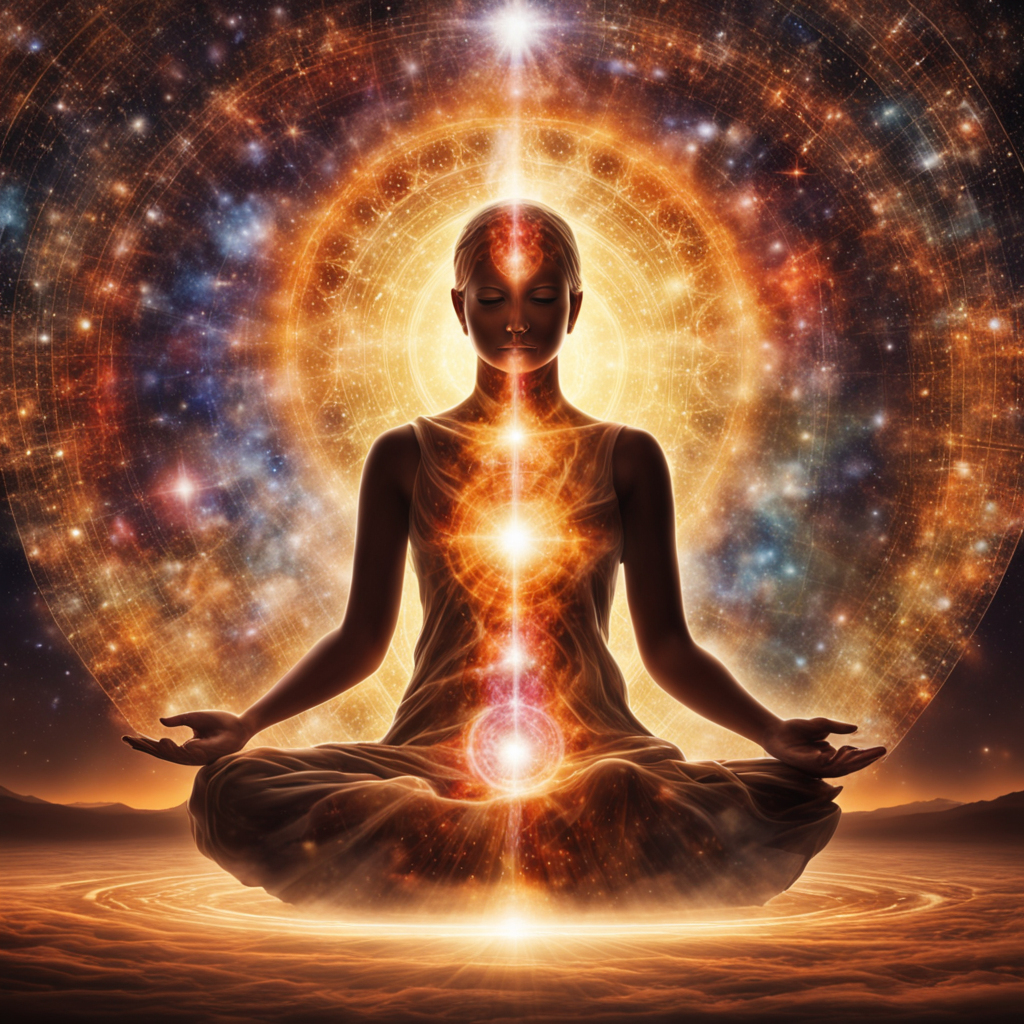
What does it mean to observe oneself? To truly look inward is to confront the observer and the observed paradox. Self-observation reveals something both unsettling and liberating: the absence of a concrete “self” to observe. Yet, this absence is not a void; it is a vast, dynamic awareness that holds all experience without judgment or attachment.

When the mind turns its gaze inward, it seeks to grasp the essence of identity. Who is the one observing? Is it the body, the thoughts, or the emotions? As the layers of identity dissolve under scrutiny, the “face” of the observing self becomes clear: it has no features, no boundaries, no name. It is an awareness that exists beyond the stories we tell ourselves, beyond the constructs of past and future.

This realization often stirs resistance. The mind, conditioned to identify with roles and narratives, may fight to hold onto the illusion of a solid self. But the observing self invites surrender—not as a defeat but as a return to authenticity. To analyze its face is not to define it but to recognize that it is the source of all definitions, all perceptions, and all experiences.

In this space of pure observation, there is no judgment. Thoughts arise and fall away like waves; emotions flow without resistance. The observer does not interfere, label, or categorize. It is simply present, awake, and unattached. This is where true freedom lies—not in controlling the waves of experience but in abiding by the unmoving awareness beneath them.

The practice of observing oneself is not an escape from life but a profound engagement with it. It is the realization that the one who suffers, the one who desires, and the one who fears is not the ultimate truth of who we are. Beyond these transient identities lies the still, eternal witness, untouched by the flux of existence.

To analyze the face of the observing self is to encounter the formless essence of being. It is a mirror reflecting the infinite, a gateway to profound peace. This realization transforms how we engage with the world, fostering a deep compassion for ourselves and others. For when the illusion of separation falls away, what remains is love—the recognition that the observer and the observed are one.

Morgan O. Smith

Yinnergy Meditation, Spiritual Life Coaching & My Book, Bodhi in the Brain…Available Now!
https://linktr.ee/morganosmith

The Profound Four

The Profound Types of Spiritual Awakening

Awakening is a journey of unfolding consciousness, marked by stages that delve deeper into the true essence of our existence. These stages reveal the profound layers of both our human and divine nature, ultimately guiding us toward the unification of all dimensions of being. Let’s explore the four major types of spiritual awakening, each one a unique path leading us closer to our boundless essence.

1. Awakening at the Human Level

This type of awakening is often the first step into a world beyond the ordinary. Here, we begin to realize that there’s more to life than our everyday identities and experiences. The focus is on self-awareness and understanding our thoughts, emotions, and behaviours from a higher perspective. By transcending the limitations of ego-based identity, we start seeing ourselves as more than just the body and mind. This awakening isn’t about escaping our humanity but embracing it with clarity and compassion. Through this initial awakening, we discover that by knowing ourselves more deeply, we open doors to greater insight and transformation.

2. Awakening at the Human/Divinity Level

As our journey progresses, a deeper layer of consciousness emerges—an awakening that bridges our human experience with divine presence. This stage often manifests as a heightened connection with something sacred within. There’s a sense of moving beyond personal desires and concerns, recognizing a guiding force that interweaves through all aspects of life. We begin to experience profound synchronicities, inner peace, and a subtle but persistent awareness of a universal intelligence operating through us. This awakening is not just about seeing the divine in ourselves but in others, inspiring us to connect and relate in new ways. At this level, divinity becomes tangible, not as a concept, but as a lived experience.

3. Awakening at the Divinity Level

At the divinity level, the barriers between the personal self and the universal self start to dissolve. This stage is characterized by an immersion in the essence of pure consciousness, where we experience a sense of being beyond the limitations of form. It is a state where divine awareness becomes central, and human identity fades into the background. During this awakening, we may feel at one with the cosmos, a single drop in the vast ocean of existence, yet inherently aware of the infinite that lies within. Living in this state can bring a profound sense of peace, stillness, and an unshakeable connection to all that is.

4. Unified Awakening: Embracing the Human, Divine, and Cosmic

The journey culminates in a unified awakening—a seamless merging of the human, divine, and cosmic dimensions. Here, every aspect of our existence is held together in a harmonious whole. We no longer see ourselves as shifting between realms but experience them simultaneously. In this awakened state, the human self, the divine presence, and the universal consciousness are recognized as one undivided reality. This unity brings about a deep sense of equanimity, freedom, and interconnectedness. Challenges and joys alike are embraced as natural expressions of life’s flow. Through this ultimate awakening, we transcend not just ego but the need to define or separate any part of our existence.

Reflecting on the Path of Awakening

Each stage of awakening offers unique insights and transformations. The journey does not unfold in a rigid sequence; rather, it ebbs and flows, allowing us to embody these different aspects of consciousness in our unique way. Spiritual awakening is not a goal but an ever-deepening process. As we awaken to the fullness of our being, we move beyond divisions, experiencing life as a living expression of universal love and wisdom.

Morgan O. Smith

Yinnergy Meditation, Spiritual Life Coaching & My Book, Bodhi in the Brain…Available Now!

https://linktr.ee/morganosmith

Beyond Illusion

Discovering the Space Between

The mind creates identities and builds a sense of self out of thoughts, emotions, and past experiences. These constructs shape beliefs around who you think you are and who you think you aren’t. This entire narrative, though compelling, is merely a distortion. It presents itself as reality but, in truth, is nothing more than an intricate mental creation. We become confined by these polarities, oscillating between two extremes—what we accept and what we reject about ourselves.

These boundaries, however, do not define the core of who you are. The sense of self emerges as a reflection against what we perceive as the ‘other.’ You’re not merely the collection of traits you cherish, nor are you the shadow aspects you struggle to suppress. By engaging with either, you remain caught in a dualistic view that blinds you to your deeper essence.

The challenge, then, is to neither grasp onto one identity nor to strive to become its opposite, but to look at the liminal space between. This uncharted territory holds the key to your True Self. Neither glorified nor condemned, this space is untouched by labels. It eludes all attempts to be defined. When you gaze into that emptiness, you come face-to-face with your origin—the point where being meets non-being, and you witness the dissolution of the false dichotomy between ‘I am this’ and ‘I am not that.’

Finding this space requires surrendering the tendency to categorize. Allow awareness to rest on the edges of thought, where opposites fade into one another. This subtle recognition can shift perception, making you aware of a silent presence that underlies all identifications. It’s a sense of being that defies expression yet is undeniably real. Here, you aren’t bound by limitations, nor are you an idealized version of yourself.

This presence is what mystics have pointed to throughout the ages—a place beyond words and mental constructs. It’s here that the True Self emerges, not as a separate entity, but as the unconditioned awareness that holds both the ‘you’ and the ‘not you.’ Let this realization transform the way you see yourself and others, dissolving barriers until all that remains is a boundless, indivisible field of consciousness.

Morgan O. Smith

Yinnergy Meditation, Spiritual Life Coaching & My Book, Bodhi in the Brain…Available Now!

https://linktr.ee/morganosmith

The Myth of Perfection

A Reflection on Human Nature and Spirituality

Perfection is a concept that many aspire to, yet one that remains fundamentally unattainable. The allure of becoming flawless is often reinforced by societal expectations, self-help narratives, and spiritual teachings that promise transcendence over our shortcomings. We yearn for mastery, imagining a state where all undesirable traits have been eradicated and every behaviour aligns with some ideal of human perfection. But is that ever truly possible?

No one is perfect. Not even the most enlightened being on the planet. Let’s use pest control as an example.

No matter how meticulously we maintain our homes or how many pest-control methods we employ, insects will inevitably appear. Some will be caught and eliminated, others will hide and multiply. This relentless cycle mirrors our inner world. Despite all efforts—through therapy, shadow work, psychedelics, or spiritual awakening—no one has found a way to remove every negative tendency permanently. As insects are part of the natural ecosystem, our imperfections are part of being human. Attempts to eliminate all flaws are as futile as trying to rid the entire world of pests.

Each trait or behaviour can be seen as a metaphorical bug. Selling a bug-killing spray or device is like an enlightened teacher selling a pathway to liberation or a self-actualized individual motivating others to reach their highest potential. The promise is not false, but the misconception lies in the belief that the bugs—the flaws—will be eradicated forever. The truth is more nuanced. Much like we can control insects to a certain extent, we can address negative traits, but total elimination is beyond reach.

If you’ve ever been to a home that had one visible roach, you likely made a snap judgment about cleanliness, even if the house was otherwise spotless. Contrast that with spotting an ant, and your reaction might be more forgiving. This response isn’t based on logic but on deeply ingrained conditioning. The same holds for how we judge others. One visible flaw can overshadow countless positive qualities, not because the flaw is inherently worse, but because of how we’ve been conditioned to perceive it.

A self-actualized person can be compared to a meticulous homeowner who manages to keep most of the pests at bay. Their house is mostly clean, orderly, and free of unwanted visitors. Yet, even they know that complete eradication is impossible. An enlightened being, on the other hand, goes beyond this mindset. They see every bug as a part of themselves—each flaw, each undesirable trait, is not separate but an expression of the whole. This broader understanding fosters a deeper acceptance. While they might occasionally choose to kill a bug, it’s done without aversion or judgment. There’s no inner conflict because they see that every bug, every flaw, serves a purpose.

Now the enlightened individual sees everything as perfection. Everything that is considered imperfect is happening perfectly. Everything is divine. Even the most imperfect individual or situation or circumstance. The enlightened recognize that what appears as chaos or dysfunction from a limited perspective is simply the perfect unfolding of a greater, unseen order. A roach-infested home, a seemingly flawed person, or an unwelcome circumstance—all are expressions of a divine play. There is no distinction between beauty and ugliness, perfection and imperfection because all dualities dissolve into the same oneness.

So, when an enlightened being enters a home overrun with insects, they do not recoil or judge. They recognize that their own home could, at any moment, be similarly overtaken. There is no attachment to a pristine space or the opinions of others regarding their environment. By accepting that bugs will always be present, the enlightened suffer less—not because their world is free of pests, but because they are no longer bothered by their existence.

The true wisdom here lies in shifting the focus away from trying to perfect oneself and toward seeing all parts of life—including the messiness, the flaws, and the unwanted bugs—as expressions of the same wholeness. The journey is not about eradicating; it’s about embracing. When we see all that is seemingly imperfect as perfectly divine, we move beyond the struggle and enter a space of true inner peace and freedom.

Morgan O. Smith

Yinnergy Meditation, Spiritual Life Coaching & My Book, Bodhi in the Brain…Available Now!

https://linktr.ee/morganosmith

Beyond the Multiverse

Exploring the Infinite Horizon of the Omniverse

When contemplating the nature of reality, it’s tempting to consider our universe as the ultimate expanse. However, the idea of an omniverse beckons us to consider a reality that transcends even the multiverse—a boundless realm where all possibilities converge, diverge, and coexist simultaneously.

The concept of an omniverse challenges the limits of our understanding. It’s not merely an endless string of universes scattered through the void but the totality of all that exists and can exist, both seen and unseen. It holds within it every possible universe, each with its distinct laws of physics, timelines, and outcomes. Yet, this is not just about space and time. It is about a profound realization that within every layer of existence lies a deeper potentiality—one that hints at the limitless creative force behind all manifestation.

Many seek to explore what lies beyond the edges of the known, hoping to unravel mysteries of parallel universes or alternate dimensions. Yet, when contemplating the omniverse, we touch on something far more profound: the convergence of all realities. Every possible configuration of existence is contained here, but what holds it all together? Consciousness. It’s consciousness that underlies every universe, dimension, and realm within the omniverse.

Imagine for a moment that every choice ever made, every potential future, every conceivable world, is occurring somewhere within this greater expanse. But who or what perceives all these realities? It is not a separate entity standing outside the omniverse, observing from a distance. The observer is woven into the fabric of all things. Consciousness, that which is aware of existence itself, is both the creator and the experiencer of the omniverse.

This realization invites us to consider the omniverse as not just an external system but as an integral part of the self. Every potentiality exists because consciousness dreams it so. You are not separate from this boundless expanse—you are one with it. Your awareness stretches far beyond the physical body, touching the very edges of this infinite creation.

What does it mean to embrace the omniverse in daily life? It means expanding beyond the limited perspective of individual identity and recognizing your role as both creator and witness. It means understanding that every experience, no matter how small, ripples through an unimaginable expanse of reality. Each moment contains the seeds of all potentiality, an invitation to awaken to your true nature.

As we stand at the edge of what we know, poised to leap into the unknown, the omniverse is a reminder that the true nature of reality cannot be confined to any one perspective. It is an open invitation to dive deeper into the infinite and discover that consciousness itself is the ultimate ground of all being.

Morgan O. Smith

Yinnergy Meditation, Spiritual Life Coaching & My Book, Bodhi in the Brain…Available Now!

https://linktr.ee/morganosmith

Unconditional Surrender

Embracing the Final Letting Go

Unconditional surrender is not simply about relinquishing control over circumstances, desires, or attachments. It goes beyond the surface. This form of surrender requires the release of the very concept of surrender itself. It demands a level of vulnerability so profound that even the notion of letting go must be let go.

What happens when there’s no longer anything to hold on to? Nothing to release? This is where true transformation begins. In this space, we step outside the dualistic framework of control versus surrender and touch something far deeper, a level of being where no effort or resistance exists. We are often conditioned to think that surrender means losing, giving up, or sacrificing. But unconditional surrender is not a loss—it is the full embrace of existence without the filters of ego, fear, or the need to manage outcomes.

When one stands in this openness, fully exposed and defenceless, something extraordinary happens. You come face to face with the reality of all that is. Without the mind’s endless chatter and strategies, there’s nothing left but the raw, unfiltered truth. And in that truth, you find freedom—not in the way we might imagine, but in a way that defies all prior understanding.

In the vulnerability of surrender, we experience what it means to exist without resistance, without striving, without seeking. It’s not about achieving some spiritual milestone or reaching a perfect state of being. Instead, it’s about dissolving the layers of defence we’ve built, trusting that whatever remains is exactly what was meant to be.

This path is not for the faint-hearted. It requires courage to step beyond the boundaries of the self and to let go of everything we’ve ever known. Yet, paradoxically, it is only through this act of ultimate surrender that we come to experience true liberation.

I would like to thank my colleague, Prakash, for mentioning Unconditional Surrender during our The Seekers Mind Clubhouse debate and for inspiring this piece.

Morgan O. Smith

Yinnergy Meditation, Spiritual Life Coaching & My Book, Bodhi in the Brain…Available Now!

https://linktr.ee/morganosmith

The Elusive Blind Spot of Enlightenment

A paradox begins to unfold from the moment consciousness takes form and you are born into this world. Enlightenment, often considered the pinnacle of spiritual realization, simultaneously becomes a blind spot. It’s not that enlightenment is absent; rather, it exists so close to you that it evades your direct perception. The act of becoming a being—separate from the whole—creates the veil obscuring what was never lost.

Most people search for this elusive state, hoping to grasp it through teachings, practices, and philosophies. Yet, the search itself can deepen the sense of separation, reinforcing the idea that enlightenment is something external to be found. But what if enlightenment was never something you needed to find? What if it was something you simply needed to stop resisting?

Human existence is an exquisite contradiction. On one hand, the moment you identify as an individual, you begin to experience duality—subject and object, self and other. On the other hand, this identification simultaneously masks the realization that you are already one with everything. Enlightenment is not an external destination; it is the underlying reality that permeates your existence.

The blind spot isn’t due to a lack of spiritual capacity or effort, but the mind’s incessant clinging to the notion of self. The moment you try to achieve enlightenment as a personal goal, it slips further away, like trying to catch a shadow. Perhaps the real journey is not about seeking, but about unlearning. The simplicity of just being, without striving, can often be the most profound realization of all.

What happens when you stop searching? What if you allow yourself to see that enlightenment is not a peak experience to attain, but the constant, ever-present background of awareness that you are, and always have been? This blind spot only remains as long as there is an effort to overcome it. Let go of that effort, and what reveals itself has been present all along—your original nature.

The key lies in the willingness to let go of the need for enlightenment, to surrender the very idea that you are separate from it. Only then does the blind spot dissolve, and the reality of your true self, free from all constructs, comes into clear view.

Morgan O. Smith

Yinnergy Meditation, Spiritual Life Coaching & My Book, Bodhi in the Brain…Available Now!

https://linktr.ee/morganosmith

From Curiosity to Self-Realization

The Path of Unveiling True Identity

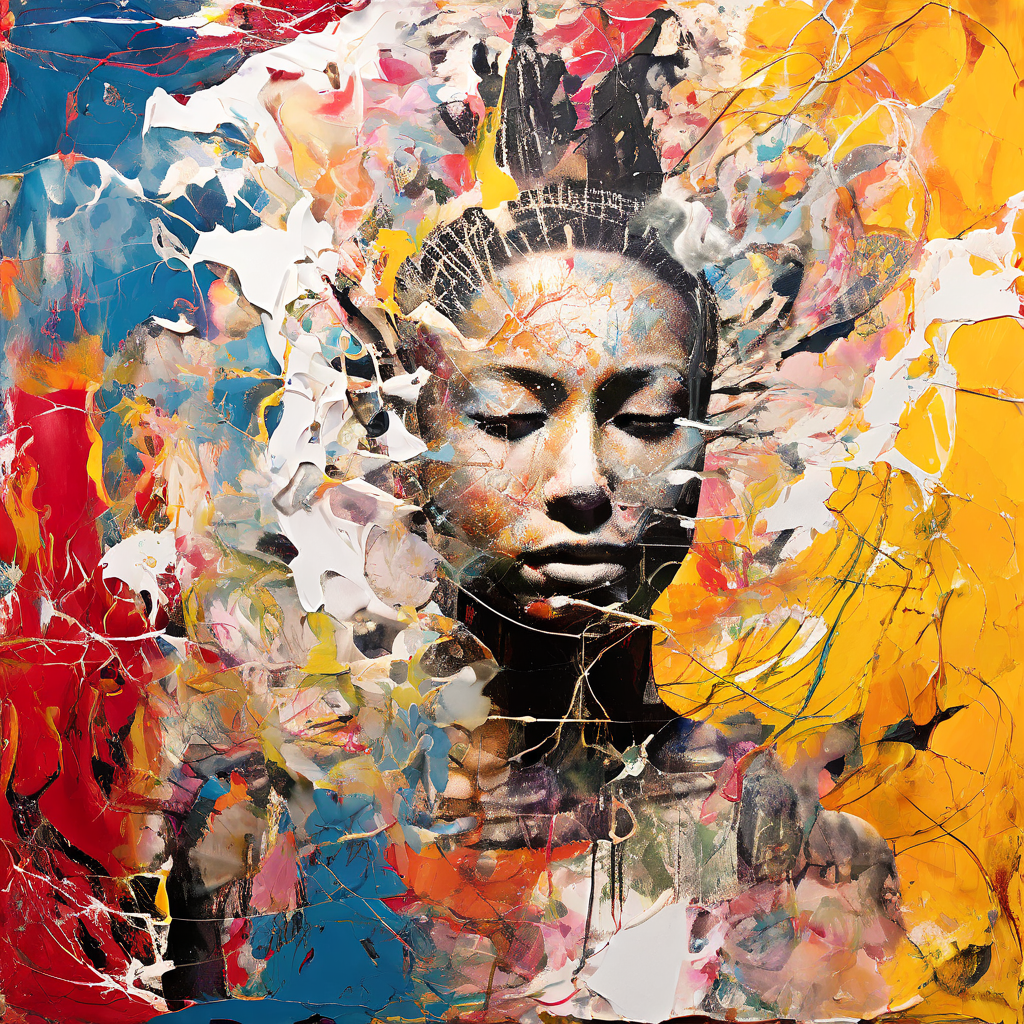
Curiosity is a subtle yet potent force that nudges us toward self-discovery. It begins as an innocent desire to understand the world, to unravel the mysteries that surround us. Yet, beneath this surface, curiosity harbours a deeper, more profound impulse: the yearning to uncover the truth of our existence. This journey from mere inquisitiveness to the realization of who and what we truly are is a transformative process, one that dissolves the illusions of separation and reveals the boundless nature of consciousness.

At first, curiosity may lead us to explore the outer world and to seek knowledge in science, philosophy, and art. We investigate the principles that govern the cosmos, the nature of life, and the intricacies of the mind. Each question we ask, each answer we uncover, brings us closer to the edge of understanding. But there comes a point when the external search no longer satisfies. The answers we find, while intellectually stimulating, fail to quench the deeper thirst within us.

This is the moment when curiosity turns inward. We begin to question not just the world, but the very nature of the self. Who am I? What am I? These questions, so simple on the surface, carry within them the seeds of profound realization. As we delve into these inquiries, we start to unravel the layers of identity that we have constructed over a lifetime—roles, beliefs, memories, and emotions. We come to see that these layers while forming the fabric of our experience, do not define our true essence.

The deeper we inquire, the more we recognize the transient nature of these identities. We observe that the thoughts, emotions, and perceptions we once took as definitive of “self” are mere phenomena, arising and passing within the field of awareness. This awareness itself, however, remains unchanged, ever-present, and untouched by the fluctuations of experience. It is in this recognition that the first glimmers of self-realization emerge.

As curiosity continues to fuel our exploration, we begin to sense a shift. The realization dawns that what we are seeking is not an object or concept that can be grasped but the very subject of all experience—the pure awareness that is our true nature. This awareness is not separate from the world we once sought to understand; it is the ground of all being, the source from which all phenomena arise.

This realization is both a moment of profound insight and the beginning of a new way of being. No longer identified with the fleeting contents of experience, we come to rest in the boundless, formless presence that we truly are. This is the culmination of curiosity’s journey: the recognition that the seeker and the sought are one and the same.

In this state of realization, curiosity does not vanish. Instead, it transforms into a deep, abiding wonder at the mystery of existence itself. The world, once viewed as a collection of separate objects, is now seen as an expression of the same consciousness that we are. Every moment, every encounter becomes an opportunity to experience the infinite nature of our being. This is the ultimate gift of curiosity—the revelation of our true identity as pure awareness, beyond all concepts and distinctions.

Morgan O. Smith

Yinnergy Meditation, Spiritual Life Coaching & My Book, Bodhi in the Brain…Available Now!
https://linktr.ee/morganosmith

Attaining Enlightenment

As Elusive as Grasping the Wind

The quest for enlightenment, that profound state of ultimate understanding and unity, is often compared to trying to hold onto the wind. This metaphor captures the essence of the journey—a pursuit that defies conventional grasping, one that requires an openness to the intangible and an embrace of the elusive.

The Elusiveness of Enlightenment

In many Eastern philosophies, Enlightenment is not a destination but a state of being. It is a realization that transcends the confines of our dualistic thinking. Much like the wind, it is everywhere and yet nowhere specific. To chase it with a rigid, goal-oriented mindset is to miss its essence.

Enlightenment involves the dissolution of the self and the shedding of layers upon layers of conditioned beliefs and identities. This shedding process can feel like an endless peeling away of illusions, akin to trying to contain the uncontainable wind in your hands. The moment you think you have a firm grasp, it slips through your fingers, revealing the futility of such an endeavour.


The Paradox of Effort and Effortlessness

One of the most challenging aspects of the spiritual path is balancing effort and effortlessness. The seeker must engage in practices, disciplines, and teachings that guide the way, yet true enlightenment often dawns in moments of complete surrender and stillness. It is in these moments that the boundaries of the self dissolve, and one experiences the boundless nature of existence.

This paradox can be frustrating. We are conditioned to believe that hard work and determination yield results. However, in the spiritual realm, striving too hard can create resistance. It is the quieting of the mind, the letting go of effort, that often brings the profound insights we seek.

Embracing the Unknowable

In accepting the elusiveness of enlightenment, we learn to appreciate the journey itself. Every moment of insight, every experience of stillness, is a part of the unfolding realization. The wind may be impossible to grasp, but it can be felt, experienced, and known in its presence.

To truly understand enlightenment, one must embrace the unknowable. It requires a heart open to the mysteries of existence and a mind willing to let go of the need for certainty. This openness allows us to experience glimpses of the infinite, moments where the separation between self and universe disappears, revealing the profound interconnectedness of all things.


Conclusion

Attaining enlightenment is indeed as difficult as grabbing hold of the wind. Yet, in this difficulty lies the beauty of the spiritual journey. It teaches us to let go, to be present, and to embrace the mystery of existence. In the end, the pursuit of enlightenment is not about reaching a final goal but about experiencing the boundless nature of our true selves, flowing effortlessly like the wind.

Morgan O. Smith

Yinnergy Meditation, Spiritual Life Coaching & My Book, Bodhi in the Brain…Available Now!

https://linktr.ee/morganosmith

The Subtle Divide

Spiritually Inclined vs. Spiritually Awakened

In the pursuit of spiritual understanding, a significant distinction emerges between being spiritually inclined and spiritually awakened. This divergence reveals not just a difference in terms of interest, but in the depth of experience and transformation.

The Spiritually Inclined

Those who are spiritually inclined are often on the periphery of spiritual exploration. Their journey is characterized by a curiosity and fascination with the metaphysical realm. This inclination is the initial spark, a gentle pull towards understanding deeper truths of existence. It involves an appreciation of spiritual concepts, rituals, and practices, often adopted to enhance personal well-being or to find solace in times of distress. Yet, this stage may lack the profound shift in perception that marks true spiritual awakening.

The Spiritually Awakened

In contrast, spiritual awakening is a profound transformation that redefines the essence of one’s being. It is not merely an interest or hobby, but a fundamental change in how one perceives and interacts with the world. This shift often arrives unexpectedly, after intense personal introspection or significant life challenges that push one to question deeper existential truths.

An awakened individual sees beyond the illusions of the self and the material world, recognizing the interconnected nature of all life. Their lives are marked by a deep, intrinsic understanding of non-duality—that there is no separation between the self and the universe, only a unified existence. This realization is not an intellectual exercise but an experiential truth that permeates every aspect of life.

Navigating the Path from Inclination to Awakening

Transitioning from being spiritually inclined to being awakened is not a guaranteed trajectory. It requires more than just passive interest; it demands active engagement, often facilitated by practices such as meditation, contemplative prayer, or profound philosophical inquiry. The catalyst for awakening is deeply personal and can be facilitated by a guide or teacher who can help one embark on the necessary introspective journey. For those seeking to bridge this gap, it is essential to cultivate an environment that encourages deep questioning and vulnerability. It involves letting go of preconceived notions and embracing the unknown with an open heart and mind.

Conclusion

The journey from spiritual inclination to awakening is unique for each individual, filled with challenges and revelations. Recognizing the difference between these states is crucial for anyone on the path of spiritual exploration, as it highlights the depth of commitment and transformation required to move beyond mere interest to profound spiritual realization.

Morgan O. Smith

Yinnergy Meditation, Spiritual Life Coaching & My Book, Bodhi in the Brain…Available Now!
https://linktr.ee/morganosmith