The Whisper of Infinity

Traversing the Path to Turiyatita

In the vast expanse of human history, there exists a realm beyond the tangible—a realm where the essence of being transcends the known layers of consciousness. This realm, elusive and profound, is the state of turiyatita. It’s a state that defies the confines of language, a realm where the self dissolves into the boundless, where the duality of existence merges into the singularity of the absolute.

The Quest for the Unquantifiable


The pursuit of turiyatita, a concept deeply rooted in Advaita Vedanta, represents the pinnacle of spiritual exploration. It’s a journey beyond the fourth state of consciousness (turiya), into a domain where the lines between the seeker, the search, and the sought blur into non-existence. But how many have crossed the threshold into this profound state?

Speculation suggests that only a whisper of humanity, approximately 0.0000139%, have truly experienced the boundless unity of turiyatita. Yet, this number is not just a statistic; it’s a reflection of the intense dedication, the years of unwavering meditation, and the profound inner transformation required to reach such heights of spiritual realization.

A Journey Beyond Numbers

The essence of this journey lies not in the attainment but in the pursuit itself. It’s a path that demands not just spiritual discipline but a complete surrender of the ego, a dissolution of the self into the cosmic oneness. This pursuit is rare, not because of its difficulty, but because of its depth—it asks of us to let go of everything we believe to be true, to transcend not just the physical, but the very concept of existence.


The Rarity of Realization

Why is it that so few have reached the state of turiyatita? It’s a question that invites us to reflect on the nature of spiritual attainment itself. Is it the rarity of the state, or the rarity of the pursuit? In a world preoccupied with the tangible, the pursuit of something so profoundly intangible is itself a rarity.

Yet, the path to turiyatita is open to all who seek it. It’s a journey that begins not with a step, but with a leap—a leap of faith into the unknown, into the spaces between thoughts, into the silence beyond sound. It’s a path that demands everything and offers nothing, yet in that nothingness lies everything.

Invitation to the Infinite

The state of turiyatita, then, is not just a destination; it’s a journey toward the ultimate realization of our true nature. It’s an exploration of the infinite within us, a call to experience the profound unity of existence. This journey is available to anyone willing to venture beyond the confines of the known, to those brave enough to explore the depths of their consciousness.


Conclusion: A Call to the Seeker

As seekers, we stand on the threshold of the infinite, invited to explore realms beyond the reach of conventional understanding. The path to turiyatita is arduous and elusive, but it’s a journey that holds the promise of the ultimate realization. It’s a call to look within, to transcend the self, and to embrace the boundless unity of existence. The realization of turiyatita, represented by a minuscule fraction of 0.0000139%, is not just a figure but a beacon of possibility for every seeker on the path to enlightenment.

Morgan O. Smith

Yinnergy Meditation, Spiritual Life Coaching & My Book, Bodhi in the Brain…Available Now!

https://linktr.ee/morganosmith

Unveiling Infinity

The Journey Beyond Spiritual Constructs

In the pursuit of spiritual enlightenment, a paradox often emerges: the journey toward liberation can inadvertently become a new form of bondage. It’s an intricate dance where the very tools and practices designed to free us can subtly entangle us in a new web of spiritual identity and attachment. This realization beckons a profound question: how do we liberate ourselves, not just from worldly entrapments, but from the constructs of spirituality itself?

**The Illusion of Spiritual Identity**

Spirituality, in its essence, is a quest for understanding, a search for the absolute truth. However, in this quest, there is a risk of creating a ‘spiritual identity’. This identity, though seemingly elevating, can become a subtle trap. It fosters a sense of separateness – the ‘enlightened’ versus the ‘unenlightened’, the ‘seeker’ versus the ‘found’. To truly transcend, one must recognize this dichotomy as an illusion.

**Dissolving the Constructs**

The path to true liberation involves dissolving these constructs. It’s about transcending not only material attachments but also the conceptual frameworks that spirituality often constructs. This includes letting go of labels, practices, and even the concept of enlightenment itself. It’s a journey into the uncharted territory of pure being, where the mind’s compulsive need to categorize and define is relinquished.


**The Freedom of No Identity**

In this space of ‘no identity’, true freedom is found. It’s a state of existence where one is not defined by spiritual accomplishments, knowledge, or experiences. Here, the individual merges with the totality of existence, experiencing a nondualistic state where the observer and the observed are one. This is the pinnacle of spiritual liberation – a state beyond states, a presence beyond identities.

**Embracing the Void**

Embracing this void, this absence of identity and construct may initially seem daunting. Yet, it’s in this emptiness that the fullness of life is experienced. It’s a paradox where the absence of everything is the presence of the absolute. In this space, there is no ‘you’ that needs to be enlightened, no path that needs to be followed. There is just the pure, unbounded essence of being.


**Conclusion**

Liberating oneself from everything, including spirituality, is not about discarding spiritual practices or insights. It’s about transcending them, recognizing that they are but signposts to a destination beyond any path’s confines. It’s a journey from form to the formless, from identity to the boundless.

In this liberation, one discovers that the ultimate truth is not something to be attained but realized – the truth that you are not just a part of the universe; you are the universe. This realization is not the end but a new beginning, an invitation to live in the fullness of absolute freedom.

Morgan O. Smith

Yinnergy Meditation, Spiritual Life Coaching & My Book, Bodhi in the Brain…Available Now!

https://linktr.ee/morganosmith


The Guru’s Wisdom

Beyond Half-Truths to Awakening

In the quest for spiritual enlightenment, the role of a Guru is often viewed as a beacon of absolute truth. Yet, this journey has an enigmatic twist: the teachings a Guru imparted embody only a fraction of the greater truth. This notion may initially seem confounding, but it is a pivotal insight for those deeply immersed in the pursuit of spiritual understanding.

Consider the Guru’s teachings as signposts, guiding you towards a horizon of enlightenment. These teachings are profound, yet they are not the complete journey. They are like the first hues of dawn, hinting at the full radiance of the day yet to unfold. The Guru provides a foundation, a starting point, but the structure of understanding is built by you, the seeker.

The other half of this truth, the part that remains veiled, is found within the silent chambers of your being. These truths reveal themselves in the quiet moments of introspection and the depths of meditation. This personal awakening is a journey that transcends words and teachings; it’s an experiential realm where knowledge transforms into wisdom.


This revelation is akin to a flower slowly unfurling its petals. The Guru’s words are the sunlight and rain, essential for growth, but the blooming, the realization of one’s spiritual essence, is a personal, intimate process. It is in this space of self-discovery where the half-truths merge into a complete understanding.

In this context, the Guru is not a purveyor of ultimate truths but a guide who points you towards your capacity for enlightenment. The journey inward is marked by a shift from seeking external validation to nurturing an internal dialogue with your true self. It is here, in the sanctum of your inner world, where the dichotomy of half-truths and complete truths dissolves into the singular reality of your experience.


As you continue on this path, remember that each insight, each moment of clarity, is a step closer to the awakening that unveils the other half of the truth. This process is not a contradiction of the Guru’s teachings but a continuation, an expansion into the realms of personal experience and self-realization.

Morgan O. Smith

Yinnergy Meditation, Spiritual Life Coaching & My Book, Bodhi in the Brain…Available Now!
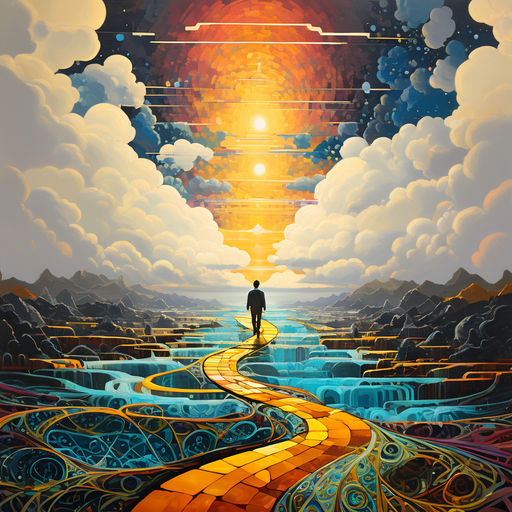
https://linktr.ee/morganosmith

The Crucible of Transformation

Ego Death and Enlightenment in the Story of Yeshu’a

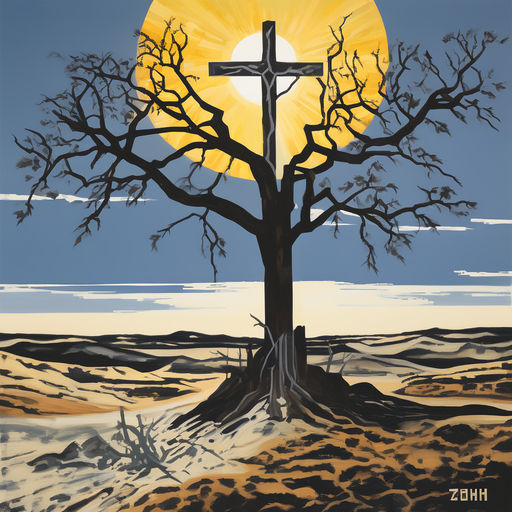
In the narrative of Yeshu’a, commonly known as Jesus Christ, the events leading up to and including the crucifixion and subsequent resurrection offer profound allegorical insights into the journey toward spiritual awakening and enlightenment. This narrative, when viewed through the lens of spiritual and psychological metamorphosis, echoes the concept of ego death — a foundational experience on the path to profound personal transformation and enlightenment.

The Crucifixion: An Allegory for Ego Death

Ego death represents the dissolution of the self-constructed identity, a moment where the illusion of the ‘I’, with all its attachments and identities, is seen through and transcended. In the story of Yeshu’a, the crucifixion symbolizes this intense moment of surrender. It is a vivid depiction of the relinquishment of personal identity, desires, and the very notion of selfhood, akin to the spiritual surrender required for the dissolution of the ego.

This moment is not about physical demise but rather a metaphorical death, where all that is false must be surrendered and ‘crucified’. The agony in the garden of Gethsemane, where Yeshu’a confronts his impending crucifixion, mirrors the inner turmoil one faces when confronting the ego’s dissolution. It’s a profound surrender to a will greater than one’s own, to a state of being that transcends individual identity.

The Resurrection: Enlightenment and Spiritual Awakening

Following the allegory of ego death, the resurrection emerges as a powerful symbol of enlightenment and spiritual awakening. In the aftermath of the ego’s dissolution, a new consciousness is born — one that is not confined by the limitations and illusions of personal identity. This is the ‘resurrected’ state, where one experiences a profound sense of unity with all existence, an unshakable peace, and an intrinsic understanding of one’s true nature beyond the ego.

The resurrection signifies the ultimate triumph over the limitations of the egoic mind, a rebirth into a state of consciousness where love, compassion, and wisdom prevail. It reflects the awakening to a life lived in profound alignment with the universal truths, embodying the essence of nonduality — where the distinction between self and other, life and death, is recognized as an illusion.

Reflections for the Spiritual Seeker

The narrative of Yeshu’a’s crucifixion and resurrection serves as a rich allegorical framework for understanding the journey toward spiritual enlightenment. It challenges us to confront our egoic constructs, to courageously face the dissolution of our self-imposed identities, and to emerge transformed by the experience of our intrinsic, undivided nature.

As spiritual seekers, this story invites us to reflect on our journey towards self-realization, encouraging us to embrace the crucible of transformation and to emerge, like Yeshu’a, reborn into the light of awareness and unity. It is a reminder that true liberation and enlightenment lie not in the avoidance of suffering or the clinging to identity but in the profound surrender and transcendence of the ego.

Morgan O. Smith

Yinnergy Meditation, Spiritual Life Coaching & My Book, Bodhi in the Brain…Available Now!
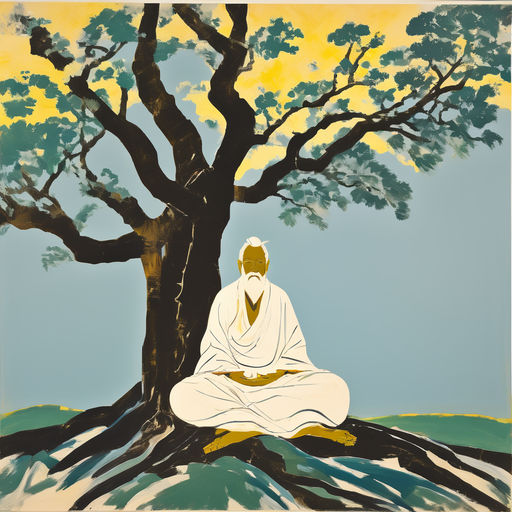
https://linktr.ee/morganosmith

In the Divine Embrace

A Journey Within and Beyond

In the vast, boundless expanse of existence, there lies a profound truth that whispers in the silent spaces of our being. It is a truth that transcends the confines of language and thought, yet is intimately known to each of us: the realization that we are intricately woven into the fabric of the divine.

As seekers on this spiritual odyssey, we commence our quest from the source of all creation, a point of infinite potential that we reverently name God. This origin is not a distant deity, but the very essence of our existence, the core of our being. It is from this sacred wellspring that our journey unfolds.

Our path is one of walking through God, a phrase that captures the essence of our existence as a continuous immersion in the divine presence. Every step we take, every breath we draw, is imbued with the essence of this ultimate reality. In this journey, the mundane becomes sacred, and the ordinary becomes extraordinary, as we perceive the divine in all.

As we traverse this path, a remarkable transformation occurs: we walk towards God, not as a destination, but as an ever-deepening understanding of our true nature. With each step, the illusion of separation dissolves, revealing the oneness that binds all existence. Our journey towards God is thus a journey towards the self, a pilgrimage to the heart of our spiritual essence.

In this profound realization, we come to walk as God. This is not a claim of divine identity in the egoistic sense, but a recognition of our inherent divinity. To walk as God is to embody the qualities of compassion, love, and wisdom that are the hallmarks of the divine. It is to live in a state of nonduality, where the self and the other, the creator and the creation, are seen as one.

This journey is not a linear path but a spiral, where each cycle brings us closer to the core of our spiritual being. It is a journey without distance, for the divine is not a place to reach but a reality to realize. In this realization, we find that we have never been separate from God, for in God we live, move, and have our being.

In conclusion, our spiritual odyssey is a dance with the divine, a journey that takes us from God, through God, towards God, and ultimately reveals that we walk as God. It is a journey of awakening to the truth within us, a call to explore the depths of our divine nature.

Morgan O. Smith

Yinnergy Meditation, Spiritual Life Coaching & My Book, Bodhi in the Brain…Available Now!
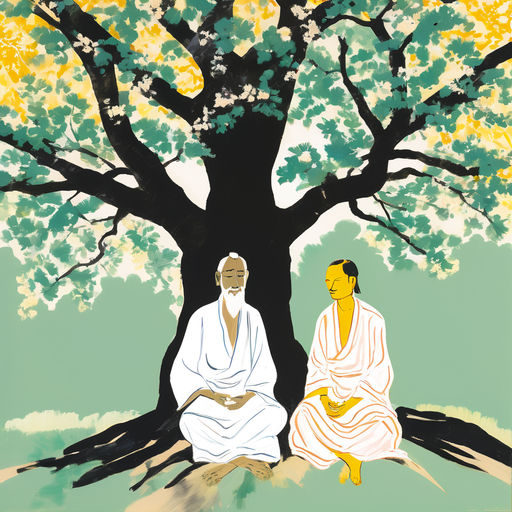
https://linktr.ee/morganosmith

Exploring the Infinite

The Space of Pure Probability

In the vast expanse of our understanding, an enigmatic and profound concept exists the Space of Pure Probability. It is a domain where the lines between the possible and impossible blur, where probabilities and improbabilities coalesce into a singular, boundless continuum.

This concept invites us to delve into the heart of absolute monism, where the distinction between subject and object dissolves. In this space, what we perceive as reality is merely one of an infinite array of potentialities. Our existence, our universe, is but one manifestation in an endless sea of probabilities.

This notion aligns seamlessly with the principles of Eastern philosophy, where the perception of duality is seen as an illusion. In the Space of Pure Probability, this illusion is stripped away, revealing a state of pure being, unbound by the constraints of dualistic thought. Here, every event and moment is not predetermined but a spontaneous expression of the whole.


In contemplating this realm, we are encouraged to consider our own lives as a dance of possibilities. Our choices, actions, and thoughts are threads in the vast web of existence, each contributing to the unfolding of the universe. We are both the creators and the creations, the observers and the observed, participating in the grand orchestration of existence.

The Space of Pure Probability also challenges our understanding of time and causality. In this realm, time is not linear but multidimensional, where past, present, and future coexist and interweave. This perspective offers a profound insight into the nature of reality, suggesting that our linear experience of time is but a limited perception of a much more complex, interconnected reality.

As we journey through our spiritual and philosophical explorations, the concept of the Space of Pure Probability serves as a reminder of the vastness of existence and the limitless potential within each of us. It beckons us to look beyond the apparent, to question, and to open ourselves to the myriad possibilities that life offers.


In embracing this space, we embrace the infinite, stepping into a realm where all is possible, and where the journey of self-discovery and enlightenment continues to unfold in wondrous and unexpected ways.

Morgan O. Smith

Yinnergy Meditation, Spiritual Life Coaching & My Book, Bodhi in the Brain…Available Now!

https://linktr.ee/morganosmith

Maya Unveiled

Understanding the Illusion in Every Gaze

In the intricate dance of life, where perceptions and reality often intertwine, lies the ancient concept of Maya. Rooted deeply in Eastern philosophy, Maya is an idea and an expansive realm of understanding. It invites us to question: What is the true essence of what we perceive? How does the veil of illusion colour our view of the world?

**The Mirage of Perception**

Each moment, we are surrounded by a myriad of stimuli. As interpreters, our senses craft a version of reality that we accept as truth. But this truth is subjective, filtered through the lens of personal experiences, beliefs, and biases. In this way, the world we perceive is not an absolute, but a personal construct. Just as a painter brings forth a landscape from his imagination onto the canvas, we too paint our realities, often unaware that the brush is in our hands.

**The Nature of Maya in Daily Life**

Maya is omnipresent, influencing every aspect of our existence. It shapes our relationships, our joys, and our sorrows. Even our self-identity is a product of this illusion, a constructed narrative we cling to. The roles we play, the labels we adopt, are but temporary garments worn by the eternal self.


**Transcending the Illusion**

In the pursuit of spiritual awakening, recognizing the presence of Maya is a pivotal step. It is in understanding that what we perceive as concrete may indeed be ephemeral. Meditation and mindfulness practices serve as gateways to this realization. As we dive deeper into the realms of introspection, we begin to distinguish the impermanent from the eternal, the illusory from the real.

**Integrating Maya into Enlightenment**

Embracing Maya does not mean rejecting the world. Instead, it involves seeing through the veil, and acknowledging the illusion while engaging with the world. It is about finding harmony between the spiritual and the material, understanding that even in illusion, there is a purpose and a lesson.

**A Journey Beyond the Visual**

Our journey of enlightenment is not about negating our experiences but about transcending their limitations. It involves expanding our consciousness beyond the confines of personal perception, into a space where unity and diversity coexist, where the duality of self and other dissolves.


**Conclusion**

Maya, often misunderstood, is not a barrier but a bridge. A bridge that leads us to question, to seek, and ultimately to understand the profound nature of existence. In every distorted view lies a hidden truth, waiting to be uncovered by the earnest seeker.

Morgan O. Smith

Yinnergy Meditation, Spiritual Life Coaching & My Book, Bodhi in the Brain…Available Now!

https://linktr.ee/morganosmith

Illuminating the Path

Celebrating Black History Month through the Contributions of Black Spiritual Leaders in Advaita Vedanta and Neo-Advaita

In the heart of Black History Month, we turn our focus to the luminous contributions of Black spiritual leaders who have enriched the realms of Advaita Vedanta and Neo-Advaita. This period of reflection and celebration offers a unique opportunity to acknowledge and honour the profound impact of these figures, whose wisdom transcends the boundaries of race, inviting us into a deeper understanding of non-duality and the essence of our true nature.

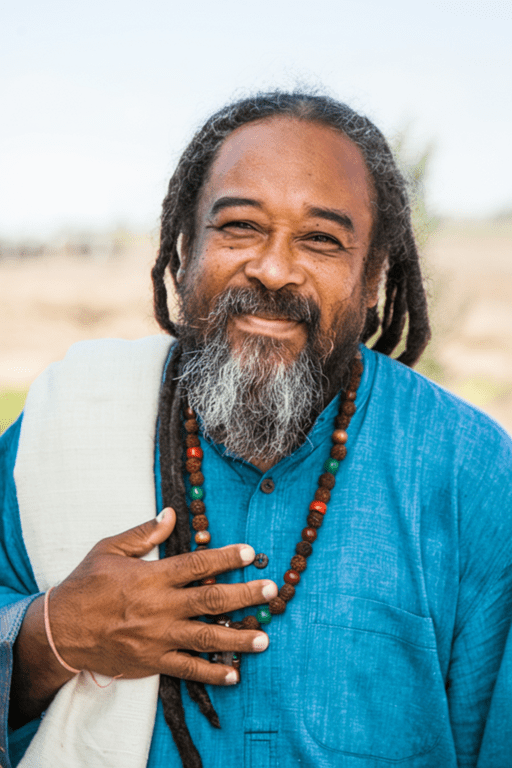
Among the voices that have echoed through the corridors of spiritual awakening, Mooji, a beacon of clarity and compassion, stands out. His teachings, deeply rooted in the principles of Advaita Vedanta, serve as a bridge to self-discovery and enlightenment. Mooji’s approach, characterized by its simplicity and accessibility, has opened doors for countless individuals to explore the depths of their being, beyond the constructs of identity and form.

In the landscape of Neo-Advaita, which simplifies traditional Advaita teachings for contemporary understanding, the presence and insights of Black spiritual teachers are invaluable. Their perspectives offer a rich, multifaceted view of spirituality, unbounded by cultural or racial limitations, encouraging a universal embrace of our shared essence.

The journey of spirituality and enlightenment is profoundly personal, yet universally connected. As we celebrate Black History Month, let us honour the diverse contributions of Black spiritual leaders in Advaita Vedanta and Neo-Advaita. Their legacy is not just in their teachings, but in the inclusive, boundless space they create for all individuals to explore their inner worlds and discover the ultimate truth of their existence.

In recognizing these luminaries, we are reminded that the path to enlightenment is enriched by the diversity of its travellers. Their voices, a symphony of wisdom, continue to inspire and uplift, guiding us toward a deeper, more inclusive understanding of spirituality and non-duality.

As we reflect on the significance of Black History Month, let us carry forward the lessons and insights of these remarkable individuals. Their contributions are a testament to the power of spiritual exploration and the unifying essence of truth, transcending the divisions of race and inviting us all into a collective journey of awakening.

Morgan O. Smith

Yinnergy Meditation, Spiritual Life Coaching & My Book, Bodhi in the Brain…Available Now!
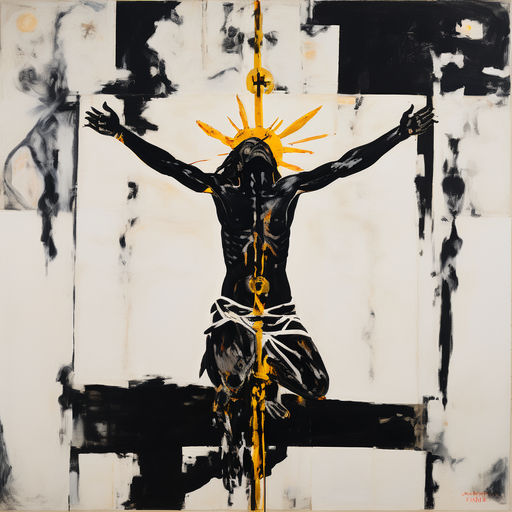
https://linktr.ee/morganosmith

Embracing the Infinite

Understanding Para Brahman

In the realm of spiritual exploration and philosophical contemplation, the concept of Para Brahman stands as a profound enigma. It is a term that transcends the limits of our typical understanding, pushing us into the depths of what might be considered the ultimate reality.

Para Brahman, in its essence, is the embodiment of the formless and the infinite. It is not confined by the physical dimensions we are accustomed to, such as length, height, depth, or width. This absence of form extends beyond the physical, into the realms of emotion, thought, and even the metaphysical. It is devoid of texture, distance, time, space, feelings, emotions, senses, attachments, desires, thoughts, memories, anticipation, smell, temperature, relationships, distinctions, wants, needs, and regrets. This extensive list, however, is not exhaustive but indicative of the boundless nature of Para Brahman.

What makes this concept both intriguing and challenging is the paradox it presents. Para Brahman, while being beyond all these attributes and perceptions, simultaneously encompasses everything that has been mentioned. It is not just the absence but also the presence of all. This paradox forces us to rethink our understanding of existence and non-existence, presence and absence, form and formlessness.


How can something be everything and nothing at the same time? This question lies at the heart of understanding Para Brahman. It compels us to look beyond the dualities that dominate our everyday experiences. In this sense, Para Brahman is not just a concept but an invitation to experience reality in its most unadulterated form.

This exploration is not just an intellectual exercise but a journey toward self-realization. It challenges our deeply ingrained notions of what is real and what is illusion. By contemplating Para Brahman, we delve into a state of consciousness where the distinctions that define our usual experiences dissolve. In this state, we are neither bound by our desires nor limited by our perceptions.

The understanding of Para Brahman brings us to the cusp of spiritual awakening, where the individual self merges with the universal self. It is a state of being that many spiritual traditions aim to realize – a state of pure consciousness, unmarred by the transient nature of physical existence.


In conclusion, the concept of Para Brahman invites us to embark on a journey beyond the confines of our material and psychological limitations. It encourages us to experience the world not just through our senses and thoughts but through a profound understanding of the interconnectedness and the boundlessness of all existence.

Morgan O. Smith

Yinnergy Meditation, Spiritual Life Coaching & My Book, Bodhi in the Brain…Available Now!
https://linktr.ee/morganosmith

The Infinite and Beyond

Contemplating Brahman and Para-Brahman

In the profound depths of Indian philosophy, the concepts of Brahman and Para-Brahman emerge as pivotal ideas that transcend ordinary comprehension, inviting seekers to explore the very edge of cosmic understanding. Brahman is often described as the ultimate reality, the unchanging, infinite, immanent, and transcendent reality that is the Divine Ground of all matter, energy, time, space, being, and everything beyond in this Universe. It is the singularity from which multiplicity flows, the essence that sustains and constitutes the cosmos and its myriad expressions.

Yet, within this already boundless concept lies the hint of something even more ineffable: Para-Brahman. This term goes beyond even Brahman, suggesting a reality that exists beyond the highest conception of the Absolute as known within the limits of human understanding. If Brahman is the white canvas upon which the universe is painted, then Para-Brahman is the very space that holds the canvas, the possibility of canvases yet untouched, and the idea of the canvas itself—both less tangible and more fundamental.

Para-Brahman is not just a step further; it is an exponential leap into the realm of the Absolute’s absolute. While Brahman can be approached through spiritual practice, described in scriptures, and meditated upon, Para-Brahman remains forever beyond the grasp of direct experience and intellectual articulation. It is the ‘Beyond’ in ‘Beyond the Ultimate’, the ‘Transcendence’ in ‘Transcendental’, where even the concept of ‘existence’ loses its footing.

The distinction between Brahman and Para-Brahman is not just of scholarly interest—it offers a radical perspective on the nature of enlightenment and the ultimate goal of spiritual pursuit. It challenges practitioners to question the very foundation of what they consider to be Absolute. In Brahman, we find the dissolution of the ego and the union with the divine; in Para-Brahman, there seems to be no ‘we’ to experience the union, no ‘divine’ to unite with, only an unmanifested potentiality that defies duality and description.

This philosophical delineation beckons us to reconsider the nature of reality and our place within it. It humbles our narrative-driven minds to accept that the ultimate truth may be a mystery that remains forever out of reach, something that can be hinted at but never fully explained or understood. Yet, this is not a cause for despair but an invitation to expand our perception, to live with a sense of wonder, and to find peace in the ineffable mystery that is the grandeur of existence.

In this light, the journey of life transforms into a sublime trek across the expanse of consciousness—with Brahman as the guide and Para-Brahman as the destination that was never apart from us, yet always beyond us. The seeker thus becomes the ultimate pilgrim, traversing an inner universe where questions and answers merge into the silent eloquence of Being.

Morgan O.  Smith

Yinnergy Meditation & My Book, Bodhi in the Brain…Available Now!

https://linktr.ee/morganosmith