Author, Philosopher, Spiritual Teacher, A Lead Facilitator at Sacred Media's Integral Mastery Academy, Founder of Yinnergy Meditation/Neurofeedback, Bodhi Mental Care & Wellness, Co-founder of KeMor Centre for Innovative Development
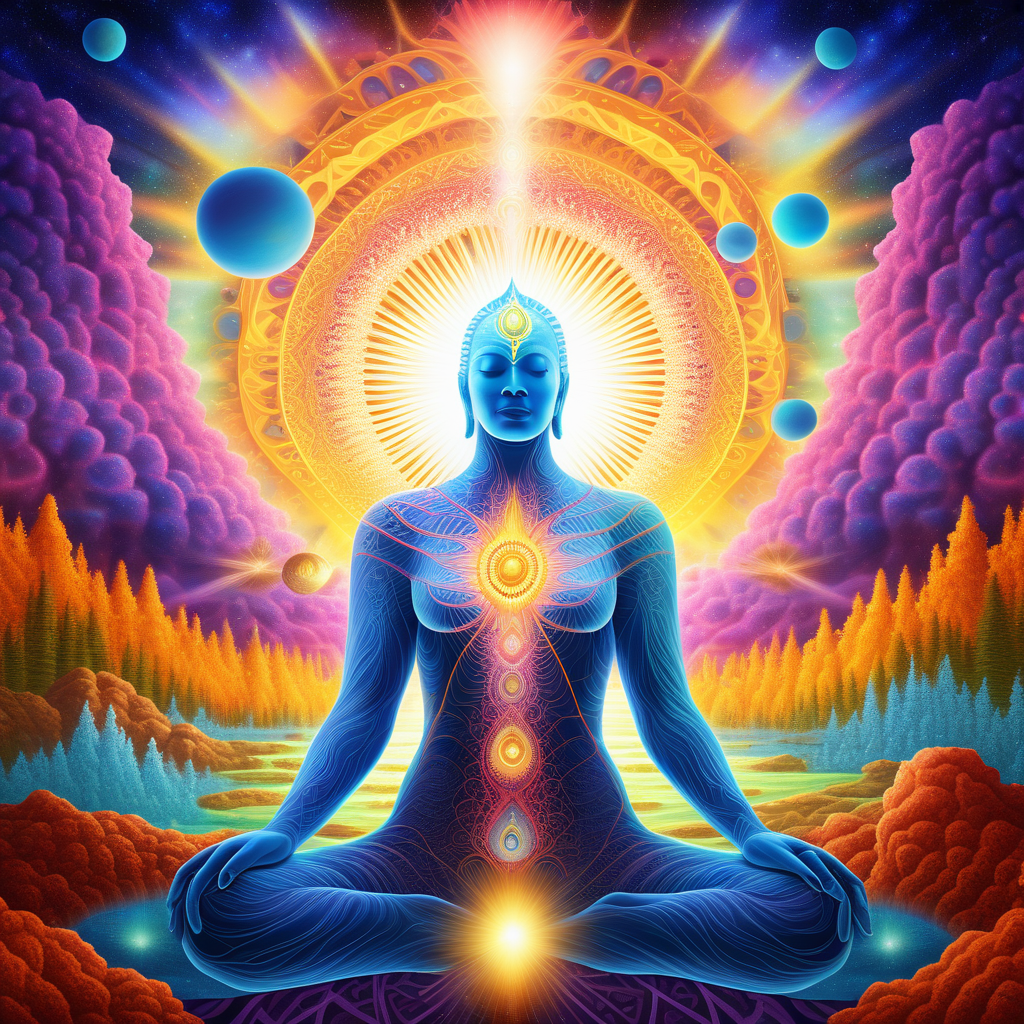
A force lies dormant at the base of your spine—curled, coiled, and waiting. It isn’t a metaphor. It isn’t symbolic. It is the sacred energy of awakening, and when it stirs, nothing remains untouched. This is not personal growth. This is elemental transformation.
Kundalini is not something you believe in—it is something that happens. The moment it rises, it begins its ascent with precision, threading its way through your central channel, shifting the architecture of your being. From the root of your spine to the crown of your head, it dismantles, rewires, and reanimates—not gently, not politely, but necessarily.
Everything once taken for granted—breath, time, self, existence—begins to unravel before your eyes. What seemed obvious collapses. What felt separate merges. What appeared to be you becomes both everything and nothing. You no longer view life from a narrow vantage point defined by fear or habit. Perception stretches beyond the ordinary, and you begin to see not from a body, but through consciousness itself.
This isn’t a philosophical musing. This is Yoga—not the posture, but the primordial union. The word means to yoke, to unify, and Kundalini is the sacred yoking of the individual to the Infinite. It is not ideal. It is not a concept. It is direct experience. It is the breakdown of boundaries until the Divine reveals Itself not as something above or beyond, but as the pulse within.
There is no going back from such a moment. Once touched by that current, life reorganizes itself around a different centre—not a person, not a role, but presence.
And within that presence, the union question vanishes—because you realize there were never two.
Morgan O. Smith
Get Your Free Copy of My Book, Bodhi in the Brain!
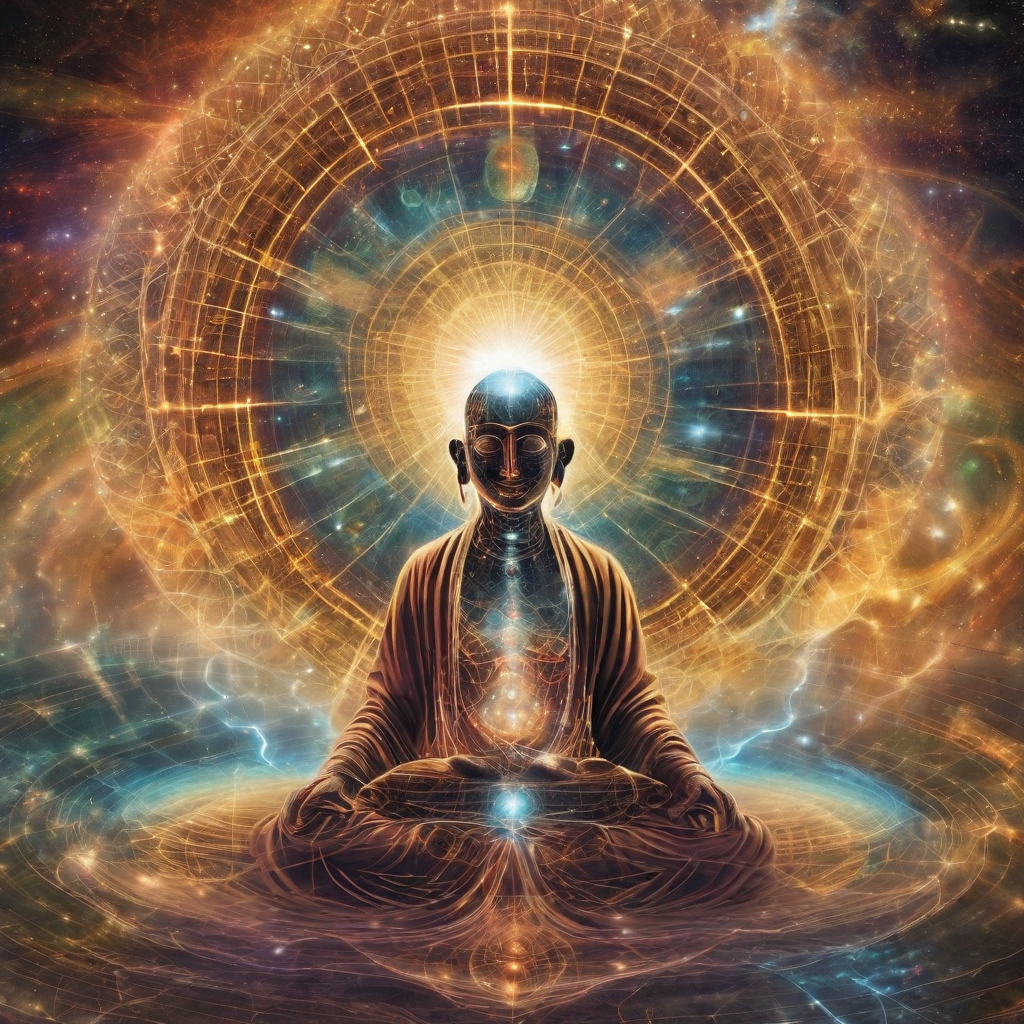
In philosophy and spirituality, the concept of a universal consciousness presents a fascinating and thought-provoking perspective. This idea posits that consciousness pervades every aspect of the universe – from the smallest atom to the vastest galaxy, and even across dimensions beyond our immediate perception. This universal consciousness is not just a passive observer; it is an active, integral part of everything that exists.
When we delve into the experiences described by myself and others who have reached what we refer to as “nondual peak experiences,” we encounter descriptions of a profound realization. In these moments, the boundaries between the self and the cosmos blur, leading to an experience of unity that is both awe-inspiring and deeply humbling. Such experiences suggest that at our most fundamental level, we are not separate entities navigating an indifferent universe; rather, we are this vast, interconnected cosmic tapestry.
This realization of oneness with and as the universe has profound implications. It challenges the conventional notion of individuality and separateness. In recognizing that we are this larger whole, our perspective on life, ethics, and our relationship with the natural world undergoes a significant shift. This holistic view fosters a sense of responsibility not just towards our immediate environment or community, but towards the entire cosmos.
Moreover, the concept of universal consciousness invites us to reconsider our understanding of reality itself. If consciousness is not merely a byproduct of the brain, but a fundamental aspect of the universe, then our exploration of reality must extend beyond the physical and into the realms of the mind and spirit. This opens up new avenues for understanding the nature of existence and our place within it.
As we continue to explore this concept, we are compelled to ask profound questions: What is the nature of this universal consciousness? How does our consciousness interact with it? And what does this interconnectedness mean for the future of humanity and the cosmos?
In conclusion, the idea of a universal consciousness offers a radical yet enlightening perspective on our existence. It invites us to view ourselves not as isolated beings, but as integral components of an awe-inspiring, interconnected universe. This realization has the potential to transform not only our self-perception but also our approach to life, ethics, and our collective future.
Morgan O. Smith
Yinnergy Meditation, Spiritual Life Coaching & My Book, Bodhi in the Brain…Available Now!
As the silent veil of ignorance lifts, a momentous spark of enlightenment ignites within the seeker, unfurling its tendrils across the boundless cosmos. It is said in ancient texts that the rare nondual state of Turiyatitta represents a zenith of spiritual awakening, where the perceived separation between self and the universe dissolves into a serene ocean of oneness. A hypothesis resonating within the modern quantum paradigm posits that this transcendent state mirrors quantum entanglement at its pinnacle, orchestrating a cosmic dance of interconnectedness.
At the juncture of enlightenment, it is conjectured that every particle within the brain, the body, across terrestrial beings, and through the inanimate, entwines in a profound network of entanglement. Like notes in a grand symphony, all entities, all matter, and perhaps even the ephemeral dance of thoughts and consciousness, become orchestrated in a divine, harmonious rhythm that underpins the entire multiverse.
This notion elevates our understanding of Turiyatitta from a mere inner experience to a cosmic event, suggesting that enlightenment transcends the corporeal, resonating across the quantum fabric of reality. Such a realization steers the human spirit towards a profound acknowledgement: as we seek inner illumination, we are, in essence, yearning for a union with the cosmos, a sublime harmony that exists beyond the veil of duality.
The curious intersection of ancient spiritual insight and quantum mechanics unfurls a rich tapestry of exploration. It beckons us to transcend the superficial boundaries of empirical investigation and delve into the metaphysical, to meditate upon the profound interconnectedness that weaves the human experience into the cosmic narrative.
This quest for a deeper understanding of Turiyatitta and quantum entanglement does not merely reside in the realms of philosophical musings; it echoes the ancient call for a universal communion, a unifying essence that seeds within us the potential to transcend the illusory veil of separateness. And as science inches closer to the bosom of mysticism, we find a poetic elegance in the pursuit of truth, a whisper of the cosmos that hums the ancient melody of oneness.
Morgan O. Smith
Yinnergy Meditation & My Book, Bodhi in the Brain…Available Now!
Introduction: In our quest to understand the nature of reality and human consciousness, two frameworks stand out: the nondual perspective and the integral perspective. While they differ in their approach, both offer profound insights and pathways to a deeper understanding of ourselves and the world around us. In this blog, we will dive into the differences, similarities, and the potential interplay between these perspectives, exploring how they can inform our journey of awakening, unity, and integration.
The Nondual Perspective: At the heart of the nondual perspective lies the recognition of fundamental oneness, the dissolution of duality, and the transcendence of the ego self. It invites us to go beyond conceptual thinking and embrace direct experiences of the present moment. In the nondual state, the boundaries between self and other, subject and object, begin to blur, revealing a profound sense of unity and interconnectedness. This perspective often focuses on personal awakening, the dissolution of the ego, and the realization of our true nature.
The Integral Perspective: In contrast, the integral perspective emphasizes the integration of diverse dimensions of reality, including subjective, objective, individual, and collective aspects. It recognizes the limitations of isolated and reductionistic viewpoints and encourages a more comprehensive understanding. The integral framework invites us to embrace multiple perspectives, appreciate complexity, and explore the interconnections between different domains of existence. It aims to address the needs and potentials of individuals and societies as a whole, emphasizing personal and collective growth.
Differences and Similarities: While the nondual and integral perspectives approach reality from distinct angles, they share some key similarities. Both perspectives offer holistic views, acknowledging the interconnectedness and interdependence of various aspects of existence. They both encourage the transcendence of dualistic thinking, recognizing the limitations of binary concepts and inviting us to embrace nuance and inclusivity. Additionally, both perspectives recognize the potential for personal and collective transformation and growth.
Interplay and Synergy: Can a nondual experience lead to an integral perspective? Absolutely. The direct realization of nonduality can provide a foundation for embracing and integrating multiple perspectives. It expands our consciousness beyond ego identity, fostering a more inclusive understanding of reality. The dissolution of duality and the recognition of paradoxical aspects often encountered in nondual experiences can cultivate an appreciation for complexity, a willingness to hold multiple perspectives, and an openness to the integral framework.
Conversely, constant engagement with an integral perspective can also pave the way for a nondual awakening. The expanded awareness and integration of diverse perspectives inherent in the integral framework create fertile ground for transcending dualistic thinking. The recognition of interdependence and exploration of connections between different domains of existence can ultimately facilitate a shift in consciousness towards the nondual state.
Conclusion: The journey of exploring nondual awakening and the integral perspective is a profound and transformative one. While the nondual perspective emphasizes the direct realization of oneness and the dissolution of ego, the integral perspective encourages the integration of diverse perspectives and dimensions of reality. Both perspectives contribute to our understanding of ourselves, others, and the world, offering complementary insights that can deepen our sense of unity and integration. As we embrace the wisdom of both perspectives, we embark on a journey of self-discovery, expansion, and the realization of our interconnectedness with all that is.
Morgan O. Smith
Yinnergy Meditation/Bodhi in the Brain, Available Now!




 Morgan O. Smith