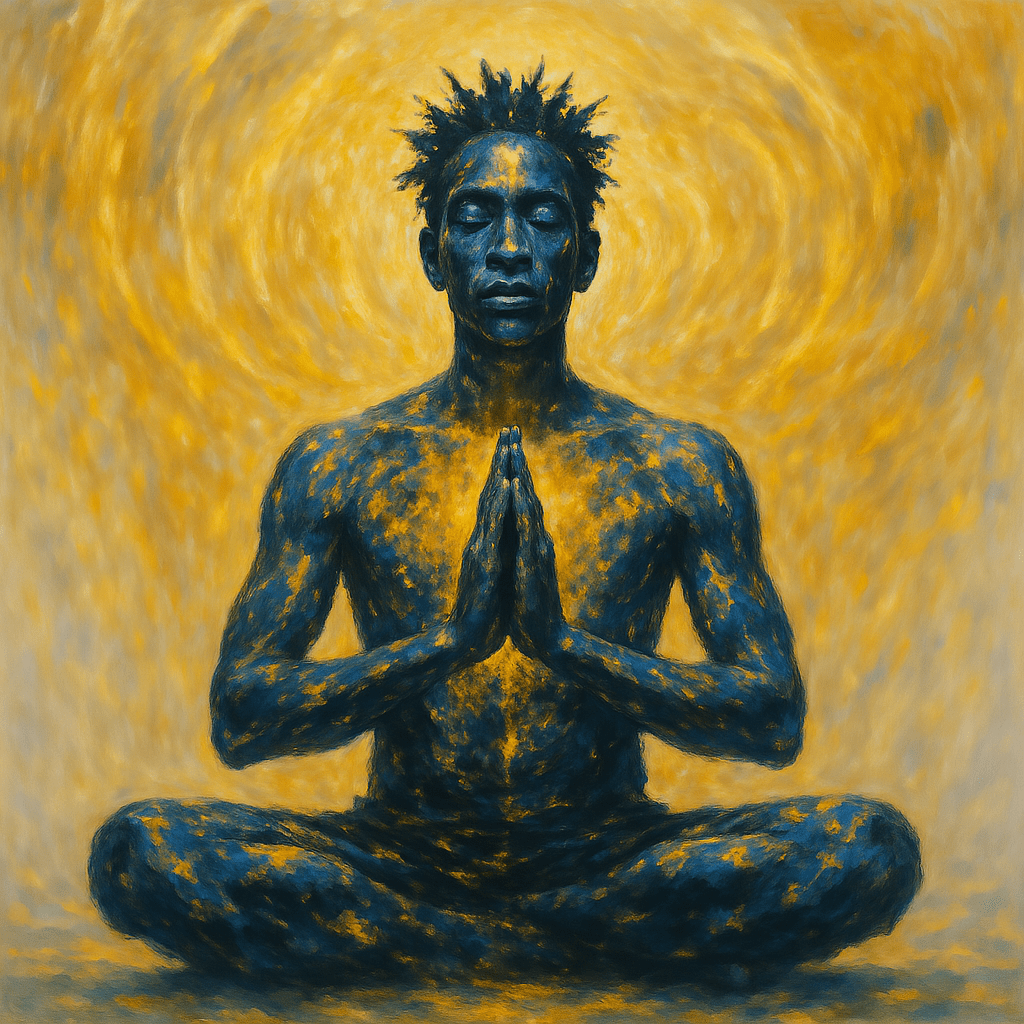
An Integral View of Oneness

From the stillness at the heart of all existence, one perceives that seemingly diverse paths, doctrines, and revelations emerge from a single source. What appears as multiplicity through the lens of human perception rests upon an unchanging, all-pervasive essence. This perspective reveals that every philosophy—grounded in ancient texts, ritual devotion, logical analysis, or direct contemplative experience—arises as one facet of a greater whole.

A Unified Whole

All schools of thought, whether they speak of oneness or duality, share a luminous core. For centuries, Vedanta has investigated this enduring mystery through varied teachings that, on the surface, may seem contradictory. Their deeper aim is to illuminate the infinite Self beyond the limits of language. Some emphasize devotion and a personal relationship with the Divine. Others announce an unqualified unity free of distinctions. Still, others highlight how the One appears as many. Examined in isolation, each approach might feel incomplete. Viewed through the lens of total realization, they function as distinct yet harmonious strands of a single radiant truth.

The Singular Essence of All Religions and Philosophies

Those who probe deeply into the world’s traditions uncover a universal wisdom that echoes across time and culture. The Absolute remains boundless and intimately present, unconstrained by any notion of limitation yet expressing itself as every form and phenomenon. Scriptures, rituals, and teachings are portals opening onto the same unfathomable reality. Symbols and narratives differ, yet their highest objective converges on awakening to the unity underlying all appearances.

Integral Vedanta and the Seamless Field of Reality

All who embrace the synthesis called Integral Vedanta notice that everything finds its place within an indivisible realm that includes both the ineffable void and the manifest universe perceived around us. On the most subtle level, existence reveals neither discrete objects nor separate identities; instead, it unfolds as a continuous interplay of forces within an unbroken expanse. This vision suggests a self-consistent cosmic intelligence that discovers itself in every aspect of creation.

Resolving Paradox Through the Unifying Vision

Where friction appears—between transcendent unity and personal devotion, the formless and myriad forms—Integral Vedanta highlights a reconciling principle. Direct description of this principle often exceeds the scope of conceptual thought. Yet the paradox dissolves seamlessly in the heart of one who perceives no division. Much like how white light refracts into many colors through a prism, the Absolute manifests as countless expressions while remaining undivided at its source.

Living the Integral Understanding

A realized individual effortlessly embodies the insight that all distinctions—spiritual, philosophical, or otherwise—are provisional signposts guiding seekers toward ultimate reality. Compassion and clarity flow abundantly, for there is no perception of otherness. Daily existence reflects this through unwavering openness, spontaneous respect for every path, and gentle acknowledgment of each approach as an essential part of the whole.

The Unspoken Mystery

Words gesture toward oneness but never fully capture its depth. Even so, philosophical analysis and discussion retain their value, as every expression can hint at the ineffable ground of being. Integral Vedanta thereby affirms any sincere method or tradition that directs consciousness toward the underlying truth, regardless of the language or rituals involved.

Conclusion

From the vantage of integral realization, contradictions between different philosophies and faiths reveal themselves as complementary viewpoints rather than obstacles. Religious and philosophical systems serve as windows onto the same vast landscape, each offering a unique perspective on the infinite. The invitation of Integral Vedanta is to recognize and celebrate these perspectives, allowing their synthesis to unveil our shared essence. All modes of exploration—devotional, analytical, experiential, or otherwise—unfold into one luminous understanding of reality’s ultimate nature.

Morgan O. Smith

Yinnergy Meditation, Spiritual Life Coaching & My Book, Bodhi in the Brain…Available Now!
https://linktr.ee/morganosmith

The Unutterable Silence of Awakening

Awakening defies articulation. To attempt to describe it is to attempt to capture the wind in your hands. Words fall short, no matter how poetic, for what unfolds in the direct experience of awakening exists beyond language, beyond thought, beyond even the sense of “I.”

Many speak of awakening with eloquence, detailing radiant visions or profound realizations. Yet, these narratives, however beautiful, point not to the experience itself but to the mind’s interpretation of it. The mind, ever the storyteller, attempts to reduce the infinite into the finite—an impossible task. To truly know awakening is to step into a space where words crumble, where the sense of separation dissolves, and where only silence remains.

Awakening isn’t an event to possess or explain; it is an unravelling. It feels like the collapsing of a boundary you didn’t realize was there. What remains is indescribable, for there is no longer a “you” separate from it to describe it.

This doesn’t mean one cannot share insights or reflect on the shifts that arise after awakening. But those insights are not awakening itself—they are the ripples of an unfathomable stillness. Awakening is not what you think it is; it cannot be. The moment you attach a concept or image to it, you have moved away from its essence.

So, if you’ve managed to neatly define your spiritual awakening, pause. Ask yourself: who is telling this story? Is this the awakening, or is this the ego dressing itself in spiritual robes? Authentic awakening is not something you have—it is something you are. And when the truth of that hits, no words will suffice.

In the wake of awakening, the need to articulate dissolves. Silence becomes the truest expression of the infinite. Perhaps this is why the great sages often spoke so little, allowing their presence to say what words never could.

Morgan O. Smith

Yinnergy Meditation, Spiritual Life Coaching & My Book, Bodhi in the Brain…Available Now!

https://linktr.ee/morganosmith

Inner Demons Turning Divine

What if the aspects of ourselves we fear the most are not meant to be exiled, but embraced? What if the so-called demons lurking in our psyche are merely misunderstood fragments of divine potential? This idea challenges conventional narratives of good versus evil, offering instead a profound opportunity for transformation.

The concept of demons often conjures images of malevolence and chaos, forces to be battled or suppressed. Yet, what we resist only persists, festering in the shadows of our subconscious. These “demons” may not be enemies to conquer but rather exiled parts of ourselves calling out for integration. They represent unmet needs, unresolved traumas, or unexpressed desires—the raw materials of our awakening, waiting to be alchemized into wisdom.

Consider anger. It is often labelled a destructive force, but beneath its surface lies a potent energy capable of fueling change. Anger can signal where boundaries have been violated or where injustice has been witnessed. When examined with awareness, it transforms from a blind rage into a catalyst for courage and action. The same applies to fear, envy, or despair. These emotions hold a mirror to the places where we feel disconnected from our true nature. Rather than condemning them, we can engage with them as messengers, seeking the divine spark hidden within their depths.

Spiritual traditions across cultures recognize this transformative potential. In Hinduism, Kali, the fierce goddess, embodies destruction and creation simultaneously. She is terrifying in her form yet revered for her power to dismantle illusion and birth truth. Similarly, Tibetan Buddhism offers practices for transforming wrathful deities into benevolent guides, illustrating that even the most frightening forces can reveal their sacred essence when approached with reverence.

On a personal level, this alchemy requires radical honesty and compassionate inquiry. When we cease to judge our inner demons and instead seek to understand them, we discover their hidden gifts. Shame may reveal a yearning for authenticity, while doubt might lead us to question limiting beliefs. By shining the light of awareness into the shadow, we liberate these energies and integrate them into our wholeness.

The path of transformation is not about erasing darkness but about learning to dance with it. Every demon holds a seed of divinity, and every shadow, when embraced, becomes a source of light. By acknowledging this, we dismantle the illusion of separation within ourselves and open to the vast, unified potential of our being.

Let us not fear our inner demons but recognize them as divine initiators, guiding us toward deeper self-knowledge and spiritual growth. Their presence invites us to reclaim the parts of ourselves we have abandoned, making us more complete, compassionate, and alive.

When we learn to see through the eyes of love, nothing remains unworthy of redemption—not even our darkest shadows.

Morgan O. Smith

Yinnergy Meditation, Spiritual Life Coaching & My Book, Bodhi in the Brain…Available Now!

https://linktr.ee/morganosmith

A Sacred Offering to Mankind

The phrase “dark night of the soul” evokes an existential reckoning, a confrontation with the deepest shadows within us. It is an intimate unravelling, a journey where the self is stripped of its illusions, attachments, and certainties. For many, this process feels like an unbearable plunge into suffering. Yet, it holds the potential to reveal a profound truth: the dissolution of the false self and the emergence of an awareness that transcends individual identity.

Taking on the pain and suffering of all mankind might seem like an impossible burden, yet it is precisely what this experience mirrors. It is not about martyrdom or an exaggerated sense of personal responsibility; instead, it speaks to the interconnected nature of all existence. In the depths of this dark night, the boundaries between “self” and “other” blur, allowing one to feel the collective anguish of humanity as their own.

This universal suffering is not a punishment but an invitation—a chance to awaken to the profound unity underlying all forms of separation. By embracing this shared pain, something extraordinary occurs: the heart begins to open, compassion takes root, and the seeds of wisdom sprout in the soil of surrender. The dark night asks, “Can you hold this pain without fleeing, without clinging to explanations, and without identifying with the suffering itself?”

When one says, “This suffering is a small price to pay,” it reflects a realization born of the dark night: the personal self is only a sliver of the infinite whole. In this light, suffering is no longer seen as a problem to solve but as a process to embrace. It transforms from an adversary into a teacher, pointing beyond the veils of duality to the indivisible unity of all that is.

The paradox of this experience is that as one holds the weight of the world’s suffering, it dissolves into something lighter than air. In letting go of resistance, the pain no longer feels like a prison. Instead, it becomes a portal to freedom—a space where all things are seen as perfect, even in their imperfection.

Emerging from the dark night does not mean returning to an unblemished sense of joy or comfort. It means carrying forward an alchemical knowing: the world’s suffering and its beauty are two sides of the same coin, inseparable and equally sacred. This realization births a new kind of strength—a quiet, humble courage that arises not from the need to control life but from a deep trust in its unfolding.

For those navigating this terrain, know that the dark night is not an end but a beginning. It is not a punishment but a grace, albeit one cloaked in shadows. It reveals that the pain and suffering of all mankind, though heavy, are but a small price to pay for the boundless freedom and love that emerges when the illusion of separation dissolves.

Morgan O. Smith

Yinnergy Meditation, Spiritual Life Coaching & My Book, Bodhi in the Brain…Available Now!

https://linktr.ee/morganosmith

The Moment of Awakening

Everything you see in existence is the product of an enlightened mind.

What happens in the precise moment of spiritual awakening? Words struggle to capture the boundlessness of that instant, but we can attempt to point toward the experience—like a finger directing attention to the moon, though never the moon itself.

All at once, the illusion of separation collapses. The lines drawn between “self” and “other,” between “here” and “there,” dissolve into an unbroken field of awareness. The mind, conditioned to cling to duality, surrenders its grip. What remains is not something new but something utterly timeless—what has always been.

This awakening is not a journey forward but a remembering. The veil of forgetfulness lifts, and the recognition strikes like lightning: everything you thought was “out there” is arising from within you. You see, not with the eyes but with the essence of Being itself, that all existence is the radiant emanation of a single conscious source.

This realization cannot be forced or manufactured. It is beyond the mind’s schemes and desires, a gift that arises when all effort falls away. There is no drumroll or grandiose announcement. There is only the silent immensity of presence—ordinary, and yet so complete that it feels as though the entire universe holds its breath.

What follows is often described as a paradox. You simultaneously feel as though you have become nothing, a formless void, and yet you also feel as though you have become everything. The birdsong is not separate from you. The breeze is not separate from you. Even the sorrow of the world beats within the rhythm of your own heart.

The clarity of this moment cannot be undone, though its intensity may soften as the mind reasserts its patterns. Yet something profound has shifted. You know, deep in your marrow, that existence is not fragmented. Every form and phenomenon, no matter how mundane or miraculous, is recognized as the outpouring of an enlightened mind.

To those who stand at the edge of this realization, clinging to the safety of concepts, there may be fear. The dissolution of “me” feels like annihilation. But on the other side of this fear is a freedom that cannot be described, only lived. The discovery is not that “you” are gone but that who you are is not confined to this fleeting identity. You are the stillness, the witnessing presence behind it all.

Everything you see in existence is the product of an enlightened mind—not as a creator separate from creation, but as the creative force manifesting itself endlessly. Every atom, every star, every fleeting thought is an expression of this unity, arising and dissolving within the infinite expanse of your true nature.

Profound awakening does not grant you something you lack. It reveals that nothing was ever missing. The world as you see it was never apart from you; it was you all along.

Morgan O. Smith

Yinnergy Meditation, Spiritual Life Coaching & My Book, Bodhi in the Brain…Available Now!

https://linktr.ee/morganosmith

What’s Holding This Together?

What if the world you experience is not held together by physical laws, but by the subtle yet profound force of imagination? While science offers us equations and frameworks to explain existence, imagination provides the unspoken blueprint from which those frameworks arise. This is not mere fantasy or whimsical daydreaming; it is the power of consciousness engaging with its boundless potential.

Reality, as it appears, is an intricate interplay of perception and conception. The moment you imagine something, a field of possibility opens, and through observation, the imagined begins to crystallize into what feels real. What you call “reality” is not separate from imagination; it is imagination solidified through awareness.

At its highest level, imagination ceases to be personal. It becomes universal, aligning with what some might call ultimate reality—existence as it is, unfiltered and unbound by distinctions of subject and object. Here, the act of imagining dissolves into pure being. What remains is not a person imagining, but imagination itself realizing its infinite nature.

The question arises: what does it mean to truly live this understanding? It means acknowledging that your thoughts and imaginings are not trivial; they are active participants in the shaping of your experience. Yet it also means surrendering the egoic notion of control. Imagination, in its ultimate sense, flows from a source beyond the personal. To live as imagination itself is to align with the unfolding of reality without resistance, without clinging to concepts of “my imagination” or “my creation.”

This dynamic interplay of imagination and reality invites a profound freedom. It suggests that your suffering is not a fixed condition, but a construct born of an imagined limitation. By recognizing the fluid nature of what appears solid, you begin to see life as it is: a luminous, creative dance, eternally recreating itself in the space of now.

When the distinction between imagination and reality dissolves, so too does the sense of separation. What remains is the realization that the ultimate imagination and ultimate reality are the same—a seamless, boundless wholeness in which everything arises and dissolves.

Morgan O. Smith

Yinnergy Meditation, Spiritual Life Coaching & My Book, Bodhi in the Brain…Available Now!

https://linktr.ee/morganosmith

The Source of All Cause and Effect

Who and What Is the Source of All Cause and Effect?

The eternal question arises: who or what governs the intricate dance of cause and effect? Is it me, you, everyone, or everything? Perhaps it is all of these and none of them simultaneously. This exploration leads us to a profound realization: the source is not separate from the flow, yet it transcends it.

Cause and effect are not isolated events. They are interconnected, forming an indivisible whole. To search for the source is to embark on a journey into the depths of consciousness itself. The mind craves a definitive answer, a singular origin to label, but the truth eludes such simplicity. It is neither here nor there, yet it manifests everywhere.

Every action we take, every thought that arises, ripples outward into the fabric of existence. Yet the source of these ripples does not lie solely in the individual. It is the interplay of infinite factors—the unmanifest potential giving birth to form and the dissolution of form back into stillness. This interplay is the source, and we are simultaneously its participants and expressions.

What does this mean for our experience of life? It calls for a radical shift in perspective. The ego sees itself as a doer, the originator of action and the controller of outcomes. But this belief dissolves when one observes deeply. The body breathes, the heart beats, and thoughts arise—all without volition. The same intelligence orchestrates the universe’s movements, from the spinning of galaxies to the opening of a flower.

To recognize that “me, you, everyone, and everything” is the source is to dissolve the illusion of separation. It is to see that cause and effect are not linear but cyclical, interwoven, and eternal. We are not spectators of this process. We are in the process.

This realization invites us to live with humility and grace. Instead of clinging to control or outcomes, we surrender to the flow of life, trusting in the intelligence that governs all things. In this surrender, we find freedom—not as passive observers, but as conscious participants in the dance of existence.

The question remains: who or what is the source of all cause and effect? It is both a question and an answer. It is not a thing to grasp but an experience to embody. You are the source. I am the source. The source is all there is.

Morgan O. Smith

Yinnergy Meditation, Spiritual Life Coaching & My Book, Bodhi in the Brain…Available Now!

https://linktr.ee/morganosmith

The Catalyst for the Ego’s Demise

The experience often referred to as “ego death” is not the obliteration of the self, but rather the dissolution of its illusions. The ego, a construct woven from the threads of identity, attachment, and fear, functions as a survival mechanism. It clings to roles, titles, and the narrative of separation to sustain its existence. Yet, this clinging obscures the deeper truth of who we are—a boundless consciousness that cannot be confined by labels or stories.

Ego death is not an event brought about by force, but a consequence of profound surrender. It arises when the conditions are ripe, often catalyzed by deep meditation, spiritual awakening, or transformative life experiences. These moments of clarity reveal the ego for what it is: a temporary construct, a shadow cast by the mind in its attempt to define the undefinable.

The catalyst for this unravelling often comes disguised. It may appear as a crisis—a moment when the identity we have constructed no longer holds up against the weight of reality. It may manifest as awe, where the boundaries of self dissolve in the face of something greater than the mind can grasp. Sometimes, it is the gradual erosion of ego through years of contemplation and self-inquiry, as if the winds of awareness slowly wear away the stone of selfhood.

The process of ego death can feel terrifying. The ego perceives its dissolution as annihilation, a threat to its very existence. Yet, for the one who witnesses this unravelling, it is liberation. What is revealed is not a void, but fullness—an infinite presence, free of the limitations imposed by the ego’s grip.

Paradoxically, the ego’s demise does not result in the loss of individuality, but a clearer expression of it. Freed from the distortions of fear and attachment, the individual becomes a unique channel for universal consciousness. Actions flow not from a sense of lack or separation, but from wholeness and authenticity.

This death of the ego is not a single moment, but an ongoing practice of letting go. It requires vigilance and a willingness to face the shadows that linger in the mind. Each time the ego asserts itself through judgment, resistance, or attachment, it offers an opportunity to recognize its presence and release its hold.

The catalyst for the ego’s demise is ultimately the realization that it was never truly alive. It is a phantom, a mirage that dissolves when illuminated by the light of awareness. In its absence, what remains is not emptiness, but the unshakable truth of being—a truth that was always present, quietly waiting to be revealed.

Morgan O. Smith

Yinnergy Meditation, Spiritual Life Coaching & My Book, Bodhi in the Brain…Available Now!

https://linktr.ee/morganosmith

Your Very Own Face

The Face of God Is Your Very Own Face Turned Inside Out

What if the divine is not something to be discovered but something to be remembered? Imagine that every search for the sacred is a quiet whisper urging you to turn your gaze inward—not as a way to find answers, but to dissolve the very questions themselves. The face of God is not hidden; it is simply turned inside out.

Consider for a moment the paradox of identity. We spend our lives constructing an idea of “self,” a fragile architecture built from memories, labels, and stories. This structure feels solid, yet beneath it lies a boundless vastness—a formless presence that defies description. That formlessness is the essence of God. It is not separate from you but exists as the very foundation of your being. When you turn yourself inside out, you don’t find something “other.” You find the unchanging witness, the infinite silence in which all of life unfolds.

The journey to realize this truth often feels like an unlearning. The more you let go of defining yourself, the closer you come to recognizing the divine nature within. It is not an external force judging or saving; it is the open awareness of experiencing life through your eyes, breathing life through your lungs, and yet remaining untouched by your stories of limitation.

This realization is not confined to moments of meditation or spiritual awakening. It reveals itself in the simplicity of everyday experiences—a child’s laughter, the stillness of a forest, or the quiet ache of longing. These glimpses call you to see that everything, including your own struggles and joys, is an expression of that infinite presence. The face of God is both the mystery and the mirror, reflecting your true nature beyond the constraints of identity.

The question is not how to find God, but whether you are willing to recognize that you are God remembering itself. This recognition is not a thought or a concept; it is a felt experience, a profound knowing that arises when the mind quiets and the heart opens.

As you turn your awareness inward, notice how the boundaries between self and other begin to blur. The separate “I” dissolves, and what remains is not just emptiness but fullness—an eternal oneness where the face of God and your own face are indistinguishable.

The invitation is clear: stop seeking and start seeing. The divine has never been elsewhere. It has always been here, waiting patiently as the silent witness of all that you are.

Morgan O. Smith

Yinnergy Meditation, Spiritual Life Coaching & My Book, Bodhi in the Brain…Available Now!
https://linktr.ee/morganosmith

The Subtle Distinction

Peak Experiences vs. Spiritual Awakening

The landscape of spiritual growth is vast and often misunderstood. Many conflate spiritual peak experiences with spiritual awakening, yet these are distinct phenomena. A spiritual peak experience, whether catalyzed by meditation, psychedelics, or moments of profound awe, is an intense, fleeting encounter with an elevated state of consciousness. While these moments can feel transformative, they are often temporary and lack the enduring shift in perception that characterizes a true awakening.

A spiritual awakening, in contrast, is a fundamental reorientation of one’s inner world. It is not simply about feeling interconnected or glimpsing higher states of being—it is about a deep, unshakeable realization that dissolves the boundaries of self, often leaving the individual profoundly changed. This shift is challenging to articulate and even harder to cultivate intentionally.

When someone describes an extraordinary experience induced by psychedelics, they are often recounting a peak experience. These moments may break through the ordinary, offering glimpses of unity or clarity, yet they seldom transcend into awakening. Psychedelics can open doors, but walking through them—truly integrating the lessons into a lasting transformation—is a rarer and more demanding process.

True awakening can occur with or without external aids, but it is exceedingly rare. It arrives unbidden, often accompanied by profound shifts in understanding and perception. Unlike peak experiences, awakening isn’t just a momentary insight—it is an enduring transformation of consciousness. Moreover, even fewer awakenings culminate in spiritual enlightenment, a state of being that transcends duality entirely.

Enlightenment, often romanticized, is not an experience but the dissolution of the experiencer. It is the culmination of awakening, where the distinction between self and other evaporates, and one rests fully in the infinite. However, reaching this state requires not only grace but profound surrender and integration over time.

The journey between peak experiences, awakening, and enlightenment is a spectrum. Each step has value and serves a purpose, yet conflating these stages can obscure the nuances of spiritual growth. Understanding these distinctions invites us to approach the path with humility and clarity, appreciating the profound while striving for the transcendent.

Morgan O. Smith

Yinnergy Meditation, Spiritual Life Coaching & My Book, Bodhi in the Brain…Available Now!

https://linktr.ee/morganosmith