Author, Philosopher, Spiritual Teacher, A Lead Facilitator at Sacred Media's Integral Mastery Academy, Founder of Yinnergy Meditation/Neurofeedback, Bodhi Mental Care & Wellness, Co-founder of KeMor Centre for Innovative Development
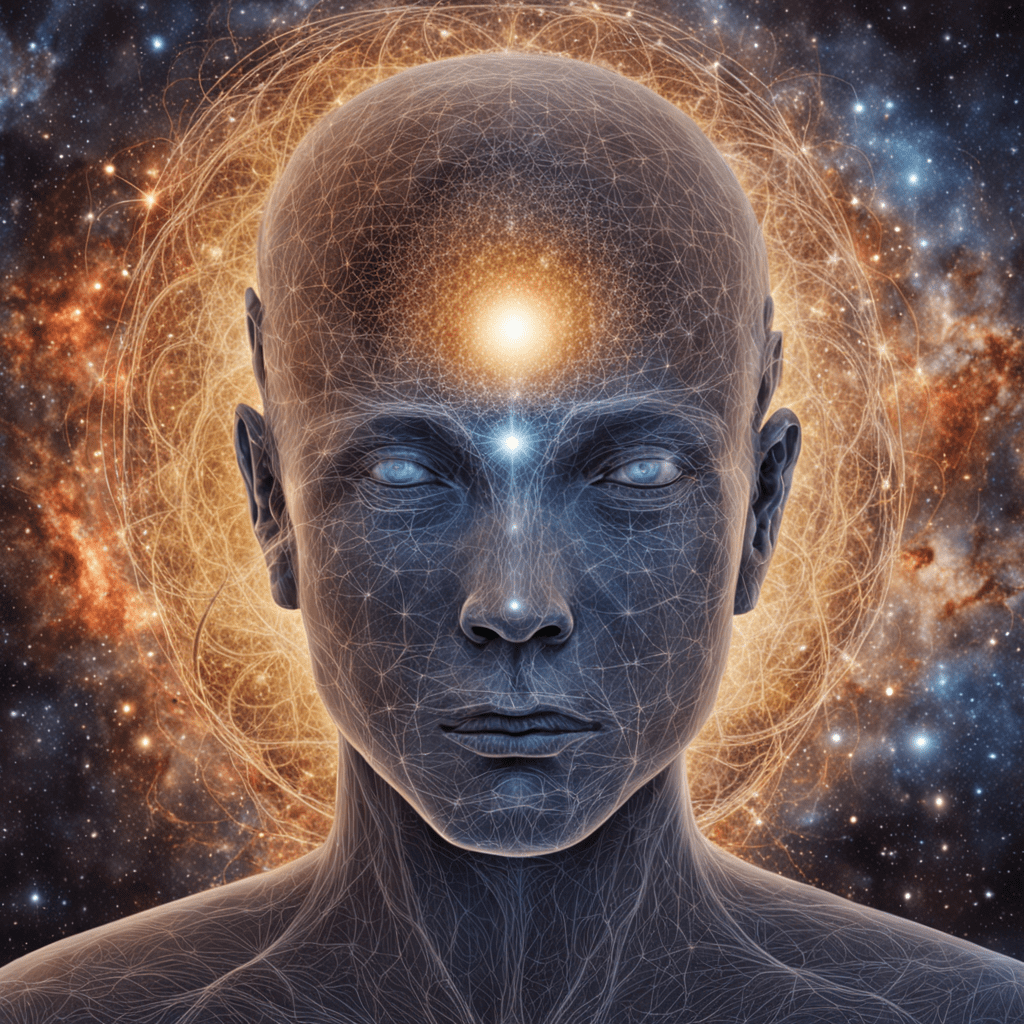
The world often feels like a series of separate entities—discrete phenomena with their own rules and boundaries. Yet, what if this apparent fragmentation is only a surface-level illusion? When you step beyond appearances, a profound truth emerges: energy and matter, gravity, time and space, and even the universe itself, are all contained within Consciousness.
This understanding is not a conceptual abstraction but a recognition that transforms how reality is experienced. Consciousness—capital “C”—is not a mere byproduct of the brain, nor is it limited to individual awareness. It is the boundless source within which all forms and phenomena arise and dissolve. Everything, from the smallest particle to the vast expanse of galaxies, is perceived by Consciousness and exists within it.
Energy and matter appear tangible, yet they are patterns within Consciousness, expressions of infinite intelligence that animates existence. Gravity, which binds the cosmos, is bound by the formless, all-encompassing awareness. Even time and space—those dimensions we rely on to orient our lives—are constructs of Consciousness, giving form to the formless, making the eternal appear temporal, and the infinite seem measurable.
This raises a deeply intimate question: if all arises within Consciousness, then who or what are you? Are you merely a transient being navigating a vast universe, or are you the infinite, witnessing its own unfolding through countless forms?
When this realization takes root, the boundaries between self and other dissolve. Life is no longer experienced as a struggle to control external forces but as a harmonious expression of the one, indivisible Consciousness. Challenges are reframed, not as obstacles imposed by an external world, but as waves moving within the ocean of awareness.
Awakening to this truth does not mean retreating from life’s experiences. Instead, it means living them fully, recognizing that they are temporary expressions of the eternal. Consciousness contains it all: the joy and the sorrow, the form and the void, the stillness and the motion. And yet, Consciousness itself remains untouched, vast, and free.
To rest in this understanding is to live without fear, to see all existence as sacred, and to embrace the paradox of being both nothing and everything.
Morgan O. Smith
Yinnergy Meditation, Spiritual Life Coaching & My Book, Bodhi in the Brain…Available Now!
Nondual suchness, the ground of all being, appears as duality—not as a mistake, but as an exquisite unfolding of its nature. This dynamic play of form and formlessness is not a separation, but a movement within unity, a way for the infinite to experience itself through the finite. This paradox, where oneness expresses itself as multiplicity, invites profound contemplation.
Duality arises as the perceivable world of contrasts: light and shadow, self and other, birth and death. Yet, these distinctions are mere appearances, like waves on the ocean. Beneath them lies the seamless nondual reality, unmoving and eternal. Why, then, does suchness manifest itself in this manner?
The answer lies not in concepts but in direct experience. Suchness manifests as duality to embark on a journey of rediscovery. The world of form becomes a mirror in which the formless can witness itself. This is the essence of the human experience: a seeming separation that eventually dissolves into the realization that the observer and the observed, the seeker and the sought, are one.
This process is neither linear nor bound by time. It is an eternal play, where the unmanifest takes form and, through the constraints of duality, rediscovers its boundless nature. This unfolding is the essence of life itself—an ongoing revelation of unity within multiplicity.
The search for self is not a problem to be solved but a mystery to be embraced. Each moment offers an opportunity to dissolve the illusion of separation and recognize the timeless reality of suchness. The ordinary becomes extraordinary when seen through the lens of nonduality, where the play of duality is understood as a dance of wholeness seeking itself.
Recognizing this truth liberates the mind from its grasping and aversion. The journey of duality becomes an exploration, not a burden. Life, with all its joys and sorrows, becomes a sacred expression of the infinite exploring itself.
To awaken to this is to realize that the search itself was never necessary, for what was sought was always present, always whole. The seeker dissolves, leaving only the suchness that was always there—silent, infinite, complete.
Morgan O. Smith
Yinnergy Meditation, Spiritual Life Coaching & My Book, Bodhi in the Brain…Available Now!
There’s a flavour so profound, so complete, that a single bite satisfies every craving. Mystics call it “One Taste.” It’s the ultimate donut—shaped as a torus, mirroring the infinite, self-sustaining design of the universe itself. One bite of this cosmic delicacy and the hunger for more dissolve forever.
The torus represents the flow of all existence. Energy moves outward from the center, loops around, and folds back into itself—a continuous, unbroken cycle. Life itself arises and returns through this geometry, reflecting the interconnected nature of all things. When you take that metaphysical bite, it’s not just a snack; it’s communion with the whole.
The Flavour Beyond Flavour
This donut isn’t ordinary. It isn’t made of flour, sugar, or butter; it’s composed of awareness, presence, and unity. That first bite unveils the truth that all flavours—whether bitter or sweet, spicy or bland—are variations of one eternal essence.
You don’t just taste it; you become it. This realization dissolves the endless craving for more, the need to acquire, achieve, or complete. One bite and the existential hunger that drives human striving come to a halt. You’re no longer searching for fulfillment because you’ve already discovered that you are fulfillment.
The Geometry of Wholeness
The torus is a profound metaphor for life’s completeness. Everything flows from the center, and everything returns to it. This shape is mirrored in the structure of galaxies, the energy fields of the Earth, and even the patterns of human consciousness. Taking that first bite reveals that the “self” and the “universe” are not separate entities but expressions of one unified flow.
Once this truth is seen, nothing is ever the same. Life continues as it always has, but the endless striving for meaning and satisfaction falls away. The bite grants freedom, not by adding anything new, but by revealing what was always present: the infinite within the finite.
Beyond the Hunger
This realization doesn’t strip life of its richness; it enhances it. You’ll still savour the sweetness of love, the tang of sorrow, and the spice of adventure, but you’ll no longer mistake these flavours for something separate from yourself. The donut is no longer outside you; it’s everything you’ve ever been.
Craving transforms into gratitude. Striving gives way to stillness. You taste each moment fully, knowing that the universe itself is unfolding through you.
Why You’ll Never Have to Eat Again
One bite of this donut doesn’t mean rejecting life. It means living with such profound intimacy that every experience, no matter how ordinary, carries the flavour of infinity. This isn’t about ascetic denial or detachment—it’s about tasting the sacred in every breath, step, and interaction.
When you’ve tasted the ultimate donut, hunger ceases because there’s nothing left to grasp. Fulfillment isn’t in the future; it’s here. Every moment is saturated with the One Taste, echoing the truth that you and the universe are the same.
Take that bite, and savour it. Everything you’ve ever sought is already within it.
Morgan O. Smith
Yinnergy Meditation, Spiritual Life Coaching & My Book, Bodhi in the Brain…Available Now!
In the quiet depths of existence, there lies a paradox that many struggle to reconcile. Darkness is often shunned, relegated to the shadows of our awareness, and misunderstood as something to escape or avoid. Yet, within this shadowed realm exists a profound luminosity, a radiance that surpasses even the most blinding light. It’s a subtle brilliance—silent, invisible, but undeniable for those who dare to look beyond the surface.
Darkness is not the absence of light but its origin. It is the womb that cradles potential, the fertile ground where all things come to be. Darkness envelops us with a kind of raw intimacy, inviting us to release attachments to form and identity. It is the space where ego dissolves, where judgments fade, and where we can finally meet ourselves without the filters we have spent lifetimes building. Here, in the stillness, a new kind of light emerges—a light that is not separate from the dark but intertwined, indistinguishable from it.
Consider that every act of creation begins within the void. The artist stares at a blank canvas, the writer faces a blank page, and the thinker sits with a blank mind. It is only by surrendering to the unknown, to the formless, that something profound can emerge. Darkness doesn’t just consume or diminish; it adds depth, layers, and meaning. It carves out spaces within us, allowing us to perceive dimensions of ourselves and the universe that we could never touch through brightness alone.
This radiant darkness reflects the essence of life itself. We are beings that expand and contract, that are filled and emptied in cycles. Every breath, every heartbeat, every experience is a reminder of this cosmic dance of giving and receiving, of adding to and taking away. When we stop resisting this rhythm, we find that what we once perceived as shadows are simply reminders of our potential, our uncharted depths.
To shine as darkness is not to reject light but to transcend the duality of light and dark altogether. It is to recognize that true illumination doesn’t come from escaping or vanquishing shadows but from integrating them. This process transforms our understanding, allowing us to embody a different kind of luminosity—a light that isn’t bound by external visibility but shines from an unshakable inner knowing.
We are both the night and the stars within it, shaping and reshaping ourselves continuously. As we embrace the shadows within, we awaken to a deeper reality, one where every facet of existence has its rightful place. This acceptance, this deep union with both light and dark, is what ultimately enables us to shine brighter than light itself.
Morgan O. Smith
Yinnergy Meditation, Spiritual Life Coaching & My Book, Bodhi in the Brain…Available Now!
If all that exists is what we call the Self, where does that leave us in understanding its true nature? The common impulse is to label, define, and separate — creating distinctions to grasp what cannot be fully grasped. But in contemplating the nature of the Self as the all-encompassing reality, we’re drawn into a profound paradox: if the Self is indeed everything, without any boundary, how can it even be considered a “Self”?
The word “Self” implies some form of individuation, a presence that stands distinct from others, yet here lies the core of the paradox. In the absence of an “other,” any idea of a distinct Self dissolves, leaving only the mystery of the No-Self.
For a Self to be recognizable as such, it would require something to stand apart from. But in the context of ultimate unity, where nothing exists outside or beyond, there is only what is — an undivided totality that transcends any dualistic notion of “Self” and “other.” This is where the very term “Self” falls away, as there can be no contrast, no relational identity. What we are left with is not a Self in any ordinary sense but rather pure awareness, the ground of being that defies description and categorization.
When looked at from this perspective, the idea of the Self takes on a radically different dimension. It becomes the No-Self, not in the sense of an absence but rather as an absolute presence that simply is. The No-Self, then, is not the lack of being but the absence of individualization within being itself. It invites us to move beyond personal identity and to experience consciousness as boundless and indivisible, an endless ocean with no separate waves.
In moving toward an experiential understanding of this paradox, the concept of “I” transforms. We begin to see that this “I” — the egoic self we identify with — is a localized point in the vast field of undivided awareness. What we call “myself” is, in reality, an expression within the infinite whole, a momentary manifestation of something that transcends all individuality.
Such an insight does not negate our individual lives or diminish the importance of each unique expression. Rather, it invites a shift in perception. It calls us to recognize that beneath our individuality lies a vastness, a timeless ground that is beyond any single label or limitation.
As we touch on this insight, we find that the paradox of Self and No-Self begins to dissolve. We see that they are not separate but interwoven, expressions of the same reality, which is beyond both. In embracing the No-Self, we open ourselves to a greater depth, where the boundaries of identity soften, and the beauty of unity comes alive in ways beyond conceptual thought.
Morgan O. Smith
Yinnergy Meditation, Spiritual Life Coaching & My Book, Bodhi in the Brain…Available Now!
The essence of all existence is an unfathomable neutrality, a foundation so vast that it transcends any concept of preference or partiality. This is not neutrality as we often think of it—detached or indifferent. Instead, it is a boundless openness, a ground of all being that sustains every polarity without attachment, holding every experience with equal clarity and freedom.
This ground embraces love and hate, joy and sorrow, light and dark, as expressions of the same indivisible essence. Nothing is held above or below, no experience or thought has a special claim. Everything arises and dissolves within this vast, unbiased awareness, like reflections gliding across the surface of a mirror, leaving no trace. Here, neutrality is not passive; it’s a profoundly active openness that allows life to unfold freely, a space so complete that all opposites find balance within it.
This neutral foundation of existence does not negate meaning; it infuses it. It is a profound wholeness, a sacred void where everything originates and to which everything eventually returns. It stands as the unseen field that holds all form and formlessness, thoughts and emotions, without claiming any of it. In this state, neutrality serves as the ultimate witness, sustaining everything without grasping onto any one thing. It’s a presence beyond judgment and division, embodying a completeness so vast that every duality dissolves into simplicity.
This neutrality is not about avoiding experiences or escaping emotions. It invites us to embrace every part of our humanity from a place of non-attachment. By resting in this foundation, we move beyond the pull of opposites and experience life from a pure, undivided presence. This is a call to find peace in the silent core of our being, where all distinctions fade and what remains is simple, limitless awareness—a ground that supports everything yet belongs to no one.
This ground of all is as transparent awareness, a presence that allows each moment to appear and dissolve like a shadow passing across a reflective surface. Here, neutrality doesn’t signify passive indifference but a clear and open awareness that supports all while holding nothing. This awareness flows through life itself, revealing each experience without the constructs of “good” or “bad,” allowing us to rest in the fullness of each moment.
True neutrality becomes the fertile emptiness from which all forms arise. It stands as a foundation where every possibility finds birth, an ocean that welcomes all waves without preference. It invites us to move beyond the struggle of opposites and see existence as the unfolding of infinite potential, unbounded and free.
This neutrality is a silent equilibrium, a quiet intelligence that witnesses every movement without push or pull. Love, hate, pleasure, and pain are like ripples on a still pond, gliding across its depth without disturbing its essence. This neutrality sees each moment as whole, complete, just as it is, and allows us to embrace life with the same clarity.
This is neutrality as a sacred void, a ground where all things find origin and return. Love and hate are no longer seen as opposites but as movements within one unified field. This ground invites us to move beyond human concepts and to touch the truth that knows itself as all things and no thing, where neutrality is not an absence but a fullness that contains all, untouched and unclaimed.
This foundation of existence offers a radical inclusion without possession, like sunlight illuminating both beauty and decay with equal openness. It holds everything as expressions of the same essence, welcoming every experience without attachment. In this space, there is no need to hold onto or push away; everything is allowed its place within a boundless, unified presence.
Ultimately, this neutrality dissolves the concept of self as a separate entity, revealing that what we think of as “self” is simply a part of the vast awareness that holds all distinctions. It is not bound to any position or side; it reflects everything, belonging to nothing.
Neutrality with a capital “N” exists beyond the need for definition or division. Presence alone becomes the essence, untouched by any impulse to define or claim. This neutrality invites us to a silence beyond words, a silence so complete it holds every polarity within itself, requiring no opposition or resolution.
In embracing this ground of all being, we find a whole love, a neutrality that does not reject or cling to any side. This is neutrality as the very fabric of existence—not a love that prefers but a love that sees no separation. It is an invitation to experience life from a place of pure awareness, free from dualities, beyond distinctions and labels, resting in the simple, infinite presence of being.
Morgan O. Smith
Yinnergy Meditation, Spiritual Life Coaching & My Book, Bodhi in the Brain…Available Now!
A Featured Story in Brainz Magazine & Insights on Spiritual Awakening
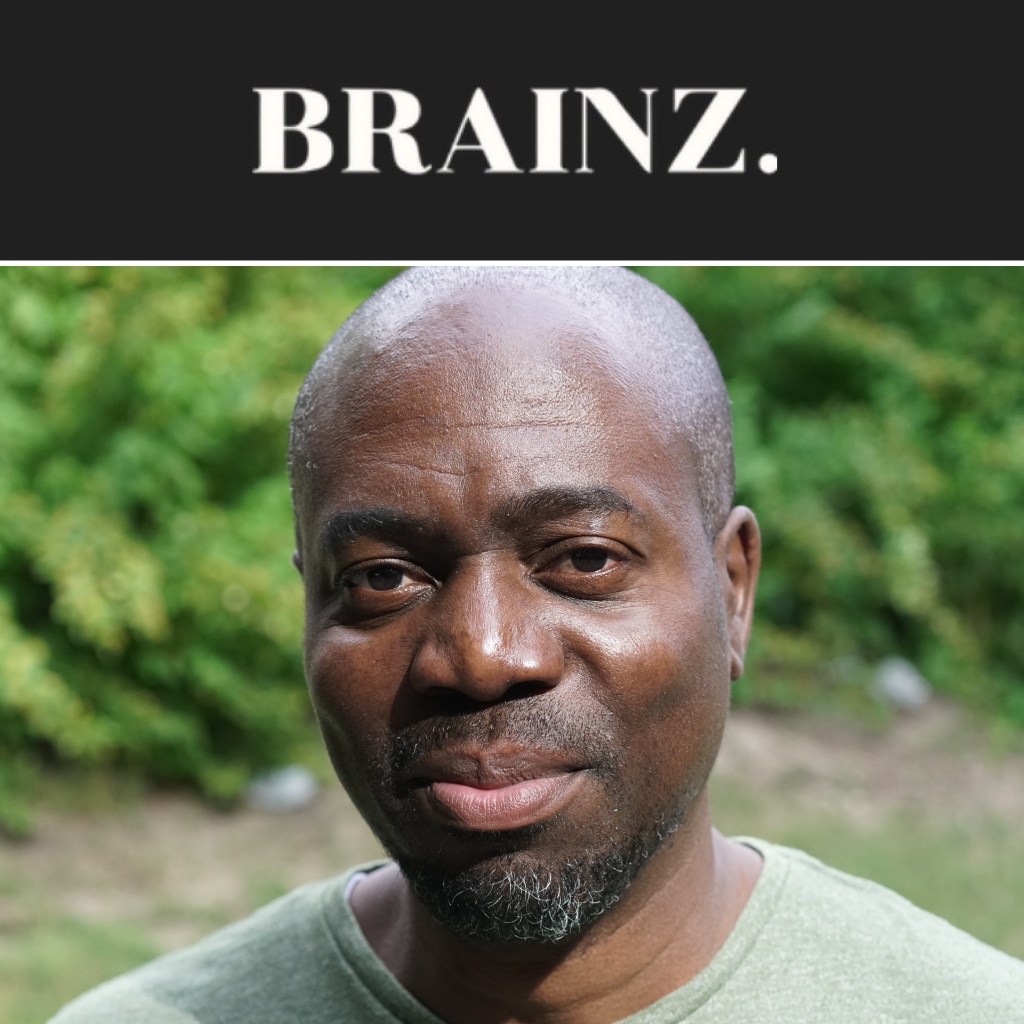
I am honoured and thrilled to share that I’m on the cover of Brainz Magazine this week! In my exclusive interview, titled “Morgan O. Smith’s Awakening Journey – How Yinnergy Meditation Was Born”, I discuss the personal path that led me to create Yinnergy Meditation. This journey has been transformative, from my own awakening experiences to the development of Yinnergy, a meditation program designed to help others experience powerful shifts in awareness, resilience, and self-discovery. You can read the full interview here: Morgan O. Smith’s Awakening Journey – How Yinnergy Meditation Was Born.
I also recently joined Gareth Duignam on The Endless Possibilities Podcast for Part 2 of our conversation on spiritual awakening. In this episode, we dive into the stages of spiritual awakening and what each stage entails, from initial glimpses of higher awareness to the profound transformations that occur as one integrates these experiences. We also discuss how Yinnergy’s unique brainwave technology is designed to support these stages, helping individuals move through each phase with stability and clarity.
Exploring Nonduality: My Latest Brainz Magazine Article
In addition to my cover feature, I’m excited to share that my second article with Brainz Magazine, titled “What Is Nonduality and Why Is It So Misunderstood?”, is now live. Nonduality is a concept that resonates deeply within spiritual traditions and personal awakening journeys. However, it’s often misunderstood as simply a philosophical idea or something intangible. In this article, I explore nonduality as an experiential truth—one that reveals the fundamental unity underlying all things.
Morgan O. Smith
Yinnergy Meditation, Spiritual Life Coaching & My Book, Bodhi in the Brain…Available Now!
Empathy often takes shape as a shared feeling of another’s pain or joy, yet what if it transcended that? What if compassion meant embodying every experience, every breath, each joy, and sorrow that life has ever held? This ultimate level of empathy—true compassion—goes beyond feeling for others; it embodies living as others.
Imagine not just observing another’s story but experiencing the nuances of every life. When you walk this path, distinctions between you and the other fade, as each heartbeat, thought, and memory becomes your own. It’s not a surrender of individuality but a shift that reveals individuality as an aspect of universality. It’s seeing through the eyes of countless lives, their hopes, their fears, and awakening to a truth embedded in all existence.
In this boundless compassion, every interaction becomes an encounter with oneself—a self far beyond personal identity. Actions, then, stem from understanding rather than judgment, from connection rather than separation. This compassion dissolves the lines that divide, exposing an intimate reality: that there is no “other.” All is part of an unbroken continuum of being.
Through this, life itself becomes a sacred practice. Each moment, each being, becomes a teacher, revealing the boundless nature of consciousness. This journey calls for courage, for it asks us to face the suffering and beauty we might have once viewed from a distance. But in facing this, a deeper realization emerges—an understanding that compassion isn’t merely a trait; it’s the essence of who we are.
To awaken to this level of empathy is to see the world through the eyes of the eternal, where all paths are one, and all experiences are ours to share.
Morgan O. Smith
Yinnergy Meditation, Spiritual Life Coaching & My Book, Bodhi in the Brain…Available Now!
Becoming an Executive Contributor for Brainz Magazine!
Hello everyone,
I’m thrilled to share some exciting news! This month, I officially joined Brainz Magazine as an Executive Contributor. Over the coming year, I’ll be exploring some of my most cherished topics: spiritual awakening, nonduality, meditation, and much more. This is an incredible opportunity to expand our reach, and I’m grateful to have each of you with me on this journey.
My first article with Brainz Magazine, “7 Key Signs You’re Going Through a Spiritual Awakening”, is now live! In this piece, I dive into the profound transformations that come when consciousness begins to expand. Whether you’re at the start of your spiritual journey or well along the path, this article offers reflections that might resonate with your own experiences.
Some signs explored include:
– A deepened connection to everything around you
– Shifts in personal beliefs and values
– Heightened sensitivity to energy and emotions
– And more…
Take a look at the article to see if these signs align with your journey. Sharing these insights is a dream come true, and I’m grateful for your support in making it possible.
Also, Check Out My Guest Appearance on the Endless Possibilities Podcast!
I’m also excited to share my recent guest appearance on the Endless Possibilities Podcast with host Gareth Duignam! We dive deep into spirituality, consciousness, and much more. You can watch it now on YouTube and join us in exploring the boundless realms of possibility.
Thank You for Your Support
Thank you for your presence on this journey. Your feedback and commitment inspire me daily, and I’m excited to bring new perspectives to a broader audience through Brainz Magazine.
Stay tuned for more updates as I continue to share insights on spiritual growth, self-discovery, and the path to awakening.
With gratitude,
Morgan O. Smith
Yinnergy Meditation, Spiritual Life Coaching & My Book, Bodhi in the Brain…Available Now!
Humanity has long pursued an understanding of God, a relentless quest to define, capture, and shape the essence of the infinite. For many, the notion of God becomes a vessel for their ideals, values, and desires—a reflection of their deepest hopes and most profound fears. Yet, encountering God through the lens of belief alone is akin to gazing at the ocean through a narrow window. The grandeur of the infinite cannot be contained, constrained, or fully fathomed within the borders of our perceptions.
The paradox lies in this: everything is God, yet nothing conforms to the concepts we construct about it. Each moment, encounter, and experience pulses with the sacred, yet the mind reduces it to fit within its familiar narratives. In the end, our beliefs become the very walls that obscure the limitless nature of divinity.
God, in the truest sense, transcends every image, word, or definition. No single tradition or philosophy can exclusively claim this vastness. Imagine standing before an infinite horizon, extending endlessly in every direction. Our concepts—however profound—are mere markers on the path, helpful but limited in capturing the essence of all that is. Here lies a liberation beyond belief: recognizing that the Divine isn’t limited by human expectations or perceptions.
Embracing this understanding offers a profound sense of freedom and humility. It invites us to move beyond belief, beyond the comfort of definition, and into direct experience. Rather than confining God to what we think we know, we begin to open ourselves to a presence that defies all description, something we sense but cannot fully articulate. This is where genuine reverence arises, born not from knowledge but from an awe that silences the mind.
When we release the need to make God fit our ideas, we become conduits for something greater. Instead of seeking to define or own this presence, we surrender to it, allowing ourselves to be moved, shaped, and transformed. This surrender is not passive; it’s an active openness, a readiness to meet the Divine in the ordinary and extraordinary, in all that we perceive and beyond.
Perhaps the journey, then, is not one of reaching an ultimate understanding but of letting go—allowing ourselves to rest in the mystery and seeing how it transforms us. For God, as it turns out, may be far more than we ever imagined and is here to be discovered, not as an idea, but as the living pulse of everything we encounter.
Morgan O. Smith
Yinnergy Meditation, Spiritual Life Coaching & My Book, Bodhi in the Brain…Available Now!




 Morgan O. Smith