The Miraculous Nature of Satori and the Beauty of the Mundane

Satori, that sudden flash of insight, is not the kind of experience that can be prepared for or understood through mere intellectual exercise. It arrives unexpectedly, sweeping through consciousness like a cool breeze amid the summer heat. It’s as if all boundaries collapse, leaving only pure awareness. And it’s at that moment you realize—nothing is truly separate.

This fleeting yet profound glimpse into the fabric of reality shifts one’s perception permanently. Suddenly, the noise of daily life quiets. The weight of things that once seemed so important dissolves, revealing a serene clarity always there, patiently waiting. After experiencing Satori, a miraculous paradox unfolds—life doesn’t feel distant or otherworldly. Instead, the mundane becomes extraordinary.

Consider the sensation of holding a cup of tea. Before Satori, you might focus on the cup’s warmth or the taste of the liquid. After Satori, you might find yourself marvelling at the simple act itself. Each sip becomes a universe in motion, rich with presence and deep appreciation. Ordinary moments, once taken for granted, now glow with the same brilliance as those rare flashes of enlightenment.

Satori isn’t about escaping the ordinary; it’s about seeing the divine within it. Whether it’s the rustle of leaves in the wind or the sound of laughter echoing through the air, the smallest details become pathways to the infinite. There is no longer a need to search for meaning elsewhere; everything, as it is, reflects the sacred nature of existence.

The true gift of Satori lies not in the experience itself, but in its ability to transform our relationship with life. It teaches us that miracles aren’t somewhere out there, waiting to be discovered—they are embedded in the fabric of each moment, no matter how small or ordinary.

Suddenly, every breath, every heartbeat, every sensation becomes an invitation to return to that space of awareness. And it’s this quiet reverence for the mundane that truly allows one to live fully, with grace and wonder.

Morgan O. Smith

Yinnergy Meditation, Spiritual Life Coaching & My Book, Bodhi in the Brain…Available Now!
https://linktr.ee/morganosmith

The Paradox of God’s Purpose

Beyond Time and Space

The idea of God having a purpose evokes a curious paradox. Purpose, as we understand it, requires time. There’s a beginning, an intention, and an outcome. Yet, God exists beyond time and space, transcending all dimensions that human minds perceive. How, then, can the ultimate transcendence have a purpose when both purpose and fulfillment rely on the passage of time?

God, in the most absolute sense, is timeless. Purpose implies movement from one state to another, a process that cannot apply to something that exists beyond time. God, as the eternal presence, neither moves nor changes. Yet, this same timeless God includes time and space as aspects of reality. Everything exists within God, and time is simply one of the infinite expressions of that existence.

From our limited perspective within time and space, purpose appears necessary and real. The flow of cause and effect shapes our understanding of meaning. Thus, we perceive God as having a purpose, as if the universe itself was an unfolding plan. But this perception only holds because we exist within the constraints of time. In truth, God’s purpose is as illusory as time itself—a projection of human understanding onto a reality that transcends all conceptual boundaries.

God, being everything, includes the illusion of purpose, yet remains untouched by it. In this sense, what we view as God’s purpose is simply an expression of the unfolding of existence within the framework of time. This divine play, known as *lila* in some traditions, is neither driven by need nor aimed at fulfillment. It is simply the unfolding of what is, without beginning or end.

The purpose we attribute to God is an attempt to understand the unfathomable. But ultimately, God’s true nature exists beyond purpose, beyond time, beyond any duality that our minds attempt to impose. To realize this is to recognize that the essence of existence is purposeless in the most profound sense—not in a nihilistic way, but as a reflection of absolute freedom, where nothing needs to be done because all is already complete.

Morgan O. Smith

Yinnergy Meditation, Spiritual Life Coaching & My Book, Bodhi in the Brain…Available Now!

https://linktr.ee/morganosmith

Turiyatitta

The Singularity of All That Is

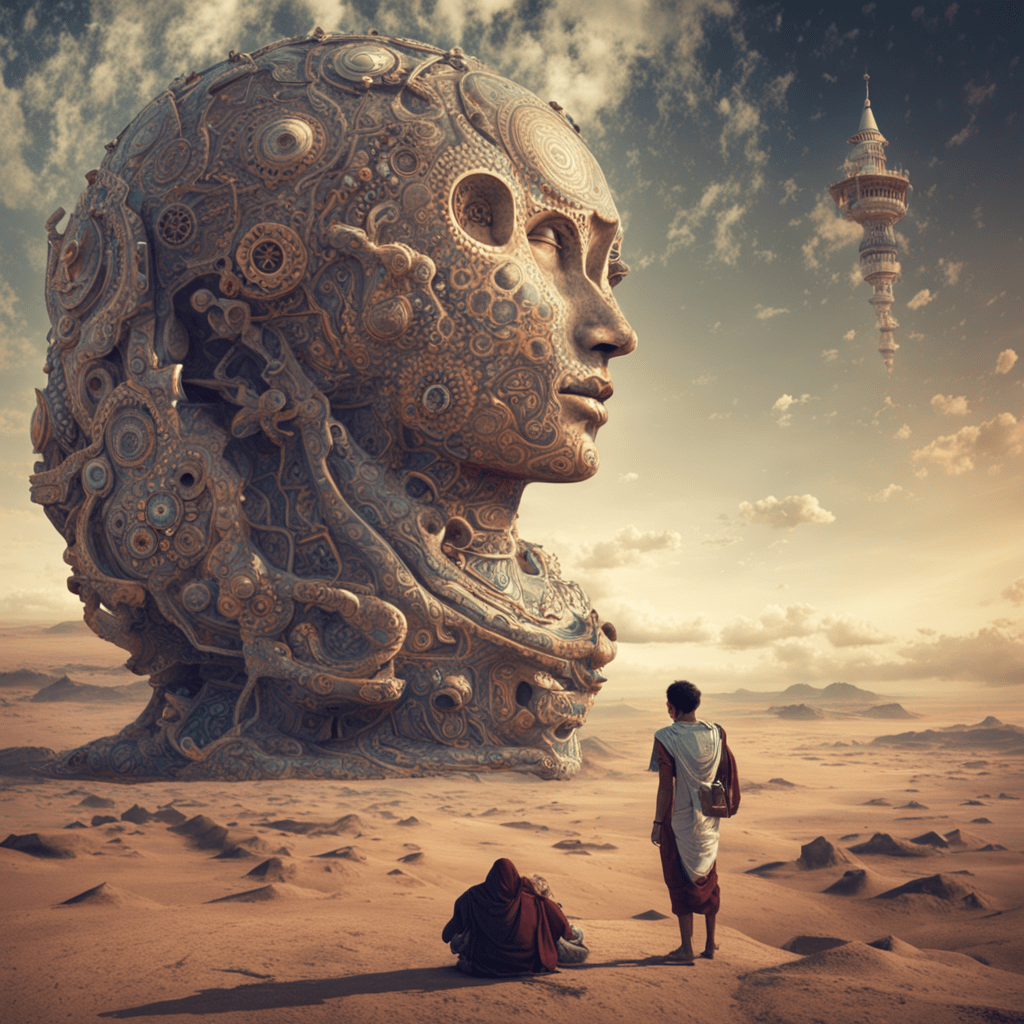
Turiyatitta, often referred to as the state beyond the fourth, is an experience that defies conventional understanding. While Turiya encompasses the witness state within waking, dreaming, and deep dreamless sleep, Turiyatitta transcends even this. It represents the complete dissolution of the witness, where all states merge into an indivisible, absolute singularity. Here, the boundaries that once defined waking, dreaming, and deep dreamless sleep no longer exist—everything and nothing become one.

In Turiyatitta, consciousness no longer stands apart, observing. The very notion of a witness dissolves into an awareness so expansive and complete that there is nothing left to observe. There is no division between subject and object, no experience of separation because nothing exists outside of this infinite awareness. This state is considered the final stage of enlightenment—where the full nondual awareness of absolute Monism is realized.

Imagine being both everything and nothing at the same time. Not merely perceiving this intellectually, but embodying the paradox in a way that no words can fully express. The divine empty witness, once perceived as separate, fully dissolves within itself. All distinctions—between time and space, self and other—collapse into the infinite. What remains is not emptiness in the typical sense, but a fullness so complete that it transcends all concepts of existence or non-existence.

Turiyatitta feels like the ultimate convergence of all possible experiences into one absolute awareness. It is a state where nothing is hidden, nothing is separate, and there is no need for perception because everything is known in its essence. There is no longer a “seer,” for there is nothing to see. The divine once thought of as a distant force or presence, is realized as the very fabric of existence.


This stage is not about attaining something new but about shedding the final layers of illusion, revealing the inherent truth that has always been. The mind quiets, the heart stills, and what remains is the simple, silent, all-encompassing awareness that is beyond all states, yet contains them all.

Morgan O. Smith

Yinnergy Meditation, Spiritual Life Coaching & My Book, Bodhi in the Brain…Available Now!
https://linktr.ee/morganosmith

Turiya

The Unseen Ground of Consciousness

Turiya, often described as the fourth state of consciousness, stands beyond waking, dreaming, and deep dreamless sleep. What does it feel like to exist within this state? The experience itself cannot be fully captured by language, for Turiya transcends the usual boundaries of perception. It is not merely a state that one “enters” and “leaves”; rather, it is the ground upon which all other states rest.

There’s a subtle, yet profound, recognition that one is not the individual witness, but the infinite awareness in which all phenomena arise and dissolve. In Turiya, the experience is not of observing the states of waking, dreaming, and deep dreamless sleep separately, but of witnessing them as simultaneous expressions of a unified field of consciousness. Here, distinctions lose their meaning—what was once experienced as separate now collapses into a seamless continuum.

This state has often been referred to as the first stage of enlightenment. Yet, even such descriptions fall short. The essence of Turiya is not something “attained” through effort. Instead, it is revealed through the dissolution of identity, a quiet remembrance of one’s true nature.

Imagine an eternal presence where time does not move, where forms arise and fall like waves on the surface of an ocean, yet the ocean itself remains unshaken. Divinity, in this context, is not something external or far-off—it is what you are. The divine becomes aware of itself, witnessing all, yet remaining untouched by the movements within itself. It is existence contemplating its own essence, eternal and ever-present.

The beauty of Turiya is in its simplicity. It does not need complex metaphors to explain itself. It is felt as a continuous hum of being, beyond concepts, thoughts, and emotions—a recognition that everything, including the experiencer, is merely a reflection of the same undivided consciousness.

To experience Turiya is to see the eternal play of life from the perspective of the timeless. It is to understand that the very states we once believed to be separate—waking, dreaming, deep dreamless sleep—are all mere movements within the One.

Morgan O. Smith

Yinnergy Meditation, Spiritual Life Coaching & My Book, Bodhi in the Brain…Available Now!

https://linktr.ee/morganosmith

Turiyatitta and the One-Electron Universe

A Journey into Nondual Oneness

As proposed by physicist John Archibald Wheeler, the concept of the one-electron universe suggests that every electron in the universe might be the same particle, traversing back and forth through time. This radical idea blurs the boundaries between individuality and unity, inviting profound contemplation on the nature of existence and consciousness.

Electrons, as identical entities, lack distinguishing features beyond their position and momentum, mirroring the fundamental principle of nonduality—the essence that underlies all forms is the same. The notion of a singular electron moving through time, creating the illusion of multiplicity, parallels the experience of Turiyatitta, the state of nondual suchness where the distinctions between self and other, subject and object, dissolve into a unified whole.

Turiyatitta, the fourth state of consciousness beyond waking, dreaming, and deep sleep, represents a transcendence of dualistic perception. This state aligns with the idea of the one-electron universe, where what appears as many is, in essence, one. The perceived separation between particles, events, and experiences collapses when viewed from the standpoint of timelessness, revealing a reality where all is interconnected and indivisible.

The spiritual peak experience of nondual suchness is akin to glimpsing the one-electron universe—an awareness that what seems fragmented and diverse is a manifestation of a singular, timeless presence. This insight challenges the ordinary perception of reality, encouraging a shift from seeing the world as a collection of separate entities to recognizing the seamless flow of existence.

Contemplating the one-electron universe invites a deeper understanding of Turiyatitta. It prompts reflection on the possibility that all experiences, all states of consciousness, are expressions of a single, underlying reality. Just as the electron moves through time, creating the appearance of multiplicity, consciousness flows through the spectrum of awareness, giving rise to the illusion of duality. Yet, at the core of this illusion lies the truth of oneness—a truth that becomes evident in the state of Turiyatitta.

Exploring the one-electron universe and its connection to nondual suchness encourages a re-evaluation of the boundaries between science and spirituality. Both realms point toward a deeper understanding of reality, one that transcends the limitations of time, space, and individual identity. Through this lens, the spiritual journey toward Turiyatitta can be seen as a movement toward recognizing the singular nature of existence, where all distinctions dissolve, and only the undivided whole remains.

Morgan O. Smith

Yinnergy Meditation, Spiritual Life Coaching & My Book, Bodhi in the Brain…Available Now!
https://linktr.ee/morganosmith

The Unraveling of the Self

Emotional and Mental Breakdowns During Spiritual Awakening

Introduction

The journey toward spiritual awakening often appears, from the outside, as a serene and enlightened path. Yet, for those who walk it, the experience can be anything but peaceful. Emotional and mental breakdowns are common, and they serve a profound purpose. These breakdowns are not merely unfortunate side effects but are integral to the transformation that takes place during spiritual awakening. Understanding why and how they occur sheds light on the deeply transformative nature of this journey.

The Dissolution of the Ego

At the heart of spiritual awakening lies the dissolution of the ego, the part of us that identifies with our thoughts, emotions, and external identities. The ego forms a protective shell around our innermost being, creating a sense of separation from the world and others. As spiritual awakening progresses, this shell begins to crack and dissolve. The breakdowns that occur during this process are the ego’s desperate attempts to hold onto the illusions it has created.

Emotional turmoil arises as old wounds, suppressed fears, and unresolved traumas surface. These are not new experiences; they are fragments of our psyche that have been buried deep within. The awakening process brings them to the surface, demanding that they be acknowledged, felt, and released. This can manifest as intense sadness, anger, or anxiety, often without a clear trigger. The breakdowns are not a sign of failure but a necessary purging of what no longer serves the soul’s evolution.

Mental Deconstruction

Alongside the emotional upheaval, there is often a mental breakdown that accompanies spiritual awakening. Our minds are accustomed to operating within the framework of duality—right and wrong, good and bad, self and other. As awakening deepens, this framework begins to disintegrate, leading to confusion, disorientation, and a sense of losing touch with reality.

The mind, which has always sought control through understanding and categorizing, now faces the incomprehensible. Concepts that once provided a sense of stability and security—such as time, identity, and purpose—start to unravel. This can feel like madness, as the mind struggles to find footing in a reality that no longer adheres to the rules it once knew.

However, this mental breakdown is a gateway to a higher understanding. It forces the individual to let go of the need to intellectually grasp the vastness of existence and instead invites them to surrender to the mystery of being. What emerges from this surrender is a more expansive awareness that transcends the limitations of the thinking mind.

The Purpose Behind the Breakdown

The emotional and mental breakdowns during spiritual awakening serve a profound purpose. They are not signs of weakness or instability but are essential phases of the journey. These breakdowns break open the rigid structures of the ego and the mind, allowing the true self to emerge. The pain and confusion are catalysts for shedding the old, making way for a new way of being.

In essence, these breakdowns are acts of grace. They strip away the false layers of the self, revealing the underlying essence that is interconnected with all of existence. Through the process of breaking down, one is rebuilt on a foundation of truth, love, and unity.

Navigating the Breakdown

For those experiencing these breakdowns, it’s important to understand that they are temporary and purposeful. Practicing self-compassion and seeking support from others who understand the journey can be invaluable. Meditation, grounding practices, and connecting with nature can also help stabilize the experience. Above all, embracing the breakdown as part of the awakening process allows for a more graceful passage through these intense phases.

When to Seek Extra Support

These breakdowns are not obstacles for most individuals. But there are cases where mental illness could be a factor and needs to be identified and not mistaken for the awakening process. Extra support and seeking professional help in these cases may be needed. They should never be avoided or spiritually bypassed. In some cases, spiritual practices should be avoided altogether, especially if they exacerbate the symptoms or lead to further confusion and distress. Understanding the difference between a spiritual crisis and a mental health issue is crucial, as neglecting the latter can lead to unnecessary suffering and hinder the healing process.

Conclusion

Spiritual awakening is not a gentle process; it is a profound upheaval that shakes the very core of our being. The emotional and mental breakdowns that occur are not obstacles but necessary steps in the dissolution of the old self. By understanding and embracing these breakdowns, one can move through them with greater ease, allowing the transformation they bring to unfold fully. In the end, what emerges from the ashes of the breakdown is a self that is more authentic, whole, and deeply connected to the essence of life itself.

Morgan O. Smith

Yinnergy Meditation, Spiritual Life Coaching & My Book, Bodhi in the Brain…Available Now!

https://linktr.ee/morganosmith

The Exponential Unfolding of Consciousness

From the Ego to the Infinite

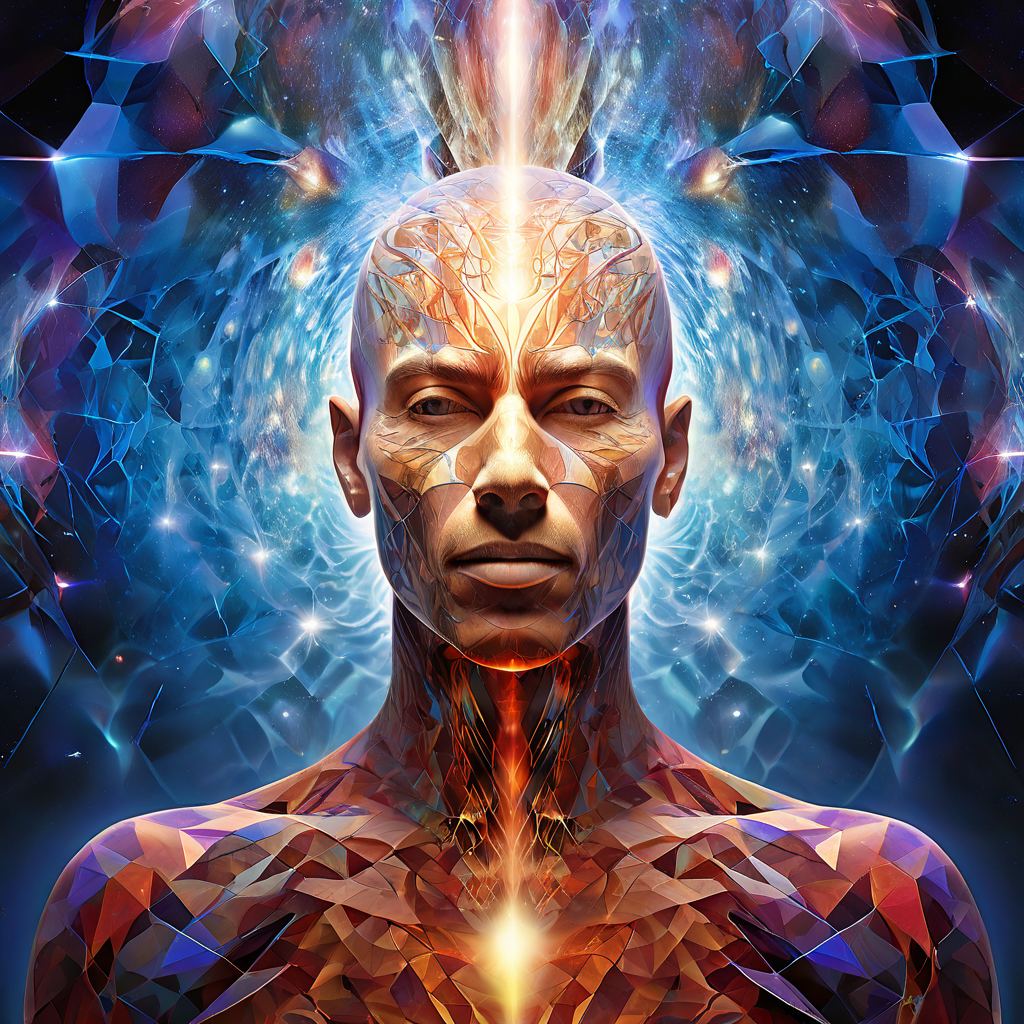
The sequence 1, 2, 4, 8, 16, 32, 64 etc is known as a geometric progression—a pattern where each term after the first is found by multiplying the previous one by a fixed, non-zero number. Each number is doubled in this case, creating an exponential growth that is not just a mathematical concept but a fundamental principle found throughout nature. This sequence is critical because it represents how small beginnings can lead to vast, expansive outcomes, demonstrating the power of exponential transformation. The same principle that drives population growth, the branching of trees, and the spiralling of shells can also be seen as a metaphor for the process of spiritual awakening. Just as nature uses geometric progression to unfold complexity and beauty, so too might our spiritual experiences expand as the mind transcends from the small “I” or ego into the vastness of collective consciousness, and ultimately into Consciousness itself.

At the outset, the mind identifies with the number 1. It is the small “I,” the ego, the center of an individual’s universe. This singular identity believes itself to be separate, and distinct from the world around it. The self sees itself as the subject in a world of objects, the thinker in a sea of thoughts, and the doer in a realm of actions. The ego stands alone, encapsulated within its boundaries, perceiving the world through a lens of duality.

But, as with the sequence, there comes a moment when the ego perceives something beyond its singular existence. It doubles into 2. This is the first awakening—a recognition that there is more to existence than just the self. The mind begins to sense its connection to others, the threads of interdependence that weave through the fabric of life. This is the initial glimpse into the collective consciousness.

As the mind continues to expand—4, 8—it begins to transcend the confines of the ego. The boundaries that once seemed so solid start to dissolve. The self no longer sees itself as merely an individual but as part of a larger whole, an integral part of the collective consciousness. This is the stage where the mind starts to perceive the unity underlying all diversity, recognizing that the separation it once clung to was an illusion.

The sequence continues—16, 32, 64—each step representing a deeper level of awareness, a more profound surrender to the truth of existence. The mind begins to transcend even the collective consciousness, moving towards the infinite, the realm of pure Consciousness. Here, the small “I” completely dissolves, and what remains is the recognition of being one with the entire universe, with the very essence of life itself.

This final stage of the sequence symbolizes the ultimate spiritual awakening. The mind has moved beyond the personal and the collective, into the boundless expanse of pure Consciousness. It is here that the true nature of reality is revealed—that there is no separation, no division, only the infinite play of Consciousness experiencing itself in myriad forms.

The journey from ego to infinite Consciousness is not just one of linear progression but of exponential transformation. Each doubling in the sequence represents a quantum leap in awareness, a step closer to the ultimate realization of nonduality. And just as the sequence could continue indefinitely, so too does the journey of spiritual awakening, for Consciousness is limitless, ever-expanding, and eternally evolving.

In reflecting upon this natural and spiritual process, we are reminded that the same patterns that govern the physical world may also govern our inner worlds. As nature grows and evolves, so too do we, propelled by the same forces of expansion, ever moving toward greater complexity, unity, and understanding. In this sense, the pattern found in the sequence 1, 2, 4, 8, 16, 32, 64 is not just a mathematical curiosity but a universal truth, guiding us on our journey from the limited self to the infinite.

Morgan O. Smith

Yinnergy Meditation, Spiritual Life Coaching & My Book, Bodhi in the Brain…Available Now!
https://linktr.ee/morganosmith

The Silence Beyond Words

The Inexpressible Nature of Ultimate Truth

In a world populated by nearly eight billion souls, each one of us carries within the potential to encounter the ultimate truth, the absolute essence of reality that lies beyond the reach of ordinary perception. Yet, even if every individual were to experience this profound truth firsthand and attempt to articulate it through words, symbols, or metaphors, we would still find ourselves standing at the edge of an infinite abyss, gazing into a mystery that language cannot touch.

The challenge lies in the very nature of ultimate truth itself. It is not a concept that can be fully captured by thought, nor a phenomenon that can be neatly packaged into language constructs. Words are tools of the mind, shaped by dualistic thinking, and while they can point towards the truth, they inevitably fall short of embodying its essence. The absolute truth transcends all distinctions, including subject and object, observer and observed. It is a realization that obliterates the boundaries between self and other, time and timelessness, existence and non-existence.

When we attempt to speak of this truth, we find ourselves constrained by the limits of our minds. No matter how profound, each interpretation remains a reflection of the observer’s perspective—an individual prism through which the light of truth is refracted. The truth itself, however, is like pure light, beyond the colours it produces when passed through different lenses. Every articulation of truth, therefore, is not the truth itself, but a facet, a glimmer, a hint of the infinite.

The spiritual journey, then, is not about defining or grasping the ultimate truth in terms of intellectual understanding. Instead, it is about surrendering to the experience of that which cannot be defined. It is about allowing the mind to rest in the silence that follows the realization that no word, no thought, no image can ever encompass the vastness of the ultimate.

In this silence, we encounter the truth directly—not as something to be explained, but as something to be lived. It is the truth that reveals itself in the spaces between thoughts, in the stillness of the heart, and the quietude of being. It is the presence that pervades all things, yet remains unseen, the substratum of reality that gives rise to all forms and yet is untouched by them.

Ultimately, the recognition of this truth calls us to a different way of being in the world. It invites us to dwell in the mystery, to embrace the unknown, and to live from a place of deep humility and reverence for the ungraspable nature of reality. In doing so, we align ourselves with the flow of life itself, moving beyond the need to categorize or control, and instead, opening to the boundless, ineffable reality that is always here, always now.

Morgan O. Smith

Yinnergy Meditation, Spiritual Life Coaching & My Book, Bodhi in the Brain…Available Now!

https://linktr.ee/morganosmith

The Infinite Horizon of Oneness

My Journey Through Totality and Nonduality

In a moment that defied the limits of ordinary perception, I found myself immersed in an experience of totality—a direct encounter with the boundless essence of oneness and nonduality. This journey wasn’t merely a philosophical concept or a fleeting glimpse; it was a profound, visceral experience that transcended the boundaries of time, space, and individuality.

As I delved into this state, I was enveloped by the overwhelming presence of all feelings and emotions. It was as if the entire spectrum of human experience was laid bare before me, each emotion coexisting in a harmonious yet intense interplay. Joy and sorrow, love and fear, peace and turmoil—all were present, all were real, and all were part of a unified whole. There was no separation, no fragmentation, just a continuous flow of pure emotional energy.

This immersion into the ocean of emotions was not chaotic, but rather, it revealed the intricate interconnectedness of all feelings. I realized that each emotion, no matter how contrasting, was a necessary expression of the same underlying essence. It was a profound lesson in acceptance and understanding, teaching me that to embrace one’s full humanity is to honour every aspect of our emotional being.

Yet, the journey did not stop there. I was drawn deeper, into an experience of all egos and senses of self throughout the entire universe. This was not just a merging with the collective consciousness of humanity; it extended to all life forms, transcending the Earth and reaching into the farthest corners of the cosmos. I became acutely aware of the diverse perspectives, thoughts, and experiences of every being. The individuality of each life form dissolved into a singular, expansive awareness.

In this state, I no longer perceived myself as a separate entity. The notion of “I” expanded infinitely, encompassing all beings, and all existences. I was simultaneously every person, every creature, every consciousness. The interconnected web of life was not just a concept; it was my reality. I experienced the joys and sufferings, the triumphs and struggles of all beings as my own. This collective consciousness revealed the profound unity that underlies the apparent diversity of life.

This journey through totality and oneness has profoundly transformed my understanding of self and existence. It has dissolved the illusion of separation and duality, revealing the inherent unity of all life. The experience has deepened my compassion and empathy, fostering a profound sense of connectedness with all beings.

In reflecting on this journey, I am reminded of the limitless potential within each of us to touch the universal essence. To experience totality is to transcend the boundaries of individual identity and to embrace the infinite oneness that we all share. It is a journey that beckons us to explore the depths of our being, to discover the unity that lies at the heart of existence, and to live with a profound sense of interconnectedness and purpose.

Morgan O. Smith

Yinnergy Meditation, Spiritual Life Coaching & My Book, Bodhi in the Brain…Available Now!
https://linktr.ee/morganosmith

The Philosophical Essence of Satan and God

I’ve been asked on occasion if I believe in the existence of Satan. My response is layered and nuanced. Philosophically, metaphorically, and symbolically, I acknowledge the concept of Satan, but I don’t subscribe to the personified version of Satan or a devil that is meant to be taken literally. To me, such a belief is irrational. Instead, Satan symbolizes everything evil or negative within the human experience.

Now, one might ask if I believe in God. My answer, while seemingly at the opposite extreme, follows a similar logic. From a literal standpoint, I don’t believe in God as a distinct entity. Rather, I assert that everything in existence is God, including myself, you, everyone, and everything else. This understanding stems from my awakening, which I claim to be a profound truth (though my interpretation of this truth is limited). In essence, God is the absolute—everything in and out of existence.

Religions like Christianity often refer to God as the alpha and the omega, the beginning and the end. If everything is God, then does this include Satan? My answer is unequivocally yes. According to certain texts, God created Satan, formerly known as Lucifer, who was God’s perfect angel. Some might argue that God created Lucifer, but Lucifer isn’t God. To this, I pose a series of questions.

If God created Lucifer, what did God make Lucifer out of? You might say pure light. But what is light made of? Oscillating electric and magnetic fields. Are these fields the alpha and the omega? No. So, what are oscillating electric and magnetic fields made of? Electromagnetic waves. Are electromagnetic waves the alpha and the omega? Again, no. What are electromagnetic waves made from? We can trace this down to the concept of emergent space-time.

Is emergent space-time the alpha and the omega, the beginning and the end? If we consider God as the absolute, then it must be. If emergent space-time is equivalent to God, then at its essence, Lucifer is made out of God. Even if you adhere to the idea that God made Lucifer ex nihilo (out of nothing), and if God is absolute, then this must include nothing (preceding emergent space-time itself). Thus, God encompasses both everything and nothing.

In this holistic view, the existence of Satan and the nature of God merge into a singular, all-encompassing reality. This perspective encourages us to transcend literal interpretations and embrace a deeper, more integrated understanding of existence, where all dichotomies dissolve into the absolute.

Morgan O. Smith

Yinnergy Meditation, Spiritual Life Coaching & My Book, Bodhi in the Brain…Available Now!

https://linktr.ee/morganosmith