The Eternal Cycle

Death’s Feast and the Birth of Life

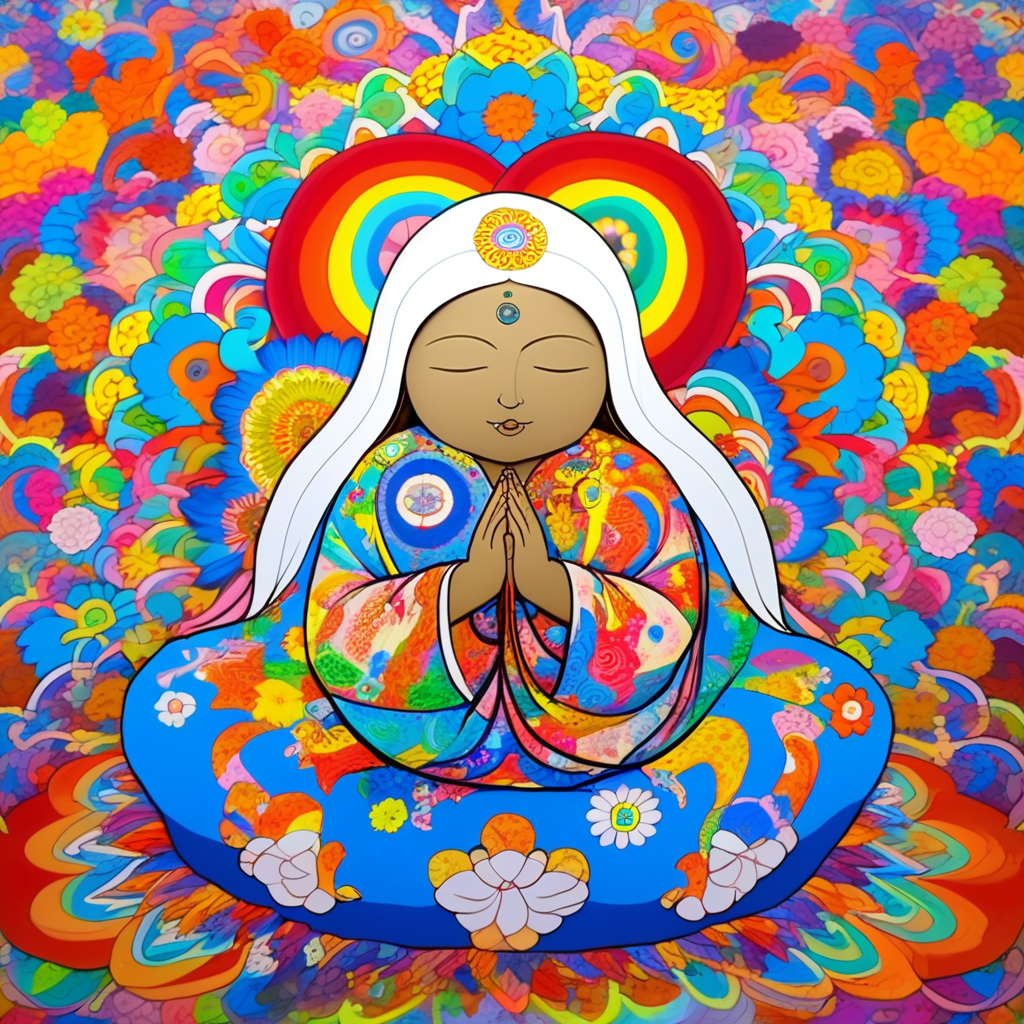
In the intricate dance of existence, death is not merely an end but a vital participant in the cycle of life. This profound interplay, often overlooked, reveals the essential truth that in the demise of one form lies the genesis of another.

Death, in its most elemental guise, dines upon the physical remains of life. Be it the flesh of creatures or the verdure of plants, death consumes without distinction. This act, often viewed with solemnity or fear, is, in fact, a transformative process. As bodies decompose and vegetation withers, they are not vanishing into oblivion. Instead, they are undergoing a metamorphosis, a sacred transition that feeds the very essence of life.

In this process, what was once living matter returns to the earth, breaking down into simpler forms. This decomposition is not merely a physical breakdown; it is a release of energy, a surrender of essence back to the source from which it came. It’s a testament to the interconnectedness of all things, where the end of one entity fuels the beginning of another.


This cycle is a reflection of the profound truth of nonduality. In the realm of absolute monism, death and life are not opposites but are inseparably intertwined, each giving meaning and substance to the other. This realization brings a deeper understanding of the nature of existence, where every ending is a new beginning, and every loss is a step towards renewal.

Thus, contemplating death’s role in the continuum of life opens a doorway to a more profound spiritual awakening. It invites us to view life and death not as a linear journey with a definitive end but as an eternal cycle of transformation and rebirth.


As we ponder this cycle, we are reminded of the impermanence of physical form and the permanence of the spiritual essence. This understanding can be a catalyst for personal growth, urging us to look beyond the transient and to connect with the eternal. It encourages us to embrace the present moment, live with mindfulness and compassion, and understand that in the grand scheme of existence, every moment is a part of this sacred cycle.

In embracing this perspective, we find peace in the knowledge that in every ending lies a new beginning, and in every death, the seeds of new life are sown.

Morgan O. Smith

Yinnergy Meditation, Spiritual Life Coaching & My Book, Bodhi in the Brain…Available Now!
https://linktr.ee/morganosmith

The Dawn of Inner Illumination

Embracing the Light Within

In the depths of our being, there lies a profound revelation, akin to the experience of witnessing the first rays of dawn after a long night. This awakening is not just a mere encounter with light; it is the realization that you are that very light, cradled in the embrace of darkness, which is also an integral part of your essence.

Imagine living in a realm of perpetual twilight, where the distinction between light and darkness blurs, creating a harmonious coexistence. This is the realm of our inner world, where we discover that light and darkness are not adversaries but complementary forces. In the heart of this realization, we find that our true nature transcends these dualities.

The journey towards this awakening begins with a simple, yet profound question: Who am I? This inquiry, deeply rooted in the wisdom of Eastern philosophy, is not a quest for a label or a definition. Instead, it is an exploration of the essence of being. As we delve deeper, we peel away the layers of conditioned thoughts and societal constructs, arriving at the core of our existence.


In this core, we discover that we are the silent observers, the light of consciousness, witnessing the dance of life. This light does not falter; it remains constant, illuminating our experiences, thoughts, and emotions. Yet, it is untouched by them, just as the sun is untouched by the activities it lights up.

This realization brings a profound sense of freedom. We are no longer bound by our limitations of ourselves. We are the vastness that encompasses all things, the eternal light shining in the heart of darkness. This is the essence of absolute monism – the understanding that all is one and that one is all.

But this awakening is not the end. It is the beginning of a new journey. A journey of living in the light of this truth, of embodying this understanding in every aspect of our lives. It is about finding the balance between being and becoming, between stillness and movement, and between the light and the darkness within.


As we embrace this light within, we become beacons for others on their paths. We inspire, guide, and uplift, not by words alone, but by the very essence of our being. Our lives become a testament to the truth that in the heart of darkness lies the most radiant light.

Morgan O. Smith

Yinnergy Meditation, Spiritual Life Coaching & My Book, Bodhi in the Brain…Available Now!

https://linktr.ee/morganosmith

Beyond the Ego

The Awakening to Your True Essence

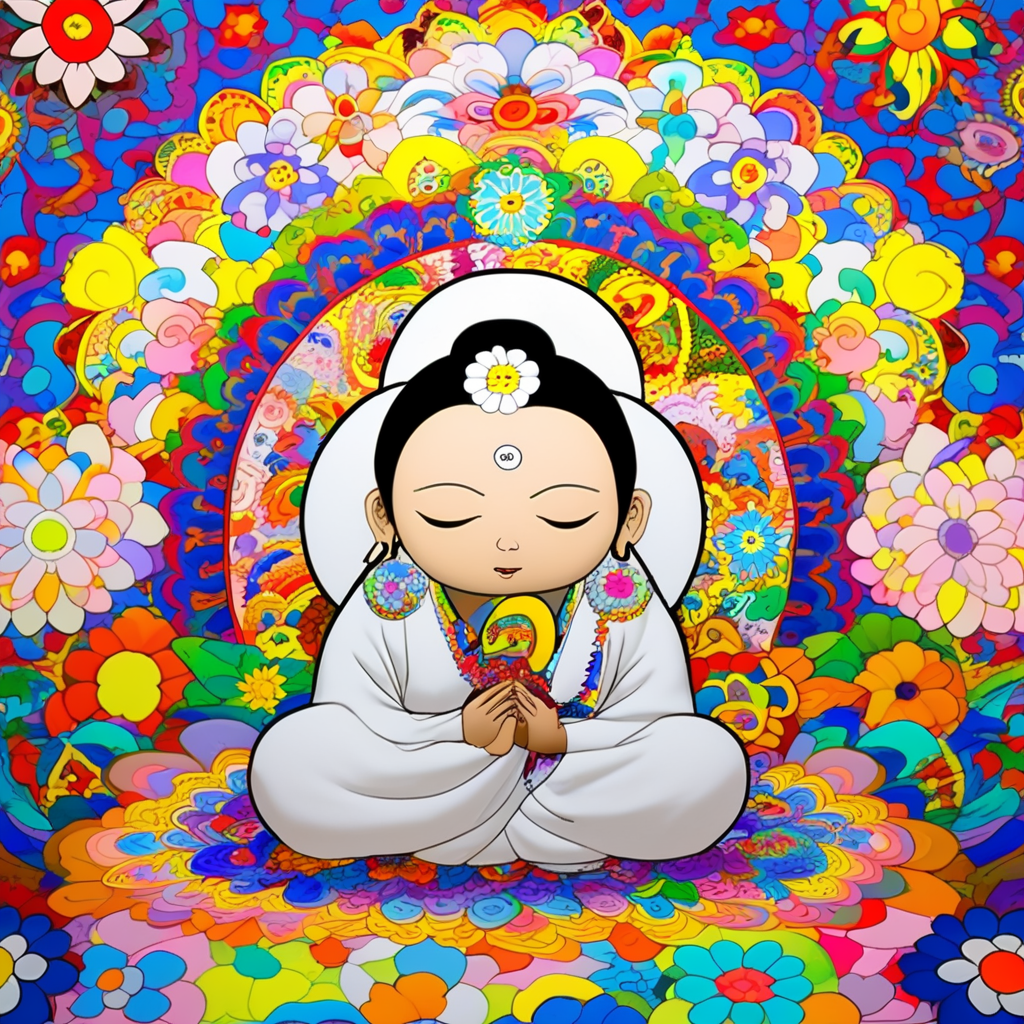
In the intricate journey of self-realization, there comes a transformative moment – a subtle, yet profound shift where the concept of ‘I’ dissolves. This pivotal point is not marked by grandiose events or dramatic changes but by a quiet, almost imperceptible departure of the ego. It is in this space, free from the ego’s clutches, that one experiences the true essence of being.

The ego, a construct deeply ingrained in our psyche, often dictates our perceptions, actions, and interactions. It is the architect of our individuality, the narrative voice that constantly scripts our life’s story with ‘I’ as the protagonist. But what happens when this voice fades away when the story no longer has a central character?

The fall of the ego is not an obliteration but an unmasking. It unveils a state of consciousness where the boundaries of self blur, merging individuality with the universal. In this state, you are no longer confined to the narrow corridors of personal identity. You become an unbounded expanse, a part of something far greater and more profound.

This transition is often accompanied by a deep sense of peace and connectedness. The relentless pursuit of personal desires and the ceaseless chatter of self-judgment quietens. In its place, arises a harmonious symphony with existence. Actions no longer stem from self-serving motives but flow effortlessly as expressions of a universal dance.


One may wonder, how does one recognize this monumental shift? It cannot be quantified or measured. It’s akin to waking from a dream, where the dreamer ceases to exist, and only the experience remains. The need for constant self-affirmation and validation dissipates. You no longer seek to define yourself against the world but find yourself as an inseparable part of it.

This awakening, however, does not imply a loss of individuality or purpose. On the contrary, it empowers you to engage with the world more authentically. Your actions become more compassionate, understanding deeper, and presence more genuine. It’s not just about becoming nothing; it’s also about becoming everything.

In essence, the fall of the ego is not an end but a beginning – a gateway to experiencing life in its purest form. It is a journey from the illusion of separation to the reality of oneness, from confinement to liberation, and from turmoil to tranquillity.


As you walk this path of enlightenment, remember that the journey is as significant as the destination. Each step, each moment of awareness, brings you closer to your true essence – a state of being where you are no longer just you, but a boundless, luminous existence.

Morgan O. Smith

Yinnergy Meditation, Spiritual Life Coaching & My Book, Bodhi in the Brain…Available Now!
https://linktr.ee/morganosmith

Eyes Wide Shut

Unveiling the Invisible Universe Within

In the silent depths of introspection, where thoughts cease their constant dance, lies a universe – vast, profound, and largely unexplored. This universe, your inner cosmos, remains hidden to many, discernible only to those who venture beyond the veil of the mundane. It’s a realm where the mind’s eye, with eyes wide shut, sees what is invisible to the physical gaze.

In this sacred space, the concept of nonduality blossoms. Here, the dichotomies of self and other, observer and observed, dissolve into a seamless expanse of consciousness. This realization is not an intellectual one; it is an experiential awakening, where one’s essence merges with the infinite.

Eastern philosophy, with its rich heritage and profound insights, offers a map to navigate this inner universe. It teaches us that our true nature is not confined to the limited identity we often cling to. Instead, it guides us to see ourselves as integral parts of a larger, interconnected whole. In this realization, the illusion of separation fades, and we begin to experience life in its totality.


Integral Theory furthers this journey by offering a framework that harmonizes diverse perspectives. It encourages us to integrate multiple dimensions of our being – emotional, mental, physical, and spiritual. This holistic approach fosters a deeper understanding of ourselves and the world around us, leading to more meaningful and enriched life experiences.

Yet, the journey inward is not merely an intellectual exercise. It’s a path paved with the heart’s wisdom, a journey toward spiritual awakening and enlightenment. It’s about transcending the ordinary to touch the extraordinary, about finding the stillness within the storm. In this stillness, we encounter peak mystical experiences, moments where time stands still, and we are at one with all that is.

Embracing this inner journey transforms how we view ourselves and the world. We start to see beauty in the mundane, wisdom in silence, and truth in simplicity. Our interactions become more compassionate, our actions more mindful, and our lives more purposeful.


I invite you to embark on this profound journey. Close your eyes to see the unseen, listen to the silence to hear the unspoken, and still your mind to understand the incomprehensible. In doing so, you may just discover that the entire universe resides within you, waiting to be explored.

Morgan O. Smith

Yinnergy Meditation, Spiritual Life Coaching & My Book, Bodhi in the Brain…Available Now!

https://linktr.ee/morganosmith

The Paradox of Enlightenment Amidst Adversity

In the profound journey toward enlightenment, there exists a nuanced understanding of the interplay between our spiritual essence and the tangible world. This exploration delves into the realm where the ultimate truths of nonduality meet the undeniable realities of our human experience. It’s a contemplation of how one navigates the vicissitudes of life, even when perched at the pinnacle of spiritual awakening.

#### The Unshakable Core vs. The Vulnerable Shell


At the heart of spiritual enlightenment lies the realization of the self’s immutable nature. This understanding, deeply rooted in Eastern philosophy, reveals that at the ultimate level, the true self transcends the fluctuations of the physical, emotional, and psychological realms. Yet, this does not render us impervious to the tangible forces that pervade our existence. The enlightened being, while recognizing the indestructible nature of their essence, also acknowledges the fragility of their human condition.

#### The Duality Within Nonduality

The path of spiritual awakening brings to light the coexistence of seemingly contradictory truths. On one hand, the enlightened individual perceives the illusionary nature of Maya, the cosmic dance of creation and destruction that engulfs the material world. On the other hand, they remain anchored in the reality of their human experience, susceptible to the myriad forms of harm that life can present.

This duality within nonduality underscores vital wisdom: enlightenment does not detach one from the human experience but deepens the engagement with it, fostering a profound understanding of the interconnectedness of all existence. The enlightened being moves through the world with a heightened awareness of the impermanence of the physical form and the eternal nature of the self.

#### The Paradox of Perception

Consider the hypothetical scenario of an individual attaining Nirvana amidst the turmoil of a war zone. At the moment of achieving this transcendent state, the exterior chaos becomes inconsequential, and yet, the spectrum of human experience is felt more deeply than ever. The house may collapse, and the physical body may perish, but the essence of the being remains untouched, observing the unfolding drama with equanimity.

This paradox of perception challenges us to reevaluate our understanding of harm and safety, pleasure and pain, and life and death. It invites us to see beyond the surface level of existence and recognize the deeper currents that shape our journey through the world.

#### Embracing the Wholeness of Experience

The essence of this exploration is not to advocate for a denial of the physical or emotional challenges we face but to illuminate the potential for profound growth and understanding within these experiences. The spiritual journey encompasses the entirety of our being, inviting us to embrace the wholeness of our experience, with all its contradictions and complexities.

In recognizing the vulnerabilities of our human existence while holding firm to the knowledge of our ultimate nature, we find a path that is rich with meaning, resilience, and an unshakeable peace.

As we navigate the complexities of life, let us remember the profound wisdom that lies in the balance between our spiritual essence and our human experience, guiding us toward a deeper understanding of the true nature of existence.

Morgan O. Smith

Yinnergy Meditation, Spiritual Life Coaching & My Book, Bodhi in the Brain…Available Now!
https://linktr.ee/morganosmith

Unveiling the African Essence in Eastern Philosophy

A Tribute during Black History Month

As we embark on the celebration of Black History Month, it’s essential to recognize the myriad contributions of African descendants not just in shaping modern civilization but also in sculpting the contours of Eastern philosophy. The historical interweaving of African traditions with Eastern thought offers a rich narrative, highlighting a profound exchange of wisdom that transcends geographical and cultural boundaries. This blog post seeks to illuminate these connections, drawing upon documented examples to honour the African influence on Eastern philosophies and spiritual practices.

### The Ancient Egyptian Influence on Greek Philosophy


The journey begins in ancient Egypt, a civilization that stood as a beacon of knowledge and enlightenment long before the Hellenistic era. It’s well-documented that Greek philosophers, who are often credited with laying the foundations of Western philosophy, were greatly influenced by their Egyptian counterparts. Thales of Miletus, who is recognized as the first Greek philosopher, is said to have studied in Egypt, immersing himself in the profound knowledge of the priests and sages. Plato, too, spent thirteen years in Egypt, learning from the wisdom of ancient hieroglyphs and the teachings of Egyptian mystics. This exchange illustrates how African wisdom traditions shaped the philosophical underpinnings that would later influence the development of Eastern thought through the Hellenistic spread into Asia.


### The Spiritual Synergy between African and Eastern Traditions

Further exploring the spiritual synergies, we find remarkable parallels between African spirituality and Eastern philosophies, particularly in their understanding of the universe and the interconnectedness of all life forms. African spiritual traditions, with their deep-rooted beliefs in the oneness of being and the ancestral realm, resonate with the core principles of nonduality and interconnectedness found in Eastern philosophy. For instance, the concept of Ubuntu in Southern Africa—emphasizing community, connection, and mutual caring for all—is echoed in the philosophies of Buddhism and Hinduism, which advocate for compassion, empathy, and the realization of oneness.

### The Yoruba Influence on Transcendental Meditation

An intriguing example of direct influence is the practice of Transcendental Meditation, which shares similarities with the meditation practices of the Yoruba religion of West Africa. The Yoruba spiritual system, with its intricate practices of meditation and communion with the divine, predates many Eastern meditation practices. The emphasis on achieving a higher state of consciousness and connecting with a divine realm in Yoruba spirituality is mirrored in the meditative practices of Hinduism and Buddhism. This parallel not only highlights the ancient wisdom of African spiritual systems but also their contribution to the global mosaic of spiritual practices.


### Conclusion: A Shared Legacy of Wisdom

The celebration of Black History Month offers a profound opportunity to acknowledge and honour the African roots intertwined with the philosophical and spiritual traditions of the East. By recognizing these contributions, we not only pay homage to our African ancestors but also embrace a more inclusive understanding of the world’s philosophical heritage. This exploration invites us to consider the depth and richness of African influence on Eastern thought, urging us to delve deeper into our collective spiritual heritage and celebrate the shared legacy of wisdom that unites us all.

Morgan O. Smith

Yinnergy Meditation, Spiritual Life Coaching & My Book, Bodhi in the Brain…Available Now!

https://linktr.ee/morganosmith

Embracing the Moment of Nondual Suchness

Beyond the Realm of Experience

In the intricate journey of understanding consciousness and existence, we often stumble upon a profound concept: the moment of nondual suchness. This concept, deeply rooted in Eastern philosophies, especially in Zen Buddhism, transcends the conventional boundaries of experience and knowledge. It presents a paradox that challenges our fundamental understanding of reality: at the moment of nondual suchness, direct experience cannot be experienced.

What does this mean, and why is it significant? To explore this, we must delve into the nature of nonduality. Nonduality refers to a state of consciousness where the distinction between the subject and object dissolves. It is a realization that there is no ‘me’ separate from the rest of existence. In this state, the usual dualistic framework of perceiver and perceived, experiencer and experienced, falls away.

This leads us to the crux: if there is no separation between the experiencer and the experience, can we truly say that an experience is happening? The moment of nondual suchness suggests that in its purest form, experience transcends the dichotomy of subject and object. You do not experience the moment; you become the moment. There is no ‘you’ observing, feeling, or thinking about the experience; there is just the undifferentiated reality of what is.


This notion can be controversial and thought-provoking because it contradicts our everyday experience where we are constantly distinguishing ourselves from our experiences. We are taught to value our perceptions, emotions, and thoughts as what defines us. Yet, the concept of nondual suchness invites us to consider a state of being where these personal distinctions are not just irrelevant, but nonexistent.

Why is this perspective important? It encourages a radical shift in how we perceive ourselves and the world around us. It challenges us to let go of our habitual patterns of thought, our constant categorization, and our deep-seated need to analyze and differentiate. By contemplating nondual suchness, we open ourselves to a more holistic understanding of existence, one that is not confined by the limits of individual perspective.

In practical terms, embracing this concept can lead to a profound sense of peace and connectedness. When the illusion of separateness falls away, so do the conflicts and struggles born from it. What remains is a state of pure being, unburdened by the complexities of dualistic thinking.


To conclude, the moment of nondual suchness presents a radical and transformative viewpoint that challenges our conventional understanding of experience. It invites us to question the very nature of our existence and to explore a realm of consciousness beyond the limitations of individual perception.

Morgan O. Smith

Yinnergy Meditation, Spiritual Life Coaching & My Book, Bodhi in the Brain…Available Now!
https://linktr.ee/morganosmith

Unveiling the Unity

A Deeper Dive into the Essence of Oneness

In the realm of spiritual enlightenment and self-discovery, the distinctions and connections between the notions of sameness, source, and essence often intertwine, leading to profound insights and confounding paradoxes. The journey toward understanding the intricate relationships among these concepts invites us to explore the depths of nonduality, a cornerstone of Eastern philosophy that transcends conventional wisdom and challenges our perception of reality.

**The Illusion of Sameness**


At first glance, the idea that everything and everyone is the same appears to encapsulate the essence of unity. However, this perspective only skims the surface of a far more intricate understanding. It suggests a superficial equality, overlooking the unique expressions and experiences that animate the world. This view, while promoting a sense of universal brotherhood, fails to acknowledge the rich diversity that permeates existence.

**The Depth of Source**

Moving deeper, the realization that all beings and phenomena emanate from the same source introduces a layer of profound connection that sameness alone cannot convey. This shared origin does not erase individual differences but rather celebrates them as expressions of a singular, underlying reality. It is here that we begin to touch the essence of nonduality, recognizing the interconnectedness of all without negating the diversity of the manifest world.


**The Revelation of Being Source**

To say that everything and everyone is source represents a pivotal shift in perception. It is an acknowledgment that the source is not merely an external wellspring from which creation flows but is inherent in every particle of existence. This realization dissolves the illusion of separation, unveiling that at our core, we are not just connected to the divine; we are the divine. This insight invites a radical transformation in how we relate to ourselves, others, and the world around us.

**The Circular Dance of Unity**

The journey comes full circle with the understanding that if everything and everyone is source, then inherently, we are all of the same source, and thus, on a fundamental level, we are the same. This circular logic is not a return to the superficial notion of sameness but an ascent to a higher vantage point from which the interconnectedness of all life is perceived as both the source and manifestation of existence.

**Embracing the Paradox**


The exploration of these concepts is not merely an intellectual exercise but a gateway to transcendent wisdom. It challenges us to embrace the paradoxes of existence: unity and diversity, emptiness and form, the eternal and the ephemeral. By contemplating these truths, we open ourselves to a deeper understanding of the universe and our place within it, fostering a sense of awe and a deeper connection to the mosaic of reality.


**Conclusion**

The path to spiritual awakening and enlightenment is enriched by the contemplation of sameness, source, and essence. Each concept, while distinct, is intricately linked to the others, offering a multifaceted perspective on the nature of existence. As we delve into these themes, we are invited to transcend the ordinary, recognize the divine within and all around us, and awaken to the profound unity that underlies the mosaic of life.

 Morgan O. Smith

Yinnergy Meditation, Spiritual Life Coaching & My Book, Bodhi in the Brain…Available Now!
https://linktr.ee/morganosmith

Beyond Labels

A Journey Through the Essence of Nonduality

In a world quick to cast judgment and affix labels, my exploration of nonduality has often been met with skepticism and disdain. Accusations of being “crazy,” “insane,” and “delusional” are hurled at me through social media, texts, and even face-to-face encounters. Yet, such reactions prompt me to question the very foundation of belief and perception in our society.

Consider for a moment the myriad of beliefs that have shaped human history and consciousness. How many individuals hold steadfast to the notion that the earth was crafted in seven days? Or that Eve emerged from Adam’s rib? Legends of Moses parting the Red Sea, Elijah ascending to heaven in a chariot of fire, Jonah’s survival within a whale, and the virgin birth and resurrection of Jesus Christ are not merely stories but are cornerstones of faith for countless people. These narratives, alongside the belief in entities like Satan or the practice of praying to an unseen force, might seem irrational or imaginary to some, yet they are deeply ingrained in the spiritual fabric of many cultures.


The juxtaposition of such beliefs against the skepticism faced by nonduality advocates raises a compelling question: Who, indeed, is the “crazy” one? This is not to disparage or belittle any set of beliefs but to highlight the subjective nature of sanity and rationality in the context of spiritual understanding. Nonduality, at its core, transcends the dichotomies of belief and disbelief, inviting a profound engagement with the essence of existence beyond the confines of conventional narratives.

Nonduality does not seek to undermine or replace traditional religious beliefs; instead, it offers a lens through which we might perceive unity in apparent diversity, seeing the interconnectedness of all things beyond the superficial separations imposed by language, culture, and individual perspective. It beckons us to explore the depth of our being, to recognize the intrinsic nature that we share with the universe itself.


The resistance faced by nondual perspectives is not a sign of their invalidity but a testament to their power to challenge and expand our understanding of reality. It is an invitation to dialogue, to introspection, and ultimately, to a more inclusive comprehension of the spiritual journey that encompasses all of humanity.

In embracing nonduality, we are not discarding the richness of diverse spiritual traditions but are deepening our engagement with the mystery that lies at the heart of existence. We are invited to witness the unfolding of life with an openness that transcends labels and judgments, recognizing that the true essence of spirituality cannot be confined to words or concepts.

So, as we navigate the waters of belief and skepticism, let us do so with a sense of curiosity and wonder, acknowledging that the quest for understanding is a path shared by all, regardless of the labels we may encounter along the way.

Morgan O. Smith

Yinnergy Meditation, Spiritual Life Coaching & My Book, Bodhi in the Brain…Available Now!

https://linktr.ee/morganosmith

Nonduality

The Unspoken Reality

In the realm of spirituality and philosophy, few concepts are as intriguing and paradoxical as nonduality. Nonduality, often associated with Eastern philosophies like Vedanta and Buddhism, refers to the idea that the dualistic distinctions we make between self and other, subject and object, mind and matter, are ultimately illusory or not fundamentally real.

The profound irony of nonduality is that any attempt to discuss or conceptualize it inherently contradicts its very essence. Speaking or thinking about nonduality is, by its nature, a dualistic activity. This is because language and thought are tools that rely on differentiation and distinction. They are the media through which we carve out the ‘self’ from the ‘other’, the ‘this’ from the ‘that’. In doing so, they perpetuate the illusion of duality – the very illusion that nonduality seeks to transcend.


This paradox highlights a fundamental challenge in human cognition: our reliance on dualistic frameworks to make sense of the world. From the moment we are born, our minds are trained to categorize and differentiate. This cognitive structuring is crucial for our survival and functioning in the world, yet it also confines us within the boundaries of dualistic thinking.

Nonduality suggests a state of consciousness where these dualistic distinctions dissolve. It points to an experiential understanding where the division between subject and object, observer and observed, ceases to exist. In this state, the egoic self expands into a boundless, undifferentiated whole.

Yet, the path to realizing nonduality is not through intellectual understanding. Since it is beyond the grasp of dualistic thought and language, nonduality is often approached through practices that transcend rational thinking, such as meditation, mindfulness, or other forms of spiritual contemplation. These practices aim to quiet the mind and dissolve the ego, allowing for a direct, non-conceptual experience of reality, unfiltered by the distorting lens of dualistic thought.


In conclusion, nonduality remains an enigmatic yet profoundly significant concept. It challenges us to look beyond the apparent separateness and fragmentation of our experiences and to question the very foundations of our understanding of reality. While it may never be fully captured in words or thoughts, it stands as a powerful reminder of the limitations of our dualistic perspectives and invites us to explore the depths of our consciousness.

Morgan O. Smith

Yinnergy Meditation, Spiritual Life Coaching & My Book, Bodhi in the Brain…Available Now!

https://linktr.ee/morganosmith