Author, Philosopher, Spiritual Teacher, A Lead Facilitator at Sacred Media's Integral Mastery Academy, Founder of Yinnergy Meditation/Neurofeedback, Bodhi Mental Care & Wellness, Co-founder of KeMor Centre for Innovative Development
For as long as humans have looked up to the skies and pondered upon the nature of existence, the question of God’s existence has been a prominent query. Some vehemently assert the presence of divine power, some deny it with equal vigour, while others remain in a state of uncertainty. What’s interesting, however, is the subtle paradox that emerges when one deeply contemplates the nature of belief and knowledge concerning God.
At its core, to be a theist is to believe in the existence of God or gods. This belief often stems from religious teachings, personal experiences, or intuitive convictions. Yet, if we pause and dissect this ‘belief’, we can identify an underlying layer of agnosticism. Agnosticism, in essence, is the state of not being sure about the existence or non-existence of God. While it might seem counterintuitive, the argument can be made that every theist, at some level, is an agnostic.
The reason is simple: to believe is not the same as to know.
Belief is a conviction, a deeply held trust in something, often without empirical evidence. Knowledge, on the other hand, suggests a certainty, a definitive understanding. So, while a theist believes in God, can they truly say they know God exists, in the same way, they know the sun rises in the east?
This uncertainty, this inability to ‘know’ for sure, brings us to the concept of the Nondual spiritual awakening. Nonduality, as a spiritual tenet, postulates that there is no separation between the self and the universe, between man and God. In this awakened state, one doesn’t just believe in God; one realizes or experiences God’s presence in everything. It’s akin to a veil being lifted, revealing a world where the divine isn’t an external entity but is immanent and present in every facet of existence.
Until one reaches this state of Nondual realization, the existence of God remains a matter of faith and belief. The journey from belief to knowledge, in the spiritual sense, is what many spiritual seekers aim for. It’s a transformation from the intellectual to the experiential, from conceptual understanding to living realization.
In conclusion, the theist’s journey, while rooted in belief, inherently contains a quest for certain knowledge. It’s a paradox that every believer grapples with, consciously or unconsciously. While some are content with their faith, others embark on spiritual voyages to seek that elusive Nondual awakening. Whether you’re a believer, an atheist, or an agnostic, the quest for understanding the nature of God and our place in the cosmos is a deeply human endeavour, one that transcends labels and challenges us to think beyond the confines of our current understanding.
Morgan O. Smith
Yinnergy Meditation & My Book, Bodhi in the Brain…Available Now!
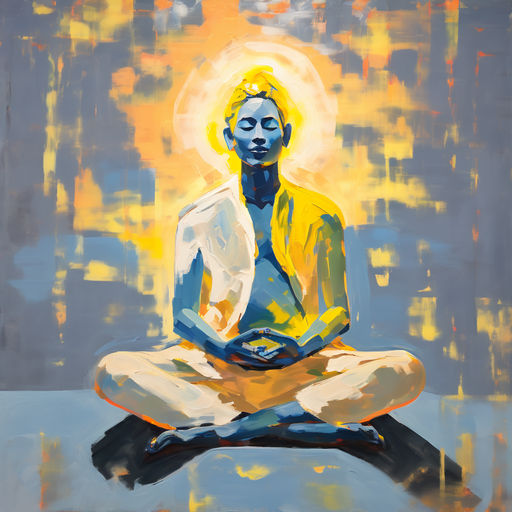
Nonduality, a term often tossed around in philosophical and spiritual circles, is frequently misunderstood or oversimplified. But a deeper dive into its nuances, especially the concepts of horizontal and vertical nonduality, offers a rich tapestry of understanding that challenges our perception of reality. So, let’s embark on a journey between these two dimensions of experience.
**Horizontal Nonduality: A Symphony of Connection**
In the cacophony of life, amidst the myriad of forms, species, and people, there lies a silent song of unity. This is the realm of horizontal nonduality, where everything, regardless of its outer appearance, dances to the same rhythm, made of the same substance or essence.
This perspective is akin to viewing a vast ocean. On the surface, we see waves of various sizes and shapes crashing and retreating. They seem separate, each with its own identity. However, dive a little deeper, and one quickly realizes that all waves are part of the same vast body of water. Similarly, horizontal nonduality emphasizes the interconnectedness of all beings, revealing that the distinctions we observe are mere waves on the surface of a more profound unity.
**Vertical Nonduality: The Abyss of the Absolute**
Beyond the bustling dance of life and form, there lies an infinite silence, a void, a realm untouched by time and space. This is the territory of vertical nonduality. It speaks of an experience that transcends our worldly understanding, pointing towards an absolute reality that’s formless, timeless, and spaceless.
If horizontal nonduality is about recognizing the unity of the ocean’s waves, vertical nonduality is about plunging into the depths, where the concept of a wave doesn’t even exist. It’s about the direct realization that one’s true essence is beyond the ephemeral play of forms.
**Integrating the Two: A Holistic Dance**
While it may seem like these two dimensions stand at odds, a truly profound understanding of nonduality weaves them together in a harmonious dance. It’s neither about negating the beauty and diversity of the world (horizontal) nor about solely transcending it (vertical). Instead, it’s about holding both in a delicate balance.
Imagine living in a world where you can marvel at the beauty of individual snowflakes while being deeply rooted in the knowledge that they all share the same watery essence. This balance provides a holistic lens, allowing us to engage with the world with depth, compassion, and wisdom.
In conclusion, the dance between horizontal and vertical nonduality offers not just a philosophical perspective, but a transformative way of engaging with life. By understanding and integrating both these dimensions, we open ourselves to a richer, more profound experience of reality, where the play of forms and the formless essence coexist in a beautiful, harmonious symphony.
Morgan O. Smith
Yinnergy Meditation & My Book, Bodhi in the Brain…Available Now!
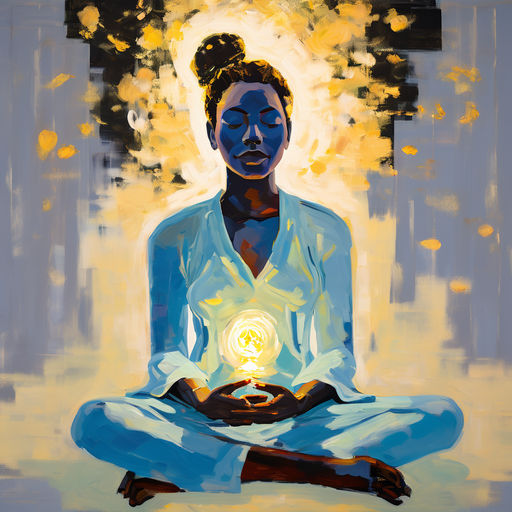
The journey of self-understanding often leads us to explore the contours of our own ego. The ego, our sense of self-identity, manifests in countless facets that embody our personality traits, motivations, and behaviours. Each of these facets, be they positive attributes like resilience and compassion, or negative tendencies such as jealousy and arrogance, forms an integral part of our self-image.
Picture the constellation of traits that define you. Some shine brilliantly, reflecting your strengths and virtues. Some might be darker, representing the areas we struggle with or seek to improve. These are the multiple dimensions of our identity, as intricate and vast as the cosmos itself.
Deep spiritual or mystical experiences can profoundly alter this constellation. During these moments of transcendence, the negative facets, those shadowy stars, seem to fade away. We are left with only the positive aspects, creating a luminous sense of heightened self-worth, inner peace, and profound connection with the world around us.
But the journey doesn’t stop at this dualistic understanding. As we delve deeper into these transformative moments, we encounter a state of nonduality. In this space, all facets of the ego, positive and negative, exist simultaneously, without clear distinctions or separations. They merge into the grand cosmic dance, each star in our constellation joining the larger cosmos, allowing us to experience the full spectrum of our human existence.
Morgan O. Smith
Yinnergy Meditation & My Book, Bodhi in the Brain…Available Now!
A Symphony of Sense and Surrender into the Nondual Existence
The ego, a fortress of our individuality, a custodian of our senses, crumbles during a profound psychological event termed ego death. This process, which is akin to crossing the Rubicon of our minds, signifies the temporary dissolution of our self-identity, the fading of our senses, and the surfacing of a cosmic oneness often linked to deep meditative states, transcendental experiences, or psychedelic journeys.
Neurologically, ego death presents an intriguing event. Our brain’s default mode network (DMN), which curates our self-narrative and sets us apart from others, shows a marked decrease in activity. We can compare it to a maestro leaving the stage, silencing the orchestra of our everyday consciousness that incessantly plays symphonies of thoughts, memories, and future projections.
In the ensuing stillness, our senses embark on an incredible transformation. The self-nonself dichotomy wavers, and feelings of oneness and interconnectedness seep in.
The conventional five senses, along with lesser-known ones such as proprioception (spatial orientation of our body parts), and thermoception (sense of temperature), recede, rendering the self imperceptible. Even the sense of agency – the consciousness of controlling one’s actions – seems to dissolve.
In place of the sensory absence comes the phenomena of nonduality – the essence of existence, unblemished by ego-driven distortions. Here, the biological reality of our senses converges with an intense metaphysical experience.
Kundalini rising – a sensation akin to a large serpent ascending the spine, activating each energy center or ‘chakra’ – might manifest in this transformative journey. Biologically, it could be perceived as a surge in nervous energy influencing neural circuits, engendering a radical alteration in perception.
The dissolution of our sense of time – chronoception – engulfs us in a timeless realm. Our sense of spatial orientation capitulates, inducing a feeling of non-locality, a state where one’s existence feels omnipresent.
This whole process might seem like an experiential validation of ‘absolute monism’ – a philosophical school of thought propounding the universe’s oneness, discrediting any duality between the individual and the world.
Yet, ego death is not an end; it’s a transformative beginning. The insights gleaned about the interconnectedness of all life forms and the illusory separateness sculpted by our ego can significantly reshape our lives.
From a wider perspective, ego death can be seen as a philosophical odyssey leading to an experiential understanding of consciousness, the essence of selfhood, and the nature of reality. The unravelling of our senses and ego sheds light on our inherent unity, nurturing a profound sense of compassion that percolates into every aspect of our existence.
Ego death’s exploration and its impact on our senses offer an avenue to challenge our conventional ways of perceiving, question our established sense of being, and dive deeper into the mysteries of our inner and outer universe. It’s not merely a psychological event but a spiritual expedition and a philosophical exploration that propels us toward a truer understanding of existence.
Morgan O. Smith
Yinnergy Meditation & My Book, Bodhi in the Brain…Available Now!
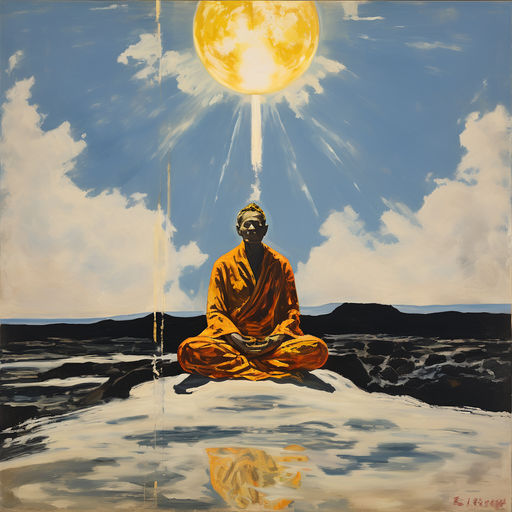
Introduction: In the realm of philosophy and spirituality, two captivating concepts often spark profound contemplation and open doors to expanded understanding: paradox and nonduality. Both concepts challenge our conventional modes of thinking and invite us to explore the nature of reality and consciousness. In this thought-provoking blog, we will delve into the differences and similarities between paradox and nonduality, and delve into their roles in the context of spiritual awakening.
Paradox: Illuminating the Mystery Within Paradoxes are enigmatic statements or situations that defy our logical expectations and challenge our understanding of reality. They present us with apparent contradictions, forcing us to question our assumptions and explore deeper layers of truth. Paradoxes are often the gateways to expanded consciousness, as they push the boundaries of our thinking and invite us to embrace the complexities and mysteries of existence. They are the mind’s playground, a fertile ground for philosophical inquiry and intellectual growth. Nonduality: Beyond Duality, Towards Unity Nonduality, on the other hand, transcends the realm of paradox by recognizing the illusory nature of dualistic distinctions altogether. It is a profound philosophical and spiritual concept that asserts the fundamental unity of all things, beyond conventional boundaries. Nonduality suggests that the apparent separation between self and other, subject and object, is an illusion that obscures the deeper truth of interconnectedness. It invites us to explore the essence of oneness that lies at the heart of existence, beyond the limitations of dualistic thinking.
Differences and Similarities: While paradox and nonduality are distinct in their approaches, they share some intriguing similarities. Both concepts challenge our preconceived notions and invite us to embrace uncertainty. Paradoxes expose the limitations of linear thinking and expand our intellectual horizons, while nonduality goes beyond the realm of paradox by embracing a holistic view of reality. They both foster an open-mindedness that allows for new perspectives and insights to emerge.
In the realm of spiritual awakening, both paradox and nonduality play crucial roles. Paradoxes serve as catalysts, shaking us out of our complacency and inviting us to question our deeply held beliefs. They disrupt our habitual patterns of thinking and awaken us to the inherent mystery and wonder of existence. Nonduality, on the other hand, offers a framework for understanding the ultimate truth of interconnectedness. It guides us towards a direct experience of unity and helps dissolve the illusory boundaries that separate us from the world and others.
Conclusion: Paradox and nonduality are two fascinating concepts that contribute to our philosophical and spiritual growth. Paradoxes challenge our intellect and expand our understanding, while nonduality transcends dualistic thinking and reveals the profound interconnectedness of all things. By embracing both paradox and nonduality, we can embark on a transformative journey of self-discovery and spiritual awakening. They invite us to explore the depths of our consciousness and contemplate the profound mysteries of existence. Let us embrace the paradoxes that confront us and open our hearts to the boundless unity that nonduality reveals. In this harmonious dance, we find the keys to unlocking the doors of awakening and embracing the vastness of our being.
Morgan O. Smith
Yinnergy Meditation & My Book, Bodhi in the Brain…Available Now!
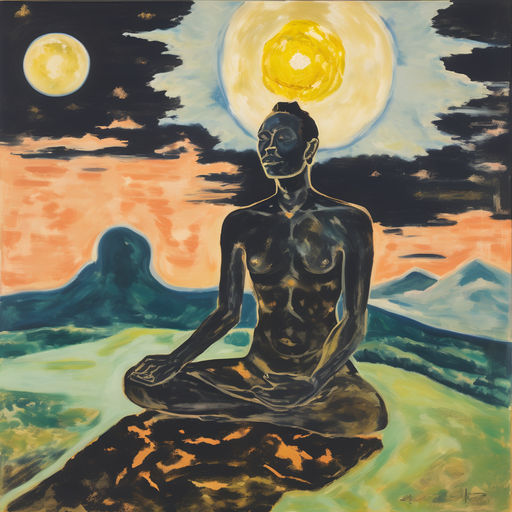
Introduction: Deep within the cosmos, lies an interconnected web of creation. Many spiritual traditions and contemporary philosophies propose the notion of Nonduality – the idea that everything in the universe is woven from a single thread. This post delves into an intriguing proposition: that every single thing in the entire universe was, is, and will be created with just one thought.
The Essence of Thought: Thought, in its purest form, is an emanation of consciousness. The ancient sages believed that the universe itself is a manifestation of cosmic consciousness. This single, all-encompassing thought is the seed from which the boundless universe springs forth.
The Nature of Nonduality: Nonduality implies that there is no separation between the observer and the observed, between subject and object. This interconnectedness suggests that the whole of creation is intrinsically linked to our own consciousness. The singular thought that manifests the universe is also the foundation of our individual thoughts and perceptions.
The Scientific Angle: In modern times, the field of quantum physics has begun to echo the ancient wisdom of Nonduality. Particles can be in multiple places at once and are deeply interconnected. Some physicists even posit that consciousness itself may be a fundamental aspect of the universe, interweaving thought with the fabric of reality.
The Ripple Effect: Considering the idea that creation stems from a single thought, our own thoughts take on new significance. Each thought could be seen as a ripple in the cosmic ocean, interacting with and shaping the universe in ways beyond our comprehension. Our thoughts, emotions, and actions might have a more profound impact on the fabric of existence than we realize.
Practical Implications: If we accept the notion of a singular thought behind creation, how does this affect our daily lives? It could be a call to mindfulness; to recognize the power and potential in our own thoughts. By aligning ourselves with the constructive, compassionate aspects of thought, we can contribute to the positive unfolding of the universe.
Conclusion: The idea that everything is born of a single thought is a profound and enchanting concept that bridges ancient wisdom with contemporary science. As we navigate the waves of existence, let us be mindful of the ripples we create. The universe, in all its complexity, might just be the echo of one resounding thought.
Morgan O. Smith
Yinnergy Meditation & My Book, Bodhi in the Brain…Available Now!
Unravelling the Unity of Being in Nondual Realization
Introduction: Nondual realization, a concept deeply rooted in various spiritual and philosophical traditions, beckons us to unravel the intricate fabric of perceived separateness. It nudges us to fathom that our heads, shoulders, knees, and toes are not disjoint fragments, but an interwoven tapestry of existence that extends beyond our physical form to encompass the entirety of the cosmos.
The Mirage of Separation: Our conditioned minds are apt at categorizing and labelling. We discern our body parts as separate entities, our thoughts as ours alone, and our experiences as exclusive. This discernment perpetuates a mirage of separation, where we see ourselves as isolated entities distinct from others and the world around us.
The Confluence of Suchness: Nondual realization, however, invites us to shed these layers of compartmentalization and dive into the undercurrent of ‘suchness’. Suchness refers to the raw, unfiltered state of existence, free from conceptualizations. At this juncture, the distinctions blur, and the head, shoulders, knees, and toes emerge not as isolated landmarks but as interconnected contours of a boundless landscape.
Unity in Diversity: Imagine a symphony where every instrument contributes to a harmonious melody. Each note, when observed in isolation, has its identity, but together they create music that is beyond the sum of its parts. Similarly, in the realm of nondual awareness, every form and phenomenon is an integral note in the cosmic symphony.
Bodies Within the Cosmic Body: In the space of nondual awareness, the body is seen not as a solitary vessel but as a wave in the ocean of existence. Each wave is distinct yet made of the same essence as the ocean. The ‘body’ extends beyond physical form and encapsulates the trees, stars, and galaxies – all expressions of the same primordial energy.
Relevance in the Modern World: In an era characterized by division and strife, embracing the understanding of nonduality can be transformative. When we recognize the interconnectedness of all forms and phenomena, compassion and empathy naturally flow. As we perceive others and the environment not as separate but as extensions of ourselves, a sense of stewardship and responsibility emerges.
Conclusion: Nondual realization is not just a philosophical concept, but an experiential reality that can awaken us to the interconnected tapestry of existence. By perceiving the unity in diversity, recognizing the body as a microcosm of the cosmic body, and letting go of entrenched categorizations, we can nurture a more inclusive, compassionate, and harmonious world. This realization invites us to not only tread more lightly upon the Earth but also to embrace the boundlessness of our being.
Morgan O. Smith
Yinnergy Meditation & My Book, Bodhi in the Brain…Available Now!
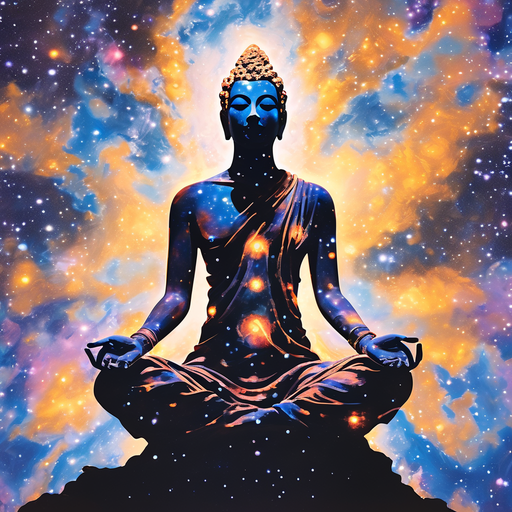
Introduction: In the realm of profound philosophical inquiry, few concepts have captivated human minds as powerfully as the notion of nonduality. It beckons us to delve deeper into the nature of existence, challenging our preconceived notions and inviting us to explore the uncharted territories of paradox. Yet, amidst the vast expanse of literature and discourse on the subject, there lies an untrodden path, a unique perspective awaiting discovery. In this thought-provoking blog, we embark on a journey to unravel the tapestry of nonduality, weaving together the threads of seemingly opposing concepts in a way that illuminates the unexplored corners of our understanding.
Section 1: Subject-Object Wholeness: The Mirage of Separation Traditionally, nonduality has been described as the dissolution of the boundary between subject and object. But what if we were to consider that this boundary is not merely an illusion to be dissolved, but rather a fundamental aspect of the interconnected whole? By embracing the paradoxical nature of subject and object, we transcend the notion of a binary relationship and uncover a rich tapestry where both unity and diversity dance in harmony. Section 2: The Dance of Infinity and Finitude: An Eternal Synchrony Infinity and finitude have long been viewed as opposites, forever in conflict. However, a fresh perspective emerges when we recognize that infinity does not exist apart from the finite, but rather encompasses it. Just as a droplet of water contains the essence of the vast ocean, the finite contains within it the spark of infinity. In this revelation, we discover an eternal synchrony where the boundaries between the two dissolve, revealing a profound interplay of expansion and limitation.
Section 3: Embracing the Yin and Yang: The Alchemy of Dualities Within the realm of nonduality, the interplay of positive and negative transcends mere opposition. Rather than negating each other, they fuse together in a cosmic dance, giving rise to the intricate tapestry of existence. By reframing our perspective, we find that positivity and negativity are two essential forces that co-create the symphony of life, providing contrasting hues that bring depth and richness to our human experience.
Section 4: The Timeless Now: Eternity and Temporality Unveiled Eternity and time often appear as irreconcilable opposites, with eternity representing a timeless realm and time embodying the ephemeral. However, what if we were to explore the idea that eternity is not separate from time, but rather encompasses it? In the ever-present now, the eternal reveals itself as the foundation from which time emerges. As we attune ourselves to this perspective, we can embrace the cyclical dance of birth, growth, decay, and renewal, while remaining anchored in the timeless essence.
Section 5: The Nondual Kaleidoscope: Beyond Samsara and Nirvana Samsara and nirvana, often considered opposing states, are entwined in the fabric of nonduality. The transformative potential lies not in escaping samsara for a transcendent nirvana, but in recognizing that both exist within the same spectrum of experience. By embracing the paradoxical nature of these concepts, we open ourselves to the possibility of finding liberation amidst the cycles of existence, fostering a profound integration of the sacred and mundane.
Conclusion: As we conclude our exploration into the uncharted realms of nonduality, we find that the fabric of existence is a tapestry of paradox, where unity and diversity, finitude and infinity, positive and negative, eternity and time, samsara and nirvana, ultimate and relative, spirit and matter, one and many, Atman and Brahman, form and emptiness, merge and interweave in a dance of cosmic significance. This unique perspective on nonduality challenges us to embrace the complexity and interplay of seemingly opposing concepts, inviting us to transcend our limited understanding and explore the profound depths of existence.
In this exploration, we are called to relinquish the impulse to categorize and label, to move beyond the constraints of linear thinking, and to embrace the boundless potential that arises when we hold paradox with reverence. It is within these liminal spaces that our consciousness expands, allowing us to perceive the interconnectedness of all things and the underlying unity that permeates the fabric of reality.
By contemplating this unique perspective on nonduality, we can cultivate a transformative shift in our perception of the world. We begin to see the inherent beauty in the interplay of opposites, recognizing that it is through the harmonization of these apparent contradictions that we can truly embrace the totality of our existence.
As we navigate the complexities of life, let us remember that the paradoxes we encounter are not obstacles to be overcome but gateways to profound insight and understanding. By embracing the intricate dance of nonduality, we embark on a journey of self-discovery and interconnectedness, transcending the limitations of our individual perspectives and merging with the vast cosmic tapestry of existence.
In this grand symphony of paradox, we are invited to become active participants, co-creators of our own reality. By engaging with the multifaceted nature of existence, we can honour the unity within diversity, find solace in the ever-present now, and discover the profound interconnectedness that weaves through all aspects of life.
So, let us venture forth with open hearts and curious minds, ready to explore the uncharted territories of nonduality. Let us embrace the unique perspective that transcends the boundaries of verbal expression and literature, and in doing so, may we awaken to the awe-inspiring beauty of the paradoxical tapestry that lies beyond the veil.
Morgan O. Smith
Yinnergy Meditation & My Book, Bodhi in the Brain…Available Now!