Nothing Is Not Hidden

“Nothing” is what it appears to be. The difficulty is not its subtlety, but our resistance to the obvious. Bias does not distort reality by adding complexity; it obscures by insisting that something more must be there.

The mind is conditioned to hunt for substance. It scans experience for objects, causes, meanings, and conclusions. When it encounters absence, silence, or emptiness, it assumes a failure of perception rather than the possibility that absence itself is the disclosure. Nothing is dismissed as a placeholder, a gap waiting to be filled, instead of recognized as complete.

Bias enters quietly. It wears the mask of intelligence, spirituality, and discernment. It whispers that truth must be profound, layered, or difficult to access. It suggests that what is immediately present cannot be ultimate, because it does not feel earned. Yet this assumption is precisely what blocks seeing.

Nothing does not hide behind form. It is revealed as form. Every sensation, thought, and emotion arises from it without leaving it. The error lies in expecting Nothing to announce itself as an object among objects. It does not compete for attention. It is the condition allowing attention to appear at all.

Seeking reinforces the bias. The seeker assumes a distance between what is and what should be known. That distance is imagined. Nothing is already fully exposed, but the demand for interpretation overlays it with concepts, metaphysics, and personal narratives. The obvious becomes invisible because it lacks drama.

Bias also clings to continuity. It prefers stable identities, persistent meanings, and coherent stories. Nothing threatens these preferences, not by opposing them, but by showing they were never fixed to begin with. The mind resists this not out of fear of annihilation, but out of loyalty to familiarity.

Seeing Nothing requires no refinement of perception. It requires the cessation of interference. When bias relaxes, what remains is not a revelation, but an acknowledgment. Nothing stands as it always has—unconcealed, ordinary, and sufficient.

No transformation is required to meet it. Only the willingness to stop arguing with what is already clear.

Morgan O. Smith

Get Your Free Copy of My Book, Bodhi in the Brain!

https://subscribepage.io/oTSZQu

Nothing Exists

The Witness Alone Remains

Every belief we hold about reality begins with a fundamental assumption: that something exists. Objects, thoughts, emotions, and even the concept of the self are taken as undeniable truths. But when we look closer, reality reveals itself to be far less solid. Strip away perceptions, dismantle the narratives, and what remains? Nothing. Not the nothing of absence, but a profound, living nothingness that holds the potential for everything.

The paradox lies here: if nothing truly exists, then what is aware of this nothing? What observes the rise and fall of sensations, thoughts, and forms? The answer is the witness—pure awareness, untouched by the shifting currents of existence. It is not an object that can be grasped, but the context in which all objects appear.

What Is the Witness?

The witness is not the thinking mind or the personality you’ve constructed through years of conditioning. It is that which observes even the mind itself. The witness is silent, still, and ever-present. It is not bound by time, nor does it possess a location. While the body and thoughts belong to the world of form, the witness transcends it entirely.

When you recognize the witness, the illusion of existence begins to unravel. The objects of your awareness—whether external events or internal thoughts—are revealed to be fleeting, momentary phenomena. They appear, they shift, and they dissolve, leaving no trace of permanence. The witness alone remains unchanged, untouched by the dance of creation and destruction.

Nothingness as Freedom

The recognition that nothing exists liberates you from attachment. If everything is transient, then clinging to any experience, belief, or identity is an exercise in futility. This does not mean rejecting the world but meeting it with openness, seeing it for what it is: a play of appearances arising within the vastness of nothingness.

This nothingness is not cold or lifeless. It is the fertile void from which all existence springs, a source of infinite creativity and potential. The witness watches the unfolding of this creative process, yet remains uninvolved, free from entanglement.

Who Experiences Existence?

The ultimate question arises: if nothing exists, how can existence be experienced at all? The witness is both the perceiver and the essence of existence itself. It is through the act of witnessing that “existence” takes on meaning. Without the witness, there is no one to perceive existence. The world, as we know it, cannot exist independently of the awareness observing it.

This insight has profound implications. The separation between the experiencer and the experienced dissolves. Reality is no longer something “out there” to be analyzed or controlled; it is a dynamic flow that arises within you, as you. The witness is not apart from existence—it is existence, recognizing itself through the illusion of separation.

Living as the Witness

To live as the witness does not mean rejecting the world or detaching from life. It means fully engaging with reality while knowing its true nature. You move through life with clarity, seeing that every thought, every sensation, and every moment arises from nothing and returns to nothing. The recognition of this emptiness brings freedom—not a withdrawal from life, but a deeper immersion in its sacredness.

When the witness becomes your anchor, suffering loses its grip. Challenges and emotions no longer define you; they are simply waves in the ocean of awareness. Relationships deepen, as you no longer seek validation or fulfillment from others. The peace of the witness is enough.

This realization is not a conclusion but an ongoing experience. Every moment offers an opportunity to rest in the witness, to see through the illusions of existence, and to marvel at the profound simplicity of being.

Morgan O. Smith

Yinnergy Meditation, Spiritual Life Coaching & My Book, Bodhi in the Brain…Available Now!

https://linktr.ee/morganosmith

You Exist Because Nothing Does

In the profound stillness of existence, there lies a paradox that both mystifies and enlightens: the realization that you exist because Nothing does. This concept, which dances on the edge of comprehension, invites us to explore the depths of nonduality and the nature of our very being.

At the heart of this exploration is the understanding that nothingness is not a void but a fertile ground from which all things arise. This nothingness is the unmanifest potential, the silent source that gives birth to the multiplicity of forms and phenomena we perceive. It is the canvas upon which the universe paints its intricate patterns, each stroke an expression of the infinite potential that lies dormant within the void.

When we delve into the essence of nothingness, we begin to see that it is inseparable from existence. In the words of Eastern philosophy, form and emptiness are two sides of the same coin. The form is the manifest world we experience through our senses, while emptiness is the unmanifest potential that underlies and pervades all existence. This realization dissolves the apparent duality between being and non-being, revealing the inherent unity of all things.


To truly grasp this concept, one must move beyond intellectual understanding and into the realm of direct experience. This journey requires a willingness to let go of preconceived notions and to embrace the unknown with an open heart. As we surrender to the mystery of existence, we may find ourselves awakening to a deeper truth: that our very being is an expression of the infinite potential that lies within the void.

This understanding can have profound implications for how we live our lives. When we recognize that our existence is rooted in nothingness, we can begin to see the transient nature of all things. This realization can free us from the attachments and aversions that bind us, allowing us to navigate the world with a sense of ease and equanimity. We come to understand that, just as waves arise and dissolve in the ocean, our experiences are fleeting expressions of the boundless potential that lies within us.

Furthermore, this insight can inspire a sense of wonder and awe at the miracle of existence. Each moment becomes a precious opportunity to witness the unfolding of the infinite potential that lies at the heart of all things. We come to appreciate the beauty and mystery of life, recognizing that even the most mundane aspects of our experience are imbued with the sacred.


In embracing the paradox that we exist because nothing does, we open ourselves to a deeper understanding of the nature of reality. We come to see that our true essence is not limited to the forms we inhabit but is rooted in the boundless potential that underlies all existence. This realization can transform our perception of ourselves and the world, inviting us to live with greater compassion, wisdom, and grace.

Morgan O. Smith

Yinnergy Meditation, Spiritual Life Coaching & My Book, Bodhi in the Brain…Available Now!

https://linktr.ee/morganosmith

Beyond the Veil of Emptiness

Unraveling the Mystique of Nothingness

In the contemplative realms of the philosophies of the East, the concept of ‘Nothingness’ often surfaces as a profound puzzle, a riddle wrapped in mystery. This notion, far from being a mere absence or void, invites us on a journey beyond the ordinary boundaries of thought and understanding.

When I refer to ‘Nothingness,’ I am pointing towards a reality that eludes the grasp of conventional ideas and definitions. It is not simply a negation of ‘something’ nor a space waiting to be filled. This Nothingness is a state of pure potentiality, unbound by the limitations of conceptual thinking. It is the silent backdrop against which the drama of existence unfolds, yet it is not separate from the play itself.

In the rich landscape of nondual understanding, Nothingness is not a destination to be reached or a concept to be understood. It is the very ground of being, the essence that permeates all existence. In the wisdom traditions of the East, this is often likened to the vastness of space – ever-present, all-encompassing, yet intangible and indefinable.


This exploration into Nothingness challenges the mind’s habitual tendency to label and categorize. It invites a surrender, a letting go of the need to understand or explain. Here, in this space of not-knowing, lies the potential for true spiritual awakening. It is in this realm where the mind is quieted that one may glimpse the ineffable truth of oneness.

In the dance of existence, Nothingness and form interplay seamlessly. Understanding this interplay is not an intellectual exercise but an experiential realization. It is a recognition that form arises from and returns to this formless void, like waves rising and falling in the ocean. This realization brings a sense of liberation, a freedom from the constraints of ego-driven perceptions.

Engaging with this concept of Nothingness requires a radical shift in perspective. It is about seeing beyond the apparent dualities of existence and non-existence, form and formlessness. In this understanding, one recognizes that the true nature of reality transcends these dichotomies.


In conclusion, the journey into Nothingness is not a journey outward to some external reality, but an inward voyage to the depths of one’s being. Here, in the heart of silence and stillness, the mystery of existence reveals itself not as a puzzle to be solved, but as a truth to be lived.

Morgan O. Smith

Yinnergy Meditation, Spiritual Life Coaching & My Book, Bodhi in the Brain…Available Now!

https://linktr.ee/morganosmith

The Philosophical Puzzle

Nothing vs. No Thing

In philosophy, linguistics, and even quantum physics, the concepts of “nothing” and “no thing” stir a deep, often controversial, debate. At first glance, they seem like mere play on words, but their implications run much deeper, touching upon the core of our understanding of existence and reality.

“Nothing,” in its purest sense, refers to the absence of anything. It’s not just an empty space, because even a vacuum is something. It’s the total lack of being, the absolute zero of existence. Philosophers have long grappled with the concept of nothingness, questioning whether it’s even possible to conceive of ‘nothing’ at all. After all, even talking about ‘nothing’ is talking about something.

On the flip side, “no thing” seems to imply a different nuance. It suggests the absence of specific things, rather than the absence of all things. This phrase allows for the existence of some form of reality, even if it’s not the one we are familiar with. It’s the realm where concepts and potentialities live, unmanifested but real in their own right.


The debate between nothing and no thing takes us into the heart of existential questions. Does the universe require something to exist, or can there be a state of true nothingness? And if ‘nothing’ exists, what are its properties? This is not just philosophical musing; it has practical implications in fields like quantum mechanics, where the fabric of reality is in constant flux, and ‘nothingness’ can spontaneously give rise to particles.

The controversy deepens when we consider human perception and language. Our minds are wired to think in terms of things and entities, making it incredibly challenging to conceptualize a state of ‘no thing’ or ‘nothing.’ This linguistic and cognitive limitation shapes our understanding of the world and perhaps limits our ability to grasp the true nature of reality.


In conclusion, the debate over nothing versus no thing is not just a matter of semantics. It’s a profound inquiry into the nature of existence, the limits of human understanding, and the mysteries of the universe. It prompts us to question, explore, and perhaps, accept that some aspects of reality are beyond the grasp of our current knowledge.

Morgan O. Smith

Yinnergy Meditation, Spiritual Life Coaching & My Book, Bodhi in the Brain…Available Now!

https://linktr.ee/morganosmith

The Paradox of the Universe

When we gaze into the vast expanse of the universe, a fundamental question arises: What is the universe made of? It seems like a straightforward inquiry, one that science could answer with theories of matter, energy, particles, and forces. However, upon deeper reflection, the answer becomes less about physics and more about philosophy. The universe, in its most enigmatic form, is made of itself, which paradoxically, is nothing.

This concept, while initially sounding absurd, invites us to explore the nature of existence and the fabric of reality. The universe isn’t just a collection of galaxies, stars, and planets; it’s an intricate tapestry of existence, interwoven with the threads of time, space, and consciousness. To say the universe is made of itself is to acknowledge that it is a self-contained entity, not requiring an external creator or an outside source of substance.


Delving deeper, the idea of the universe being ‘nothing’ challenges our understanding of ‘nothingness’. In philosophy, ‘nothing’ is often considered a state of non-existence, an absence of everything. Yet, in the context of the universe, ‘nothing’ transforms into a concept of boundless potential. This ‘nothing’ is not an emptiness (not in the traditional sense) but a source of all creation, a primordial state from which everything emerged.

This perspective aligns with some interpretations of quantum physics, where the vacuum of space is not empty but teeming with energy and potentiality. It’s in this ‘nothingness’ that particles pop in and out of existence, creating the fabric of reality as we perceive it. Therefore, the universe is made of itself and nothing is not a contradiction but a profound insight into the nature of reality.


The implications of this thought are vast and deeply philosophical. It suggests that the universe, and by extension, our existence, is a self-generated, self-sustaining phenomenon. We are not just in the universe; we are of the universe – an integral part of this grand, incomprehensible entity that is both everything and nothing.

In conclusion, the question of what the universe is made of leads us down a path of deep philosophical contemplation. It reveals that the universe, in its essence, is a paradox, defying the conventional understanding of existence and non-existence. It’s a reminder of the mystery and wonder that surrounds us, an invitation to ponder the unfathomable depths of reality.

Morgan O. Smith

Yinnergy Meditation, Spiritual Life Coaching & My Book, Bodhi in the Brain…Available Now!

https://linktr.ee/morganosmith

Embracing the Void

My Journey from Interconnectedness to the Profound Depths of Nothingness

In the boundless expanse of spiritual exploration, some moments defy the constructs of language and thought, where the self is immersed into an abyss of nothingness, devoid of form, identity, and connection. During my conversation with Steve James on Guru Viking, I touched upon such a moment, sharing an experience where the vibrant tapestry of interconnectedness faded into a profound experience of nothingness.

The spiritual path is often synonymous with a sense of interconnectedness, a realization of the boundless thread that weaves through all of existence, connecting every being, every moment, and every particle in a dance of cosmic unity. However, my journey took an unexpected turn, leading me from the palpable sense of connection to everything into the enigmatic embrace of nothingness.

This shift was not a descent into nihilism, nor was it a negation of the interconnectedness experienced prior. It was an immersion into a state where all forms, connections, and identities dissolved into an infinite void, a space where nothingness was not an absence but a profound presence that enveloped my being.

Experiencing nothingness was not a cessation of existence but a plunge into the very essence of it, devoid of form, thought, and identity. It was a space where the dichotomies of existence and non-existence, self and other, and life and death collapsed into a singular point of indescribable nothingness.

This experience of nothingness, while seemingly paradoxical in the context of interconnectedness, illuminated the evolving and multifaceted nature of the spiritual journey. It showcased that the path is not linear nor bound by the constructs of our understanding and experiences. The spiritual journey is an ever-unfolding mystery, where experiences of interconnectedness and nothingness are different facets of the same indescribable reality.

As I continue to navigate through the infinite landscapes of spirituality, the experience of nothingness serves as a humble reminder of the mystery and unpredictability that defines the spiritual path. It is a reminder that the journey does not adhere to our expectations or understandings but unfolds in its own enigmatic and mystical way.

Morgan O.  Smith

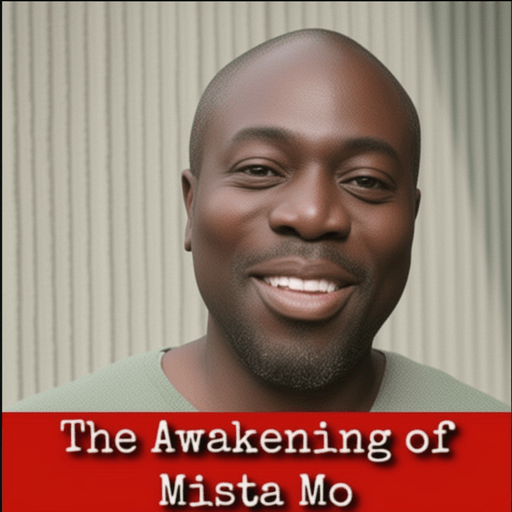
Watch The Awakening of Mista Mo:

Ep 176: The Awakening of Mista Mo

Embark on a captivating expedition in Episode 176, “The Awakening of Mista Mo.” Today, we unravel the transformative journey of Mista Mo, a soul who found enlightenment in the most unexpected corners of life. His tale is one of resilience, discovery, and awakening to a higher calling amidst the cacophony of worldly chaos. As we traverse through his life’s chapters, we uncover pearls of wisdom that beckon a deeper understanding of self and the universe. Join us in this stirring narrative that echoes the eternal quest for inner peace and enlightenment.

A friendly reminder for seekers everywhere: Guru Viking continues to unfurl wisdom every Friday on YouTube. Enrich your spiritual palette on Apple, SoundCloud, and Spotify as well. https://www.guruviking.com/

Yinnergy Meditation & My Book, Bodhi in the Brain…Available Now!

https://linktr.ee/morganosmith