
Understanding the Unity of Existence
Atman is identical to Brahman, fundamentally the same. While Atman is often viewed as the individualized aspect of Brahman, it retains its essence as Brahman. Brahman is the ground of all being, and Atman is but a speck of this divine soil. This soil, sharing the same substance as the ground, emphasizes their intrinsic unity.
Atman itself has no location, shape, or form, yet the physical body—the gross body—does. This physical body is also Atman but has shape and form, making it localized and subject to polarity. The physical body, dense and tangible, includes everything that constitutes it: vibrating strings, subatomic particles, atoms, molecules, and cells. Each of these elements, in their individual form, is Atman.
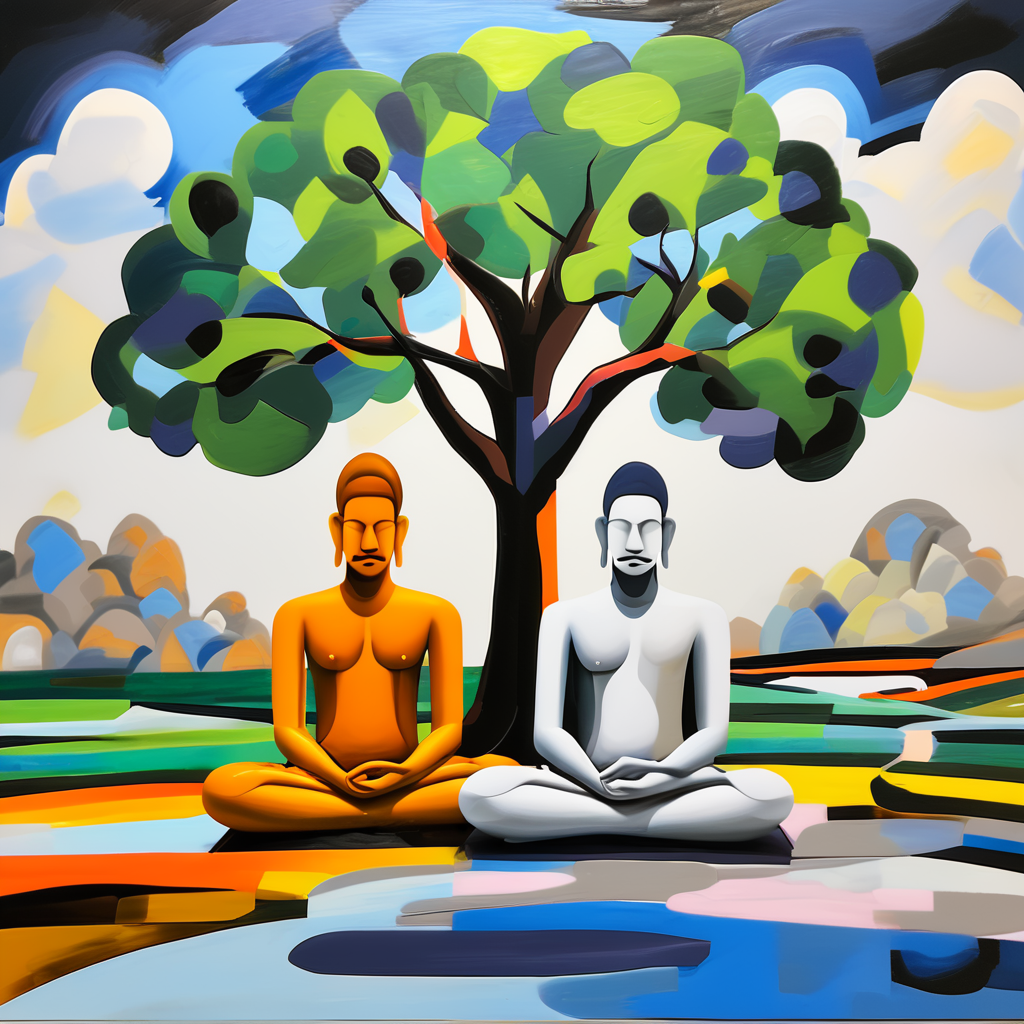
All the subtle bodies are also Atman, spanning from the most subtle to the gross physical body. When the physical body dies, the soul doesn’t leave the body because it is non-local. The soul, as Atman, remains ever-present. Atman offers a more sophisticated explanation of the soul. Remember, Atman doesn’t leave the body because there’s nothing there to leave. This nothing or nothingness is Atman, the empty witness.
The opposite of all shapes and form is indeed all shape and form. Nothingness is non-local, omnipresent, and ubiquitous. In its absolute state, nothingness manifests as everything. This empty witness manifests its individual reality. Every event that occurs from its individual perspective is Atman. Everything that happens, from all perspectives, is Brahman. Atman and Brahman are the same, transcending the ego and the sense of self.

Transcending the ego is an act, part of the cosmic play that Atman/Brahman engages in. The same Atman/Brahman that doesn’t exist yet does. Everything and nothing are the same, merely imagined from two different perspectives.
Morgan O. Smith
Yinnergy Meditation, Spiritual Life Coaching & My Book, Bodhi in the Brain…Available Now!

 Morgan O. Smith