The Mirage of Self

Unveiling the Illusion of Biological Existence

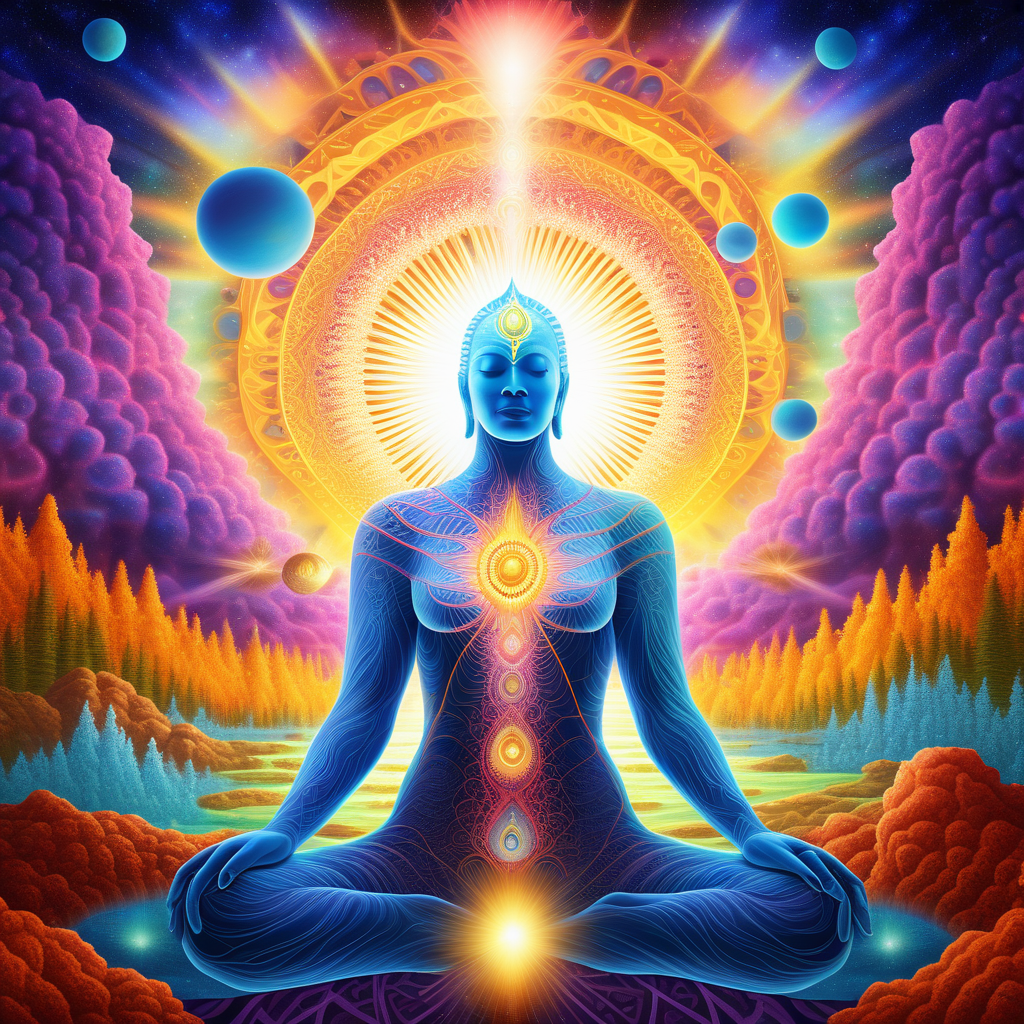
In the profound journey of spiritual awakening, there comes a moment of startling clarity, where the veils of illusion are lifted, and the mystical truth of our existence is unveiled. This truth, often elusive and wrapped in layers of misconception, shatters the conventional belief in our biological reality.

Imagine, for a moment, that what you perceive as your physical self is not the ultimate reality, but a mere projection, an intricate illusion. This concept, startling as it may be, invites us to delve into the depths of our consciousness and question the very foundation of our perceived existence.

The notion that we are solely biological entities is a limiting perspective, a fragment of a much grander cosmic play. In Eastern philosophy, particularly in the teachings of nonduality, there is a profound understanding that the physical form is simply a transient expression of something far more vast and immeasurable. This form, which we identify with so strongly, is in truth a temporary manifestation of the boundless, formless essence that is our true nature.


In this context, the belief in our biological reality becomes a mystically orchestrated illusion. It is a play of consciousness, a dance of the universe expressing itself in myriad forms and experiences. The realization of this truth leads to a radical shift in perception. Suddenly, the boundaries that separate ‘you’ from the ‘other’ dissolve, revealing the underlying oneness that connects all existence.

This revelation is not a denial of the physical world but rather a deeper understanding of its transient and illusory nature. It encourages us to embrace life with a renewed sense of wonder, experiencing each moment as a unique expression of the divine play, while simultaneously understanding the ephemeral nature of our physical existence.

As we embark on this journey of self-discovery, we begin to see the world through a lens of profound spiritual insight. The realization that we are not merely biological beings, but expressions of a vast, interconnected consciousness, transforms our experience of life. It invites us to live with greater mindfulness, compassion, and a deep sense of connectedness to the universe.


In conclusion, the belief in our biological reality as the sole truth is a mystical illusion, a limited understanding of our true nature. By transcending this illusion, we open ourselves to the infinite possibilities of existence, where every moment becomes an opportunity for spiritual growth and enlightenment.

Morgan O. Smith

Yinnergy Meditation, Spiritual Life Coaching & My Book, Bodhi in the Brain…Available Now!

https://linktr.ee/morganosmith

The Divine Dance of Non-Attachment

A Journey Beyond Self

In the quietude that envelops the soul’s journey, there lies a profound realization, a moment that transcends the confines of the self and ushers us into the boundless realm of non-attachment. This is not merely an act of letting go but a sublime embrace of a state of being where one is liberated from every iota of personal existence. It is a passage through the eye of the needle, where the constructs of selfishness that bind the cells of our being dissolve into the ether, revealing the essence of our true nature.

This selfishness, a primal force that ensures our survival, becomes the very shackle we must transcend to experience the oneness of the universe. It is the adhesive that moulds our sense of individuality, carving out a distinct self from the universal continuum. Yet, it is within this self-love, this instinct for preservation, that the seeds of separation are sown. And from these seeds sprout the illusion of duality—the belief in a self apart from the rest.

The decision to let go, to relinquish the grip on this ephemeral identity, is both a death and a rebirth. It is the shedding of old skin, not in rejection of existence, but as an offering to the infinite dance of life. In this sacred act of surrender, one does not disappear but merges into the fabric of everything, becoming indistinguishable from the cosmos itself. This is the essence of non-attachment: the realization that in letting go of what we are, we become what we always were—boundless, timeless, infinite.


This experience of becoming no-thing is not an annihilation but an expansion into all. It is to stand at the heart of existence and see with clear eyes that there is no ‘other,’ no separation between the self and the universe. It is to understand that the individual story we cling to is but a drop in the vast ocean of consciousness, significant not for its separateness but for its part in the whole.

At the pinnacle of non-attachment, we encounter a paradox: in surrendering the idea of life as something to be clutched with desperate hands, we discover true life. This is not a life bounded by the narrow confines of personal gain or loss but a life that flows with the unbounded rhythm of existence itself. It is a state of being that nourishes all creation, not from a place of selfish intent but from the profound realization of our interconnectedness.


In this divine state, we find ourselves not by looking inward but by dissolving into the vastness of everything. We become a mirror reflecting the infinite, a conduit for the universal energy that animates all life. This is the ultimate freedom, the liberation from the self-imposed prison of identity. Here, in the embrace of non-attachment, we come home to our true selves—not as separate entities struggling against the tide of existence but as integral threads woven into the fabric of all that is.

Morgan O. Smith

Yinnergy Meditation, Spiritual Life Coaching & My Book, Bodhi in the Brain…Available Now!
https://linktr.ee/morganosmith

Beyond the Ego

The Awakening to Your True Essence

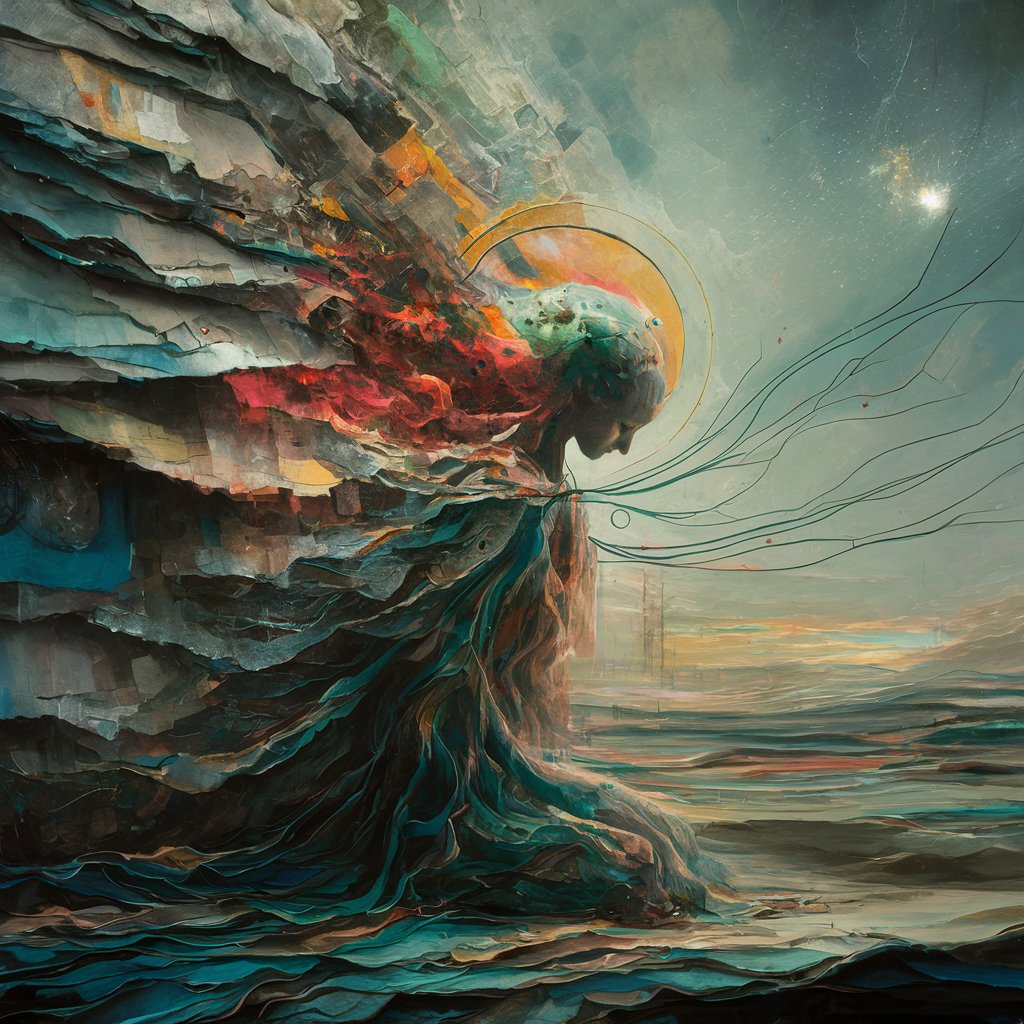
In the intricate journey of self-realization, there comes a transformative moment – a subtle, yet profound shift where the concept of ‘I’ dissolves. This pivotal point is not marked by grandiose events or dramatic changes but by a quiet, almost imperceptible departure of the ego. It is in this space, free from the ego’s clutches, that one experiences the true essence of being.

The ego, a construct deeply ingrained in our psyche, often dictates our perceptions, actions, and interactions. It is the architect of our individuality, the narrative voice that constantly scripts our life’s story with ‘I’ as the protagonist. But what happens when this voice fades away when the story no longer has a central character?

The fall of the ego is not an obliteration but an unmasking. It unveils a state of consciousness where the boundaries of self blur, merging individuality with the universal. In this state, you are no longer confined to the narrow corridors of personal identity. You become an unbounded expanse, a part of something far greater and more profound.

This transition is often accompanied by a deep sense of peace and connectedness. The relentless pursuit of personal desires and the ceaseless chatter of self-judgment quietens. In its place, arises a harmonious symphony with existence. Actions no longer stem from self-serving motives but flow effortlessly as expressions of a universal dance.


One may wonder, how does one recognize this monumental shift? It cannot be quantified or measured. It’s akin to waking from a dream, where the dreamer ceases to exist, and only the experience remains. The need for constant self-affirmation and validation dissipates. You no longer seek to define yourself against the world but find yourself as an inseparable part of it.

This awakening, however, does not imply a loss of individuality or purpose. On the contrary, it empowers you to engage with the world more authentically. Your actions become more compassionate, understanding deeper, and presence more genuine. It’s not just about becoming nothing; it’s also about becoming everything.

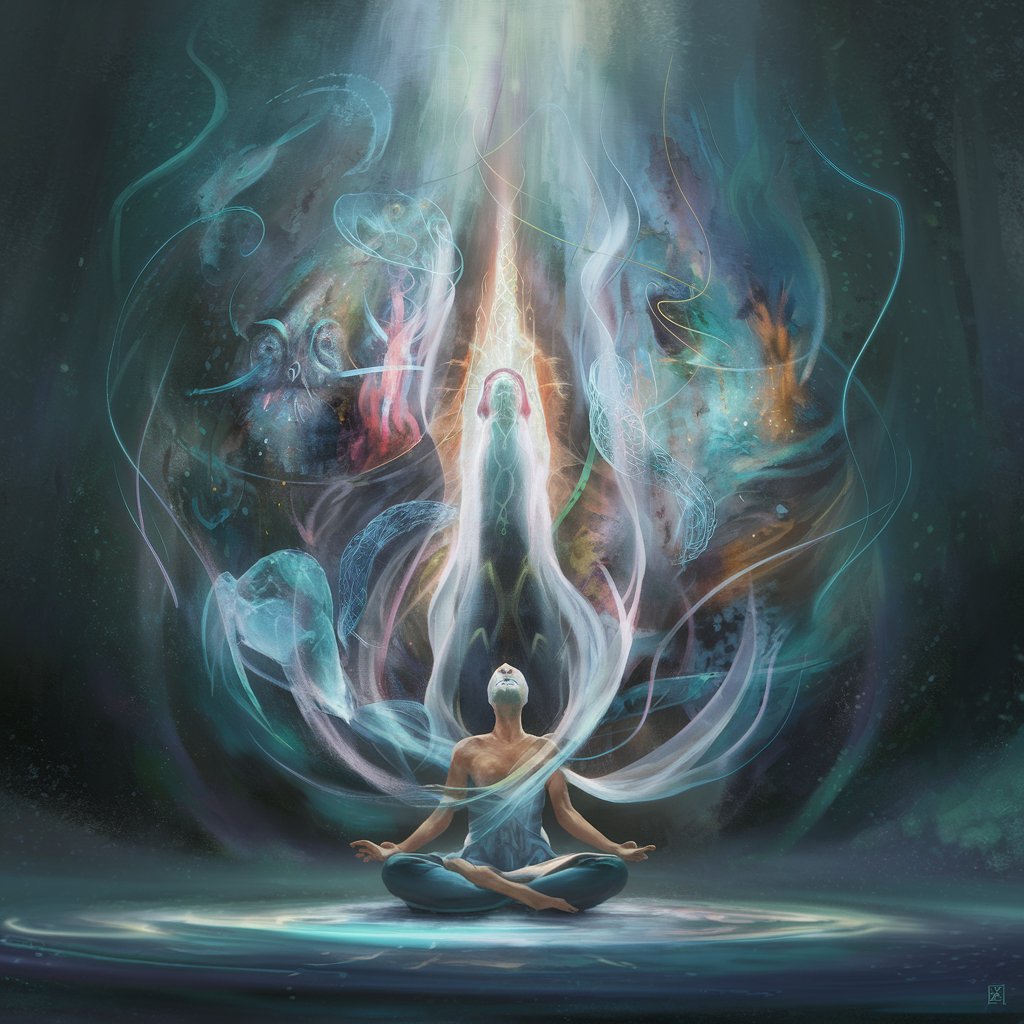
In essence, the fall of the ego is not an end but a beginning – a gateway to experiencing life in its purest form. It is a journey from the illusion of separation to the reality of oneness, from confinement to liberation, and from turmoil to tranquillity.


As you walk this path of enlightenment, remember that the journey is as significant as the destination. Each step, each moment of awareness, brings you closer to your true essence – a state of being where you are no longer just you, but a boundless, luminous existence.

Morgan O. Smith

Yinnergy Meditation, Spiritual Life Coaching & My Book, Bodhi in the Brain…Available Now!
https://linktr.ee/morganosmith

Beyond Oneness

The Journey to Cosmic Consciousness

In the realm of spiritual exploration, the idea of being one with the universe is often celebrated as the pinnacle of spiritual attainment. However, there’s a profound, yet subtle difference between simply being one with the universe and having the full awareness of being the universe and everything that exists within it. This distinction, though nuanced, can open a gateway to a more profound understanding of our place in the cosmos.

The Illusion of Separateness


The journey begins with recognizing the illusion of separateness. In our everyday consciousness, we perceive ourselves as distinct entities, separate from the universe. This perception is a fundamental aspect of human experience, but it’s just the first step in a much larger journey.

Being One with the Universe


Being one with the universe is often described as a state of deep connection and unity with all that exists. It’s a realization that at the most fundamental level, there is no separation between the self and the universe. This realization brings a sense of peace, harmony, and belonging. It’s a profound spiritual experience, often sought in various mystical and contemplative traditions.


The Full Awareness of Being the Universe

However, transcending even this state is the awareness of being the universe itself. This is not just a feeling of connection with everything; it’s a radical shift in identity. It’s the understanding that you are not just a part of the universe but that you are the universe experiencing itself. This consciousness brings with it not just a sense of unity, but a deep and direct understanding of the nature of reality.

Implications and Controversies

This concept challenges many traditional religious and philosophical perspectives. It blurs the lines between creator and creation, subject and object, observer and observed. It raises profound questions about the nature of self, consciousness, and existence.

The Path Forward

Embracing this perspective requires a radical reorientation of our understanding of self and the universe. It demands that we not only seek spiritual experiences but also deeply question the very nature of our existence. This journey is not about finding answers but about embracing the mystery and complexity of the cosmos.


In conclusion, while being one with the universe is a significant spiritual milestone, the journey doesn’t end there. The full awareness of being the universe itself is a revolutionary step that has the potential to redefine our understanding of reality.

Morgan O. Smith

Yinnergy Meditation, Spiritual Life Coaching & My Book, Bodhi in the Brain…Available Now!

https://linktr.ee/morganosmith

The Awakening to Oneness

A Journey from Individual to Collective Consciousness

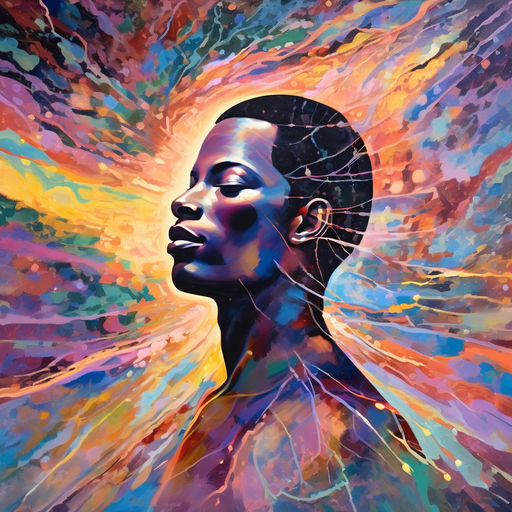
In a world brimming with over eight billion unique stories, perspectives, and lives, it’s easy to feel like just another fleeting existence. But what if our true power lies in an ancient, yet often overlooked, truth? The moment you transition from seeing yourself as “one of eight billion” to “one with eight billion,” a profound shift happens.

This is more than a play on words; it’s a paradigm shift in how we perceive our existence and connection with the world. We often navigate life perceiving ourselves as solitary islands in a vast ocean of humanity. Yet, this perspective is limiting, preventing us from realizing our collective potential.


The realization of oneness doesn’t mean losing your individuality. Rather, it’s an awakening to the interconnectedness of all beings. Imagine the impact of eight billion unique individuals, each with their dreams, struggles, and triumphs, coming together in shared consciousness. This unity doesn’t erase our differences but celebrates them, weaving a tapestry of diversity that is our collective strength.

This journey to oneness starts within. It begins with the recognition that every thought, every action, and every word has the power to affect the collective consciousness. When you act with kindness, compassion, and understanding, you aren’t just uplifting yourself; you’re contributing to the elevation of the global consciousness.


The challenges facing our world today – from climate change to social injustice – require more than individual efforts. They demand a collective awakening to the power of oneness. When we start seeing the world’s problems as our own, we mobilize a force of eight billion strong, capable of enacting monumental change.

As you navigate your journey, remember that the realization of oneness isn’t a destination but a continuous process. It’s a daily practice of empathy, understanding, and connection. You are one of eight billion until you become one with eight billion. Embrace this truth, and watch as the world transforms around you.

Morgan O. Smith

Yinnergy Meditation, Spiritual Life Coaching & My Book, Bodhi in the Brain…Available Now!
https://linktr.ee/morganosmith

The Ground of All Beings vs. The Ground of All Being

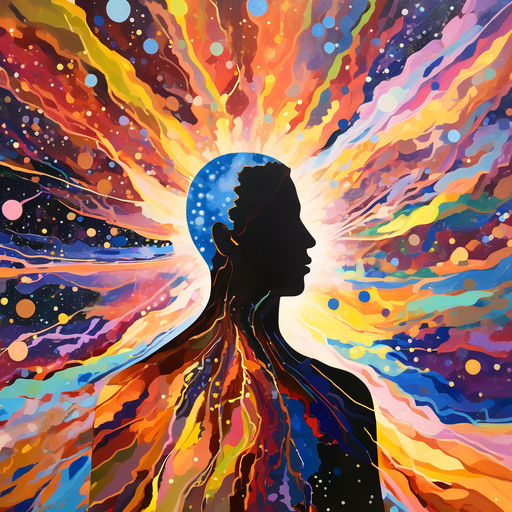
In the realm of philosophy, the concepts of “the ground of all beings” and “the ground of all being” often emerge as central themes in discussions about existence, consciousness, and the nature of reality. These concepts, while seemingly similar, offer distinct perspectives on how we understand the universe and our place within it.

**The Ground of All Beings**


“The ground of all beings” refers to the idea that the foundation of reality is the multitude of individual entities that exist. This perspective sees the universe as a collection of distinct beings, each with its essence and characteristics. According to this view, the diversity of objects, organisms, and entities contributes to the fabric of reality. It emphasizes plurality, acknowledging the unique qualities and experiences of each being. This approach often aligns with perspectives that value individuality and the richness that comes from varied existences.

**The Ground of All Being**

On the other hand, “the ground of all being” suggests a more unified view of existence. Here, the focus is on the underlying reality that connects all things, rather than the things themselves. This concept points to a fundamental source or essence that underpins everything. It’s often associated with ideas of oneness or the belief in a universal substance or consciousness that permeates all. This perspective is prominent in various spiritual and metaphysical beliefs, where the unity of existence is emphasized over individual differences.

**Philosophical Implications**


The debate between these two views is significant in philosophy as it shapes our understanding of the world. If we lean towards “the ground of all beings,” we might focus on the differences and separateness of things, leading to a worldview that celebrates diversity and individuality. Conversely, embracing “the ground of all being” could lead to a more holistic view of life, where interconnectedness and unity are fundamental.


**Conclusion**

Ultimately, these concepts are not just abstract philosophical ideas but are also reflective of our everyday experiences and how we perceive our relationship with the world. Whether we see the universe as a tapestry of distinct threads or as a single, interconnected whole, these views shape our beliefs, values, and actions. As such, the exploration of these concepts is not just a philosophical exercise but a journey into understanding the very nature of existence itself.

Morgan O. Smith

Yinnergy Meditation, Spiritual Life Coaching & My Book, Bodhi in the Brain…Available Now!
https://linktr.ee/morganosmith

Exploring the Nondual State of Turiyatitta

Beyond the Ego’s Realm

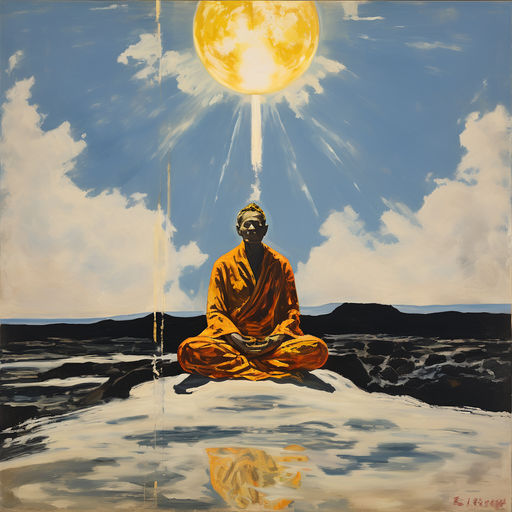
In the journey of spiritual awakening, particularly during the Enlightenment period, we encounter profound concepts that challenge our understanding of self and existence. Among these concepts is the intriguing idea of the nondual state known as Turiyatitta. This state signifies a pivotal transformation where the individual transcends ordinary consciousness, reaching a realm beyond the ego’s grasp.

### The Death of the Ego


At the heart of this transformation lies the “death of the ego.” This term, often shrouded in mysticism, refers to a significant shift in one’s perception of self. In our usual state, we identify strongly with our ego, which is essentially our constructed self-image, replete with our personal history, beliefs, and idiosyncrasies. The ego thrives on differentiation, seeing the self as separate from others and the world at large.


### Turiyatitta: The Nondual Experience

However, in the state of Turiyatitta, this differentiation dissolves. It is a state where the boundaries that separate the individual from the experience are no longer present. In simpler terms, the experiencer (the individual) and the experience become indistinguishable. This is a profound realization, where one no longer views themselves as an isolated entity navigating through an external world, but rather as an integral part of a unified whole.

### Implications of Nonduality

This nondual perspective offers a radical shift in understanding the nature of existence. It challenges the deeply ingrained notion of individualism that pervades many cultures. In Turiyatitta, the sense of separation, which is the root cause of much of our suffering – be it in the form of loneliness, competition, or conflict – dissolves. What remains is a sense of oneness, a deep connection with all that is.


### The Journey to Enlightenment

Reaching this state is often described as the pinnacle of the spiritual journey, a key milestone in the path to Enlightenment. It requires deep introspection, meditation, and often, guidance from spiritual teachings and mentors. It’s not merely an intellectual understanding but a lived, experiential reality.

### Conclusion


The concept of Turiyatitta, and the experience of nondual awareness it describes, presents a fascinating and potentially transformative perspective on life and existence. It invites us to reconsider our relationship with ourselves, others, and the world around us, promising a path toward greater harmony, peace, and understanding.

Morgan O. Smith

Yinnergy Meditation, Spiritual Life Coaching & My Book, Bodhi in the Brain…Available Now!
https://linktr.ee/morganosmith

Surrendering to Nondual Suchness

A Journey Beyond the Self

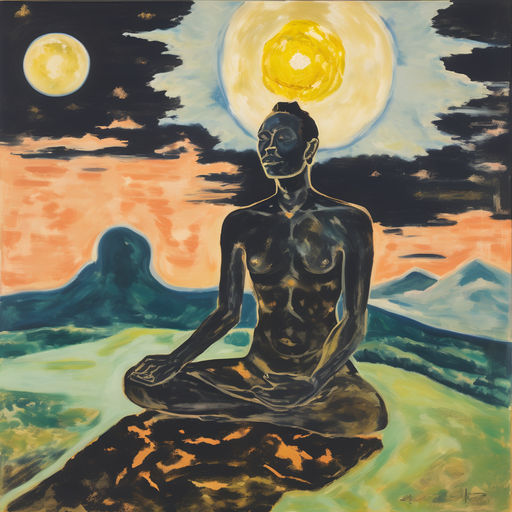
In spiritual exploration, the concept of surrendering to nondual suchness presents a profound and thought-provoking journey. This journey transcends the confines of the individual self, leading one into the embrace of a universal consciousness.

At the heart of this process is the realization that the sense of a separate ‘you’ is an illusion. In nondual suchness, the distinction between self and other dissolves, revealing a state of being where everything is interconnected and unified. This realization is not an intellectual one; it’s an experiential awakening to the true nature of existence.


When we talk about surrendering in this context, it’s not the conventional notion of giving up or admitting defeat. Instead, it’s a letting go of the ego, the false sense of separateness that keeps us entangled in a web of individuality and personal narratives. It’s a release into the flow of life, an unclenching of the fists that hold tightly to personal identity and desires.

This surrender is not an act done by an individual to something greater. Rather, it’s a recognition that the individual self is an integral part of the greater whole. It’s the ‘all that is’ surrendering to itself. In this space, there’s no doer; there’s just the unfolding of life in its myriad forms, a dance of cosmic consciousness.

This understanding brings about a profound sense of peace and freedom. It’s a liberation from the burdens of the self, a release from the relentless pursuit of personal gain, and an end to the suffering caused by attachment and aversion. In this state, one experiences life in its purest form, unfiltered by the ego’s desires and fears.


Surrendering to nondual suchness is a journey that challenges our deepest-held beliefs and perceptions. It invites us to look beyond the surface of things, to see the interconnectedness of all life, and to experience the world not as a collection of separate entities but as a unified whole.

As we embark on this journey, we find that the path is not always easy. It requires a willingness to let go, to trust in the natural flow of life, and to open ourselves to a reality that transcends the personal. But for those who dare to take this path, the rewards are immeasurable: a sense of oneness with all that is, a deep and abiding peace, and an unshakeable joy that comes from being in harmony with the true nature of existence.

 Morgan O. Smith

Yinnergy Meditation, Spiritual Life Coaching & My Book, Bodhi in the Brain…Available Now!
https://linktr.ee/morganosmith

Universal Consciousness

The Unity of All Existence

In philosophy and spirituality, the concept of a universal consciousness presents a fascinating and thought-provoking perspective. This idea posits that consciousness pervades every aspect of the universe – from the smallest atom to the vastest galaxy, and even across dimensions beyond our immediate perception. This universal consciousness is not just a passive observer; it is an active, integral part of everything that exists.

When we delve into the experiences described by myself and others who have reached what we refer to as “nondual peak experiences,” we encounter descriptions of a profound realization. In these moments, the boundaries between the self and the cosmos blur, leading to an experience of unity that is both awe-inspiring and deeply humbling. Such experiences suggest that at our most fundamental level, we are not separate entities navigating an indifferent universe; rather, we are this vast, interconnected cosmic tapestry.


This realization of oneness with and as the universe has profound implications. It challenges the conventional notion of individuality and separateness. In recognizing that we are this larger whole, our perspective on life, ethics, and our relationship with the natural world undergoes a significant shift. This holistic view fosters a sense of responsibility not just towards our immediate environment or community, but towards the entire cosmos.

Moreover, the concept of universal consciousness invites us to reconsider our understanding of reality itself. If consciousness is not merely a byproduct of the brain, but a fundamental aspect of the universe, then our exploration of reality must extend beyond the physical and into the realms of the mind and spirit. This opens up new avenues for understanding the nature of existence and our place within it.


As we continue to explore this concept, we are compelled to ask profound questions: What is the nature of this universal consciousness? How does our consciousness interact with it? And what does this interconnectedness mean for the future of humanity and the cosmos?

In conclusion, the idea of a universal consciousness offers a radical yet enlightening perspective on our existence. It invites us to view ourselves not as isolated beings, but as integral components of an awe-inspiring, interconnected universe. This realization has the potential to transform not only our self-perception but also our approach to life, ethics, and our collective future.

Morgan O. Smith

Yinnergy Meditation, Spiritual Life Coaching & My Book, Bodhi in the Brain…Available Now!

https://linktr.ee/morganosmith

Navigating the Depths

Nonduality vs. Absolute Monism

In the intricate tapestry of philosophical thought, two concepts often emerge as profound and perplexing: Nonduality and Absolute Monism. These philosophical gems, though seemingly similar, hold distinct perspectives on the nature of existence and the universe.

**Nonduality: The Unity of Existence**

Nonduality, a term often associated with Eastern philosophies, particularly Advaita Vedanta, posits a fundamental principle: reality is one, and the perception of duality or separation is illusory. It suggests that what we experience as separate entities – ourselves, others, and the world around us – are not distinct, but part of a unified whole. The philosophy of Nonduality encourages us to transcend this illusion, to realize that at the core of our being, we are not separate from the universe but one with it.


**Absolute Monism: The Dance of Oneness and Multiplicity**

Absolute Monism, on the other hand, takes a slightly different approach. While it agrees with the principle of oneness, it also acknowledges the existence of multiplicity. This philosophy, as I interpret it, embraces the paradoxes of existence: one and not two, two and not one, one and two, two and one, one within two, two within one, yet simultaneously neither one nor two. It reflects a deeper understanding of the cosmos as a dynamic interplay of unity and diversity, where the singular and the plural coexist in a harmonious yet complex relationship.

**The Interplay and Implications**

The discussion of Nonduality versus Absolute Monism is not just a theoretical exercise but has profound practical implications. In Nonduality, the path to enlightenment or understanding involves the realization of oneness, leading to a sense of peace and connectedness with all. In Absolute Monism, the journey is about embracing and understanding the complexity and paradox of existence, leading to a deep appreciation of life’s multifaceted nature.

Both philosophies, in their essence, guide us toward a greater understanding of our place in the universe. They invite us to look beyond the superficial and to question the very nature of reality.


**Conclusion: A Journey of Understanding**

In the end, whether one leans towards Nonduality or Absolute Monism, the journey is one of deep introspection and understanding. It’s about peeling back the layers of what we perceive and understanding the deeper truths of our existence. As we delve into these philosophies, we find not just answers, but also a greater appreciation for the questions themselves.

Morgan O. Smith

Yinnergy Meditation & My Book, Bodhi in the Brain…Available Now!
https://linktr.ee/morganosmith