The Dance of Divine Ignorance

Brahman’s Playful Journey to Self-Realization

From the mysterious depths of Hindu philosophy arises a compelling concept, the notion of divine ignorance. Within this notion, we find an intriguing paradox: Brahman, the supreme reality or absolute truth, embarks on a deliberate voyage of self-forgetfulness, only to rediscover itself anew.

The journey begins with Brahman, the substratum of all existence. As an eternal, infinite entity beyond time, space, and causality, it is all-knowing and all-encompassing. Yet, it willingly dons the cloak of divine ignorance, becoming unaware of its true nature. Why? It’s an act of divine playfulness or ‘lila.’ It is a purposeful exercise to experience life’s duality, diversity, and the contrasts it can offer.

In this state of divine ignorance, Brahman may assume any form, animate or inanimate, and traverse a myriad of experiences, each unique and valuable. As humans, animals, or even as the elements themselves, Brahman willingly dives into the sea of forgetfulness, plunging into the game of life and death, joy and sorrow, love and hatred. Brahman is there in every moment, in every experience, playing hide-and-seek with itself.

Each incarnation in this state is a chapter of the cosmic narrative, leading to an eventual grand finale – the rediscovery of the self as Brahman. This moment of awakening is not a simple return to the start but a profound realization heightened by the accumulated experiences. It is a conscious awareness of oneness, a dissolution of the illusory divide between the self and the universe.

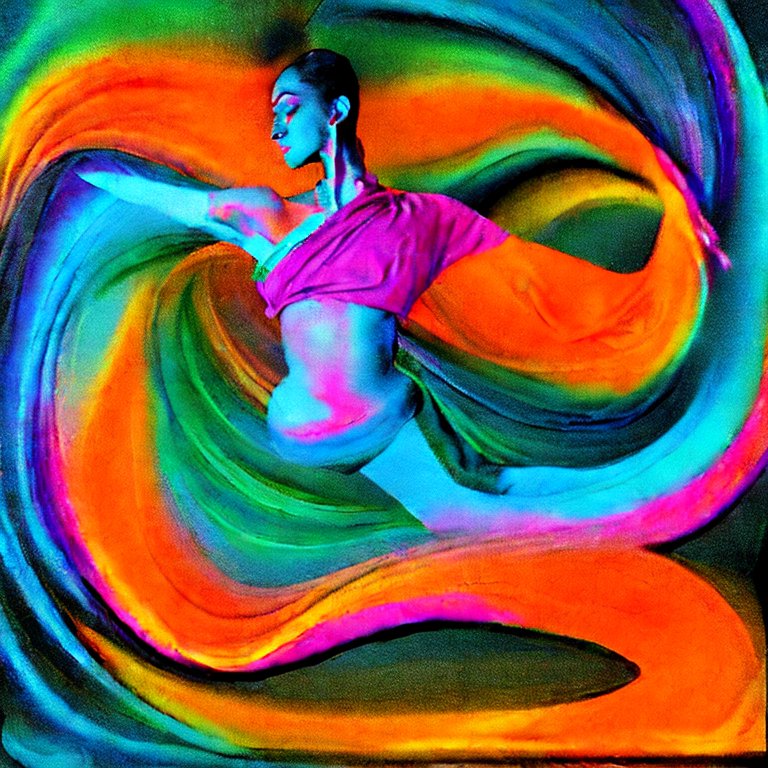
However, this journey isn’t a linear path. It’s a dance, a rhythm of existence where each beat is a cycle of divine ignorance and self-realization. Each turn of the dance spirals upwards, towards an ever-deepening understanding and experience of the truth.

The concept of divine ignorance challenges us to see life not as a series of random events but as a purposeful, meaningful journey toward self-realization. It teaches us that ignorance isn’t a flaw to be eradicated, but an essential part of the cosmic play. It is a transformative cocoon that emerges as the butterfly of awareness.

Divine ignorance invites us to embrace our vulnerabilities, our doubts, and our seeming ‘ignorance,’ and use them as catalysts for growth. It gently reminds us that the path to self-realization isn’t a desperate escape from ignorance but a joyful dance through it.

In conclusion, the dance of divine ignorance is not just Brahman’s journey but ours. We are not separate from Brahman, we are Brahman; playing the role of being a part of it, participating in this cosmic dance. Divine ignorance is not an obstacle but a bridge to our ultimate truth. It’s a profound truth worth reflecting upon, and perhaps, just perhaps, it’s time for us to embrace the dance and rediscover ourselves anew.

Morgan O. Smith

Yinnergy Meditation & My Book, Bodhi in the Brain…Available Now!
https://linktr.ee/morganosmith

The Ultimate Context

A Glimpse Beyond Our Narratives

Life is a tapestry of personal narratives. Each of us is the author of our own story, swept up in the whirl of our everyday trials and tribulations, from the mundane to the monumental. We’re all preoccupied with our victories and defeats, joys and sorrows, dreams and disappointments, which collectively form our unique, personal content. Yet, amidst this tumultuous weave of personal stories, there lurks a broader tapestry, a profound, immutable context that transcends our existences—the Ultimate Reality or the Ultimate Context.

This Ultimate Context is akin to a vast ocean upon which our individual lives are but transient waves. We are too often ignorant of its presence, absorbed in the details of our fleeting crests and troughs, beginnings, and endings. But our myopic vision deprives us of the understanding that our waves are inseparable from the larger, unfathomable expanse of the ocean—the Ultimate Reality.

Unveiling the Veil of Illusion

Many philosophical traditions, such as Buddhism and Hinduism, refer to our preoccupation with personal content as an illusion—maya or samsara. This illusion stems from our inability to recognize that the seemingly separate, solid, and enduring ‘self’ we believe ourselves to be is just a wave on the ocean’s surface, part of the boundless, interconnected, and constantly changing Ultimate Reality.

Our inability to perceive this reality is often compared to a dream from which we struggle to awaken. Our ‘personal content’ may seem to us the full reality because it engrosses our senses and emotions, yet it is merely a fragment of the ‘Ultimate Context.’

Rediscovering the Ultimate Context

How do we reorient our focus away from our narratives to understand the Ultimate Context? Philosophies and spiritual traditions around the world suggest varied paths, from rigorous intellectual inquiry to deep meditation. Regardless of the method, the goal remains the same: to transcend the confines of our consciousness and recognize our union with the Ultimate Reality.

Practicing mindfulness and living in the ‘here and now’ is one approach that offers us the chance to step away from our content. Mindfulness offers a way to become aware of the ‘nowness’ of existence, to experience the world and ourselves as a series of interconnected, ephemeral phenomena. Through this process, we can gradually attune ourselves to the Ultimate Context.

The Potential Impact

Imagine what our lives would look like if we acknowledged the Ultimate Context. Our struggles, while not diminished, might be seen in a new light. We would recognize that we are not isolated entities combating a hostile universe, but integral parts of a vast, interconnected whole. This understanding could engender a profound sense of peace, compassion, and interconnectedness, transforming our relationships with ourselves, others, and the world at large.

Embracing the Journey

Venturing into the realm of the Ultimate Context is not an easy task. It requires us to shift our perceptions, to question our deeply ingrained beliefs about ourselves and reality. But the journey, while challenging, holds the promise of a profound transformation—a metamorphosis from a wave oblivious of its oceanic nature to one that rides the currents of existence with grace, understanding, and wonder.

In the end, the Ultimate Context is not a lofty abstraction to be pondered upon, but a living reality to be experienced. It invites us to shift our gaze from the canvas of our content and behold the magnificent tapestry of existence. To make this shift is to awaken from our dream of separateness and embrace the full richness of our interconnected lives. This is not an escape from our day-to-day trials and tribulations but a broader understanding of their place within a larger panorama of existence. By grounding our narratives within the Ultimate Context, we can navigate life’s ups and downs with greater equanimity, wisdom, and inner peace.

Implications for Society

If we expand this understanding from the individual to the collective level, the implications are profound. Recognizing the Ultimate Context could revolutionize our approach to societal issues, from climate change to social inequality. Instead of viewing these problems through the narrow lens of individualistic concerns, we would perceive them as disruptions in the interconnected web of existence that they truly are. This could catalyze a more compassionate, holistic, and effective response.

The Ultimate Journey

The journey toward the Ultimate Context is more than a philosophical quest. It is a profound transformation, an inner pilgrimage towards a fuller, more interconnected understanding of reality. It is a journey from the known to the unknown, from the surface to the depth, from separateness to oneness.

Embracing the Ultimate Context does not mean rejecting our content, our individual stories. Instead, it invites us to view them as integral threads of a grander cosmic tapestry. The beauty of our trials and tribulations, our victories and defeats, lies in their interconnectedness with everything else that exists.

In this journey, we are not alone. Every individual, consciously or unconsciously, is a traveller on this path. We are all part of the same quest, the same unfolding story of discovering and understanding the Ultimate Context. As we navigate this path, let us remember that our waves are not separate from the ocean. They are the ocean, expressing itself in all its diversity, beauty, and mystery. In embracing the Ultimate Context, we celebrate not just our narratives, but the grand saga of existence itself.

Morgan O. Smith

Yinnergy Meditation & My Book, Bodhi in the Brain…Available Now!

https://linktr.ee/morganosmith

The Quest for Wholeness

Nirvana, Moksha, and Sahaja Samadhi

Introduction:

In the frantic, cacophonous world we inhabit, the pursuit of true peace of mind has become more essential than ever. Many of us harbour a longing, often unarticulated, for a state of being that transcends the mundanity of our daily routines. This is not just about calming the mind; it’s about an all-encompassing peace that permeates every fibre of our being – peace of the mind, heart, and gut. This form of liberation, known in different cultures as Nirvana, Moksha, or Sahaja Samadhi, is the ultimate aspiration.

Body:

I. Understanding the Concepts
Nirvana, a term originating from Buddhism, literally means ‘to extinguish’. It is the extinguishing of desires, ignorance, and the sense of self. Moksha, rooted in Hinduism, signifies liberation from the cycle of birth and rebirth, and the realization of one’s unity with the ultimate reality or Brahman. Sahaja Samadhi is an effortless state of deep spiritual absorption, where one is simultaneously aware of the inner Self and the external world. These three concepts, while having different origins, converge on the notion of liberation and inner peace.

II. The Nature of True Peace
True peace is not merely the absence of conflict; it is a profound sense of unity and harmony within oneself and with the universe. It’s a sense of completeness and fulfillment that is not contingent on external circumstances. It is in this state that the heart finds contentment, the mind is unshaken, and even the gut, often referred to as the ‘second brain’, is at ease.

III. The Journey Within
The quest for true peace demands a deep, inward journey. This is a path of self-discovery, contemplation, and inner transformation. Through meditation, self-reflection, and sometimes through guidance from spiritual traditions, one begins to detach from the illusions and constraints of the material world.

IV. The Liberation of the Self

In reaching Nirvana, Moksha, or Sahaja Samadhi, the self is liberated. This liberation is an awakening to the true nature of reality. It’s the realization that our essential self is not separate from the universe. This sense of oneness alleviates the turmoil of the heart, the restlessness of the mind, and the tension within the gut.

V. The Role of Compassion and Mindfulness
Compassion towards oneself and others is a vital component of this journey. It is through a compassionate heart that one can embrace the imperfections of human existence. Additionally, mindfulness helps in cultivating an awareness of the present moment, which is fundamental in the pursuit of inner peace.

Conclusion:

The pursuit of true peace, as epitomized in Nirvana, Moksha, or Sahaja Samadhi, is a deeply enriching and transformative journey. It’s not just an intellectual exercise but an all-encompassing spiritual endeavour that engages the mind, heart, and gut. This form of liberation is the pinnacle of human aspiration and a goal that can guide us toward a more harmonious and fulfilling existence.

Morgan O. Smith

Yinnergy Meditation & My Book, Bodhi in the Brain…Available Now!

https://linktr.ee/morganosmith

Journey to the Ultimate

The Spiritual Awakening of Absolute Monism & Integral Theory

Introduction:

In our diverse universe, imagine a state of consciousness where everything converges into a singular, unified essence. A state where you’re not just you, but rather, an intricate piece of the grand cosmic tapestry, seamlessly woven into the fabric of existence. Welcome to the spiritual awakening of Absolute Monism via the lens of Integral Theory—a journey that transcends the self and experiences the whole, simultaneously, in all its diverse magnificence.

The Quadrants of Integral Theory:

1. The ‘I’ Awakening: Transcending the Self
Personal subjective experiences make up our individual worlds. But what happens when these individual worlds collapse into a singular, universal experience? This is the spiritual awakening in the “I” quadrant. Here, you no longer perceive yourself as separate from the universe. You recognize your thoughts, emotions, and consciousness as expressions of the universal consciousness, leading to an inner peace that extends beyond conventional understanding. You start identifying with the all-encompassing “One”.

2. The ‘We’ Awakening: Dissolving Boundaries

The “We” quadrant is where cultural experiences and shared values reside. Awakening here means transcending societal constructs. The realization dawns that every life form, despite its apparent differences, shares the same underlying essence. A profound sense of empathy, compassion, and unity replaces the illusion of separation between “us” and “them”.

3. The ‘It’ Awakening: Synchronized Existence
The “It” quadrant focuses on our actions and behaviours, the outward expression of our internal states. In the Absolute Monism context, you begin to see yourself as an integral part of the cosmos, operating under universal laws. This awareness induces a deep resonance with nature, promoting a harmonious co-existence with all beings and a seamless flow in action.

4. The ‘It’s’ Awakening: Unified Reality
In the “Its” quadrant, the focus shifts to societal structures and systems. A spiritual awakening in this quadrant facilitates the understanding that these structures are not independent but are integral parts of the all-encompassing One. Society, nature, and the cosmos are seen as interconnected facets of a singular, unified reality.

Conclusion:

Experiencing all four quadrants simultaneously leads to a profound shift in consciousness—an unwavering sense of interconnectedness, an innate understanding of the unity of existence, and an indomitable peace with the ebb and flow of life. It’s a transcendence that integrates all aspects of reality into an all-encompassing experience of oneness—an embodiment of Absolute Monism through the framework of Integral Theory.

Indeed, this spiritual awakening illuminates the essence of Absolute Monism—the philosophical view that all aspects of reality are manifestations of the same ultimate essence or spirit. Are we ready to embark on this journey toward a unified consciousness? For, in this ultimate spiritual awakening, we discover the extraordinary in the ordinary, and the universe in ourselves.

Morgan O. Smith

Yinnergy Meditation & My Book, Bodhi in the Brain…Available Now!

https://linktr.ee/morganosmith