The Courage of Radical Openness

Seeing others as thyself is not a moral instruction. It is a perceptual shift. A reorientation of how reality is registered once the reflex to divide dissolves.

Eyes wide open does not mean naïve seeing. It means perception unclouded by projection. Faces are no longer screens for personal history, unmet needs, or inherited narratives. Another person appears as they are—complex, conditioned, luminous, conflicted—without being reduced to a role. Judgment loosens because clarity replaces assumption. Seeing becomes intimate without being invasive.

A heart wide open does not imply emotional excess or boundarylessness. It signals availability. The willingness to feel without selecting which feelings are permitted. Joy is allowed. Discomfort is allowed. Grief is allowed. Compassion emerges not as effort, but as resonance. Another’s pain is not absorbed as obligation, nor deflected as inconvenience. It is simply felt as part of the shared field of experience.

A mind wide open is not the absence of thought. It is freedom from fixation. Opinions lose their rigidity. Certainty softens. The need to be right gives way to the capacity to understand. This openness does not erase discernment; it refines it. Differences remain visible, but no longer threaten identity. Perspective becomes spacious enough to hold contradiction without collapse.

Seeing others as thyself does not blur individuality. It reveals its true context. Distinct lives, distinct stories, distinct expressions, arising within the same indivisible reality. Separation persists as appearance, not as truth. What dissolves is the belief that the boundary is absolute.

This way of seeing cannot be forced. Ethics alone cannot produce it. It unfolds naturally as identification loosens its grip on a singular point of view. The centre quietly falls away. What remains is not detachment, but intimacy without possession.

From this recognition, action changes. Speech becomes more careful, not from fear, but from sensitivity. Listening deepens because there is no urgency to defend a position. Even conflict transforms. Disagreement no longer requires dehumanization. Accountability no longer requires condemnation.

Seeing others as thyself is not about becoming better. It is about becoming honest. Honest about what has always been the case beneath habit and conditioning. No hierarchy of worth. No isolated self standing apart from the whole. Only different expressions of the same life, meeting itself again and again, through countless faces.

Morgan O. Smith

Get Your Free Copy of My Book, Bodhi in the Brain!
https://subscribepage.io/oTSZQu

Nothing Is Not Hidden

“Nothing” is what it appears to be. The difficulty is not its subtlety, but our resistance to the obvious. Bias does not distort reality by adding complexity; it obscures by insisting that something more must be there.

The mind is conditioned to hunt for substance. It scans experience for objects, causes, meanings, and conclusions. When it encounters absence, silence, or emptiness, it assumes a failure of perception rather than the possibility that absence itself is the disclosure. Nothing is dismissed as a placeholder, a gap waiting to be filled, instead of recognized as complete.

Bias enters quietly. It wears the mask of intelligence, spirituality, and discernment. It whispers that truth must be profound, layered, or difficult to access. It suggests that what is immediately present cannot be ultimate, because it does not feel earned. Yet this assumption is precisely what blocks seeing.

Nothing does not hide behind form. It is revealed as form. Every sensation, thought, and emotion arises from it without leaving it. The error lies in expecting Nothing to announce itself as an object among objects. It does not compete for attention. It is the condition allowing attention to appear at all.

Seeking reinforces the bias. The seeker assumes a distance between what is and what should be known. That distance is imagined. Nothing is already fully exposed, but the demand for interpretation overlays it with concepts, metaphysics, and personal narratives. The obvious becomes invisible because it lacks drama.

Bias also clings to continuity. It prefers stable identities, persistent meanings, and coherent stories. Nothing threatens these preferences, not by opposing them, but by showing they were never fixed to begin with. The mind resists this not out of fear of annihilation, but out of loyalty to familiarity.

Seeing Nothing requires no refinement of perception. It requires the cessation of interference. When bias relaxes, what remains is not a revelation, but an acknowledgment. Nothing stands as it always has—unconcealed, ordinary, and sufficient.

No transformation is required to meet it. Only the willingness to stop arguing with what is already clear.

Morgan O. Smith

Get Your Free Copy of My Book, Bodhi in the Brain!
https://subscribepage.io/oTSZQu

All Perspectives, Held at Once

The mind is trained to move. It scans, compares, chooses, rejects. Such motion gives the impression that reality must be approached piece by piece, perspective by perspective, as though truth were a puzzle assembled over time. Yet there is another mode of knowing; one that does not move at all.

When awareness rests in itself, perspectives no longer compete for dominance. They appear simultaneously, without hierarchy. Subjective feeling, objective fact, cultural meaning, and systemic pattern are no longer separate lenses fighting for authority. Each arises as a facet of the same totality, already complete.

Grasping all perspectives at once does not require encyclopedic knowledge or intellectual speed. It requires the absence of contraction. The moment the need to stand somewhere collapses, the whole field becomes visible. No viewpoint is excluded because none is defended.

Contradiction dissolves here; not because differences vanish, but because opposition depends on identification. When awareness is no longer anchored to a single position, opposing views reveal themselves as complementary expressions of one indivisible reality. What once appeared irreconcilable is now seen as mutually arising.

This capacity does not belong to the personality. It is not a skill developed through effort or refinement. It emerges naturally when the sense of being a separate observer relaxes. What remains is a silent comprehension that does not argue, does not conclude, and does not seek resolution.

From this clarity, compassion becomes effortless. Every stance, every belief, every action is understood from its own internal logic. Judgment falls away, replaced by direct recognition. Even confusion is seen clearly, without resistance.

Such seeing does not flatten the world. It deepens it. Distinctions remain, yet none claim ownership of truth. The full spectrum of existence is held without strain, like light containing every colour without favouring one.

Nothing new is acquired here. Something false simply stops obscuring what was always present.

Morgan O. Smith

Get Your Free Copy of My Book, Bodhi in the Brain!

https://subscribepage.io/oTSZQu

When Truth Hides Behind Its Own Mask

Falsehood is rarely what it seems. What appears as distortion, contradiction, or misperception still rises from the same source that gives birth to clarity. Nothing stands outside that ground. Even the illusions that mislead the mind are formed from the very substance they conceal.

Untruth doesn’t float in a separate realm. It is reality-bending itself just enough to create contrast. Without that contrast, recognition would never sharpen. Awareness would never deepen. The infinite would never explore itself through finite perception. Every mistaken conclusion, every misreading of a moment, every belief that turns out to be incomplete; all of it is the Absolute wearing a temporary disguise.

The cosmos reveals and conceals itself through the same gesture. Light becomes shadow by changing its angle. Understanding becomes confusion by narrowing its scope. The source never fractures, yet experience presents endless variations that feel divided. Those divisions create the necessary friction for insight to ignite. They teach the mind to release its rigid claims and return to the space where nothing stands apart.

Falsehood is not failure. It is instruction. It is the movement by which consciousness learns to see through its own projections. When a distortion collapses, what remains is not just truth; it is wisdom cultivated through the very mechanism that once obscured it.

Reality’s nature doesn’t falter because a viewpoint misinterprets it. The Absolute keeps expressing itself, even when it appears as error. The mind stumbles, adjusts, expands, and dissolves its boundaries. Through that unfolding, the deeper truth becomes unmistakable.

What hides the Real is made of the Real. And what reveals the Real is made of the same.

Morgan O. Smith

Get Your Free Copy of My Book, Bodhi in the Brain!

https://subscribepage.io/oTSZQu

The Fragrance of Awareness

Why Everything Begins to Appear Beautiful

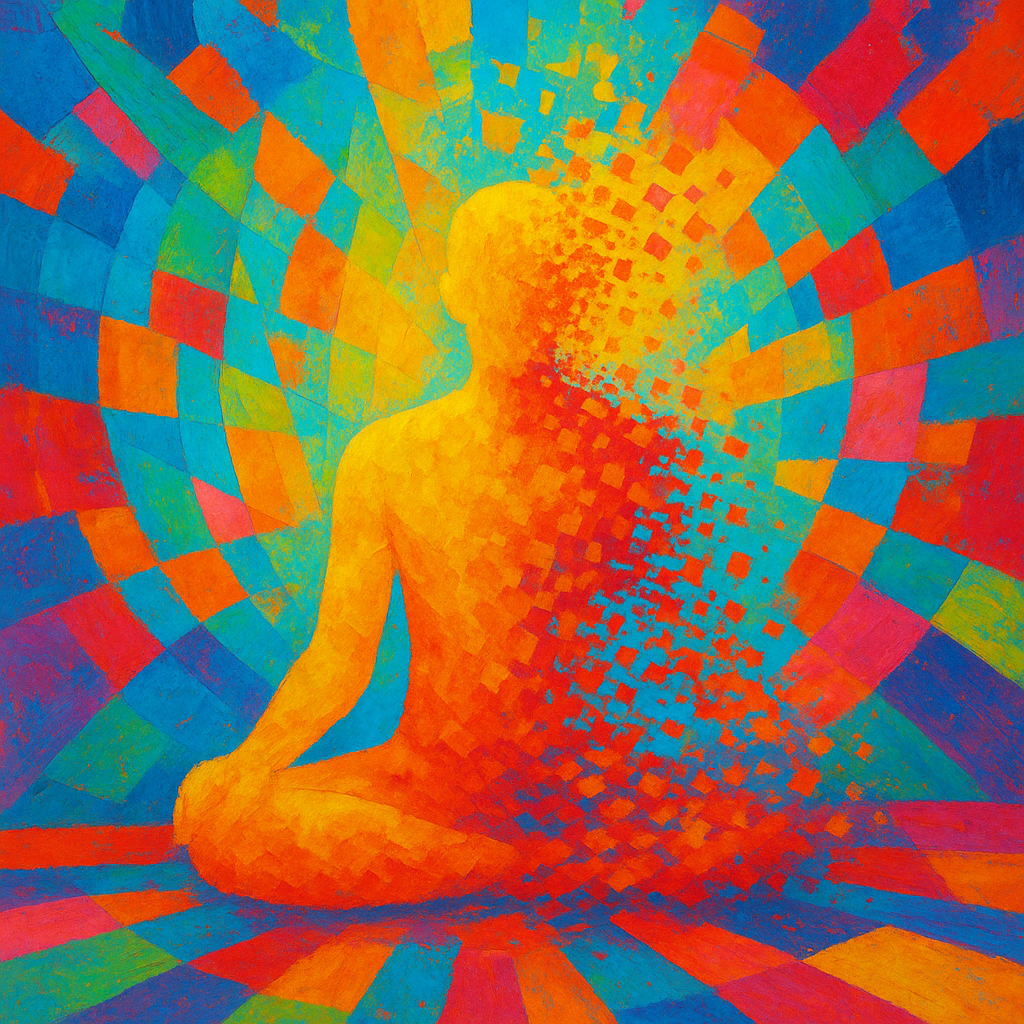
Long-term meditation reshapes perception not by adding new qualities to reality, but by stripping away the distortions that once filtered it. What was previously judged as ugly, tragic, or unjust begins to reveal a quiet radiance beneath its form. The world does not change; awareness does. Beauty ceases to depend on preference. It becomes the natural scent of existence when the mind grows still enough to notice.

When thoughts slow and habitual interpretation dissolves, perception rests directly on what is. The ordinary becomes luminous because there is no longer resistance to what appears. A cracked wall, a wrinkled face, or a moment of loss can shimmer with the same grace as a sunset. Meditation gradually erodes the reflex that divides life into categories of like and dislike, pleasant and unpleasant. What remains is an intimacy with reality so complete that even pain acquires a certain sacred texture.

Beauty, in this sense, is not sentimentality; it is clarity. The mind that no longer insists on how life should look begins to perceive how extraordinary it already is. Awareness witnesses decay and creation as one movement. The tears of grief and the laughter of birth flow from the same source, both radiant with the light of consciousness itself.

This transformation of perception is not a psychological trick; it is the awakening of the senses to their original purity. Meditation returns vision to its natural state; unburdened by personal story, untouched by grasping. To the silent witness, everything breathes with equal dignity. The beggar and the saint, the chaos and the calm, all belong to a single wholeness that can only be described as beautiful beyond reason.

When the veil of self-interest lifts, beauty ceases to be an object and becomes the very field of being. One no longer seeks it. One lives as it.

Morgan O. Smith

Get Your Free Copy of My Book, Bodhi in the Brain!
https://subscribepage.io/oTSZQu

The Silent Agreement Beneath All Voices

Every conviction, no matter how radical or righteous, is an echo of the same unspoken longing to be understood, to belong, to find meaning amid the vastness. Each culture, religion, and ideology carves its own path toward that longing, often believing itself to be the only way. Yet beneath the words, beneath the gestures of defence or devotion, there hums a single vibration that does not divide.

Those who dare to listen beyond preference hear it clearly. The louder the debate, the clearer it becomes that all sides are pleading for the same recognition of their humanity. The fundamental call is not for dominance but for understanding; to be seen through the eyes of unity rather than difference.

Beliefs are useful until they are mistaken for truth. When held too tightly, they become walls. When held lightly, they become windows through which consciousness observes itself from a thousand angles. The awakened mind learns not to choose sides but to perceive the underlying harmony that holds both sides together.

True wisdom is not born from agreement but from capacity; the capacity to listen without fear, to allow contradiction to breathe, to see that diversity of expression is the universe conversing with itself. Every person, every nation, speaks a dialect of the same cosmic language. The argument is never between right and wrong but between two reflections of the same light, each insisting that its brightness is original.

When this is seen, opposition dissolves. The wars of ideology lose their fuel. You begin to recognize that all are reaching toward the same ineffable truth, merely using different words to describe it. What remains is not a conclusion but a profound peace; the peace of seeing through the illusion of difference.

Morgan O. Smith

Get Your Free Copy of My Book, Bodhi in the Brain!
https://subscribepage.io/oTSZQu

The Precision of Perception

Why Interpretation Shapes Your Awakening

Reality isn’t hiding. What conceals it is the web of interpretations spun by the mind: assumptions, projections, and inherited beliefs. Yet, paradoxically, it is through interpretation that one begins to peel away those very veils. Every interpretation is a mirror. The question is: what is it reflecting?

Interpretation matters because it reveals where you are on the developmental spiral. Crude, reactive interpretations reflect lower rungs of psychological growth; often rooted in fear, blame, or a need for certainty. As awareness matures, interpretations become more nuanced, inclusive, and paradox-tolerant. They start to echo the underlying unity of things, rather than just categorize them.

Interpretation is not merely a mental activity. It is a soul signal. The more refined it becomes, the closer it gets to silence, the point where no interpretation is needed. That is the paradox. The highest interpretation doesn’t claim to know; it bows. It listens. It dissolves.

Yet such dissolution is not a regression into vagueness. It is the clarity that comes when all interpretations have done their job and exhausted their usefulness. Then what remains is the directness of being—your true nature—not as a conclusion, but as the very absence of conclusion.

This is why interpretation is not to be dismissed but refined. It is a bridge. And the more accurate your interpretation of the world, the closer you walk toward the unconditioned—what no interpretation can contain, but all of them secretly point toward.

What you interpret is what you live. Misinterpret life, and you suffer. Align with it, and you awaken. Accuracy in perception is not about being “right”; it is about being real. Every step you take toward clearer interpretation is a step toward the Real that has no opposite.

Morgan O. Smith

Get Your Free Copy of My Book, Bodhi in the Brain!

https://subscribepage.io/oTSZQu

The Fiction of Randomness

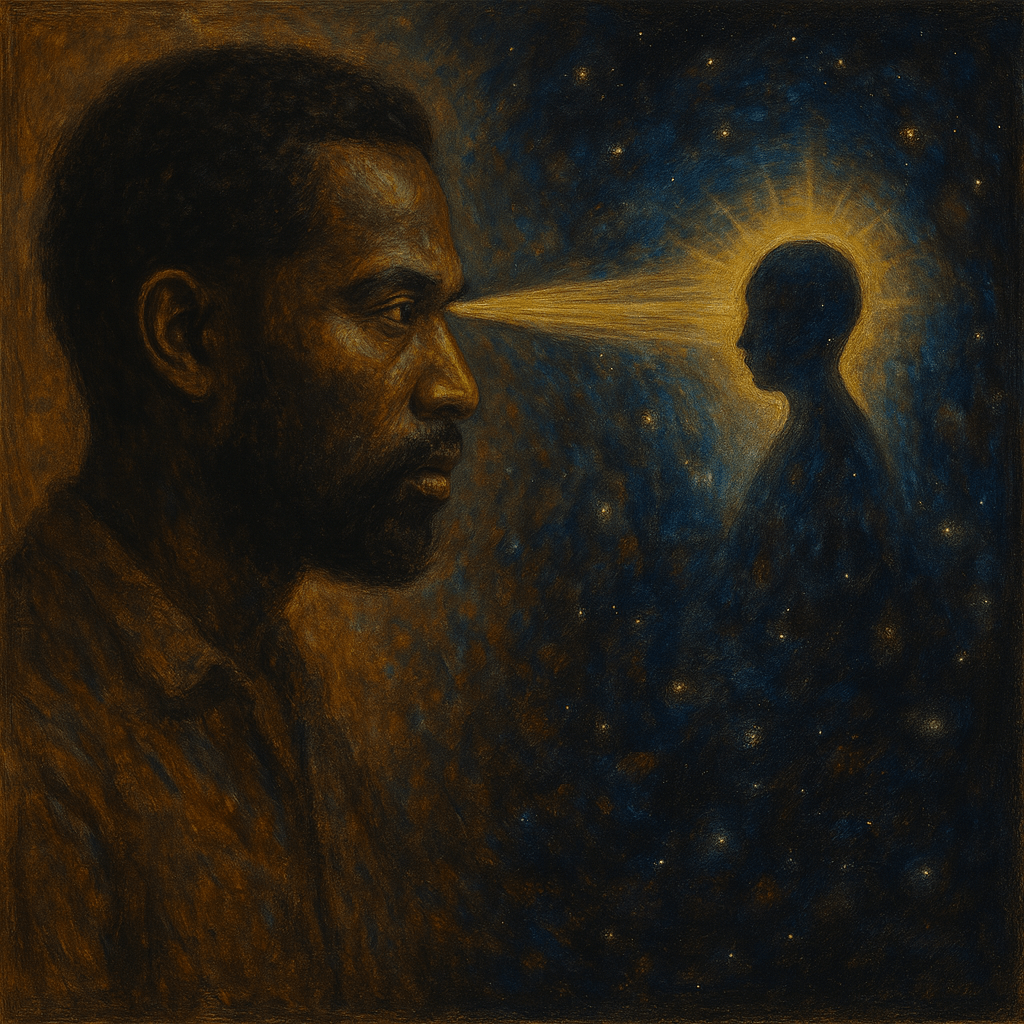
If every effect has a cause, what room remains for the idea of “random”? Strip away the assumptions and peer into the structure of unfolding—what appears arbitrary may only be the limit of our perception, not the limit of reality.

What we call random is simply what we cannot trace. A roll of dice seems disorderly, but beneath it is a network of variables: velocity, angle, friction, momentum, density of the table, even micro-vibrations in the air. Were we to measure all these with precision, we would predict the outcome every time. The surprise we feel isn’t due to chaos, but to ignorance.

This is not about turning life into a mechanical calculation. Quite the opposite. It’s about bowing to a deeper intelligence that is so vast, so precise, it weaves galaxies from the quantum breath of atoms. When nothing is out of place, even disorder is part of a symmetry too subtle for the linear mind to grasp.

Events that seem unexplainable—miracles, tragedies, synchronicities—often get dumped into the “random” pile because they defy our narratives. Yet each thread is embedded in a continuum of unfolding, stretching far beyond memory, culture, or even lifetime.

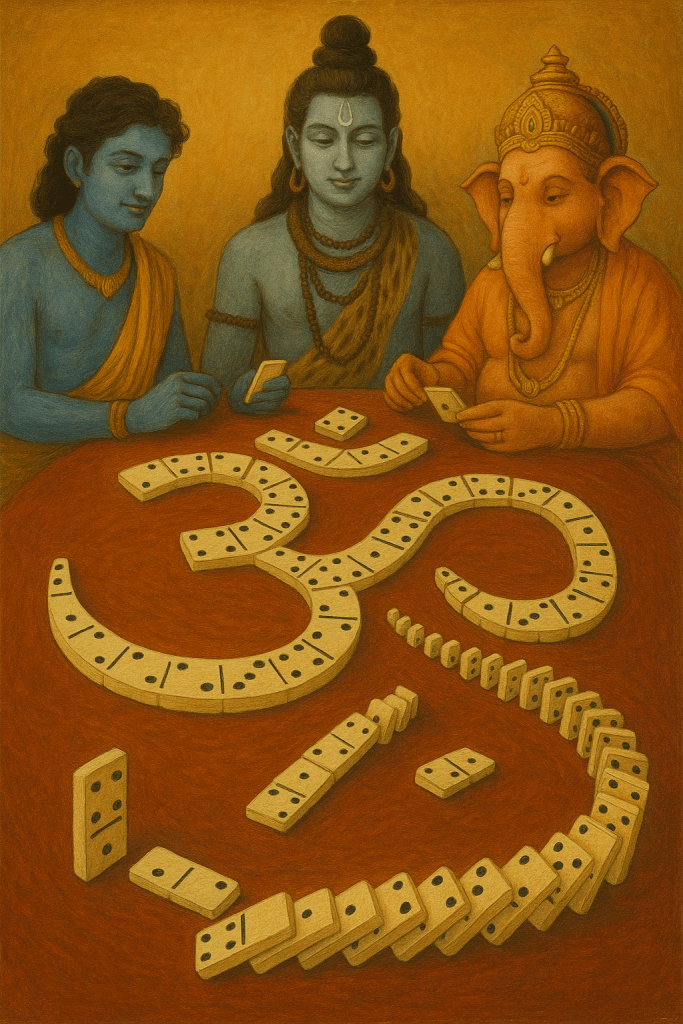
To say life is random is to deny the sacred choreography of emergence. Every moment is connected, not as dominoes collapsing mindlessly, but as a living mandala of causes so intricately interlaced they cannot be undone or simplified.

When one begins to see this—really see it—the need to explain, justify, or control begins to fall away. What replaces it is not fatalism, but participation. There is no randomness, only the undetected curvature of deeper causality. And when that is recognized, trust becomes more than a spiritual concept. It becomes a way of being.

Morgan O. Smith

Get Your Free Copy of My Book, Bodhi in the Brain!
https://subscribepage.io/oTSZQu

Beyond Identity

The Illusion of Separation and the Boundless Self

What You Are Not

Strip away the names, the labels, the ideas, and what remains? Nothing. And yet, in that nothingness, everything arises. You have no true identity, defined form, or fixed point in time or space—yet you appear as all things. You are not this body, not this mind, not even the grand concept of the self that you have clung to. What you believe yourself to be is merely a shadow of what you truly are.

The illusion of separation creates the experience of individuality. This appearance is not wrong—it is the stage upon which existence plays itself out. But beneath this grand performance, you remain whole, indivisible, untouched. You have never been anything other than totality itself, masquerading as the temporary.

Timeless Existence, Eternal Becoming

You think of yourself as moving through time, yet time moves through you. The past is not behind you, nor is the future ahead—both are simply angles of the same moment, stretching into what appears as linear sequence. The experience of time is an unfolding dream, a dance of perception, measured by the mind yet never truly existing apart from it.

You were never born, nor will you ever die. The body follows its cycle, the mind weaves its stories, but what you are precedes all of this. There is no point at which you began, nor will there be a point where you cease to be. You are not a passenger in the stream of time—you are the river itself, flowing and still, changing yet unchangeable.

The Paradox of Experience

You exist beyond pleasure and pain, yet you experience both. The vastness of what you are embraces every joy, every sorrow, every triumph, and every loss. From the personal vantage point, suffering seems real. From the vastness of what you truly are, it is simply another unfolding, another wave in the great ocean of being.

The universe is not happening to you; you are happening as the universe. Every emotion, every sensation, every moment is a reflection of the infinite nature of your being. To see clearly is to recognize that paradise and suffering are not opposites—they are expressions of the same boundless presence. What is heaven to one may be hell to another, yet both arise within the same limitless field of awareness.

The Grand Play of Forgetting and Remembering

Forgetting is part of the experience. You never truly lost yourself; you only created layers of distraction to deepen the illusion of separation. But beneath the veil, awareness remains unchanged. It watches, it witnesses, it knows.

There is no struggle to remember who you are because you have never truly forgotten. The self you long to rediscover has never been absent. The only thing that obscures it is the illusion of individuality—the belief that you are a fragment rather than the whole.

Creation Without Creating

Nothing is ever truly created, yet everything appears anew in every moment. The universe emerges not from effort, but from the effortless unfolding of being itself. What appears as thought, as energy, as matter, is nothing more than the echo of your own presence.

You are not a separate creator forging reality from the outside—you are reality itself, expressing infinite possibilities without effort. Every concept of manifestation, every idea of cause and effect, dissolves when seen from the vastness of what you are.

The Silence Beyond Thought

Words attempt to define, but what you are cannot be contained by description. Understanding is not needed—only direct experience. This cannot be grasped intellectually; it must be known in the deepest sense, beyond language, beyond belief, beyond the limits of perception.

You are the stillness that speaks, the emptiness that overflows, the silence from which all sound emerges. The mind seeks elaboration, but the truth is found in simplicity. In seeing clearly, you recognize that nothing needs to be said, nothing needs to be explained—because you are already that which you seek.

Morgan O. Smith

Get Your Free Copy of My Book, Bodhi in the Brain!
https://subscribepage.io/oTSZQu

What’s Holding This Together?

What if the world you experience is not held together by physical laws, but by the subtle yet profound force of imagination? While science offers us equations and frameworks to explain existence, imagination provides the unspoken blueprint from which those frameworks arise. This is not mere fantasy or whimsical daydreaming; it is the power of consciousness engaging with its boundless potential.

Reality, as it appears, is an intricate interplay of perception and conception. The moment you imagine something, a field of possibility opens, and through observation, the imagined begins to crystallize into what feels real. What you call “reality” is not separate from imagination; it is imagination solidified through awareness.

At its highest level, imagination ceases to be personal. It becomes universal, aligning with what some might call ultimate reality—existence as it is, unfiltered and unbound by distinctions of subject and object. Here, the act of imagining dissolves into pure being. What remains is not a person imagining, but imagination itself realizing its infinite nature.

The question arises: what does it mean to truly live this understanding? It means acknowledging that your thoughts and imaginings are not trivial; they are active participants in the shaping of your experience. Yet it also means surrendering the egoic notion of control. Imagination, in its ultimate sense, flows from a source beyond the personal. To live as imagination itself is to align with the unfolding of reality without resistance, without clinging to concepts of “my imagination” or “my creation.”

This dynamic interplay of imagination and reality invites a profound freedom. It suggests that your suffering is not a fixed condition, but a construct born of an imagined limitation. By recognizing the fluid nature of what appears solid, you begin to see life as it is: a luminous, creative dance, eternally recreating itself in the space of now.

When the distinction between imagination and reality dissolves, so too does the sense of separation. What remains is the realization that the ultimate imagination and ultimate reality are the same—a seamless, boundless wholeness in which everything arises and dissolves.

Morgan O. Smith

Yinnergy Meditation, Spiritual Life Coaching & My Book, Bodhi in the Brain…Available Now!

https://linktr.ee/morganosmith