Knowing vs. Believing:

A Personal Perspective on Divinity

Throughout my life, many Christians and many individuals from different religious backgrounds have approached me with a question that seems to be etched into our collective spiritual psyche: “Do you believe in God?”

My response is always a bit unexpected: I don’t believe in God. I *know* God. There’s a profound difference between the two, and this distinction shapes my entire spiritual paradigm.

### The Nature of Belief

Belief is an interesting concept. It stems from uncertainty and acts as a bridge between the known and the unknown. When we believe in something, it signifies that we hold it to be true without concrete evidence or direct experience. It’s a leap of faith. It’s the trust we put into things unseen or unverified.

But with knowledge, the dynamics change. Knowledge is grounded in experience, indisputable facts, or personal revelations. When we know something, it is deeply entrenched within us, forming a part of our identity. It’s not just a thought, but a lived experience.

### The Unshakable Foundation of Knowing

To say that I know God is to say that my relationship with the divine is not based on stories, scriptures, or what someone else has told me. It is based on a deep, intrinsic realization. An unwavering certainty that God, or the essence of all there is, permeates every molecule, every thought, every fleeting moment of our existence.

When we come to such profound realizations, words often fail to capture the depth of our experience. To know God is not about conforming to religious doctrines or performing rituals, although those can be paths leading toward this understanding. It is about an inner awakening, a cosmic “aha” moment where everything clicks into place.

### Why Does This Distinction Matter?

In our journey through life, both belief and knowledge have their roles. Belief can be a starting point, a motivator to seek deeper truths, to question, to explore. But belief can also be limiting if it keeps us tethered to dogmas without encouraging personal experience or exploration.

Knowledge, on the other hand, propels us forward. It gives us confidence, clarity, and a sense of purpose. When it comes to the divine, knowledge transforms our perception of the world, ourselves, and our place in the vast expanse of existence.

In conclusion, the journey from belief to knowledge is deeply personal, profound, and transformative. It is about breaking free from external validations and finding the truth within.

Morgan O. Smith

Yinnergy Meditation & My Book, Bodhi in the Brain…Available Now!

https://linktr.ee/morganosmith

The Ego

Many Faces of the “I”

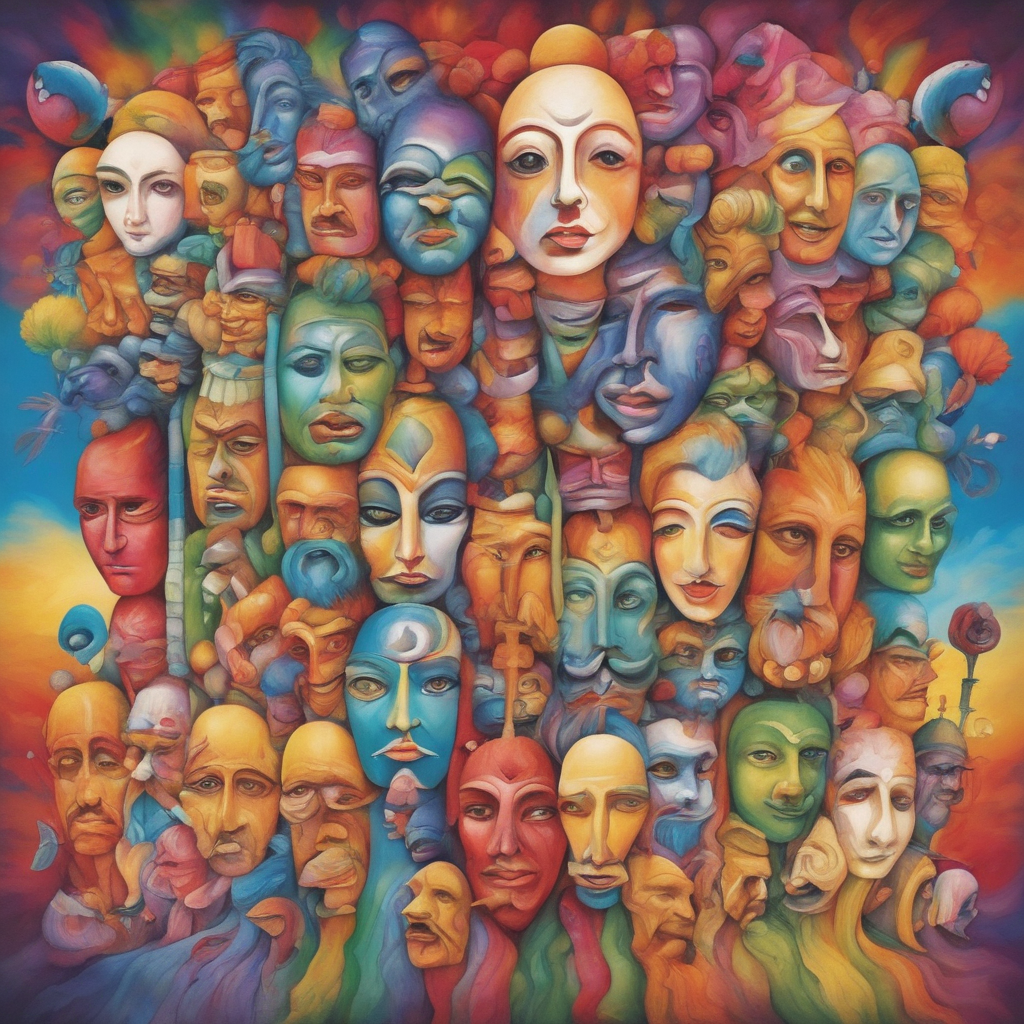
In our quest to understand ourselves, few concepts are as debated, dissected, and deliberated as the ego. Spanning from ancient spiritual scriptures to the modern therapist’s couch, the ego stands as a reflection of our sense of self and our relation to the world. Yet, its definitions vary, painting a multifaceted picture of this central aspect of human existence.

### **1. Ego in Psychoanalysis: The Mediator**

Freud’s tripartite model of the psyche introduced us to the ego as the balancing force between the primal urges of the id and the moral compass of the superego. Here, the ego isn’t an adversary but a necessary mediator, guiding our actions in a world of societal norms. It poses the question: Is our ego the voice of reason amidst internal chaos?

### **2. Ego in General Psychology: The Self’s Mirror**

When we talk about self-esteem or self-worth, we’re often referring to the ego. This definition paints the ego as a mirror reflecting our perceived value and place in the world. Yet, this raises a thought-provoking inquiry: If our ego is a mirror, who or what determines its reflection?

### **3. Ego in Philosophy: The Conscious Observer**
Descartes’ famous dictum “Cogito, ergo sum” (I think, therefore I am) encapsulates the philosophical perspective of the ego as the conscious thinking subject. If our ego is the conscious observer of our experiences, it invites us to ponder: Without this observer, do experiences lose their significance?

### **4. Ego in Spirituality: The Illusory Self**
Many spiritual traditions view the ego as a barrier to enlightenment. It’s the illusory sense of separateness that binds us to suffering. The spiritual perspective urges us to ask: If the ego is an illusion, then who indeed are we beneath this veneer?

### **5. Ego in Pop Culture: The Mask of Pride**
Everyday parlance often equates a “big ego” with arrogance. It’s seen as a mask, sometimes shielding insecurities, other times amplifying genuine pride. This usage compels us to consider: Is the ego merely a façade, and what lies behind it?

### **6. Ego in Eastern Philosophies: The Creator of “I-ness”**

Hindu philosophy introduces Ahamkara, the aspect of us that births the sense of “I.” This ego is neither good nor bad but a natural facet of being human. Reflecting on this, we might wonder: Is the ego, not an enemy but an inevitable companion on our human journey?

**In Conclusion: The Infinite Layers of “I”**

The ego, regardless of its definition, remains at the core of human introspection. Its multifaceted interpretations offer not just explanations but a myriad of questions. As we navigate our understanding of the ego, we’re not just uncovering the layers of this concept but also the layers of our very existence.

In exploring the ego, we’re invited to embark on a profound journey inward, to question, understand, and perhaps even transcend the confines of the “I.” For as varied as its definitions might be, the ego’s ultimate gift is the invitation to self-reflection.

Morgan O. Smith

Yinnergy Meditation & My Book, Bodhi in the Brain…Available Now!
https://linktr.ee/morganosmith

The Dark Night of the Soul vs. The Dark Knight of the Soul

A Spiritual Odyssey

In the labyrinthine corridors of the soul, there lies a path seldom tread, shadowed by mystery and often enveloped by fear. It is a path that leads to a place known as the “dark night of the soul,” a phase of spiritual desolation that has baffled seekers across generations. Yet, within the enigmatic darkness, emerges an unexpected companion – the “dark knight of the soul.”

The Dark Night: A Crisis of Faith

The “dark night of the soul,” a term coined by St. John of the Cross, represents a profound spiritual crisis, a period where the familiar becomes strange, and the divine seems distant. It is a time of purging, where doubts, fears, and the hidden shadows of the soul rise to the surface. The comfort of belief evaporates, replaced by a void that challenges the very core of spiritual identity.

In the “dark night,” one is forced to confront the most profound existential questions. What is the nature of divinity? Why does it seem so elusive? What is the purpose of suffering? The answers are not easily found, and the path becomes obscured.

The Dark Knight: The Warrior Within

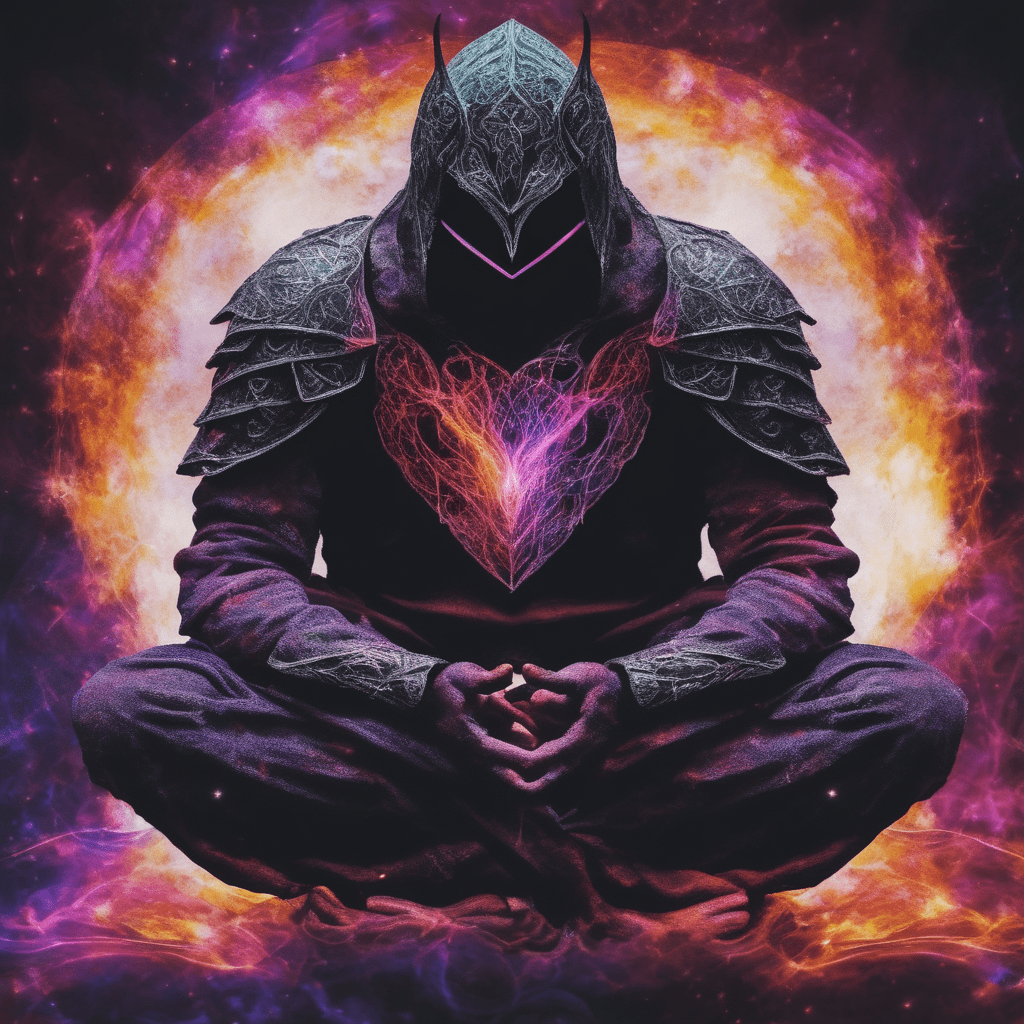
In contrast to the disorienting emptiness of the “dark night,” the concept of the “dark knight of the soul” represents a heroic inner archetype. It is the spiritual warrior within, forged not in battles against external foes but in the internal struggles against one’s demons.

The “dark knight” is not a saviour but a guide, a symbol of the courage, resilience, and wisdom needed to navigate through the night. It embodies the willingness to face the darkness, wrestle with doubt, challenge fears, and integrate the shadows rather than shunning them.

The “dark knight” does not vanquish the night but learns to dance with it, finding grace in struggle and meaning in confusion.

The Dance of Darkness and Light

The interplay between the “dark night” and the “dark knight” is a profound spiritual odyssey. One cannot exist without the other. The “dark night” provides the terrain, the challenge, and the abyss that must be crossed. The “dark knight” offers the tools, the strength, and the inner fire that illuminates the way.

In this spiritual dance, the darkness is not something to be feared but embraced. It is a crucible where the false self is burned away, leaving only the authentic soul, raw and unburdened.

The path through the “dark night” is not a path of despair but a journey toward enlightenment. The “dark knight” is not a symbol of battle but a metaphor for inner harmony.

Conclusion

The journey through the “dark night of the soul” and the guidance of the “dark knight of the soul” offers a rich tapestry of spiritual exploration. It reminds us that darkness is not an end but a beginning, a transformation that leads to a deeper connection with the self and the divine.

In embracing both the “dark night” and the “dark knight,” we find a roadmap to authenticity, wisdom, and a spirituality that transcends superficial understanding. The darkness and the knight are not foes but partners, leading us toward a horizon where the soul’s true radiance shines.

The odyssey through the dark night is an invitation, a calling to all who seek. The dark knight awaits, a silent companion ready to guide us through the shadows into the embrace of our luminous essence.

Morgan O. Smith

Yinnergy Meditation & My Book, Bodhi in the Brain…Available Now!
https://linktr.ee/morganosmith

Reincarnation Unfolding

The Mystical Dance of Life at the Subatomic Scale

Reincarnation is often conceived as a cycle of birth, death, and rebirth. This process, however, is not confined merely to the level of an individual’s life journey, but also at a minute, an invisible scale that continuously unfolds within us.

The human body is composed of about 37 trillion cells, with each one possessing its lifecycle. Old cells die and new ones are born in a ceaseless symphony of life. Every second, millions of cells in your body reincarnate, dying and then being reborn anew. This minute cycle mirrors the grandeur of the reincarnation concept, challenging us to rethink what it means at the fundamental level.

To delve deeper, each cell consists of molecules, atoms, and subatomic particles, each undergoing their cycles of transformation. These minuscule particles don’t die or are born in the traditional sense, but rather transform, changing their states, swapping places, decaying, and then being reincarnated into different particles. From this viewpoint, reincarnation becomes a ubiquitous process that is playing out at every moment.

In light of this perspective, where does the soul reside? Is it just in the whole or also in the parts? If we consider the soul as the essence of life and consciousness, then every cell, every molecule, and even every atom has a part of this essence. This soulful essence, then, is constantly dying and being reborn, experiencing its cycle of reincarnation at a cellular, molecular, and atomic level.

Then arises the concept of karma, a law of moral causation. Can it apply at a subatomic level? At first glance, it might seem improbable. After all, karma is about action and consequence, and cells or atoms don’t have agency in the same way humans do.

However, if we think of karma less as moral action and more as causality, things start to take shape. Each cell’s fate—its health, its functioning, its lifespan—is determined by previous actions, or karmas, at the molecular and atomic levels. These actions could be genetic expressions, protein formations, or even quantum fluctuations.

Molecular karma plays out in the creation of proteins, cellular karma in the orchestration of life processes, and atomic karma in fundamental interactions. The sum of all these karma of parts can even influence the karma of the whole, impacting our health, our mind, and our life.

Through this lens, the concept of reincarnation and karma expands beyond a spiritual or religious doctrine and becomes a fundamental principle of life, from the grand scale of human existence to the tiny dance of atoms.

Thus, the journey of life and death is not a one-time event; it is a constant process. Every moment, we are dying and being reborn, at various levels of our existence. Our karma, too, is being created, fulfilled, and carried forward at these multiple levels. Such a realization can provide us with a profound perspective on life, death, reincarnation, and karma, reminding us of our intricate connection with the cosmos.

This understanding, although awe-inspiring, is only the tip of the iceberg. The philosophical implications are profound, leaving us to ponder the mysterious dance of life and death that is taking place within us, every moment, at every level.

Morgan O. Smith

Yinnergy Meditation & My Book, Bodhi in the Brain…Available Now!
https://linktr.ee/morganosmith

The Facets of Ego and Transcendent Experiences

Part One

The journey of self-understanding often leads us to explore the contours of our own ego. The ego, our sense of self-identity, manifests in countless facets that embody our personality traits, motivations, and behaviours. Each of these facets, be they positive attributes like resilience and compassion, or negative tendencies such as jealousy and arrogance, forms an integral part of our self-image.

Picture the constellation of traits that define you. Some shine brilliantly, reflecting your strengths and virtues. Some might be darker, representing the areas we struggle with or seek to improve. These are the multiple dimensions of our identity, as intricate and vast as the cosmos itself.

Deep spiritual or mystical experiences can profoundly alter this constellation. During these moments of transcendence, the negative facets, those shadowy stars, seem to fade away. We are left with only the positive aspects, creating a luminous sense of heightened self-worth, inner peace, and profound connection with the world around us.

But the journey doesn’t stop at this dualistic understanding. As we delve deeper into these transformative moments, we encounter a state of nonduality. In this space, all facets of the ego, positive and negative, exist simultaneously, without clear distinctions or separations. They merge into the grand cosmic dance, each star in our constellation joining the larger cosmos, allowing us to experience the full spectrum of our human existence.

Morgan O. Smith

Yinnergy Meditation & My Book, Bodhi in the Brain…Available Now!
https://linktr.ee/morganosmith

The Dance of Consciousness

How Traits and States Influence Each Other

Introduction:
In the realm of philosophy and neuroscience, the nature of consciousness has long been a subject of intense scrutiny. As we delve into the complex interplay between traits of consciousness and states of consciousness, we embark on a thought-provoking journey that explores how these facets of our mind shape and are shaped by each other.

Part I: The Essence of Traits of Consciousness
Traits of consciousness refer to the enduring qualities and patterns that define an individual’s cognitive, emotional, and behavioural makeup. These traits form the bedrock of one’s personality, shaping how they perceive the world, process information, and interact with others. From introversion to openness, resilience to empathy, traits of consciousness provide a unique lens through which individuals experience their existence.

Part II: Unraveling States of Consciousness
States of consciousness, on the other hand, are transient and ever-changing mental conditions. These states can range from heightened awareness during moments of meditation or creative inspiration to altered states induced by substances or intense emotional experiences. States of consciousness are like ripples on the surface of a vast ocean, reflecting our immediate perceptions and inner states.

Part III: The Bidirectional Influence

At first glance, it might appear that traits and states of consciousness operate independently. However, upon closer examination, we discover the profound bidirectional influence they exert on each other.

1. Traits Shaping States:

Our enduring traits of consciousness lay the foundation for how we perceive and react to various states. For instance, a highly empathetic individual might experience deeper connections with others during states of heightened compassion or love. Similarly, a person with a predisposition to anxiety may be more prone to states of distress during challenging situations.

2. States Shaping Traits:

The fluidity of consciousness states can leave lasting imprints on our traits. Profound transformative experiences, such as spiritual awakenings or near-death encounters, can lead to significant shifts in an individual’s personality and worldview. Moreover, states like mindfulness and meditation can foster positive traits like patience and self-awareness.

Part IV: The Dance of Consciousness
As the dance unfolds, we realize that consciousness is not static but rather a dynamic process, constantly in flux. Traits and states intertwine, shaping and reshaping one another in an intricate and evolving dance.

Conclusion:
The relationship between traits and states of consciousness is a fascinating exploration of the human mind’s complexity. Acknowledging this interconnectedness can empower us to cultivate positive traits while embracing the ebb and flow of transient states. As we embrace the intricacies of our consciousness, we embark on a journey of self-discovery, leading us to a deeper understanding of ourselves and the world around us. Remember, we are not merely passive observers of our consciousness; we are active participants in its unfolding story.

Morgan O. Smith

Yinnergy Meditation & My Book, Bodhi in the Brain…Available Now!

https://linktr.ee/morganosmith

The Ocean of Consciousness

A Deep Dive into Self-Realization

In the vast expanse of our existence, there exists an ocean, profound and unending. This is not an ocean you can traverse with a boat, nor one that can be mapped with lines and contours. It is the ocean of consciousness, the ocean within us, teeming with treasures waiting to be found and explored.

This inner cosmos reflects the enormity and complexity of our being. It is a reminder that we are not mere beings afloat on the surface of existence. We are the deep-sea divers, explorers of the unseen depths of our own consciousness, where the treasures of self-realization lie.

Each of us is invited to embark on this journey, to delve beneath the tranquil surface of our everyday awareness, to submerge into the depths of the self. It’s within these depths that the unexplored and unseen aspects of ourselves are concealed like sunken treasures.

The journey of self-realization is, indeed, a swim in these deep waters. It is not always an easy journey; at times, we may feel lost in the vast, nebulous expanse, unsure of where to look or what to seek. It is natural to fear the unknown, the hidden, the deep, but it is also where true treasures lie.

These treasures are not the tangible riches we often pursue; they are rather pearls of wisdom, gems of personal truth, and gold nuggets of self-understanding. They hold the power to transform our perspective, illuminate our purpose, and enrich our existence. Once discovered, these treasures have the capacity to fundamentally alter the way we perceive ourselves and our place in the cosmos.

But how does one navigate these waters? How do we uncover these treasures of the self? The compass guiding us through this journey is reflection, introspection, and mindful living. These tools help us dive into the currents of our thoughts, feelings, and experiences, allowing us to probe and understand the unseen layers of our consciousness.

As we continue to swim within these deep waters, we learn to appreciate the beauty of the journey more than the destination. We realize that the exploration itself is a form of treasure, a transformative process that molds us into more conscious, more self-aware beings.

In this philosophical journey of self-realization, we not only find treasures within ourselves but also learn to become treasures for the world around us. The knowledge, wisdom, and understanding we gain through this exploration have the power to influence and enrich the lives of others.

So, let us all dive into the deep waters of consciousness and continue to explore. In this exploration, we find not only the treasures of self-realization but the true essence of our existence. Amid the vastness of this ocean, we find ourselves, understanding that we are not just a part of the universe, but the universe itself, unfolding.

Morgan O. Smith

Yinnergy Meditation & My Book, Bodhi in the Brain…Available Now!

https://linktr.ee/morganosmith

Three Perspectives on Divinity

A Journey of Self-Discovery and Cosmic Connection

Every human being, at some point, grapples with the concept of divinity. How we perceive the divine greatly influences how we understand ourselves and our place in the cosmos. While there are many ways to envision divinity, let us ponder the “Three Faces of God” – “I am That,” “Thou art,” and “It, the Ground of All Being.” Each provides a distinct lens through which we may view and experience the divine.

1. Divine Within: The Face of “I am That”

“I am That” is a call to recognize the divine within us. It is not just a statement; it’s an acknowledgment of our inherent divinity. This perspective dissolves the illusion of separateness, helping us realize that we’re not merely fleeting existences in an indifferent universe, but integral fragments of a divine whole.

This face asks us to engage in deep introspection, to see beyond the veil of our mundane identities, and to understand that our true essence is not our transient ego, but the eternal spirit. Could it be that we’re more divine than we’ve ever imagined? This face prompts us to explore that possibility.

2. Divine As Other: The Face of “Thou Art”

The face of “Thou Art” offers a contrasting perspective. Here, the divine is seen as the ‘Other,’ an entity outside ourselves with whom we can establish a personal connection. This relationship with the divine, filled with reverence and love, is akin to the bond between a devotee and their deity.

In this model, God is the figure we pray to, seek comfort from, and surrender our troubles to. It’s a perspective that creates a powerful, intimate bond with the divine, letting us experience the divinity not as a part of us, but as a separate, caring, and guiding entity.

3. Divine As All: The Face of “It, the Ground of All Being”

The third face, “It, the Ground of All Being,” portrays God as an impersonal essence, the primal energy that permeates the cosmos. This face of divinity does not personify the divine but sees it as the raw material of existence. It is the unchanging reality amidst the ceaseless flux of the universe.

This view urges us to go beyond the traditional understandings of God and probe deeper into the mysteries of existence. Could it be that the divine is not just a deity or a spirit within, but also the very fabric of reality?

Wrapping Up

The Three Faces of God offer a multidimensional understanding of the divine, guiding us on our spiritual and philosophical quest. They propose different ways to connect with the divine, based on our personal inclinations and spiritual needs. More than a simple triad, they represent a spectrum of possibilities on our spiritual journey.

In acknowledging these perspectives, we can foster a richer understanding and experience of God, allowing us to discover the divine within ourselves, in an intimate relationship, and as the underlying reality of existence. Such an exploration can become a catalyst for personal growth and spiritual evolution, leading us to new levels of self-discovery and cosmic connection. After all, isn’t that what the quest for understanding divinity is all about?

Morgan O. Smith

Yinnergy Meditation & My Book, Bodhi in the Brain…Available Now!

https://linktr.ee/morganosmith

In Divine Light

Society’s Golden Shadow 

Intro:

In a world where the quest for meaning continues to stir the human soul, spirituality and reverence for the divine emerge as quintessential human experiences. But what if the collective admiration and worship of God are manifestations of society’s golden shadow – the unexplored, positive aspects of our shared unconscious? This post delves into the notion that the sacred spaces we turn towards in times of despair or joy are indeed reflections of the inherent greatness within ourselves.

Understanding the Golden Shadow:

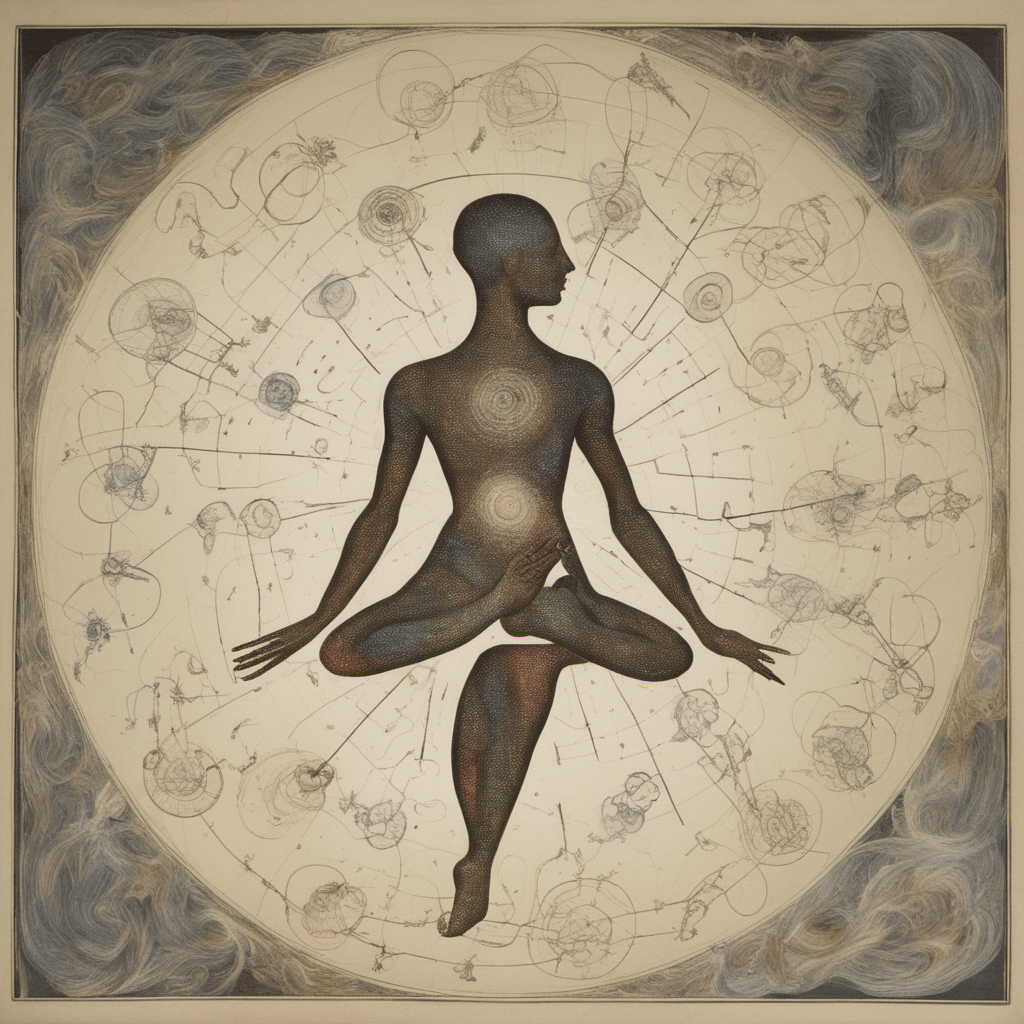
Drawing from Carl Jung’s concepts, the golden shadow encompasses the positive attributes within our unconscious minds that we might not recognize. When these attributes are exemplified by an external entity, such as a deity, we project our golden shadow upon it.

God as the Epitome of Society’s Golden Shadow:

The divine figures across cultures are often epitomes of virtues – love, compassion, wisdom, and more. Society’s adoration for these figures could be interpreted as an admiration for the virtues themselves. The deities become mirrors, reflecting what individuals and societies aspire to embody.

Religion as a Path to Self-Realization:

One could argue that the rituals, prayers, and moral teachings of religion serve as vehicles for cultivating the qualities represented by the divine within ourselves. In essence, by worshipping or admiring God, individuals are also venerating and nurturing their own latent potential.

The Challenges:

This perspective might not sit well with everyone, especially those who believe in the transcendental nature of God. Moreover, using religious practices solely as tools for self-improvement might seem reductive. It’s essential to approach this hypothesis with respect for the diversity of beliefs and experiences.

Conclusion:

The notion that society’s worship and admiration for God is a projection of its golden shadow is thought-provoking. It offers a lens through which we can perceive religious and spiritual practices as not just pathways to the divine, but also as avenues to recognize and cultivate the virtues within ourselves. Whether or not one subscribes to this idea, it invites reflection on the profound interconnectedness between the human spirit and the sacred.

Morgan O. Smith

Yinnergy Meditation & My Book, Bodhi in the Brain…Available Now!
https://linktr.ee/morganosmith

The Eternal Now

Enlightenment as the Ever-Present Journey

Introduction:
Time is a mysterious and often bewildering dimension of our existence. Like the fleeting shadow of tomorrow, enlightenment is often thought to be something that is always just out of reach. However, what if the key to enlightenment was not in endlessly chasing it, but in realizing that it is already here?

The Illusion of Tomorrow:
Many of us tend to postpone our happiness or goals for the future. “I will be happy when…” or “I will do that tomorrow,” are phrases we frequently tell ourselves. Yet, as time moves forward, tomorrow remains as elusive as ever. It’s always today. This is a poignant reminder that the present moment is all we have.

Parallel to the Illusion of Enlightenment:
Enlightenment is often perceived as the pinnacle of spiritual accomplishment, a state to be attained in the distant future. However, much like tomorrow, the notion of enlightenment as a destination may be an illusion. If enlightenment is truly understanding and being at peace with oneself and the universe, then it must exist in the here and now.

The Eternal Present:
The Buddhist concept of “Satori” embodies a sudden awakening or flash of insight. It illustrates that enlightenment is not a far-off goal but an ever-present possibility. When we begin to see that the essence of life and self-realization is embedded in the present, the journey toward enlightenment takes on a different texture. It becomes a continuous, unfolding process rather than a destination.

Cultivating Awareness:
The path to recognizing that enlightenment is in the present involves cultivating awareness and mindfulness. By fully engaging with the present moment and releasing our attachments to the past and future, we can find clarity and wisdom.

The Role of Experience:
Our experiences, no matter how mundane, are integral to our understanding. Every moment provides an opportunity for growth and learning. Through mindfulness, we can recognize the sacredness in the ordinary, and see that enlightenment isn’t something distant, but an ever-present reality.

Conclusion:
“Enlightenment is always here” is not just a statement, but an invitation to break the chains of time and enter the eternal now. It’s an invitation to stop searching and start living. Like the enigmatic nature of tomorrow, enlightenment is not something that can be grasped or attained in the future. It is a journey that is happening right now. Every moment is an opportunity for awakening. May we have the courage to embrace the present and recognize the enlightenment that is always here.

Morgan O. Smith

Yinnergy Meditation & My Book, Bodhi in the Brain…Available Now!
https://linktr.ee/morganosmith