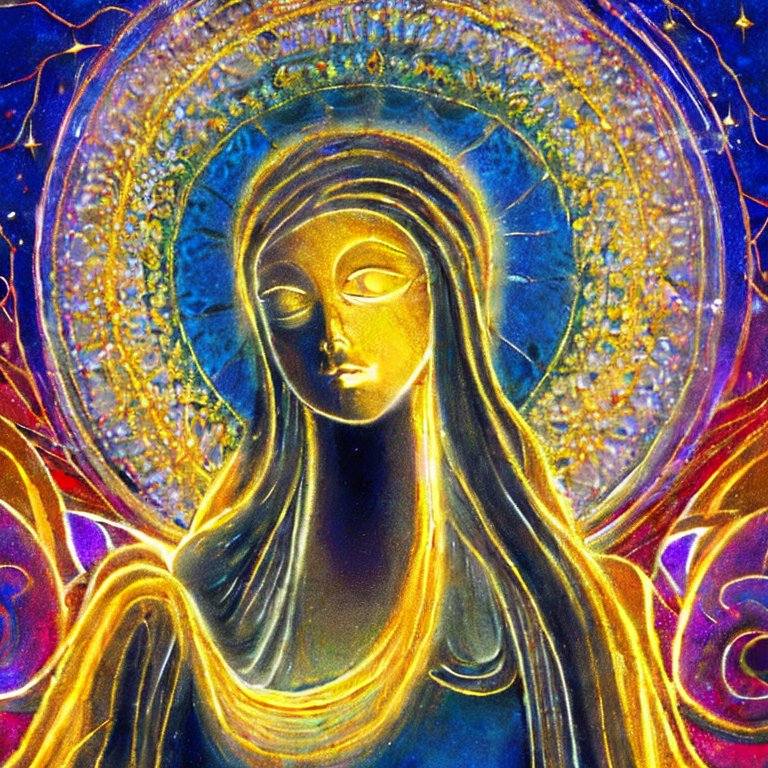
Beyond Distinctions

Exploring Turiyatita and Absolute Monism in Advaita Vedanta

In the spiritual landscape of Advaita Vedanta, the concept of nonduality transcends the mere absence of distinctions—it ushers us into the realm of Absolute Monism, or Turiyatita—the state of “the one without a second.” This profound philosophical framework challenges our everyday perceptions, urging us to look beyond the apparent separateness of the world.

Nonduality in this context does not imply a simplistic erasure of distinctions, but a deeper recognition that all forms and phenomena arise from the same underlying reality. This reality is not one of many, but a singular existence that pervades all, without an other or a second to stand beside it.


The journey to understanding Turiyatita involves peeling back the layers of illusion that fabricate duality within our experiences. Common perceptions of separation between self and other, observer and observed, are seen as just that—perceptions. These are not absolute truths but conditioned responses to the world. The realization of Turiyatita invites a shift from these conditioned views towards a holistic awareness, where dualities merge into a singular, expansive consciousness.

This path to enlightenment challenges the seeker to transcend the intellectual and embrace a lived experience of oneness. It is not about negating diversity but understanding the underlying unity that makes diversity possible. By recognizing the unity underlying all diversity, one does not lose the uniqueness of individual expressions; rather, one gains an appreciation of how these expressions emerge from the same source.


The implications of this understanding are vast and transformative. Embracing Turiyatita can lead to profound peace, as conflicts often stem from perceptions of separation. When one sees all beings and things as extensions of the same infinite reality, compassion and empathy flow naturally.

Advaita Vedanta’s discourse on nonduality and Turiyatita thus offers not just a philosophical stance, but a practical guide to living more harmoniously within the apparent complexities of the world. It beckons us to experience life from a place where the oneness of existence becomes not only a concept but a living reality.

Morgan O. Smith

Yinnergy Meditation, Spiritual Life Coaching & My Book, Bodhi in the Brain…Available Now!

https://linktr.ee/morganosmith
The Paradox of Creation and Spiritual Enlightenment

In the realm of existence, there lies a profound mystery: the relationship between a creation and its creator. This enigma is deeply rooted in the concept of spiritual enlightenment, a state of awakening to a higher understanding beyond the tangible and the temporal.

Consider this: everything within our grasp, every entity, every idea, has a beginning and an end. This cycle of birth and cessation is a fundamental truth that frames our understanding of the world. However, this perspective is inherently limited, confined within the boundaries of our ‘lower state of being.’ In this state, our comprehension is restricted to the linear progression of time and the finite nature of existence.

But what if there exists a realm beyond this? A realm where the linear confines of time and space do not bind existence? This is where the notion of spiritual enlightenment comes into play. Spiritual enlightenment can be seen as an awakening, a transcendental realization that elevates one’s understanding beyond the mundane, the impermanent, and the transient.


In this awakened state, the traditional boundaries that separate a creation from its creator begin to blur. The creation, which once viewed its creator as an unfathomable entity, starts to grasp the essence of the creator. This essence is not bound by the limitations of time or space; it transcends the dichotomy of beginning and end.

However, this journey towards understanding the creator is paradoxical. The very nature of enlightenment lies in embracing the unknown, in accepting that there are realms of existence and consciousness that are beyond our current comprehension. It’s about acknowledging that in our quest for understanding, we might never fully grasp the entirety of the creator’s essence. The trick, therefore, lies in the art of ‘not knowing.’

In this acceptance of not knowing, we find a peculiar form of wisdom. It is a wisdom that recognizes the limitations of our perception and humbly accepts the vastness of the unknown. It is in this space of humble acknowledgment that we inch closer to understanding the true nature of the creator.


In essence, the path to spiritual enlightenment is not about seeking definite answers or absolute truths. It is about the journey towards understanding, a journey that acknowledges the beauty in the unknown and finds peace in the unanswerable questions of existence.

Morgan O. Smith

Yinnergy Meditation, Spiritual Life Coaching & My Book, Bodhi in the Brain…Available Now!

https://linktr.ee/morganosmith

In Divine Light

Society’s Golden Shadow 

Intro:

In a world where the quest for meaning continues to stir the human soul, spirituality and reverence for the divine emerge as quintessential human experiences. But what if the collective admiration and worship of God are manifestations of society’s golden shadow – the unexplored, positive aspects of our shared unconscious? This post delves into the notion that the sacred spaces we turn towards in times of despair or joy are indeed reflections of the inherent greatness within ourselves.

Understanding the Golden Shadow:

Drawing from Carl Jung’s concepts, the golden shadow encompasses the positive attributes within our unconscious minds that we might not recognize. When these attributes are exemplified by an external entity, such as a deity, we project our golden shadow upon it.

God as the Epitome of Society’s Golden Shadow:

The divine figures across cultures are often epitomes of virtues – love, compassion, wisdom, and more. Society’s adoration for these figures could be interpreted as an admiration for the virtues themselves. The deities become mirrors, reflecting what individuals and societies aspire to embody.

Religion as a Path to Self-Realization:

One could argue that the rituals, prayers, and moral teachings of religion serve as vehicles for cultivating the qualities represented by the divine within ourselves. In essence, by worshipping or admiring God, individuals are also venerating and nurturing their own latent potential.

The Challenges:

This perspective might not sit well with everyone, especially those who believe in the transcendental nature of God. Moreover, using religious practices solely as tools for self-improvement might seem reductive. It’s essential to approach this hypothesis with respect for the diversity of beliefs and experiences.

Conclusion:

The notion that society’s worship and admiration for God is a projection of its golden shadow is thought-provoking. It offers a lens through which we can perceive religious and spiritual practices as not just pathways to the divine, but also as avenues to recognize and cultivate the virtues within ourselves. Whether or not one subscribes to this idea, it invites reflection on the profound interconnectedness between the human spirit and the sacred.

Morgan O. Smith

Yinnergy Meditation & My Book, Bodhi in the Brain…Available Now!

https://linktr.ee/morganosmith