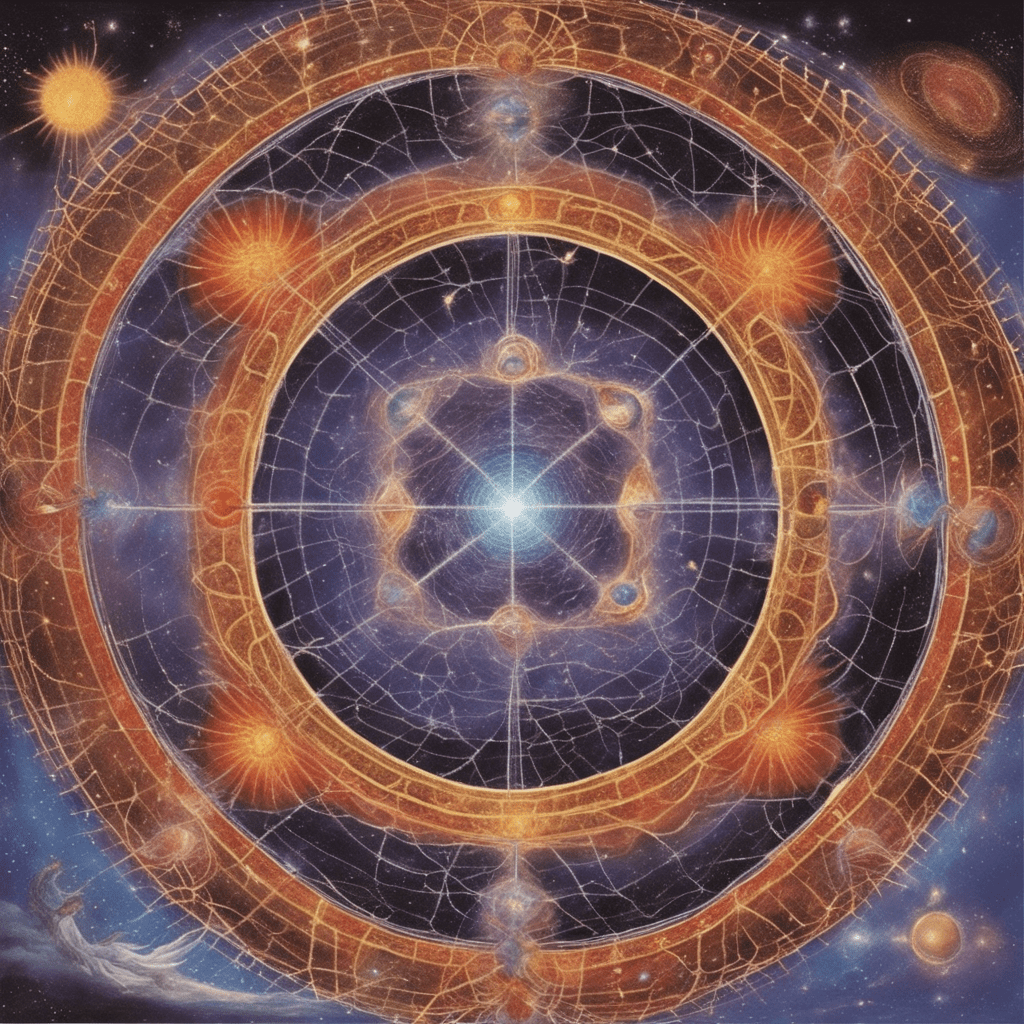
The Birth of Purpose

Unveiling the “Why” of Your Life

Mark Twain’s poignant observation—that our lives are defined by the day we are born and the day we discover why—speaks to a universal quest for meaning. Birth introduces us to the world, but it is purpose that gives our existence depth and significance. This discovery transforms a mere life into a profound journey.

The search for one’s purpose often feels elusive, like chasing shadows in the dark. It demands more than intellectual effort; it requires us to pause, reflect, and confront the silence beneath our everyday noise. Purpose rarely presents itself in grand revelations. Instead, it whispers in moments of clarity, when life’s chaos subsides and we sense an alignment between who we are and what we do.

For some, this purpose is tied to service—offering a helping hand or inspiring others to rise. For others, it is found in the relentless pursuit of a dream, an expression of creativity, or simply being present and whole. Whatever the form, discovering purpose feels less like an addition to life and more like the peeling away of layers, revealing what was always there.

However, the question arises: How do we find it?

The process begins with self-awareness. Quiet observation of one’s passions, strengths, and values can illuminate the direction toward purpose. Those moments when time seems to dissolve when you feel most alive and authentic, hold clues. Follow them. Trust them. They are markers on the path.

Another step is embracing uncertainty. Searching for “why” does not always yield immediate answers. Life’s purpose evolves as you do, shifting with growth and perspective. What feels meaningful today may expand or transform tomorrow. Purpose is not a destination but an ongoing inquiry, a question to be lived rather than solved.

The most profound realization about purpose may be this: it is less about finding a specific role or mission and more about being attuned to the present. Purposeful living is born not from monumental achievements but from how we engage with each moment, each relationship, and each opportunity to learn and grow.

When we shift our focus from doing to being, from achieving to experiencing, we realize that purpose is not a far-off goal but something we cultivate daily. The journey becomes its reward. And in those rare, luminous moments when we connect with our “why,” we find ourselves not only alive but truly living.

Morgan O. Smith

Yinnergy Meditation, Spiritual Life Coaching & My Book, Bodhi in the Brain…Available Now!
https://linktr.ee/morganosmith

Nature’s Unyielding Dance

Embracing Evolution Beyond Acceptance

In the grand expanse of existence, nature is a paradoxical entity, embodying acceptance while relentlessly pursuing change. This duality offers a profound reflection on the nature of being and becoming, serving as a mirror to our spiritual journeys. Nature, in its essence, accepts its form and function with a serene equanimity that belies the tumultuous undercurrent of evolution. It is in this serene acceptance that the seed of transformation is sown, propelling existence toward an ever-unfolding destiny.

Nature’s acceptance is not of passivity but of an understanding that the present moment is perfect in its imperfection. It acknowledges that at this very instant, it is the culmination of countless cycles of change, yet it is but a waypoint on an infinite journey of becoming. This realization is key to unlocking the mysteries of our spiritual paths, where acceptance and change coexist in a delicate balance.

The process of evolution, both in the external world and within the realms of our inner landscapes, is nature’s testament to the perpetual quest for growth and transcendence. Just as the earth’s flora and fauna adapt to the ever-changing environment, so too must we embrace the evolution of our spiritual understanding and enlightenment. Each moment is an opportunity to transcend the limitations of our previous selves, spurred by the acceptance of our current state of being.


In this dance of existence, where acceptance and evolution move in harmony, lies the essence of true enlightenment. It is a journey that acknowledges the beauty of the now while striving for the potential of tomorrow. Much like nature’s ceaseless evolution, our spiritual paths are marked by an unending quest for deeper understanding, connection, and oneness with the universe.

This reflection on nature’s duality serves as a reminder that in our search for spiritual awakening, we must hold space for both acceptance and the desire for transformation. It is in the embrace of this paradox that we find the freedom to evolve, not despite nature’s acceptance, but because of it.


Through contemplating the unyielding dance of nature, we are invited to explore the depths of our being, challenging ourselves to grow and evolve while remaining grounded in the acceptance of our present reality. Let us, therefore, take inspiration from the world around us, recognizing that our journey towards enlightenment is a dynamic interplay between being and becoming, where the acceptance of what is served as the foundation for what we are yet to become.

Morgan O. Smith

Yinnergy Meditation, Spiritual Life Coaching & My Book, Bodhi in the Brain…Available Now!

https://linktr.ee/morganosmith

The Sacred Within the Flawed

A Paradox of Divine Texts

In an intricate dance between the divine and human, sacred texts from various religious and philosophical traditions find themselves at the nexus of reverence and scrutiny. These texts, while venerated as conduits of divine wisdom and moral guidance, are not immune to critique nor the acknowledgment of their inherent flaws.

When we unravel the threads of any sacred text, we find them woven with not just divine insights but also the human elements of error, contradiction, and historical context. Many perceive the imperfections found within these texts as reasons for critique and skepticism. Yet, there is a compelling perspective to be explored – the idea that the very flaws embedded within sacred texts render them genuinely sacred.

In dwelling within the flawed, we find a reflection of our imperfect nature. Sacred texts do not present an unattainable moral and existential utopia but rather provide a mirror through which we can perceive and engage with our own imperfections and moral dilemmas. The contradictions and ambiguities are not simply obstacles to faith but rather essential elements that provoke deeper questioning, reflection, and ultimately, a more profound understanding of our place within the cosmic order.

The perfection of the divine, if it were to be communicated through a medium devoid of error or contradiction, may remain eternally aloof and incomprehensible to our flawed human nature. Therefore, perhaps it is within the inconsistencies and paradoxes of sacred texts that we find an accessible pathway toward divine wisdom – a bridge crafted from the very imperfections that define our humanity.

By acknowledging and engaging with the flaws within these revered writings, believers do not denounce their faith but rather deepen it, embracing a spiritual journey that accepts the entwinement of the divine and the human, the perfect and the imperfect. It becomes a spiritual practice wherein the belief is not despite the flaws but is enriched and deepened by them.

In this juxtaposition, an opportunity for an intimate and authentic spiritual journey is birthed. The flaws compel believers to wrestle with their understanding, to question, and to seek, rather than passively accept a prescribed truth. This active engagement fosters a spirituality that is not static but dynamically interwoven with the realities of human experience, constantly evolving and adapting to the nuances of our understanding and experience.

As we traverse through the passages of sacred writings, embracing both divine wisdom and human error, we embark upon a journey that is both inward and outward, exploring the realms of the divine and our soul. In this sacred exploration, the flaws do not deter us but rather beckon us into a deeper, more authentic engagement with the divine, where faith is not a blind acceptance but a perpetual quest, rich with inquiry, reflection, and spiritual growth.

Perhaps then, the sacredness of these texts is not diminished by their flaws but is instead, beautifully and mysteriously, illuminated by them.

Morgan O.  Smith

Yinnergy Meditation & My Book, Bodhi in the Brain…Available Now!
https://linktr.ee/morganosmith

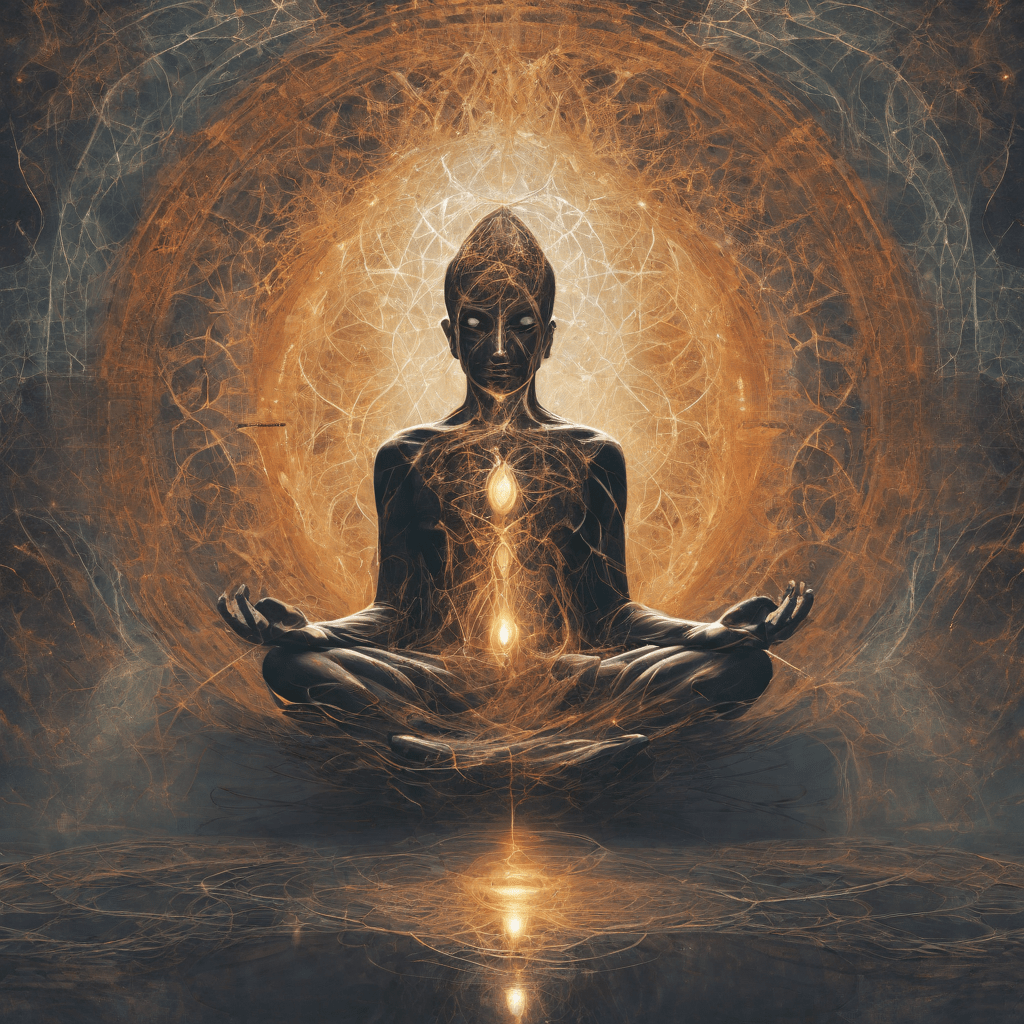
The Infinite Dance of Karma

The Cosmic Web of Cause and Effect

Karma – a concept that has intrigued minds for ages, symbolizes the infinite dance of cause and effect. It is the fundamental fabric that weaves our actions into the cosmic narrative. Rooted in ancient philosophies, karma isn’t merely a spiritual notion but a universal truth, pointing towards the intertwined reality that everything is connected, directly or indirectly. Our every action, no matter how minuscule, sends ripples across the universe, affecting the self and the collective in ways seen and unseen.

But what exactly is karma? It’s often simplified as the law of moral causation, but its essence runs much deeper. It encompasses every action, and every movement that has ever occurred, is occurring and will occur in the universe. It’s not just a human-centric concept but a universal truth. Every cause sets forth a chain of effects which in turn become causes for further effects. The ceaseless cycle of cause and effect is the cosmic dance of karma.

Imagine the simplicity yet profundity of a heartbeat. With each beat, blood circulates, carrying oxygen and nutrients that sustain life. This seemingly automatic act is karma in motion, a fundamental action upon which the rhythm of life dances.

Now expand this lens outward to include the actions and interactions of all beings, the movement of planets, and the birth, and death of stars. Each of these is both a cause and an effect, weaving an intricate web of karma. The notion that the rotation of the earth around the sun, the drifting of galaxies, and even the cataclysmic explosion of the Big Bang are knots in the vast net of karma evokes a humbling perspective on our existence. It’s not only our deliberate actions that contribute to this cosmic choreography but the natural, involuntary actions and the colossal, unfathomable cosmic events too.

In this boundless network of action and reaction, the dichotomy of good and bad karma surfaces. Our perception of karma is often clouded by our limited understanding and the immediate repercussions we experience. What may seem like bad karma resonating from our actions might open doors of opportunities for another or perhaps, contribute to a larger cosmic narrative that we are yet to comprehend. The notion of good and bad is, after all, a human construct, an attempt to make sense of the vast, intertwined chaos that is the universe.

Every challenge, every serendipity, each misfortune, and stroke of luck, are threads in the cosmic tapestry of karma. Our actions, regardless of their nature, contribute to the greater narrative, pushing the boundaries of our understanding, and urging us to reflect on our place in this infinite dance of karma.

Understanding karma transcends the simplistic moral scales; it’s about recognizing our cosmic interconnectedness and the eternal, beautiful, and sometimes terrifying dance of cause and effect. As we tread along our individual and collective journeys, may we become more mindful of the ripples our actions send across the cosmic sea, contributing to the harmonious symphony of existence?

Morgan O.  Smith

Yinnergy Meditation & My Book, Bodhi in the Brain…Available Now!
https://linktr.ee/morganosmith