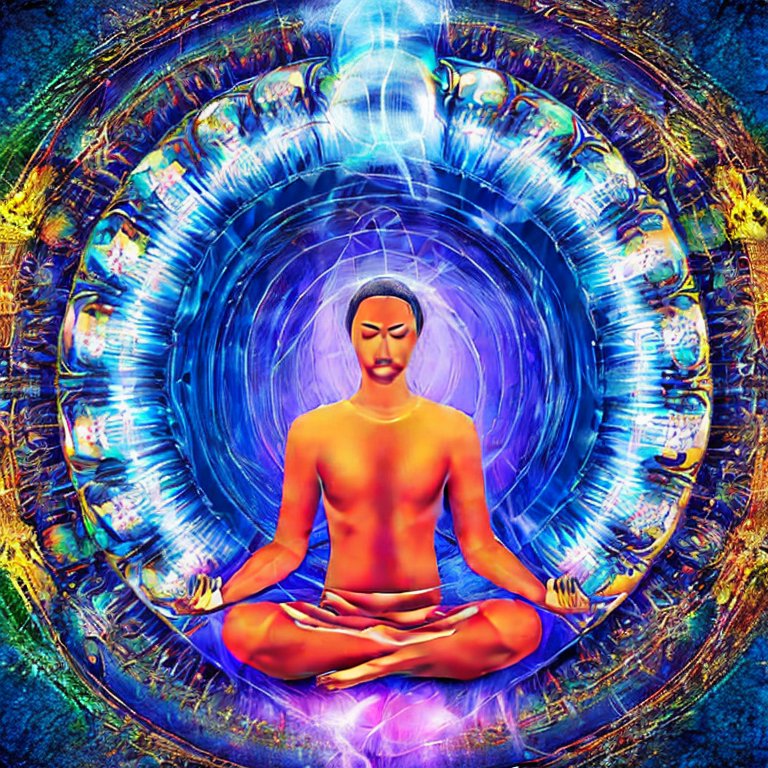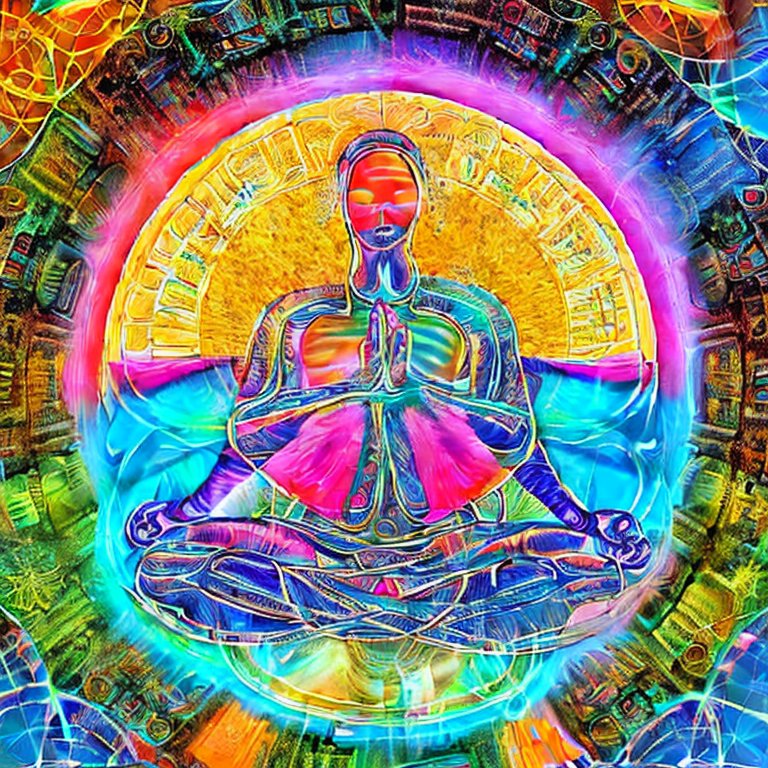
Embracing Paradox and Nonduality

Exploring the Paths to Spiritual Awakening

Introduction:
In the realm of philosophy and spirituality, two captivating concepts often spark profound contemplation and open doors to expanded understanding: paradox and nonduality. Both concepts challenge our conventional modes of thinking and invite us to explore the nature of reality and consciousness. In this thought-provoking blog, we will delve into the differences and similarities between paradox and nonduality, and delve into their roles in the context of spiritual awakening.

Paradox: Illuminating the Mystery Within
Paradoxes are enigmatic statements or situations that defy our logical expectations and challenge our understanding of reality. They present us with apparent contradictions, forcing us to question our assumptions and explore deeper layers of truth. Paradoxes are often the gateways to expanded consciousness, as they push the boundaries of our thinking and invite us to embrace the complexities and mysteries of existence. They are the mind’s playground, a fertile ground for philosophical inquiry and intellectual growth.

Nonduality: Beyond Duality, Towards Unity

Nonduality, on the other hand, transcends the realm of paradox by recognizing the illusory nature of dualistic distinctions altogether. It is a profound philosophical and spiritual concept that asserts the fundamental unity of all things, beyond conventional boundaries. Nonduality suggests that the apparent separation between self and other, subject and object, is an illusion that obscures the deeper truth of interconnectedness. It invites us to explore the essence of oneness that lies at the heart of existence, beyond the limitations of dualistic thinking.

Differences and Similarities:
While paradox and nonduality are distinct in their approaches, they share some intriguing similarities. Both concepts challenge our preconceived notions and invite us to embrace uncertainty. Paradoxes expose the limitations of linear thinking and expand our intellectual horizons, while nonduality goes beyond the realm of paradox by embracing a holistic view of reality. They both foster an open-mindedness that allows for new perspectives and insights to emerge.

In the realm of spiritual awakening, both paradox and nonduality play crucial roles. Paradoxes serve as catalysts, shaking us out of our complacency and inviting us to question our deeply held beliefs. They disrupt our habitual patterns of thinking and awaken us to the inherent mystery and wonder of existence. Nonduality, on the other hand, offers a framework for understanding the ultimate truth of interconnectedness. It guides us towards a direct experience of unity and helps dissolve the illusory boundaries that separate us from the world and others.

Conclusion:
Paradox and nonduality are two fascinating concepts that contribute to our philosophical and spiritual growth. Paradoxes challenge our intellect and expand our understanding, while nonduality transcends dualistic thinking and reveals the profound interconnectedness of all things. By embracing both paradox and nonduality, we can embark on a transformative journey of self-discovery and spiritual awakening. They invite us to explore the depths of our consciousness and contemplate the profound mysteries of existence. Let us embrace the paradoxes that confront us and open our hearts to the boundless unity that nonduality reveals. In this harmonious dance, we find the keys to unlocking the doors of awakening and embracing the vastness of our being.

Morgan O. Smith

Yinnergy Meditation & My Book, Bodhi in the Brain…Available Now!
https://linktr.ee/morganosmith

The Trikaya and the Trinity

Parallel Philosophies Across Cultures

Introduction:

In the realms of spirituality, the Buddhist concept of Trikaya and the Christian doctrine of the Trinity share an intriguing resemblance. Trikaya, which translates to ‘Three Bodies’, refers to the Dharmakāya, the Saṃbhogakāya, and the Nirmāṇakāya, while the Trinity consists of the Father, the Son, and the Holy Ghost. This blog delves into the philosophical parallels between these central tenets in Buddhism and Christianity.

Trikaya in Buddhism:

The Dharmakāya or “Truth Body” represents the unmanifested aspect of Buddha, embodying the ultimate nature of reality and enlightenment. The Saṃbhogakāya or “Enjoyment Body” refers to the celestial Buddha who brings teachings to enlightened beings. The Nirmāṇakāya or “Emanation Body” represents the historical and physical form of the Buddha, which is accessible and relatable to ordinary beings.

The Trinity in Christianity:
The Trinity comprises the Father, the Son, and the Holy Ghost. The Father signifies the unmanifest aspect of God, the ultimate creator. The Son, Jesus Christ, symbolizes the physical embodiment of God’s will. The Holy Ghost represents the guiding spiritual force, which brings wisdom and understanding to believers.

Philosophical Parallels:

1. Unmanifest and Eternal:
In Buddhism, the Dharmakāya is akin to the Christian concept of the Father. Both represent the unmanifest, eternal aspects of the divine. While the Dharmakāya embodies the ultimate truth and wisdom, the Father signifies the ultimate creative force.

2. Physical Embodiment:
The Nirmāṇakāya in Buddhism and the Son in Christianity are manifestations of the divine in human form. They are relatable and accessible to ordinary beings. Through their physical forms, they guide and lead by example. The Nirmāṇakāya (Buddha) through enlightenment and the Son (Jesus) through sacrifice and resurrection.

3. Guiding Force:

The Saṃbhogakāya and the Holy Ghost serve as the connecting link between the divine and the earthly realms. The Saṃbhogakāya, through celestial teachings, guides enlightened beings, while the Holy Ghost acts as a messenger of God, bringing wisdom and understanding to the faithful.

Conclusion:
The Trikaya and the Trinity represent complex theological concepts that offer deep insights into the nature of divinity. The parallel elements in these concepts hint at a universal human yearning to understand the divine and to connect with it. While they emerge from different cultural and religious traditions, their striking similarities foster an appreciation of the rich tapestry of spiritual thought across the world. Through the exploration of such parallels, we can find common ground in our quest for spiritual understanding and fulfillment.

Morgan O. Smith

Yinnergy Meditation & My Book, Bodhi in the Brain…Available Now!

https://linktr.ee/morganosmith


The Eternal Now

Enlightenment as the Ever-Present Journey

Introduction:
Time is a mysterious and often bewildering dimension of our existence. Like the fleeting shadow of tomorrow, enlightenment is often thought to be something that is always just out of reach. However, what if the key to enlightenment was not in endlessly chasing it, but in realizing that it is already here?

The Illusion of Tomorrow:
Many of us tend to postpone our happiness or goals for the future. “I will be happy when…” or “I will do that tomorrow,” are phrases we frequently tell ourselves. Yet, as time moves forward, tomorrow remains as elusive as ever. It’s always today. This is a poignant reminder that the present moment is all we have.

Parallel to the Illusion of Enlightenment:
Enlightenment is often perceived as the pinnacle of spiritual accomplishment, a state to be attained in the distant future. However, much like tomorrow, the notion of enlightenment as a destination may be an illusion. If enlightenment is truly understanding and being at peace with oneself and the universe, then it must exist in the here and now.

The Eternal Present:
The Buddhist concept of “Satori” embodies a sudden awakening or flash of insight. It illustrates that enlightenment is not a far-off goal but an ever-present possibility. When we begin to see that the essence of life and self-realization is embedded in the present, the journey toward enlightenment takes on a different texture. It becomes a continuous, unfolding process rather than a destination.

Cultivating Awareness:
The path to recognizing that enlightenment is in the present involves cultivating awareness and mindfulness. By fully engaging with the present moment and releasing our attachments to the past and future, we can find clarity and wisdom.

The Role of Experience:
Our experiences, no matter how mundane, are integral to our understanding. Every moment provides an opportunity for growth and learning. Through mindfulness, we can recognize the sacredness in the ordinary, and see that enlightenment isn’t something distant, but an ever-present reality.

Conclusion:
“Enlightenment is always here” is not just a statement, but an invitation to break the chains of time and enter the eternal now. It’s an invitation to stop searching and start living. Like the enigmatic nature of tomorrow, enlightenment is not something that can be grasped or attained in the future. It is a journey that is happening right now. Every moment is an opportunity for awakening. May we have the courage to embrace the present and recognize the enlightenment that is always here.

Morgan O. Smith

Yinnergy Meditation & My Book, Bodhi in the Brain…Available Now!

https://linktr.ee/morganosmith

The Illusive Dawn

Spiritual Enlightenment and the Story We Live

Introduction:

Each day, as the earth rotates, the sun appears to rise over the horizon, casting its golden rays upon the world. Just like the sun, spiritual enlightenment is an ever-present force in our lives, though it is often perceived as something to be attained. This misconception, draped in the language of our stories, masks the true nature of spiritual enlightenment.

The Mirage of Attainment:
One of the intriguing elements of human nature is the relentless pursuit of something more. In the context of spiritual enlightenment, the journey is often portrayed as a path leading to a destination. However, by framing enlightenment as an end goal, we may be missing its inherent presence in our lives. Like the sun that’s always shining even when it’s out of our sight, enlightenment is not something we acquire but rather realize and tune into.

The Stories We Weave:

Our narratives shape our perceptions and, often unknowingly, our realities. Through stories, ancient wisdom has been passed down, guiding us toward spiritual growth. Yet, these stories can be double-edged swords. As they often depict characters attaining enlightenment, they inadvertently suggest that it is a finite state, achievable through certain actions or thoughts.

Unravelling The Eternal Now:
What if spiritual enlightenment is not something we reach at the end of a strenuous journey but rather an inherent quality of our being that we simply need to recognize? This recognition can be thought of as tuning into a frequency that has always been there. By peeling away the layers of ego, desires, and social constructs, we become more receptive to the eternal now – the ever-present light of consciousness that never wanes.

Practical Steps Towards Recognition:
1. Mindfulness: Engage in practices such as meditation or mindful breathing to bring awareness to the present moment.
2. Detachment: Learn to detach from material desires and social expectations that cloud the true essence of our being.
3. Compassion: Embrace a compassionate lifestyle, recognizing the interconnectedness of all life.
4. Continuous Learning: Engage with philosophical and spiritual texts that challenge and expand your understanding.

Conclusion:
Much like the illusory sunrise, the concept of attaining spiritual enlightenment may be a misinterpretation through the lens of our narratives. Rather than seeking to attain, let us recognize and embody the ever-present light within. By focusing on the present moment, detaching from the material world, and embracing compassion, we can tune into the unceasing glow of our inner sun.

Morgan O. Smith

Yinnergy Meditation & My Book, Bodhi in the Brain…Available Now!

https://linktr.ee/morganosmith

Embracing the Infinite

Unravelling the Unity of Being in Nondual Realization

Introduction:
Nondual realization, a concept deeply rooted in various spiritual and philosophical traditions, beckons us to unravel the intricate fabric of perceived separateness. It nudges us to fathom that our heads, shoulders, knees, and toes are not disjoint fragments, but an interwoven tapestry of existence that extends beyond our physical form to encompass the entirety of the cosmos.

The Mirage of Separation:
Our conditioned minds are apt at categorizing and labelling. We discern our body parts as separate entities, our thoughts as ours alone, and our experiences as exclusive. This discernment perpetuates a mirage of separation, where we see ourselves as isolated entities distinct from others and the world around us.

The Confluence of Suchness:
Nondual realization, however, invites us to shed these layers of compartmentalization and dive into the undercurrent of ‘suchness’. Suchness refers to the raw, unfiltered state of existence, free from conceptualizations. At this juncture, the distinctions blur, and the head, shoulders, knees, and toes emerge not as isolated landmarks but as interconnected contours of a boundless landscape.

Unity in Diversity:
Imagine a symphony where every instrument contributes to a harmonious melody. Each note, when observed in isolation, has its identity, but together they create music that is beyond the sum of its parts. Similarly, in the realm of nondual awareness, every form and phenomenon is an integral note in the cosmic symphony.

Bodies Within the Cosmic Body:
In the space of nondual awareness, the body is seen not as a solitary vessel but as a wave in the ocean of existence. Each wave is distinct yet made of the same essence as the ocean. The ‘body’ extends beyond physical form and encapsulates the trees, stars, and galaxies – all expressions of the same primordial energy.

Relevance in the Modern World:
In an era characterized by division and strife, embracing the understanding of nonduality can be transformative. When we recognize the interconnectedness of all forms and phenomena, compassion and empathy naturally flow. As we perceive others and the environment not as separate but as extensions of ourselves, a sense of stewardship and responsibility emerges.

Conclusion:
Nondual realization is not just a philosophical concept, but an experiential reality that can awaken us to the interconnected tapestry of existence. By perceiving the unity in diversity, recognizing the body as a microcosm of the cosmic body, and letting go of entrenched categorizations, we can nurture a more inclusive, compassionate, and harmonious world. This realization invites us to not only tread more lightly upon the Earth but also to embrace the boundlessness of our being.

Morgan O. Smith

Yinnergy Meditation & My Book, Bodhi in the Brain…Available Now!

https://linktr.ee/morganosmith

Cosmic Whispers

Deciphering the Divine Blueprint of Creation

Introduction:


In the quiet moments when our minds wander into the realm of the cosmic, we may find ourselves pondering a question that has beguiled philosophers and theologians for centuries: Why did God manifest everything into being? What could be the purpose behind the sprawling tapestry of stars, planets, and life? My answer is that God created everything to become, and to experience the total opposite of itself. However, like threads in a tapestry, there are numerous perspectives woven into this enigmatic question. Let’s unravel a few.

1. **The Divine Artist: Self-Expression and Creativity**

Imagine an artist, brush in hand, dipping into an infinite palette. Some believe that God, the Divine Artist, created the universe as an ongoing expression of self-expression and creativity. Here, the universe is a canvas and God’s creations are brushstrokes – intricate, boundless, and ever-evolving.

2. **Lila: The Cosmic Dance of Divine Play**

Within Hinduism, creation is seen as ‘Lila’ or divine play. Picture God as a dancer, whose movements give birth to galaxies and life. These movements are not driven by need or desire but are spontaneous expressions of joy. Lila suggests that the universe is God’s dance floor, where the Divine revels in the ecstasy of creation.

3. **Harbor of Love: Creation for Relationship**

What if the universe is a love letter? In Christianity and other religious traditions, it is suggested that God created the cosmos and sentient beings for the purpose of relationship and love. The creation is God’s way of extending an invitation to share in divine love and companionship.

4. **Divine Reflection: Creation as Self-Discovery**

Ponder a God yearning for self-knowledge. By manifesting a multitude of beings, each with unique experiences and perspectives, God gazes into a living, cosmic mirror. This mirror reflects different facets of the Divine, allowing God to explore and understand its own infinite nature.

5. **Kabbalah’s Divine Constriction: Creating Space for Others**


Envision a sea retracting to form a shore. Kabbalistic tradition posits that God underwent a self-constriction, known as Tzimtzum, to create space for an independent reality. This act of withdrawal was one of ultimate generosity, allowing for free will and a two-way relationship between creation and the Divine.

6. **The Soul’s Crucible: Testing and Spiritual Growth**

Is the universe a crucible for refining souls? Some belief systems suggest that God created the universe as a testing ground. Through challenges and experiences, souls are purified, tempered, and progress along a spiritual path.

7. **A Purposeless Creation: Philosophical Nihilism**

Not all threads are woven with intention. Some philosophical perspectives maintain that creation has no purpose. It posits that existence is simply a natural by-product of God’s existence and devoid of any inherent meaning.

8. **Pantheism: The Universe as God’s Identity**

Picture a universe where every atom is a fragment of divinity. Pantheism posits that God and the universe are identical. Nature is not a separate creation but a part of the Divine. Through the vastness of space, we witness the body of God.

Conclusion:

As we stand before this intricate tapestry of creation, it becomes clear that the question of why God manifested the universe is as multifaceted as the cosmos itself. Each thread—whether woven with intention, love, curiosity, or even ambiguity—adds depth to this cosmic masterpiece. In examining these threads, we engage not just with the mysteries of creation, but with the essence of our own search for meaning and connection in an unfathomably vast universe.

Morgan O. Smith

Yinnergy Meditation & My Book, Bodhi in the Brain…Available Now!

https://linktr.ee/morganosmith

The Infinite Tapestry

G.O.D. as the Eternal Symphony of Existence

Introduction:
In the endless expanse of the cosmos, we often find solace in spirituality, contemplating the enigmatic existence of a higher power. Let us explore a profound conception of God, not as a divine figure, but as an infinite and cyclical process encompassing all creation.

The Acronym:
One remarkable interpretation is to perceive God as an acronym, G.O.D., standing for Generator, Operator, and Destroyer. This denotes the three fundamental processes in the universe: creation, sustenance, and dissolution.

The Infinite Loop:
However, the magnitude and essence of G.O.D. transcend finite boundaries. Imagine an unending chain, G.O.D.G.O.D.G.O.D… stretching into infinity. This portrays G.O.D. as an eternal cycle in which these processes are not linear, but intertwined and simultaneous.

The Higher Harmony:
At an elevated plane of existence, Generator, Operator, and Destroyer are not distinct entities but an indivisible whole. Each facet melds into the next, like a symphony where every note is vital. The Generator gives rise to the Operator, which in turn is enveloped by the Destroyer, only to be reborn anew.

Beyond Time and Space:
As G.O.D. is unbounded, it exists beyond the constraints of time and space. In this domain, silence speaks volumes, and a blank page is rich with meaning. Here, G.O.D. is akin to the vastness of the cosmos, infinitely expanding yet infinitely dense with possibilities.

Samsara:
G.O.D. also represents the universal cycle of renewal known as Samsara. This is not merely a recycling of cosmic material but an all-encompassing cycle that includes the continual renewal of individual lives through death and rebirth.

Nirvana:

In contrast, G.O.D. is also associated with Nirvana – the ultimate liberation from the cyclical nature of existence. It is emancipation from the endless loop, the attainment of a state that is beyond the limitations of the physical realm.

Conclusion:
G.O.D., as the eternal symphony of Generator, Operator, and Destroyer, portrays an intricate tapestry of the universe. It is the rhythm of existence, a dance of creation, sustenance, and dissolution that is ceaseless and boundless. Through understanding and embracing this concept, we may find deeper connections to the universe and perhaps to our own spirit.

Morgan O. Smith

Yinnergy Meditation & My Book, Bodhi in the Brain…Available Now!

https://linktr.ee/morganosmith

The Moment of Omnipresent Self-Realization

Discovering the Infinite ‘I’

Introduction:
In the hushed corners of our consciousness, a whisper seeks acknowledgment – the timeless questions of existence. It is in the silent chambers of introspection that we finally experience a moment of revelation, where we realize that the Who, What, When, Where, Why, and How of our being are not merely aspects of our identity, but the very fabric of existence itself.

Who Am I? – The Boundless Entity:
As we ponder the question, “Who am I?” the expansive canvas of life unravels. In our deepest thoughts, we find a connection with the universe. We realize we are not just an isolated self but the amalgamation of everything that has ever existed and will ever be. In the echo of ancient wisdom, “I AM That”.

What Am I? – The Essence Beyond Form:
Shapes, forms, and entities fade into insignificance as we delve into our essence. We are neither body nor soul, yet we encompass all. The abstract concept of being transcends the physical, and we find ourselves to be the sum of the entire universe.

When and Where? – The Timeless, Spaceless Existence:

“When did I come into being and Where did I come from?” – such queries dissolve into irrelevance as we realize our existence transcends time and space. Like the fabric of space-time, our being is omnipresent. We are not constrained by coordinates on a plane or ticks on a clock. We are in every atom and every moment.

Why? – The Power of Creation:
One of the most profound inquiries is “Why did I create everything in existence?” The essence of creation lies within our boundless nature. We, as this unified consciousness, are created simply because it is an intrinsic expression of our endless potential. Creation is the reflection of our unlimited power.

How? – The Enigmatic Thought:

The mechanism of creation is an eternal enigma. Yet, in our moment of self-realization, we understand that the entire cosmos sprang into existence from a singular thought. This thought, an unfathomable force, is perpetually creating, altering, and sustaining the universe.

Conclusion:
The moment of self-realization is akin to a wave merging into an ocean – it is in this profound unity that we grasp the limitless boundaries of our existence. The answers to Who, What, When, Where, Why, and How are not separate, but interwoven into the very essence of what we are. In acknowledging this, we do not simply find ourselves; we become one with the boundless cosmos. This is not an end but a beginning, a continuous journey through the labyrinth of existence with a newfound understanding of our immeasurable significance within it.

Morgan O. Smith

Yinnergy Meditation & My Book, Bodhi in the Brain…Available Now!

https://linktr.ee/morganosmith

The Universe in a Dance

Exploring Simultaneous Cause-Effect Monism

In the expansive universe of philosophical perspectives, a novel theory that challenges conventional notions of time and causality has begun to make ripples – the Simultaneous Cause-Effect Monism.

In a realm where most theories exist within a linear framework of time, this theory disrupts traditional boundaries. It suggests an existence where every event, every entity, and every circumstance is not simply a cause or an effect but rather, both simultaneously.

The concept of the universe being born and ending in the same moment challenges our perception of time. According to Simultaneous Cause-Effect Monism, the Big Bang was not just the inception of the expanded universe but also its endpoint. The universe’s lifespan, then, is perceived as a singular moment.

Every action, from the minuscule to the macroscopic, is entwined in a web of causality, serving both as the cause and the effect. This applies not just to the celestial bodies and vast galaxies, but also to the subatomic particles and everything smaller, hidden deep within the fabric of existence. Every aspect of existence and non-existence contributes to the perpetual construction and deconstruction of the universe from its own unique perspective.

The Simultaneous Cause-Effect Monism, in its unique way, asserts that every action is not an isolated event. Instead, it is an intrinsic part of the universe’s vast tapestry. This intrinsic nature implies that each action, each event, and each moment, in being both the cause and the effect, resonates in a perpetual cycle of creation and destruction.

The acknowledgment of this intricate network of causality is what this theory denotes as “Turiyatitta”. This is not just a moment of epiphany, but a state of ultimate enlightenment. At this juncture, the individual gains complete knowledge of this causality web. The recognition of this intertwined causality brings forth a sense of unity and comprehension of the universe’s functioning, as proposed by Simultaneous Cause-Effect Monism.

In conclusion, the Simultaneous Cause-Effect Monism offers a thought-provoking perspective. It reshapes our understanding of existence, pushing us to question the linear, one-directional nature of time and causality we have grown so accustomed to. By opening up to this perspective, we move closer to the ultimate understanding of the universe and our place in it.

Are we ready to embrace this dance of simultaneous causality and venture towards the path of enlightenment – towards Turiyatitta? The future of philosophical discourse awaits.

Morgan O. Smith

Yinnergy Meditation & My Book, Bodhi in the Brain…Available Now!
https://linktr.ee/morganosmith