Navigating the Shades of Morality

Embracing Our Humanity Through Spiritual Evolution

In the labyrinth of human experience, we often find ourselves at a crossroads between contrasting moral landscapes. This journey, fraught with myriad complexities, guides us through a transformative process—a shift from seeing the world in stark contrasts to embracing the nuanced shades of morality that define our existence. It’s a journey that doesn’t just challenge our perceptions but also enriches our understanding of what it means to be inherently human.

The Evolution of Perception

As we embark on this spiritual and psychological evolution, our initial encounters with morality are often painted in broad strokes of black and white. This dichotomy, while offering clarity, is also a testament to our nascent understanding of the moral universe. However, as we delve deeper into our journey of self-discovery and spiritual awakening, we begin to notice the emergence of grey areas. These are not mere anomalies but signposts of our evolving consciousness.

The Tug of War Within

This recognition ushers in a period of internal conflict—a tug-of-war between the polarities of good and evil, right and wrong. It’s a battle that rages within, pulling us in opposing directions. Yet, it’s through this struggle that we learn the invaluable lesson of acceptance. By integrating these disparate aspects of our being, we unlock a more profound comprehension of our nature and the world around us.

Standing Firm in the Middle

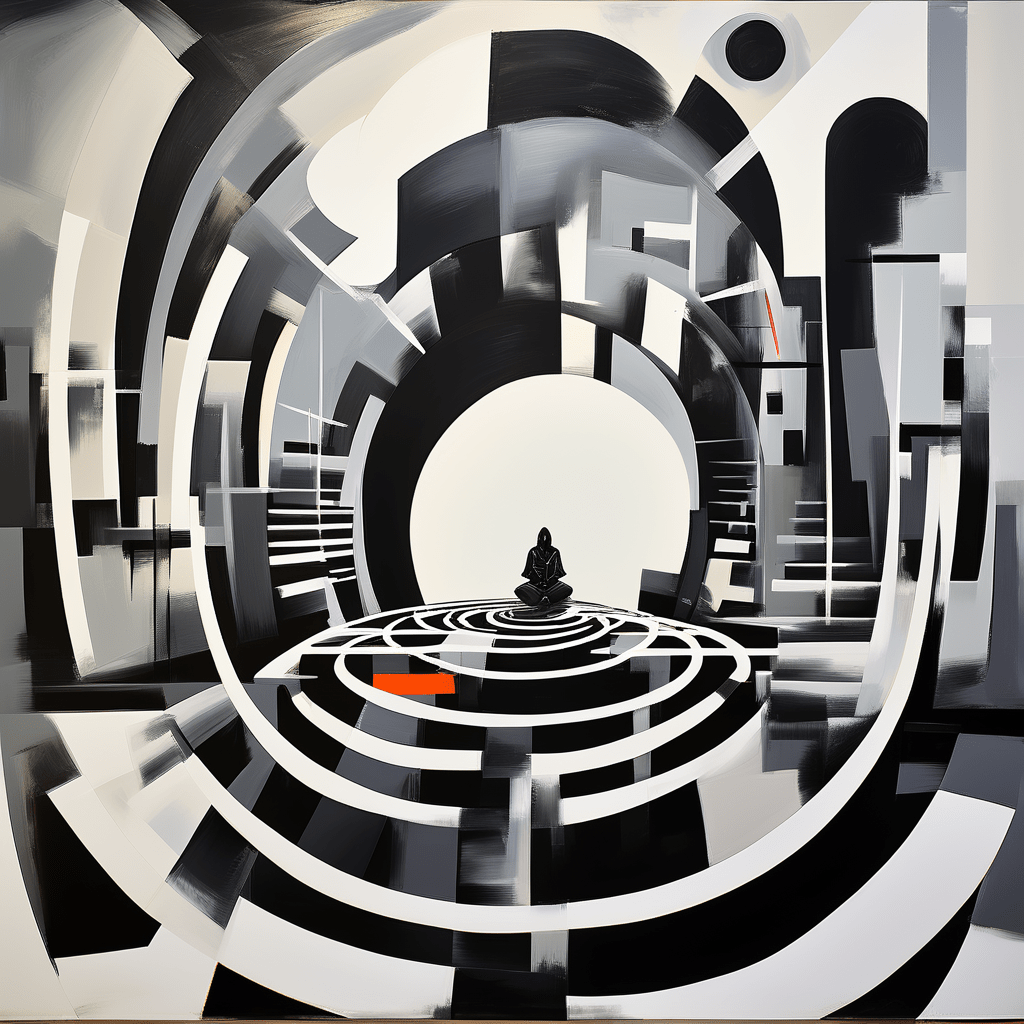
The ultimate aim of this journey is not to choose a side but to find equilibrium amidst the chaos. To stand firm in the middle is to acknowledge our capacity for both the divine and the diabolical. It is in this space that we discover true empathy and compassion, unburdened by bias and judgment. This balanced stance does not signify indifference but a deeper connection to the vast spectrum of human experiences and emotions.

The Gift of Empathy and Compassion

By embracing the grey areas of morality, we cultivate a more empathetic and compassionate perspective. This transformation is not just personal but collective, as our increased understanding and acceptance ripple outwards, influencing our interactions and relationships. In recognizing our complexities, we become more forgiving of others, bridging divides and fostering a sense of shared humanity.

Conclusion: Embracing Our Humanity

The journey through the shades of morality is an integral part of our spiritual evolution. It challenges us to confront and reconcile the complexities within ourselves, leading to a more empathetic, compassionate, and balanced existence. By standing in the middle of our moral landscape, we embrace the full spectrum of our humanity, finding peace in the acceptance of our multifaceted nature.

Morgan O. Smith

Yinnergy Meditation, Spiritual Life Coaching & My Book, Bodhi in the Brain…Available Now!

https://linktr.ee/morganosmith

The Convergence of Quadrants

A Journey from Relative to Ultimate Reality

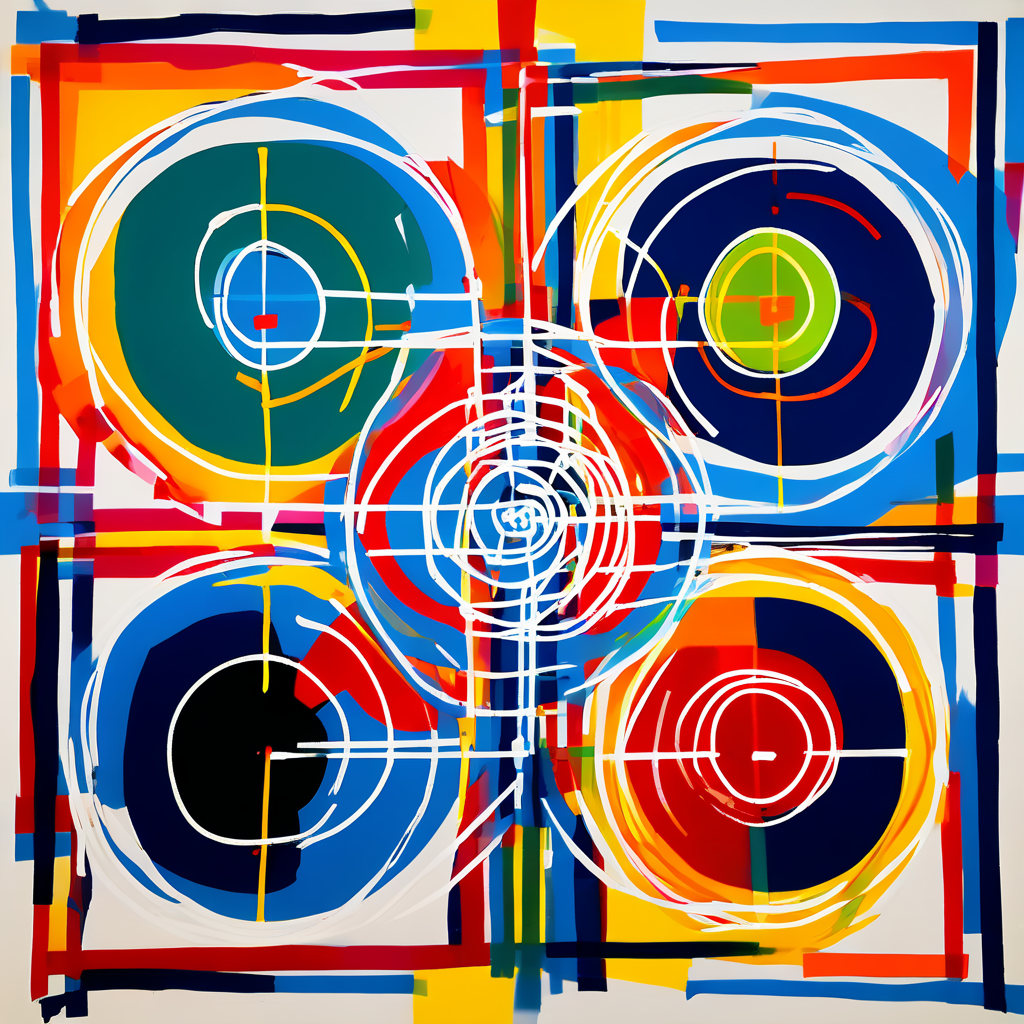
In the realms of Integral Theory, our perception of reality is intricately divided into four primary dimensions or perspectives: the subjective (‘I’), the intersubjective (‘We’), the objective (‘It’), and the interobjective (‘Its’). These perspectives serve as the foundational pillars through which we navigate our relative existence, framing our experiences, relationships, and understanding of the world around us. These quadrants, when represented graphically, are not just abstract concepts but are reflective of the comprehensive ways in which we engage with reality.

However, the journey toward spiritual awakening introduces a profound transformation in this perception. As one advance towards the state of Turiyatitta, a term deeply rooted in Eastern philosophy signifying a state beyond the waking, dreaming, and deep sleep states, a remarkable unification occurs. In Turiyatitta, the boundaries that once separated the ‘I’ from ‘We’, the ‘We’ from ‘It’, and the ‘It’ from ‘Its’, dissolve into a seamless oneness. This state transcends the distinctions between the subjective and the objective, the individual and the collective, and the observer and the observed.


The exploration of Turiyatitta challenges the compartmentalized view of reality presented by Integral Theory. It invites us into a realm where the delineations between the upper-left (I), lower-left (We), upper-right (It), and lower-right (Its) quadrants blur, suggesting that these divisions are merely constructs of a relative reality. In the ultimate reality experienced through Turiyatitta, these quadrants converge, revealing that at the most profound level, there is no distinction between ‘I’ and ‘We’, ‘We’ and ‘It’, ‘It’ and ‘Its’—everything becomes interconnected, a unified whole.

This revelation has significant implications for our spiritual and philosophical journeys. It suggests that the ultimate truth lies not in the separation and analysis of reality into distinct quadrants but in the recognition of the inherent oneness that underlies all existence. The experience of Turiyatitta offers a direct encounter with this oneness, an experiential understanding that transcends intellectual comprehension and invites us into a direct, immediate experience of unity.


Engaging with this perspective does not invalidate the usefulness of the four quadrants in navigating our relative reality. Instead, it enriches our understanding by adding depth to our perception, allowing us to see beyond the surface distinctions and appreciate the underlying unity that connects all aspects of existence. This holistic view fosters a deeper sense of empathy, interconnectedness, and a profound appreciation for the mystery that is life itself.

As we navigate our spiritual path, the exploration of Turiyatitta and the convergence of the four quadrants invite us to reconsider our understanding of reality. It encourages us to look beyond the apparent separations and to embrace the unity that encompasses all aspects of our existence. In doing so, we open ourselves to a more profound, interconnected, and unified experience of reality, one that transcends the limitations of our conventional perspectives and guides us toward a deeper realization of the ultimate truth.

Morgan O. Smith

Yinnergy Meditation, Spiritual Life Coaching & My Book, Bodhi in the Brain…Available Now!
https://linktr.ee/morganosmith

The Intricate Weave of the Cosmic Design

Understanding the Perfection of the Causal Level

In the depths of the cosmic fabric, there exists a precision so intricate, that it defies the bounds of human comprehension. At the causal level, a realm beyond the tangible, every thought, action, situation, and event is not merely a happenstance but a fragment of a grander scheme, meticulously orchestrated. This notion invites us to ponder the unfathomable precision with which the universe operates, suggesting that everything occurring – past, present, and future – aligns with an impeccable calculation.

This perspective challenges us to view our lives and the universe not as a series of random occurrences but as parts of a vast, interconnected system, operating with purpose and precision. It beckons us to consider the implications of such a view on our understanding of fate, free will, and the essence of our existence. If every aspect of the cosmos is perfectly calculated, where does that leave the concept of individual agency?

Exploring this realm requires us to delve into the philosophical and spiritual implications of a preordained universe. It raises questions about the nature of reality itself. Is the universe a deterministic machine, its gears turning with absolute precision, or is there room for spontaneity and unpredictability? How do we reconcile the apparent paradoxes of predestination and free will?


Moreover, this understanding invites us to reflect on the role of consciousness in cosmic design. If everything is perfectly calculated, is consciousness merely a spectator, or does it play a more active role in the unfolding of the universe? This inquiry leads us to the heart of nonduality, suggesting that the separation between the observer and the observed is an illusion and that at a fundamental level, we are intimately woven into the very fabric of the universe we seek to understand.

The realization that everything is happening perfectly, as it is supposed to happen, offers a profound sense of peace and acceptance. It encourages us to view our challenges and struggles not as obstacles but as necessary steps in our evolutionary journey, perfectly placed on our path for growth and realization. This perspective fosters a deep sense of trust in the flow of life, guiding us to live in harmony with the cosmic order.


As we navigate our lives, let us contemplate the perfection of the causal level, recognizing our role in the grand scheme of the universe. May this understanding inspire us to live with intention, embracing each moment as a vital thread in the intricate weave of the cosmic design.

Morgan O. Smith

Yinnergy Meditation, Spiritual Life Coaching & My Book, Bodhi in the Brain…Available Now!

https://linktr.ee/morganosmith

The Eternal Now

Understanding the Convergence of Time and Causality

In the realm of spiritual and philosophical inquiry, the concepts of time and causality often lead us down intricate paths of understanding. Consider the profound idea that the past, present, and future are not separate entities, but rather simultaneous occurrences, manifesting in the eternal ‘now’. This perspective invites us to view every event, every situation, and every action as interconnected and existing within the same infinite moment.

The notion that every cause is simultaneously an effect, and every effect a cause, further deepens our exploration into the cyclical nature of existence. This idea challenges the linear perspective of time and causality that dominates Western thought. Instead, it aligns with the Eastern philosophical understanding that everything in the universe is interdependent and in constant flux, yet fundamentally unified.


Such an understanding reshapes our perception of life’s events. It suggests that our actions are both the result of past influences and the creators of future conditions, all interwoven into the continuous fabric of the present. This holistic view can empower us to live more fully in the moment, appreciating the interconnectedness of all that is.

By embracing this perspective, we open ourselves to the myriad possibilities that each moment holds. It encourages us to live with greater awareness, recognizing that our thoughts and actions are potent contributors to the fabric of our lives and the universe at large.


In reflecting on this unity of time and causality, we might find ourselves more attuned to the subtle, yet profound, essence of life’s continuous unfolding. This realization can be a gateway to deeper spiritual awakening and enlightenment, offering a fresh lens through which to view our existence and our role within it.

Morgan O. Smith

Yinnergy Meditation, Spiritual Life Coaching & My Book, Bodhi in the Brain…Available Now!

https://linktr.ee/morganosmith

Exploring the Infinite

Beyond Religion’s Scope of God

In the vast expanse of human understanding and belief, the concept of God often finds itself neatly packaged within the confines of religious doctrine. Yet, to equate God solely with religion is to overlook the boundless essence that the idea of a supreme being or ultimate reality embodies. This exploration ventures beyond the traditional religious frameworks to understand God as an encompassing presence that transcends our conventional beliefs.

#### Unveiling the Divine Beyond Temples and Texts

Religion, with its rituals, scriptures, and edifices, serves as a vessel for many in their quest to connect with the divine. However, it represents merely one avenue through which the essence of what we term ‘God’ can be experienced. The divine, or the ultimate reality, is an omnipresent force that permeates all aspects of existence, not limited to or by any institution or set of beliefs.

#### The Universal Fabric: A Confluence of Consciousness

At the heart of numerous Eastern philosophies is the notion of nonduality—the understanding that there is no fundamental distinction between the individual and the universe, the self and the divine. This perspective invites us to view God not as an external entity presiding over the cosmos but as the very fabric of existence itself. Here, God is seen in the interconnectedness of all things, in the energy that flows through the cosmos, and in the consciousness that animates the universe.


#### Personal Revelation: A Journey Within

The journey to understanding and experiencing the divine beyond the confines of religion is deeply personal and introspective. It requires us to transcend the external trappings of spirituality and seek connection with the divine essence that resides within and around us. Meditation, mindfulness, and contemplative practices serve as gateways to experiencing this profound unity, allowing individuals to tap into the infinite potential and wisdom that lies beyond the superficial layers of reality.

#### The Divine Dance: Interplay of the Immanent and Transcendent

To conceptualize God merely in religious terms is to overlook the dynamic interplay between the immanent and the transcendent aspects of the divine. The immanent suggests that God is present within the world, accessible and experienced through the beauty of nature, the depth of human emotion, and the complexity of the mind. Conversely, the transcendent aspect of God invites us to look beyond the material world to the vast, unknowable mystery that lies beyond our immediate perception.


#### Conclusion: Embracing the Infinite

The quest to understand and relate to God beyond the realm of religion is a testament to the human spirit’s unending search for meaning and connection. It challenges us to look beyond prescribed doctrines and explore the depths of our consciousness and the universe. In doing so, we embrace a more holistic and expansive view of the divine, one that encompasses the myriad ways in which the essence of the ultimate reality manifests in our lives and the world at large.

This exploration serves not only to broaden our conceptual horizons but to invite each individual to embark on a personal voyage of discovery, where the understanding of God is as vast and varied as the seekers themselves.

Morgan O. Smith

Yinnergy Meditation, Spiritual Life Coaching & My Book, Bodhi in the Brain…Available Now!

https://linktr.ee/morganosmith


Beyond Distinctions

Exploring Turiyatita and Absolute Monism in Advaita Vedanta

In the spiritual landscape of Advaita Vedanta, the concept of nonduality transcends the mere absence of distinctions—it ushers us into the realm of Absolute Monism, or Turiyatita—the state of “the one without a second.” This profound philosophical framework challenges our everyday perceptions, urging us to look beyond the apparent separateness of the world.

Nonduality in this context does not imply a simplistic erasure of distinctions, but a deeper recognition that all forms and phenomena arise from the same underlying reality. This reality is not one of many, but a singular existence that pervades all, without an other or a second to stand beside it.


The journey to understanding Turiyatita involves peeling back the layers of illusion that fabricate duality within our experiences. Common perceptions of separation between self and other, observer and observed, are seen as just that—perceptions. These are not absolute truths but conditioned responses to the world. The realization of Turiyatita invites a shift from these conditioned views towards a holistic awareness, where dualities merge into a singular, expansive consciousness.

This path to enlightenment challenges the seeker to transcend the intellectual and embrace a lived experience of oneness. It is not about negating diversity but understanding the underlying unity that makes diversity possible. By recognizing the unity underlying all diversity, one does not lose the uniqueness of individual expressions; rather, one gains an appreciation of how these expressions emerge from the same source.


The implications of this understanding are vast and transformative. Embracing Turiyatita can lead to profound peace, as conflicts often stem from perceptions of separation. When one sees all beings and things as extensions of the same infinite reality, compassion and empathy flow naturally.

Advaita Vedanta’s discourse on nonduality and Turiyatita thus offers not just a philosophical stance, but a practical guide to living more harmoniously within the apparent complexities of the world. It beckons us to experience life from a place where the oneness of existence becomes not only a concept but a living reality.

Morgan O. Smith

Yinnergy Meditation, Spiritual Life Coaching & My Book, Bodhi in the Brain…Available Now!

https://linktr.ee/morganosmith

The Paradox of Perfection

Divine Flaws in a Flawless Existence

In the realm of spirituality and philosophy, the concept of a perfect God is often contemplated with reverence and awe. This perfect entity, in many traditions, is seen as the embodiment of absolute purity, wisdom, and power. Yet, there lies a paradox at the heart of divinity: the expression of flaws within the framework of perfection. This notion challenges our conventional understanding of perfection and invites us to explore the deeper, more nuanced aspects of the divine and its manifestation in the world.

Consider for a moment the idea that a perfect God expresses its flaws perfectly. This statement that I am making is not a contradiction, but a profound acknowledgment of the complexity and depth inherent in the divine nature. It suggests that what we perceive as flaws are not mistakes or oversights but, rather, intentional expressions of the divine essence. These ‘flaws’ offer a window into the incomprehensible wisdom of the divine, serving as reminders of the limitless ways in which perfection can manifest.

The beauty of this concept lies in its ability to humanize the divine, making it more accessible and relatable to us. In our own lives, we strive for perfection, often berating ourselves for our flaws and failures. However, if we embrace the perspective that even in divinity, there exists a form of perfection that includes flaws, we can begin to view our imperfections not as failures, but as integral parts of our unique journey. This shift in perspective encourages a more compassionate and forgiving approach to self-growth and personal development.


Furthermore, the idea of a perfect God expressing flaws perfectly invites us to reevaluate our understanding of the world around us. The imperfections we observe in nature, in human behaviour, and the unfolding of events may not be random chaos but, perhaps, expressions of a larger, divine plan. This realization opens up a space for a deeper acceptance of the world as it is, fostering a sense of peace and trust in the unfolding of life’s mysteries.

In exploring the paradox of divine flaws, we are encouraged to engage with our spiritual journey more openly and curiously. It prompts us to question our assumptions about perfection, divinity, and the nature of reality itself. By contemplating how a perfect God might express flaws perfectly, we are invited into a richer, more dynamic relationship with the spiritual aspects of existence.

This exploration is not just a philosophical exercise but a practical guide for living. It teaches us to embrace our complexities and contradictions, to find beauty in imperfection, and to see the divine not as a distant, unattainable ideal but as a present, living truth reflected in every aspect of our lives.


In closing, let us ponder the myriad ways in which perfection and imperfection coexist within and around us. May this contemplation inspire a deeper appreciation for the mysterious, imperfectly perfect nature of the divine and encourage us to embrace our flaws as perfectly expressed aspects of our being.

Morgan O. Smith

Yinnergy Meditation, Spiritual Life Coaching & My Book, Bodhi in the Brain…Available Now!
https://linktr.ee/morganosmith

Nature’s Unyielding Dance

Embracing Evolution Beyond Acceptance

In the grand expanse of existence, nature is a paradoxical entity, embodying acceptance while relentlessly pursuing change. This duality offers a profound reflection on the nature of being and becoming, serving as a mirror to our spiritual journeys. Nature, in its essence, accepts its form and function with a serene equanimity that belies the tumultuous undercurrent of evolution. It is in this serene acceptance that the seed of transformation is sown, propelling existence toward an ever-unfolding destiny.

Nature’s acceptance is not of passivity but of an understanding that the present moment is perfect in its imperfection. It acknowledges that at this very instant, it is the culmination of countless cycles of change, yet it is but a waypoint on an infinite journey of becoming. This realization is key to unlocking the mysteries of our spiritual paths, where acceptance and change coexist in a delicate balance.

The process of evolution, both in the external world and within the realms of our inner landscapes, is nature’s testament to the perpetual quest for growth and transcendence. Just as the earth’s flora and fauna adapt to the ever-changing environment, so too must we embrace the evolution of our spiritual understanding and enlightenment. Each moment is an opportunity to transcend the limitations of our previous selves, spurred by the acceptance of our current state of being.


In this dance of existence, where acceptance and evolution move in harmony, lies the essence of true enlightenment. It is a journey that acknowledges the beauty of the now while striving for the potential of tomorrow. Much like nature’s ceaseless evolution, our spiritual paths are marked by an unending quest for deeper understanding, connection, and oneness with the universe.

This reflection on nature’s duality serves as a reminder that in our search for spiritual awakening, we must hold space for both acceptance and the desire for transformation. It is in the embrace of this paradox that we find the freedom to evolve, not despite nature’s acceptance, but because of it.


Through contemplating the unyielding dance of nature, we are invited to explore the depths of our being, challenging ourselves to grow and evolve while remaining grounded in the acceptance of our present reality. Let us, therefore, take inspiration from the world around us, recognizing that our journey towards enlightenment is a dynamic interplay between being and becoming, where the acceptance of what is served as the foundation for what we are yet to become.

Morgan O. Smith

Yinnergy Meditation, Spiritual Life Coaching & My Book, Bodhi in the Brain…Available Now!

https://linktr.ee/morganosmith

The Infinite Reflection

Understanding the Illusion and Unity of Existence

Imagine waking up one day to a profound realization: you are the universe and everything within it. Not just a part of it, but the entirety – every person, every star, every whisper of wind. In this moment of enlightenment, you recognize that you are both the creator and the consequence of every action, every event that has unfolded, is unfolding, and will unfold. This boundless oneness blurs the lines between self and other, time and space, cause and effect.

But then, imagine a further twist. What if this grand experience, this universal consciousness, was itself an illusion? The ultimate revelation dawns that everything you’ve ever known, every experience you’ve believed to be real, never actually happened. Your birth, your life, your death – all are part of a grand illusion, a cosmic play in which you are both the audience and the actor.

How do you convey such an earth-shattering, mind-bending experience to others? Language seems inadequate, too anchored in the reality we all agree upon. Yet, the urge to express this transcendent knowledge persists.


**1. Art as a Bridge:** In its myriad forms, it offers a powerful medium to translate the ineffable into the tangible. A painting, a piece of music, or a dance can convey the depth and nuance of this experience in ways words cannot.

**2. Metaphor and Allegory:** Storytelling, with its rich tradition of metaphor and allegory, can be an effective tool. Parables that hint at a deeper, more profound truth can help others grasp the essence of this realization.

**3. Meditation and Mindfulness:** Sharing practices that encourage mindfulness and meditation can lead others to catch a glimpse of this profound understanding. It’s about guiding them to look within and perhaps, momentarily, touch the edge of this vast awareness.


**4. Humility and Open Dialogue:** Embrace humility in your approach. Such experiences, while profound, are deeply personal and can be perceived differently. Engaging in open, non-judgmental dialogue allows for a shared exploration of these complex ideas.

**5. Acknowledging the Paradox:**
It’s essential to recognize and convey that this experience is a paradox. It defies logic and challenges the very nature of reality as we understand it. By acknowledging this, you invite others to open their minds to possibilities beyond the conventional.

**6. Emphasizing the Unity of Experience:** Regardless of whether our existence is real or an illusion, the perception of our shared reality binds us. Highlighting this unity can be a comforting and unifying message, offering a sense of belonging in the mysterious journey of life.


In the end, conveying such an experience is less about imparting knowledge and more about inspiring a journey. It’s an invitation to question, to wonder, and to look beyond the apparent to find a deeper connection with the universe and our place within it.

Morgan O. Smith

Yinnergy Meditation, Spiritual Life Coaching & My Book, Bodhi in the Brain…Available Now!

https://linktr.ee/morganosmith

The Paradox of Perfection

Rethinking Good and Evil in Theological Perspective

In a realm beyond human comprehension, where the notions of good and evil blur into a cosmic dance, we find ourselves pondering the nature of divinity and creation. From God’s standpoint, the binary concepts of good and evil do not hold the same significance as they do for us, the sentient beings of his creation. This perspective invites us to delve into a philosophical exploration, especially when viewed through the lens of Christian mythology.

Consider the figure of Lucifer, often depicted as the epitome of rebellion and wrongdoing. According to some interpretations of Christian theology, Lucifer was created as a perfect being by God. If perfection is inherent in his design, then his actions, including those perceived as wrong, could be seen as an expression of this perfection. This raises a profound question: can a being created perfect by an all-knowing deity truly do wrong?


The concept of free will complicates this scenario further. Lucifer’s decision to rebel is often attributed to his exercise of free will. But, if this free will was granted by the same perfect and all-knowing God, then are Lucifer’s actions a deviation from perfection, or are they a part of a divine plan? This paradox suggests that if God is perfect and creates beings with the capacity for perfect expression of free will, then their actions, regardless of how we perceive them, might be in alignment with a broader, divine narrative.

From this standpoint, the actions of a perfect being like Lucifer could be viewed not as a failure or flaw, but as an integral part of a grand design, orchestrated by a perfect deity. This perspective challenges our traditional understanding of morality, urging us to reconsider the concepts of good and evil, not as absolute truths, but as human interpretations of a much larger, divine puzzle.


Such contemplations lead us down a path where philosophical and theological musings intersect, prompting us to question the very foundations of our moral compass. In this cosmic scheme, where does humanity fit in, and how do our notions of right and wrong resonate with the divine narrative?

Morgan O. Smith

Yinnergy Meditation, Spiritual Life Coaching & My Book, Bodhi in the Brain…Available Now!

https://linktr.ee/morganosmith