The Serpent’s Gaze

Awakening Through the Fire of Kundalini

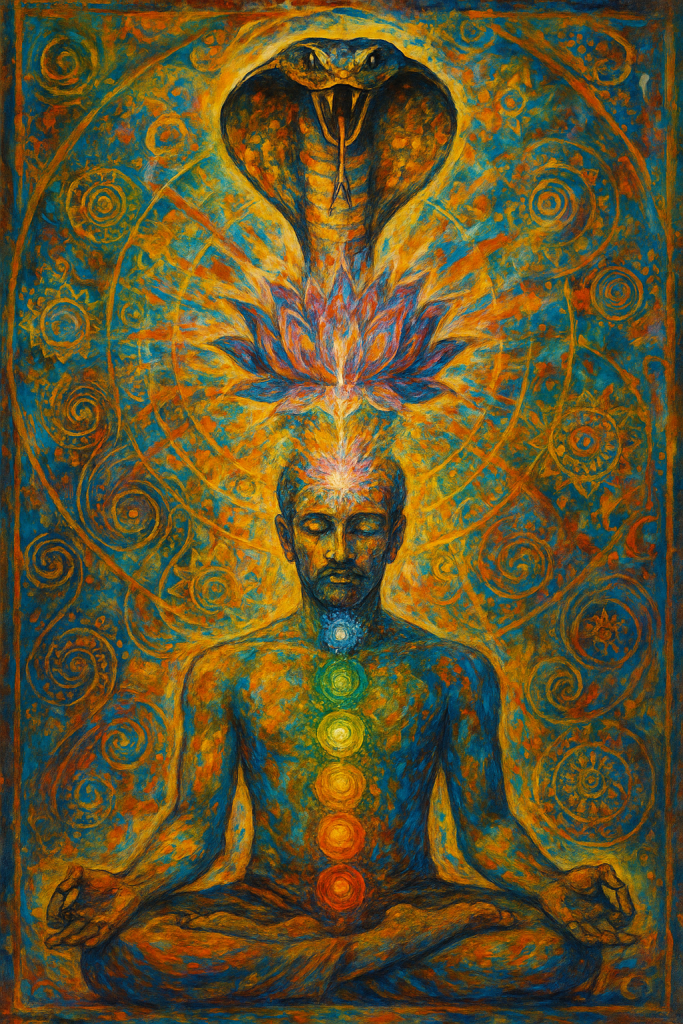
The surge of Kundalini energy does not arrive as a gentle visitor. It comes as a serpent rising, a King Cobra rearing its hood, carrying both the gift of awakening and the threat of annihilation. Those who encounter this force discover it is not a metaphor; it is a reality coursing through every nerve, every cell, as if the body itself were being rewritten from the inside out.

When this energy pierces upward through the spine and explodes through the crown, the encounter feels like a confrontation with divinity itself. The serpent turns its head, upside down, to stare directly at you. In that gaze is the paradox: vitality at its peak and the shadow of death standing closer than ever. The breath sharpens, the heartbeat quickens, and one realizes that this power could end everything in an instant—or transfigure it beyond recognition.

Many speak of spiritual awakening as blissful or serene, but the truth carries far more weight. The awakening of Kundalini is as much a dance with mortality as it is with enlightenment. To feel more alive than ever before is to simultaneously brush against the veil of death, because both are rooted in the same ultimate source. Death is not the opposite of life, but the threshold that life constantly leans against.

The serpent reminds us that awakening is not safe. It burns away illusions, sears through the fragile boundaries of identity, and brings us face-to-face with what cannot die. The brush with death is not punishment—it is initiation. To survive, it is to be reborn, no longer mistaking yourself for the limited frame of flesh and thought, but knowing yourself as the vast consciousness in which even death dissolves.

Kundalini does not ask for permission. It does not ask if you are ready. It rises, and in that rising, you discover whether you can hold its gaze without collapsing into fear. The courage required is not of the ego, but of the soul. To endure the serpent’s fire is to step into a reality that few dare to enter, where life and death are revealed as two faces of the same eternal current.

Morgan O. Smith

Get Your Free Copy of My Book, Bodhi in the Brain!

https://subscribepage.io/oTSZQu

Designed for Longing

The Gift of Dissatisfaction

Satisfaction often appears as a destination, something to be reached, secured, and held onto. Yet the moment one grasps it, a subtle hunger begins to stir again. The new job, the relationship, the recognition, the spiritual experience—all of it, no matter how profound or fulfilling, eventually reveals its transience.

What if this is not a flaw in human nature, but the very design of it? To never be fully satisfied is not a curse but a compass. It pushes us forward, beckoning us into deeper terrains of discovery, love, and creativity. The ache of incompletion is what keeps us alive to possibility. Without it, our spirit would stagnate.

Satisfaction is not the absence of desire but the willingness to engage with desire without being enslaved by it. To live in peace with dissatisfaction is to realize that fullness and emptiness coexist. The longing itself becomes a teacher, whispering that no object, achievement, or moment will ever be enough, because “enough” is not an endpoint, but an ongoing movement.

To accept this is to loosen the grip on perfection. You no longer demand that life provide a final fix, a permanent conclusion. Instead, you walk with the paradox: satisfaction arises from embracing dissatisfaction. The search for completion unveils the truth that nothing was missing in the first place.

The wisdom here is subtle. Contentment does not mean settling. It means seeing the beauty of being forever unfinished, of being shaped by desire but not consumed by it. Your very dissatisfaction becomes evidence that you are part of an unfolding reality, one that will never exhaust its depth.

Satisfaction lies not at the end of longing, but in the freedom to let longing remain.

Morgan O. Smith

Get Your Free Copy of My Book, Bodhi in the Brain!

https://subscribepage.io/oTSZQu

The Subtle Distinctions of Oneness, Nonduality, and the Sacred

To speak of oneness is to point to a direct perception where boundaries dissolve and all things merge into a singular whole. It is an overwhelming intimacy with existence itself—nothing stands apart, no subject or object remains. The experience carries a profound sense of union, yet it still acknowledges a felt “all” that has become “one.”

Nonduality, by contrast, is not the merging of things into one but the recognition that no separation ever truly existed to begin with. The very categories of “one” and “many” collapse. There is no subject perceiving unity, no object being unified—just the unbroken reality that precedes both. Here, the language of experience falters because even the notion of “an experience” implies duality between experiencer and what is experienced.

To call all things divine or sacred is yet another register. This perception imbues life with reverence, not only as one undivided whole but as shimmering expressions of the holy. Every moment, every being, every breath radiates significance. It is not merely that things are nondual, but that the nondual reality is inherently worthy of devotion. The sacred quality does not rest on belief; it is revealed when perception is refined enough to sense the luminous depth at the heart of being.

The distinctions are subtle, yet they matter. Oneness offers belonging. Nonduality uproots the illusion of separation. The sacred awakens awe and reverence for what is. Together, they sketch the contours of realization, each layer illuminating a different face of truth.

When all three—oneness, nonduality, and the sacred—merge seamlessly, a higher recognition dawns: absolute monism. Here, the whole of existence is seen as a single reality that is simultaneously one, beyond duality, and inherently divine. Nothing is outside of it, nothing is other than it, nothing is less than it. The boundaries of philosophy, devotion, and direct experience collapse into the same source. This is not a synthesis of perspectives but the revelation that they have always been expressions of the same truth. Absolute monism discloses the indivisible essence where belonging, emptiness, and holiness are not separate qualities but different ways of perceiving what is eternally and already the case.

Morgan O. Smith

Get Your Free Copy of My Book, Bodhi in the Brain!
https://subscribepage.io/oTSZQu

The Ecstasy of Knowing

When Mind and Soul Dissolve into One

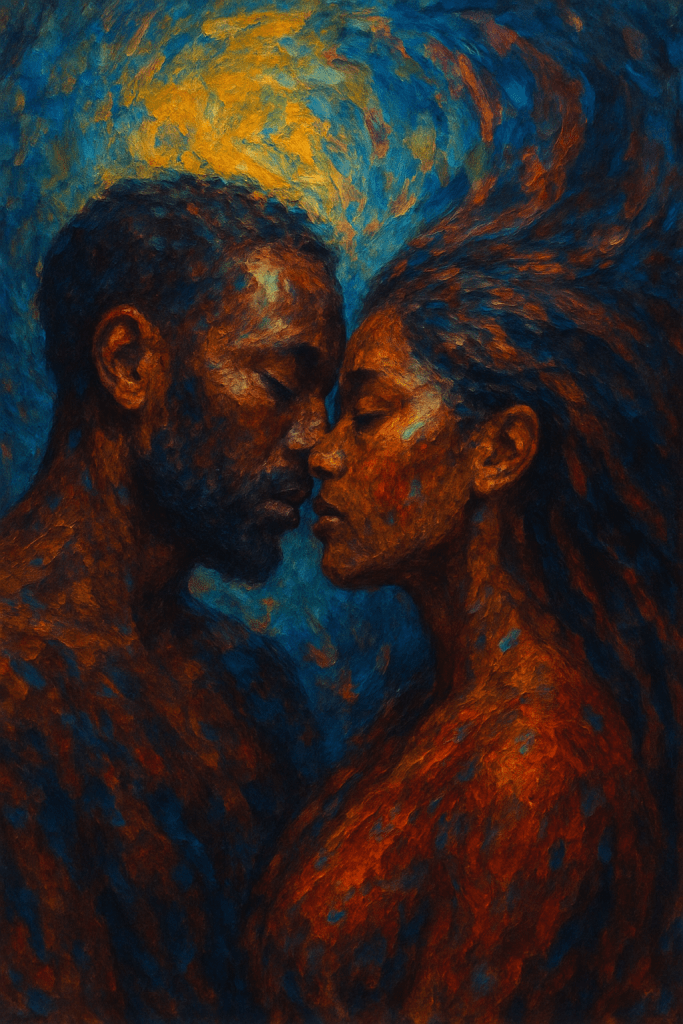
The awakened mind, when met with the receptive soul, becomes a current of divine fusion—an alchemical embrace where thought and feeling cease to be separate. This union transcends the limits of sensation, unveiling a pleasure far beyond the fleeting intoxication of flesh. It is an ascent into boundless wisdom, an eroticism of consciousness where insight spills forth, saturating the ego’s constructs until they dissolve into the vastness of being.

This is not a mere intellectual encounter, nor is it an indulgence in sentimentality. It is the tantric interplay between awareness and presence, where the pulsation of knowing meets the depths of surrender. When the mind no longer dictates and the soul no longer pleads, a stillness emerges—a space so open that it drowns the self in its own infinity. Here, knowledge is not collected but revealed, not possessed but embodied. Love is not an attachment but an atmosphere, pervading every movement, every breath, every silent recognition of the one essence behind all things.

This is where tantra ceases to be philosophy and becomes direct experience. The dissolution of the personal into the infinite is neither loss nor gain but a return—one that neither seeks nor resists, neither holds nor lets go. It is the eroticism of the absolute, where wisdom penetrates the soul like lightning, setting fire to all that would obscure its radiance.

The lover and the beloved, the seeker and the sought, the knower and the known—these distinctions fade into the luminous vastness of pure being. And from this space, all that remains is the silent ecstasy of knowing.

Morgan O. Smith

Get Your Free Copy of My Book, Bodhi in the Brain!

https://subscribepage.io/oTSZQu

The Architecture of the Ideal

Why the Myth Matters More Than the Man

Whether Jesus walked the earth or not is irrelevant to me. I am less concerned with the historicity of a man than I am with the utility of what he represents. Jesus is a technology. So is the Buddha. So is Krishna. These aren’t merely personalities from the past; they are structured mechanisms—living blueprints—for the cultivation of inner transformation and the evolution of civilization.

They function like algorithms for awakening, coded into the myths and memories of culture, waiting to be activated. Each offers a symbol-set, a behavioral protocol, an ethical framework, and a psychological mirror. Whether or not they existed, they exist. Their presence in the collective psyche is undeniable, and their effect, observable.

Civilizations have risen around these templates. Wars have been fought in their names, yes—but so have peace movements been born, arts been inspired, and lives reoriented toward compassion, surrender, and truth. These are not minor outcomes. These are pivotal shifts in the trajectory of human consciousness.

When a society lacks mythic technologies, it spirals. When the sacred is reduced to opinion or dismissed entirely, a vacuum forms. And into that vacuum pours the lesser gods of the day—greed, algorithmic manipulation, ego-as-brand. The sacred figures stand not because they are flawless historical beings, but because they point beyond history. They are fingers, pointing not to the past, but to what is possible—personally, collectively, cosmically.

To see Jesus as a technology is to acknowledge the architecture of possibility. To understand the Buddha as a psychological operating system is to awaken to what it means to be truly sane. Whether temporary or permanent, these peak states—compassion without condition, awareness without center, love without lack—are doorways we are meant to pass through, again and again, until their impermanence no longer discourages us, but refines us.

Maybe they were fictionalized. Maybe they were real. Doesn’t matter. They were necessary. They remain necessary. Because without the fiction of perfection, how would we recognize the direction of our ascent?

Morgan O. Smith

Get Your Free Copy of My Book, Bodhi in the Brain!

https://subscribepage.io/oTSZQu

The Weightlessness of Perspective

How much weight does a point of view actually hold?

None. And yet, it seems to shape entire lives, govern nations, define relationships, and breed conflict. But the more one deepens into the ungraspable expanse of reality, the more all perspectives—including one’s own—become like shadows cast by a flame none can touch.

I do not feel resistance toward those who oppose my view. I feel space—vast, immeasurable space. Not tolerance, not passive indifference, but a kind of cosmic shrug. This universe is too immense, too precise, too paradoxical for me to waste even a flicker of energy defending a perspective I know was born out of a temporary configuration of memory, biology, and environment.

What I see, I see through a filter: race, culture, conditioning, gender, language, trauma, karma, personality, neurochemistry, and a moment’s breath. Someone else sees through a completely different lens. To argue over the differences is like two waves debating who touches the shore more truthfully.

Each wave is made of the same water.

Ultimate Reality does not conform to opinions. It cannot be contained by agreement or disagreement. It isn’t found in right or wrong, winning or losing. It is not trying to prove itself. It simply is, and isness doesn’t care how it’s described.

This is not nihilism. It’s reverence. Reverence for the mystery so wide, so total, that every perspective is valid precisely because none of them are.

The deeper the realization, the more perspectives one can hold. Not juggle, not compare, not rank—but hold. To see from the eyes of the enemy and the beloved, the oppressor and the oppressed, the doubter and the devotee. To feel into each vantage point, not to believe it, but to understand it from within.

Eventually, you don’t just hold perspectives. You become the capacity for perspective itself. You become the silence before thought, the awareness behind all positions.

From there, disagreement becomes theatre.

Opposition becomes dance.

And the only thing that matters is the stillness that allows it all to appear.

Morgan O. Smith

Get Your Free Copy of My Book, Bodhi in the Brain!

https://subscribepage.io/oTSZQu

The Stage Beyond Oneness

When Even the Kosmos Falls Away

There comes a point when even the most expansive vision collapses—not from error, but from completion.

On the path of awakening, seekers often journey from the confines of selfhood to a union with all things. Ego dissolves, and what once felt separate now reveals itself as interconnected. Compassion grows. The heart blooms for all beings. One begins to live for the Whole.

But for some, even this union becomes too crowded.

Even the notion of “One” becomes too noisy.

This is the threshold where Kosmocentric awareness—a state of profound unity with all life and existence—gives way to something quieter, more radical. Not a deeper connection, but the quiet erasure of the very need for connection. Not expansion, but the release of expansion itself.

This is acentric awareness.

Not centered on the self.

Not centered on the world.

Not even centered on the All.

Acentricity does not point toward identification with something greater. It simply makes no identification at all. No vantage point. No witness. No center from which to perceive. It does not declare that all is One—it no longer needs such declarations. Truth requires no thesis here.

Reality just appears.

Without context.

Without a watcher.

Without the echo of a thought that says, “I am aware.”

Call it suchness.

Call it the absence of everything, shimmering as everything.

Call it the stillness that doesn’t oppose movement, because it was never still.

This isn’t transcendence. It isn’t detachment. It isn’t a stance. It’s the utter end of stance—the collapse of spiritual architecture, without the rubble. It doesn’t reject the world. It simply no longer perceives it as something to accept or reject.

And what does such a life look like?

Unremarkable.

Utterly simple.

Perhaps quiet, perhaps animated.

But always empty of claim, even the claim to be empty.

There are no teachings left to transmit. Not because truth has been mastered, but because it was never a possession. No more climbing. No more seeking. No more union. Not even rest—because rest would imply effort once existed.

This is the unborn silence that does not speak—not even through the mouths of sages.

It appears as a leaf falling, as someone stirring soup, as the sound of a crow at dusk.

And you might pass by it without knowing.

Because it doesn’t need to be known.

It just is.

And it is no one’s.

Morgan O. Smith

Get Your Free Copy of My Book, Bodhi in the Brain!

https://subscribepage.io/oTSZQu

Once Enlightened… Your Problems Have Just Begun

The illusion is that awakening is the end of the road. That the moment the self dissolves, suffering bows out, and the curtain falls. But what if that moment is not an arrival, but a beginning?

Before awakening, the ego fights battles it believes are personal. After awakening, the battlefield is not smaller—it’s vaster, quieter, and infinitely more subtle. The old problems—desire, fear, control—don’t disappear. They shape-shift. They clothe themselves in spiritual garments and reintroduce themselves as paradoxes: “Should I speak, or is silence more aligned?” “Is this surrender or passivity?” “Am I still pretending there’s a me who can do or not do?”

No one warns you that after the clouds part, the sun may burn.

Liberation is not the end of pain. It’s the end of avoidance. One no longer flinches. One no longer hides. You feel fully raw, exposed, without anesthesia. And still, you sit. Still, you breathe. Still, you bow.

You now see with clarity what others can’t. You watch the mechanisms of ego turning behind the eyes of those you love, and the weight of compassion grows heavier, not lighter. You begin to weep for the world—not out of despair, but from a reverence so deep it bends your knees.

Once you’ve seen through the illusion of self, the world becomes impossibly intimate. Every leaf becomes your body. Every scream, your own. Every cruelty, a mirror reflecting the exact frequency of your forgotten selves. There is no refuge. There is only recognition.

You don’t get to leave the world. You return to it—with your skin ripped open, your boundaries gone, and your heart unarmored. Enlightenment doesn’t make you untouchable. It makes you unable to turn away.

There are no medals for realization. No applause for dissolving. No reward for merging with the absolute. What you get, instead, is a silence that never leaves you. A love so vast it terrifies the small mind. A clarity that strips you of every comfortable lie.

And you carry it.

Not as a badge.
As a burden.
As a blessing.
As a vow.

You walk through the world invisible, but more alive than ever. And your problems—they don’t vanish. They deepen. They purify. They sanctify.

Not because you are broken.

But now, you are whole.

Morgan O. Smith

Get Your Free Copy of My Book, Bodhi in the Brain!
https://subscribepage.io/oTSZQu

The Fiction of Randomness

If every effect has a cause, what room remains for the idea of “random”? Strip away the assumptions and peer into the structure of unfolding—what appears arbitrary may only be the limit of our perception, not the limit of reality.

What we call random is simply what we cannot trace. A roll of dice seems disorderly, but beneath it is a network of variables: velocity, angle, friction, momentum, density of the table, even micro-vibrations in the air. Were we to measure all these with precision, we would predict the outcome every time. The surprise we feel isn’t due to chaos, but to ignorance.

This is not about turning life into a mechanical calculation. Quite the opposite. It’s about bowing to a deeper intelligence that is so vast, so precise, it weaves galaxies from the quantum breath of atoms. When nothing is out of place, even disorder is part of a symmetry too subtle for the linear mind to grasp.

Events that seem unexplainable—miracles, tragedies, synchronicities—often get dumped into the “random” pile because they defy our narratives. Yet each thread is embedded in a continuum of unfolding, stretching far beyond memory, culture, or even lifetime.

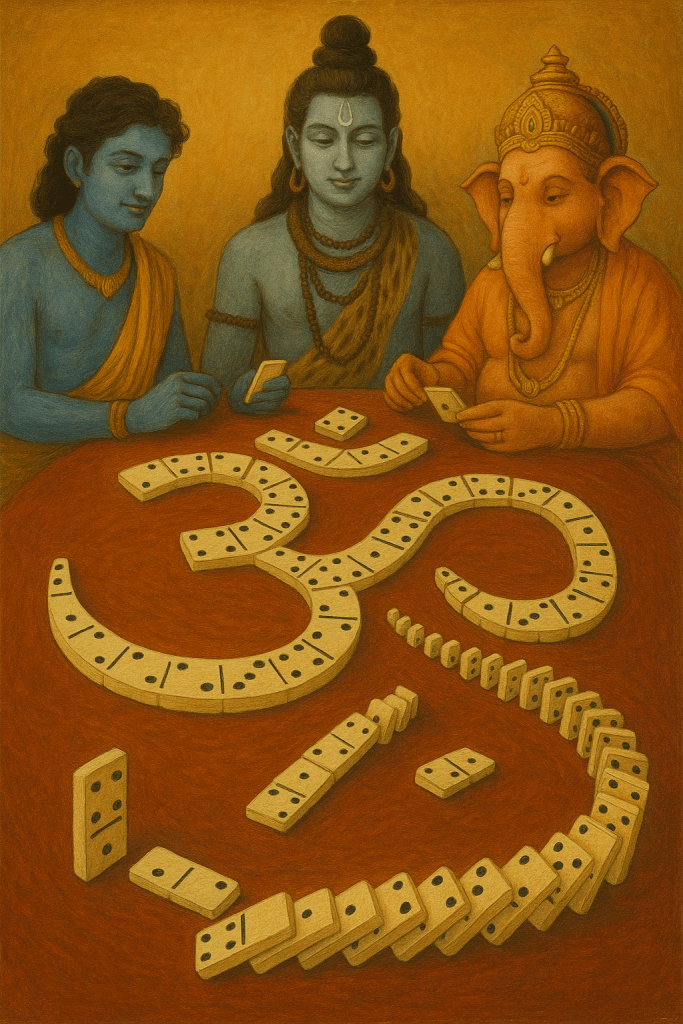
To say life is random is to deny the sacred choreography of emergence. Every moment is connected, not as dominoes collapsing mindlessly, but as a living mandala of causes so intricately interlaced they cannot be undone or simplified.

When one begins to see this—really see it—the need to explain, justify, or control begins to fall away. What replaces it is not fatalism, but participation. There is no randomness, only the undetected curvature of deeper causality. And when that is recognized, trust becomes more than a spiritual concept. It becomes a way of being.

Morgan O. Smith

Get Your Free Copy of My Book, Bodhi in the Brain!
https://subscribepage.io/oTSZQu

The Final Disappearance

What happens at the moment of death?

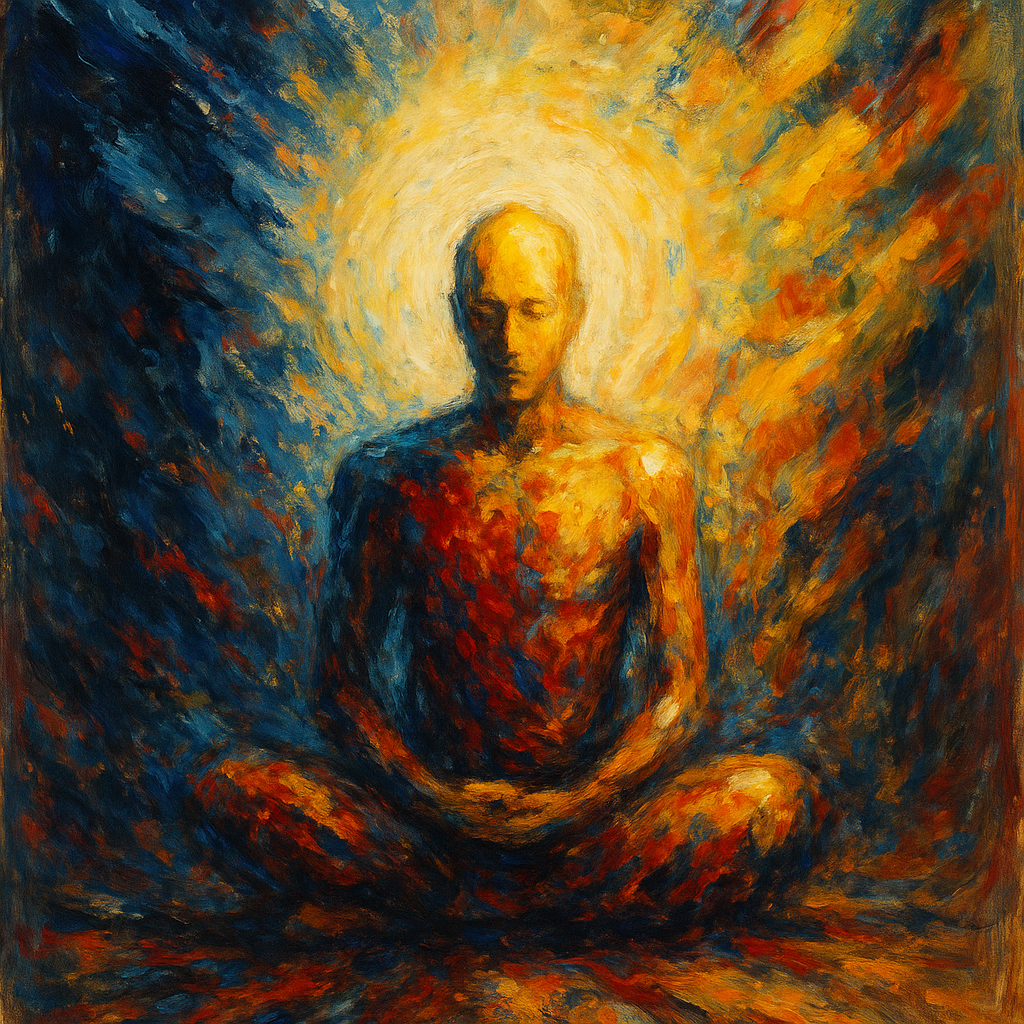
Not from the standpoint of biochemistry or theology, but from the lived silence of awakened seeing—the vantage where death and self are no longer two.

At the summit of awakening—whether called Moksha, Nirvana, Turiyatitta, or Nirvikalpa Samadhi—the idea of death unthreads itself. What dies never truly lived, and what lives has never been touched by time. The dissolution of the body is not the end, nor is it a doorway. It is the falling away of questions that were never yours.

There is no climactic revelation at that edge. There is only this. The suchness that never began, never moved, and never faded. At peak realization, death ceases to be an event. It is not an exit. It is the unspeaking of form—a gentle vanishing into what was always here.

This is not metaphor.

Consciousness, unfragmented and clear, neither resists death nor awaits it. It has already passed through it, endlessly. Not as a journey from point A to point B, but as a revelation that neither point exists.

You don’t meet death. You realize you were never separate from it.

At this depth, what we call life no longer hangs from a timeline. What we call death no longer casts a shadow. No more witness is watching the last breath. Only the unnameable recognizes itself through the temporary flicker of form.

The body may fall away, but the body was never the one who knew. The breath may stop, but the breath was never yours. That which remains doesn’t remain—it is. Before and after mean nothing to it.

Some call this realization peace. Others call it extinction. But it’s neither stillness nor silence nor bliss. It’s before all that. It’s the absence of absence. The presence of presence. Not two.

When the last ripple of self dissolves, what’s left is not a person merging with eternity. There is no one to merge. There is only what was always whole.

This is death at the level of freedom. This is life without division.

Not a conclusion.

A cessation of seeking.

Morgan O. Smith

Get Your Free Copy of My Book, Bodhi in the Brain!

https://subscribepage.io/oTSZQu