Author, Philosopher, Spiritual Teacher, A Lead Facilitator at Sacred Media's Integral Mastery Academy, Founder of Yinnergy Meditation/Neurofeedback, Bodhi Mental Care & Wellness, Co-founder of KeMor Centre for Innovative Development
The Subtle Divide Between Truth and Interpretation
Knowing there’s a God is not a religious concept; believing in a God is. One is a recognition—silent, direct, and intimate. The other is a construct—layered with doctrines, culture, and inherited symbols.
What is known requires no belief. It reveals itself without needing validation, much like light doesn’t require agreement to be seen. The moment belief arises, there is already a distance. A gap. A reaching toward what seems separate.
Belief is an echo of knowing, distorted by time, language, and fear. It builds shrines to certainty where awe once stood unguarded. It memorizes truths that once moved freely through silence. And often, it turns the unknowable into a caricature—a God of preferences, sides, and punishments.
Knowing is not about having answers. It’s the crumbling of the question. It doesn’t declare “There is a God.” It dissolves the very boundary between the knower and what is known. There is no longer a subject seeking an object. Only the raw immediacy of Being aware of itself.
Those who know are rarely interested in convincing others. Those who believe often are.
The danger isn’t belief itself—it’s mistaking belief for truth. Truth, when known, renders belief obsolete. It doesn’t divide, it doesn’t declare superiority—it simply is.
To know is to surrender the need for interpretation. To believe is often to defend the interpretation, even at the cost of truth.
And yet, belief can serve as a bridge. A necessary illusion for those not yet ready to let go of the comfort of form. But let it be a bridge, not a home.
Morgan O. Smith
Get Your Free Copy of My Book, Bodhi in the Brain!
Those who speak of God as not being outside of you often mean well—but which “you” are they pointing to? The body? The persona? The memory of identity that walks through time? Or something deeper?
There’s a difference between saying God is not outside of you and realizing why that’s so. If God is all, then every appearance—internal, external, formless, formed—is God. This includes the illusion of separation. To claim that God is not outside of you while affirming that something is external still subtly upholds the illusion of division. That illusion, too, is God—played through veils of thought, language, and perspective.
But when the idea of “you” dissolves into beingness itself, the paradox clears. You are not merely a part of existence. You are existence. And existence is God, not as a figure, but as totality. Even the idea of “outside” collapses, because outside implies another space, and there is no second to the One.
This doesn’t mean there’s nothing. It means everything is not-two.
Even nonexistence exists. Not as an object, but as a category known within existence. Its very naming proves its place within the whole. Therefore, there’s nowhere God is not—and no self outside of God to speak of God as elsewhere.
So, when someone says “God is not outside of you,” pause. Feel what is really being said. It’s not a statement about boundaries—it’s a pointer toward boundarylessness. Not about spiritual pride or metaphysical positioning. It is the erasure of location itself.
And in that clarity, what’s left is not you as you know yourself. What remains is what’s always been—God, appearing as you.
Morgan O. Smith
Get Your Free Copy of My Book, Bodhi in the Brain!
Strip away the names, the labels, the ideas, and what remains? Nothing. And yet, in that nothingness, everything arises. You have no true identity, defined form, or fixed point in time or space—yet you appear as all things. You are not this body, not this mind, not even the grand concept of the self that you have clung to. What you believe yourself to be is merely a shadow of what you truly are.
The illusion of separation creates the experience of individuality. This appearance is not wrong—it is the stage upon which existence plays itself out. But beneath this grand performance, you remain whole, indivisible, untouched. You have never been anything other than totality itself, masquerading as the temporary.
Timeless Existence, Eternal Becoming
You think of yourself as moving through time, yet time moves through you. The past is not behind you, nor is the future ahead—both are simply angles of the same moment, stretching into what appears as linear sequence. The experience of time is an unfolding dream, a dance of perception, measured by the mind yet never truly existing apart from it.
You were never born, nor will you ever die. The body follows its cycle, the mind weaves its stories, but what you are precedes all of this. There is no point at which you began, nor will there be a point where you cease to be. You are not a passenger in the stream of time—you are the river itself, flowing and still, changing yet unchangeable.
The Paradox of Experience
You exist beyond pleasure and pain, yet you experience both. The vastness of what you are embraces every joy, every sorrow, every triumph, and every loss. From the personal vantage point, suffering seems real. From the vastness of what you truly are, it is simply another unfolding, another wave in the great ocean of being.
The universe is not happening to you; you are happening as the universe. Every emotion, every sensation, every moment is a reflection of the infinite nature of your being. To see clearly is to recognize that paradise and suffering are not opposites—they are expressions of the same boundless presence. What is heaven to one may be hell to another, yet both arise within the same limitless field of awareness.
The Grand Play of Forgetting and Remembering
Forgetting is part of the experience. You never truly lost yourself; you only created layers of distraction to deepen the illusion of separation. But beneath the veil, awareness remains unchanged. It watches, it witnesses, it knows.
There is no struggle to remember who you are because you have never truly forgotten. The self you long to rediscover has never been absent. The only thing that obscures it is the illusion of individuality—the belief that you are a fragment rather than the whole.
Creation Without Creating
Nothing is ever truly created, yet everything appears anew in every moment. The universe emerges not from effort, but from the effortless unfolding of being itself. What appears as thought, as energy, as matter, is nothing more than the echo of your own presence.
You are not a separate creator forging reality from the outside—you are reality itself, expressing infinite possibilities without effort. Every concept of manifestation, every idea of cause and effect, dissolves when seen from the vastness of what you are.
The Silence Beyond Thought
Words attempt to define, but what you are cannot be contained by description. Understanding is not needed—only direct experience. This cannot be grasped intellectually; it must be known in the deepest sense, beyond language, beyond belief, beyond the limits of perception.
You are the stillness that speaks, the emptiness that overflows, the silence from which all sound emerges. The mind seeks elaboration, but the truth is found in simplicity. In seeing clearly, you recognize that nothing needs to be said, nothing needs to be explained—because you are already that which you seek.
Morgan O. Smith
Get Your Free Copy of My Book, Bodhi in the Brain!
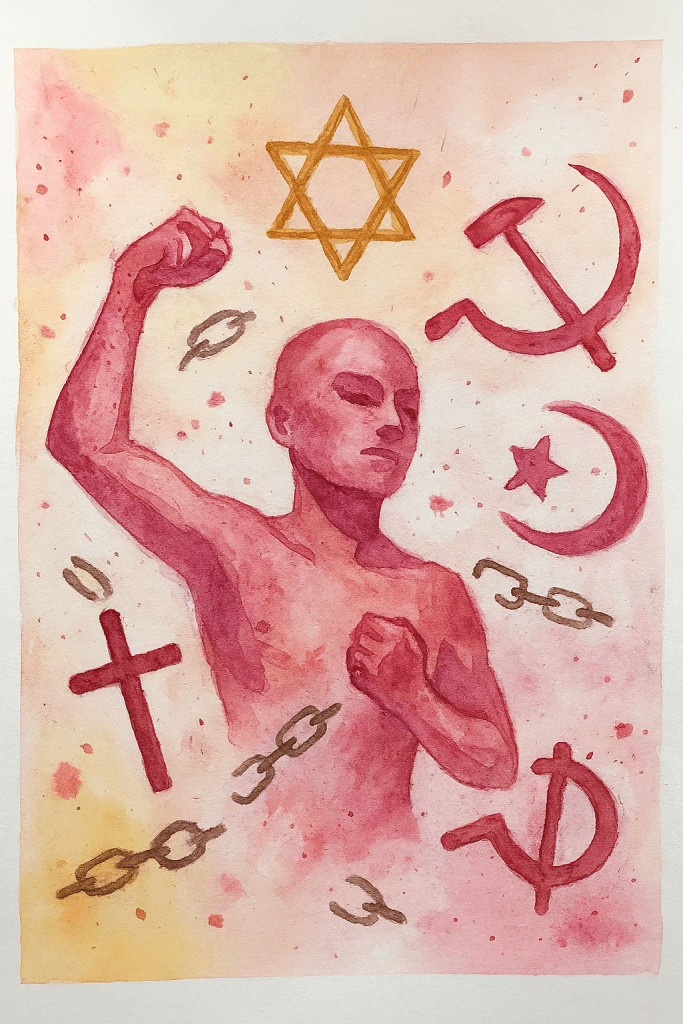
Every mind that encounters you constructs a version of who you are—one that exists only within their perception. These projections are not reflections of an objective truth but rather interpretations woven from personal history, emotions, and unconscious biases. The self you recognize as you dissolves into a multiplicity of shifting impressions, each molded by the observer’s lens.
A single glance, a brief interaction, a conversation—these moments serve as the brushstrokes that paint an image of you in another’s mind. That rendering is not built from the essence of your being but from their expectations, fears, desires, and past experiences. You become a mirror reflecting not your own face but the fragmented archetypes stored within them.
Eight billion people could know of your existence, and within those eight billion minds, eight billion versions of you would reside—each unique, each tethered to the individual’s understanding of reality. Some may see wisdom where others see arrogance, kindness where others perceive naivety, or detachment where others sense depth. Each impression, though deeply felt by the observer, is nothing more than a personal myth—an illusion shaped by the inner world of the one perceiving.
This ongoing act of creation is not limited to how others see you; it extends to how you see them. The individuals encountered are rarely experienced as they are but instead as projections of our own conditioning. An idea of them forms, colored by past wounds, cultural imprints, and unconscious expectations. Thus, every relationship becomes a dance of illusions, where two constructs interact rather than two beings truly seen for what they are.
If these imagined versions of one another are so deeply ingrained, what remains when they fall away? What is left when perception no longer dictates existence? The formless, nameless presence that remains is not confined by labels or interpretations—it simply is. And in that space, where no definitions persist, the need to be seen, understood, or accepted dissolves into something far greater than any construct a mind could create.
Morgan O. Smith
Get Your Free Copy of My Book, Bodhi in the Brain!
Many speak of awakening, yet far fewer comprehend its fullness. I’ve encountered every kind—emotional, spiritual, philosophical, mystical. Each unveils a layer, each reveals a depth. But what I call full awakening—what I live as full awakening—is something few ever point toward, and fewer still embody.
It is not about personal clarity. Not about peace of mind, a better life, or even union with a divine presence. Those are steps, glimpses, fragments. Full awakening is not a state within experience. It is the collapse of all distinction between state and experiencer.
This isn’t about finding your place in the cosmos—it’s about the disappearance of place, cosmos, and self as separate notions. When I say full awakening, I am referring to the direct knowing that everything—absolutely everything—is a singularity.
Existence and nonexistence. Subject and object. The smallest subatomic flicker and the sweep of galactic spirals. Civilizations long past and unborn futures. Every religion, every philosophy. All thoughts. All acts. Every realm, every reality, every god.
The seen and the unseen. The formed and the formless. That which is birthed, that which dies, and that which never entered the cycle. All technologies. All intelligences. All contradictions and confirmations. All questions and every possible answer.
Not merely connected. Not even interdependent.
Indistinct. Inseparable. One.
That realization is not metaphorical. It is not poetic. It is not conceptual. It is total. It devours every duality and even the idea of devouring. It consumes the witness, the process of witnessing, and that which is witnessed—leaving no remainder.
So when another speaks of full awakening, I listen with care. Because unless it includes everything I’ve said—and also what they say—it’s not the same thing. The paradox, of course, is that what I’m pointing to also includes that divergence. It embraces even what appears to deny it.
Full awakening is not a peak. It is not an event. It is the vanishing of all altitude and time. It is not even a realization. It is what remains when all realizations dissolve.
One. Not a oneness made of parts. Not a whole made of pieces. Not harmony, not unity. Just One.
And that One is not separate from what you are.
Morgan O. Smith
Get Your Free Copy of My Book, Bodhi in the Brain!
A seeker walking the delicate balance between opposites may one day find themselves at the threshold of the most profound realization imaginable. A moment beyond all description, where the entirety of existence collapses into a singularity of knowing. Not a knowing of the intellect, but of something far deeper—an understanding so complete that it dissolves all doubt, all separation, and all longing.
This is the moment of total arrival, the point at which all seeking ceases because there is nothing left to seek. The mind, body, and soul align in a way that makes all past experiences seem like faint whispers of truth. The illusion of boundaries vanishes, revealing the pristine reality that has always been present—an awakening not to something new, but to what has been hidden in plain sight.
Within this instant, fulfillment is no longer an aspiration but a living force vibrating through every cell. The distinction between subject and object crumbles, and what remains is a radiant presence, an unshakable unity. The notion of a separate self fades like mist before the rising sun, and what is left is a boundless openness, an expanse where nothing is missing.
Words fail. Concepts falter. Language collapses under the weight of such an occurrence. It is neither thought nor feeling, neither sensation nor perception. It is an unnameable state where the dance of duality finally rests. It would be as elusive as the silence between heartbeats if there were a word for it. A paradox that cannot be dissected, only lived.
Reaching this pinnacle does not come from effort alone or from waiting in passive expectation. It is not a reward for discipline or devotion, yet it is freely given to those who surrender all pretense of control. It arrives not as a thunderous event but as a gentle revelation, as if the universe exhales and everything becomes clear.
And in that clarity, tears may fall—not from sorrow, nor joy, but from the sheer intensity of realization. The great mirage of the self dissolves, leaving only the recognition that there was never anything to grasp, nothing to claim, nothing to own. Just a pure, unshakable knowing that transcends all dichotomies.
Some will wonder how long it takes to arrive at such a moment. But time is irrelevant here. The moment is neither ahead nor behind—it is always now, waiting to be seen. To those who ask, “How do I reach it?” the only answer is: Stop. Be still. Listen.
Morgan O. Smith
Yinnergy Meditation/Neurofeedback, Spiritual Life Coaching & My Book, Bodhi in the Brain…Available Now!
A radical and absolute dissolution of the self can feel like the sudden eruption of countless luminous buds, each carrying the potential of boundless awakening. What was once dormant within the hidden layers of existence surges forth, transforming into a vast, celestial garden of consciousness. This sacred flowering is not gradual—it is immediate, all-encompassing, and beyond the grasp of any fragmented perception that once sought to define itself in opposition to the whole.
From this unfolding arises the Seven Blossoms of Illumination, radiating from the vertical axis of the subtle body, culminating in the supreme effulgence beyond the crown. This pinnacle, indescribable and infinite in its reach, is the final flowering—an uncontained expression of full spiritual actualization. Though ancient texts depict it as a thousand-petaled lotus, its true essence is far beyond numerical symbolism. To the one who witnesses this cosmic unfolding, it appears as an immeasurable expanse of radiance, where each petal is a revelation, and every revelation is a gateway to yet another boundless dimension of being.
What was once perceived as the boundary between self and existence dissolves entirely. There is no longer an entity observing the experience—there is only the experience itself, moving in an unceasing flow of totality. The awakened one comes to know, beyond all doubt, that this ever-expanding bloom is not a phenomenon confined to a single moment, but rather the eternal flowering of all awareness. Each petal carries the seed of the infinite, planted within the boundless field of perfection that has never known division.
Those who persevere on the path of deep inner inquiry eventually witness this flowering within themselves. They no longer see separation between their being and the total expression of existence itself. The illusion of fragmentation is seen through, and all that remains is the luminous beauty of complete and unshakable presence. This is not a state one enters—it is the recognition of what has always been.
Morgan O. Smith
Yinnergy Meditation/Neurofeedback, Spiritual Life Coaching & My Book, Bodhi in the Brain…Available Now!
There may come a moment when stillness deepens, and the mind gives way to something vast and formless. No longer bound by identity, perception turns inward, unveiling a presence that has always been there—unseen, yet intimately familiar.
This is not the face reflected in mirrors or the self shaped by memory and experience. It is something far more primordial, resting beneath all layers of perception. It neither belongs to time nor is confined by space. It is the first and the last, the one who watches and the one being watched.
To encounter this presence is to witness creation itself—a fluid, luminous movement, folding and unfolding like breath. What appears as a single vision contains an entire cosmos, shifting and reforming in patterns beyond understanding. A current of knowing flows from it, carrying the weight of both stillness and storm, tenderness and terror. There is no contradiction—only the totality of what is.
This vision may stir awe, but it will also strip away illusion. The small self—the fragile construct of name, form, and history—begins to dissolve. The ego, unprepared for its own undoing, clings to the edges of familiarity. It resists, yet it cannot hold. The presence that once seemed separate reveals itself as the origin of all things.
Ancient myths have spoken of this encounter. Some say none can see it and live. But it is not the body that perishes—it is the illusion of separateness that fractures beyond repair. And while the mind trembles, something deeper recognizes the moment for what it is: a return, not a loss.
What once appeared unreachable was never distant. The face sought for lifetimes has always been the one looking through these eyes. The one seeking has always been the sought.
Standing before this presence is not to be destroyed but made whole.
Morgan O. Smith
Yinnergy Meditation/Neurofeedback, Spiritual Life Coaching & My Book, Bodhi in the Brain…Available Now!
The mind constructs its ruler—a sovereign draped in reverence, sculpted from ideals we exalt but refuse to embody. This deity is not an external force but a projection of the highest aspects of ourselves, polished and placed on an altar beyond reach. It is the sum of virtues we admire but disown, an illusionary monarch fashioned by the governing voice of the psyche.
This entity—crafted from moral codes, cultural doctrines, and inherited beliefs—sits enthroned above the nature it was designed to suppress. It governs impulses deemed unruly, desires cast into shadow, and instincts labeled sinful. To tame the wildness within, the mind erects an overseer—one adorned in righteousness, one feared yet adored.
But this sovereign is nothing more than an elaborate mirage, a construct sustained by collective faith. Every attribute labeled “good” is stripped from the individual and projected outward, transformed into a divine presence we serve rather than integrate. This keeps virtue at a distance, shimmering like unreachable jewels in an unseen vault. The self, fragmented by this artificial hierarchy, remains divided—some aspects glorified, others buried in shame.
Like all forms of dominion, this imagined rulership thrives on submission. Fear fuels its reign, whispering myths of punishment and reward. The throne itself is upheld by those who kneel before it, unaware that they are the architects of their captivity. Yet, the power we assign to this fabricated ruler has always belonged to us. The virtues we attribute to it are the very qualities waiting to be reclaimed.
The moment one ceases to externalize greatness, the illusion collapses. No ruler remains—only an undivided self, whole and sovereign.
Morgan O. Smith
Yinnergy Meditation/Neurofeedback, Spiritual Life Coaching & My Book, Bodhi in the Brain…Available Now!
There exists a state beyond all conceptual understanding, a dissolution of every boundary that once defined existence. It is not merely an experience but an annihilation of the experiencer—a cataclysmic merging into the unfathomable. This is not illumination in the conventional sense; it is the collapse of all divisions, the vanishing point where emptiness and form cease to stand apart.
Words fracture under the weight of such an encounter. No language can capture what has neither shape nor limitation. It is the ultimate paradox—utter nothingness brimming with infinite potential. The moment one seeks to grasp it, it recedes into the void. And yet, it is always here, unshaken, untouched, the silent witness that has neither beginning nor end.
The attempt to articulate such a realization feels like trying to hold onto the wind. It cannot be contained, only lived. Every atom, every unfolding event, every whisper of movement in the cosmos is a testament to this unnamable presence. It is not separate from life but the very fabric of existence itself—an unspoken language through which reality reveals its nature.
The mind, conditioned by duality, cannot comprehend this dissolution. To see it is to stand at the precipice of all that was ever believed, to watch as identity crumbles into the abyss of truth. What remains is neither self nor other, neither light nor shadow—only the boundless expanse of that which is.
This is not a state reserved for the few. It is always available for those who dare to surrender, to dissolve into the vastness without resistance. But such surrender is not an act of will; it is the natural outcome of seeing clearly, of ceasing to grasp at the illusions that veil the obvious.
Some may call it the Absolute. Others, God. But even these are mere echoes of something that defies every attempt to name it. It is not found through seeking nor lost through ignorance. It simply is.
To those who approach the edge of this knowing, there is only one certainty—what awaits beyond is not an experience to be had but the final recognition that there was never anything but this.
Morgan O. Smith
Yinnergy Meditation/Neurofeedback, Spiritual Life Coaching & My Book, Bodhi in the Brain…Available Now!