The Singular Moment of Absolute Realization

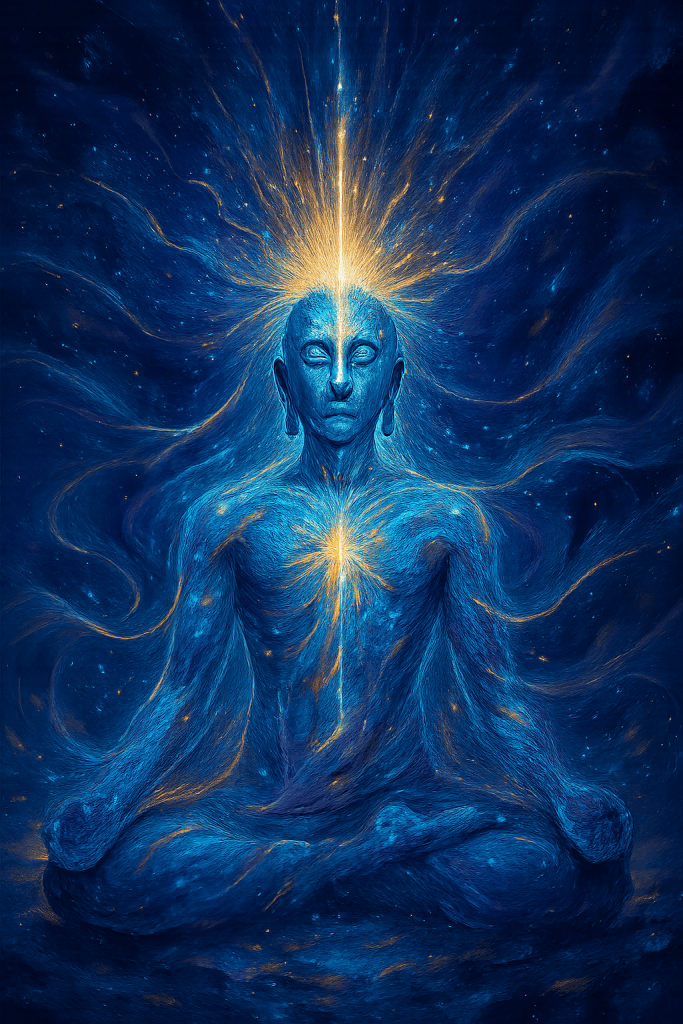
A seeker walking the delicate balance between opposites may one day find themselves at the threshold of the most profound realization imaginable. A moment beyond all description, where the entirety of existence collapses into a singularity of knowing. Not a knowing of the intellect, but of something far deeper—an understanding so complete that it dissolves all doubt, all separation, and all longing.

This is the moment of total arrival, the point at which all seeking ceases because there is nothing left to seek. The mind, body, and soul align in a way that makes all past experiences seem like faint whispers of truth. The illusion of boundaries vanishes, revealing the pristine reality that has always been present—an awakening not to something new, but to what has been hidden in plain sight.

Within this instant, fulfillment is no longer an aspiration but a living force vibrating through every cell. The distinction between subject and object crumbles, and what remains is a radiant presence, an unshakable unity. The notion of a separate self fades like mist before the rising sun, and what is left is a boundless openness, an expanse where nothing is missing.

Words fail. Concepts falter. Language collapses under the weight of such an occurrence. It is neither thought nor feeling, neither sensation nor perception. It is an unnameable state where the dance of duality finally rests. It would be as elusive as the silence between heartbeats if there were a word for it. A paradox that cannot be dissected, only lived.

Reaching this pinnacle does not come from effort alone or from waiting in passive expectation. It is not a reward for discipline or devotion, yet it is freely given to those who surrender all pretense of control. It arrives not as a thunderous event but as a gentle revelation, as if the universe exhales and everything becomes clear.

And in that clarity, tears may fall—not from sorrow, nor joy, but from the sheer intensity of realization. The great mirage of the self dissolves, leaving only the recognition that there was never anything to grasp, nothing to claim, nothing to own. Just a pure, unshakable knowing that transcends all dichotomies.

Some will wonder how long it takes to arrive at such a moment. But time is irrelevant here. The moment is neither ahead nor behind—it is always now, waiting to be seen. To those who ask, “How do I reach it?” the only answer is: Stop. Be still. Listen.

Morgan O. Smith

Yinnergy Meditation/Neurofeedback, Spiritual Life Coaching & My Book, Bodhi in the Brain…Available Now!
https://linktr.ee/morganosmith

The Perfect Gift Wrapped in Mind

The body is often seen as a vessel, a biological mechanism enabling experience and action. But what if we approached it differently? What if we recognized the body as the ultimate gift—intricately wrapped in layers of mind, emotion, and perception? This perspective shifts us from treating the body as a passive object to understanding it as an intelligent instrument of the infinite.

Each sensation the body offers is a doorway. The ache in your shoulders, the flutter in your stomach, the breath moving through your chest—these aren’t merely physiological events. They are signals, invitations to become aware of the mind’s imprints and the silent intelligence that animates them. The body reveals the unseen layers of the mind, not to entangle us but to set us free.

Consider the interplay of movement and stillness. A heartbeat pulses within every moment of quietude, a reminder that even in perceived rest, life hums with activity. Similarly, the mind often overlays the body’s simplicity with stories—self-judgment, desires, and fears. Yet, beneath this mental wrapping lies pure awareness, unclouded and ever-present.

True liberation doesn’t come from rejecting the body or attempting to transcend it but from embracing its divine design. The body is where the formless meets form, where consciousness expresses itself in tangible, palpable ways. When we cease resisting its messages and begin listening with curiosity, the body transforms from an object of control into a teacher of profound wisdom.

This realization is not merely theoretical. It can be felt. Try sitting quietly and attuning to the subtleties of your breath. Notice the places where tension resides, where the body’s natural rhythms feel interrupted. With gentle attention, ask: “What is this teaching me?” Often, the mind will resist—habitually seeking distraction or interpretation. But as you remain present, something deeper emerges: an understanding that the body and mind are not separate, but two facets of the same infinite presence.

Awakening is not about leaving the body behind but about fully inhabiting it. By appreciating its perfect gift and unwrapping the layers of mind that obscure it, we find ourselves drawn closer to our true nature.

The next time you feel pain, joy, or anything in between, pause. Let the body be your guide, not just a vehicle for experience but the very expression of life’s sacred mystery.

Morgan O. Smith

Yinnergy Meditation, Spiritual Life Coaching & My Book, Bodhi in the Brain…Available Now!

https://linktr.ee/morganosmith

The Paradox of Beauty Amidst Atrocity

Beauty is often regarded as a fleeting, external phenomenon—a delicate arrangement of forms that pleases the eye or stirs the soul. However, the true nature of beauty extends far beyond superficial appearances. It emerges from the depths of perception, a reflection of consciousness itself. What we deem beautiful is not solely determined by what we see but by how we see. Even when confronted with humanity’s darkest moments, beauty can be recognized not as a denial of suffering, but as an intrinsic aspect of existence that transcends circumstance.

Consider the mind that bears witness to atrocities. On the surface, nothing but devastation appears to exist. And yet, the capacity to witness, to remain present with such horror, reveals something profound. Beauty resides within this presence—the willingness to face what is and still hold space for the inherent dignity of life, no matter how dire. It is not a naïve romanticism of suffering but an acknowledgment of the complex interweaving of light and shadow, both of which play their role in the human experience.

Atrocities test the limits of compassion, empathy, and humanity itself. When one can still perceive beauty in these moments—not the beauty of the event, but the beauty of resilience, of human connection, of the sacredness of life—it becomes clear that beauty is not bound to pleasure. Beauty, in its truest sense, is the capacity to remain open to life, to acknowledge the depths of pain without being consumed by it. It speaks to the heart of what it means to be fully alive: to see the world as it is, in both its horror and its grace.

This paradox—the existence of beauty within tragedy—challenges the conventional understanding of what beauty truly is. It invites a deeper reflection on the nature of perception itself. Beauty does not exist in isolation from suffering but within the totality of experience. To behold something, even amidst atrocity, is to acknowledge its place within the grand unfolding of life. It is to see that every moment, even the darkest, is imbued with the potential for transcendence, for deeper understanding, for awakening.

This is not a call to justify suffering or to dismiss the profound pain of human atrocities. Rather, it is an invitation to recognize that beauty is an ever-present reality, accessible not through avoidance but through the courageous act of seeing the world as it truly is. It is a recognition that the eyes of the beheld are not passive observers of life, but active participants in the unfolding of reality. The capacity to perceive beauty in all its forms is not a matter of circumstance, but of consciousness.

Morgan O. Smith

Yinnergy Meditation, Spiritual Life Coaching & My Book, Bodhi in the Brain…Available Now!

https://linktr.ee/morganosmith

One Heartbeat…One Thousand Thoughts

Consider the heartbeat: a steady, rhythmic pulse that carries the force of life through every cell of your being. Within each beat lies an unseen multitude, a vast array of thoughts—fleeting, overlapping, and often unnoticed. This single moment, this solitary beat contains within it the energy of a thousand thoughts, each connected to the next, creating the internal world we navigate daily.

Thoughts rush like a river, surging with desires, fears, memories, and plans. Yet, they are barely registered before the next wave crashes. The heartbeat, however, remains a constant companion, reminding us that a profound stillness exists beneath the surface of our scattered minds.

It is within this space—the pause between heartbeats—that clarity can emerge. As our awareness deepens, we recognize that the mind’s racing thoughts are but ripples on the ocean of our being. We are not the thoughts themselves but the consciousness that observes them. By aligning with the heartbeat rather than the noise of the mind, we begin to see beyond the clutter of mental activity, into the spacious awareness where thoughts dissolve and presence shines.

A single heartbeat holds the potential for transformation, for within that beat is the opportunity to disengage from the frantic movement of thought and return to the grounded essence of who we are. Thought is not the enemy, but its sheer volume often drowns out the wisdom that whispers between the beats.

This shift, from identifying with thought to residing in awareness, is subtle but profound. It reveals that while a thousand thoughts may pass through our minds, they are transient. The heartbeat, however, is the rhythm of life itself, a steady pulse guiding us toward presence. Here lies a truth often overlooked: life happens not in the storm of thoughts, but in the quiet between them.

The next time your mind feels overwhelmed, listen to your heartbeat. Allow yourself to rest in the awareness that arises in its rhythm. Watch as the thousand thoughts lose their hold, and the simplicity of being takes centre stage. This is the essence of spiritual awakening—a return to the heart, where a thousand thoughts collapse into one still, eternal presence.

Morgan O. Smith

Yinnergy Meditation, Spiritual Life Coaching & My Book, Bodhi in the Brain…Available Now!

https://linktr.ee/morganosmith

Love as the Wildfire That Consumes All

Regardless of the situation or circumstance, love is the force that transforms. Allow it to spread like wildfire, engulfing everything in its path. Imagine every leaf of hate, every hardened trunk of resentment, and every twisted branch of fear ignited, consumed until only ash remains. The ash is not the end, but the beginning—a fertile soil for renewal, a space where new life can emerge, untouched by the old.

Hate feeds on division, growing thick like a forest of misunderstanding. Yet, fire—pure and unrelenting—brings everything to a singular state, where difference dissolves into unity. In the same way, love has the power to dismantle rigid identities and dissolve the illusions that separate us from others. When you love, you open yourself to the world without conditions. You stop trying to manage what is uncontrollable. You release the need to defend a fixed self and surrender to the flowing, infinite nature of life.

This kind of love requires courage. It demands the willingness to step into discomfort, embrace vulnerability, and face even the shadows within yourself. But as each branch of judgment burns, what is revealed is clarity—a vision unclouded by projection and bitterness. You begin to see the world not as a battleground but as a place of shared experience, where suffering and joy, growth and decay, are all part of the same unfolding.

When you allow love to spread, you release control over where it lands. It may touch those you least expect, and reach places long hidden from sight. It may even burn through your own assumptions about what love should look like. But that is its gift. Love, like wildfire, is indiscriminate—it cannot be contained by preference or limited by attachment. It moves with its own intelligence, revealing truths beyond what the mind can grasp.

In the aftermath, there is only stillness. The forest of illusions is reduced to ash, leaving behind the essence of what truly matters. From this stillness, new growth emerges—not the old recycled patterns of fear and separation but a fresh awareness grounded in presence and peace.

Let love be the fire that purifies and regenerates. Allow every layer of fear to ignite, every doubt to dissolve, and every sorrow to be consumed. Stand in the flames, trusting that what burns away is only what no longer serves. What remains, after all is said and done, is freedom.

Morgan O. Smith

Yinnergy Meditation, Spiritual Life Coaching & My Book, Bodhi in the Brain…Available Now!

https://linktr.ee/morganosmith

Beyond Illusion

Discovering the Space Between

The mind creates identities and builds a sense of self out of thoughts, emotions, and past experiences. These constructs shape beliefs around who you think you are and who you think you aren’t. This entire narrative, though compelling, is merely a distortion. It presents itself as reality but, in truth, is nothing more than an intricate mental creation. We become confined by these polarities, oscillating between two extremes—what we accept and what we reject about ourselves.

These boundaries, however, do not define the core of who you are. The sense of self emerges as a reflection against what we perceive as the ‘other.’ You’re not merely the collection of traits you cherish, nor are you the shadow aspects you struggle to suppress. By engaging with either, you remain caught in a dualistic view that blinds you to your deeper essence.

The challenge, then, is to neither grasp onto one identity nor to strive to become its opposite, but to look at the liminal space between. This uncharted territory holds the key to your True Self. Neither glorified nor condemned, this space is untouched by labels. It eludes all attempts to be defined. When you gaze into that emptiness, you come face-to-face with your origin—the point where being meets non-being, and you witness the dissolution of the false dichotomy between ‘I am this’ and ‘I am not that.’

Finding this space requires surrendering the tendency to categorize. Allow awareness to rest on the edges of thought, where opposites fade into one another. This subtle recognition can shift perception, making you aware of a silent presence that underlies all identifications. It’s a sense of being that defies expression yet is undeniably real. Here, you aren’t bound by limitations, nor are you an idealized version of yourself.

This presence is what mystics have pointed to throughout the ages—a place beyond words and mental constructs. It’s here that the True Self emerges, not as a separate entity, but as the unconditioned awareness that holds both the ‘you’ and the ‘not you.’ Let this realization transform the way you see yourself and others, dissolving barriers until all that remains is a boundless, indivisible field of consciousness.

Morgan O. Smith

Yinnergy Meditation, Spiritual Life Coaching & My Book, Bodhi in the Brain…Available Now!

https://linktr.ee/morganosmith

The Absolute and the Illusion of Time

In our journey towards spiritual awakening, we often encounter the perplexing notion of time. Our minds are conditioned to perceive time linearly: past, present, and future. This perception is deeply ingrained in our consciousness, shaping our understanding of reality. However, the Absolute— the ultimate reality—exists beyond this linear framework. In the realm of the Absolute, everything that has ever happened, is happening now, and will happen in the future, all coexist in a timeless continuum.

Imagine a vast, infinite expanse where every moment in time is accessible simultaneously. This is not a mere concept but a profound truth that beckons us to transcend our limited perceptions. In the Absolute, the past, present, and future are not distinct entities but facets of a singular, eternal moment. Our conventional understanding of time dissolves, revealing a state of being that is unbounded and ever-present.

To grasp this concept, we must first recognize that our perception of time is an illusion created by the mind. The mind, with its incessant chatter and constant need to categorize experiences, imposes a linear structure on reality. This structure is useful for navigating the physical world, but it also confines us within a limited framework. The spiritual journey involves breaking free from these mental constructs and experiencing reality as it truly is—timeless and infinite.


Consider the implications of this timeless reality on our lives. Every event, every experience, every thought and emotion, is part of an eternal now. The suffering we endure, the joys we cherish, the lessons we learn, all exist simultaneously within this grand mosaic of existence. This understanding can bring a profound sense of peace and acceptance. When we realize that everything is happening as it should, in its own perfect time, we can let go of our fears and anxieties about the future and our regrets about the past.

Moreover, this realization can transform our approach to life. If we understand that every moment is imbued with the entirety of existence, we can cultivate a deeper presence in our daily lives. Each action, no matter how mundane, becomes an expression of the eternal now. Each interaction, no matter how fleeting, holds the potential for profound connection. In this way, we begin to live in harmony with the flow of the universe, attuned to the rhythm of the Absolute.

Embracing the timeless nature of reality also invites us to explore the depths of our consciousness. Meditation, contemplation, and other spiritual practices become portals to experiencing the eternal now. As we quiet the mind and delve into the silence within, we can touch the essence of the Absolute. In these moments of stillness, we glimpse the truth of our being—that we are not separate entities bound by time but expressions of the infinite consciousness that pervades all existence.


In conclusion, the Absolute transcends our limited perception of time, inviting us to experience reality as an eternal now. By recognizing the illusory nature of linear time, we can cultivate a deeper presence in our lives and align ourselves with the flow of the universe. This understanding brings peace, acceptance, and a profound sense of interconnectedness, guiding us on our journey toward spiritual awakening.

Morgan O. Smith

Yinnergy Meditation, Spiritual Life Coaching & My Book, Bodhi in the Brain…Available Now!

https://linktr.ee/morganosmith

Embracing the Stillness

The Space Between Extremes

In the quiet of existence, where dualities converge and distinctions fade, lies a profound stillness. This is not a void of absence but a vibrant presence, where the very essence of being unfolds beyond the boundaries of self. In this space, there is a deep, unwavering serenity, a stillness that remains untouched by the oscillations of life’s extremes.

To truly understand this stillness, one must transcend the conventional notion of self. It is not about fortifying the ego or creating a resilient identity; rather, it is the realization that the ‘me’ we cling to is an illusion. The self, as we know it, is but a construct of the mind, shaped by experiences, memories, and societal influences. When we see through this illusion, we discover that there is nothing that can be broken or shaken.

Imagine the ocean. The surface may be turbulent, whipped by winds and storms, but the depths remain calm, undisturbed by the chaos above. Similarly, when we identify with the deeper currents of our being, the surface disturbances lose their power. This is not a passive state of detachment but an active engagement with life from a place of profound inner peace.

This realization is the crux of many spiritual traditions. In nonduality, the self is seen as an expression of the universal consciousness, not separate from it. The dissolution of the individual ego leads to a direct experience of unity with all that is. It is a state where the observer and the observed merge, where the boundaries of ‘me’ and ‘not me’ dissolve.


Such a perspective transforms how we navigate life’s challenges. Without the burden of a fragile ego to protect, we can face adversity with equanimity. The fear of failure, rejection, or loss diminishes because there is no ‘self’ to defend. Instead, we move through life with grace and acceptance, recognizing that every experience is a manifestation of the same underlying reality.

In practical terms, this understanding invites us to cultivate mindfulness and presence. By observing our thoughts and emotions without attachment, we begin to see them for what they are—fleeting phenomena passing through the vastness of our true nature. Meditation and contemplative practices can help us deepen this awareness, guiding us back to the stillness that lies at the heart of our being.

This journey is not about achieving a state of perfection but embracing the wholeness of our existence. It is about recognizing that the stillness we seek is already within us, always accessible, always present. By resting in this space between extremes, we find a source of strength and peace that transcends all conditions.


In the end, the realization that there is no ‘me’ to break or shake is profoundly liberating. It allows us to engage with life fully, without fear or resistance. We become like the still point in the turning world, unmovable and unbreakable because we have transcended the very notion of a separate self.

Morgan O. Smith

Yinnergy Meditation, Spiritual Life Coaching & My Book, Bodhi in the Brain…Available Now!

https://linktr.ee/morganosmith

Beyond the Mirage

The Ego’s Role in the Quest for Enlightenment

In the labyrinth of human experience, the ego emerges as both the architect and inhabitant of its intricate corridors. It shapes our perceptions, drives our actions, and colours our interpretations of the world around us. The journey toward enlightenment, often seen as the pinnacle of spiritual achievement, is not exempt from the ego’s pervasive influence. This exploration delves into the nuanced relationship between the ego and the spiritual quest, challenging the seeker to look beyond surface motivations to the true essence of enlightenment.

The ego, in its essence, is a construct of identity, a compilation of beliefs, experiences, and perceptions that define the “I” or “self.” It is the narrator of our life story, constantly weaving narratives that reinforce its centrality in our existence. In the context of spirituality, the ego can manifest as the driving force behind our pursuit of enlightenment. It convinces us that attainment of this exalted state will elevate our worth, grant us peace, or confirm our superiority. Yet, this pursuit, when ego-driven, is akin to chasing a mirage—the closer we believe we are to grasping it, the more elusive it becomes.


The paradox lies like enlightenment itself. True enlightenment transcends the ego, a state of being that exists beyond the dualities of superiority and inferiority, attainment and loss. It is the realization that the self, as constructed by the ego, is but a fleeting shadow on the vast canvas of existence. The irony is profound: the very entity that seeks enlightenment—the ego—is the barrier that must be dissolved to experience it.

This realization invites a deeper inquiry: If the ego is the motivation behind our actions, including the quest for enlightenment, how can one transcend it? The answer lies not in the renunciation of the ego but in the understanding and integration of its role in our spiritual journey. It is about observing the ego without identification, recognizing its patterns, and gently guiding it from a place of seeking to one of presence. In presence, the distinction between seeker and enlightenment dissolves, revealing that the essence of what we seek is inherent within us, obscured only by the veils of the ego.

Transcending the ego does not mean its obliteration but understanding its illusory nature and no longer allowing it to dictate our spiritual journey. It means moving from ego-driven motivation to a state of being where actions flow from a place of awareness, compassion, and interconnectedness. This shift is subtle yet profound, marked not by dramatic enlightenment experiences but by the quiet realization of the oneness that pervades all existence.


In conclusion, the path to enlightenment is intricately linked with the understanding of the ego. It is a journey from identification with the ego to realizing the self as part of a larger, interconnected whole. This exploration challenges us to look beyond the ego’s motivations, question our perceptions of enlightenment, and discover the profound simplicity of being that lies beyond the ego’s grasp.

Morgan O. Smith

Yinnergy Meditation, Spiritual Life Coaching & My Book, Bodhi in the Brain…Available Now!

https://linktr.ee/morganosmith

Embracing the Ethereal

The Journey Beyond Attachments

In the boundless quest for spiritual awakening, we often encounter the concept of ‘freedom’—a term that resonates deeply within the chambers of the soul. Yet, what is this freedom that spiritual traditions speak of with reverence? It is not the liberty of movement or choice as perceived in our physical world, but rather, an emancipation from the very chains that bind our consciousness: attachments.

Attachments, in their myriad forms, are akin to anchors that tether our spirits to the transient. These may manifest as material possessions, relationships, or even intangible ideologies. Clinging to these creates a false sense of security, an illusionary comfort that veils our perception of the ultimate truth.

The essence of spiritual liberation lies in the realization that our true nature is not confined by these attachments. It’s a journey inward, where one discovers that we are but pure consciousness, unshackled and expansive at the core. This realization is profound, for it illuminates the path to absolute freedom.

This freedom is not a destination but an ongoing process of shedding layers of conditioning. It requires vigilance and introspection, challenging us to look beyond our perceived needs and desires. As we embark on this journey, we begin to experience life in its purest form—unfiltered and unbounded.

The practice of detachment does not imply a life devoid of relationships or possessions. Rather, it encourages a relationship with the external that is not governed by dependency or craving. It teaches us to appreciate and engage with the world without being enslaved by its allure.

As we cultivate a state of non-attachment, we find ourselves more present, and more attuned to the subtleties of life. We experience a profound peace, knowing that our inner sanctum remains untouched by the ebb and flow of external circumstances.

This path to ultimate freedom is not devoid of challenges. It confronts the very foundations upon which we have built our understanding of self and the world. Yet, it is in this confrontation that we find the opportunity for true growth and enlightenment.

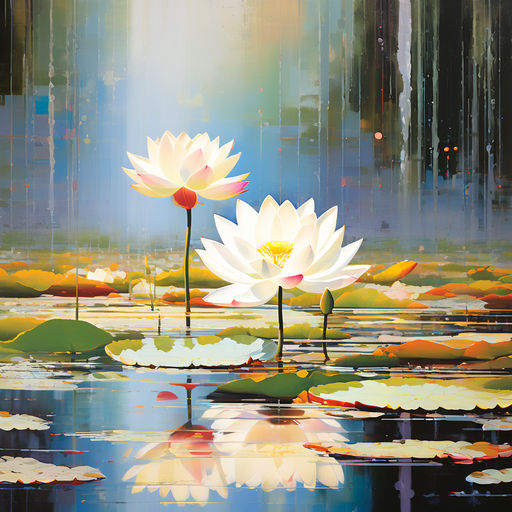
In embracing this ethereal freedom, we become witnesses to the dance of existence, participating fully yet not lost in its rhythm. We become like the lotus, rooted in the mud but untouched by the water.


The journey beyond attachments is an invitation to experience life in its unadulterated essence, to witness the unfolding of consciousness in its majestic expanse. It is a call to embrace the ethereal freedom that lies within each of us, waiting to be discovered.

Morgan O. Smith

Yinnergy Meditation, Spiritual Life Coaching & My Book, Bodhi in the Brain…Available Now!
https://linktr.ee/morganosmith