Author, Philosopher, Spiritual Teacher, A Lead Facilitator at Sacred Media's Integral Mastery Academy, Founder of Yinnergy Meditation/Neurofeedback, Bodhi Mental Care & Wellness, Co-founder of KeMor Centre for Innovative Development
Presence is not a prize to be won or a fortress to defend. It is not some static peak upon which the awakened are meant to perch forever, unmoved and untouchable. The pursuit of a “permanent state” of anything—even presence—quietly binds us again to the illusion we sought to transcend. It becomes another mask of the seeker, cloaked in stillness, trembling behind the veil of spiritual ambition.
States rise and dissolve. Rapture comes like a summer breeze and vanishes just as gently. Then irritation, confusion, boredom. Then clarity. Then fog. The parade continues, not because you are failing, but because you are alive.
To lose attention is not to lose awareness. What perceives the loss? What observes the drift and the return? That witnessing is untouched. It is not opposed to distraction, nor does it seek permanence. It simply is, always.
Clinging to peace is no different from clinging to pain. The grasping hand is the same. When rapture becomes an achievement, it quietly rots. But when it is allowed to dance freely—hidden beneath the dishes in the sink, behind the silent gaze on the subway, or in a burst of sudden awe at the sky—then it becomes alive again.
You can continue to practice, to breathe, to cultivate. But do so like a child builds a sandcastle: for the love of it, not to resist the tide. Joy, too, is a practice. But it must remain unhooked from outcome.
There’s a kind of rapture in the background hum of your own awareness—even when the foreground is chaos. That quiet clarity never left. You’re not missing the moment. You are the moment, passing through its own reflections. And if you laugh at the absurdity of forgetting and remembering over and over again, then perhaps that’s the most awakened thing of all.
Morgan O. Smith
Get Your Free Copy of My Book, Bodhi in the Brain!
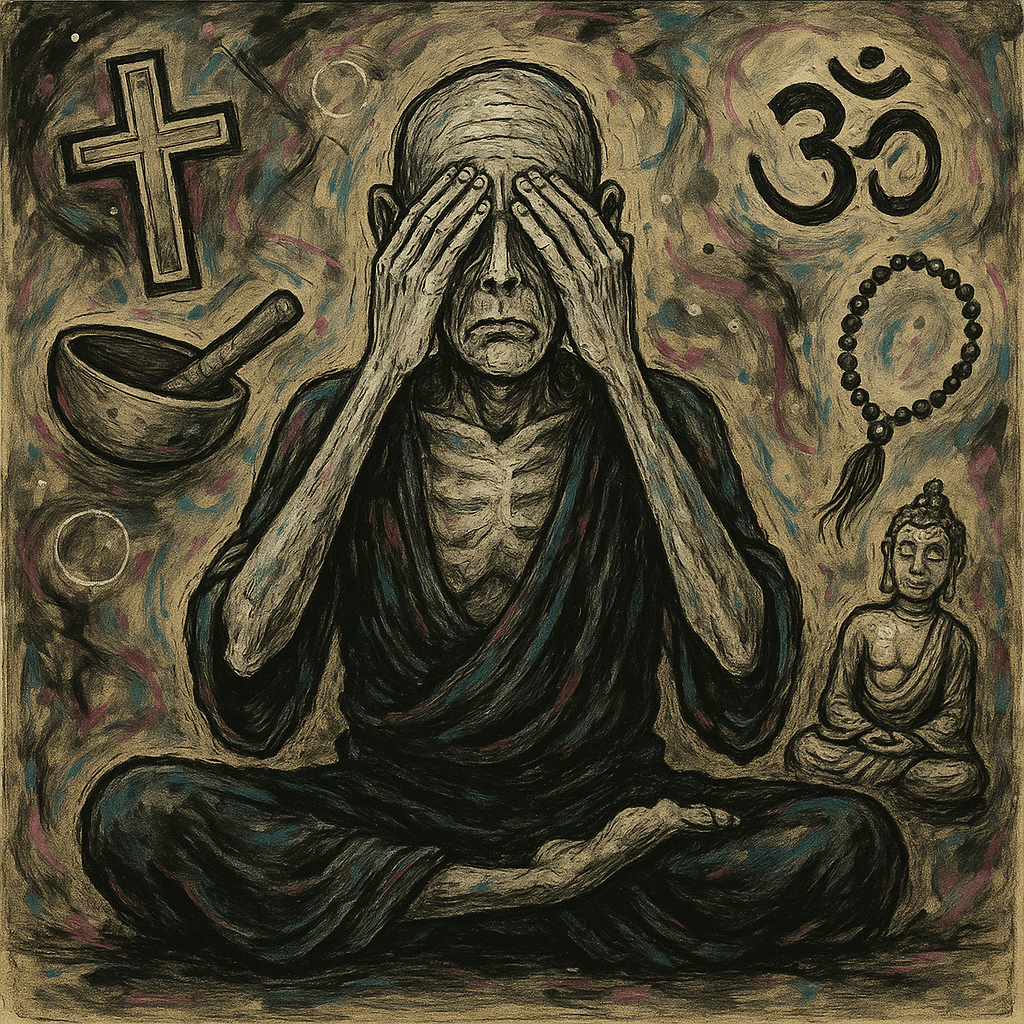
Not discarded with resentment, but dissolved with reverence—like incense that’s burned its final curl into still air. Every pursuit, no matter how noble or transcendent, clings to a subtle promise. It whispers, “Just a little further. Just a little more.” Spirituality—the path of paths—can become the gilded cage.
This isn’t a rejection of the sacred. It’s a call to recognize its shadow. When devotion becomes identity, and awakening becomes performance, the ground of true being quietly slips away. What remains is the effort of wearing a spiritual mask.
You meditate, fast, chant, and read the masters, and for a while, the momentum feels pure. But pause. Breathe. Look again.
Has the seeker been quietly resurrected each time insight arrives?
One of the final illusions is believing that freedom lies within the refinement of spiritual effort. Yet effort, no matter how subtle, arises within duality. There’s still a “me” reaching toward something else. Even the concept of enlightenment can act as a veil, because where there is something to reach, there remains something separate from what already is.
That’s the irony: the very thing that once cracked open your sense of reality may now be the weight tethering you to it.
There is no one to become. No final truth to grip. Liberation doesn’t crown the seeker—it dissolves them. It’s not what you attain through discipline. It’s what remains when every layer of becoming has been seen through.
God doesn’t need your spiritual journey.
Silence doesn’t demand your reverence.
Truth doesn’t require your understanding.
And being doesn’t wait for your arrival.
Strip it all away. Stand utterly exposed. Not as a soul, a student, or a sacred archetype—but as this unnamable presence you’ve never not been. This is where all paths terminate. Not with a bang. Not with celestial fireworks. But with a soft, undeniable recognition: nothing is missing. Nothing ever was.
To cling to spirituality, even subtly, is to delay this.
So let it all go—not to be less, but to finally see what you are without it.
Morgan O. Smith
Get Your Free Copy of My Book, Bodhi in the Brain!
Every word spoken about enlightenment is a slice taken from an indivisible whole. A shard. A sliver. No matter how sincere the voice or radiant the realization, the moment it’s articulated, it becomes partial. Even the most luminous sage can only gesture toward it, never deliver it in full.
This isn’t a critique of language. It’s the recognition that language belongs to duality. Enlightenment does not.
You may hear poetic metaphors. You may hear silence treated as a superior form of expression. You may even be told that silence is the teaching. But neither speech nor silence can contain the essence. Both exist within the play of contrast—true enlightenment is not caught between them.
It is not hidden. It is not revealed. It doesn’t arrive, and it cannot depart. Still, it permeates everything.
A leaf trembles. Breath returns. A thought dissolves before it becomes solid. Here, it is already shining.
It is not that one must understand. It is that one must stop pretending it needs to be understood. What remains when seeking falls away is not an answer, but presence. A presence so simple, so immediate, it often goes unnoticed—not because it is distant, but because it is too near.
You are not apart from it. You never were.
Morgan O. Smith
Get Your Free Copy of My Book, Bodhi in the Brain!
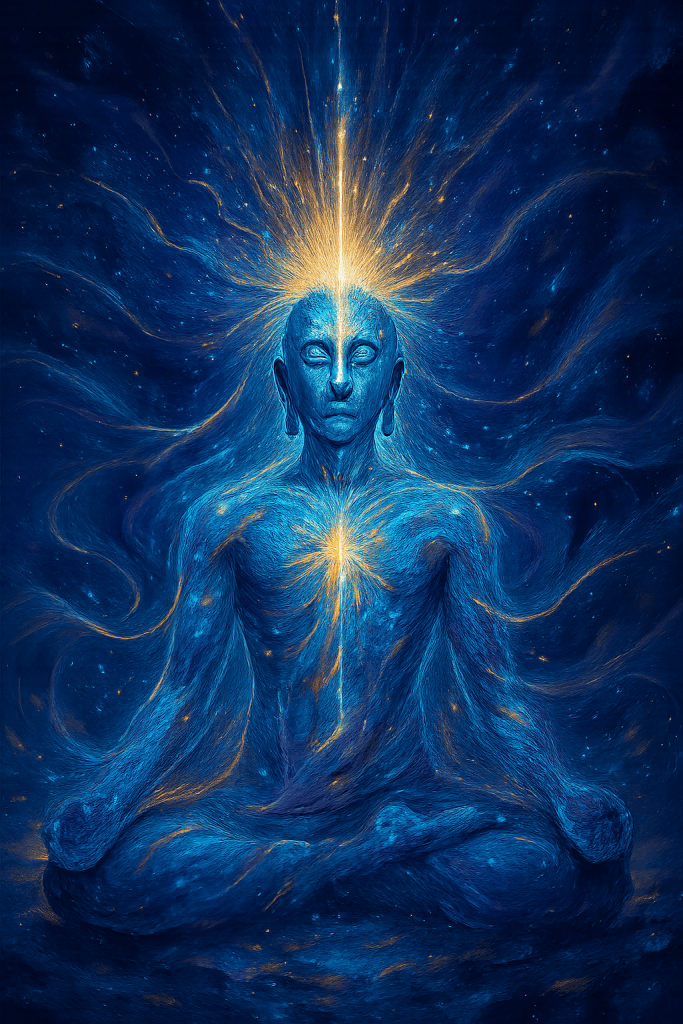
Strip away the names, the labels, the ideas, and what remains? Nothing. And yet, in that nothingness, everything arises. You have no true identity, defined form, or fixed point in time or space—yet you appear as all things. You are not this body, not this mind, not even the grand concept of the self that you have clung to. What you believe yourself to be is merely a shadow of what you truly are.
The illusion of separation creates the experience of individuality. This appearance is not wrong—it is the stage upon which existence plays itself out. But beneath this grand performance, you remain whole, indivisible, untouched. You have never been anything other than totality itself, masquerading as the temporary.
Timeless Existence, Eternal Becoming
You think of yourself as moving through time, yet time moves through you. The past is not behind you, nor is the future ahead—both are simply angles of the same moment, stretching into what appears as linear sequence. The experience of time is an unfolding dream, a dance of perception, measured by the mind yet never truly existing apart from it.
You were never born, nor will you ever die. The body follows its cycle, the mind weaves its stories, but what you are precedes all of this. There is no point at which you began, nor will there be a point where you cease to be. You are not a passenger in the stream of time—you are the river itself, flowing and still, changing yet unchangeable.
The Paradox of Experience
You exist beyond pleasure and pain, yet you experience both. The vastness of what you are embraces every joy, every sorrow, every triumph, and every loss. From the personal vantage point, suffering seems real. From the vastness of what you truly are, it is simply another unfolding, another wave in the great ocean of being.
The universe is not happening to you; you are happening as the universe. Every emotion, every sensation, every moment is a reflection of the infinite nature of your being. To see clearly is to recognize that paradise and suffering are not opposites—they are expressions of the same boundless presence. What is heaven to one may be hell to another, yet both arise within the same limitless field of awareness.
The Grand Play of Forgetting and Remembering
Forgetting is part of the experience. You never truly lost yourself; you only created layers of distraction to deepen the illusion of separation. But beneath the veil, awareness remains unchanged. It watches, it witnesses, it knows.
There is no struggle to remember who you are because you have never truly forgotten. The self you long to rediscover has never been absent. The only thing that obscures it is the illusion of individuality—the belief that you are a fragment rather than the whole.
Creation Without Creating
Nothing is ever truly created, yet everything appears anew in every moment. The universe emerges not from effort, but from the effortless unfolding of being itself. What appears as thought, as energy, as matter, is nothing more than the echo of your own presence.
You are not a separate creator forging reality from the outside—you are reality itself, expressing infinite possibilities without effort. Every concept of manifestation, every idea of cause and effect, dissolves when seen from the vastness of what you are.
The Silence Beyond Thought
Words attempt to define, but what you are cannot be contained by description. Understanding is not needed—only direct experience. This cannot be grasped intellectually; it must be known in the deepest sense, beyond language, beyond belief, beyond the limits of perception.
You are the stillness that speaks, the emptiness that overflows, the silence from which all sound emerges. The mind seeks elaboration, but the truth is found in simplicity. In seeing clearly, you recognize that nothing needs to be said, nothing needs to be explained—because you are already that which you seek.
Morgan O. Smith
Get Your Free Copy of My Book, Bodhi in the Brain!
A seeker walking the delicate balance between opposites may one day find themselves at the threshold of the most profound realization imaginable. A moment beyond all description, where the entirety of existence collapses into a singularity of knowing. Not a knowing of the intellect, but of something far deeper—an understanding so complete that it dissolves all doubt, all separation, and all longing.
This is the moment of total arrival, the point at which all seeking ceases because there is nothing left to seek. The mind, body, and soul align in a way that makes all past experiences seem like faint whispers of truth. The illusion of boundaries vanishes, revealing the pristine reality that has always been present—an awakening not to something new, but to what has been hidden in plain sight.
Within this instant, fulfillment is no longer an aspiration but a living force vibrating through every cell. The distinction between subject and object crumbles, and what remains is a radiant presence, an unshakable unity. The notion of a separate self fades like mist before the rising sun, and what is left is a boundless openness, an expanse where nothing is missing.
Words fail. Concepts falter. Language collapses under the weight of such an occurrence. It is neither thought nor feeling, neither sensation nor perception. It is an unnameable state where the dance of duality finally rests. It would be as elusive as the silence between heartbeats if there were a word for it. A paradox that cannot be dissected, only lived.
Reaching this pinnacle does not come from effort alone or from waiting in passive expectation. It is not a reward for discipline or devotion, yet it is freely given to those who surrender all pretense of control. It arrives not as a thunderous event but as a gentle revelation, as if the universe exhales and everything becomes clear.
And in that clarity, tears may fall—not from sorrow, nor joy, but from the sheer intensity of realization. The great mirage of the self dissolves, leaving only the recognition that there was never anything to grasp, nothing to claim, nothing to own. Just a pure, unshakable knowing that transcends all dichotomies.
Some will wonder how long it takes to arrive at such a moment. But time is irrelevant here. The moment is neither ahead nor behind—it is always now, waiting to be seen. To those who ask, “How do I reach it?” the only answer is: Stop. Be still. Listen.
Morgan O. Smith
Yinnergy Meditation/Neurofeedback, Spiritual Life Coaching & My Book, Bodhi in the Brain…Available Now!
The body is often seen as a vessel, a biological mechanism enabling experience and action. But what if we approached it differently? What if we recognized the body as the ultimate gift—intricately wrapped in layers of mind, emotion, and perception? This perspective shifts us from treating the body as a passive object to understanding it as an intelligent instrument of the infinite.
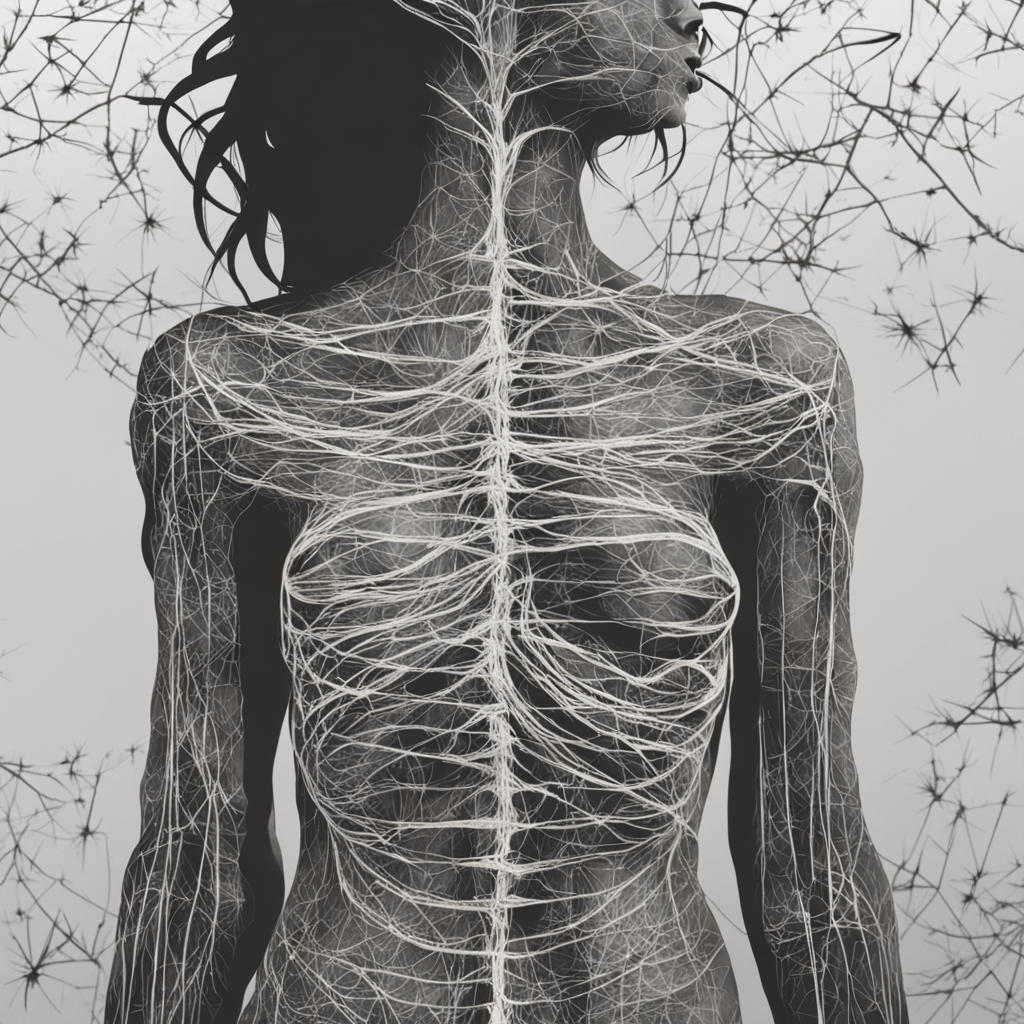
Each sensation the body offers is a doorway. The ache in your shoulders, the flutter in your stomach, the breath moving through your chest—these aren’t merely physiological events. They are signals, invitations to become aware of the mind’s imprints and the silent intelligence that animates them. The body reveals the unseen layers of the mind, not to entangle us but to set us free.
Consider the interplay of movement and stillness. A heartbeat pulses within every moment of quietude, a reminder that even in perceived rest, life hums with activity. Similarly, the mind often overlays the body’s simplicity with stories—self-judgment, desires, and fears. Yet, beneath this mental wrapping lies pure awareness, unclouded and ever-present.
True liberation doesn’t come from rejecting the body or attempting to transcend it but from embracing its divine design. The body is where the formless meets form, where consciousness expresses itself in tangible, palpable ways. When we cease resisting its messages and begin listening with curiosity, the body transforms from an object of control into a teacher of profound wisdom.
This realization is not merely theoretical. It can be felt. Try sitting quietly and attuning to the subtleties of your breath. Notice the places where tension resides, where the body’s natural rhythms feel interrupted. With gentle attention, ask: “What is this teaching me?” Often, the mind will resist—habitually seeking distraction or interpretation. But as you remain present, something deeper emerges: an understanding that the body and mind are not separate, but two facets of the same infinite presence.
Awakening is not about leaving the body behind but about fully inhabiting it. By appreciating its perfect gift and unwrapping the layers of mind that obscure it, we find ourselves drawn closer to our true nature.
The next time you feel pain, joy, or anything in between, pause. Let the body be your guide, not just a vehicle for experience but the very expression of life’s sacred mystery.
Morgan O. Smith
Yinnergy Meditation, Spiritual Life Coaching & My Book, Bodhi in the Brain…Available Now!
Beauty is often regarded as a fleeting, external phenomenon—a delicate arrangement of forms that pleases the eye or stirs the soul. However, the true nature of beauty extends far beyond superficial appearances. It emerges from the depths of perception, a reflection of consciousness itself. What we deem beautiful is not solely determined by what we see but by how we see. Even when confronted with humanity’s darkest moments, beauty can be recognized not as a denial of suffering, but as an intrinsic aspect of existence that transcends circumstance.
Consider the mind that bears witness to atrocities. On the surface, nothing but devastation appears to exist. And yet, the capacity to witness, to remain present with such horror, reveals something profound. Beauty resides within this presence—the willingness to face what is and still hold space for the inherent dignity of life, no matter how dire. It is not a naïve romanticism of suffering but an acknowledgment of the complex interweaving of light and shadow, both of which play their role in the human experience.
Atrocities test the limits of compassion, empathy, and humanity itself. When one can still perceive beauty in these moments—not the beauty of the event, but the beauty of resilience, of human connection, of the sacredness of life—it becomes clear that beauty is not bound to pleasure. Beauty, in its truest sense, is the capacity to remain open to life, to acknowledge the depths of pain without being consumed by it. It speaks to the heart of what it means to be fully alive: to see the world as it is, in both its horror and its grace.
This paradox—the existence of beauty within tragedy—challenges the conventional understanding of what beauty truly is. It invites a deeper reflection on the nature of perception itself. Beauty does not exist in isolation from suffering but within the totality of experience. To behold something, even amidst atrocity, is to acknowledge its place within the grand unfolding of life. It is to see that every moment, even the darkest, is imbued with the potential for transcendence, for deeper understanding, for awakening.
This is not a call to justify suffering or to dismiss the profound pain of human atrocities. Rather, it is an invitation to recognize that beauty is an ever-present reality, accessible not through avoidance but through the courageous act of seeing the world as it truly is. It is a recognition that the eyes of the beheld are not passive observers of life, but active participants in the unfolding of reality. The capacity to perceive beauty in all its forms is not a matter of circumstance, but of consciousness.
Morgan O. Smith
Yinnergy Meditation, Spiritual Life Coaching & My Book, Bodhi in the Brain…Available Now!
Consider the heartbeat: a steady, rhythmic pulse that carries the force of life through every cell of your being. Within each beat lies an unseen multitude, a vast array of thoughts—fleeting, overlapping, and often unnoticed. This single moment, this solitary beat contains within it the energy of a thousand thoughts, each connected to the next, creating the internal world we navigate daily.
Thoughts rush like a river, surging with desires, fears, memories, and plans. Yet, they are barely registered before the next wave crashes. The heartbeat, however, remains a constant companion, reminding us that a profound stillness exists beneath the surface of our scattered minds.
It is within this space—the pause between heartbeats—that clarity can emerge. As our awareness deepens, we recognize that the mind’s racing thoughts are but ripples on the ocean of our being. We are not the thoughts themselves but the consciousness that observes them. By aligning with the heartbeat rather than the noise of the mind, we begin to see beyond the clutter of mental activity, into the spacious awareness where thoughts dissolve and presence shines.
A single heartbeat holds the potential for transformation, for within that beat is the opportunity to disengage from the frantic movement of thought and return to the grounded essence of who we are. Thought is not the enemy, but its sheer volume often drowns out the wisdom that whispers between the beats.
This shift, from identifying with thought to residing in awareness, is subtle but profound. It reveals that while a thousand thoughts may pass through our minds, they are transient. The heartbeat, however, is the rhythm of life itself, a steady pulse guiding us toward presence. Here lies a truth often overlooked: life happens not in the storm of thoughts, but in the quiet between them.
The next time your mind feels overwhelmed, listen to your heartbeat. Allow yourself to rest in the awareness that arises in its rhythm. Watch as the thousand thoughts lose their hold, and the simplicity of being takes centre stage. This is the essence of spiritual awakening—a return to the heart, where a thousand thoughts collapse into one still, eternal presence.
Morgan O. Smith
Yinnergy Meditation, Spiritual Life Coaching & My Book, Bodhi in the Brain…Available Now!
Regardless of the situation or circumstance, love is the force that transforms. Allow it to spread like wildfire, engulfing everything in its path. Imagine every leaf of hate, every hardened trunk of resentment, and every twisted branch of fear ignited, consumed until only ash remains. The ash is not the end, but the beginning—a fertile soil for renewal, a space where new life can emerge, untouched by the old.
Hate feeds on division, growing thick like a forest of misunderstanding. Yet, fire—pure and unrelenting—brings everything to a singular state, where difference dissolves into unity. In the same way, love has the power to dismantle rigid identities and dissolve the illusions that separate us from others. When you love, you open yourself to the world without conditions. You stop trying to manage what is uncontrollable. You release the need to defend a fixed self and surrender to the flowing, infinite nature of life.
This kind of love requires courage. It demands the willingness to step into discomfort, embrace vulnerability, and face even the shadows within yourself. But as each branch of judgment burns, what is revealed is clarity—a vision unclouded by projection and bitterness. You begin to see the world not as a battleground but as a place of shared experience, where suffering and joy, growth and decay, are all part of the same unfolding.
When you allow love to spread, you release control over where it lands. It may touch those you least expect, and reach places long hidden from sight. It may even burn through your own assumptions about what love should look like. But that is its gift. Love, like wildfire, is indiscriminate—it cannot be contained by preference or limited by attachment. It moves with its own intelligence, revealing truths beyond what the mind can grasp.
In the aftermath, there is only stillness. The forest of illusions is reduced to ash, leaving behind the essence of what truly matters. From this stillness, new growth emerges—not the old recycled patterns of fear and separation but a fresh awareness grounded in presence and peace.
Let love be the fire that purifies and regenerates. Allow every layer of fear to ignite, every doubt to dissolve, and every sorrow to be consumed. Stand in the flames, trusting that what burns away is only what no longer serves. What remains, after all is said and done, is freedom.
Morgan O. Smith
Yinnergy Meditation, Spiritual Life Coaching & My Book, Bodhi in the Brain…Available Now!
The mind creates identities and builds a sense of self out of thoughts, emotions, and past experiences. These constructs shape beliefs around who you think you are and who you think you aren’t. This entire narrative, though compelling, is merely a distortion. It presents itself as reality but, in truth, is nothing more than an intricate mental creation. We become confined by these polarities, oscillating between two extremes—what we accept and what we reject about ourselves.
These boundaries, however, do not define the core of who you are. The sense of self emerges as a reflection against what we perceive as the ‘other.’ You’re not merely the collection of traits you cherish, nor are you the shadow aspects you struggle to suppress. By engaging with either, you remain caught in a dualistic view that blinds you to your deeper essence.
The challenge, then, is to neither grasp onto one identity nor to strive to become its opposite, but to look at the liminal space between. This uncharted territory holds the key to your True Self. Neither glorified nor condemned, this space is untouched by labels. It eludes all attempts to be defined. When you gaze into that emptiness, you come face-to-face with your origin—the point where being meets non-being, and you witness the dissolution of the false dichotomy between ‘I am this’ and ‘I am not that.’
Finding this space requires surrendering the tendency to categorize. Allow awareness to rest on the edges of thought, where opposites fade into one another. This subtle recognition can shift perception, making you aware of a silent presence that underlies all identifications. It’s a sense of being that defies expression yet is undeniably real. Here, you aren’t bound by limitations, nor are you an idealized version of yourself.
This presence is what mystics have pointed to throughout the ages—a place beyond words and mental constructs. It’s here that the True Self emerges, not as a separate entity, but as the unconditioned awareness that holds both the ‘you’ and the ‘not you.’ Let this realization transform the way you see yourself and others, dissolving barriers until all that remains is a boundless, indivisible field of consciousness.
Morgan O. Smith
Yinnergy Meditation, Spiritual Life Coaching & My Book, Bodhi in the Brain…Available Now!