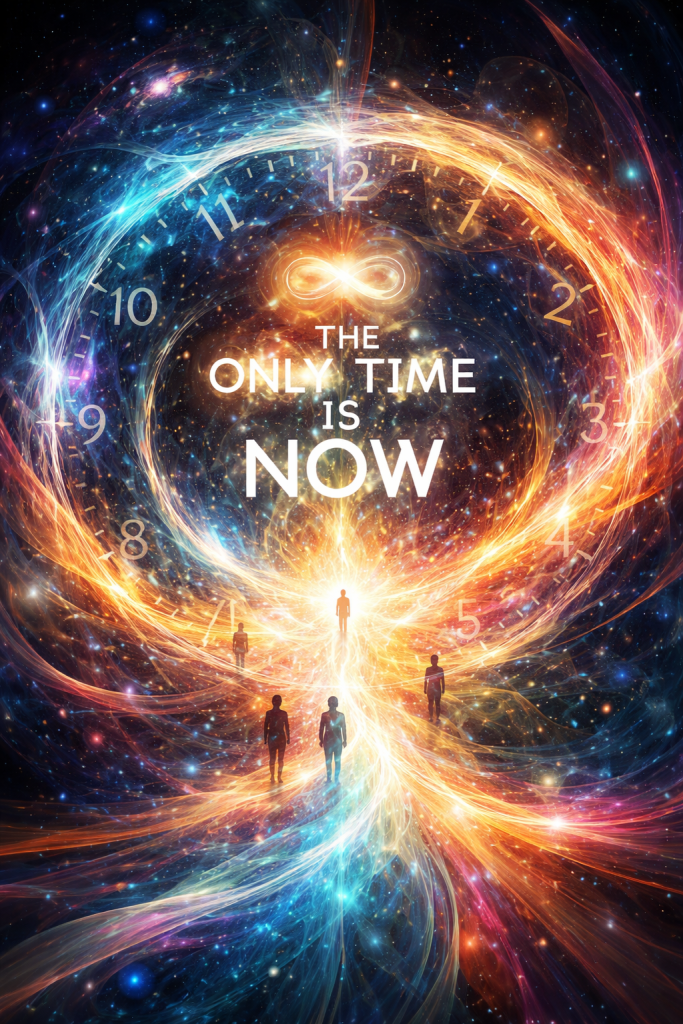
Don’t Mistake Spiritual Persona for Spiritual Attainment

In the quest for spiritual enlightenment, it is easy to fall into the trap of equating outward appearances with inner transformation. The spiritual marketplace is brimming with individuals adorned in the symbols of enlightenment—beads, robes, and serene smiles. But beneath these carefully cultivated images, what lies? Are these symbols true reflections of deep spiritual attainment, or merely the trappings of a spiritual persona?

The essence of genuine spiritual attainment transcends outward appearances. It is an internal metamorphosis that reconfigures one’s very being. True spiritual growth dismantles the ego, dissolves the illusion of separation, and fosters a profound sense of unity with all existence. This journey is deeply personal and often invisible to the outside world. It is marked by humility, compassion, and an unwavering commitment to truth.

A spiritual persona, on the other hand, can be a carefully constructed mask. It seeks validation from the external world by adopting symbols and behaviours associated with spirituality. This persona can be seductive, as it offers the semblance of wisdom and enlightenment without necessitating the arduous inner work required for genuine transformation. It may garner admiration and respect, but it does not hold the essence of true spiritual attainment.

To discern the difference, one must look beyond appearances. True spiritual attainment manifests in actions, choices, and the quality of one’s presence. It is reflected in the ability to remain centred in the face of life’s challenges, to act with compassion even in difficult circumstances, and to embrace the inherent uncertainty of existence with equanimity.

It is a state of being that radiates from within, often silently, without needing external validation or recognition. It is characterized by a deep sense of peace, a boundless capacity for love, and an unwavering connection to the present moment.

The path to spiritual attainment requires courage—the courage to face one’s deepest fears, to dismantle long-held beliefs, and to surrender the ego’s need for control and validation. It demands an authentic engagement with the present moment, a willingness to embrace discomfort, and a commitment to the inner journey, no matter how solitary or challenging.

As you navigate your spiritual journey, remember that the true markers of spiritual attainment are not found in external symbols or personas. They are found in the quiet moments of insight, the depths of your heart, and the transformative power of authentic presence. Embrace the journey inward, for it is there that the true treasures of spiritual awakening are discovered.

Morgan O. Smith

Yinnergy Meditation, Spiritual Life Coaching & My Book, Bodhi in the Brain…Available Now!

https://linktr.ee/morganosmith

Embracing the Now

The Path to Ego Death and True Awareness

In our relentless pursuit of self-improvement and understanding, we often overlook a fundamental truth: the power of simply being in the present moment. This idea, though simple, holds profound implications for our journey towards inner peace and self-realization.

**Letting Go of Judgment and Bias**

To truly embrace the present, we must first release ourselves from the shackles of judgment and bias. This means observing our experiences, thoughts, and feelings without labelling them as good or bad, right or wrong. It’s about being an impartial witness to our own life.


**The Surrender to ‘What Is’**

Surrendering to ‘what is’ requires a deep acceptance of the present moment, regardless of its nature. It’s not about resignation or defeat; rather, it’s an active engagement with the now. In doing so, we allow life to flow naturally, without the resistance that often leads to suffering.

**Death of the Ego**


The ego, often seen as our conscious self or identity, thrives on differentiation, judgment, and past-future thinking. By embracing the present and letting go of these traits, we facilitate the ‘death’ of the ego. Now this does mean losing our sense of self, transcending the limited, subjective view of the ego.


**A New Perspective**

As we learn to live in the present, our perspective on life shifts. We begin to see the interconnectedness of all things and the beauty in simplicity. The burdens of past regrets and future anxieties lighten, offering a sense of liberation.

**Final Thoughts**

The journey towards ego death and true awareness is not about gaining something new but about losing the misconceptions and biases that cloud our true nature. It’s a path of unlearning, of returning to the essence of who we are.

Morgan O. Smith

Yinnergy Meditation, Spiritual Life Coaching & My Book, Bodhi in the Brain…Available Now!

https://linktr.ee/morganosmith

Embracing Anatta and Sunyata

A Buddhist Exploration of Spiritual Enlightenment

In the rich and intricate fabric of Buddhist philosophy, two profound concepts stand out: anatta, or the principle of no-self, and sunyata, or the notion of emptiness. These ideas challenge our conventional understanding of self and reality, offering a transformative path to spiritual enlightenment.

This blog post delves into the fascinating journey of embracing anatta and sunyata and what changes might occur in a person as a result.

Anatta: The Principle of No-Self

Anatta challenges the notion of a fixed and permanent self, a radical idea that has profound implications on how we perceive ourselves and the world. Upon realizing anatta, an individual may undergo the following transformations:

– **Loss of Attachment to Self-Identity**: Labels, roles, and personal narratives lose their grip, allowing for a more fluid and adaptable understanding of self.
– **Decrease in Ego-Driven Desires**: The pursuit of personal gain or recognition may fade, replaced by selfless compassion and loving-kindness.
– **Deepened Interconnectedness with Others**: Seeing beyond the illusion of separate selves fosters a profound connection with all beings.

Sunyata: Embracing the Emptiness

Sunyata refers to the empty nature of all phenomena, a state where things are devoid of inherent existence. The realization of sunyata leads to:

– **Transcending Dualities**: Ordinary distinctions such as good and bad, self and other, become irrelevant, replaced by an all-encompassing view of reality.
– **Detachment from Material Pursuits**: Recognizing the empty nature of material things may lead to a detachment from worldly desires and a more mindful way of living.
– **Harmony with the Present Moment**: Seeing things as they are, empty of inherent existence, nurtures a profound connection with the present moment.

The Journey Toward Enlightenment


Understanding anatta and sunyata is not an intellectual exercise but a profound experiential realization. The individual may engage in various practices such as meditation, mindfulness, and ethical living to cultivate this understanding.

The Impact on Relationships and Society

Embracing these principles fosters compassion, empathy, and altruism, reshaping relationships and offering a model of social harmony. It moves us towards a society rooted in wisdom and compassion, rather than division and selfishness.

Conclusion

The realization of anatta and sunyata is a transformative and enlightening experience that shifts our perception of self and reality. It dissolves the barriers that separate us and leads to a more compassionate and interconnected way of living.

In a world filled with complexity and conflict, these age-old Buddhist principles offer timeless wisdom and a path to inner peace. They invite us to let go of rigid self-identities and material pursuits, to see beyond the surface, and to embrace a more profound and holistic view of existence.

May the teachings of Anatta and Sunyata guide us towards a more awakened and compassionate life, where we recognize the interconnectedness of all beings and live in harmony with ourselves and the world.

Morgan O. Smith

Yinnergy Meditation & My Book, Bodhi in the Brain…Available Now!

https://linktr.ee/morganosmith

The Eternal Now

Enlightenment as the Ever-Present Journey

Introduction:
Time is a mysterious and often bewildering dimension of our existence. Like the fleeting shadow of tomorrow, enlightenment is often thought to be something that is always just out of reach. However, what if the key to enlightenment was not in endlessly chasing it, but in realizing that it is already here?

The Illusion of Tomorrow:
Many of us tend to postpone our happiness or goals for the future. “I will be happy when…” or “I will do that tomorrow,” are phrases we frequently tell ourselves. Yet, as time moves forward, tomorrow remains as elusive as ever. It’s always today. This is a poignant reminder that the present moment is all we have.

Parallel to the Illusion of Enlightenment:
Enlightenment is often perceived as the pinnacle of spiritual accomplishment, a state to be attained in the distant future. However, much like tomorrow, the notion of enlightenment as a destination may be an illusion. If enlightenment is truly understanding and being at peace with oneself and the universe, then it must exist in the here and now.

The Eternal Present:
The Buddhist concept of “Satori” embodies a sudden awakening or flash of insight. It illustrates that enlightenment is not a far-off goal but an ever-present possibility. When we begin to see that the essence of life and self-realization is embedded in the present, the journey toward enlightenment takes on a different texture. It becomes a continuous, unfolding process rather than a destination.

Cultivating Awareness:
The path to recognizing that enlightenment is in the present involves cultivating awareness and mindfulness. By fully engaging with the present moment and releasing our attachments to the past and future, we can find clarity and wisdom.

The Role of Experience:
Our experiences, no matter how mundane, are integral to our understanding. Every moment provides an opportunity for growth and learning. Through mindfulness, we can recognize the sacredness in the ordinary, and see that enlightenment isn’t something distant, but an ever-present reality.

Conclusion:
“Enlightenment is always here” is not just a statement, but an invitation to break the chains of time and enter the eternal now. It’s an invitation to stop searching and start living. Like the enigmatic nature of tomorrow, enlightenment is not something that can be grasped or attained in the future. It is a journey that is happening right now. Every moment is an opportunity for awakening. May we have the courage to embrace the present and recognize the enlightenment that is always here.

Morgan O. Smith

Yinnergy Meditation & My Book, Bodhi in the Brain…Available Now!

https://linktr.ee/morganosmith

The Illusive Dawn

Spiritual Enlightenment and the Story We Live

Introduction:

Each day, as the earth rotates, the sun appears to rise over the horizon, casting its golden rays upon the world. Just like the sun, spiritual enlightenment is an ever-present force in our lives, though it is often perceived as something to be attained. This misconception, draped in the language of our stories, masks the true nature of spiritual enlightenment.

The Mirage of Attainment:
One of the intriguing elements of human nature is the relentless pursuit of something more. In the context of spiritual enlightenment, the journey is often portrayed as a path leading to a destination. However, by framing enlightenment as an end goal, we may be missing its inherent presence in our lives. Like the sun that’s always shining even when it’s out of our sight, enlightenment is not something we acquire but rather realize and tune into.

The Stories We Weave:

Our narratives shape our perceptions and, often unknowingly, our realities. Through stories, ancient wisdom has been passed down, guiding us toward spiritual growth. Yet, these stories can be double-edged swords. As they often depict characters attaining enlightenment, they inadvertently suggest that it is a finite state, achievable through certain actions or thoughts.

Unravelling The Eternal Now:
What if spiritual enlightenment is not something we reach at the end of a strenuous journey but rather an inherent quality of our being that we simply need to recognize? This recognition can be thought of as tuning into a frequency that has always been there. By peeling away the layers of ego, desires, and social constructs, we become more receptive to the eternal now – the ever-present light of consciousness that never wanes.

Practical Steps Towards Recognition:
1. Mindfulness: Engage in practices such as meditation or mindful breathing to bring awareness to the present moment.
2. Detachment: Learn to detach from material desires and social expectations that cloud the true essence of our being.
3. Compassion: Embrace a compassionate lifestyle, recognizing the interconnectedness of all life.
4. Continuous Learning: Engage with philosophical and spiritual texts that challenge and expand your understanding.

Conclusion:
Much like the illusory sunrise, the concept of attaining spiritual enlightenment may be a misinterpretation through the lens of our narratives. Rather than seeking to attain, let us recognize and embody the ever-present light within. By focusing on the present moment, detaching from the material world, and embracing compassion, we can tune into the unceasing glow of our inner sun.

Morgan O. Smith

Yinnergy Meditation & My Book, Bodhi in the Brain…Available Now!

https://linktr.ee/morganosmith