Morgan O. Smith
Few concepts in spirituality have been misunderstood as thoroughly as the ego.
We are repeatedly told to transcend the ego, destroy the ego, become egoless, or surrender the self. The implication is that spiritual maturity requires becoming less of a person, less defined, less assertive, and somehow psychologically smaller.
I see it differently.
A profound spiritual awakening does not require a weak ego. It may require an exceptionally developed one.
The problem is not that we have an ego. The problem is what the ego believes itself to be.
At its most basic level, the ego refers to the sense of self.
It is the psychological structure through which we organize experience around the perception of “I,” “me,” and “mine.” It allows us to establish boundaries, make decisions, assume responsibility, navigate relationships, pursue goals, withstand social pressure, and function as individuals within the world.
When someone says, “He has a big ego,” they are usually not talking about the existence of a strong sense of self. They are describing narcissism, defensiveness, arrogance, grandiosity, insecurity, or excessive self-importance.
Those are qualities that can characterize an ego.
They are not the definition of ego itself.
This distinction matters because spiritual communities sometimes confuse psychological weakness with spiritual transcendence.
A person can be passive, poorly differentiated, unable to establish boundaries, dependent upon approval, easily manipulated, and afraid of confrontation while imagining these characteristics to be signs of egolessness.
They may be nothing of the sort.
Sometimes what appears to be egolessness is simply an ego that has not sufficiently developed.
A healthy sense of self is necessary for functioning within a difficult world.
This becomes especially important for anyone carrying leadership, spiritual, community, social, or global responsibilities. Without sufficient psychological structure, other people’s expectations, projections, demands, criticisms, and agendas can overwhelm you.
The world can trample over a poorly developed self.
Meditation, when properly integrated, should not merely dissolve psychological structure. It can strengthen our capacity to remain centred while encountering stress, emotional activation, social pressure, uncertainty, and outside influence.
Paradoxically, spiritual practice can make the ego both stronger and more transparent.
Stronger does not necessarily mean louder.
It can mean more stable.
Less reactive.
Less easily manipulated.
Less dependent upon validation.
More capable of holding contradiction.
More capable of surrender.
This produces one of the great paradoxes of awakening:
The ego may need to become strong enough to let go of itself.
I make an important distinction between egoic death and ego death.
Egoic death refers to the collapse, surrender, or transformation of defensive ego structures. Identification with certain beliefs, roles, wounds, narratives, attachments, fears, and psychological defenses may loosen dramatically.
Something about “me” dies.
Yet the basic sense that there is still a “me” experiencing reality can remain.
Ego death, as I use the term, is more radical.
During a profound nondual awakening, the sense of being a separate subject can disappear altogether. There is no longer an individual standing apart from experience, observing reality from somewhere behind the eyes.
The subject-object structure collapses.
There is seeing, but no separate seer.
There is awareness, but no independently existing owner of awareness.
There is existence, but the familiar psychological centre claiming, “I am the one to whom existence is happening,” is absent.
That is what I mean by ego death.
The difference is enormous.
A person can undergo an extraordinary emotional, mystical, psychedelic, religious, or psychological transformation without experiencing the complete dissolution of the subject-object boundary.
Not every dramatic spiritual experience is a nondual awakening.
Not every loss of psychological defenses is ego death.
Permanent inability to function as a self is not the goal.
After a profound awakening, the practical personality returns because life requires it.
Your name returns.
Your responsibilities return.
Your relationships return.
Your preferences return.
Your history remains accessible.
Someone still has to answer the phone, pay the bills, make decisions, protect boundaries, honour commitments, create, teach, lead, and respond when another human being calls your name.
The ego resurrects itself as a functional structure.
But something can be fundamentally different.
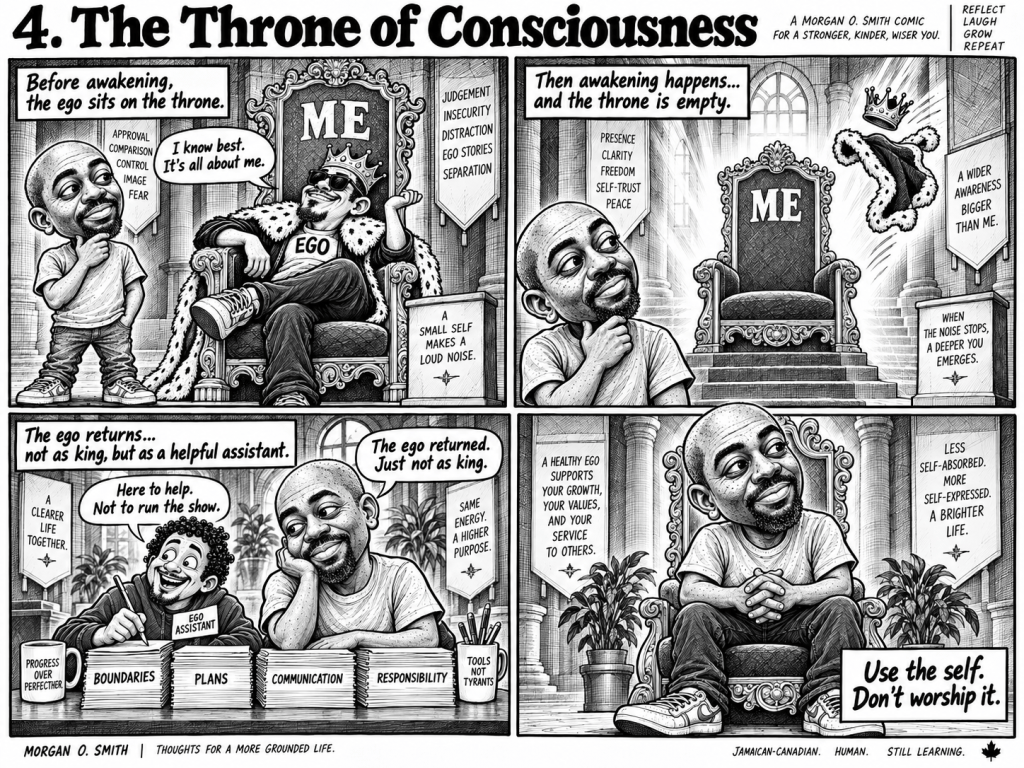
Before awakening, the ego can appear to be a solid psychological object at the centre of existence.
After awakening, it can become increasingly transparent.
The self still functions, but its apparent solidity has been penetrated.
You can use the self without completely mistaking yourself for it.
The ego returns, but it does not necessarily return to the throne.
This distinction is essential.
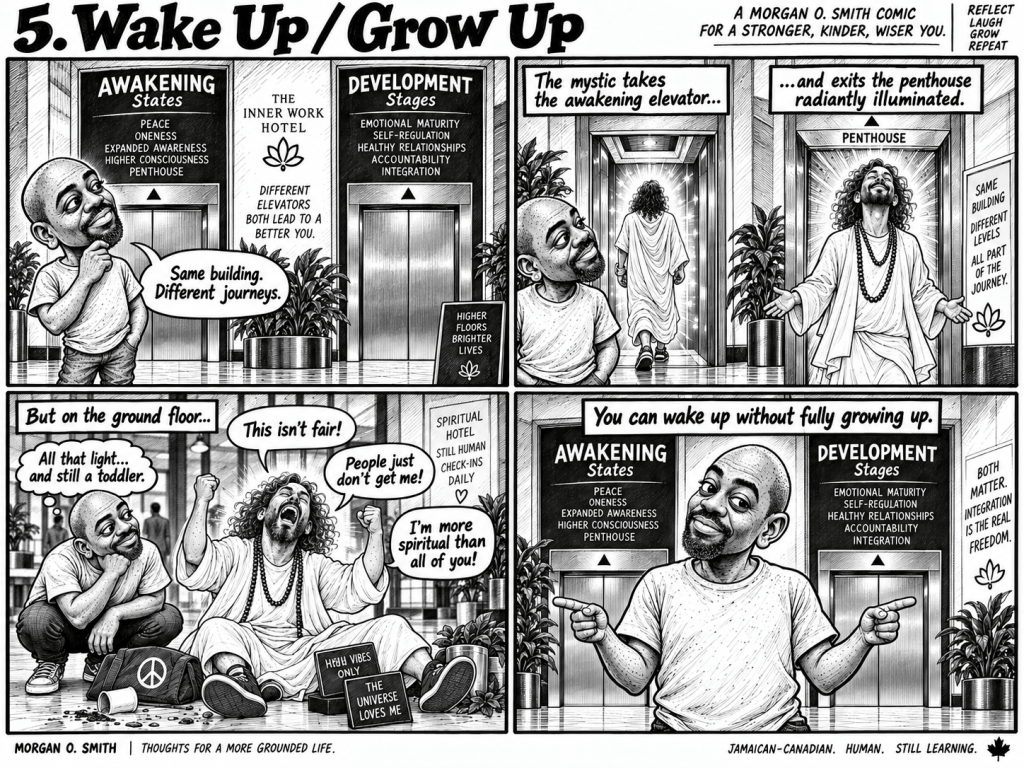
Psychological development and spiritual awakening are two different dimensions of a human being.
A person can have profound mystical states while remaining psychologically immature.
Another person can be extraordinarily mature, ethical, rational, compassionate, and psychologically integrated without ever experiencing nondual awakening.
Development does not automatically produce awakening.
Awakening does not automatically produce development.
Psychological stages describe the increasing complexity and capacity of the ego.
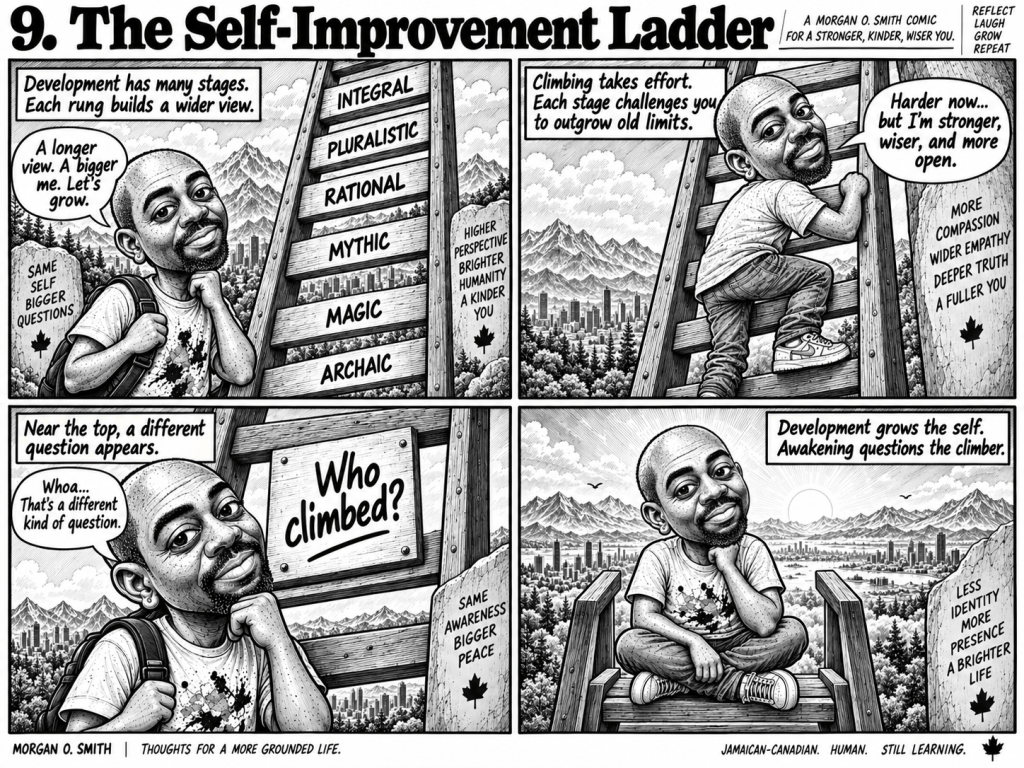
One developmental sequence can be described as:
Archaic → Magic → Mythic → Magic/Mythic → Rational → Pluralistic → Integral → Super-Integral
Each movement represents a transformation in how the self organizes reality, interprets experience, understands other people, constructs meaning, and relates to increasingly complex perspectives.
States of consciousness describe something different:
Waking → Dreaming → Dreamless Sleep → Turiya → Turiyatita
Turiya and turiyatita point toward dimensions associated with spiritual realization and enlightenment rather than merely greater psychological complexity.
Development asks:
How mature, complex, inclusive, and perspectivally capable is the self?
Awakening asks:
What is ultimately true about the self?
Those are not the same question.
This distinction explains something that otherwise seems contradictory.
How can someone have an authentic mystical awakening and still hold immature beliefs?
Because the state that was experienced and the psychological structure interpreting that state are not necessarily at the same level of development.
A person may enter an extraordinary state of consciousness and later interpret it through a Magic worldview.
Another may interpret a similar state Mythically.
Another Rationally.
Another Pluralistically.
Another Integrally.
The awakening may be profound while the interpretation of the awakening remains constrained by the developmental structure available to the person.
This is why spiritual experience alone does not automatically produce psychological maturity.
Someone can experience oneness and still be narcissistic.
Someone can experience emptiness and still lack healthy boundaries.
Someone can experience profound love and still hold ethnocentric beliefs.
Someone can experience the dissolution of the separate self and later reconstruct an identity around being “the awakened one.”
The ego is remarkably capable of claiming ownership of the experience in which its own separate existence temporarily disappeared.
That is one of the great ironies of spiritual awakening.
Another common misunderstanding is equating ego with egocentricity.
They are not synonymous.
Egocentricity describes a particular organization of identity in which one’s own needs, interests, desires, fears, and perspective dominate.
Development can progressively widen that identity:
Egocentric → Ethnocentric → Worldcentric → Kosmocentric
The egocentric self says:
I am primarily concerned with me.
The ethnocentric self expands:
I am one of us. My people, culture, religion, nation, group, or community matter.
The worldcentric self expands further:
My concern includes all human beings regardless of race, sex, class, nationality, culture, religion, creed, or social identity.
Kosmocentric identity expands beyond humanity:
My concern includes life, consciousness, the planet, the universe, and existence itself.
Something fascinating happens here.
From one perspective, the ego becomes smaller because self-centredness decreases.
From another perspective, the ego becomes enormous because what the person includes within the meaning of “self” has expanded dramatically.
The boundaries of identity become increasingly porous.
This is why calling a worldcentric or kosmocentric person “egoless” can be misleading.
They still require a functioning ego.
They still need boundaries.
They still need discernment.
They still need the ability to say yes and no.
They still need enough psychological strength to withstand manipulation, criticism, projection, conflict, responsibility, and pressure.
What has changed is the circumference of concern.
The self has expanded beyond its previous boundaries.
There is another paradox here.
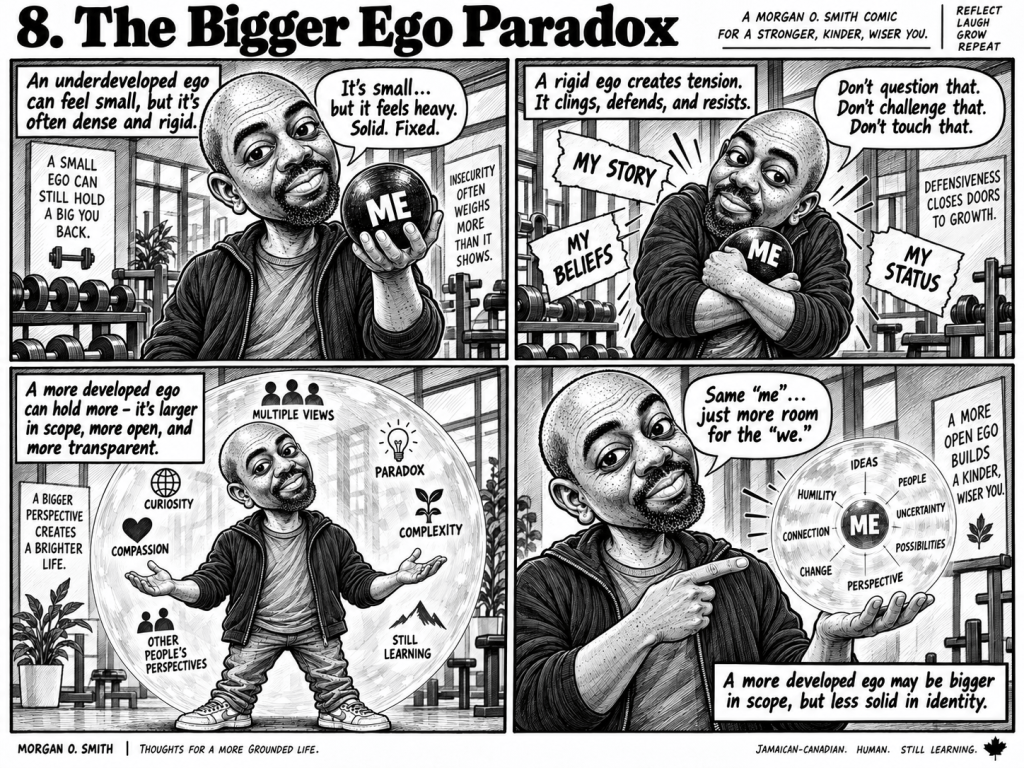
At lower levels of development, the ego can feel like a small but extremely solid object.
Everything revolves around protecting it.
My status.
My identity.
My beliefs.
My group.
My worldview.
My importance.
My security.
My story.
As development proceeds, the ego can become larger while simultaneously becoming less solid.
More perspectives can be included.
More contradictions can be tolerated.
More identities can be understood.
More complexity can be held without psychological collapse.
Eventually the ego becomes capable of questioning the very structure through which it has been interpreting reality.
This is where psychological development can become extraordinarily important for spiritual realization.
A highly developed ego may possess enough complexity to recognize the limitations of its own perspective.
The self becomes capable of seeing itself as a perspective rather than simply assuming that its perspective is reality itself.
That is a major shift.
Perhaps the highest development of ego is not an ego that dominates every room.
It is an ego capable of holding many rooms.
A highly developed person can recognize multiple perspectives without immediately collapsing them into their own.
They can understand why another person sees reality differently.
They can distinguish perspective from truth claims.
They can hold paradox without immediately demanding resolution.
They can examine their own assumptions.
They can move between subjective, interpersonal, cultural, systemic, spiritual, global, and kosmic perspectives.
They can possess strong boundaries without becoming rigid.
They can exercise authority without requiring superiority.
They can experience criticism without psychological collapse.
They can surrender without becoming submissive.
They can become transparent without becoming weak.
At increasingly integral and super-integral stages, the ego becomes capable of holding multiple perspectives simultaneously.
This is a very different picture of ego development from the stereotype of the dominant personality.
Perhaps the strongest ego is the one that no longer needs to constantly prove its strength.
This is where psychological development and spiritual awakening finally encounter one another.
Development progressively asks the ego to become larger, more complex, more inclusive, and more capable of perspective-taking.
Awakening eventually asks something completely different:
Who is this “I” that has been developing?
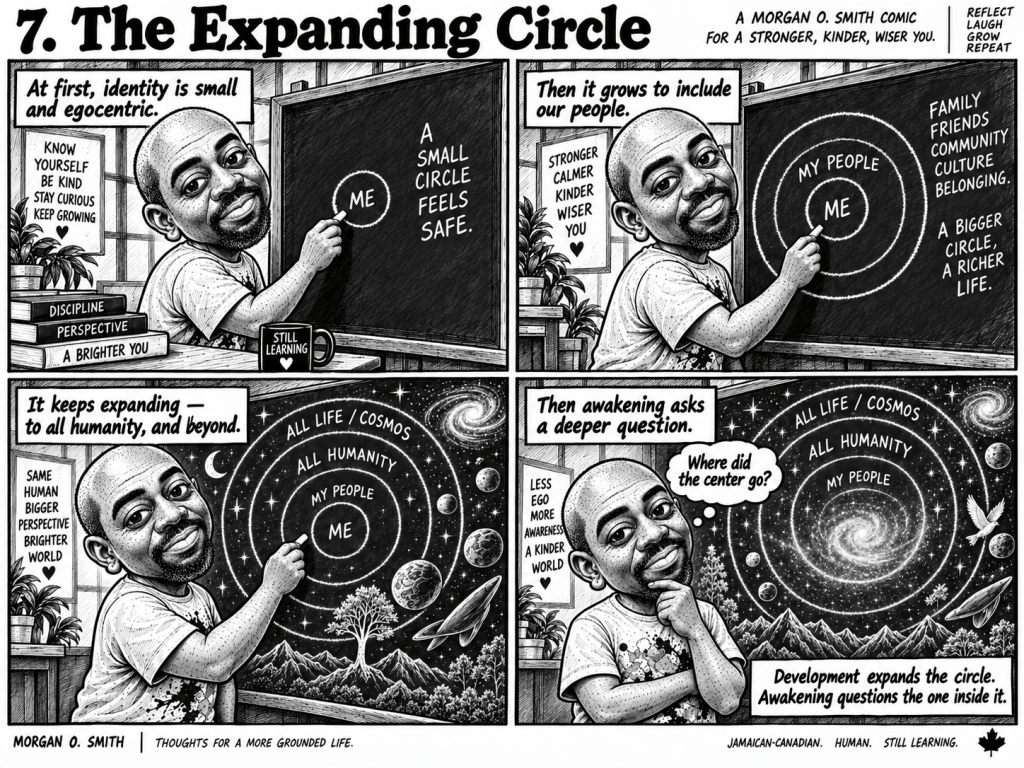
Development can take us from egocentric identity toward ethnocentric, worldcentric, and kosmocentric identity.
The circle becomes larger.
Awakening questions the centre of the circle itself.
Who is standing there?
Who is experiencing?
Who is aware?
Where exactly is the boundary between the observer and the observed?
At the highest psychological stages, the ego may become capable of seeing reality through multiple perspectives simultaneously.
At the deepest levels of awakening, something even more radical can be recognized.
The apparent observer is itself part of what is being observed.
From one nondual perspective, all existence is The Self.
From another, there is No Self anywhere to be found.
These statements appear contradictory only while we assume that Self must mean the individual personality.
The Self of nonduality is not the autobiographical self.
It is not the personality.
It is not your name, history, occupation, nationality, race, sex, religion, ideology, accomplishments, wounds, preferences, or social identity.
The startling recognition is that what you ultimately are cannot be contained within the psychological structure you previously called yourself.
Advaita can express this realization as Self.
Buddhist traditions may approach it through emptiness and no-self.
The language differs.
The ordinary assumption of an independently existing psychological subject is being challenged at its root.
There is an intriguing convergence between the highest reaches of development and the deepest reaches of awakening.
Development expands identity.
Awakening dissolves the assumption that identity possesses an independently existing centre.
At first:
I am me.
Then:
I am one of us.
Then:
All human beings are within my circle of concern.
Then:
Life, consciousness, the planet, and the cosmos are within my circle of concern.
Nondual awakening can take the inquiry somewhere even stranger:
Where is the boundary separating “me” from existence in the first place?
From the perspective of Self, everything is Myself.
From the perspective of no-self, there is no separate “myself” anywhere.
Absolute inclusion and absolute emptiness begin pointing toward the same mystery from opposite directions.
The ego cannot manufacture this realization simply by becoming more psychologically developed.
But a developed ego may be far better equipped to integrate what happens when its assumed centrality collapses.
This may be one of the most important cautions in serious spiritual work.
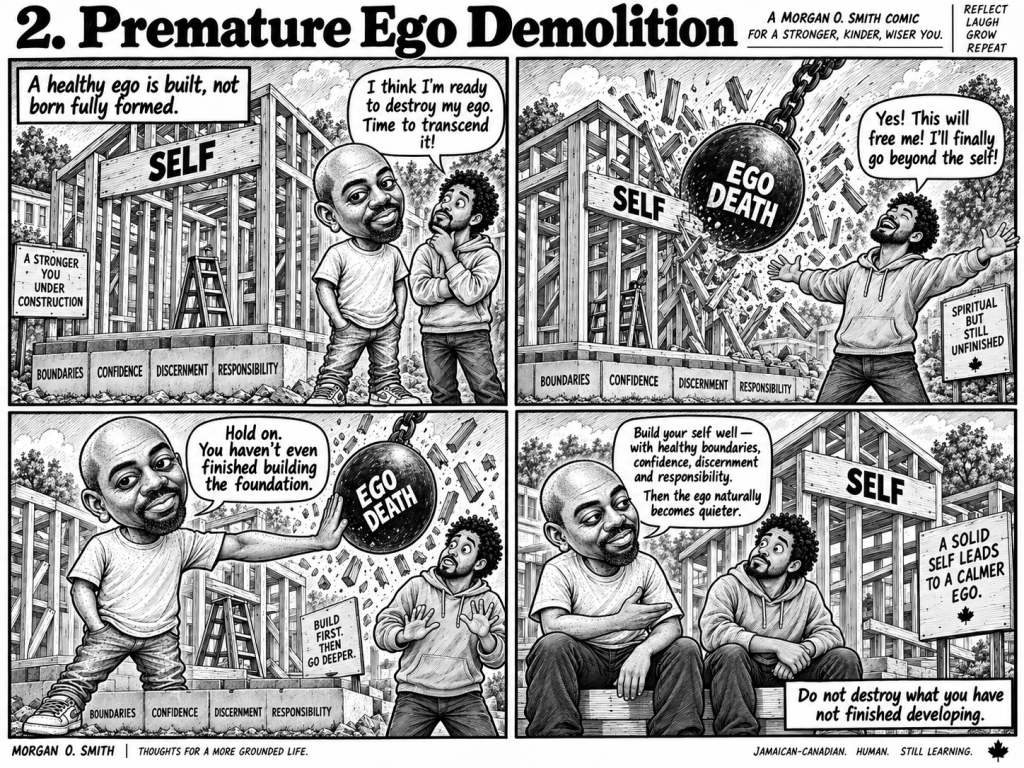
Trying to destroy the ego prematurely can become another form of avoidance.
Someone who needs boundaries may try to become egoless.
Someone who needs confidence may practice self-erasure.
Someone who needs psychological integration may pursue transcendence.
Someone who needs to learn how to say no may interpret surrender as saying yes to everyone.
Someone who needs a coherent identity may attempt to dissolve identity altogether.
Someone who needs to develop personal agency may mistake passivity for spiritual surrender.
This can become especially dangerous around spiritual authority.
A poorly developed sense of self may make someone highly susceptible to manipulation while they interpret their inability to resist authority as humility.
That is not necessarily transcendence.
Spiritual awakening should not require becoming incapable of being human.
The work is subtler than that.
Develop the self.
Strengthen it.
Integrate it.
Expand it.
See through it.
Let it become transparent.
And when consciousness finally discovers what exists prior to the distinction between self and other, allow the ego to surrender completely.
Then let it return.
Not necessarily as the ruler of consciousness, but as one of its instruments.
Psychological stages of development and states of awakening are two different facets of every individual.
One concerns the development of the self.
The other concerns awakening beyond the assumed limitations of that self.
One can grow horizontally and vertically through increasingly complex structures of identity, morality, cognition, perspective, and concern.
One can also awaken into increasingly profound states in which the ordinary construction of self and reality becomes transparent or disappears altogether.
Neither dimension should be mistaken for the other.
A sophisticated worldview does not prove enlightenment.
A profound mystical experience does not prove psychological maturity.
The extraordinary possibility is the development of both.
A human being can become psychologically strong without becoming psychologically rigid.
Deeply individual without becoming egocentric.
Worldcentric without losing personal boundaries.
Kosmocentric without abandoning practical responsibilities.
Capable of inhabiting multiple perspectives without losing discernment.
And spiritually awakened without becoming psychologically diminished.
Perhaps the mature spiritual question is therefore no longer:
“How do I get rid of my ego?”
A more interesting question is:
How fully can the self develop before it discovers that it was never the whole of what I am?
Beyond even that lies a question no psychological stage can answer for us:
When the sense of being a separate self disappears completely, what remains?
Morgan O. Smith
Most people eventually outgrow their childhood ideas about almost everything.
Our tastes in food become more refined. Our understanding of relationships deepens. Our appreciation for music changes. Fashion evolves. Culture shifts. Even our political, moral, and philosophical views often undergo profound transformation as life teaches us new lessons.
Yet there is one idea that frequently remains frozen in time.
Paradise.
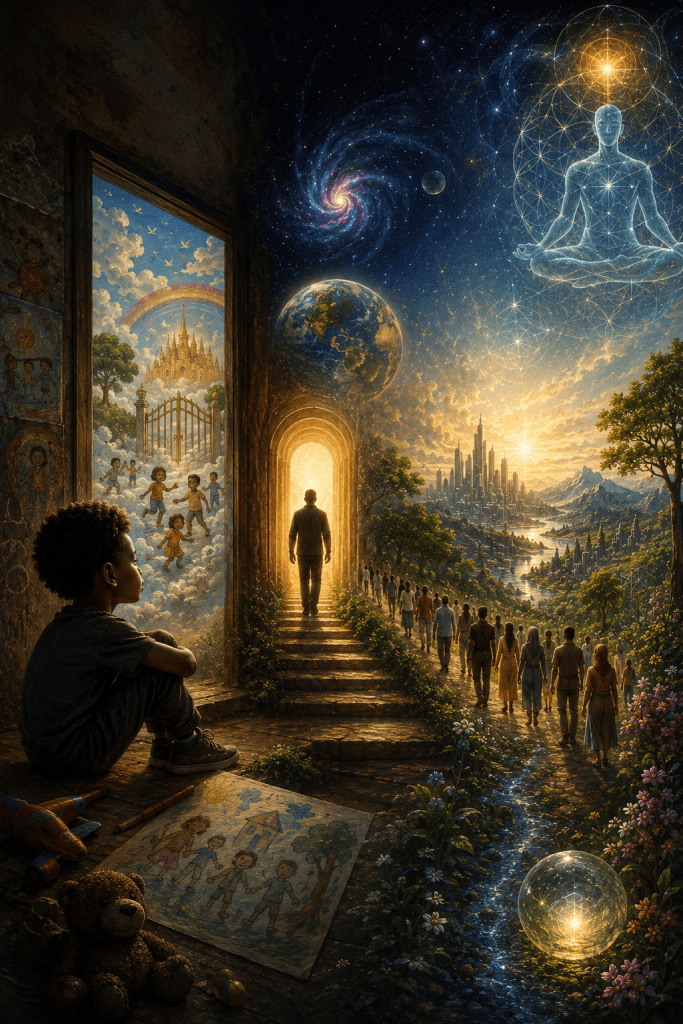
For many adults, heaven still resembles the picture they accepted as children. A beautiful place somewhere above the clouds where good people are rewarded, reunited with loved ones, and live happily forever. Although our understanding of nearly every other aspect of life matures, our image of paradise often remains untouched.
Why?
The answer may have less to do with religion than with psychological development.
Every stage of psychological development interprets reality according to its own capacity. Paradise is no exception.
The earliest stage is concerned only with survival. Paradise simply means warmth, food, shelter, and freedom from danger.
As tribal consciousness develops, paradise becomes reunion with ancestors, spirits, and one’s people. Belonging is eternal.
The egocentric stage imagines paradise as limitless pleasure, power, success, and personal fulfillment. Heaven exists for the individual.
The mythic stage transforms paradise into a divine kingdom governed by justice. Those who obey are rewarded. Those who reject divine law are excluded. This is where many traditional religious images of heaven take shape.
The rational stage begins questioning whether heaven exists at all. Paradise may become symbolic, psychological, or simply an unanswered mystery.
The pluralistic stage opens paradise to everyone. Love replaces exclusivity. Compassion becomes more important than belief. Humanity itself becomes the family.
Integral consciousness recognizes that every previous view reflects a particular stage of development rather than an absolute truth. Paradise is increasingly understood as a way of being rather than merely a destination.
Finally, holistic consciousness dissolves the distinction altogether. Paradise is not somewhere else. Reality itself is recognized as the living expression of the Absolute.
Our understanding of paradise also changes according to the size of our identity.
The egocentric perspective asks:
“How do I get into heaven?”
The ethnocentric perspective asks:
“Which group is chosen?”
The worldcentric perspective asks:
“How can everyone be included?”
The Kosmocentric perspective asks something entirely different.
“Who is it that seeks paradise in the first place?”
Here, the search begins to collapse.
The seeker, the destination, and the journey are all recognized as appearances within one indivisible reality.
Children require certainty.
Simple stories offer comfort in the face of death and uncertainty. Those early images become emotionally rooted long before critical thinking fully develops.
Unlike our opinions about careers, relationships, or politics, our beliefs about paradise are rarely revisited with the same willingness to question them. Religious traditions often preserve these images because they provide stability, identity, and hope.
There is nothing inherently wrong with that.
Every stage serves an important purpose.
Problems arise only when we assume that the understanding which comforted us at age five must also satisfy us at age fifty.
The greatest transformation may not involve discovering a better description of heaven.
It may involve recognizing that paradise was never meant to describe a location.
Perhaps heaven is a symbol pointing toward a realization.
A realization that nothing has ever existed outside the infinite.
A realization that separation was never ultimately real.
A realization that the very awareness reading these words is not traveling toward paradise.
It is the ground from which every idea of paradise has always appeared.
Perhaps the deepest question is not whether heaven exists after death.
Perhaps the deeper question is whether consciousness can awaken enough to recognize paradise before death.
If consciousness itself is the Absolute, then paradise is no longer a promise waiting in the future.
It is reality, seen without the illusion of separation.
Morgan O. Smith
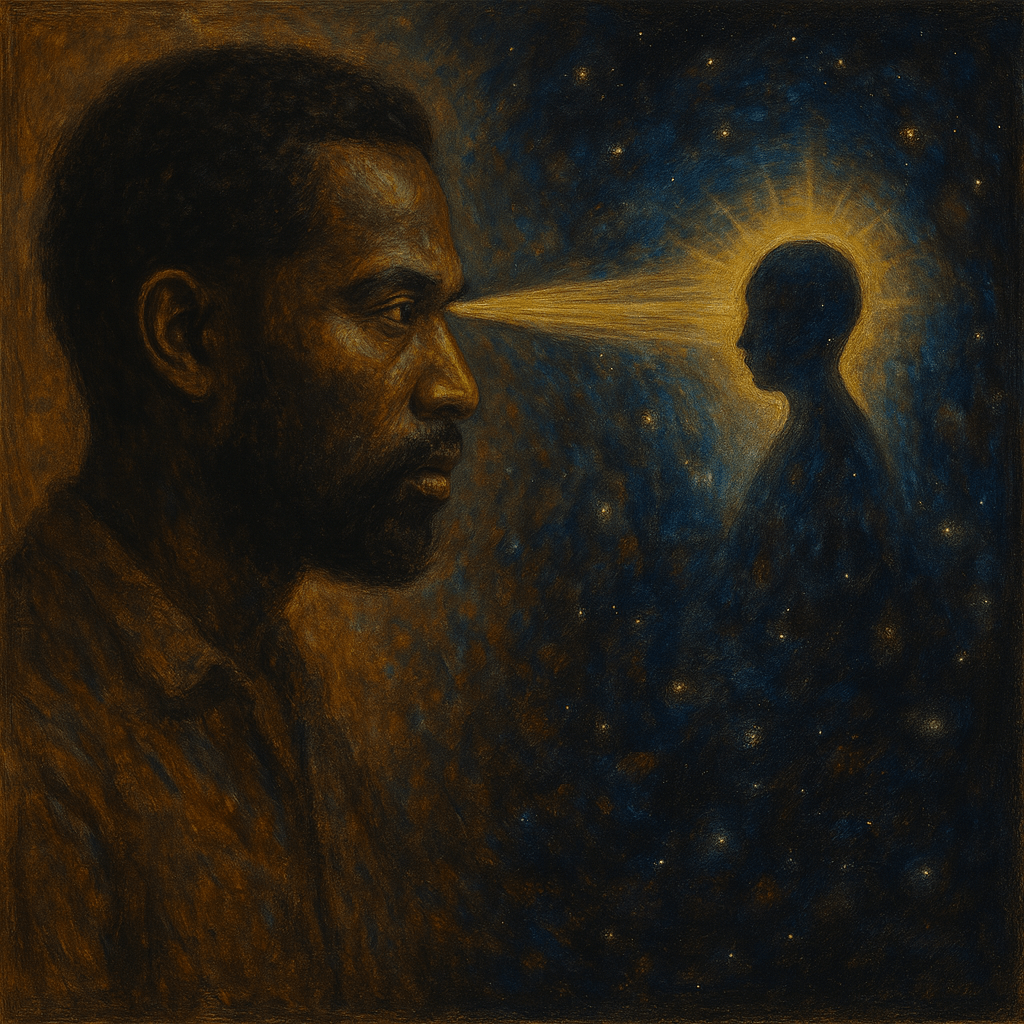
Why Interpretation Shapes Your Awakening
Reality isn’t hiding. What conceals it is the web of interpretations spun by the mind: assumptions, projections, and inherited beliefs. Yet, paradoxically, it is through interpretation that one begins to peel away those very veils. Every interpretation is a mirror. The question is: what is it reflecting?
Interpretation matters because it reveals where you are on the developmental spiral. Crude, reactive interpretations reflect lower rungs of psychological growth; often rooted in fear, blame, or a need for certainty. As awareness matures, interpretations become more nuanced, inclusive, and paradox-tolerant. They start to echo the underlying unity of things, rather than just categorize them.
Interpretation is not merely a mental activity. It is a soul signal. The more refined it becomes, the closer it gets to silence, the point where no interpretation is needed. That is the paradox. The highest interpretation doesn’t claim to know; it bows. It listens. It dissolves.
Yet such dissolution is not a regression into vagueness. It is the clarity that comes when all interpretations have done their job and exhausted their usefulness. Then what remains is the directness of being—your true nature—not as a conclusion, but as the very absence of conclusion.
This is why interpretation is not to be dismissed but refined. It is a bridge. And the more accurate your interpretation of the world, the closer you walk toward the unconditioned—what no interpretation can contain, but all of them secretly point toward.
What you interpret is what you live. Misinterpret life, and you suffer. Align with it, and you awaken. Accuracy in perception is not about being “right”; it is about being real. Every step you take toward clearer interpretation is a step toward the Real that has no opposite.
Morgan O. Smith
Get Your Free Copy of My Book, Bodhi in the Brain!

How much weight does a point of view actually hold?
None. And yet, it seems to shape entire lives, govern nations, define relationships, and breed conflict. But the more one deepens into the ungraspable expanse of reality, the more all perspectives—including one’s own—become like shadows cast by a flame none can touch.
I do not feel resistance toward those who oppose my view. I feel space—vast, immeasurable space. Not tolerance, not passive indifference, but a kind of cosmic shrug. This universe is too immense, too precise, too paradoxical for me to waste even a flicker of energy defending a perspective I know was born out of a temporary configuration of memory, biology, and environment.
What I see, I see through a filter: race, culture, conditioning, gender, language, trauma, karma, personality, neurochemistry, and a moment’s breath. Someone else sees through a completely different lens. To argue over the differences is like two waves debating who touches the shore more truthfully.
Each wave is made of the same water.
Ultimate Reality does not conform to opinions. It cannot be contained by agreement or disagreement. It isn’t found in right or wrong, winning or losing. It is not trying to prove itself. It simply is, and isness doesn’t care how it’s described.
This is not nihilism. It’s reverence. Reverence for the mystery so wide, so total, that every perspective is valid precisely because none of them are.
The deeper the realization, the more perspectives one can hold. Not juggle, not compare, not rank—but hold. To see from the eyes of the enemy and the beloved, the oppressor and the oppressed, the doubter and the devotee. To feel into each vantage point, not to believe it, but to understand it from within.
Eventually, you don’t just hold perspectives. You become the capacity for perspective itself. You become the silence before thought, the awareness behind all positions.
From there, disagreement becomes theatre.
Opposition becomes dance.
And the only thing that matters is the stillness that allows it all to appear.
Morgan O. Smith
Get Your Free Copy of My Book, Bodhi in the Brain!

Embracing Our Humanity Through Spiritual Evolution
In the labyrinth of human experience, we often find ourselves at a crossroads between contrasting moral landscapes. This journey, fraught with myriad complexities, guides us through a transformative process—a shift from seeing the world in stark contrasts to embracing the nuanced shades of morality that define our existence. It’s a journey that doesn’t just challenge our perceptions but also enriches our understanding of what it means to be inherently human.
The Evolution of Perception
As we embark on this spiritual and psychological evolution, our initial encounters with morality are often painted in broad strokes of black and white. This dichotomy, while offering clarity, is also a testament to our nascent understanding of the moral universe. However, as we delve deeper into our journey of self-discovery and spiritual awakening, we begin to notice the emergence of grey areas. These are not mere anomalies but signposts of our evolving consciousness.
The Tug of War Within
This recognition ushers in a period of internal conflict—a tug-of-war between the polarities of good and evil, right and wrong. It’s a battle that rages within, pulling us in opposing directions. Yet, it’s through this struggle that we learn the invaluable lesson of acceptance. By integrating these disparate aspects of our being, we unlock a more profound comprehension of our nature and the world around us.
Standing Firm in the Middle
The ultimate aim of this journey is not to choose a side but to find equilibrium amidst the chaos. To stand firm in the middle is to acknowledge our capacity for both the divine and the diabolical. It is in this space that we discover true empathy and compassion, unburdened by bias and judgment. This balanced stance does not signify indifference but a deeper connection to the vast spectrum of human experiences and emotions.
The Gift of Empathy and Compassion
By embracing the grey areas of morality, we cultivate a more empathetic and compassionate perspective. This transformation is not just personal but collective, as our increased understanding and acceptance ripple outwards, influencing our interactions and relationships. In recognizing our complexities, we become more forgiving of others, bridging divides and fostering a sense of shared humanity.

Conclusion: Embracing Our Humanity
The journey through the shades of morality is an integral part of our spiritual evolution. It challenges us to confront and reconcile the complexities within ourselves, leading to a more empathetic, compassionate, and balanced existence. By standing in the middle of our moral landscape, we embrace the full spectrum of our humanity, finding peace in the acceptance of our multifaceted nature.
Morgan O. Smith
Yinnergy Meditation, Spiritual Life Coaching & My Book, Bodhi in the Brain…Available Now!

A Deeper Understanding of Enlightenment
In our quest to understand enlightenment, we often envision it as perpetual positivity, a beacon of good virtues and admirable qualities. However, this view might be a simplistic interpretation of a concept far more profound and encompassing. To grasp the true essence of enlightenment, we must recognize it as the embodiment of nature in its entirety, not just its appealing aspects.
Enlightenment, in its deepest sense, is not limited to the display of positive attributes; it also encompasses the darker, less admired facets of nature. Nature, in its raw form, is an amalgamation of contrasts—beauty and destruction, calm and chaos. Similarly, an enlightened being embodies all these facets, including those we view negatively.
We often celebrate the sunlit parts of nature while disdaining its storms and upheavals. In parallel, enlightened beings, often idealized for their virtues, might also manifest traits or behaviours we consider negative. This doesn’t necessarily diminish their state of enlightenment; rather, it highlights that enlightenment transcends conventional moral dichotomies. It encompasses a full spectrum of qualities, mirroring the complexity and diversity of nature itself.
Perhaps, when an enlightened individual exhibits behaviours we perceive as negative, it’s not a regression to lower psychological states, but an expression of the entire range of human experience. This concept can be challenging to grasp, especially when viewed from the traditional perspective of enlightenment being a state of flawless virtue.
In essence, true enlightenment is beyond the dualities of good and bad, positive and negative. It is a comprehensive expression of nature in all its forms—the gentle breeze and the raging storm. Recognizing this holistic view of enlightenment invites us to expand our understanding and accept the full spectrum of experiences and traits that constitute the enlightened state.
In this light, enlightenment becomes a journey of embracing all aspects of existence, a voyage that transcends conventional wisdom and invites us to witness the universe in its full, unfiltered majesty.
Morgan O. Smith
Yinnergy Meditation, Spiritual Life Coaching & My Book, Bodhi in the Brain…Available Now!
Embracing Continuous Learning and Growth Amidst Peaks of Consciousness
In the intricate tapestry of spiritual exploration, there exists a profound truth that often goes unspoken: the journey does not culminate at the peaks of consciousness but continues to weave through the valleys of continuous learning and growth. During my dialogue with Steve James on Guru Viking, I delved into this aspect, highlighting the perpetual nature of learning and psychological development, even amidst the high states of consciousness.
The journey towards enlightenment and higher states of consciousness is often perceived as an ascent towards a pinnacle, a final destination where one is imbued with all-knowing wisdom and eternal peace. However, my experiences and explorations have illuminated a different truth. Reaching high states of consciousness is not the end of the journey but a passage into deeper realms of continuous learning and psychological growth.
Despite experiencing moments where the self dissolves into the boundless ocean of consciousness, where the dichotomy of the observer and the observed collapses into oneness, there remains an ever-present opportunity for learning and growth. The experiences of non-duality and interconnectedness do not exempt us from the continuous evolution of our psychological and spiritual being.
In my journey, I have found that the peaks of consciousness open doors to deeper understanding and further questions, propelling the spirit into uncharted territories of the self and the universe. It is a realization that every moment, every experience, and every interaction is an opportunity to learn, to grow, and to delve deeper into our understanding of existence and our place within it.
The path is not linear, and the learning is not finite. Even amidst the profound experiences of oneness and elevated consciousness, there exist layers of the self, waiting to be explored, understood, and integrated. It is an invitation to look inward continuously, to explore the depths of our being, and to embrace the unending journey of learning and growth.
Morgan O. Smith
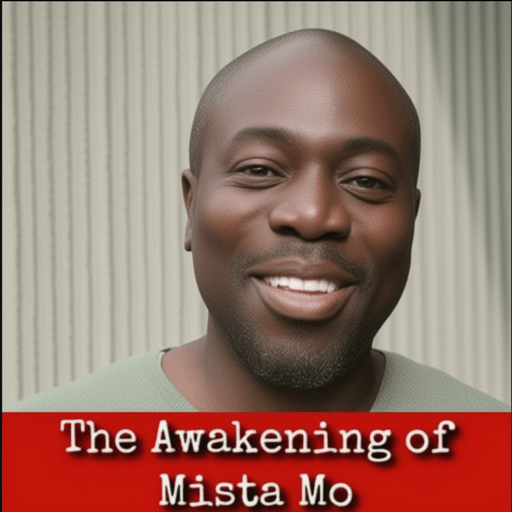
Watch The Awakening of Mista Mo:
Ep 176: The Awakening of Mista Mo
Embark on a captivating expedition in Episode 176, “The Awakening of Mista Mo.” Today, we unravel the transformative journey of Mista Mo, a soul who found enlightenment in the most unexpected corners of life. His tale is one of resilience, discovery, and awakening to a higher calling amidst the cacophony of worldly chaos. As we traverse through his life’s chapters, we uncover pearls of wisdom that beckon a deeper understanding of self and the universe. Join us in this stirring narrative that echoes the eternal quest for inner peace and enlightenment.
A friendly reminder for seekers everywhere: Guru Viking continues to unfurl wisdom every Friday on YouTube. Enrich your spiritual palette on Apple, SoundCloud, and Spotify as well. https://www.guruviking.com/
Yinnergy Meditation & My Book, Bodhi in the Brain…Available Now!