The Quantum Dance of Consciousness

Bridging Absolute Monism and Superposition

In the vast expanse of human experience and scientific inquiry, there are moments when disparate realms converge, revealing profound insights into the nature of reality. One such convergence is the spiritually enlightened peak experience of absolute monism and the quantum phenomenon of superposition. This intersection invites us to explore a deeper, more integrated understanding of existence.

The Experience of Absolute Monism

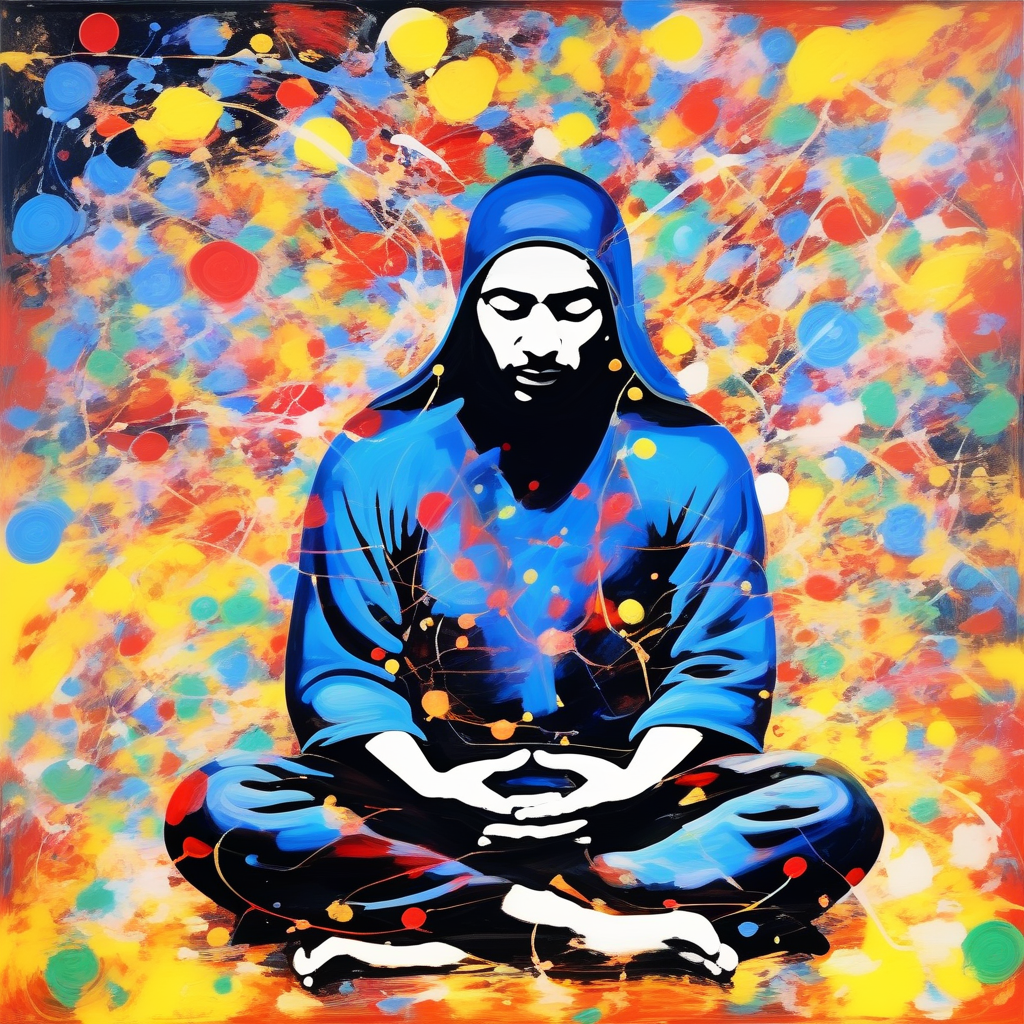
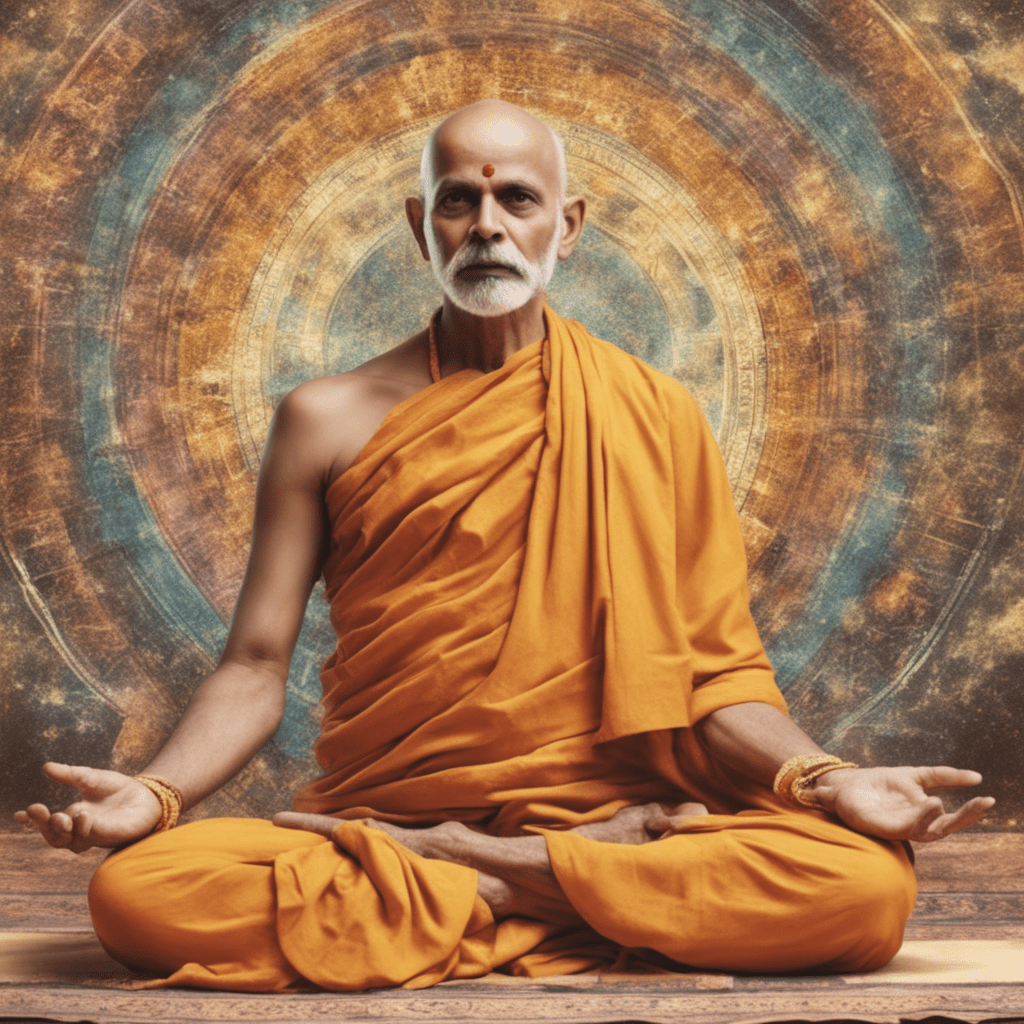
Imagine a moment of profound stillness, where the boundaries that define you dissolve, and the illusion of separation fades away. In this state, you experience a boundless unity, a seamless oneness with all that is. This is the essence of absolute monism—a direct, transformative experience that reveals the interconnectedness of all existence. It is a realization that transcends intellectual understanding, touching the core of being and altering one’s perception of reality.

Superposition in Quantum Physics

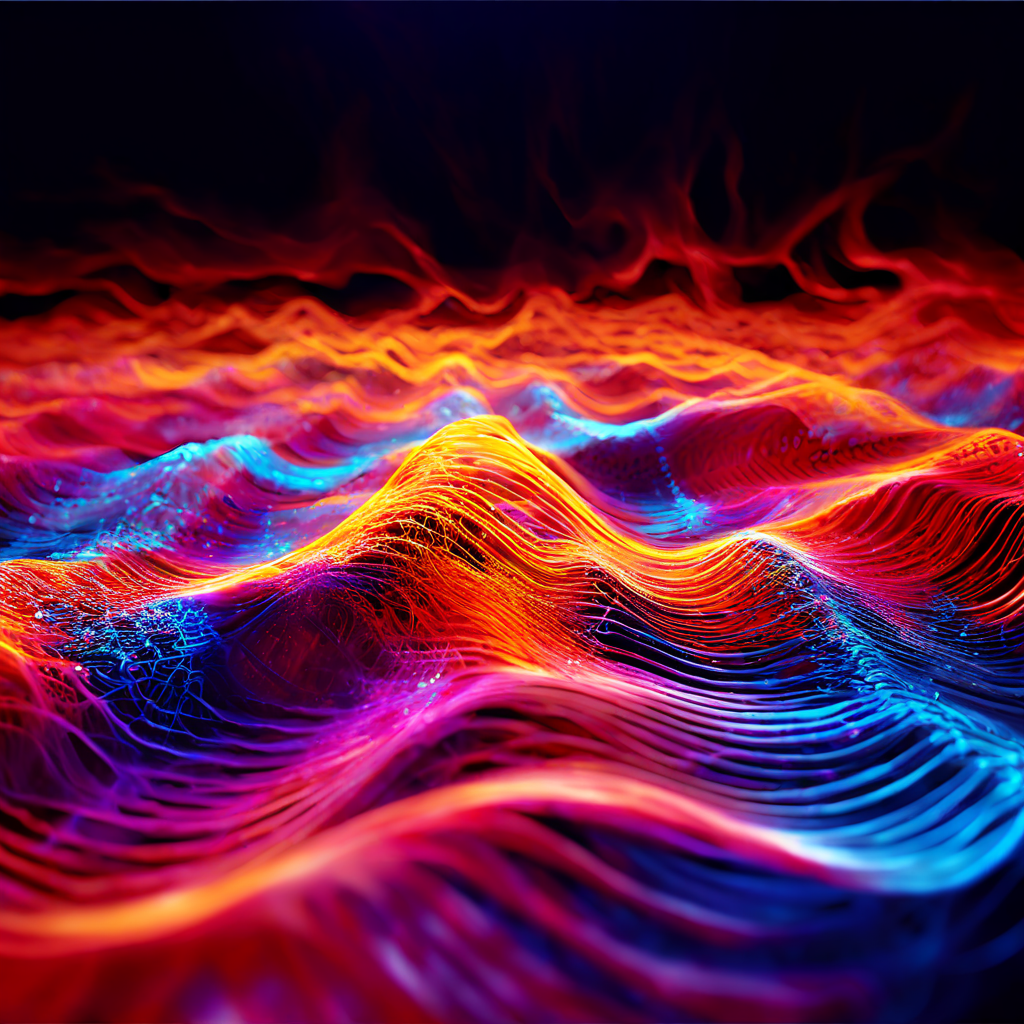
Quantum physics, the realm of the very small, offers a striking parallel to this mystical experience. Superposition is a principle where a quantum system exists in multiple states simultaneously until it is observed. This phenomenon challenges our classical notions of a fixed, definite reality, suggesting instead a universe that is inherently probabilistic and interconnected. The act of observation plays a crucial role in collapsing these multiple possibilities into a single, observable state.

Bridging the Spiritual and the Scientific

At first glance, the realms of spiritual enlightenment and quantum physics might seem worlds apart. Yet, they both point toward a deeper, underlying unity. In absolute monism, the dissolution of duality reveals an undivided reality. Similarly, in quantum physics, superposition reflects a state of potentiality where all possibilities coexist.

The Role of Observation

In the spiritual journey, the realization of absolute monism often emerges through deep meditation or transformative experiences. This form of “observation” collapses the illusion of separateness, unveiling the unity of existence. In quantum mechanics, it is the act of measurement that collapses a superposition into a definite state. Both suggest that consciousness or awareness plays a pivotal role in shaping reality.

Indeterminacy and Unity

The indeterminate nature of superposition aligns with the spiritual insight that ultimate reality transcends fixed forms and definitions. Both perspectives invite us to embrace a more fluid and interconnected understanding of existence. They challenge us to move beyond rigid, binary thinking and to appreciate the complexity and beauty of a reality that is both unified and diverse.

Transformation of Perception

Experiencing absolute monism can profoundly transform how we perceive ourselves and the world. It fosters a sense of unity, compassion, and interconnectedness. Similarly, understanding superposition can expand our perception of the physical world, challenging classical assumptions and inviting us to explore the mysteries of the quantum realm.

Conclusion

The convergence of absolute monism and superposition offers a rich, thought-provoking perspective on the nature of reality. It reminds us that the boundaries between science and spirituality are not as rigid as they seem. Both realms, in their own ways, point toward a deeper truth—a universe where unity, interconnectedness, and the role of consciousness are fundamental. By exploring these intersections, we embark on a journey that not only broadens our understanding but also deepens our appreciation for the profound mysteries of existence.

Morgan O. Smith

Yinnergy Meditation, Spiritual Life Coaching & My Book, Bodhi in the Brain…Available Now!

https://linktr.ee/morganosmith

The Ground of All Being is Groundless

In the realm of philosophical thought, there exists a profound paradox that has puzzled thinkers for centuries: the concept that the ground of all being is, in fact, groundless. This idea challenges our fundamental understanding of existence, suggesting that the foundation upon which reality is built is devoid of any intrinsic substance or essence.

At first glance, this notion appears contradictory. How can the ground of all being, the fundamental basis of everything that exists, be groundless? To unravel this enigma, we must delve into the philosophical and metaphysical discussions that surround the nature of existence and reality.

The idea of a ‘groundless ground’ originates from existential and metaphysical debates. Philosophers like Heidegger and Sartre pondered the absence of an inherent essence in existence. This absence implies that existence precedes essence, meaning things exist first and their meanings or purposes are secondary, shaped by external factors rather than intrinsic qualities.


This perspective shifts the way we perceive reality. Instead of viewing the universe and everything in it as having a predetermined purpose or essence, we begin to see existence as a blank canvas. Our perceptions, experiences, and the meanings we assign to things shape this canvas. In this sense, the ‘ground’ of all being is not a pre-established foundation but a dynamic, ever-changing tapestry of experiences and interpretations.

Moreover, this idea resonates with quantum physics, where the most fundamental levels of matter behave in ways that defy traditional laws of physics. Particles exist in states of potentiality, their positions and velocities are determined only when observed. This uncertainty at the heart of matter echoes the philosophical concept of a groundless ground, suggesting that at the most fundamental level, the universe itself may not rest on any fixed foundation.

The implications of a groundless ground are both liberating and daunting. It frees us from the constraints of preordained meanings and purposes, allowing us to shape our existence. However, it also places the responsibility of finding or creating meaning squarely on our shoulders.


In conclusion, the concept that the ground of all being is groundless invites us to explore the depths of our existence. It challenges us to seek meaning and purpose not in some inherent essence but in the experiences and interpretations that shape our reality. This exploration is not just a philosophical exercise; it is a journey into the heart of what it means to be.

Morgan O. Smith

Yinnergy Meditation, Spiritual Life Coaching & My Book, Bodhi in the Brain…Available Now!
https://linktr.ee/morganosmith

The Paradox of the Universe

When we gaze into the vast expanse of the universe, a fundamental question arises: What is the universe made of? It seems like a straightforward inquiry, one that science could answer with theories of matter, energy, particles, and forces. However, upon deeper reflection, the answer becomes less about physics and more about philosophy. The universe, in its most enigmatic form, is made of itself, which paradoxically, is nothing.

This concept, while initially sounding absurd, invites us to explore the nature of existence and the fabric of reality. The universe isn’t just a collection of galaxies, stars, and planets; it’s an intricate tapestry of existence, interwoven with the threads of time, space, and consciousness. To say the universe is made of itself is to acknowledge that it is a self-contained entity, not requiring an external creator or an outside source of substance.


Delving deeper, the idea of the universe being ‘nothing’ challenges our understanding of ‘nothingness’. In philosophy, ‘nothing’ is often considered a state of non-existence, an absence of everything. Yet, in the context of the universe, ‘nothing’ transforms into a concept of boundless potential. This ‘nothing’ is not an emptiness (not in the traditional sense) but a source of all creation, a primordial state from which everything emerged.

This perspective aligns with some interpretations of quantum physics, where the vacuum of space is not empty but teeming with energy and potentiality. It’s in this ‘nothingness’ that particles pop in and out of existence, creating the fabric of reality as we perceive it. Therefore, the universe is made of itself and nothing is not a contradiction but a profound insight into the nature of reality.


The implications of this thought are vast and deeply philosophical. It suggests that the universe, and by extension, our existence, is a self-generated, self-sustaining phenomenon. We are not just in the universe; we are of the universe – an integral part of this grand, incomprehensible entity that is both everything and nothing.

In conclusion, the question of what the universe is made of leads us down a path of deep philosophical contemplation. It reveals that the universe, in its essence, is a paradox, defying the conventional understanding of existence and non-existence. It’s a reminder of the mystery and wonder that surrounds us, an invitation to ponder the unfathomable depths of reality.

Morgan O. Smith

Yinnergy Meditation, Spiritual Life Coaching & My Book, Bodhi in the Brain…Available Now!
https://linktr.ee/morganosmith

Embracing the Spectrum

Perspectives on Nonduality

In the realm of spirituality and philosophy, nonduality presents a fascinating paradox. It’s a term that evokes both simplicity and complexity, challenging our understanding of reality and existence. At its core, nonduality means ‘not two’ or ‘one without a second’. This concept, often rooted in Eastern philosophies such as Advaita Vedanta, posits that there is no fundamental division in the universe. Everything, at its essence, is the same.

But here’s where it gets intriguing: within this notion of oneness, myriad perspectives and interpretations exist. Each of these perspectives offers a unique lens through which we can view nonduality. Some may see it as a spiritual realization of oneness with the universe, others as a philosophical understanding that transcends physical distinctions. Some approach nonduality through the lens of science, seeking to understand how this concept aligns with the interconnectedness revealed in quantum physics.


What’s remarkable is that all these perspectives are valid and encompassed within the unified reality of nonduality. This inclusivity is precisely what nonduality is about – it’s not just a concept of ‘no distinctions’ in a literal sense, but also a recognition that every interpretation, every perspective, is part of the whole. The variety of viewpoints doesn’t dilute the concept but enriches our understanding and appreciation of it.

This leads us to a profound realization: nonduality isn’t just a concept to be understood intellectually, but an experiential truth to be lived. It encourages us to look beyond the apparent separations and differences that define our everyday existence. In recognizing nonduality, we find a deeper connection with the world around us, seeing ourselves not as isolated beings but as integral parts of a greater whole.


In essence, nonduality teaches us that while we may perceive distinctions and separations in the world, at a fundamental level, these distinctions are illusory. It invites us to experience life not just through the lens of separation but through a lens of unity and interconnectedness. This shift in perspective can be transformative, offering a pathway to greater understanding, compassion, and peace.

As we explore this concept further, it’s essential to remember that nonduality isn’t about negating diversity or individual experiences. Instead, it’s about recognizing the underlying unity that encompasses all diversity. It’s a journey of discovery, where each step in understanding brings us closer to the profound simplicity at the heart of existence.

Morgan O. Smith

Yinnergy Meditation, Spiritual Life Coaching & My Book, Bodhi in the Brain…Available Now!
https://linktr.ee/morganosmith

Atoms Within Atoms

Contemplating the Cosmic Scale of Existence

In the grand tapestry of existence, our understanding often finds itself confined within the boundaries of human perception. Yet, when we dare to venture beyond these limits, we encounter a humbling and awe-inspiring perspective. Consider this: each of us is composed of trillions of atoms, minuscule yet intricate components that constitute our very essence. Now, elevate this thought to a cosmic scale. What if our entire universe, with its vast galaxies and nebulae, is but a single atom within the immeasurable body of a higher entity or force, which some may choose to call God?

This analogy invites us to rethink our place in the cosmos. It suggests that just as each atom plays a vital role in the structure and function of our being, so too might our universe contribute to a larger purpose within this colossal entity. This perspective is not to diminish our significance but to expand our understanding of connectivity and purpose. In this cosmic view, every action, thought, and event within our universe could be integral to the workings of a grander scheme, a higher order of existence.

Such a notion also challenges our understanding of God or the ground of all being. Traditionally conceived as an omnipotent and omniscient entity, this view presents God not just as a creator or a distant observer but as a vast, living entity within which universes exist like atoms within a body. This reimagining bridges the gap between the spiritual and the physical, suggesting a universe that is not separate from the divine but intrinsically part of it.

The implications of this perspective are profound. It propels us to consider our actions and their repercussions not just on a worldly scale but as part of a cosmic dance. It encourages a sense of universal responsibility and interconnectedness, urging us to view ourselves not as isolated beings but as integral components of a much larger existence.

In conclusion, the idea that our universe could be akin to an atom within the body of a higher entity redefines our understanding of existence, purpose, and spirituality. It invites us to contemplate our place in the cosmos as inhabitants of a vast universe and as part of a much grander, interconnected whole.

Morgan O. Smith

Yinnergy Meditation, Spiritual Life Coaching & My Book, Bodhi in the Brain…Available Now!
https://linktr.ee/morganosmith

Absolute Causality and the Epiphany of Absolute Monism

In the profound journey of spiritual exploration, a moment stands out as particularly transformative: the moment of spiritual enlightenment. This isn’t just a fleeting insight; it’s an experiential understanding of “Absolute Monism”. This is a state where one perceives the unity and interconnectedness of all things, leading to an astonishing realization: every action, behaviour, situation, or event, regardless of its scale or significance, is intrinsically linked to the very cause of the universe’s existence – the Big Bang.

This concept, which I term “Absolute Causality”, posits that the Big Bang isn’t just a distant historical event; it’s an ongoing process that manifests in every aspect of our lives. This perspective radically alters our understanding of time, causality, and our place in the universe. We begin to see that our every action isn’t merely a drop in the ocean but is, in fact, part of the ocean itself.


Absolute Monism, in this context, becomes more than a philosophical idea; it’s a lived experience. It dissolves the illusion of separation between the self and the universe, leading to a profound sense of unity and interconnectedness with all existence. This realization fosters a deeper sense of responsibility and mindfulness in our actions, as we understand that what we do has a ripple effect throughout the fabric of the cosmos.

Furthermore, Absolute Causality redefines our understanding of time. Rather than viewing the Big Bang as a one-time event in the distant past, we perceive it as an eternal process that continuously unfolds in every moment. This view aligns with certain interpretations of quantum physics, suggesting that time is not linear but a more complex, interconnected web of events and possibilities.


In conclusion, the experience of Absolute Monism and the realization of Absolute Causality offer a transformative lens through which we can view our existence. It’s a perspective that encourages us to live more consciously, understanding that our actions are not just our own but part of a grand, cosmic dance that began with the universe itself.

 Morgan O. Smith

Yinnergy Meditation, Spiritual Life Coaching & My Book, Bodhi in the Brain…Available Now!
https://linktr.ee/morganosmith

Everything in Existence Manifests Everything in Existence into Existence

If you’ve ever gazed into the night sky, pondering the vast expanse of the universe, you’ve likely considered the interconnectedness of all things. The stars, planets, galaxies – and even ourselves – seem to be part of a grand cosmic dance. Yet, have you ever thought that everything in existence, in some way or another, brings everything else into being?

**The Interconnected Web**


At the very heart of our universe lies a web of relationships, cause and effect, and the interplay of energy and matter. Every atom, every molecule, and every organism is not just a product of the universe but also a part of its ongoing creation.

**From Quantum to Cosmic**


In the realm of quantum physics, particles interact in ways that seem to defy logic. These interactions are based not on isolation but on relationships, affecting each other’s states instantaneously. As these particles come together to form atoms, and atoms form molecules, and so on, we can trace back every bit of matter and energy to these intricate connections.

**Manifestation Through Observation**

The very act of observing a particle can change its state. Does this not suggest that our consciousness, our mere act of observation, plays a role in the universe’s continual creation? If so, then we too are manifesting existence.

**The Ripple Effect**

A single action, no matter how small, can send ripples across the fabric of reality. A butterfly flapping its wings in Brazil can set off a tornado in Texas, and so goes the popular rendition of the butterfly effect. This suggests that everything – from the tiniest insect to the most massive star – plays a role in the evolution of existence.

**Conclusion**


It’s a profound and humbling thought: everything in existence plays a part in manifesting everything else into existence. This perspective not only emphasizes our interconnectedness but also hints at the responsibility we hold as conscious beings in this vast cosmos. By recognizing the value and influence of even the smallest actions, we can navigate our journey through existence with greater purpose and intention.

Morgan O.  Smith

Yinnergy Meditation & My Book, Bodhi in the Brain…Available Now!

https://linktr.ee/morganosmith

The Expansive Self

Beyond the Boundaries of Individual Identity

In the vast tapestry of human experience, one of the most profound and transformative realizations is the awakening to a sense of identity that stretches far beyond the individual self. This philosophical journey, explored by thinkers, mystics, and seekers throughout history, offers an exploration into the very essence of what it means to be human, and more profoundly, what it means to be a part of the cosmos.

### The Layers of Self

**1. The Individual Identity**: Our daily lives are governed by our personal experiences, histories, and beliefs. This individual self, encapsulated by our distinct personalities, desires, and aspirations, is like a drop in the vast ocean of existence.

**2. The Collective Identity**: There are moments, often inspired by shared experiences, when we resonate with a group, whether based on nationality, religion, or shared purpose. Here, the boundaries blur slightly, and the drop becomes a wave, united in its motion with other droplets.

**3. The Universal Self**: Delving deeper, we encounter a realm where the wave realizes it’s not just a part of the ocean, but the ocean itself. This vast sense of identity, encompassing all of life, the universe, and the myriad forms within it, is an experience of unity and oneness with all that exists.

### The Power of Oneness


With an expanded identity, empathy and compassion naturally flourish. The pain and joy of another are no longer abstract experiences; they become deeply personal as if they were our own. This profound interconnectedness also extends to nature, leading to an intrinsic desire to safeguard the environment and all its inhabitants.

Moreover, as one navigates this expanded identity, the grip of personal desires and ego-based needs loosens. Life begins to flow with an acceptance of its unfolding mystery, reducing resistance and enhancing serenity.

### Mystical Insights and Modern Science

Historically, mystics from various traditions spoke of experiences of union with the divine, the universe, or the underlying essence of reality. Today, intriguingly, modern science, especially in fields like quantum physics, hints at ideas of interconnectedness and non-locality. Such insights suggest that the ancient intuitions of interconnectedness may have parallels in our current understanding of the cosmos.

### Challenges of the Expansive Self


However, this journey is not without its pitfalls. As we embrace a broader sense of self, there’s the risk of “spiritual bypassing” – a tendency to use these expansive realizations to sidestep personal issues or challenging emotions. An expansive identity doesn’t negate personal responsibilities or the need for personal boundaries. It invites a deeper engagement with life in all its complexity.

### Conclusion

Our identity’s evolution, from a solitary droplet to the vast ocean, is a journey of consciousness and profound realization. It reminds us that beneath the multiplicity and diversity of existence lies an undercurrent of unity, urging us to rediscover and embrace our place in the cosmos.

As we ponder on the vastness of our identity, it serves as a beacon, guiding us toward a life of deeper meaning, connection, and purpose. In recognizing our expansive self, we find not only our place in the universe but also the universe within ourselves.

Morgan O. Smith

Yinnergy Meditation & My Book, Bodhi in the Brain…Available Now!
https://linktr.ee/morganosmith

Reincarnation Unfolding

The Mystical Dance of Life at the Subatomic Scale

Reincarnation is often conceived as a cycle of birth, death, and rebirth. This process, however, is not confined merely to the level of an individual’s life journey, but also at a minute, an invisible scale that continuously unfolds within us.

The human body is composed of about 37 trillion cells, with each one possessing its lifecycle. Old cells die and new ones are born in a ceaseless symphony of life. Every second, millions of cells in your body reincarnate, dying and then being reborn anew. This minute cycle mirrors the grandeur of the reincarnation concept, challenging us to rethink what it means at the fundamental level.

To delve deeper, each cell consists of molecules, atoms, and subatomic particles, each undergoing their cycles of transformation. These minuscule particles don’t die or are born in the traditional sense, but rather transform, changing their states, swapping places, decaying, and then being reincarnated into different particles. From this viewpoint, reincarnation becomes a ubiquitous process that is playing out at every moment.

In light of this perspective, where does the soul reside? Is it just in the whole or also in the parts? If we consider the soul as the essence of life and consciousness, then every cell, every molecule, and even every atom has a part of this essence. This soulful essence, then, is constantly dying and being reborn, experiencing its cycle of reincarnation at a cellular, molecular, and atomic level.

Then arises the concept of karma, a law of moral causation. Can it apply at a subatomic level? At first glance, it might seem improbable. After all, karma is about action and consequence, and cells or atoms don’t have agency in the same way humans do.

However, if we think of karma less as moral action and more as causality, things start to take shape. Each cell’s fate—its health, its functioning, its lifespan—is determined by previous actions, or karmas, at the molecular and atomic levels. These actions could be genetic expressions, protein formations, or even quantum fluctuations.

Molecular karma plays out in the creation of proteins, cellular karma in the orchestration of life processes, and atomic karma in fundamental interactions. The sum of all these karma of parts can even influence the karma of the whole, impacting our health, our mind, and our life.

Through this lens, the concept of reincarnation and karma expands beyond a spiritual or religious doctrine and becomes a fundamental principle of life, from the grand scale of human existence to the tiny dance of atoms.

Thus, the journey of life and death is not a one-time event; it is a constant process. Every moment, we are dying and being reborn, at various levels of our existence. Our karma, too, is being created, fulfilled, and carried forward at these multiple levels. Such a realization can provide us with a profound perspective on life, death, reincarnation, and karma, reminding us of our intricate connection with the cosmos.

This understanding, although awe-inspiring, is only the tip of the iceberg. The philosophical implications are profound, leaving us to ponder the mysterious dance of life and death that is taking place within us, every moment, at every level.

Morgan O. Smith

Yinnergy Meditation & My Book, Bodhi in the Brain…Available Now!

https://linktr.ee/morganosmith

Moksha

The Universe in Liberation

As we traverse the intricate corridors of Hindu philosophy, a term that emerges as a beacon of liberation is ‘Moksha’. This concept, commonly associated with individual salvation from the cycle of birth, death, and rebirth, presents a spiritual zenith. However, what if we zoom out from the individual perspective and consider Moksha at a cosmic level? What if the Universe itself were to attain Moksha?

The Big Bang marked the birth of the Universe, setting forth an infinite dance of creation, preservation, and destruction. Stars were born, galaxies sculpted, and planets formed, only to one day succumb to the grand design of entropy. This cyclical nature bears a striking resemblance to the cycle of Samsara in Hindu thought, where souls are continuously born and reborn in different forms until Moksha is achieved.

If the Universe could experience Moksha, it would transcend its cycle of cosmic Samsara – from the Big Bang to the eventual Big Crunch or Heat Death, depending on which theoretical physicist you ask. This liberation would mean breaking free from the constraints of time, space, and causality, reaching a state of infinite, timeless existence.

So, what would this feel like for the Universe?

When we ponder this question, we must acknowledge that the Universe’s experience, in this context, is beyond human comprehension. But let’s indulge in the thought experiment. We could imagine this state as one of perfect harmony and unity. There would be no ‘other’, no ‘alien’, and no ‘external’. The galaxies, stars, planets, and even the tiniest quantum particles would exist in a state of interconnection and oneness.

From the perspective of sentient beings, this would mean a profound sense of unity with everything else. Distinctions that currently cause division – species, races, cultures, even life and non-life – would become irrelevant. All of existence, inanimate and animate, would be seen as expressions of the same cosmic consciousness.

And yet, paradoxically, this unified existence would also mean the cessation of experience as we know it. Experience implies a subject and an object, an experiencer and the experienced. But in the absolute unity of cosmic Moksha, these dualities would dissolve. Therefore, in a sense, the Universe would be in a state of ‘experiencing without an experiencer’ or ‘knowing without a knower’.

In the grand scheme of cosmic liberation, human Moksha could be seen as a fractal microcosm – a ripple that mirrors the pattern of the whole. Each being achieving liberation contributes to the whole Universe moving towards its own Moksha, its release from the cosmic cycle of birth and death. This profound realization places our spiritual quests in a broader context and imbues them with a universal significance.

However, the implications of this concept are not just metaphysical, but deeply ethical. Recognizing our shared journey toward liberation fosters compassion, humility, and a sense of stewardship for all of existence. Our actions, in this view, can either facilitate or hinder the Universe’s journey toward Moksha.

In conclusion, contemplating Moksha at a universal scale stretches the boundaries of our imagination and empathy. It invites us to view ourselves not as isolated entities but as integral parts of a grand cosmic dance seeking the ultimate liberation.

Morgan O. Smith

Yinnergy Meditation & My Book, Bodhi in the Brain…Available Now!
https://linktr.ee/morganosmith