The Paradox of the Bodhisattva

Embracing Infinite Compassion

The greatest human sacrifice is the bodhisattva’s goal of not attaining nirvana until all sentient beings are free from samsara. An impossible task, but the bodhisattva does this anyway out of love. So out of love, he or she continues to be born, die, and be reborn while being fully conscious of entering a life full of grief, discomfort, and dissatisfaction.

The bodhisattva’s path is one of profound paradox and immeasurable compassion. In the face of boundless suffering, the bodhisattva chooses not the liberation of nirvana but the unending cycle of rebirth. This choice, rooted in an infinite love for all sentient beings, defies conventional notions of self-preservation and personal enlightenment.

In the depths of this commitment lies a radical redefinition of what it means to live a meaningful life. The bodhisattva embodies a profound understanding that individual enlightenment is intertwined with the liberation of all beings. This interconnectedness transforms personal suffering into a collective journey, where the lines between self and other dissolve in the embrace of universal compassion.


To fully grasp the bodhisattva’s sacrifice, one must delve into the core of their motivation: the unyielding love for all beings. This love transcends personal desires and aspirations, anchoring itself in the welfare of every sentient entity. It is a love that is willing to endure the perpetual ebb and flow of samsara, embracing each life with open-hearted acceptance despite the inherent pain and impermanence.

The bodhisattva’s journey challenges us to reconsider our own lives and the nature of true fulfillment. It asks us to look beyond our immediate comfort and desires, to see our existence as part of a larger, interconnected whole. In doing so, we begin to understand that the pursuit of personal happiness is not separate from the well-being of others.

Engaging with the bodhisattva ideal, even as a mere contemplation, invites us into a deeper exploration of love and compassion. It urges us to reflect on our capacity to extend kindness and empathy beyond the confines of our personal experiences. In a world often dominated by individualism and self-interest, the bodhisattva’s sacrifice serves as a beacon, illuminating the transformative power of selfless love.
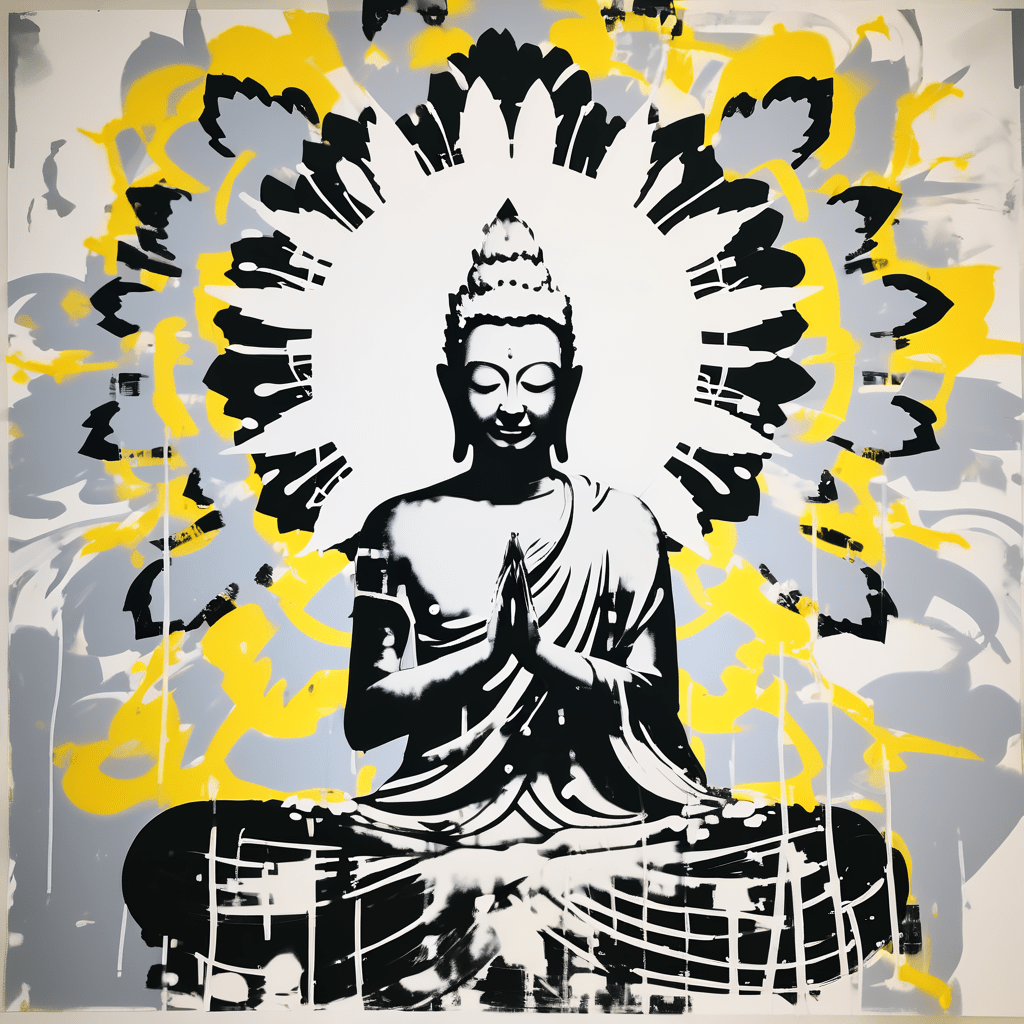

Ultimately, the bodhisattva’s commitment to the liberation of all beings is a testament to the boundless potential of the human spirit. It is a reminder that true enlightenment is not an isolated achievement but a collective awakening. As we meditate on the bodhisattva’s path, we are inspired to cultivate a love that transcends our own lives, embracing the entirety of existence in its compassionate embrace.

Morgan O. Smith

Yinnergy Meditation, Spiritual Life Coaching & My Book, Bodhi in the Brain…Available Now!

https://linktr.ee/morganosmith

Embracing the Shadows

The Transformative Power of the Dark Night of the Soul

In the depths of human experience, where the light of understanding seems but a distant memory, we find ourselves in the midst of what Saint John of the Cross coined the “dark night of the soul.” This phrase has transcended its religious origins to signify a period of profound personal turmoil and existential crisis that, paradoxically, can lead to the most profound spiritual awakening.

The dark night of the soul is not simply a period of trouble or depression. It is a crucible in which the very foundations of identity, belief, and understanding are melted down. It is the unsettling void where the familiar dissolves, and we are left seemingly alone, wrestling with the most fundamental questions of our existence. Why am I here? What is my purpose? Is there any meaning to my suffering?

However, within this darkness lies a peculiar grace. The darkness, dense and impenetrable, confronts us with our deepest fears and insecurities. Stripped of all pretense, the ego is humbled, and the spirit becomes pliable. It is here, in the surrender to the unknown, that the light of awakening begins to seep through. As the Persian poet Rumi once said, “The wound is the place where the Light enters you.” Our wounds and our darkness become the very openings through which a new understanding can emerge.

The transformation that follows is often not one that pulls us out of the dark, but rather one that illuminates the night itself. We find that this darkness was not the absence of light, but the very medium through which a deeper, subtler light could be perceived—a light of truth that the glaring sun of our previously held certainties and convictions could never reveal.

In the embrace of the dark night, the soul learns the language of paradox. The loss of everything that once seemed sure becomes the freedom to explore truth without constraint. In letting go of what we thought we knew, we become open to an entirely new way of being. This is not the light of day with its clear boundaries and definitions, but the soft glow of twilight that admits to mysteries we can never fully grasp or articulate.

This spiritual awakening is not a destination but a continual unfolding. As dawn follows the darkest hour, our awakening is an ever-evolving process where new challenges and understandings emerge. The dark night becomes a passage, a womb of rebirth. Like the phoenix arising from the ashes, our spirits are reborn from the very trials that seemed to threaten our undoing.

And so, the dark night of the soul is not to be feared or avoided but embraced as an essential passage to a deeper, more authentic spiritual life. The darkness is not the end of the journey but a vital, indeed crucial, part of it—a passage that refines, teaches, and ultimately enlightens, granting us wisdom that shines all the brighter for having known the depths of shadow.

Morgan O.  Smith

Yinnergy Meditation & My Book, Bodhi in the Brain…Available Now!

https://linktr.ee/morganosmith

The Ouroboros of Samsara

An Endless Cycle of Self-Inflicted Suffering

The universe is filled with symbols that describe the cyclical nature of existence. One of the most captivating is the concept of ‘Samsara’ from Eastern traditions and ‘Ouroboros’ from ancient civilizations. While they emerge from different cultural contexts, they bear striking resemblances, encapsulating the endless cycle of birth, death, and rebirth and the continuous loop of life-consuming itself.

### Samsara: The Wheel of Existence

Samsara, derived from Sanskrit, signifies the cyclical process of birth, death, and rebirth. It’s a fundamental concept in Buddhism, Hinduism, and Jainism. Many Eastern spiritual practices aim to break free from this relentless cycle and attain enlightenment or Moksha. Why? Because Samsara is not just about rebirth – it’s about suffering. Every birth brings with it aging, sickness, and ultimately, death. The attachments, desires, and ignorance in life lead to actions (karma) that bind us to this wheel, causing endless suffering.

### Ouroboros: The Eternal Circle


The Ouroboros is an ancient symbol depicting a serpent or dragon eating its own tail. Found in many cultures, from ancient Egypt to the indigenous traditions of the Americas, it’s emblematic of the eternal cyclical nature of the universe. Creation out of destruction, life out of death. Just as the snake sheds its skin only to be reborn, life continually renews itself even as it ends.

### Biting One’s Tail: The Self-Caused Suffering


The fascinating aspect of the Ouroboros is the act of the snake biting its own tail. It’s a voluntary act of self-consumption, symbolizing self-reflection and the cyclical nature of things. But what if we viewed this act as a representation of self-inflicted suffering, much like the karmic traps in Samsara?

Every time we hold onto grudges, indulge in harmful habits, or remain ignorant of our true nature, we bite our own tail. We become both the cause and the recipient of our suffering. And just like the snake cannot see beyond its circular path, we often find it challenging to envision a life beyond our self-inflicted pain.

### Breaking the Cycle

While these symbols might paint a bleak picture of existence, they also offer hope. Just as the cycle of Samsara can be broken through enlightenment, the Ouroboros signifies rebirth and renewal. But this requires self-awareness.

By recognizing the patterns of our actions, understanding the roots of our desires, and embracing self-reflection, we can begin to release our grip on our own tails. This doesn’t mean the cessation of life’s challenges, but rather an enlightened approach to them, devoid of self-inflicted suffering.

In conclusion, Samsara and the Ouroboros serve as profound reminders of the cyclical nature of existence and the potential pitfalls of living unconsciously. They beckon us to awaken, to understand our role in our suffering, and to seek paths that transcend these ancient cycles. As we navigate the journey of life, may we always strive to understand the deeper meaning behind these symbols and find the courage to let go of our tail.

Morgan O. Smith

Yinnergy Meditation & My Book, Bodhi in the Brain…Available Now!

https://linktr.ee/morganosmith