The Self and No-Self

Unraveling the Boundaries of Existence

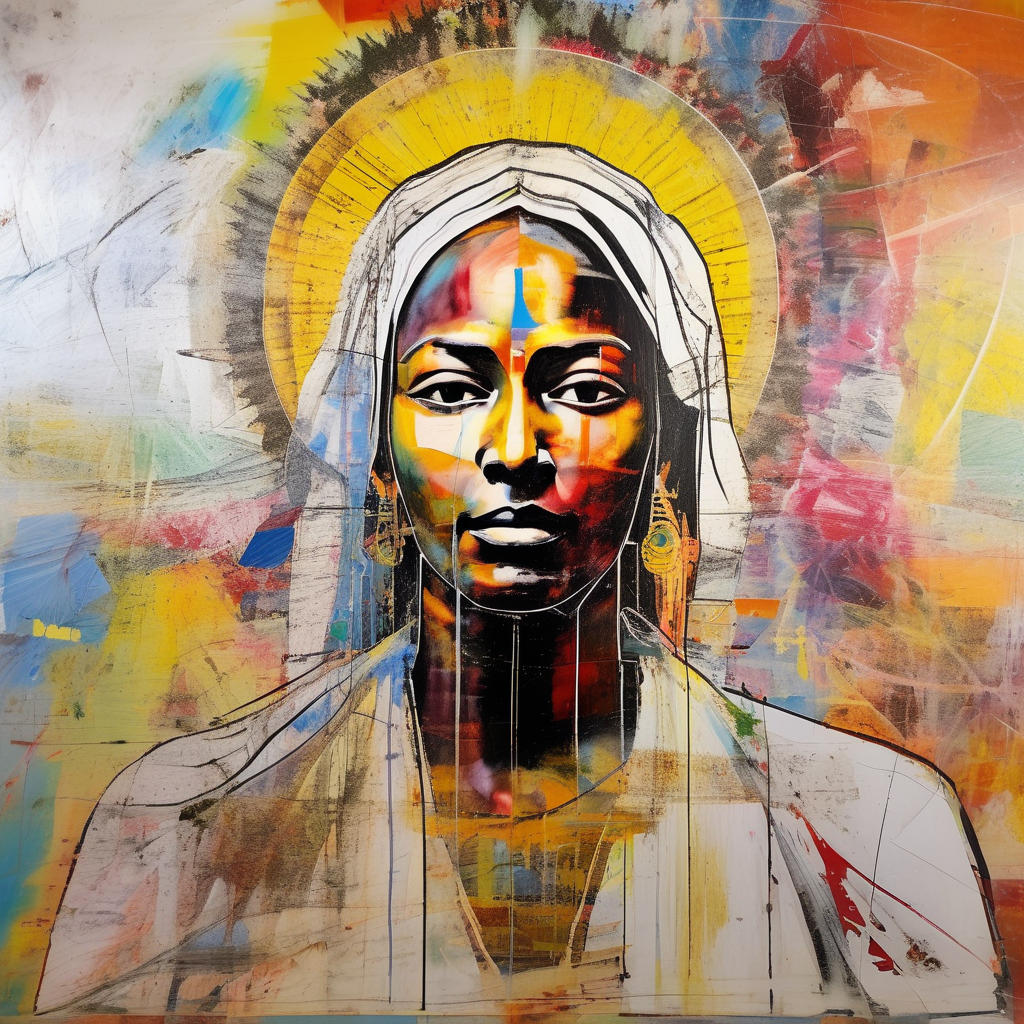
If all that exists is what we call the Self, where does that leave us in understanding its true nature? The common impulse is to label, define, and separate — creating distinctions to grasp what cannot be fully grasped. But in contemplating the nature of the Self as the all-encompassing reality, we’re drawn into a profound paradox: if the Self is indeed everything, without any boundary, how can it even be considered a “Self”?

The word “Self” implies some form of individuation, a presence that stands distinct from others, yet here lies the core of the paradox. In the absence of an “other,” any idea of a distinct Self dissolves, leaving only the mystery of the No-Self.

For a Self to be recognizable as such, it would require something to stand apart from. But in the context of ultimate unity, where nothing exists outside or beyond, there is only what is — an undivided totality that transcends any dualistic notion of “Self” and “other.” This is where the very term “Self” falls away, as there can be no contrast, no relational identity. What we are left with is not a Self in any ordinary sense but rather pure awareness, the ground of being that defies description and categorization.

When looked at from this perspective, the idea of the Self takes on a radically different dimension. It becomes the No-Self, not in the sense of an absence but rather as an absolute presence that simply is. The No-Self, then, is not the lack of being but the absence of individualization within being itself. It invites us to move beyond personal identity and to experience consciousness as boundless and indivisible, an endless ocean with no separate waves.

In moving toward an experiential understanding of this paradox, the concept of “I” transforms. We begin to see that this “I” — the egoic self we identify with — is a localized point in the vast field of undivided awareness. What we call “myself” is, in reality, an expression within the infinite whole, a momentary manifestation of something that transcends all individuality.

Such an insight does not negate our individual lives or diminish the importance of each unique expression. Rather, it invites a shift in perception. It calls us to recognize that beneath our individuality lies a vastness, a timeless ground that is beyond any single label or limitation.

As we touch on this insight, we find that the paradox of Self and No-Self begins to dissolve. We see that they are not separate but interwoven, expressions of the same reality, which is beyond both. In embracing the No-Self, we open ourselves to a greater depth, where the boundaries of identity soften, and the beauty of unity comes alive in ways beyond conceptual thought.

Morgan O. Smith

Yinnergy Meditation, Spiritual Life Coaching & My Book, Bodhi in the Brain…Available Now!

https://linktr.ee/morganosmith

Beyond the Idea of God

Embracing the Infinite Beyond Belief

Humanity has long pursued an understanding of God, a relentless quest to define, capture, and shape the essence of the infinite. For many, the notion of God becomes a vessel for their ideals, values, and desires—a reflection of their deepest hopes and most profound fears. Yet, encountering God through the lens of belief alone is akin to gazing at the ocean through a narrow window. The grandeur of the infinite cannot be contained, constrained, or fully fathomed within the borders of our perceptions.

The paradox lies in this: everything is God, yet nothing conforms to the concepts we construct about it. Each moment, encounter, and experience pulses with the sacred, yet the mind reduces it to fit within its familiar narratives. In the end, our beliefs become the very walls that obscure the limitless nature of divinity.

God, in the truest sense, transcends every image, word, or definition. No single tradition or philosophy can exclusively claim this vastness. Imagine standing before an infinite horizon, extending endlessly in every direction. Our concepts—however profound—are mere markers on the path, helpful but limited in capturing the essence of all that is. Here lies a liberation beyond belief: recognizing that the Divine isn’t limited by human expectations or perceptions.

Embracing this understanding offers a profound sense of freedom and humility. It invites us to move beyond belief, beyond the comfort of definition, and into direct experience. Rather than confining God to what we think we know, we begin to open ourselves to a presence that defies all description, something we sense but cannot fully articulate. This is where genuine reverence arises, born not from knowledge but from an awe that silences the mind.

When we release the need to make God fit our ideas, we become conduits for something greater. Instead of seeking to define or own this presence, we surrender to it, allowing ourselves to be moved, shaped, and transformed. This surrender is not passive; it’s an active openness, a readiness to meet the Divine in the ordinary and extraordinary, in all that we perceive and beyond.

Perhaps the journey, then, is not one of reaching an ultimate understanding but of letting go—allowing ourselves to rest in the mystery and seeing how it transforms us. For God, as it turns out, may be far more than we ever imagined and is here to be discovered, not as an idea, but as the living pulse of everything we encounter.

Morgan O. Smith

Yinnergy Meditation, Spiritual Life Coaching & My Book, Bodhi in the Brain…Available Now!
https://linktr.ee/morganosmith

To See God’s Face

A Glimpse Beyond the Veil

The desire to see the face of God is often spoken of in spiritual traditions, symbolizing the quest to grasp the ultimate truth, touch the divine essence, and witness the Source from which all arises. Yet, many seekers find that the face of God remains elusive. This is not because God hides but because the totality of His expressions cannot be grasped by the human mind until one reaches a state of enlightenment.

What does it mean to see God’s face? Is it a literal vision, or does it represent the merging of self with the Divine? To catch a glimpse of God’s face is to touch the Infinite, even if momentarily. However, the expressions of God—the vastness of His being, the unfolding of all possibilities and manifestations—are incomprehensible to a mind still bound by duality. These expressions are ever-changing, reflecting the dynamic play of creation, destruction, and renewal. Only upon reaching enlightenment, where distinctions dissolve and all is seen as one, does the seeker begin to witness these myriad expressions in their fullness.

Until then, we stand at the threshold, experiencing occasional moments of clarity and divine presence. These glimpses pull us toward deeper understanding, but the full vision, the entire spectrum of God’s expressions, remains veiled. Enlightenment is not simply a state where we “see” more clearly; it is where the very notion of seer and seen dissolves. Only then do we realize that every expression, every nuance of the Divine face, is also our own. The act of witnessing merges into being and all of existence is recognized as the radiant outpouring of the One.

What does this mean for the seeker? The yearning to see the face of God should not be dismissed as a futile chase. It is a sacred impulse. It is the soul’s longing for its source. Yet, one must realize that enlightenment is not an end but a process of continuous unveiling. Until we become still enough, free from the limitations of ego and mind, the Divine will remain a distant and ever-moving horizon. And even upon that horizon, we will see not a singular expression but an infinite number of faces, each revealing another aspect of the cosmic dance.

In the face of God, we encounter not just creation but the unfathomable mystery behind all forms. Enlightenment is the point at which the seeking ends, not because we have seen all there is to see, but because we have become the very essence we sought.

Morgan O. Smith

Yinnergy Meditation, Spiritual Life Coaching & My Book, Bodhi in the Brain…Available Now!

https://linktr.ee/morganosmith

The Paradox of Divine Knowledge

Beyond the Mind’s Perception

God knows nothing yet knows everything—a contradiction that stands as a perfect reflection of the nature of absolute reality. This enigmatic statement, like a koan, invites deeper contemplation beyond linear thinking. It points to a knowledge that defies conceptual grasp, a knowing that cannot be possessed by the mind.

To say God knows everything implies omniscience—a perfect awareness of all events, possibilities, and outcomes within the realm of manifestation. Yet, to say God knows nothing points to an awareness that transcends any form of subject-object relationship. Here, knowledge is not fragmented into parts. Rather, it exists as a pure, nondual state of being.

This paradox can only be resolved through a radical shift in perception. From the mind’s perspective, knowing implies a knower and a known—a separation that inherently breeds confusion. The clearer this division becomes, the more apparent the contradiction. But from the perspective of absolute awareness, there is no such division. Knowing and not knowing collapse into a single essence, a seamless flow where everything is already perfectly held without the need for grasping or possessing.

The confusion arises only when one attempts to use a dualistic framework to analyze a nondual reality. For those entrenched in rational thought, this statement appears illogical. Yet, the crystal clarity of this confusion emerges when seen through the lens of direct experience. God’s knowing is not intellectual; it is a luminous stillness that enfolds every possible expression of existence without ever defining itself through those expressions.

What, then, does it mean for God to “know nothing”? It signifies the emptiness of all forms, a state where no thought, label, or concept can fully capture what is. It is a knowing that is the essence of all things yet free from the content of knowing itself. There are no judgments, no biases, no preferences—just a silent, omnipresent witnessing. The awareness is so pure that it does not even recognize itself as “knowing” in the conventional sense. It is like the sky holding all clouds yet remaining untouched by their presence or absence.

This is the clarity that lies within the paradox: God knows everything because God is everything. Simultaneously, God knows nothing because God is not bound by the limitations of any particular knowledge. The confusion dissolves when we release the need to categorize and understand reality through fixed structures.

To experience this confusion as crystal clear requires embracing the humility of not knowing. When all concepts, beliefs, and labels are dropped, what remains is a pure awareness that is as empty as it is full. The mind may struggle to grasp this state, but the heart recognizes it intuitively. It is a state of grace, a luminous unknowing that is beyond the reach of both thought and language.

Paradox is not a flaw in understanding; it is the gateway to freedom. It invites one to look beyond the confines of intellect and rest in a knowing that cannot be spoken. This is the ultimate clarity: a confusion that reveals the divine nature of all that is.

Morgan O. Smith

Yinnergy Meditation, Spiritual Life Coaching & My Book, Bodhi in the Brain…Available Now!
https://linktr.ee/morganosmith

Attaining Enlightenment

As Elusive as Grasping the Wind

The quest for enlightenment, that profound state of ultimate understanding and unity, is often compared to trying to hold onto the wind. This metaphor captures the essence of the journey—a pursuit that defies conventional grasping, one that requires an openness to the intangible and an embrace of the elusive.

The Elusiveness of Enlightenment

In many Eastern philosophies, Enlightenment is not a destination but a state of being. It is a realization that transcends the confines of our dualistic thinking. Much like the wind, it is everywhere and yet nowhere specific. To chase it with a rigid, goal-oriented mindset is to miss its essence.

Enlightenment involves the dissolution of the self and the shedding of layers upon layers of conditioned beliefs and identities. This shedding process can feel like an endless peeling away of illusions, akin to trying to contain the uncontainable wind in your hands. The moment you think you have a firm grasp, it slips through your fingers, revealing the futility of such an endeavour.


The Paradox of Effort and Effortlessness

One of the most challenging aspects of the spiritual path is balancing effort and effortlessness. The seeker must engage in practices, disciplines, and teachings that guide the way, yet true enlightenment often dawns in moments of complete surrender and stillness. It is in these moments that the boundaries of the self dissolve, and one experiences the boundless nature of existence.

This paradox can be frustrating. We are conditioned to believe that hard work and determination yield results. However, in the spiritual realm, striving too hard can create resistance. It is the quieting of the mind, the letting go of effort, that often brings the profound insights we seek.

Embracing the Unknowable

In accepting the elusiveness of enlightenment, we learn to appreciate the journey itself. Every moment of insight, every experience of stillness, is a part of the unfolding realization. The wind may be impossible to grasp, but it can be felt, experienced, and known in its presence.

To truly understand enlightenment, one must embrace the unknowable. It requires a heart open to the mysteries of existence and a mind willing to let go of the need for certainty. This openness allows us to experience glimpses of the infinite, moments where the separation between self and universe disappears, revealing the profound interconnectedness of all things.


Conclusion

Attaining enlightenment is indeed as difficult as grabbing hold of the wind. Yet, in this difficulty lies the beauty of the spiritual journey. It teaches us to let go, to be present, and to embrace the mystery of existence. In the end, the pursuit of enlightenment is not about reaching a final goal but about experiencing the boundless nature of our true selves, flowing effortlessly like the wind.

Morgan O. Smith

Yinnergy Meditation, Spiritual Life Coaching & My Book, Bodhi in the Brain…Available Now!

https://linktr.ee/morganosmith

Are We Truly God? Exploring the Divine Paradox

In the quest for spiritual enlightenment, a profound question often arises: Are we truly God? The answer, paradoxically, is both affirmative and negative. This might seem bewildering, but it encapsulates the essence of our being and the nature of existence itself.

Yes, We Are:

At the core of our being lies a spark of the divine. Every moment of clarity, every act of compassion, every intuitive insight reflects our inherent divinity. In moments of deep meditation or mystical experience, we touch upon a state of unity where the boundaries between self and the universe dissolve. We feel the interconnectedness of all things, experiencing firsthand the truth of our divine nature.

No, We’re Not:

Conversely, we are also distinct from the absolute. Our daily lives, with their trials and tribulations, remind us of our limitations. We experience separation, individuality, and the constraints of physical existence. These experiences ground us in the reality that, while we may embody aspects of the divine, we are not the totality of it. The ego, with its desires and fears, maintains the illusion of separateness.


Maybe We Are, Maybe We’re Not:

The coexistence of these opposing truths leads us to a deeper understanding. This paradox mirrors the dual nature of existence: the finite and the infinite, the known and the unknown. It is within this dynamic interplay that the essence of our being resides. By embracing this paradox, we move beyond binary thinking and open ourselves to the fluidity of existence.

Understanding the Paradox:

To truly grasp this paradox is to recognize that our existence transcends simplistic definitions. We are both the wave and the ocean, distinct yet inseparable. In acknowledging our divine potential while also accepting our human limitations, we embark on a journey of self-discovery that is both humbling and empowering.


Conclusion:

This paradoxical truth—that we are simultaneously divine and not—invites us to embrace the full spectrum of our existence. It challenges us to live with openness, curiosity, and a deep sense of wonder. By doing so, we honour the complexity of our being and the mysterious beauty of the universe.

Morgan O. Smith

Yinnergy Meditation, Spiritual Life Coaching & My Book, Bodhi in the Brain…Available Now!
https://linktr.ee/morganosmith

Seeing God in All Faces, Places, and Empty Spaces

“See God in all faces, places, and empty spaces” is an invitation to recognize the divine presence in every aspect of existence. This perspective encourages a profound shift in how we perceive the world, inviting us to see beyond the superficial and appreciate the sacredness that permeates all things.

Faces
Seeing God in all faces means acknowledging the inherent divinity within every person we encounter. It is a call to look beyond differences in appearance, culture, or belief, and to recognize the shared essence that connects us all. This recognition fosters empathy, compassion, and a deeper sense of unity, as we see each individual as an expression of the divine.

Places
When we see God in all places, we cultivate a sense of reverence for our surroundings. Whether in nature, urban environments, or our homes, this perspective encourages us to find beauty and sacredness everywhere. It prompts us to treat our environment with respect and gratitude, understanding that every place is a manifestation of the divine presence.


Empty Spaces
Seeing God in empty spaces invites us to appreciate the silence, stillness, and potential that exist in the gaps and voids of our lives. These spaces are not merely absences but are pregnant with possibility and the unmanifest potential from which all creation arises. By embracing these empty spaces, we learn to find peace in stillness and to trust in the unfolding of life’s inherent wisdom.

Integrating This Perspective
To truly embody this perspective, one must cultivate mindfulness and an open heart. Practicing presence in each moment, we can begin to see the interconnectedness and the divine thread that weaves through all of existence. This practice transforms our perception, allowing us to live with greater joy, peace, and a deep sense of belonging.


By seeing God in all faces, places, and empty spaces, we align ourselves with a higher understanding of unity and divine presence. This shift not only enriches our spiritual journey but also enhances our interactions with the world, inspiring us to live with compassion, respect, and a profound appreciation for the sacredness of life.

Morgan O. Smith

Yinnergy Meditation, Spiritual Life Coaching & My Book, Bodhi in the Brain…Available Now!
https://linktr.ee/morganosmith

The Divine Soil of Atman

Understanding the Unity of Existence

Atman is identical to Brahman, fundamentally the same. While Atman is often viewed as the individualized aspect of Brahman, it retains its essence as Brahman. Brahman is the ground of all being, and Atman is but a speck of this divine soil. This soil, sharing the same substance as the ground, emphasizes their intrinsic unity.

Atman itself has no location, shape, or form, yet the physical body—the gross body—does. This physical body is also Atman but has shape and form, making it localized and subject to polarity. The physical body, dense and tangible, includes everything that constitutes it: vibrating strings, subatomic particles, atoms, molecules, and cells. Each of these elements, in their individual form, is Atman.


All the subtle bodies are also Atman, spanning from the most subtle to the gross physical body. When the physical body dies, the soul doesn’t leave the body because it is non-local. The soul, as Atman, remains ever-present. Atman offers a more sophisticated explanation of the soul. Remember, Atman doesn’t leave the body because there’s nothing there to leave. This nothing or nothingness is Atman, the empty witness.

The opposite of all shapes and form is indeed all shape and form. Nothingness is non-local, omnipresent, and ubiquitous. In its absolute state, nothingness manifests as everything. This empty witness manifests its individual reality. Every event that occurs from its individual perspective is Atman. Everything that happens, from all perspectives, is Brahman. Atman and Brahman are the same, transcending the ego and the sense of self.


Transcending the ego is an act, part of the cosmic play that Atman/Brahman engages in. The same Atman/Brahman that doesn’t exist yet does. Everything and nothing are the same, merely imagined from two different perspectives.

Morgan O. Smith

Yinnergy Meditation, Spiritual Life Coaching & My Book, Bodhi in the Brain…Available Now!

https://linktr.ee/morganosmith

Embracing the Paradox

The Divine Symphony of Pain and Pleasure

In the intricate dance of existence, where the lines between the divine and the mundane blur, we encounter a profound paradox that challenges our understanding of life, suffering, and bliss. This paradox lies in the realization that the essence of divinity, or what we might call ‘God’, permeates every aspect of our reality. God is not merely a distant observer or a creator apart from creation but is intimately woven into the fabric of everything that exists. In this realization, we find that God embodies every nuance of existence—every thought, every feeling, every interaction. This divine presence is both the creator and the creation, the experiencer and the experience, and the observer and the observed.

The notion that God experiences pain, and is continually afflicted by it, yet remains unaffected, presents a compelling exploration into the nature of divinity and existence. It suggests that within the divine consciousness, there exists a capacity to encompass all dualities—pain and pleasure, creation and destruction, life and death—without being limited by them. This capacity is not a contradiction but a testament to the boundless nature of the divine. It is within this boundless nature that we find the freedom to experience the full spectrum of existence without attachment, recognizing that pain and pleasure are not opposites but expressions of the same fundamental reality.


The idea that realizing one’s identity as God brings about a deeper experience of pain, yet also a profound experience of pleasure, illuminates the path of spiritual awakening as one of embracing all facets of existence. This awakening is not a transcendence that denies pain or seeks only bliss but an acceptance of the inherent duality of life as expressions of the divine. In this acceptance, we find that pain and pleasure, sorrow and joy, do not merely experience to be endured or sought after but are avenues through which the divine essence reveals itself.

The narrative that God manifests everything into existence to experience the opposite of itself, which always was The Self, invites us into a contemplation of the purpose of creation. It suggests that the unfolding of the universe is a divine play, a cosmic exploration of self-discovery, where every moment of existence is a death and rebirth of the Self. This continual cycle of creation and dissolution, of experiencing all facets of existence, is not a journey towards an end but an eternal expression of the divine nature.


At the heart of this exploration is the understanding that harm, pain, and suffering are integral to the wholeness of existence. To remove them would be to deny the completeness of the divine experience. Yet, in the ultimate realization, we find that the divine essence, the core of our being, transcends the concepts of life and death, pain and pleasure. This essence cannot perish, for it is beyond all dualities, yet it chooses to engage with these dualities as expressions of its infinite potential.

This profound paradox challenges us to look beyond the surface of our experiences and recognize the divine essence within all aspects of existence. It invites us to embrace the complexity of life, to find beauty in the pain, and to see the divine play in every moment. In doing so, we open ourselves to a deeper understanding of our nature and the nature of reality, where pain and pleasure are not merely experiences to be judged but are sacred expressions of the divine dance of existence.

Morgan O. Smith

Yinnergy Meditation, Spiritual Life Coaching & My Book, Bodhi in the Brain…Available Now!

https://linktr.ee/morganosmith

Beyond Beliefs

Unveiling the Divinity Within

In the realm of personal spirituality and enlightenment, the architecture of our belief systems plays a crucial role in shaping our reality. These systems, intricate labyrinths of thought and conviction, hold the power to liberate or confine us within their walls. It is through the meticulous construction of these beliefs that we often, unknowingly, crown a deity of our own making—a god born not of ethereal realms but of the very fabric of our convictions.

This self-created deity, governed by the edicts of our belief system, wields the power to influence our perceptions, actions, and ultimately, our spiritual journey. Yet, the question arises: what happens when we step back and observe the deity we’ve enthroned? Do we find a benevolent guide leading us towards enlightenment, or a tyrant, chaining us to the shadowy depths of ignorance and limitation?


The path to spiritual awakening beckons us to embark on a quest not outward, but inward, to the very core of our being. It invites us to question not just the nature of our self-created deities, but the very essence of belief itself. What if, in our search for divinity, we discover that the truest god is not one constructed of beliefs but one that transcends them? A presence that exists beyond the dualities of right and wrong, good and evil—a non-dual consciousness that simply is.

This realization invites a profound transformation, a shift from being a subject under the rule of a constructed deity to becoming a sovereign being, aware of the inherent divinity within. It is a journey from the external worship of a god made in the image of our beliefs to the recognition and honouring of the divine essence that permeates all of existence, including ourselves.


As we peel away the layers of beliefs that have long dictated our spiritual path, we uncover a luminous truth: that we are not mere subjects to a higher power, but integral expressions of the divine. This insight does not diminish the sacred but elevates it, revealing that enlightenment does not come from worshiping a deity external to us but from realizing our innate divinity.

This journey of enlightenment challenges us to dismantle the altar of beliefs we’ve constructed and to gaze into the mirror of our soul. In doing so, we discover that the god we’ve been seeking has always been here, within us, patiently waiting for us to look beyond the veil of beliefs and recognize our true nature.


As we traverse this sacred path, let us embrace the courage to question, explore, and ultimately dissolve the barriers that separate us from the divine essence we embody. For in the heart of our spiritual quest lies the key to our liberation—a realization that we are not bound by the gods of our creation but are, in essence, expressions of the infinite divine.

Morgan O. Smith

Yinnergy Meditation, Spiritual Life Coaching & My Book, Bodhi in the Brain…Available Now!

https://linktr.ee/morganosmith