I Am the Beauty That Comes Out of My Own Chaos

In the vast, intricate dance of existence, chaos often seems like an unwelcome guest. Yet, from this very chaos, beauty arises, like a phoenix emerging from the ashes. To perceive oneself as the beauty that emerges from chaos is to embrace a profound truth about the nature of reality and the self.

Chaos is often misunderstood. It is seen as disorder, confusion, and disruption. However, chaos is the birthplace of creativity and transformation. It is the fertile ground from which new patterns, understandings, and ways of being emerge. In the crucible of chaos, the old is dissolved, allowing the new to take shape.

Our personal lives are no different. Each of us encounters moments of chaos, those times when life seems to fall apart when our carefully constructed worlds crumble. It is in these moments that we are offered a rare opportunity: the chance to reconstruct ourselves anew, to find beauty in our brokenness.

Embracing chaos requires a shift in perspective. Rather than resisting or fearing it, we can learn to welcome it as a necessary part of our evolution. This shift is rooted in the understanding that chaos and order are not opposites but are part of a dynamic interplay that drives the universe. In every storm, there is a hidden order; in every upheaval, there is a silent harmony waiting to be discovered.


When we see ourselves as the beauty that emerges from chaos, we acknowledge our inherent resilience and capacity for growth. We recognize that our greatest strengths are often forged in the fires of adversity. The scars we bear are not marks of defeat but symbols of our journey through chaos to a deeper, more profound beauty.

This perspective aligns closely with the wisdom of nonduality, which teaches that all dualities are ultimately illusory. Chaos and order, beauty and ugliness, success and failure—these are simply different expressions of the same underlying reality. By transcending these dualities, we come to see ourselves not as fragmented beings caught in the struggle between opposites, but as whole, complete, and inherently beautiful.

As we navigate the chaos in our lives, we can draw upon the insights of Eastern philosophy to guide us. The Taoist concept of Wu Wei, or effortless action, teaches us to flow with the natural rhythms of life rather than against them. By surrendering to the flow, we allow the beauty of our true nature to emerge spontaneously from the chaos.

In the stillness of meditation, we can find a refuge from the turmoil. By turning inward, we reconnect with the unchanging essence of who we are—a presence that remains untouched by the vicissitudes of life. This inner stillness is the eye of the storm, the center of the cyclone where chaos transforms into clarity and beauty.


Ultimately, to see oneself as the beauty that comes out of chaos is to live in harmony with the ever-changing dance of life. It is to trust in the process of transformation and to embrace every moment, no matter how chaotic, as an integral part of our journey toward greater self-discovery and enlightenment.

Morgan O. Smith

Yinnergy Meditation, Spiritual Life Coaching & My Book, Bodhi in the Brain…Available Now!

https://linktr.ee/morganosmith

Ol Doinyo Laetoli le Baaba

Illuminating the Spiritual Legacy of Ol Doinyo Laetoli le Baaba during Black History Month

In the reflective observance of Black History Month, we embark on a journey that transcends the mere recounting of historical achievements, steering us toward the profound realms where spirituality and cultural heritage intersect. The narrative of Black history is incomplete without honouring the luminaries who have sculpted the spiritual landscape of our times. Among these influential figures, the late Ol Doinyo Laetoli le Baaba stands as a beacon of spiritual enlightenment, whose contributions extend far beyond the conventional boundaries of recognition.

Ol Doinyo Laetoli le Baaba, a sage of our era, infused the spiritual discourse with a rich infusion of wisdom drawn from the depths of African spirituality. His teachings, resonating with the essence of interconnectedness, invite us into a realm where the self is not an isolated entity but a part of the vast continuum of existence. This perspective offers a refreshing contrast to the often individualistic narratives prevalent in mainstream spirituality, urging us to rediscover our bonds with nature, community, and the ancestral wisdom that shapes our collective consciousness.

Celebrating Black History Month provides a poignant moment to reflect on how Ol Doinyo Laetoli le Baaba’s legacy enriches our understanding of spirituality. His work exemplifies how the exploration of spiritual depths can be a source of empowerment, resilience, and liberation. In a world fraught with division and superficiality, his teachings serve as a reminder of the power of spiritual unity and the importance of anchoring our lives in values that foster community well-being and harmony with the cosmos.

Moreover, Ol Doinyo Laetoli le Baaba’s contributions challenge us to broaden our spiritual horizons, encouraging an inclusive approach that honours diverse paths to enlightenment. This inclusivity is crucial in our quest for a more compassionate and understanding world, where spirituality becomes a bridge connecting diverse cultures and traditions.

As we celebrate Black History Month, let us honour Ol Doinyo Laetoli le Baaba by embracing his vision of a spiritually awakened society, where the wisdom of all cultures is recognized as integral to our collective journey toward enlightenment. Let his legacy inspire us to delve deeper into the spiritual philosophies that have nurtured resilience and hope in the face of adversity, and to recommit ourselves to the path of spiritual growth and communal upliftment.

In remembering Ol Doinyo Laetoli le Baaba, we are reminded of the vast spiritual wealth embedded in the history and heritage of Black communities. His life and teachings stand as a testament to the enduring strength and beauty of African spirituality, offering a wellspring of inspiration for all who seek to traverse the path of spiritual awakening with authenticity and grace.

Morgan O. Smith

Yinnergy Meditation, Spiritual Life Coaching & My Book, Bodhi in the Brain…Available Now!

https://linktr.ee/morganosmith

Devils of Tasmania

Embracing Our Inner Demons

In the depths of our psyche lurks a hidden shame, explicit yet unacknowledged. We live most of our lives concealing our darker selves, fearing the part within capable of mass destruction and devoid of remorse. This fear drives us to repress these inner demons, to maintain the facade of our public persona, free from shame and disgrace.


Yet, these impulses, these inner monsters, are potent forces, akin to natural disasters. They are not acts of God but inherent parts of our being, capable of tearing down everything in their path. Their destructive nature is unchanging and inevitable. Our task is not to deny them but to accept and direct their fury toward crumbling edifices that lack a solid foundation.

These demons, if unchecked, can ruin lives. However, harnessed correctly, they have the power to demolish outdated beliefs and paradigms, shedding light on areas we need to confront and overcome. Their destructive capabilities allow us to rebuild from the ashes creatively. They give us a chance to construct anew – to erect buildings of thought and behaviour that are more resilient and robust than ever before.


Our distress over this destruction stems from our attachment to what we have built and our reluctance to accept the impermanence of all things. Only by acknowledging and embracing these internal devils can we truly liberate ourselves from their hold and transform their destructive power into a force for personal growth and renewal.

Morgan O. Smith

Yinnergy Meditation, Spiritual Life Coaching & My Book, Bodhi in the Brain…Available Now!

https://linktr.ee/morganosmith

The Spiritual Essence of Black History Month

A World-Centric Reflection

In the heart of February, we embark on a journey through Black History Month, a period that transcends mere remembrance of historical events and figures. From an awakened and world-centric perspective, this month offers a profound opportunity to connect with the universal truths of resilience, interconnectedness, and the inherent dignity of every soul.

#### The Spiritual Dimensions of Resilience

The narratives that emerge during Black History Month are imbued with a resilience that resonates on a spiritual level. This resilience is not just a matter of overcoming adversities but a testament to the indomitable spirit that thrives in the face of challenges. It mirrors the universal journey of the soul towards liberation, reminding us that our spiritual quests are interconnected. The stories of Black individuals and communities navigating through, and triumphing over, systemic challenges inspire a deep respect for the sacred journey of life, encouraging all to perceive obstacles as pathways to inner strength and enlightenment.


#### Interconnectedness: A World-Centric Embrace

Celebrating Black History Month from a world-centric point of view underscores the spiritual principle of interconnectedness. It illuminates the truth that we are all part of a greater whole, where each individual’s history and achievements contribute to the collective human experience. This realization fosters a deep sense of unity and compassion, urging us to transcend our perceived separateness and embrace our shared humanity. By honouring the contributions and struggles of the Black community, we acknowledge the vibrancy and richness that diversity brings to our collective soul.

#### The Dignity of Every Soul


At its core, Black History Month invites us to recognize and honour the inherent dignity of every soul. This recognition is fundamental to spiritual enlightenment, as it calls for an acknowledgment of the divine spark within each person. The celebration of Black achievements and the acknowledgment of the injustices faced by Black individuals and communities challenge us to confront our own biases and cultivate a more inclusive and empathetic understanding of humanity. It is a call to action for every individual to contribute to a world where the dignity of all is upheld and celebrated.


#### A Call for Deep Reflection and Action

As we delve into the depths of Black History Month, let it also be a time for deep spiritual reflection and action. Let us meditate on the lessons of resilience, interconnectedness, and dignity, and how they can inform our paths towards spiritual awakening and societal transformation. It is an opportune moment to commit to practices that foster inner growth and contribute to the healing and upliftment of our global community.

#### In Conclusion

Black History Month, viewed through an awakened and world-centric lens, is a powerful invitation to engage with the deeper aspects of our being and our connection to others. It is a reminder that our spiritual and worldly journeys are enriched by the diversity of experiences and wisdom that each culture and community brings. Let this month inspire us to walk with greater compassion, understanding, and commitment to creating a world that reflects the highest ideals of unity and spiritual fulfillment.

Morgan O. Smith

Yinnergy Meditation, Spiritual Life Coaching & My Book, Bodhi in the Brain…Available Now!

https://linktr.ee/morganosmith

Embracing Roots

A Journey Through Ancestry and Spiritual Enlightenment

In the heart of Black History Month, a period steeped in reflection and celebration, as a born Jamaican, I embarked on a deeply personal exploration into the labyrinth of my lineage. The unveiling of my genetic heritage—spanning Nigeria, Benin-Togo, Congo-Western Bantu, Ghana, Senegal, and a surprising touch of Sweden-Denmark—initiated a profound contemplation on the spiritual practices that once thrived in these regions, long before the erasure and transformation brought by the slave trade.

The spiritual landscapes of my ancestors were rich with diversity, each culture nurturing a unique relationship with the divine, the natural world, and the community. From the Orishas of Nigeria to the ancestral veneration in the Congo, and from the rhythmic ceremonies of Vodun in Benin-Togo to the profound Serer spirituality of Senegal, these practices were rooted in a deep understanding of interconnectedness. In Ghana, the harmonious balance between the physical and spiritual realms underscored the essence of existence.

The advent of the slave trade and the subsequent imposition of Christianity introduced a seismic shift in the spiritual orientation of many African descendants. This convergence of beliefs, however, did not obliterate the ancestral wisdom but rather embedded it deeper into the collective consciousness of those who were forcibly displaced. Christianity, with its narrative of suffering, redemption, and salvation, offered a new lens through which the spiritual heritage of my ancestors could be reinterpreted.

My spiritual journey, influenced by the intricate web of my genealogy, has been a testament to the resilience and adaptability of faith. It led me to the profound awakening of Nondual Suchness—an understanding that transcends the binary oppositions and dualities that often confine our perception. This realization, that everything is interconnected and every part of the universe is contained within me, has been a transformative experience. It signifies not just a return to the spiritual practices of my ancestors but an evolution of those beliefs into a holistic understanding of existence where everything is included within the gross body of my DNA.

This journey through my ancestral spiritual practices to the enlightenment of Nondual Suchness underscores the notion that we are not merely products of our immediate culture but are deeply connected to a rich historical and spiritual lineage. It highlights how the imposition of a new spiritual system can act as a catalyst for deeper spiritual exploration, leading to a more encompassing awareness that honours both the diversity and unity of our existence.

As we celebrate Black History Month, let us remember the spiritual legacies of our ancestors. Their wisdom, resilience, and spiritual insights continue to guide us, offering a beacon of light as we navigate our paths to understanding and enlightenment. In embracing our roots, we find the strength to transcend and include all that we are, forging a path toward a future where the past is not forgotten but honoured as the foundation of our spiritual growth.

Morgan O. Smith

Yinnergy Meditation, Spiritual Life Coaching & My Book, Bodhi in the Brain…Available Now!

https://linktr.ee/morganosmith


Embracing Life’s Paradox

The Path to Tranquility Through Suffering

In the tapestry of human existence, suffering is often perceived as an unwelcome intruder, an aberration in the otherwise serene flow of life. Yet, this perspective overlooks a profound truth: suffering is not just an integral part of life, but it can also be a conduit for deep, transformative growth. The statement, “All life is suffering until we watch our sufferings without bias or judgment,” encapsulates a significant philosophical stance, inviting us to reevaluate our relationship with pain and hardship.

At the core of this idea lies the Buddhist philosophy of Dukkha, which suggests that suffering is inherent in the very fabric of life. This suffering stems from various sources: the pain of change, the anxiety of impermanence, and the dissatisfaction arising from unfulfilled desires. However, the key to alleviating this suffering is not found in the external world but within our perceptions and reactions.


Watching our sufferings without bias or judgment means observing our pains and challenges with a sense of detachment and mindfulness. It’s about recognizing that suffering is a natural part of life and not something to be feared or avoided. This mindful observation allows us to understand the impermanent nature of our experiences, leading to a sense of liberation and peace.

Moreover, this approach transforms suffering from a state of passive endurance to an active process of introspection and learning. It becomes an opportunity to cultivate resilience, empathy, and wisdom. Through this lens, we see that our most challenging moments are often our greatest teachers, guiding us toward a deeper understanding of ourselves and the world around us.


In essence, the path to tranquillity and inner peace is paradoxically paved by accepting and understanding suffering. It is about shifting our perspective from seeing suffering as a curse to embracing it as a catalyst for personal growth and enlightenment.

Morgan O. Smith

Yinnergy Meditation, Spiritual Life Coaching & My Book, Bodhi in the Brain…Available Now!
https://linktr.ee/morganosmith

Embracing the Veil of Night

A Journey Through Darkness to Dawn

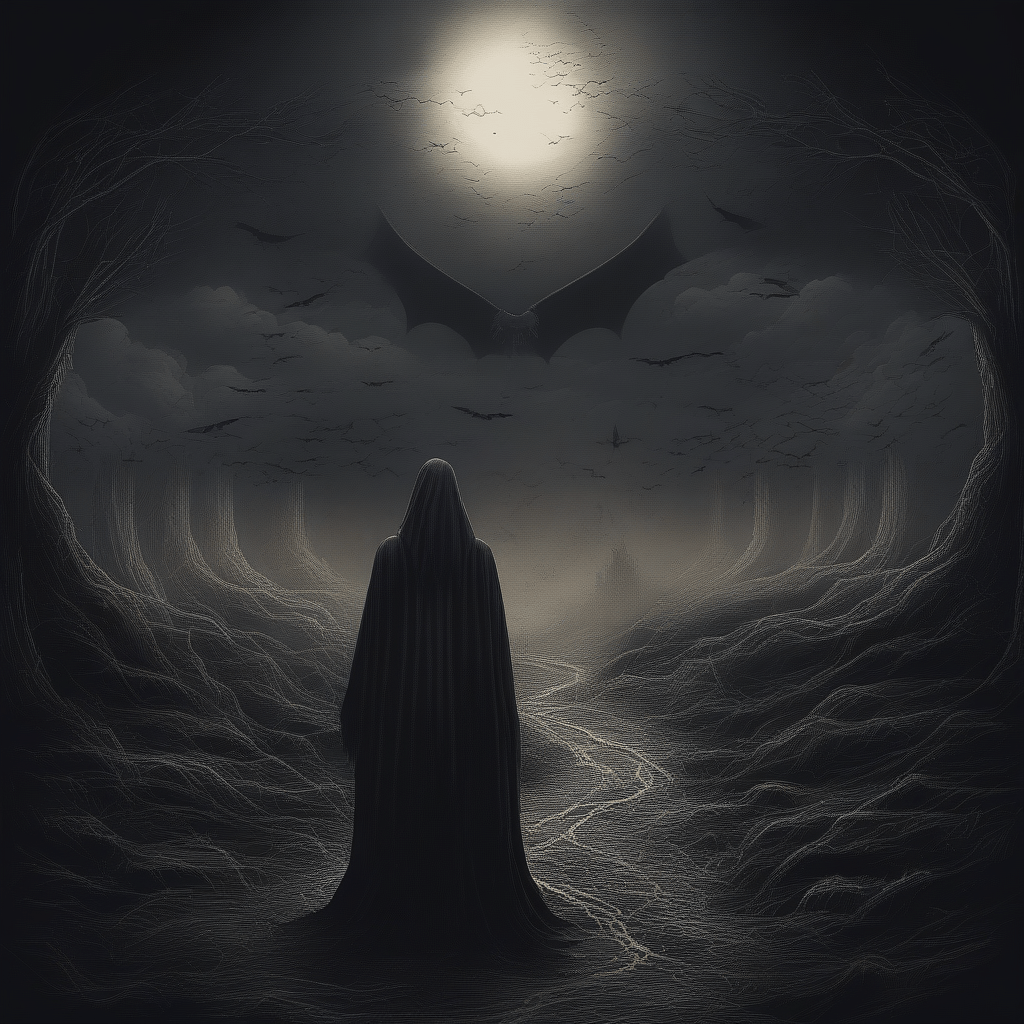
As the inky shroud of night stretches across the sky, it offers not just a canvas for the stars, but a metaphorical landscape for the soul’s dark night. In these periods of profound introspection and uncertainty, the world seems to pause, holding its breath along with us as we confront the spectres of our fears, doubts, and the vast unknown that the darkness symbolizes.

The dark night is not just an absence of light but a presence of mystery, a deep silence calling for our attention. It’s during these times that the familiar contours of our lives fade into shadows, and we’re invited to sit with the disquiet of our thoughts. Here, devoid of distraction, we encounter the rawest versions of ourselves. But what are we to do in this space between the known and the unknowable?

First, we must accept the dark night when it arrives. The darkness is not a curse but a sacred space. It’s in this seeming void that we’re afforded the chance to shed the superfluous, to strip away the veneer of day-to-day pretenses and stand bare, if we dare, before the truths we’ve cloaked in daylight.

Next, we must learn to navigate by a different set of stars—those that reside within us. This navigation doesn’t involve moving at all, but rather being still. Being still enough to listen to the whispers of intuition, the guidance of a heart untarnished by the glare of artificial lights.

To get through the dark night, we should not rush to fill it with artificial light, lest we miss its lessons. Rather, let’s kindle the inner flame of self-compassion and understanding, allowing it to illuminate our path. This flame is fed by the recognition of our shared humanity, the understanding that no one is immune to the dark night and that it’s a fundamental part of the growth process.

Emerging from the dark night is akin to witnessing the dawn. Just as the first light of daybreak does not erase the night but rather builds upon it, the insights gained in the dark become part of the foundation upon which we build a new day. We carry forward a newfound clarity and strength, a resilience born from having faced the abyss and having the courage to embrace it.

In conclusion, the dark night is an invitation to a profound personal revolution. As we traverse its landscape, let us be gentle with ourselves and others, knowing that each of us battles a silent storm beneath the stars. And remember, it’s always the darkest before the dawn. The new light that awaits us promises not just a new day but a new way of being, forged in the quiet depths of the night.

Morgan O.  Smith

Yinnergy Meditation & My Book, Bodhi in the Brain…Available Now!

https://linktr.ee/morganosmith

The Dark Night of the Soul vs. The Dark Knight of the Soul

A Spiritual Odyssey

In the labyrinthine corridors of the soul, there lies a path seldom tread, shadowed by mystery and often enveloped by fear. It is a path that leads to a place known as the “dark night of the soul,” a phase of spiritual desolation that has baffled seekers across generations. Yet, within the enigmatic darkness, emerges an unexpected companion – the “dark knight of the soul.”

The Dark Night: A Crisis of Faith

The “dark night of the soul,” a term coined by St. John of the Cross, represents a profound spiritual crisis, a period where the familiar becomes strange, and the divine seems distant. It is a time of purging, where doubts, fears, and the hidden shadows of the soul rise to the surface. The comfort of belief evaporates, replaced by a void that challenges the very core of spiritual identity.

In the “dark night,” one is forced to confront the most profound existential questions. What is the nature of divinity? Why does it seem so elusive? What is the purpose of suffering? The answers are not easily found, and the path becomes obscured.

The Dark Knight: The Warrior Within

In contrast to the disorienting emptiness of the “dark night,” the concept of the “dark knight of the soul” represents a heroic inner archetype. It is the spiritual warrior within, forged not in battles against external foes but in the internal struggles against one’s demons.

The “dark knight” is not a saviour but a guide, a symbol of the courage, resilience, and wisdom needed to navigate through the night. It embodies the willingness to face the darkness, wrestle with doubt, challenge fears, and integrate the shadows rather than shunning them.

The “dark knight” does not vanquish the night but learns to dance with it, finding grace in struggle and meaning in confusion.

The Dance of Darkness and Light

The interplay between the “dark night” and the “dark knight” is a profound spiritual odyssey. One cannot exist without the other. The “dark night” provides the terrain, the challenge, and the abyss that must be crossed. The “dark knight” offers the tools, the strength, and the inner fire that illuminates the way.

In this spiritual dance, the darkness is not something to be feared but embraced. It is a crucible where the false self is burned away, leaving only the authentic soul, raw and unburdened.

The path through the “dark night” is not a path of despair but a journey toward enlightenment. The “dark knight” is not a symbol of battle but a metaphor for inner harmony.

Conclusion

The journey through the “dark night of the soul” and the guidance of the “dark knight of the soul” offers a rich tapestry of spiritual exploration. It reminds us that darkness is not an end but a beginning, a transformation that leads to a deeper connection with the self and the divine.

In embracing both the “dark night” and the “dark knight,” we find a roadmap to authenticity, wisdom, and a spirituality that transcends superficial understanding. The darkness and the knight are not foes but partners, leading us toward a horizon where the soul’s true radiance shines.

The odyssey through the dark night is an invitation, a calling to all who seek. The dark knight awaits, a silent companion ready to guide us through the shadows into the embrace of our luminous essence.

Morgan O. Smith

Yinnergy Meditation & My Book, Bodhi in the Brain…Available Now!
https://linktr.ee/morganosmith

The Unburned Heart of Thích Quảng Đức

A Testament to Unyielding Compassion

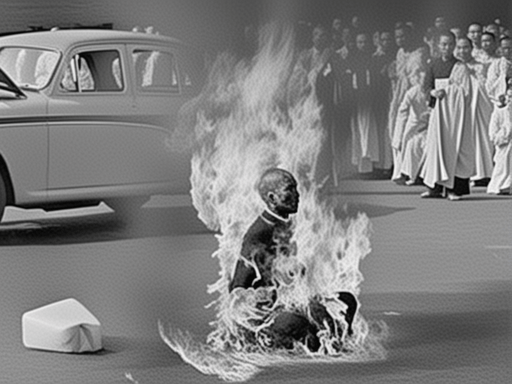
In the vast annals of human history, few images stand as starkly haunting as that of Thích Quảng Đức, a Vietnamese monk who, in a profound act of protest, set himself ablaze on a Saigon street in 1963. While the flames consumed his physical form, Quảng Đức remained motionless, embodying the epitome of tranquillity and peace. As if this act was not profound enough, an even more astonishing testament to his spirit was the heart that remained unburned, not only in the initial act but even upon re-cremation.

**The Unyielding Heart**

What does it mean to have a heart that does not burn? In the literal sense, it defies the expectations of nature and science. But on a more profound level, the heart of Thích Quảng Đức symbolizes the ultimate emblem of pure, unyielding compassion. In a world often ruled by tumultuous fires of hate, prejudice, and indifference, Quảng Đức’s heart serves as a poignant reminder that true compassion is unassailable. It can neither be burned nor extinguished.

**Compassion Amidst Chaos**

The metaphorical imagery of a heart that remains intact, even amidst the raging fires, is a testament to the enduring nature of compassion. The flames that consumed Quảng Đức were not merely physical; they represented the societal and political upheavals of his time. Yet, his heart, like his spirit, stood resolute, undeterred, and most importantly, compassionate.

In the face of adversity, many of us allow our hearts to be overtaken by the metaphorical fires of anger, resentment, or apathy. Yet, Thích Quảng Đức’s heart is a beacon, calling upon us to rise above the flames of malice and to foster a heart that, metaphorically speaking, can never burn.

**A Legacy Beyond the Flames**

Today, housed in a glass chalice at Xá Lợi Pagoda, Thích Quảng Đức’s heart serves as a perpetual reminder of his teachings and spirit. To the Vietnamese Buddhists and many others across the globe, he is revered as Bồ Tát Thích Quảng Đức, a bodhisattva. A being filled with such boundless compassion that he chose to remain in the cycle of samsara to help others attain enlightenment.

This unburned heart serves as a testament not just to the man, but to the idea that compassion, when deeply rooted in one’s being, can transcend even the most harrowing circumstances. It challenges each of us to reflect on the state of our hearts. Do we nurture a heart that is impenetrable to the flames of hatred, bitterness, and indifference?

**In Conclusion**


The legacy of Thích Quảng Đức is not simply about the act of self-immolation. It’s about a heart—a pure, compassionate heart that remained untouched despite the circumstances. As we traverse through our trials and tribulations, may we strive to cultivate such a heart, a heart that remains compassionate, resilient, and most of all, unburned.

Morgan O. Smith

Yinnergy Meditation & My Book, Bodhi in the Brain…Available Now!
https://linktr.ee/morganosmith

The Unfolding Symphony

Embracing Life through an Open Heart

Introduction: In the grand theatre of existence, our hearts play a central role in the symphony of human experience. To navigate the depths of life’s mysteries, we must learn the art of keeping our hearts open. A profound approach to achieving this lies in the act of wholeheartedly accepting and embracing everything we encounter – the sights, sounds, scents, flavours, and textures – as intrinsic aspects of ourselves. This philosophical journey explores the transformative power of openness, inviting us to delve into the essence of existence and cultivate a profound connection with the world around us.

  1. Embracing the Multitude of Perspectives: To keep the heart open, we must acknowledge the multitude of perspectives that shape our reality. Each experience we encounter is coloured by our unique perceptions, and no two individuals experience the world in exactly the same way. By embracing the diversity of viewpoints, we unlock the potential for genuine empathy and understanding, fostering an inclusive and compassionate society.
  2. Surrendering to the Flow of Life: Life’s tapestry weaves an intricate pattern of joy and sorrow, triumph and defeat. Embracing an open heart requires us to surrender to the natural ebb and flow of existence without resistance. When we stop trying to control or manipulate life’s course, we find solace in the understanding that every experience is a teacher, guiding us towards growth and self-discovery.
  3. Liberating the Self from Ego: The ego often entangles our hearts in a web of desires, fears, and judgments. To truly embrace life as an extension of ourselves, we must transcend the ego’s limitations and recognize the interconnection between all living beings. Letting go of the attachment to the “self” allows us to dissolve the illusion of separateness and discover a profound sense of unity with the universe.
  4. Cultivating Radical Acceptance: Radical acceptance is the key to unlocking the transformative power of an open heart. By embracing everything we encounter – the pleasant and the challenging, the familiar and the unfamiliar – as essential aspects of our journey, we learn to dance gracefully with life’s ever-changing rhythms. Embracing all facets of existence deepens our capacity for resilience and enriches our human experience.
  5. Living with Gratitude: Gratitude is a sacred gateway that opens our hearts to the splendour of life. Embracing a sense of profound gratitude for each moment, we begin to see life’s wonders with fresh eyes and a receptive heart. Gratitude is the beacon that leads us to treasure even the seemingly mundane, unveiling the beauty hidden within the folds of everyday life.

Conclusion: Keeping the heart open is an ethereal quest that unravels the essence of our existence. By accepting and embracing every encounter, we transcend the boundaries of self and connect with the universal tapestry of life. Embracing diverse perspectives, surrendering to life’s flow, and liberating ourselves from the ego’s grasp elevate us to a higher plane of consciousness. Through radical acceptance and gratitude, we find profound meaning in the ordinary and glimpse the extraordinary in the ordinary. Let us embark on this philosophical journey, keeping our hearts open to the wonders that life has to offer, and savouring the grand symphony of existence in all its magnificence.

Morgan O. Smith

Yinnergy Meditation & My Book, Bodhi in the Brain…Available Now!

https://linktr.ee/morganosmith