The Self and No-Self

Unraveling the Boundaries of Existence

If all that exists is what we call the Self, where does that leave us in understanding its true nature? The common impulse is to label, define, and separate — creating distinctions to grasp what cannot be fully grasped. But in contemplating the nature of the Self as the all-encompassing reality, we’re drawn into a profound paradox: if the Self is indeed everything, without any boundary, how can it even be considered a “Self”?

The word “Self” implies some form of individuation, a presence that stands distinct from others, yet here lies the core of the paradox. In the absence of an “other,” any idea of a distinct Self dissolves, leaving only the mystery of the No-Self.

For a Self to be recognizable as such, it would require something to stand apart from. But in the context of ultimate unity, where nothing exists outside or beyond, there is only what is — an undivided totality that transcends any dualistic notion of “Self” and “other.” This is where the very term “Self” falls away, as there can be no contrast, no relational identity. What we are left with is not a Self in any ordinary sense but rather pure awareness, the ground of being that defies description and categorization.

When looked at from this perspective, the idea of the Self takes on a radically different dimension. It becomes the No-Self, not in the sense of an absence but rather as an absolute presence that simply is. The No-Self, then, is not the lack of being but the absence of individualization within being itself. It invites us to move beyond personal identity and to experience consciousness as boundless and indivisible, an endless ocean with no separate waves.

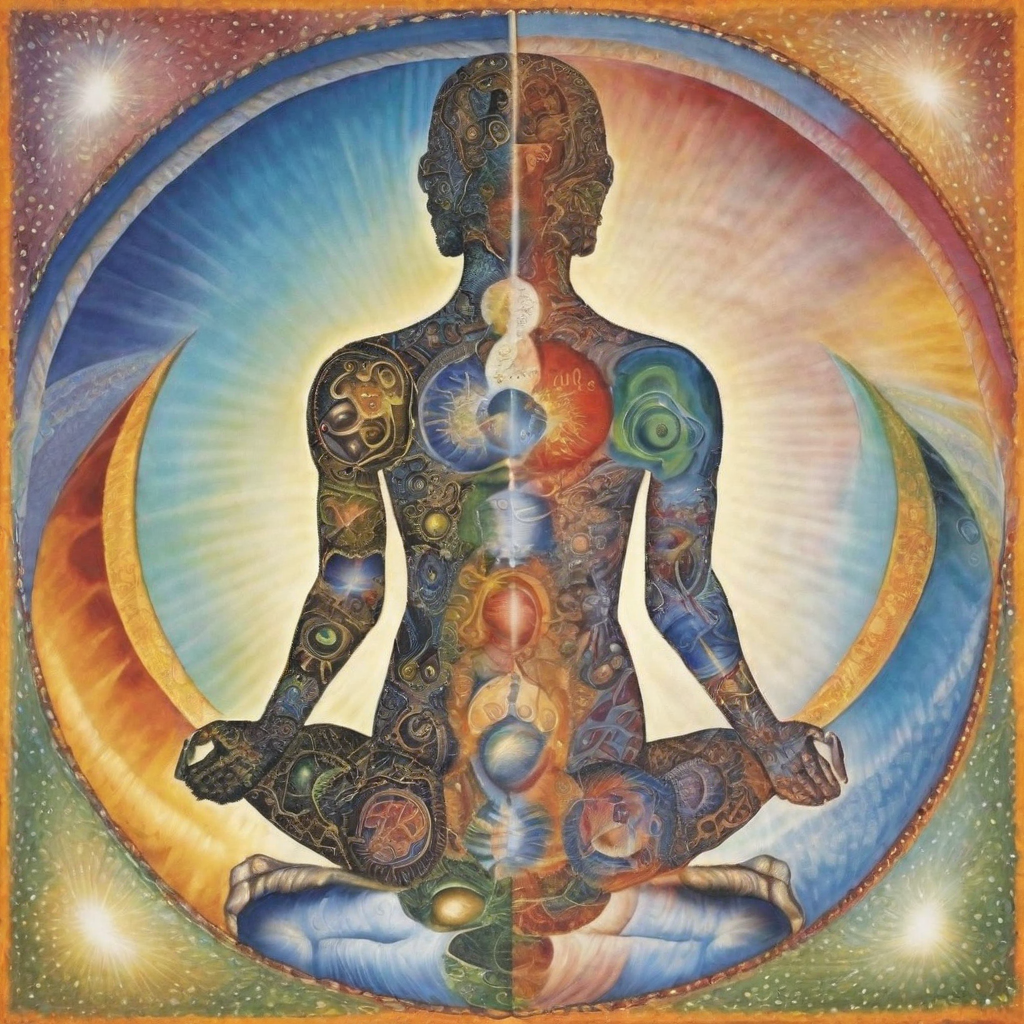
In moving toward an experiential understanding of this paradox, the concept of “I” transforms. We begin to see that this “I” — the egoic self we identify with — is a localized point in the vast field of undivided awareness. What we call “myself” is, in reality, an expression within the infinite whole, a momentary manifestation of something that transcends all individuality.

Such an insight does not negate our individual lives or diminish the importance of each unique expression. Rather, it invites a shift in perception. It calls us to recognize that beneath our individuality lies a vastness, a timeless ground that is beyond any single label or limitation.

As we touch on this insight, we find that the paradox of Self and No-Self begins to dissolve. We see that they are not separate but interwoven, expressions of the same reality, which is beyond both. In embracing the No-Self, we open ourselves to a greater depth, where the boundaries of identity soften, and the beauty of unity comes alive in ways beyond conceptual thought.

Morgan O. Smith

Yinnergy Meditation, Spiritual Life Coaching & My Book, Bodhi in the Brain…Available Now!

https://linktr.ee/morganosmith

Mirrors of the Self

Seeing the Divine in All

In the vast expanse of existence, each entity and every moment is a reflective surface, giving us a glimpse of our deepest selves. When we peer into the world, what we encounter is not just matter arranged in space but a mosaic of mirrors, each offering a unique reflection of who we are. The idea that everything we perceive is a reflection of our face is not just a poetic sentiment but a profound philosophical proposition that invites introspection about the nature of self and the universe.

The reflections we see are not literal but abstract, distilling our essence in the myriad forms and phenomena around us. This abstraction is where the beauty of perception lies; it is a canvas where the mind can project its inner workings—its hopes, fears, and dreams. The world outside becomes a screen for the drama of the self to unfold, the grand play of consciousness where every actor wears a mask that resembles something within us.

In this grand reflection, if we are to see the face of God, then it must be understood that this divine visage is not an entity separate from us but interwoven into our being. The divine reflection is the totality of the cosmos itself, a unity where every face is indeed an aspect of a greater countenance. If we are made in the image of the divine, as many traditions suggest, then it follows that the divine is also made in the countless images reflected to us.

Every interaction, every glance at nature, every piece of art, and every human invention is a facet of this divine reflection. We are constantly in dialogue with the divine through the medium of our experiences. In recognizing this, we might come to treat each moment with reverence, understanding that in the act of observation, we are participating in a sacred exchange.

As we walk through the world, let us consider that the beauty, the ugliness, the sublime, and the mundane are all part of the same tapestry, woven with threads of the divine. It is not just in the extraordinary that we can glimpse the face of God, but in the ordinary, the overlooked, and the understated. By recognizing the divine reflections in all that we encounter, we open ourselves to a more profound sense of connection and purpose.

In the end, the philosophy that everything is a reflection of our face does not isolate us in solipsism but connects us to a greater whole. It offers a vision of unity, where the self is not an isolated entity but a vibrant echo of the universe, a reflection of the divine face in the mirror of existence.

Morgan O.  Smith

Yinnergy Meditation & My Book, Bodhi in the Brain…Available Now!
https://linktr.ee/morganosmith

The Unity of Being

When Heads, Shoulders, Knees, and Toes Merge into Oneness

The ancient wisdom embedded in children’s songs and games can sometimes surface in the most unexpected of philosophical realms. Take, for instance, the playful melody “Heads, Shoulders, Knees, and Toes.” When investigated through the lens of Nondual philosophy, it becomes a metaphor for a journey toward universal oneness and interconnectedness.

In Nondualism, the self and the universe are not two separate entities, but rather manifestations of a single, unifying reality. The concept of separateness – the idea that heads, shoulders, knees, and toes are distinct parts – is seen as a mere illusion, a construct of our perceptive capabilities. When we immerse ourselves in the quintessential essence that underlies all beings and things, we begin to perceive that beneath the superficial distinctiveness and multiplicity, there is a fundamental oneness.

Just as the child, in the innocence of play, connects each body part in a joyful, seamless movement without pondering the philosophical depth intertwined, perhaps we too, in our adult complexity, can rediscover that inherent interconnectedness. Our heads, representing our thoughts and intellect; our shoulders, symbolizing our burdens and responsibilities; our knees, embodying our flexibility and humility; and our toes, reflecting our foundation and stability, though seemingly separate, all derive from and exist within the same unified source.

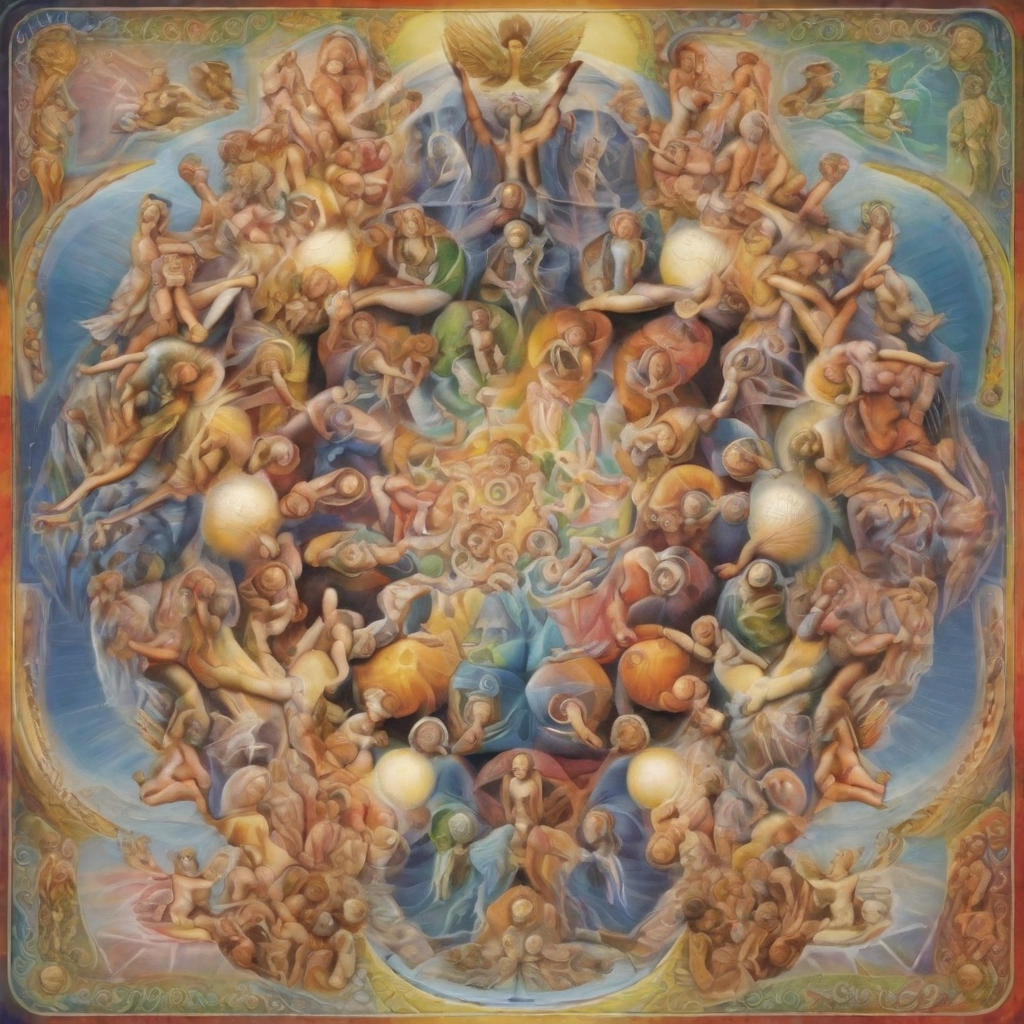
In this unity, the dissimilarities and boundaries that appear to separate us from others, from the world, and the divine, dissolve into a boundless ocean of oneness. Our heads, shoulders, knees, and toes, then, become not isolated components, but rather expressions of the singular reality, dancing together in a harmonious rhythm of existence.

The reconciliation of our physical and non-physical aspects, the visible and the invisible, and the manifold and the one, invites us to explore the possibility that we are not merely beings traversing through the world, but the world itself. As we navigate through the multifaceted reality of life, can we embrace the Nondual perspective, perceiving not separateness, but unity in the myriad forms and experiences?

So, we may joyously sing, not just with nostalgia but with profound insight into our existence: “Heads, shoulders, knees, and toes.” In the simplicity of these words, let’s find a reminder that beneath the diversity and complexity of our being, we are all interconnected, interwoven parts of the same undivided reality.

The depth of such unity nudges us to perceive ourselves and the world around us with eyes that see beyond the physical and the apparent, inviting us into a holistic existence where every head, shoulder, knee, and toe sings in unison with our oneness.

Morgan O.  Smith

Yinnergy Meditation & My Book, Bodhi in the Brain…Available Now!
https://linktr.ee/morganosmith