Embracing Falsehoods at the Pinnacle of Awareness

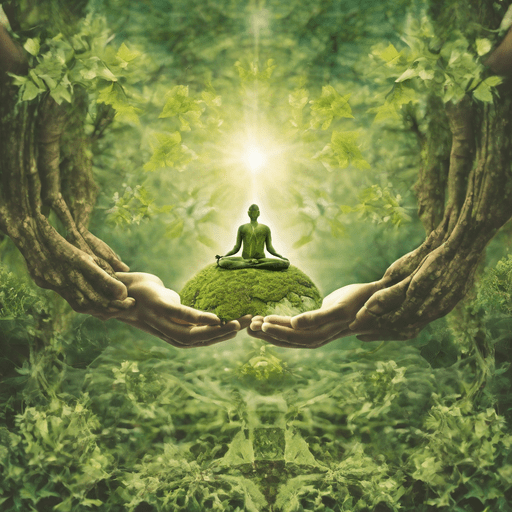
In the realm of human consciousness, there exists a fascinating paradox. At the highest level of awareness, a person can reach a state where they can believe in something, fully aware that it is not true. This peculiar aspect of human psychology offers a deep insight into the nature of belief, perception, and the human mind.

What does it mean to believe in something while knowing it isn’t true? It’s like willingly suspending disbelief while watching a movie. You enter into a contract with the fiction, fully aware that dragons don’t exist or that superheroes don’t fly, yet you allow yourself to believe in these concepts for the duration of the experience. This phenomenon isn’t just limited to entertainment but extends to the very core of our everyday lives.

Why do people engage in such seemingly contradictory behaviour? The answer lies in the complexity of the human mind and its quest for meaning and comfort. Beliefs, even those acknowledged as false, can provide a sense of comfort, belonging, or identity. They can be a source of inspiration or a means of coping with the harsh realities of life. In a world that often feels chaotic and unpredictable, these beliefs, however, detached from reality, can offer a sense of order and purpose.


This ability to believe in the unbelievable highlights the power of the human imagination and creativity. It’s a testament to our ability to envision worlds and possibilities beyond our immediate reality, a skill that has been a driving force behind art, literature, and scientific innovation. It allows us to explore ideas and scenarios that, while not real, can lead to real-world insights and advancements.

However, this power comes with a responsibility. While it can be enriching and beneficial, deliberately believing in falsehoods can also lead to dangerous delusions and collective harm if not approached with critical thinking and ethical considerations. It’s vital to find a balance, to know when to embrace these beliefs as a source of inspiration and when to acknowledge them as mere constructs of our imagination.


In conclusion, the capacity to believe in something while knowing it isn’t true is a unique aspect of human consciousness, reflecting our complex psychology. It’s a powerful tool that, when used wisely, can enrich our lives and propel us toward greater heights of imagination and understanding. However, it’s crucial to navigate this terrain with discernment and a keen sense of reality.

Morgan O. Smith

Yinnergy Meditation, Spiritual Life Coaching & My Book, Bodhi in the Brain…Available Now!

https://linktr.ee/morganosmith

Devils of Tasmania

Embracing Our Inner Demons

In the depths of our psyche lurks a hidden shame, explicit yet unacknowledged. We live most of our lives concealing our darker selves, fearing the part within capable of mass destruction and devoid of remorse. This fear drives us to repress these inner demons, to maintain the facade of our public persona, free from shame and disgrace.


Yet, these impulses, these inner monsters, are potent forces, akin to natural disasters. They are not acts of God but inherent parts of our being, capable of tearing down everything in their path. Their destructive nature is unchanging and inevitable. Our task is not to deny them but to accept and direct their fury toward crumbling edifices that lack a solid foundation.

These demons, if unchecked, can ruin lives. However, harnessed correctly, they have the power to demolish outdated beliefs and paradigms, shedding light on areas we need to confront and overcome. Their destructive capabilities allow us to rebuild from the ashes creatively. They give us a chance to construct anew – to erect buildings of thought and behaviour that are more resilient and robust than ever before.


Our distress over this destruction stems from our attachment to what we have built and our reluctance to accept the impermanence of all things. Only by acknowledging and embracing these internal devils can we truly liberate ourselves from their hold and transform their destructive power into a force for personal growth and renewal.

Morgan O. Smith

Yinnergy Meditation, Spiritual Life Coaching & My Book, Bodhi in the Brain…Available Now!
https://linktr.ee/morganosmith

The Unseen Journey

Crawling Towards Enlightenment

In the realm of spiritual growth, the path to enlightenment is often misconceived as a sudden emergence into a state of knowing. Yet, the essence of true understanding unfolds gradually, mirroring the natural progression from crawling to walking. This journey is subtle, requiring patience, persistence, and a deep commitment to the inward voyage.

Enlightenment, in its profound simplicity, can be likened to the process of a child learning to navigate the world. Initially, the child crawls, a phase marked by exploration and curiosity. This stage, though seemingly modest, is foundational. It represents the initial stirrings of awareness, where the soul begins to recognize the vastness of its existence beyond the physical constraints. Here, the seeker starts to explore the inner dimensions, crawling through the layers of self, guided by the light of introspection.

The transition from crawling to walking in spiritual terms is not marked by physical growth but by the expansion of consciousness. It involves the gradual shedding of ego, the relinquishment of attachments, and the deepening of one’s connection to the universal truth. This process is not linear but cyclical, with each step forward often accompanied by moments of regression, prompting further introspection and growth.

As we embark on this journey, we learn that enlightenment is not a destination but a way of being. It is the realization that every moment, every breath is an opportunity to be present, to witness the unfolding of life with a heart full of compassion and a mind free from judgment. The path demands a surrendering, a letting go of the need for certainty, and an embrace of the mystery that envelops our existence.

The beauty of this journey lies in its uniqueness for each individual, yet the underlying principle remains the same: one must learn to crawl before one can walk. The initial steps, taken in the darkness of the unknown, are what prepare us for the light of wisdom. It is in the act of crawling, of moving forward with humility and grace, that we pave the way for our spiritual awakening.


Let us then honour the crawl, the gentle, determined exploration of our inner landscapes, for it is here that the seeds of enlightenment are sown. Let us approach each day as a step towards understanding, a movement closer to the harmony that exists between the self and the universe. In doing so, we walk the path of enlightenment, not with haste, but with the deliberate pace of one who understands the value of each moment of awareness.

Morgan O. Smith

Yinnergy Meditation, Spiritual Life Coaching & My Book, Bodhi in the Brain…Available Now!

https://linktr.ee/morganosmith

Everyone Falls Back Asleep After Awakening, But No One Falls Asleep After Enlightenment

In the journey of self-awareness and understanding, there’s a profound adage that resonates deeply: “Everyone falls back asleep after awakening, but no one falls asleep after enlightenment.” This statement, while seemingly simple, carries with it a world of meaning and depth, particularly in the context of spiritual and personal growth.

#### The Paradox of Awakening and Enlightenment

At first glance, the idea of “falling back asleep after awakening” seems counterintuitive. Isn’t awakening supposed to be a permanent shift in consciousness? The truth, however, lies in the subtle difference between temporary awakenings and true enlightenment. Many of us experience moments of awakening — brief glimpses into a deeper reality or a sudden awareness of a profound truth. These moments can be sparked by various experiences: a beautiful sunset, a piece of art, or a moment of deep connection with another person. However, these are often transient, and we find ourselves slipping back into our habitual patterns of thought and behaviour.

Enlightenment, on the other hand, represents a fundamental and irreversible shift. It’s akin to a door that, once opened, cannot be closed again. In enlightenment, there is a permanent transformation of perspective, a sustained awareness that transcends the ordinary consciousness. This state is often described as a deep, unshakable understanding of the nature of reality, self, and existence.


#### The Role of Meditation in Enlightenment

This statement emphasizes the necessity of years of meditation for true enlightenment. Meditation, in its various forms, is more than just a practice of calming the mind. It’s a tool for deep introspection, for peeling away the layers of illusion and ego that cloud our true nature. Through persistent meditation, one can gradually dissolve these barriers, fostering a greater connection with the inner self and the universe.

Meditation teaches patience, discipline, and, most importantly, the ability to observe without attachment. These qualities are essential in moving from fleeting moments of awakening to a sustained state of enlightenment. It’s a journey of continuous growth and learning, where each meditative experience builds upon the last, gradually leading to a profound understanding and acceptance of what is.


#### Conclusion

In conclusion, the journey from awakening to enlightenment is not a straight path. It involves many cycles of falling back into unconsciousness and rising again with a deeper understanding. This process is necessary and valuable, as each fall and rise polishes the soul, preparing it for the ultimate state of enlightenment. The years of meditation are not just a discipline but a devotion to the inner journey, a commitment to uncovering and living one’s truth.

Morgan O. Smith

Yinnergy Meditation, Spiritual Life Coaching & My Book, Bodhi in the Brain…Available Now!

https://linktr.ee/morganosmith

The Paradox of Unconditional Love

From Relative to Ultimate Self

In the pursuit of understanding love, especially unconditional love, we encounter a profound dichotomy between our relative self and our ultimate self. This journey from dualistic thinking to a non-dualistic state of being offered a rich terrain for philosophical exploration.

#### Relative Self: The Duality of Love and Judgment

The relative self operates in a world of dualities. Here, we are taught to “love the sinner, hate the sin,” a phrase that encapsulates our struggle to navigate the complexities of love intertwined with judgment. This perspective, while grounded in good intentions, often leads us into a labyrinth of conditional affection, where love is metered out based on perceived right or wrong.

However, this is not the endpoint of our journey with love. As relative beings, we are called to observe our actions, thoughts, and emotions without judgment or bias. This doesn’t imply a passive existence but rather an active engagement in self-awareness. It’s about understanding our reactions and biases at every stage of our development.


#### Ultimate Self: Realizing Love as the Essence of Being

Transitioning to the concept of the ultimate self, we enter a realm where the individual self dissolves into a universal consciousness. In this state, “everything is the self, and of the self,” leading to the realization that all there is, is Love – with a capital L. This Love transcends the dualities of the relative self. It is not just an emotion or a state of being but the very essence of existence.

Unconditional love, in this ultimate sense, is not something one can force. It’s a realization that emerges as the soul matures and lets go of attachments and prejudices. It’s recognizing the self in all things and all things in the self.

#### The Path to Unconditional Love

The journey to unconditional love is neither linear nor predictable. It involves years of introspection, meditation, and conscious efforts to detach from the biases and attachments of the relative self. This path requires patience, as unconditional love doesn’t happen overnight.

In this process, action and acceptance go hand in hand. While it’s important to act and change situations for the better, it’s equally vital to accept what cannot be changed. This acceptance is a form of unconditional love, acknowledging that not everything is within our control or needs to be controlled.


#### Conclusion

Unconditional love is more than an ideal; it’s a transformative journey that bridges the gap between the relative and the ultimate self. It’s about realizing that at the core of our being, beyond the layers of judgment and bias, lies an all-encompassing love. This realization dawns not through force but through a gradual awakening of the soul, ready to embrace the self in all its forms.

 Morgan O.  Smith

Yinnergy Meditation & My Book, Bodhi in the Brain…Available Now!

https://linktr.ee/morganosmith

The Environment’s Role in Spiritual Growth

Spiritual growth is an inward journey that involves deepening self-awareness, a connection to a higher purpose, and a pursuit of inner peace and enlightenment. Though one might perceive spiritual growth as purely internal, the environment plays an instrumental role in shaping this voyage.

**The Outer Reflects the Inner**:
Spirituality isn’t limited to the realm of meditation, prayers, or religious practices. It’s also about understanding oneself to the larger world. The environment serves as a mirror, reflecting the chaos or calm we feel within. A serene setting, like a tranquil forest or a quiet beach, can provide the space needed for introspection, while a tumultuous environment might challenge and refine our spiritual resilience.

**The Playground of Experiences**: Our experiences, heavily influenced by our environment, serve as lessons that guide our spiritual evolution. Facing economic hardships might teach us humility and gratitude while being in a nurturing emotional environment can facilitate feelings of love and empathy. Each environment, with its unique challenges and blessings, offers distinct lessons for our soul’s growth.

**Environmental Genetics and The Enlightened Individual**:
Modern scientific understanding acknowledges that both genes and the environment play roles in determining our characteristics. This interplay is also valid for spiritual inclinations. An individual with a genetic predisposition towards introspection and an environment that encourages self-reflection might have a smoother path toward enlightenment. Conversely, someone genetically predisposed to anxiety but raised in a supportive environment might learn to channel that anxiety into a deeper spiritual quest.

Yet, it’s crucial to remember that enlightenment isn’t a one-size-fits-all concept. The combination of genetics and environment produces a spectrum of enlightened individuals, each with unique strengths, perspectives, and wisdom to offer.

### Balancing Agency with Environmental Influences

While the environment significantly shapes us, spiritual growth also involves recognizing and exercising our agency. It’s about acknowledging environmental influences while taking proactive steps to seek experiences and environments that align with our spiritual goals.

For many, this might mean seeking spiritual communities, immersing oneself in nature, or actively creating a personal sanctuary that facilitates inner reflection and growth. For others, it might involve challenging and transforming their environments.

In conclusion, the environment isn’t just a backdrop against which the drama of life unfolds; it’s an active participant, a teacher, a mirror, and a guide on our spiritual journey. Recognizing its influence can empower us to harness its lessons, navigate its challenges, and embark on a more profound, fulfilling spiritual voyage.

Morgan O.  Smith

Yinnergy Meditation & My Book, Bodhi in the Brain…Available Now!

https://linktr.ee/morganosmith

The Ouroboros of Samsara

An Endless Cycle of Self-Inflicted Suffering

The universe is filled with symbols that describe the cyclical nature of existence. One of the most captivating is the concept of ‘Samsara’ from Eastern traditions and ‘Ouroboros’ from ancient civilizations. While they emerge from different cultural contexts, they bear striking resemblances, encapsulating the endless cycle of birth, death, and rebirth and the continuous loop of life-consuming itself.

### Samsara: The Wheel of Existence

Samsara, derived from Sanskrit, signifies the cyclical process of birth, death, and rebirth. It’s a fundamental concept in Buddhism, Hinduism, and Jainism. Many Eastern spiritual practices aim to break free from this relentless cycle and attain enlightenment or Moksha. Why? Because Samsara is not just about rebirth – it’s about suffering. Every birth brings with it aging, sickness, and ultimately, death. The attachments, desires, and ignorance in life lead to actions (karma) that bind us to this wheel, causing endless suffering.

### Ouroboros: The Eternal Circle


The Ouroboros is an ancient symbol depicting a serpent or dragon eating its own tail. Found in many cultures, from ancient Egypt to the indigenous traditions of the Americas, it’s emblematic of the eternal cyclical nature of the universe. Creation out of destruction, life out of death. Just as the snake sheds its skin only to be reborn, life continually renews itself even as it ends.

### Biting One’s Tail: The Self-Caused Suffering


The fascinating aspect of the Ouroboros is the act of the snake biting its own tail. It’s a voluntary act of self-consumption, symbolizing self-reflection and the cyclical nature of things. But what if we viewed this act as a representation of self-inflicted suffering, much like the karmic traps in Samsara?

Every time we hold onto grudges, indulge in harmful habits, or remain ignorant of our true nature, we bite our own tail. We become both the cause and the recipient of our suffering. And just like the snake cannot see beyond its circular path, we often find it challenging to envision a life beyond our self-inflicted pain.

### Breaking the Cycle

While these symbols might paint a bleak picture of existence, they also offer hope. Just as the cycle of Samsara can be broken through enlightenment, the Ouroboros signifies rebirth and renewal. But this requires self-awareness.

By recognizing the patterns of our actions, understanding the roots of our desires, and embracing self-reflection, we can begin to release our grip on our own tails. This doesn’t mean the cessation of life’s challenges, but rather an enlightened approach to them, devoid of self-inflicted suffering.

In conclusion, Samsara and the Ouroboros serve as profound reminders of the cyclical nature of existence and the potential pitfalls of living unconsciously. They beckon us to awaken, to understand our role in our suffering, and to seek paths that transcend these ancient cycles. As we navigate the journey of life, may we always strive to understand the deeper meaning behind these symbols and find the courage to let go of our tail.

Morgan O. Smith

Yinnergy Meditation & My Book, Bodhi in the Brain…Available Now!

https://linktr.ee/morganosmith

The Cosmic Symphony

Embracing the Process

In the grand tapestry of the universe, every thread is intricately woven to craft a masterpiece. The ebb and flow of life, its joys and sorrows, its peaks and troughs, are all deliberate strokes of an artist’s brush. We, as participants in this cosmic dance, often wonder if things are truly happening as they should. And if we were to delve deeper into the nature of existence, we might find that everything indeed is unfolding just as it was meant to.

Have you ever caught yourself amidst a moment of contemplation, thinking about the choices you’ve made or the path you’ve walked? What if every decision, every hesitation, every triumphant leap was not just a product of your will but was predestined to occur? This thought might be overwhelming, but it offers a comforting embrace. It suggests that there’s a meticulous design in the seeming chaos around us.

At the heart of this realization lies the concept that you are both the cause and the effect. Imagine a pond – you are the pebble that causes the ripple, and simultaneously, you are the waves that radiate outward. Your actions, thoughts, and emotions all have consequences that shape the universe, just as the universe, in turn, shapes you.

Now, some might question, “What of free will? Do we not possess the agency to shape our destiny?” This is where the paradox of existence comes into play. Our free will is an essential part of the universe’s design. It’s not an either-or situation; it’s a harmonious blend of fate and choice. Our choices, even when they seem entirely spontaneous or defiant, are the universe expressing itself. And that expression, in its entirety, is perfection.

But what if we doubt? What if we find it hard to trust this process? Well, even that skepticism is a part of the plan. It’s through questioning that we often find clarity. Through doubt, we often find faith. And through resistance, we often find our true path.

In the vastness of the cosmos, it’s easy to feel small, to feel like our existence is but a fleeting moment. Yet, when we embrace the idea that every moment, every emotion, every challenge, and triumph is as it should be, we recognize our infinite significance. We become co-authors of the universe’s story, and we begin to trust not just the process but ourselves within it.

So the next time you find yourself in contemplation, remember: that everything is happening perfectly. You are both the artist and the canvas, the song and the singer, the cause and the effect. Embrace your role in the cosmic dance and know that every step, misstep, twirl, or pause is a note in the symphony of existence.

Morgan O. Smith

Yinnergy Meditation & My Book, Bodhi in the Brain…Available Now!

https://linktr.ee/morganosmith

The Illusion of Spiritual Identity

Beyond Stories We Tell Ourselves

Spirituality, at its core, is a profound journey toward understanding one’s place in the vast expanse of existence. However, in our attempt to grasp this elusive understanding, we often pigeonhole ourselves into labels: spiritual, materialistic, moral, and the like. But what if I were to suggest that these labels, these stories, are mere illusions? And that by clinging to them, we might be limiting our true potential.

#### **The Stories We Tell Ourselves**

Every culture, every religion, and every individual has a narrative. These narratives shape our beliefs, our actions, and the way we perceive the world. They are the tapestries upon which our identities are woven. But what happens when we deconstruct these tapestries? Beneath the intricate designs and patterns, what remains?

The reality is that these stories are our creations, shaped by societal norms, personal experiences, and myriad other factors. To say one is ‘spiritual’ or ‘materialistic’ is to adopt a particular perspective, a specific lens through which we view the world.

#### **The Ground of All Being**

But let’s delve deeper. Beneath these self-imposed labels and narratives, there lies a fundamental essence – often referred to as the ‘ground of all being’. This essence is the raw, unfiltered state of existence. It is what you are before the stories, before the labels, and before the definitions. It is the canvas upon which all our narratives are painted.

This ground of being is paradoxical. While it exists beyond all descriptors, it simultaneously encompasses them. Think of it as an ocean. The waves, currents, and whirlpools may differ in their nature and intensity, but they all arise from and subside back into the same vast expanse of water.

#### **Embracing the Beyond**

Realizing this fundamental truth can be liberating. When we understand that our spiritual or materialistic labels are mere waves upon the ocean of existence, we can learn to see beyond them. We can experience the world without the confines of our self-imposed narratives.

This doesn’t mean that one should abandon their spiritual practices or beliefs. Rather, it’s about recognizing them for what they are – beautiful expressions of the infinite variations of existence.

#### **Conclusion**

In the end, whether you consider yourself spiritual, materialistic, or anything in between, it’s crucial to remember that these are just facets of the grander jewel that is existence. By stepping back and seeing beyond our self-crafted stories, we can come closer to experiencing the profound depth of what we truly are.

Morgan O. Smith

Yinnergy Meditation & My Book, Bodhi in the Brain…Available Now!

https://linktr.ee/morganosmith

The Facets of Ego and Transcendent Experiences

Part One

The journey of self-understanding often leads us to explore the contours of our own ego. The ego, our sense of self-identity, manifests in countless facets that embody our personality traits, motivations, and behaviours. Each of these facets, be they positive attributes like resilience and compassion, or negative tendencies such as jealousy and arrogance, forms an integral part of our self-image.

Picture the constellation of traits that define you. Some shine brilliantly, reflecting your strengths and virtues. Some might be darker, representing the areas we struggle with or seek to improve. These are the multiple dimensions of our identity, as intricate and vast as the cosmos itself.

Deep spiritual or mystical experiences can profoundly alter this constellation. During these moments of transcendence, the negative facets, those shadowy stars, seem to fade away. We are left with only the positive aspects, creating a luminous sense of heightened self-worth, inner peace, and profound connection with the world around us.

But the journey doesn’t stop at this dualistic understanding. As we delve deeper into these transformative moments, we encounter a state of nonduality. In this space, all facets of the ego, positive and negative, exist simultaneously, without clear distinctions or separations. They merge into the grand cosmic dance, each star in our constellation joining the larger cosmos, allowing us to experience the full spectrum of our human existence.

Morgan O. Smith

Yinnergy Meditation & My Book, Bodhi in the Brain…Available Now!

https://linktr.ee/morganosmith