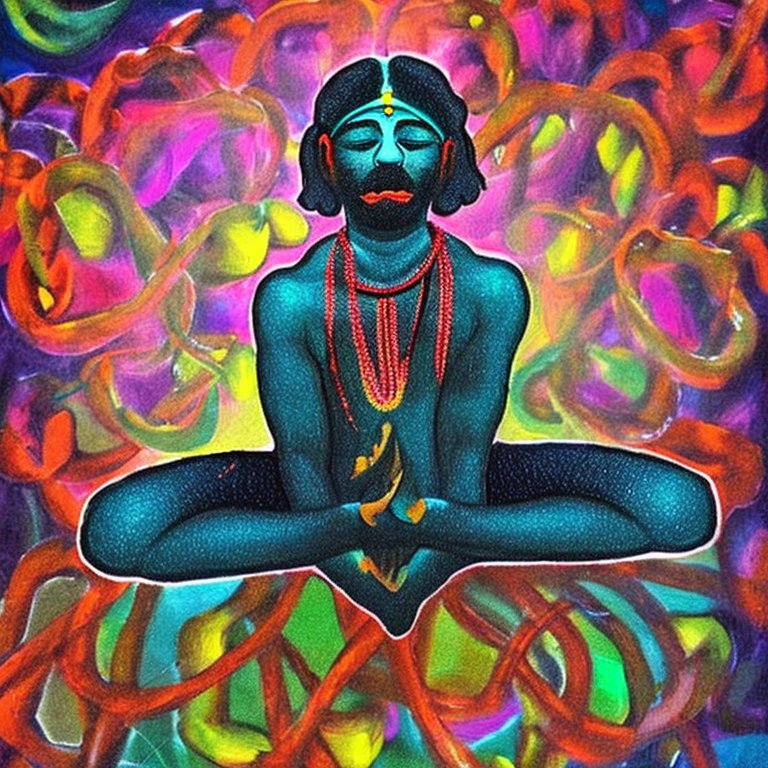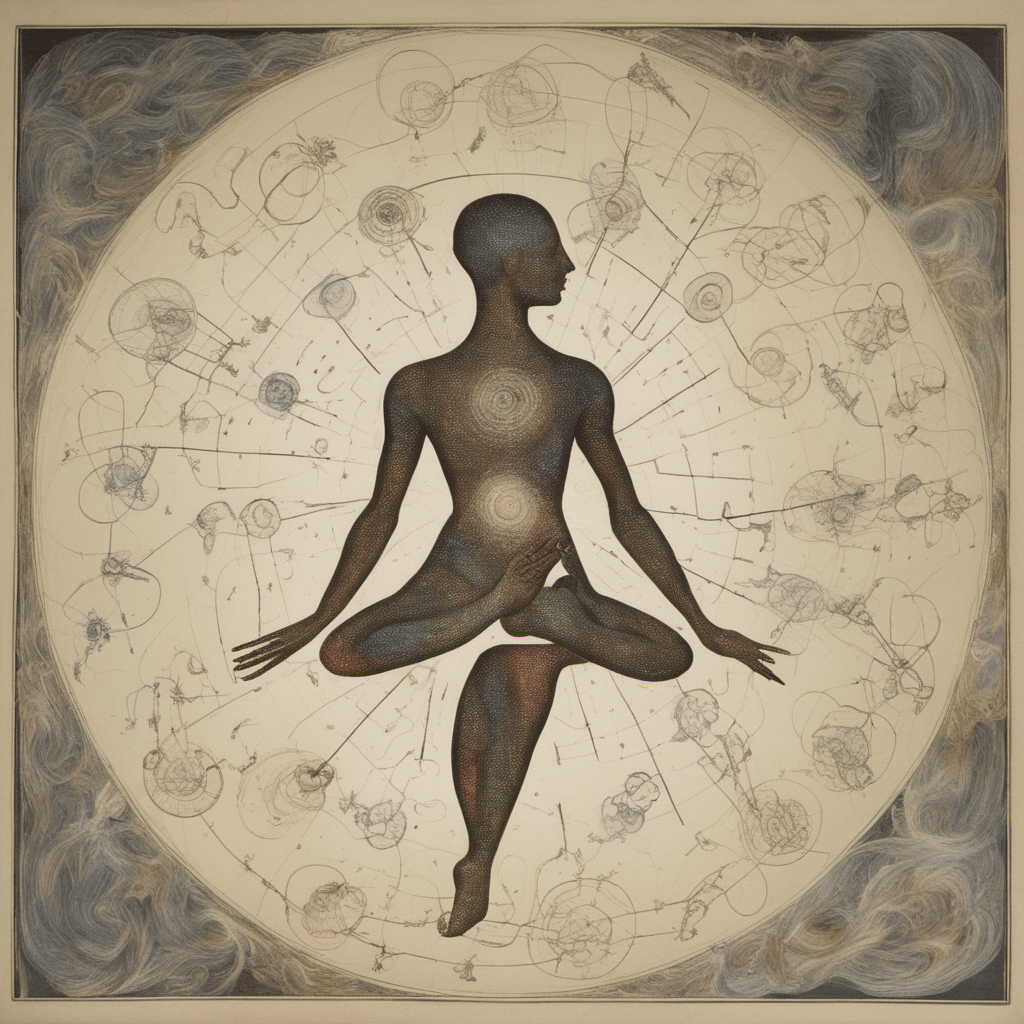
The Dance of Consciousness

How Traits and States Influence Each Other

Introduction:
In the realm of philosophy and neuroscience, the nature of consciousness has long been a subject of intense scrutiny. As we delve into the complex interplay between traits of consciousness and states of consciousness, we embark on a thought-provoking journey that explores how these facets of our mind shape and are shaped by each other.

Part I: The Essence of Traits of Consciousness
Traits of consciousness refer to the enduring qualities and patterns that define an individual’s cognitive, emotional, and behavioural makeup. These traits form the bedrock of one’s personality, shaping how they perceive the world, process information, and interact with others. From introversion to openness, resilience to empathy, traits of consciousness provide a unique lens through which individuals experience their existence.

Part II: Unraveling States of Consciousness
States of consciousness, on the other hand, are transient and ever-changing mental conditions. These states can range from heightened awareness during moments of meditation or creative inspiration to altered states induced by substances or intense emotional experiences. States of consciousness are like ripples on the surface of a vast ocean, reflecting our immediate perceptions and inner states.

Part III: The Bidirectional Influence

At first glance, it might appear that traits and states of consciousness operate independently. However, upon closer examination, we discover the profound bidirectional influence they exert on each other.

1. Traits Shaping States:

Our enduring traits of consciousness lay the foundation for how we perceive and react to various states. For instance, a highly empathetic individual might experience deeper connections with others during states of heightened compassion or love. Similarly, a person with a predisposition to anxiety may be more prone to states of distress during challenging situations.

2. States Shaping Traits:

The fluidity of consciousness states can leave lasting imprints on our traits. Profound transformative experiences, such as spiritual awakenings or near-death encounters, can lead to significant shifts in an individual’s personality and worldview. Moreover, states like mindfulness and meditation can foster positive traits like patience and self-awareness.

Part IV: The Dance of Consciousness
As the dance unfolds, we realize that consciousness is not static but rather a dynamic process, constantly in flux. Traits and states intertwine, shaping and reshaping one another in an intricate and evolving dance.

Conclusion:
The relationship between traits and states of consciousness is a fascinating exploration of the human mind’s complexity. Acknowledging this interconnectedness can empower us to cultivate positive traits while embracing the ebb and flow of transient states. As we embrace the intricacies of our consciousness, we embark on a journey of self-discovery, leading us to a deeper understanding of ourselves and the world around us. Remember, we are not merely passive observers of our consciousness; we are active participants in its unfolding story.

Morgan O. Smith

Yinnergy Meditation & My Book, Bodhi in the Brain…Available Now!

https://linktr.ee/morganosmith

Drowning or Swimming? Decoding the Paradox of Mind Transcendence

Joseph Campbell, a luminary in the realm of comparative mythology and religion, once penned a remarkably profound quote: “The psychotic drowns in the same waters in which the mystic swims with delight.” This sentence invokes an evocative imagery of two people submerged in the same waters, yet experiencing entirely different outcomes. As we unravel the layers behind this quote, we delve into the profound disparity between losing one’s mind and transcending it.

On the surface, the quote suggests a nuanced understanding of how two people can experience the same reality in starkly different ways. But it goes deeper than that. It’s about the fine line that separates self-destruction and self-actualization, the boundary between psychosis and mysticism. The “waters” in this quote can be seen as the metaphorical sea of consciousness – the vast, undefined, often unruly and chaotic realm of the mind.

For the psychotic, these waters are treacherous, overwhelming, and ultimately engulfing. This individual is at the mercy of their thoughts, emotions, and perceptions, succumbing to the unfiltered and uncontrollable tide of the mind’s creations. They ‘drown’ as they lose their ability to discern between their constructed thoughts and objective reality.

On the other hand, the mystic does not just survive but thrives in these waters. How so? They are those who have mastered the art of transcending the mind. They don’t seek to control or suppress their thoughts and feelings but rather learn to navigate them. By developing a keen awareness of their internal states, they can distance themselves from their thoughts, recognizing that they are not defined or confined by them. This detachment isn’t a rejection of the mind but a profound understanding of its place.

Does this mean transcending the mind is merely about survival? Not in the least. For the mystic, the sea of consciousness becomes a source of delight and wonder, a playground of existential exploration. The waters which are tumultuous for the psychotic become serene for the mystic. They can revel in the complexities and curiosities of the mind, but they never forget they are swimming – not sinking.

So, what distinguishes the drowning psychotic from the delightfully swimming mystic? It lies in the relationship each holds with their mind. The psychotic is subjugated by their mind, entangled in a brutal dance with their thoughts, leading to the loss of self. Conversely, the mystic views the mind as a tool, a companion in their quest for enlightenment, not a ruthless master.

We can argue that the art of swimming in these waters, as a mystic does, is accessible to us all. The question is whether we can cultivate mindfulness, detach from our thoughts without suppression, and remain open to the vast possibilities of human consciousness. After all, the goal isn’t to escape the waters but to learn to swim and ultimately delight in them.

Joseph Campbell’s metaphor presents a thought-provoking dichotomy between two extremes of human consciousness. It is a profound reminder that our relationship with our mind can either lead to our downfall or our enlightenment. It urges us to transcend rather than lose ourselves in the convoluted maze that is the human mind. The water, after all, is the same. It’s the swimmers who are different.

Morgan O. Smith

Yinnergy Meditation & My Book, Bodhi in the Brain…Available Now!

https://linktr.ee/morganosmith

The Spirituality Façade

Navigating Between Pretense and Authenticity

Introduction:
In an age where spirituality is often a trend, the differentiation between authentic spiritual pursuit and a mere display of piety becomes pivotal. If one merely adopts the garb of spirituality without authenticity, is it spirituality at all? This article seeks to explore the delicate balance between presenting oneself as spiritual and embarking on an authentic spiritual journey.

The Allure of Spiritual Image:

Social media, popular culture, and sometimes peer pressure portray spirituality as a serene and enlightened state. This depiction can be tantalizing. People are enticed to showcase themselves as spiritual beings, oftentimes to fit into a community, gain admiration or even as a refuge from self-accountability.

Defining Authenticity:

On the other side lies authenticity, which is the honesty and genuineness in one’s thoughts, actions, and intentions. Authenticity in spirituality means that one’s quest is not for show, but a sincere endeavour to seek meaning, connection, and perhaps even transcendence.

Dissecting Inauthentic Spirituality:

If spirituality is worn as a mask and not lived, it becomes hollow. For instance, one might engage in spiritual practices in public but live a life contrary to those principles in private. This lack of alignment between external display and internal values questions the very essence of one’s spirituality. Is it spirituality or is it pretense?

Authentic Spirituality – A Journey Within:

Authentic spirituality, by contrast, is unshackled by the need for external validation. It is a deeply personal journey, irrespective of the eyes that may or may not be watching. This path might be replete with doubts, stumbles, and personal challenges, but it’s real and grounded in honest pursuit.

The Purity Test:
So, how can one discern authentic spirituality? A question that individuals must ask themselves is whether their spiritual actions and pursuits would remain the same if there was no one to witness them. The answer can be very telling.

Conclusion:
To embrace spirituality is to undertake a journey of profound depth. It’s not just a robe one wears but the very fabric of one’s being. As such, authenticity should be its cornerstone. When spirituality is stripped of pretense, what remains is a raw and real quest – a journey that can be tumultuous, rewarding, and ultimately transformative. Let us aspire to ensure that our spiritual pursuits are rooted in the genuine soil of our being, not just the sands of outward display.

Morgan O. Smith

Yinnergy Meditation & My Book, Bodhi in the Brain…Available Now!

https://linktr.ee/morganosmith

The Ultimate Context

A Glimpse Beyond Our Narratives

Life is a tapestry of personal narratives. Each of us is the author of our own story, swept up in the whirl of our everyday trials and tribulations, from the mundane to the monumental. We’re all preoccupied with our victories and defeats, joys and sorrows, dreams and disappointments, which collectively form our unique, personal content. Yet, amidst this tumultuous weave of personal stories, there lurks a broader tapestry, a profound, immutable context that transcends our existences—the Ultimate Reality or the Ultimate Context.

This Ultimate Context is akin to a vast ocean upon which our individual lives are but transient waves. We are too often ignorant of its presence, absorbed in the details of our fleeting crests and troughs, beginnings, and endings. But our myopic vision deprives us of the understanding that our waves are inseparable from the larger, unfathomable expanse of the ocean—the Ultimate Reality.

Unveiling the Veil of Illusion

Many philosophical traditions, such as Buddhism and Hinduism, refer to our preoccupation with personal content as an illusion—maya or samsara. This illusion stems from our inability to recognize that the seemingly separate, solid, and enduring ‘self’ we believe ourselves to be is just a wave on the ocean’s surface, part of the boundless, interconnected, and constantly changing Ultimate Reality.

Our inability to perceive this reality is often compared to a dream from which we struggle to awaken. Our ‘personal content’ may seem to us the full reality because it engrosses our senses and emotions, yet it is merely a fragment of the ‘Ultimate Context.’

Rediscovering the Ultimate Context

How do we reorient our focus away from our narratives to understand the Ultimate Context? Philosophies and spiritual traditions around the world suggest varied paths, from rigorous intellectual inquiry to deep meditation. Regardless of the method, the goal remains the same: to transcend the confines of our consciousness and recognize our union with the Ultimate Reality.

Practicing mindfulness and living in the ‘here and now’ is one approach that offers us the chance to step away from our content. Mindfulness offers a way to become aware of the ‘nowness’ of existence, to experience the world and ourselves as a series of interconnected, ephemeral phenomena. Through this process, we can gradually attune ourselves to the Ultimate Context.

The Potential Impact

Imagine what our lives would look like if we acknowledged the Ultimate Context. Our struggles, while not diminished, might be seen in a new light. We would recognize that we are not isolated entities combating a hostile universe, but integral parts of a vast, interconnected whole. This understanding could engender a profound sense of peace, compassion, and interconnectedness, transforming our relationships with ourselves, others, and the world at large.

Embracing the Journey

Venturing into the realm of the Ultimate Context is not an easy task. It requires us to shift our perceptions, to question our deeply ingrained beliefs about ourselves and reality. But the journey, while challenging, holds the promise of a profound transformation—a metamorphosis from a wave oblivious of its oceanic nature to one that rides the currents of existence with grace, understanding, and wonder.

In the end, the Ultimate Context is not a lofty abstraction to be pondered upon, but a living reality to be experienced. It invites us to shift our gaze from the canvas of our content and behold the magnificent tapestry of existence. To make this shift is to awaken from our dream of separateness and embrace the full richness of our interconnected lives. This is not an escape from our day-to-day trials and tribulations but a broader understanding of their place within a larger panorama of existence. By grounding our narratives within the Ultimate Context, we can navigate life’s ups and downs with greater equanimity, wisdom, and inner peace.

Implications for Society

If we expand this understanding from the individual to the collective level, the implications are profound. Recognizing the Ultimate Context could revolutionize our approach to societal issues, from climate change to social inequality. Instead of viewing these problems through the narrow lens of individualistic concerns, we would perceive them as disruptions in the interconnected web of existence that they truly are. This could catalyze a more compassionate, holistic, and effective response.

The Ultimate Journey

The journey toward the Ultimate Context is more than a philosophical quest. It is a profound transformation, an inner pilgrimage towards a fuller, more interconnected understanding of reality. It is a journey from the known to the unknown, from the surface to the depth, from separateness to oneness.

Embracing the Ultimate Context does not mean rejecting our content, our individual stories. Instead, it invites us to view them as integral threads of a grander cosmic tapestry. The beauty of our trials and tribulations, our victories and defeats, lies in their interconnectedness with everything else that exists.

In this journey, we are not alone. Every individual, consciously or unconsciously, is a traveller on this path. We are all part of the same quest, the same unfolding story of discovering and understanding the Ultimate Context. As we navigate this path, let us remember that our waves are not separate from the ocean. They are the ocean, expressing itself in all its diversity, beauty, and mystery. In embracing the Ultimate Context, we celebrate not just our narratives, but the grand saga of existence itself.

Morgan O. Smith

Yinnergy Meditation & My Book, Bodhi in the Brain…Available Now!
https://linktr.ee/morganosmith

Dancing with Shadows

The Devil as Society’s Dark Projection

Intro:

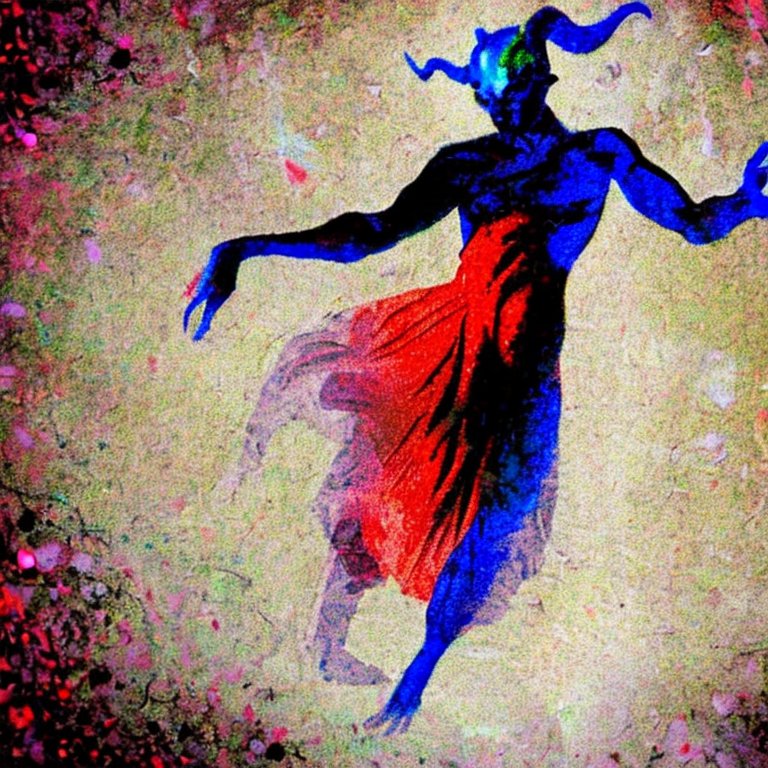
As we sail through the oceans of human consciousness, we often encounter tempests that unveil the darker facets of our nature. If the divine represents society’s golden shadow, virtues, and aspirations, could the devil figure embody society’s dark shadow, a reflection of our collective id and repressed instincts? This article plunges into the depths of this unsettling yet captivating hypothesis.

Understanding the Dark Shadow:

Carl Jung posited the existence of the shadow as a component of the unconscious, housing both positive and negative elements that are not integrated into the conscious self. The dark shadow encompasses the negative aspects – our fears, impulses, and darker instincts.

The Devil as Society’s Dark Shadow:

Across cultures, the devil often symbolizes the epitome of evil, temptation, and the darker aspects of human nature. By projecting these qualities onto a devil figure, society externalizes its inner darkness, creating a ‘scapegoat’ onto which it can cast its sins and unwanted characteristics.

The Collective Unconscious and the Id:

Sigmund Freud’s concept of the id complements Jung’s shadow. The id is the instinctual part of the mind that contains sexual and aggressive drives and desires. Society’s projection of the id onto the devil may represent a form of collective defence mechanism, an attempt to deal with the disconcerting aspects of our nature.

The Devil as an Archetype:

In Jungian terms, the devil can be seen as an archetype, a universal symbol that dwells in the collective unconscious of mankind. This archetype manifests in various forms in different cultures, but its core characteristics usually represent the antithesis of societal norms and moral values.

Facing Our Demons:

Recognizing the devil as a projection of society’s dark shadow calls for the courageous endeavour to face our inner demons. Individuals and societies can work towards a more balanced and authentic existence by accepting and integrating these shadow aspects.

Conclusion:

The notion of the devil as society’s dark shadow casts a new light on the traditional narratives of good and evil. It invites us to reflect upon how the figures of deities and demons are not only external entities but also potent symbols of the complexities of human nature. Through understanding these shadows, society stands on the precipice of deeper self-awareness and a more holistic grasp of the human condition.

Morgan O. Smith

Yinnergy Meditation & My Book, Bodhi in the Brain…Available Now!

https://linktr.ee/morganosmith

Exploring Consciousness

Expanding Consciousness through Yoga & Meditation Practices

Yoga and meditation present an array of practices that facilitate the exploration of diverse states of consciousness, enhancing individuals’ mindfulness and self-awareness. This blog is dedicated to examining multiple practices associated with gross, subtle, causal, turiya, and turiyatita states of consciousness, illustrating the intertwined nature of these practices in guiding practitioners toward multiple states of awareness.

Gross Consciousness: Exploring the Physical Dimension

The gross state of consciousness, typically associated with waking life, is distinguished by physical and sensory experiences. Practices that emphasize the gross state involve:

Hatha Yoga: With a focus on physical postures (asanas), breath regulation (pranayama), and meditation, this practice supports overall physical and mental health.
Vinyasa Yoga: Offering a dynamic fusion of movement and breath, this style of yoga aids practitioners in maintaining mindfulness and presence.

Subtle Consciousness: Journeying into Dreams & Emotions

The dream state, characterized by emotional and mental experiences, reflects the subtle state of consciousness. Techniques concentrating on the subtle state include:

Yoga Nidra: This guided meditation facilitates a state of deep relaxation, mirroring the dream state, and fostering increased awareness.
Lucid Dreaming: This practice involves consciously recognizing that you’re dreaming, providing an opportunity to delve into the subconscious mind.

Causal Consciousness: Merging with the Universal Source

The deep sleep state, denoted by unity and an absence of individual identity, resonates with the causal state of consciousness. Techniques accessing the causal state include:

Advaita Vedanta: This non-dual philosophy promotes self-inquiry and contemplation, guiding toward the realization of the ultimate reality beyond individual identity.
Shambhavi Mudra: This meditative technique, focusing on the “third eye” or the space between the eyebrows, cultivates internal tranquillity and unlocks the causal state.

Turiya: The Realm of Pure Consciousness

Turiya, the fourth state, is marked by pure consciousness beyond the states of waking, dreaming, and deep sleep. Practices aiming for turiya encompass:

Transcendental Meditation (TM): Utilizing mantras, this meditation technique aims to transcend mental activities and experience pure consciousness.
Dzogchen/Mahamudra: These Tibetan Buddhist practices emphasize direct recognition of the mind’s nature, leading to a non-dual experience of reality.

Turiyatita: Surpassing Boundaries and Embracing Integration

Turiyatita, transcending the fourth state, symbolizes the amalgamation of all consciousness states. Techniques fostering turiyatita are:

Sahaja Yoga: Centered on the spontaneous awakening of Kundalini energy, this practice leads to a thoughtless awareness state surpassing all other states.
Jnana Yoga: The path of wisdom and self-inquiry dissolves the perceived separation between the individual self and ultimate reality, leading to the turiyatita experience.

Conclusion: Embarking on Your Unique Path

Every individual’s journey to elevated states of consciousness is distinctive. Discovering practices that align with your personal growth and self-exploration is crucial. As you delve into diverse yoga and meditation techniques, maintain an open mindset that your path may comprise various practices and experiences. Cherish the transformative journey and the profound power these age-old disciplines offer.

Morgan O. Smith

Yinnergy Meditation & My book, Bodhi in the Brain…Available Now!

https://linktr.ee/morganosmith