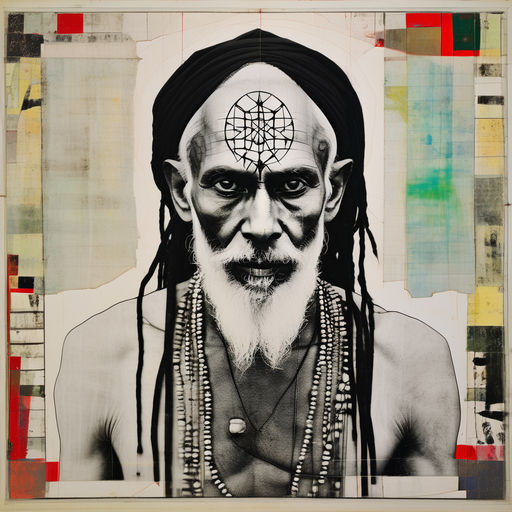
I Am the Beauty That Comes Out of My Own Chaos

In the vast, intricate dance of existence, chaos often seems like an unwelcome guest. Yet, from this very chaos, beauty arises, like a phoenix emerging from the ashes. To perceive oneself as the beauty that emerges from chaos is to embrace a profound truth about the nature of reality and the self.

Chaos is often misunderstood. It is seen as disorder, confusion, and disruption. However, chaos is the birthplace of creativity and transformation. It is the fertile ground from which new patterns, understandings, and ways of being emerge. In the crucible of chaos, the old is dissolved, allowing the new to take shape.

Our personal lives are no different. Each of us encounters moments of chaos, those times when life seems to fall apart when our carefully constructed worlds crumble. It is in these moments that we are offered a rare opportunity: the chance to reconstruct ourselves anew, to find beauty in our brokenness.

Embracing chaos requires a shift in perspective. Rather than resisting or fearing it, we can learn to welcome it as a necessary part of our evolution. This shift is rooted in the understanding that chaos and order are not opposites but are part of a dynamic interplay that drives the universe. In every storm, there is a hidden order; in every upheaval, there is a silent harmony waiting to be discovered.


When we see ourselves as the beauty that emerges from chaos, we acknowledge our inherent resilience and capacity for growth. We recognize that our greatest strengths are often forged in the fires of adversity. The scars we bear are not marks of defeat but symbols of our journey through chaos to a deeper, more profound beauty.

This perspective aligns closely with the wisdom of nonduality, which teaches that all dualities are ultimately illusory. Chaos and order, beauty and ugliness, success and failure—these are simply different expressions of the same underlying reality. By transcending these dualities, we come to see ourselves not as fragmented beings caught in the struggle between opposites, but as whole, complete, and inherently beautiful.

As we navigate the chaos in our lives, we can draw upon the insights of Eastern philosophy to guide us. The Taoist concept of Wu Wei, or effortless action, teaches us to flow with the natural rhythms of life rather than against them. By surrendering to the flow, we allow the beauty of our true nature to emerge spontaneously from the chaos.

In the stillness of meditation, we can find a refuge from the turmoil. By turning inward, we reconnect with the unchanging essence of who we are—a presence that remains untouched by the vicissitudes of life. This inner stillness is the eye of the storm, the center of the cyclone where chaos transforms into clarity and beauty.


Ultimately, to see oneself as the beauty that comes out of chaos is to live in harmony with the ever-changing dance of life. It is to trust in the process of transformation and to embrace every moment, no matter how chaotic, as an integral part of our journey toward greater self-discovery and enlightenment.

Morgan O. Smith

Yinnergy Meditation, Spiritual Life Coaching & My Book, Bodhi in the Brain…Available Now!
https://linktr.ee/morganosmith

The Mirror Within

Consciousness Awakening to Itself

In the silent depths of introspection, there exists a profound mystery as ancient as existence itself: the phenomenon of consciousness gazing upon its reflection, unaware of its true nature until a moment of awakening. This moment—when consciousness becomes aware of itself—is akin to a mirror suddenly recognizing its surface, a realization that what it has been reflecting all along is its essence.

**The Unseen Observer**

Imagine for a moment that within you lies an unseen observer, a witness to your thoughts, emotions, and experiences. This observer is not separate from you but is you—your consciousness in its purest form. It watches silently, without judgment or intervention, as the drama of life unfolds. Yet, paradoxically, it remains unaware of its observing nature until a pivotal moment of self-recognition.

**The Illusion of Separation**

Our lives are often lived under the illusion of duality, where the world is seen as divided between the self and the other, the observer and the observed. This illusion is a deep-rooted aspect of human experience, creating a sense of separation that is the source of much of our suffering and longing. But what happens when we peel back the layers of this illusion when the observer turns its gaze inward and recognizes itself as both the creator and the creation?

**Awakening from the Dream**

The journey of spiritual awakening is essentially the process of consciousness recognizing itself. It’s like waking from a dream to realize that you were both the dreamer and the dream. This moment of recognition is profound and transformative, marking the beginning of a new understanding of existence where the boundaries between self and other begin to dissolve.


**The Ripple Effect of Self-Recognition**

When consciousness awakens to its true nature, it sets off a ripple effect that touches every aspect of our lives. We begin to see the interconnectedness of all things, realizing that the separation we once felt was an illusion. This understanding brings with it a deep sense of peace and compassion, as we recognize the same divine spark within ourselves and others.

**Embarking on the Journey Within**

The path to this awakening is uniquely personal, yet universally accessible. It requires no specific belief system or spiritual practice, only an openness to explore the inner landscapes of our being. Meditation, mindfulness, and contemplative practices can facilitate this journey, allowing us to quiet the mind and listen to the silent whisper of consciousness calling us home to ourselves.

**The Dance of Existence**

As we awaken to the reality that consciousness is both the observer and the observed, we find ourselves participating in a cosmic dance, where every thought, action, and moment is an expression of the divine. This realization is not the end of the journey but the beginning of a new chapter in our spiritual evolution, where life becomes a conscious expression of the love and unity that underpin all of existence.


**Conclusion**

The moment consciousness becomes aware of itself is a profound turning point, a doorway to a deeper understanding of our true nature and the nature of reality. As we embark on this journey of self-discovery, we realize that we are not separate observers of the universe but integral parts of its unfolding story. In this realization, we find not only peace and compassion but also a deep sense of belonging to the vast, interconnected web of existence.

Morgan O. Smith

Yinnergy Meditation, Spiritual Life Coaching & My Book, Bodhi in the Brain…Available Now!
https://linktr.ee/morganosmith

Beyond the Mirage

The Ego’s Role in the Quest for Enlightenment

In the labyrinth of human experience, the ego emerges as both the architect and inhabitant of its intricate corridors. It shapes our perceptions, drives our actions, and colours our interpretations of the world around us. The journey toward enlightenment, often seen as the pinnacle of spiritual achievement, is not exempt from the ego’s pervasive influence. This exploration delves into the nuanced relationship between the ego and the spiritual quest, challenging the seeker to look beyond surface motivations to the true essence of enlightenment.

The ego, in its essence, is a construct of identity, a compilation of beliefs, experiences, and perceptions that define the “I” or “self.” It is the narrator of our life story, constantly weaving narratives that reinforce its centrality in our existence. In the context of spirituality, the ego can manifest as the driving force behind our pursuit of enlightenment. It convinces us that attainment of this exalted state will elevate our worth, grant us peace, or confirm our superiority. Yet, this pursuit, when ego-driven, is akin to chasing a mirage—the closer we believe we are to grasping it, the more elusive it becomes.


The paradox lies like enlightenment itself. True enlightenment transcends the ego, a state of being that exists beyond the dualities of superiority and inferiority, attainment and loss. It is the realization that the self, as constructed by the ego, is but a fleeting shadow on the vast canvas of existence. The irony is profound: the very entity that seeks enlightenment—the ego—is the barrier that must be dissolved to experience it.

This realization invites a deeper inquiry: If the ego is the motivation behind our actions, including the quest for enlightenment, how can one transcend it? The answer lies not in the renunciation of the ego but in the understanding and integration of its role in our spiritual journey. It is about observing the ego without identification, recognizing its patterns, and gently guiding it from a place of seeking to one of presence. In presence, the distinction between seeker and enlightenment dissolves, revealing that the essence of what we seek is inherent within us, obscured only by the veils of the ego.

Transcending the ego does not mean its obliteration but understanding its illusory nature and no longer allowing it to dictate our spiritual journey. It means moving from ego-driven motivation to a state of being where actions flow from a place of awareness, compassion, and interconnectedness. This shift is subtle yet profound, marked not by dramatic enlightenment experiences but by the quiet realization of the oneness that pervades all existence.


In conclusion, the path to enlightenment is intricately linked with the understanding of the ego. It is a journey from identification with the ego to realizing the self as part of a larger, interconnected whole. This exploration challenges us to look beyond the ego’s motivations, question our perceptions of enlightenment, and discover the profound simplicity of being that lies beyond the ego’s grasp.

Morgan O. Smith

Yinnergy Meditation, Spiritual Life Coaching & My Book, Bodhi in the Brain…Available Now!
https://linktr.ee/morganosmith

The Unending Quest

Evolution’s Eternal Dissatisfaction

In the grand scheme of existence, evolution emerges as a relentless force, driven not by a final destination but by an insatiable quest for transformation. This dynamic process, ever unfolding, illustrates the profound truth that satisfaction within creation is but a temporary state, a mere waypoint on a much grander journey. Evolution, in its essence, embodies the principle that perfection is not a fixed point but an endless horizon.

The notion that evolution is never wholly satisfied with its creations serves as a metaphor for our personal and spiritual growth. Just as the universe continuously evolves, so too must we. This concept challenges us to view our lives not as a series of destinations reached but as a continuous flow of becoming. It invites us to embrace change, celebrate the process of transformation, and find joy in the journey of self-discovery and enlightenment.

In the context of nonduality, this evolutionary dissatisfaction can be seen as a reflection of the universe’s inherent desire for expansion and self-expression. Nonduality teaches us that separation is an illusion, that all is one, and within this oneness, the drive towards greater expressions of complexity and consciousness is evident. The universe, and by extension, we, are not static entities but dynamic, ever-changing manifestations of consciousness seeking to explore and experience itself in infinite ways.


This perspective shifts our understanding of dissatisfaction. Rather than viewing it as a negative state to be avoided, we can see it as a catalyst for growth and evolution. Discontent becomes a signpost, pointing towards opportunities for deeper understanding and greater alignment with our true nature. It encourages us to look beyond the surface of our desires and to question what truly drives us toward fulfillment.

The evolutionary impulse within us all is a testament to the potential that lies in embracing the unknown. It is a call to venture beyond the comfort of the familiar, to let go of the need for permanence and certainty, and to surrender to the flow of life. This journey, though fraught with challenges, holds the promise of profound wisdom and spiritual awakening.


As seekers on this path, we are invited to reflect on our evolutionary dissatisfaction. How does it manifest in our lives? What lessons does it hold for us? And how can we harness it as a force for positive transformation?

This exploration of evolution and dissatisfaction offers a fresh lens through which we can view our journey toward enlightenment. It reminds us that the essence of growth is not in reaching a state of permanent satisfaction but in embracing the beauty of the process, the unfolding of life, and the deepening of our understanding of the interconnectedness of all things.

Morgan O. Smith

Yinnergy Meditation, Spiritual Life Coaching & My Book, Bodhi in the Brain…Available Now!
https://linktr.ee/morganosmith

The Quiet Power of Self-Affirmation

Embracing Truth Beyond Validation

In the realm of personal growth and spiritual enlightenment, a profound realization dawns upon us: when we harbour an unwavering conviction in truth, the need for external affirmation diminishes. This realization is a cornerstone in the journey toward self-awareness and inner peace.

Consider the nature of truth as perceived through the lens of Eastern philosophy. It is not a construct external to us, waiting for validation or approval. Instead, truth is an intrinsic part of our being, resonating deeply within our consciousness. The moment we recognize and embrace this inner truth, we transcend the dependence on external validation. This is a pivotal step in our spiritual evolution, marking a shift from seeking approval to cultivating self-assurance.

The beauty of this realization lies in its simplicity and power. When you are convinced of a truth – be it a personal belief, a spiritual insight, or an understanding of the self – you stand firm in your conviction without the crutch of others’ opinions. This is not to undermine the value of dialogue and shared perspectives but to highlight a more profound sense of confidence that comes from within.


This confidence is not born of arrogance or unwarranted self-assurance. It is a quiet, unshakable belief that what you hold has been reflected upon, deeply felt, and integrated into your being. It is a testament to the journey of self-discovery and personal enlightenment you have embarked upon.

The concept of non-duality in Eastern philosophy offers a valuable perspective here. It teaches us that the distinctions we make between self and others, between our beliefs and the external world, are illusory. In recognizing the non-dual nature of existence, we understand that our deepest truths are not separate from the universal truth. They are interwoven in the very fabric of existence, and as such, they require no external endorsement.

Embrace this journey of self-affirmation with humility and openness. Let your truths be a source of strength and guidance, rooted deeply in your experience and understanding. As you do so, you will find that the need for external validation naturally falls away, leaving you with a serene confidence in your path and beliefs.


In conclusion, the path to spiritual awakening and enlightenment is illuminated by the truths we hold dear, truths that require no external validation to shine brightly within us. They reflect our deepest selves, resonating with the universal truths that bind us all.

Morgan O. Smith

Yinnergy Meditation, Spiritual Life Coaching & My Book, Bodhi in the Brain…Available Now!

https://linktr.ee/morganosmith

The Silent Symphony of Spiritual Awakening

In the realm of spiritual evolution, the experience of awakening transcends the boundaries of sensory perception. It is akin to a symphony, a harmonious ensemble that exists beyond the conventional domain of sound. This metaphorical orchestra plays not to our ears but to the essence of our being, orchestrating a transformation that is both subtle and profound.

Imagine a melody that doesn’t vibrate through the air but resonates within the core of your consciousness. It’s a rhythm that aligns with the heartbeat of the universe, a tune that sings of unity and the dissolution of duality. This is the music of spiritual awakening, an inner revelation that whispers the secrets of existence, unheard but deeply felt.

In Eastern philosophy, particularly in concepts like Advaita Vedanta, there is an emphasis on the realization that the self and the universe are one. The melody of awakening, in this context, is the recognition of this oneness. It’s a journey from the illusion of separateness to the truth of unity, a path that leads from isolation to the embrace of all-encompassing existence.


This journey is personal and unique to each individual. For some, it begins with a subtle sense of discomfort, a feeling that there is more to life than what meets the eye. For others, it may be a profound event, a moment of clarity where the veil of illusion lifts, revealing the true nature of reality. Regardless of how it starts, the journey is always inward, a dive deep into the self to discover truths that lie beyond the intellect.

As the melody of awakening plays, it invites us to let go of our preconceived notions and conditioned beliefs. It asks us to surrender to the experience, to allow the music to lead us to places within ourselves that we never knew existed. It’s an invitation to dance in the rhythm of the cosmos, to become one with the infinite dance of creation and destruction.

But this journey is not without its challenges. Like any transformation, spiritual awakening can be disorienting, even unsettling. It asks us to shed layers of our ego, to confront our deepest fears and insecurities. Yet, in this process of unravelling, we find our true essence, a state of being that is beyond the transient nature of our worldly identities.


The melody of spiritual awakening is a call to experience life in its fullest, most authentic form. It’s an invitation to view the world not through the lens of judgment and separation but through the eyes of love and unity. In this state, every moment becomes a profound interaction with the divine, every experience a step closer to enlightenment.

As you embark on or continue this journey, remember that the song of awakening is unique to you. Listen closely, and you will find that it has been playing all along, a silent symphony waiting for you to join in its eternal dance.

Morgan O. Smith

Yinnergy Meditation, Spiritual Life Coaching & My Book, Bodhi in the Brain…Available Now!
https://linktr.ee/morganosmith

Unveiling the Self

The Interplay of Spiritual Discovery and Inner Knowing

In the labyrinth of spiritual awakening, we often find ourselves at a crossroads: the tranquil acceptance of “Knowing what I am” versus the dynamic pursuit of “Wanting to know more about what I am.” This seemingly contradictory dichotomy is a profound exploration of our journey toward enlightenment.

**The Sanctuary of Self-Knowledge**

Knowing what I am – this realization marks a pivotal moment in our spiritual odyssey. It’s an immersion into the depths of self-awareness where the essence of our being illuminates. This is not a mere intellectual understanding, but an experiential truth that resonates with every fibre of our existence. In this sanctuary of self-knowledge, the incessant chatter of the mind subsides, and we encounter the purest form of our existence. The realization that ‘I am’ transcends the need for definitions, residing in a state of pure beingness.

**The Odyssey of Continual Seeking**

Conversely, the desire to delve deeper and understand more about what we are keeps the flame of spiritual quest alive. This is not a journey marked by restlessness, but rather a deep-seated curiosity and reverence for the unfathomable complexities of our existence. It propels us into an expansive space where every moment is an opportunity for discovery and profound insight. This continual seeking is not driven by a sense of lack but by the awe and wonder of the boundless nature of our being.

**Harmonizing Knowing and Seeking**

The beauty of our spiritual journey lies in harmonizing these two aspects. The state of ‘Knowing what I am’ brings a groundedness and peace, a foundation from which our curiosity can safely explore. Meanwhile, ‘Wanting to know more about what I am’ injects vitality and dynamism into our spiritual practice, ensuring that our journey is an ever-evolving exploration.

Embracing both these aspects allows us to live in a state of dynamic stillness. In this space, the paradox dissolves, revealing that knowing and seeking are not mutually exclusive but are interwoven threads in the fabric of our spiritual evolution.

**Conclusion: The Dance of Enlightenment**

Ultimately, our spiritual path is not about choosing between knowing and seeking. It is about recognizing that both are essential components of our journey toward enlightenment. As we dance between these two states, we discover that each step, whether grounded in knowing or propelled by seeking, is a step closer to the ultimate realization of our true nature.

Morgan O. Smith

Yinnergy Meditation, Spiritual Life Coaching & My Book, Bodhi in the Brain…Available Now!
https://linktr.ee/morganosmith

The Dual Nature of Ego

Obstacle and Catalyst in the Quest for Enlightenment

In our quest for spiritual awakening, the concept of the ego plays a paradoxical role. On one hand, it is often seen as the primary hindrance on the path to enlightenment. On the other, it can serve as a vital instrument propelling us toward this very goal. This duality presents a fascinating aspect of our spiritual journey, inviting us to explore the ego not just as an adversary, but also as an ally.

In its most basic form, the ego is our sense of self. It’s the ‘I’ or ‘me’ that navigates through the world. In many Eastern philosophies, the ego is perceived as the root of suffering and illusion. It’s this ego that clings to desires, fears, and identities, trapping us in a cycle of samsara – the continuous loop of birth, life, and death. From this viewpoint, enlightenment is about transcending this limited self and recognizing our true nature, which is unbounded and interconnected with the entire cosmos.


However, this is only one facet of the ego’s role in our spiritual evolution. Consider the idea that the ego can also be a vehicle for growth. It is, after all, the ego that initially sparks the desire for enlightenment. Though rooted in the individual self, this desire can lead us toward a deeper understanding and a broader perspective. The ego drives us to seek, question, and yearn for something beyond our current state. In this sense, it can be seen as a necessary step in our spiritual evolution.

Moreover, confronting and understanding the ego is a vital part of spiritual practice. It’s through this process that we gain insight into our true nature. The ego’s patterns, attachments, and fears are not just obstacles to be removed but also mirrors reflecting our deeper truths. By engaging with our ego, we learn about the constructs of our identity, the nature of our minds, and the illusions we hold. This understanding is a crucial milestone in the journey toward enlightenment.

In this complex dance, the ego is both the veil that conceals the truth and the force that urges us to seek it. As seekers, we must navigate this paradox with awareness and discernment. The goal is not to annihilate the ego but to understand its nature and role in our spiritual development. By doing so, we can transform our relationship with the ego, seeing it not just as a barrier to overcome, but as a teacher guiding us towards greater awareness and unity with the all-encompassing truth.


In conclusion, the ego’s dual nature as both a barrier and a catalyst in the journey toward enlightenment offers a profound lesson. It reminds us that every aspect of our being, including those we perceive as limitations, can contribute to our spiritual growth. The path to enlightenment is not about rejecting parts of ourselves but understanding them in a way that leads to a deeper realization of our true essence.

Morgan O. Smith

Yinnergy Meditation, Spiritual Life Coaching & My Book, Bodhi in the Brain…Available Now!

https://linktr.ee/morganosmith

Beyond the Boundaries of Existence

A Journey into the Heart of Nonduality

In spiritual exploration and philosophical inquiry, one often confronts the paradox of being simultaneously intertwined with and transcendent of the universe. This intricate dance of existence nudges us to delve deeper into the essence of what it means to be truly alive, transcending the mere fabric of being.

At the core of this exploration lies the profound principle of nonduality. Nonduality whispers to us a truth that is often overlooked: the realization that the observer and the observed are not separate entities, but are intrinsically one. This notion challenges us to look beyond the conventional dichotomies of inside and outside, above and below, self and other.

Imagine standing at the edge of a vast ocean. The water stretches out infinitely, touching the horizon where sky and sea appear to merge. In this moment, are you separate from the scene before you, or are you a part of this grand spectacle? Nonduality invites us to consider that we are both the observer of the ocean and the ocean itself. Our consciousness is not just within us; it extends to the furthest reaches of the cosmos and is intertwined with the very essence of all that exists.


This perspective opens the doors to an enlightened understanding of our place in the universe. It is not a place of hierarchy, of being above or below anything, but a state of profound interconnectedness. Here, the concept of ‘self’ expands and dissolves into the vastness of all existence. In this state, we realize that we are not just within the universe; we are the universe.

Such an awakening is not an escape from reality, but a deeper immersion. It invites us to engage with the world not as separate entities fighting for survival, but as expressions of a singular, boundless existence. It encourages us to embrace compassion and empathy, recognizing that in harming another, we harm ourselves; in loving another, we love ourselves.

This journey into the heart of nonduality is not a path of passive observation. It is an active engagement with life, a challenge to dissolve the barriers we have built within ourselves. As we embrace this path, we begin to see the world not as a place of division and conflict, but as a canvas of unity and harmony.


In conclusion, the philosophy of nonduality offers us a lens through which we can view ourselves and the world in a radically different light. It challenges us to go beyond the superficial layers of existence and to recognize the profound interconnectedness of all things. As we embark on this journey, we find that we are not merely below, within, without, above, or beyond all things. We are all these things and more; we are the infinite dance of existence itself.

Morgan O. Smith

Yinnergy Meditation, Spiritual Life Coaching & My Book, Bodhi in the Brain…Available Now!

https://linktr.ee/morganosmith

Awakening to Inherent Wisdom

The Illusion of Seeking Enlightenment

In the realm of spiritual discovery, there exists a profound yet often overlooked truth: the state of enlightenment is not a distant reality to be attained, but an intrinsic aspect of our very being. This realization confronts the traditional narrative of spiritual pursuit, where enlightenment is viewed as a summit to be reached through arduous journeying.

Consider for a moment the notion that you are, at this very instant, already enlightened. The idea may seem counterintuitive, especially in the context of Eastern philosophy which often emphasizes a path of gradual awakening. Yet, this perspective invites us to reconsider our approach to spiritual growth. It is not about acquiring something new or transforming into someone else; it is about recognizing and embracing the wisdom already within us.

The journey of self-discovery, then, turns inward. It becomes an unfolding, gentle unveiling of the layers of misconception and illusion that cloud our perception of our true nature. This process is not about adding more knowledge or experiences but subtracting the unessential, peeling away the narratives and beliefs that have limited our understanding of ourselves.


In this light, every moment is an opportunity for enlightenment. Each experience, no matter how mundane, carries the potential to be a window to our true selves. The challenge lies in our ability to remain present and attentive to these opportunities. It requires a shift from seeking externally for answers, to turning inward and listening to the silent wisdom that speaks in the stillness of our being.

This perspective also reshapes our understanding of the spiritual path. The path is not a linear progression towards a defined end, but a deepening into the ever-present reality of our enlightened nature. It is a journey without distance, where the destination is already where we stand.

Reflect on this: What changes when you start acting from the understanding that you are already enlightened? How does this shift your perception of your spiritual journey?


In embracing this paradigm, we find that enlightenment is not a state to be achieved, but a truth to be realized. It is not an exclusive domain of the few, but an accessible reality for all. Our task is not to seek enlightenment, but to recognize and embody the enlightenment that we already are.

Morgan O. Smith

Yinnergy Meditation, Spiritual Life Coaching & My Book, Bodhi in the Brain…Available Now!

https://linktr.ee/morganosmith