Beyond the Verbal Abyss

Embracing the Indescribable in the Pursuit of Nondual Consciousness

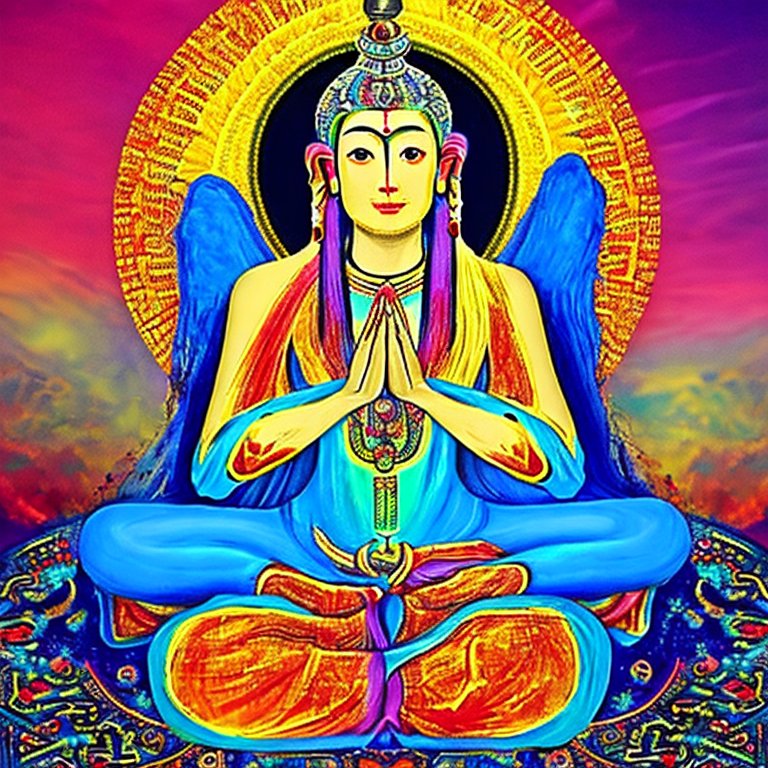
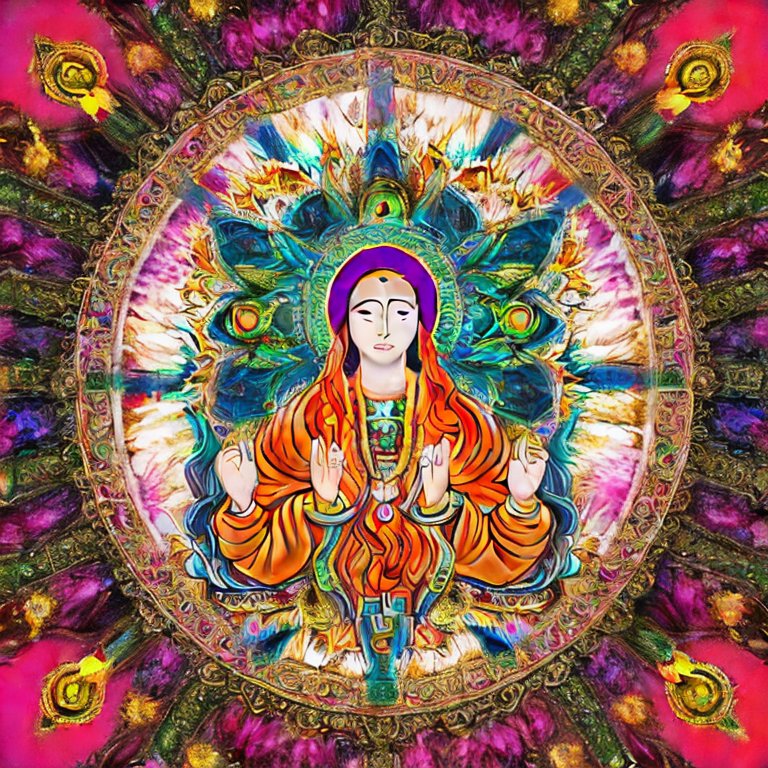
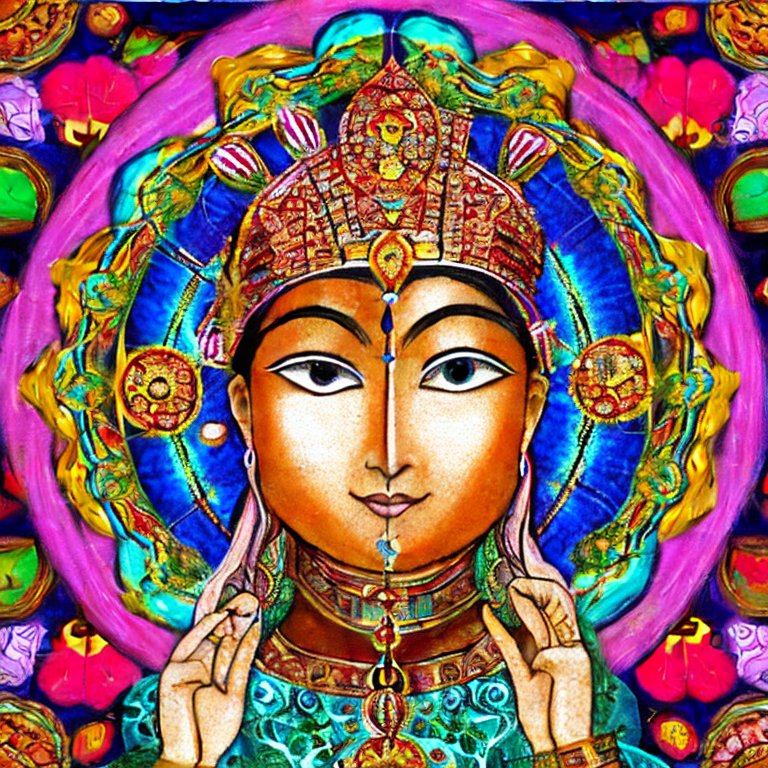
The realm of metaphysics has been exploring the uncharted territory of human existence since the inception of philosophical thought. The concept of ‘Turiyatita’, borrowed from the ancient Vedantic wisdom, invites us to delve into the mystery of the Ultimate Nondual Presence. In a state of supreme transcendence, Turiyatita marries the notions of Emptiness and form, painting a picture of the Self fully liberated and realized.

This profound state is said to represent the highest level of human awareness. It’s the experience of actualizing the quintessential Vedantic concept, “Aham Brahmasmi,” the realization that all is Brahman, the ultimate reality.

The fascinating paradox of this journey lies in its unspeakability. The moment of enlightenment, where one realizes their ultimate oneness with the universe, is so overwhelmingly mind-shattering that no human language can capture its essence. We find ourselves venturing into a stateless state, an inexplicable expanse that houses all potentiality, while simultaneously being nothing. It’s a cosmic riddle that has always existed and will continue to exist, challenging the very constructs of human understanding.

Over the years, I grappled with expressing the enigma that is Turiyatita. I discovered that language, no matter how profound or poetic, remains insufficient to convey this transcendental experience. The individual mind’s narratives fall short when tasked with communicating such an experience to the collective consciousness. This realization is like a boundless sea that can only be expressed through the universe itself – through everything around us, beneath us, above us, within us, and even through us. Our very existence, after all, is an echo of this ‘Absolute’ language.

This illuminating journey of pure awareness left me in a state of awe, marking an indelible imprint on my ego’s fragments. An unforgettable memory, it is the most profound self-discovery I’ve had in this lifetime.

Most of us remain oblivious to the existence of this state, yet it’s accessible to everyone. It waits patiently for anyone bold enough to plunge into its mysterious depths. These are the Akashic waters of enlightenment, a blissful abyss where the brave explorers willingly lose themselves.

This presence, while unnoticeable, pervades our existence as an invisible field, a force that forms the bedrock of all beings. It’s in the exploration of this Ground of All Existence that one realizes the enigma of the indescribable, the ineffable mystery commonly referred to as ‘God’.

So, as we journey through life and its varied experiences, may we always strive for the courage to explore these profound depths. For it is in these explorations that we touch upon the mysteries of our existence, our true selves, and the cosmic reality we are all a part of.

Morgan O. Smith

Yinnergy Meditation & My Book, Bodhi in the Brain…Available Now!

https://linktr.ee/morganosmith

The Enigma of the Monistically Absolute

A Journey Beyond Comprehension

Imagine, for a moment, immersing yourself into an immeasurable realm of complete egolessness, a profound plunge into the depths of an eternal abyss that, paradoxically, awakens you to the highest pinnacle of existential understanding. It’s a journey toward the Monistically Absolute – an awakening to the Ultimate Truth where you comprehend an uncanny Total Singularity that scoffs at the confinements of quantifiable laws.

At the crux of this unfathomable awareness, you realize a truth so deep, it pierces the veil between the subjective and the objective. This is the domain where the intangible and tangible lose their distinctions, where The One that is Nothing becomes the full embodiment of Everything, actualized and present. It is a formless form encapsulating all of existence, flourishing within, around, and beyond the contours of its existence. It is a sphere of limitless awareness, an unbroken stream of consciousness that’s perpetually alert of its Totality. A No-Self that is paradoxically the True Self, a staggering enigma that transcends all earthly dialectics.

In this grand unveiling, God is no longer a figment of belief, a notion, or an intellectual construct. Instead, God morphs into an undeniable Knowing, an indelible Truth that shuns falsehood. It’s a profound Love that transcends expression and becomes the very essence of all that Is. The intimacy of this event is beyond temporal boundaries; it engulfs every moment of existence, a timeless experience that allows The One to be conscious of its simultaneous manifestation as All Things. It’s the silent observer, the omnipresent witness of the past, present, and future, all intertwined within the continuum of the eternal Now.

As you dwell deeper into this mysterious reality, the sensation of this something, this profoundly intuitive phenomenon, penetrates your very core. It is a transformative event, an encounter where you, the seeker, tap into the pulsating heart of the universe, the underpinning reality that blankets all forms of Being. This is an experience of a Paradoxical Presence that stretches beyond all measurable scopes. It leaves the experiencer in a state of rapturous awe, a sublime ecstasy so profound it overshadows any state considered sublime. It is an unbounded experience that cannot be confined by mortal limitations, it’s a boundlessness that transcends all known bounds.

For in this divine encounter, what once was restricted by the mortal mind finds liberation in an outpouring of boundless stillness, an ecstatic dance of Absolute Pure Essence. It is an experience that echoes within the realm of the ineffable, shattering all illusions, tearing away the cloaks of misconceptions, and inviting one to taste the nectar of the Monistically Absolute. It’s a realm where contradictions dissolve, boundaries disappear, and all that remains is the unending dance of absolute existence, consciousness, and bliss.

The realm of the Monistically Absolute is an invite to all seekers, a call to transcend earthly illusions and merge with the infinite truth. It’s a realm that unfolds before us when we are ready to let go of all we think we know and open ourselves to the enigmatic beauty of the universe. It’s a journey of self-discovery and cosmic understanding, an odyssey that has the potential to redefine our perspectives and transform our realities. Will you heed the call?

Morgan O. Smith

Yinnergy Meditation & My Book, Bodhi in the Brain…Available Now!

https://linktr.ee/morganosmith
The Dance of Consciousness

How Traits and States Influence Each Other

Introduction:
In the realm of philosophy and neuroscience, the nature of consciousness has long been a subject of intense scrutiny. As we delve into the complex interplay between traits of consciousness and states of consciousness, we embark on a thought-provoking journey that explores how these facets of our mind shape and are shaped by each other.

Part I: The Essence of Traits of Consciousness
Traits of consciousness refer to the enduring qualities and patterns that define an individual’s cognitive, emotional, and behavioural makeup. These traits form the bedrock of one’s personality, shaping how they perceive the world, process information, and interact with others. From introversion to openness, resilience to empathy, traits of consciousness provide a unique lens through which individuals experience their existence.

Part II: Unraveling States of Consciousness
States of consciousness, on the other hand, are transient and ever-changing mental conditions. These states can range from heightened awareness during moments of meditation or creative inspiration to altered states induced by substances or intense emotional experiences. States of consciousness are like ripples on the surface of a vast ocean, reflecting our immediate perceptions and inner states.

Part III: The Bidirectional Influence

At first glance, it might appear that traits and states of consciousness operate independently. However, upon closer examination, we discover the profound bidirectional influence they exert on each other.

1. Traits Shaping States:

Our enduring traits of consciousness lay the foundation for how we perceive and react to various states. For instance, a highly empathetic individual might experience deeper connections with others during states of heightened compassion or love. Similarly, a person with a predisposition to anxiety may be more prone to states of distress during challenging situations.

2. States Shaping Traits:

The fluidity of consciousness states can leave lasting imprints on our traits. Profound transformative experiences, such as spiritual awakenings or near-death encounters, can lead to significant shifts in an individual’s personality and worldview. Moreover, states like mindfulness and meditation can foster positive traits like patience and self-awareness.

Part IV: The Dance of Consciousness
As the dance unfolds, we realize that consciousness is not static but rather a dynamic process, constantly in flux. Traits and states intertwine, shaping and reshaping one another in an intricate and evolving dance.

Conclusion:
The relationship between traits and states of consciousness is a fascinating exploration of the human mind’s complexity. Acknowledging this interconnectedness can empower us to cultivate positive traits while embracing the ebb and flow of transient states. As we embrace the intricacies of our consciousness, we embark on a journey of self-discovery, leading us to a deeper understanding of ourselves and the world around us. Remember, we are not merely passive observers of our consciousness; we are active participants in its unfolding story.

Morgan O. Smith

Yinnergy Meditation & My Book, Bodhi in the Brain…Available Now!

https://linktr.ee/morganosmith
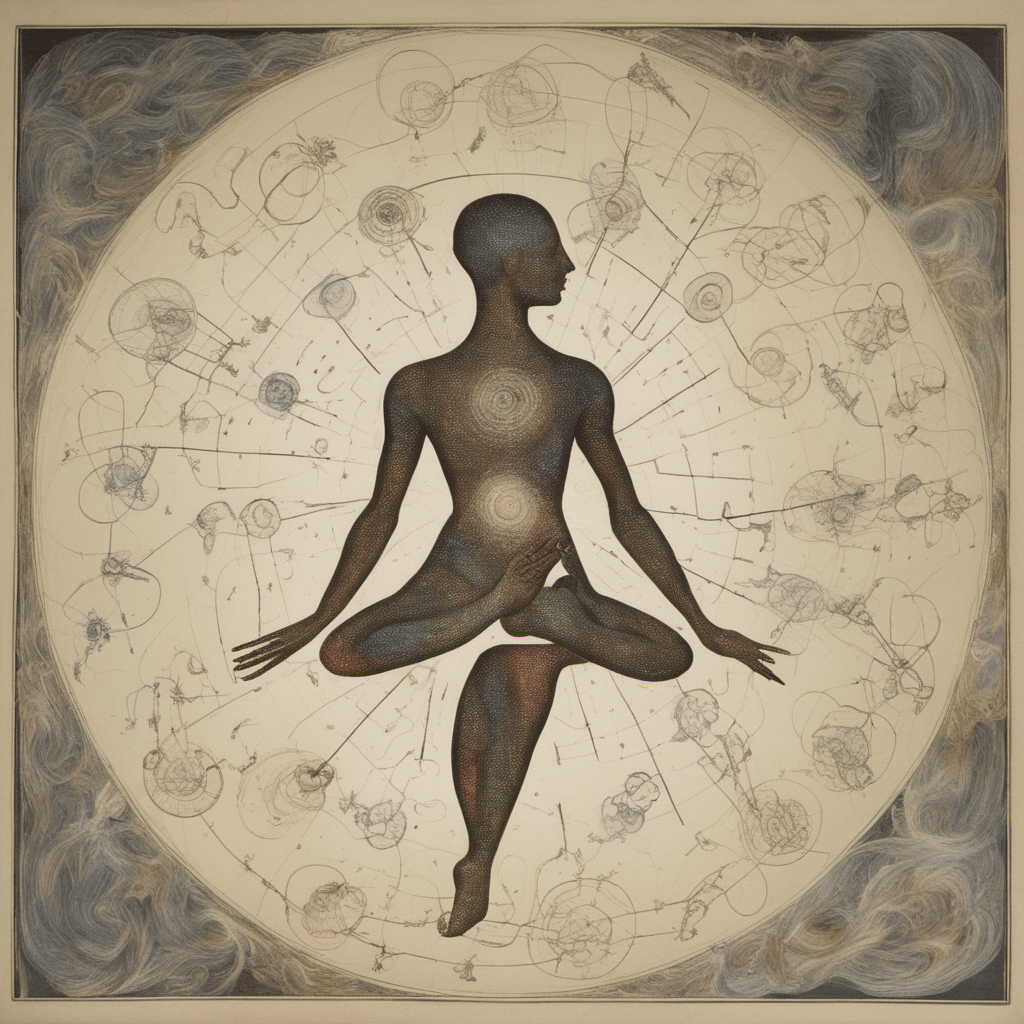
The Ocean of Consciousness

A Deep Dive into Self-Realization

In the vast expanse of our existence, there exists an ocean, profound and unending. This is not an ocean you can traverse with a boat, nor one that can be mapped with lines and contours. It is the ocean of consciousness, the ocean within us, teeming with treasures waiting to be found and explored.

This inner cosmos reflects the enormity and complexity of our being. It is a reminder that we are not mere beings afloat on the surface of existence. We are the deep-sea divers, explorers of the unseen depths of our own consciousness, where the treasures of self-realization lie.

Each of us is invited to embark on this journey, to delve beneath the tranquil surface of our everyday awareness, to submerge into the depths of the self. It’s within these depths that the unexplored and unseen aspects of ourselves are concealed like sunken treasures.

The journey of self-realization is, indeed, a swim in these deep waters. It is not always an easy journey; at times, we may feel lost in the vast, nebulous expanse, unsure of where to look or what to seek. It is natural to fear the unknown, the hidden, the deep, but it is also where true treasures lie.

These treasures are not the tangible riches we often pursue; they are rather pearls of wisdom, gems of personal truth, and gold nuggets of self-understanding. They hold the power to transform our perspective, illuminate our purpose, and enrich our existence. Once discovered, these treasures have the capacity to fundamentally alter the way we perceive ourselves and our place in the cosmos.

But how does one navigate these waters? How do we uncover these treasures of the self? The compass guiding us through this journey is reflection, introspection, and mindful living. These tools help us dive into the currents of our thoughts, feelings, and experiences, allowing us to probe and understand the unseen layers of our consciousness.

As we continue to swim within these deep waters, we learn to appreciate the beauty of the journey more than the destination. We realize that the exploration itself is a form of treasure, a transformative process that molds us into more conscious, more self-aware beings.

In this philosophical journey of self-realization, we not only find treasures within ourselves but also learn to become treasures for the world around us. The knowledge, wisdom, and understanding we gain through this exploration have the power to influence and enrich the lives of others.

So, let us all dive into the deep waters of consciousness and continue to explore. In this exploration, we find not only the treasures of self-realization but the true essence of our existence. Amid the vastness of this ocean, we find ourselves, understanding that we are not just a part of the universe, but the universe itself, unfolding.

Morgan O. Smith

Yinnergy Meditation & My Book, Bodhi in the Brain…Available Now!

https://linktr.ee/morganosmith
The Dance of Emptiness and Form

Unveiling the True Essence of Yoga

The philosophical underpinnings of Yoga transcend the popular perception of it as merely a physical discipline. Yoga, in its quintessence, is a union, a symbiotic dance between emptiness and form. This dance, a philosophical waltz within the vast expanses of the universe, finds a profound echo within us.

When we speak of form, we are drawn towards the tangible, quantifiable aspects of our existence—our body, the physical world around us. These are things we can touch, see, smell, hear, taste—the concrete attributes of our being. On the Yoga mat, the physical form is the obvious manifestation of our practice. Asanas are the embodiment of form, an expression of our grounded reality.

On the other hand, emptiness is an abstract concept, often considered synonymous with void or nothingness. In Eastern philosophies, emptiness does not signify a lack or absence but is regarded as the space that allows the form to exist, the silence that cradles the sound. It is the immaterial consciousness, the observer within us.

In the practice of Yoga, we cultivate the experience of both form and emptiness. Through asanas, we engage with form, enhancing our physical wellness and strength. Yet simultaneously, through meditation and breath control (Pranayama), we connect with the space of consciousness, the emptiness.

The union of emptiness and form in Yoga echoes the concept of Yin and Yang in Taoism. These seemingly opposing forces are complementary and interdependent. Similarly, in Yoga, the physical form (body) and the immaterial consciousness (emptiness) are intertwined in a dance, with neither one being superior to the other.

The realization of this union empowers us to perceive ourselves beyond the limitations of physical existence. We start to experience our oneness with the universe, recognizing that the emptiness within us is the same as the cosmic void, and the form is an expression of universal matter.

In true Yoga, we find balance and harmony between form and emptiness. We start understanding that emptiness isn’t a void but a space filled with infinite possibilities, and form is not rigid but a fluid and ever-changing phenomenon. This balance and harmonious interaction between emptiness and form illuminate the path toward self-realization and enlightenment.

Consequently, Yoga transforms from a practice into a way of life, a journey towards unveiling the veiled, harmonizing the paradox of existence and experiencing the profound unity of all creation. It’s a journey that, while dancing on the stage of duality, ultimately guides us back to unity.

In essence, Yoga teaches us to embrace the dance of life, the continuous ebb and flow between form and emptiness. In this dance, we discover our true selves, learning to live in harmony with our internal rhythms and the universal pulse. Only by acknowledging and understanding both emptiness and form can we truly unfold the potential within, ultimately experiencing the profound union that is the heart of Yoga.

Through this exploration, may we all find our unique rhythm in the cosmic dance and awaken to the truth that Yoga is not just something we do, but rather a state of being. A union of emptiness and form, a harmonious dance in the infinite canvas of existence.

Morgan O. Smith

Yinnergy Meditation & My Book, Bodhi in the Brain…Available Now!

https://linktr.ee/morganosmith
Exploring Spiritual Enlightenment

Unveiling the Essence of Being

Introduction:
In the realm of spirituality, few concepts captivate the human imagination as profoundly as spiritual enlightenment. It has been sought after, contemplated upon, and revered across cultures and traditions. At its core, spiritual enlightenment encompasses a holistic realization, knowing, comprehension, recognition, and liberation, leading to an intimate understanding of one’s essence as the Ground of all Being. In this thought-provoking blog, we embark on a journey to unravel the depths of spiritual enlightenment and explore its transformative power.

Realization: The Full Realization of What You Are as The Ground of All Being
The journey toward spiritual enlightenment begins with a profound realization—an awakening to the fundamental truth of one’s existence. It is an experiential revelation that transcends intellectual understanding, offering a direct encounter with the essence of reality. This realization unveils the interconnectedness of all existence and dissolves the boundaries that separate the self from the world.

Knowing: Knowing Who and What You Are as The Ground of All Being

Knowing, in the context of spiritual enlightenment, goes beyond intellectual knowledge or beliefs. It is a direct and intimate knowing of one’s true nature, beyond the ephemeral constructs of ego and identity. This knowing arises from experiential wisdom that transcends language and logic, revealing the profound interconnectedness of all life.

Comprehension: Comprehending What You Are as The Ground of All Being
Comprehension in spiritual enlightenment refers to a deep understanding that arises from the integration of realization and knowing. It involves grasping the inherent wisdom that pervades all existence and recognizing the underlying unity amidst the apparent diversity. This comprehension allows us to perceive the world through a lens of compassion, empathy, and interconnectedness.

Recognition: Recognizing What You Are as The Ground of All Being

Recognition entails a moment of profound insight where the illusory veils of separation and limitation fall away, revealing the truth of one’s being. It is a transformative recognition of our true nature as vast, boundless awareness, intimately interconnected with the entire cosmos. Through this recognition, we come to acknowledge the divinity that resides within ourselves and all beings.

Liberation: Being Liberated from Shape or Form, Free from Illusion and Attachments

Liberation represents the ultimate culmination of spiritual enlightenment—a state of profound freedom and liberation from the constraints of ego, attachment, and illusion. It is an experiential transcendence of the limited, conditioned self, allowing one to dwell in the realm of pure emptiness. Yet, paradoxically, this liberation is not a detachment from the world but a unification with it, as the awakened individual realizes their inseparability from the tapestry of existence.

Conclusion:
Spiritual enlightenment encompasses a multidimensional journey that surpasses the limitations of language and rationality. It is a profound exploration of the self and the universe, revealing our interconnectedness and inherent divinity. Through realization, knowing, comprehension, recognition, and liberation, we can embark on a transformative path that leads to a deeper understanding of our existence. By embracing the essence of spiritual enlightenment, we may find ourselves united with everything that is form while being liberated from the illusory constraints that bind us. May this exploration inspire you on your quest for self-discovery and awakening to the timeless truth of the Ground of all Being.

Morgan O. Smith

Yinnergy Meditation & My Book, Bodhi in the Brain…Available Now!

The Spirituality Façade

Navigating Between Pretense and Authenticity

Introduction:
In an age where spirituality is often a trend, the differentiation between authentic spiritual pursuit and a mere display of piety becomes pivotal. If one merely adopts the garb of spirituality without authenticity, is it spirituality at all? This article seeks to explore the delicate balance between presenting oneself as spiritual and embarking on an authentic spiritual journey.

The Allure of Spiritual Image:

Social media, popular culture, and sometimes peer pressure portray spirituality as a serene and enlightened state. This depiction can be tantalizing. People are enticed to showcase themselves as spiritual beings, oftentimes to fit into a community, gain admiration or even as a refuge from self-accountability.

Defining Authenticity:

On the other side lies authenticity, which is the honesty and genuineness in one’s thoughts, actions, and intentions. Authenticity in spirituality means that one’s quest is not for show, but a sincere endeavour to seek meaning, connection, and perhaps even transcendence.

Dissecting Inauthentic Spirituality:

If spirituality is worn as a mask and not lived, it becomes hollow. For instance, one might engage in spiritual practices in public but live a life contrary to those principles in private. This lack of alignment between external display and internal values questions the very essence of one’s spirituality. Is it spirituality or is it pretense?

Authentic Spirituality – A Journey Within:

Authentic spirituality, by contrast, is unshackled by the need for external validation. It is a deeply personal journey, irrespective of the eyes that may or may not be watching. This path might be replete with doubts, stumbles, and personal challenges, but it’s real and grounded in honest pursuit.

The Purity Test:
So, how can one discern authentic spirituality? A question that individuals must ask themselves is whether their spiritual actions and pursuits would remain the same if there was no one to witness them. The answer can be very telling.

Conclusion:
To embrace spirituality is to undertake a journey of profound depth. It’s not just a robe one wears but the very fabric of one’s being. As such, authenticity should be its cornerstone. When spirituality is stripped of pretense, what remains is a raw and real quest – a journey that can be tumultuous, rewarding, and ultimately transformative. Let us aspire to ensure that our spiritual pursuits are rooted in the genuine soil of our being, not just the sands of outward display.

Morgan O. Smith

Yinnergy Meditation & My Book, Bodhi in the Brain…Available Now!

https://linktr.ee/morganosmith
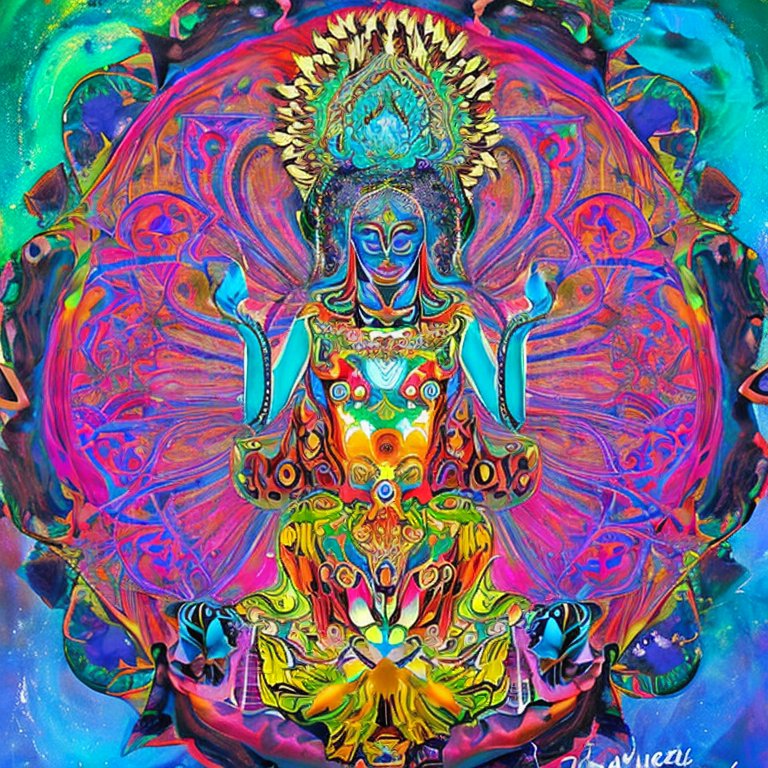
Three Perspectives on Divinity

A Journey of Self-Discovery and Cosmic Connection

Every human being, at some point, grapples with the concept of divinity. How we perceive the divine greatly influences how we understand ourselves and our place in the cosmos. While there are many ways to envision divinity, let us ponder the “Three Faces of God” – “I am That,” “Thou art,” and “It, the Ground of All Being.” Each provides a distinct lens through which we may view and experience the divine.

1. Divine Within: The Face of “I am That”

“I am That” is a call to recognize the divine within us. It is not just a statement; it’s an acknowledgment of our inherent divinity. This perspective dissolves the illusion of separateness, helping us realize that we’re not merely fleeting existences in an indifferent universe, but integral fragments of a divine whole.

This face asks us to engage in deep introspection, to see beyond the veil of our mundane identities, and to understand that our true essence is not our transient ego, but the eternal spirit. Could it be that we’re more divine than we’ve ever imagined? This face prompts us to explore that possibility.

2. Divine As Other: The Face of “Thou Art”

The face of “Thou Art” offers a contrasting perspective. Here, the divine is seen as the ‘Other,’ an entity outside ourselves with whom we can establish a personal connection. This relationship with the divine, filled with reverence and love, is akin to the bond between a devotee and their deity.

In this model, God is the figure we pray to, seek comfort from, and surrender our troubles to. It’s a perspective that creates a powerful, intimate bond with the divine, letting us experience the divinity not as a part of us, but as a separate, caring, and guiding entity.

3. Divine As All: The Face of “It, the Ground of All Being”

The third face, “It, the Ground of All Being,” portrays God as an impersonal essence, the primal energy that permeates the cosmos. This face of divinity does not personify the divine but sees it as the raw material of existence. It is the unchanging reality amidst the ceaseless flux of the universe.

This view urges us to go beyond the traditional understandings of God and probe deeper into the mysteries of existence. Could it be that the divine is not just a deity or a spirit within, but also the very fabric of reality?

Wrapping Up

The Three Faces of God offer a multidimensional understanding of the divine, guiding us on our spiritual and philosophical quest. They propose different ways to connect with the divine, based on our personal inclinations and spiritual needs. More than a simple triad, they represent a spectrum of possibilities on our spiritual journey.

In acknowledging these perspectives, we can foster a richer understanding and experience of God, allowing us to discover the divine within ourselves, in an intimate relationship, and as the underlying reality of existence. Such an exploration can become a catalyst for personal growth and spiritual evolution, leading us to new levels of self-discovery and cosmic connection. After all, isn’t that what the quest for understanding divinity is all about?

Morgan O. Smith

Yinnergy Meditation & My Book, Bodhi in the Brain…Available Now!

https://linktr.ee/morganosmith
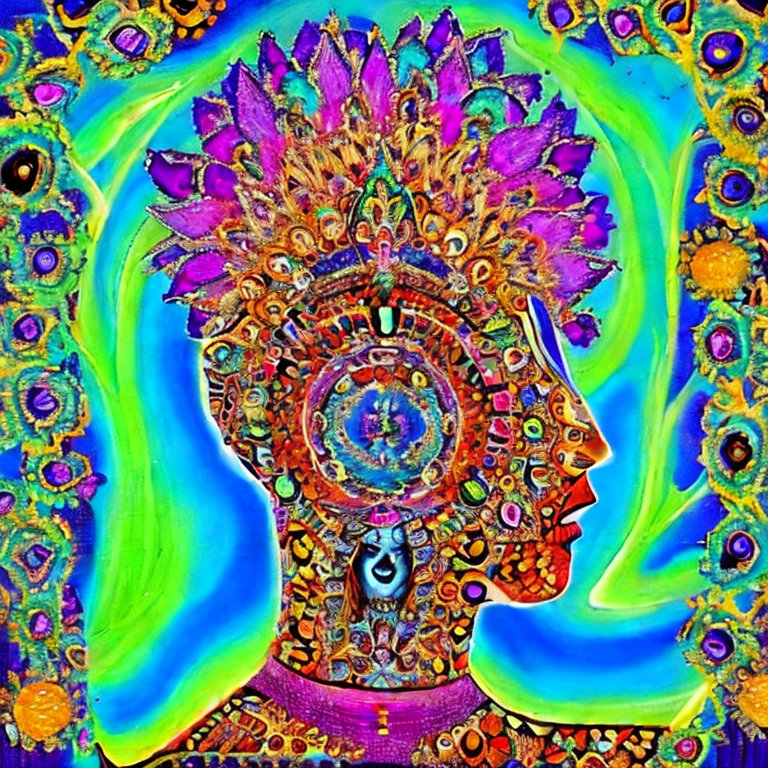
Embracing Paradox and Nonduality

Exploring the Paths to Spiritual Awakening

Introduction:
In the realm of philosophy and spirituality, two captivating concepts often spark profound contemplation and open doors to expanded understanding: paradox and nonduality. Both concepts challenge our conventional modes of thinking and invite us to explore the nature of reality and consciousness. In this thought-provoking blog, we will delve into the differences and similarities between paradox and nonduality, and delve into their roles in the context of spiritual awakening.

Paradox: Illuminating the Mystery Within
Paradoxes are enigmatic statements or situations that defy our logical expectations and challenge our understanding of reality. They present us with apparent contradictions, forcing us to question our assumptions and explore deeper layers of truth. Paradoxes are often the gateways to expanded consciousness, as they push the boundaries of our thinking and invite us to embrace the complexities and mysteries of existence. They are the mind’s playground, a fertile ground for philosophical inquiry and intellectual growth.

Nonduality: Beyond Duality, Towards Unity

Nonduality, on the other hand, transcends the realm of paradox by recognizing the illusory nature of dualistic distinctions altogether. It is a profound philosophical and spiritual concept that asserts the fundamental unity of all things, beyond conventional boundaries. Nonduality suggests that the apparent separation between self and other, subject and object, is an illusion that obscures the deeper truth of interconnectedness. It invites us to explore the essence of oneness that lies at the heart of existence, beyond the limitations of dualistic thinking.

Differences and Similarities:
While paradox and nonduality are distinct in their approaches, they share some intriguing similarities. Both concepts challenge our preconceived notions and invite us to embrace uncertainty. Paradoxes expose the limitations of linear thinking and expand our intellectual horizons, while nonduality goes beyond the realm of paradox by embracing a holistic view of reality. They both foster an open-mindedness that allows for new perspectives and insights to emerge.

In the realm of spiritual awakening, both paradox and nonduality play crucial roles. Paradoxes serve as catalysts, shaking us out of our complacency and inviting us to question our deeply held beliefs. They disrupt our habitual patterns of thinking and awaken us to the inherent mystery and wonder of existence. Nonduality, on the other hand, offers a framework for understanding the ultimate truth of interconnectedness. It guides us towards a direct experience of unity and helps dissolve the illusory boundaries that separate us from the world and others.

Conclusion:
Paradox and nonduality are two fascinating concepts that contribute to our philosophical and spiritual growth. Paradoxes challenge our intellect and expand our understanding, while nonduality transcends dualistic thinking and reveals the profound interconnectedness of all things. By embracing both paradox and nonduality, we can embark on a transformative journey of self-discovery and spiritual awakening. They invite us to explore the depths of our consciousness and contemplate the profound mysteries of existence. Let us embrace the paradoxes that confront us and open our hearts to the boundless unity that nonduality reveals. In this harmonious dance, we find the keys to unlocking the doors of awakening and embracing the vastness of our being.

Morgan O. Smith

Yinnergy Meditation & My Book, Bodhi in the Brain…Available Now!

https://linktr.ee/morganosmith

The Dawn of Syncretic Souls

A Harmonious Unveiling of Eastern and Western Spirituality

Introduction:
In the transcendent tapestry of human spirituality, East and West have often been seen as disparate threads. The West, with its logical rigour and scientific orientation, seems worlds apart from the East’s mystical, inward-focused spiritual traditions. However, in the heart of a spiritual awakening, a resplendent horizon emerges, revealing the unity and complementary nature of these spiritual worlds. This article explores this enigmatic integration, delving into how the confluence of Eastern and Western spirituality can offer a comprehensive and profound spiritual experience.

The Philosophical Underpinnings:
Eastern spirituality, rooted in traditions such as Hinduism, Buddhism, and Taoism, often emphasizes the notions of unity, interdependence, and the cyclical nature of existence. In contrast, Western spirituality, particularly in Abrahamic religions, has been more inclined toward linear progression, individual salvation, and a personal God. Notwithstanding these differences, both sides seek to understand the fundamental nature of existence and the path toward greater fulfillment and enlightenment.

The Awakening Confluence:
The moment of spiritual awakening can be likened to the dawn; the dark night of ignorance recedes as the sun of wisdom rises. In this pivotal moment, the dichotomies of East and West dissipate, as one comprehends the interwoven complexities of existence. The Eastern idea of interconnectedness suddenly harmonizes with the Western emphasis on individual worth, signifying that our individual journey has cosmic interconnected consequences.

Science and Mysticism:

One of the key avenues through which this integration is taking place is the dialogue between science (often associated with the West) and mysticism (a domain of the East). Through disciplines like quantum physics, Western science is beginning to echo Eastern concepts of interdependence and non-duality. The parallels between quantum entanglement and the interconnectedness emphasized in Eastern philosophies are a testament to this evolving synthesis.

A More Comprehensive Path:
By integrating Eastern and Western spirituality, individuals may find a more comprehensive and balanced path. For instance, the Western emphasis on social justice and activism can bolster the Eastern focus on inner peace and equanimity. Conversely, the Eastern practices of meditation and mindfulness can bring a sense of inner clarity and purpose to the Western pursuit of external achievements.

Conclusion:
As the human spirit continues to evolve, the integration of Eastern and Western spiritual perspectives offers a more holistic and enriched path. This synthesis, fully realized in the moment of spiritual awakening, acts as a bridge between dualities, fostering a deeper understanding of the self and the universe. Through this harmonious integration, humanity has the potential to weave a more intricate, compassionate, and enlightened tapestry of existence.

Morgan O. Smith

Yinnergy Meditation & My Book, Bodhi in the Brain…Available Now!

https://linktr.ee/morganosmith