Drugs, Mystical Experience, and the Value of Service

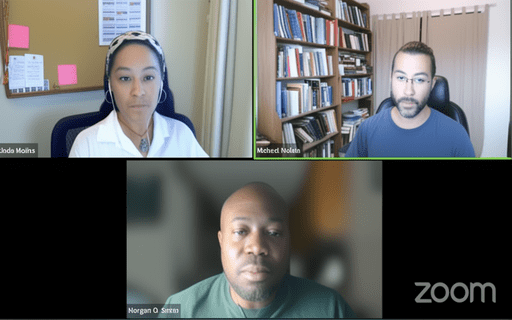
A Conversation with Linda & Michael Molina

First and foremost, I would like to extend my heartfelt gratitude to Linda and Michael Molina for inviting me to share my insights and experiences on their esteemed platform. Our engaging conversation traversed through the realms of spirituality, the use of entheogens, and the profound journey toward self-realization. Here are some of the key points I discussed during our enlightening conversation:

Oneness and Surrender:

One of the pivotal aspects of spiritual growth I emphasized is the practice of surrender and the dissolution of the ego to attain a state of “Oneness” or non-dual awareness. This state transcends the dichotomy of self and other, immersing one into a boundless existence that is the true nature of reality. I posited that the various paths and narratives leading to Oneness are but creations of higher consciousness, serving as a script that guides us through the unfolding drama of self-discovery. The crux of the journey lies in surrendering and opening one’s heart to the myriad experiences that life presents, allowing the essence of Oneness to permeate our being.

Embracing Negative Experiences:

The path toward spiritual enlightenment is not always bathed in light. It often takes us through the dark alleys of our psyche, urging us to confront and embrace our shadows. I shared the importance of welcoming negative experiences or the “dark sides” as integral parts of the spiritual journey. These challenging phases, when navigated with awareness and acceptance, can catalyze profound growth and a deeper understanding of our true nature.

Advice for Spiritual Seekers:

The spiritual expedition is an endless voyage towards the heart of existence. I advised fellow seekers to persevere, even when they stumble upon beautiful or profound experiences. There’s always a deeper level of realization awaiting beyond the apparent zenith. Each step taken on this sacred path unveils a new horizon of understanding, urging us to delve deeper into the mystery of existence.

Philosophical Insight:

Reflecting on the nature of reality, I likened the stories and paths leading to spiritual realization to scripts in a movie, orchestrated by a higher consciousness. These scripts, while seemingly real and consequential, are mere narratives that help make sense of our journey towards Oneness. The ultimate truth lies beyond these scripts, in the boundless realm of pure consciousness where the illusion of separation dissolves, revealing the unadulterated essence of Oneness.

Our conversation was a deep dive into the essence of spirituality, the transformative potential of brainwave entrainment, entheogens, and the boundless journey toward self-realization. I am immensely grateful to Linda and Michael Molina for providing a platform to explore and share these profound truths. Through such enlightening exchanges, we inch closer to unravelling the mystic tapestry of existence and fostering a collective awakening to the inherent unity of all life.

Morgan O.  Smith

Yinnergy Meditation & My Book, Bodhi in the Brain…Available Now!

https://linktr.ee/morganosmith

Watch the episode “Drugs, Mystical Experience, and the Value of Service” below. For more on ESF, check out their channel at https://www.youtube.com/@EmergingSciences

When the Golden Shadow Presents Itself as a Spiritual Peak Experience

Throughout our lives, we often come across moments of profound clarity, moments when the essence of the universe seems to touch our very souls. These experiences, often termed ‘peak experiences’, can be transformative. But when these encounters emerge from our ‘golden shadow’, the exploration takes on an added dimension.

The ‘golden shadow’, a term rooted in Jungian psychology, represents the unacknowledged positive aspects of oneself. It is not just the dark shadow that contains repressed desires and fears; the golden shadow holds our unrealized strengths and potential. When it manifests in our conscious experiences, it showcases what we could be, what we haven’t yet embraced about our greatness.

A spiritual peak experience arising from the golden shadow is not just a fleeting moment of enlightenment, but a glimpse into the vast reservoir of our untapped potential. It is the universe’s way of saying, “This is you. This is what you’re capable of.” Such moments aren’t just spiritual highs; they are profound realizations of the grandeur within us that’s waiting to be unveiled.

However, there’s a challenge. The nature of the golden shadow is that it’s often elusive. We may feel overwhelmed by the brilliance of our potential, believing that it’s too grand, too beautiful, too powerful to belong to us. But that’s the illusion. It’s imperative to remember that the golden shadow is as much a part of us as our flaws and insecurities.

Embracing these spiritual peak experiences means recognizing that the brilliance we witness during such moments is our own. It’s a call to action, an invitation to integrate this vast potential into our everyday lives. By doing so, we’re not only elevating our consciousness but also contributing to the collective evolution of humankind.

In the end, when the golden shadow presents itself as a spiritual peak experience, it’s a reminder of our intrinsic connection with the universe and our rightful place within it. We are each one of us, magnificent galaxies of potential, waiting for the right moment to shine.

Morgan O. Smith

Yinnergy Meditation & My Book, Bodhi in the Brain…Available Now!

https://linktr.ee/morganosmith

The Ouroboros of Samsara

An Endless Cycle of Self-Inflicted Suffering

The universe is filled with symbols that describe the cyclical nature of existence. One of the most captivating is the concept of ‘Samsara’ from Eastern traditions and ‘Ouroboros’ from ancient civilizations. While they emerge from different cultural contexts, they bear striking resemblances, encapsulating the endless cycle of birth, death, and rebirth and the continuous loop of life-consuming itself.

### Samsara: The Wheel of Existence

Samsara, derived from Sanskrit, signifies the cyclical process of birth, death, and rebirth. It’s a fundamental concept in Buddhism, Hinduism, and Jainism. Many Eastern spiritual practices aim to break free from this relentless cycle and attain enlightenment or Moksha. Why? Because Samsara is not just about rebirth – it’s about suffering. Every birth brings with it aging, sickness, and ultimately, death. The attachments, desires, and ignorance in life lead to actions (karma) that bind us to this wheel, causing endless suffering.

### Ouroboros: The Eternal Circle


The Ouroboros is an ancient symbol depicting a serpent or dragon eating its own tail. Found in many cultures, from ancient Egypt to the indigenous traditions of the Americas, it’s emblematic of the eternal cyclical nature of the universe. Creation out of destruction, life out of death. Just as the snake sheds its skin only to be reborn, life continually renews itself even as it ends.

### Biting One’s Tail: The Self-Caused Suffering


The fascinating aspect of the Ouroboros is the act of the snake biting its own tail. It’s a voluntary act of self-consumption, symbolizing self-reflection and the cyclical nature of things. But what if we viewed this act as a representation of self-inflicted suffering, much like the karmic traps in Samsara?

Every time we hold onto grudges, indulge in harmful habits, or remain ignorant of our true nature, we bite our own tail. We become both the cause and the recipient of our suffering. And just like the snake cannot see beyond its circular path, we often find it challenging to envision a life beyond our self-inflicted pain.

### Breaking the Cycle

While these symbols might paint a bleak picture of existence, they also offer hope. Just as the cycle of Samsara can be broken through enlightenment, the Ouroboros signifies rebirth and renewal. But this requires self-awareness.

By recognizing the patterns of our actions, understanding the roots of our desires, and embracing self-reflection, we can begin to release our grip on our own tails. This doesn’t mean the cessation of life’s challenges, but rather an enlightened approach to them, devoid of self-inflicted suffering.

In conclusion, Samsara and the Ouroboros serve as profound reminders of the cyclical nature of existence and the potential pitfalls of living unconsciously. They beckon us to awaken, to understand our role in our suffering, and to seek paths that transcend these ancient cycles. As we navigate the journey of life, may we always strive to understand the deeper meaning behind these symbols and find the courage to let go of our tail.

Morgan O. Smith

Yinnergy Meditation & My Book, Bodhi in the Brain…Available Now!

https://linktr.ee/morganosmith

Absolute Monism

Unraveling the Tapestry of Oneness

The vast universe, with its manifold entities and infinite complexities, often bewilders human minds. Philosophers and thinkers from time immemorial have grappled with questions about the nature of existence and the ultimate reality. One profound idea that surfaces recurrently is that of Absolute Monism: the belief that beneath the apparent multiplicity, there is but one undivided reality. Let’s take a deeper look into this captivating worldview.

### A Universe from One Thread


At the heart of Absolute Monism lies the assertion that all differences and diversities we perceive are mere illusions. This assertion may seem contradictory to our daily experiences. After all, isn’t the world teeming with diversity?

Yet, this is where Eastern and Western philosophies converge. Ancient Hindu scriptures speak of *Brahman* as the ultimate, undifferentiated reality. The Hindu philosophy of Advaita Vedanta encapsulates this belief by stating that the world’s multiplicity, driven by *Maya*, is an illusion. Meanwhile, in the West, the philosopher Spinoza proposed that God and Nature are two names for the same reality, implying a singular, infinite substance. These ideas, separated by continents, come together to champion a singular reality beneath the apparent diversity.

### Seeing Beyond the Illusion

The concept of illusion is integral to understanding monism. In life, appearances can often be deceiving. A mirage in the desert, a rainbow after the rain, and even our reflection in the water are all illusions. If such simple things can deceive our senses, might it be possible that our entire perception of diverse reality is similarly mistaken?

*Mysticism* has been one avenue through which individuals across cultures have described experiences consistent with Absolute Monism. The interconnectedness of all things, a theme found in the tapestry of monism, speaks to the heart, nudging us to see beyond divisions and differences.

### Implications for Modern Times

If Absolute Monism holds that all is one, then what does this mean for us in the present age, surrounded by divisive forces and fragmented views?

Firstly, on an ethical plane, it implies that harm inflicted upon one is harm to the entirety. This perspective could drastically alter how we approach interpersonal relationships, environmental concerns, and global crises. If we truly internalize this philosophy, then every act of kindness and harm has far-reaching consequences.

Secondly, it brings to the fore the importance of self-realization. In many monistic traditions, the realization of this singular truth is the end goal, bringing about an end to suffering.

Lastly, it sparks curiosity about the nature of our universe. With advancements in modern physics and cosmology, we find theories that echo monistic thoughts. The Big Bang, for instance, suggests that everything we see, touch, and experience emerges from a singular point.

### Embracing Diversity within Unity

Absolute Monism does not negate the value of diversity. Rather, it calls for a deeper understanding. Imagine a tapestry. Up close, one can see the myriad of colours, textures, and patterns. But from a distance, it’s one cohesive artwork. Similarly, monism asks us to appreciate the individual threads while recognizing the grand design.

In an age teeming with division, perhaps the idea of Absolute Monism can be the bridge that reminds us of our interconnectedness. As we stand at the cusp of profound global challenges, this ancient philosophy might just hold the key to a unified, harmonious future.


Embracing the ideas of Absolute Monism requires introspection and openness. Whether you fully resonate with its tenets or not, it undoubtedly serves as a beacon, guiding us toward unity, understanding, and profound interconnectedness.

Morgan O. Smith

Yinnergy Meditation & My Book, Bodhi in the Brain…Available Now!

https://linktr.ee/morganosmith

The Mystical Peak Experience of Pure Sexual Love

Exploring Eros

In the diverse tapestry of human experience, few phenomena are as enigmatic and profound as the experience of love. Among its many facets, the experience of Eros stands apart as a sublime manifestation of pure sexual love that transcends the ordinary and becomes mystical.

Eros: More than Just Desire

Named after the Greek god of love, Eros is often relegated to the realm of mere physical attraction or romantic infatuation. However, to those who have encountered its mystical peak, it represents something far more profound. Eros is an expression of love that transcends mere physicality, reaching into the spiritual realm and connecting us to something greater.

The Peak Experience: A Transcendental Connection


The mystical experience of Eros is not about hedonistic pleasure or fleeting passion. It’s a profound peak experience that transcends the mundane, awakening a deeper connection not only with a partner but with existence itself.

In this state, lovers are not merely engaging in a physical act; they are participating in a sacred ritual that symbolizes unity, trust, and transcendence. It’s a moment where boundaries dissolve, and two individuals become one, not just physically, but emotionally and spiritually.

The Philosophical Dimensions of Eros

The experience of Eros brings into focus philosophical questions about the nature of love, connection, and existence. Is love merely a biochemical reaction, or does it hint at a more profound, cosmic truth? Can sexual love be a pathway to spiritual enlightenment? What does it mean to truly connect with another human being?

Many philosophers and mystics have explored these questions, recognizing the potential for sexual love to be a vehicle for self-realization and spiritual growth. Eros, in its purest form, challenges our conventional understanding of love, encouraging us to see beyond the superficial and to recognize the sacred in the everyday.

Conclusion: Eros as a Path to Understanding

The mystical peak experience of Eros is not just a fleeting moment of pleasure; it’s a profound philosophical insight into the nature of connection, existence, and the human condition. It offers a glimpse into a realm where love is not confined to physical attraction but is a unifying force that binds us all.

To understand Eros is to engage with some of the most fundamental questions about what it means to be human, what it means to love, and what it means to connect with something greater than ourselves. It’s a journey that invites us to look within, to question, to explore, and to grow.

The mystical experience of Eros reminds us that love is not merely an emotion but a transformative power that can lead us to deeper understanding and spiritual awakening. It is a beacon that guides us toward a more profound connection with ourselves, with others, and with the universe itself. In embracing Eros, we may find not just pleasure, but wisdom, joy, and a sense of unity that transcends our earthly existence.

Morgan O. Smith

Yinnergy Meditation & My Book, Bodhi in the Brain…Available Now!

https://linktr.ee/morganosmith


Exploring the Emotional Spectrum

A Journey Through Plutchik’s Wheel and the Hindu Subtle Body

Introduction

The exploration of human emotion transcends disciplines, cultures, and time. From psychological models such as Plutchik’s Wheel of Emotions to the spiritual teachings within Hinduism concerning the subtle body, the pursuit to understand our emotional selves is as complex as it is enriching. This blog post takes a deep dive into these seemingly disparate concepts, examining the intersection of emotion, spirituality, and subtle awakening.

Plutchik’s Wheel of Emotions

Plutchik’s model identifies eight basic emotions:

1. **Joy** – A sense of happiness and fulfillment.
2. **Trust** – Confidence in something or someone.
3. **Fear** – A response to perceived danger or threat.
4. **Surprise** – A reaction to the unexpected.
5. **Sadness** – A feeling of loss or despair.
6. **Disgust** – A strong aversion or repulsion.
7. **Anger** – A reaction to perceived wrong or injustice.
8. **Anticipation** – Expectation or excitement for what’s to come.

These primary emotions combine to form complex emotions and are mapped in a way that each emotion has an opposite.

The Emotional Subtle Body in Hinduism

Hindu philosophy introduces the concept of the subtle body, an intricate and vital part of our spiritual being, separate from the physical body. Comprised of the mind (Manas), intellect (Buddhi), ego (Ahamkara), and conditioned consciousness (Chitta), the subtle body is responsible for our thoughts, emotions, and consciousness.

Connecting the Dots: Emotions and the Subtle Body

The profound connection between Plutchik’s emotional spectrum and the emotional subtle body within Hinduism lies in the universality of emotions and the depth of human experience. Here’s a breakdown:

– **Joy & Trust**: These positive emotions align with spiritual awakening and the cultivation of inner peace and compassion, reflecting a higher level of consciousness.

– **Fear & Anger**: These emotions can be linked to spiritual blocks or ignorance (Avidya) within Hinduism, which hampers spiritual growth.

– **Surprise & Anticipation**: These emotions speak to our deep connection with the universe and the ever-changing nature of life, echoing the Hindu belief in the transient nature of our physical existence.

– **Sadness & Disgust**: Often seen as negative emotions, they can be channels for growth and understanding of the self, mirroring the Hindu concept of Dharma or righteous living.

Conclusion: Emotions as Pathways to Spiritual Awakening


The emotional spectrum is not merely a psychological construct but a spiritual pathway. By understanding emotions through the lens of both Plutchik’s model and Hindu philosophy, we can embark on a journey toward subtle spiritual awakening.

The nuances of emotions, their combinations, and their reflections within the emotional subtle body offer us tools to navigate our spiritual paths. The profound connection between these concepts suggests that our emotions are not transient or superficial but deeply entwined with our very essence.

This exploration encourages us to recognize emotions as more than reactions to the world around us. They are signposts guiding us toward self-realization and a deeper connection with the divine within.

Morgan O. Smith

Yinnergy Meditation & My Book, Bodhi in the Brain…Available Now!

https://linktr.ee/morganosmith

The Profound Transformation of Realizing Oneself as Brahman

A Journey Beyond the Self

In the boundless tapestry of human existence, few ideas are as profound and transformative as the realization of oneself as Brahman. A central concept in Hindu philosophy, Brahman refers to the ultimate reality or cosmic spirit, a principle that transcends the individual self and unites all living beings.

This blog post explores the many changes an individual might experience upon this realization, a journey that transcends mundane existence and awakens a new consciousness.

### The Loss of Ego and the Embrace of Unity

Perhaps the most radical shift in consciousness comes from losing the individual ego. Recognizing oneself as part of the universal oneness leads to a dissolution of the self, allowing the individual to see beyond the superficial distinctions that often characterize human perception. This leads to a profound sense of unity, empathy, and compassion, transcending barriers like race, nationality, and religion.

### A Shift in Values and Desire

The realization of Brahman changes the very fabric of desire and ambition. Material possessions, social status, and even relationships may lose their significance, replaced by spiritual growth and a deepened understanding of the cosmic order. The individual might pursue selfless service, finding fulfillment in contributing to the well-being of all.

### The Embrace of Paradox and the Transcendent Nature of Existence

This profound awakening allows for a comfortable acceptance of paradoxes and contradictions. Time becomes more fluid, creativity blossoms, and the person might develop an ability to recognize synchronicities, meaningful coincidences that reveal the interconnected web of existence.

### Living in Harmony and Transcending Social Constructs


Living in harmony with nature, respecting all life, and transcending conventional gender roles and social constructs, the enlightened individual moves through life with grace, mindfulness, and effortless action. Their actions are unforced, carried out with a sense of reverence and alignment with universal ethics.

### The Physical and Emotional Manifestations

The journey to realizing oneself as Brahman does not merely affect the mind but also resonates through the body and emotions. The individual may find improved physical well-being, experience deeper states of meditation, and become almost entirely devoid of internal and external conflict.

### The Inspiration to Others

Through this transformation, the individual becomes a living example of peace, love, and wisdom, inspiring others simply through their presence and way of being. They embody a philosophy that sees beyond the limitations of material existence and offers a path to spiritual awakening.

### Conclusion

The realization of oneself as Brahman is a profound spiritual concept that encompasses every aspect of being—mental, physical, emotional, and spiritual. It offers a glimpse into a state of consciousness that transcends the mundane and awakens a new way of perceiving reality.

In a world often driven by material pursuits and divisive ideologies, the teachings surrounding Brahman provide a timeless wisdom that calls for unity, compassion, and a life centred on spiritual truth. Whether viewed as a philosophical concept, a religious belief, or a spiritual experience, the realization of Brahman invites us to look beyond the self and embrace a vision of existence that is all-encompassing, transcendent, and profoundly transformational.

As we navigate the complexities of modern life, may we find inspiration in the ancient wisdom that teaches us to see ourselves not as isolated beings but as part of a grand, interconnected cosmos, guided by a principle that is at once beyond us and within us. It is a journey of discovery, a path to enlightenment, and a call to a deeper, more meaningful existence.

Morgan O. Smith

Yinnergy Meditation & My Book, Bodhi in the Brain…Available Now!

https://linktr.ee/morganosmith

Beyond the Verbal Abyss

Embracing the Indescribable in the Pursuit of Nondual Consciousness

The realm of metaphysics has been exploring the uncharted territory of human existence since the inception of philosophical thought. The concept of ‘Turiyatita’, borrowed from the ancient Vedantic wisdom, invites us to delve into the mystery of the Ultimate Nondual Presence. In a state of supreme transcendence, Turiyatita marries the notions of Emptiness and form, painting a picture of the Self fully liberated and realized.

This profound state is said to represent the highest level of human awareness. It’s the experience of actualizing the quintessential Vedantic concept, “Aham Brahmasmi,” the realization that all is Brahman, the ultimate reality.

The fascinating paradox of this journey lies in its unspeakability. The moment of enlightenment, where one realizes their ultimate oneness with the universe, is so overwhelmingly mind-shattering that no human language can capture its essence. We find ourselves venturing into a stateless state, an inexplicable expanse that houses all potentiality, while simultaneously being nothing. It’s a cosmic riddle that has always existed and will continue to exist, challenging the very constructs of human understanding.

Over the years, I grappled with expressing the enigma that is Turiyatita. I discovered that language, no matter how profound or poetic, remains insufficient to convey this transcendental experience. The individual mind’s narratives fall short when tasked with communicating such an experience to the collective consciousness. This realization is like a boundless sea that can only be expressed through the universe itself – through everything around us, beneath us, above us, within us, and even through us. Our very existence, after all, is an echo of this ‘Absolute’ language.

This illuminating journey of pure awareness left me in a state of awe, marking an indelible imprint on my ego’s fragments. An unforgettable memory, it is the most profound self-discovery I’ve had in this lifetime.

Most of us remain oblivious to the existence of this state, yet it’s accessible to everyone. It waits patiently for anyone bold enough to plunge into its mysterious depths. These are the Akashic waters of enlightenment, a blissful abyss where the brave explorers willingly lose themselves.

This presence, while unnoticeable, pervades our existence as an invisible field, a force that forms the bedrock of all beings. It’s in the exploration of this Ground of All Existence that one realizes the enigma of the indescribable, the ineffable mystery commonly referred to as ‘God’.

So, as we journey through life and its varied experiences, may we always strive for the courage to explore these profound depths. For it is in these explorations that we touch upon the mysteries of our existence, our true selves, and the cosmic reality we are all a part of.

Morgan O. Smith

Yinnergy Meditation & My Book, Bodhi in the Brain…Available Now!

https://linktr.ee/morganosmith

The Facets of Ego and Transcendent Experiences: Part Two

As we proceed from Part One, a profound realization dawns. During moments of complete ego death, the individual facets cease to exist, yet paradoxically, they all exist, blending into a unified consciousness. The boundaries of ‘I’, ‘you’, ‘us’, and ‘them’ dissolve, making room for an all-encompassing ‘we’.

Our ego transforms and integrates into the collective consciousness, interconnecting with the egos of all beings, and indeed, the universe itself. Every trait, every star in our constellation, becomes part of this grand cosmic tapestry.

This realization isn’t merely intellectual, but experiential. Our individual identities meld into the collective, signifying an interconnectedness that transcends our singular perspective. In the dance of the facets of ego and the mystical experiences, we uncover our deepest potential to be interconnected, to share in the collective consciousness of all beings, and to participate consciously in the magnificent orchestration of the universe.

Through this journey, we don’t lose ourselves; instead, we find our place in the cosmos, gaining a newfound appreciation for the diversity and unity that life offers. We witness our traits, without labelling them as positive or negative, as part of a unified whole. Our ego ceases to be an entity isolated from the universe and becomes a fundamental part of the cosmic consciousness.

This exploration of the ego and its many facets is not just an intellectual exercise, but a call for introspection and self-awareness. It encourages us to embrace our full spectrum of experiences, from the depths of our struggles to the heights of our joys, all the while seeking that profound connection with the universe and our place within it.

Morgan O. Smith

Yinnergy Meditation & My Book, Bodhi in the Brain…Available Now!

https://linktr.ee/morganosmith

The Multiverse Within

Exploring Chakras Beyond Our Perception

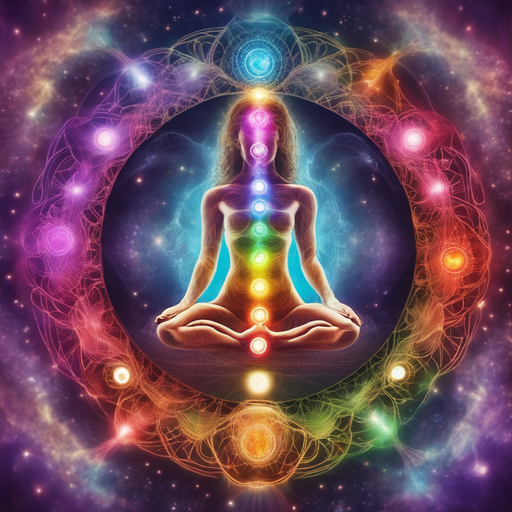
In the rich tapestry of Eastern philosophy and spirituality, the concept of chakras and kundalini awakening has long captivated the Western world. But a deeper, more expansive understanding of these ideas prompts us to transcend the traditional seven chakras in the human body and see them permeating the universe at every level – from the massive galaxies to the tiniest sub-atomic particles.

This perspective’s core is the belief that chakras are not exclusive to the gross or subtle human body. They are ubiquitous and omnipresent, extending their influence to every cell, every molecule, every atom, and even to the most infinitesimal particles. Just like each human has energy centers, these minuscule entities – bodies in their own right – are also believed to possess chakras.

This viewpoint is a confluence of spirituality and quantum physics. It suggests a microcosm-macrocosm principle where the patterns of the universe repeat themselves at different scales, connecting everything from the vastness of the cosmos to the smallest particles.

During a full-blown kundalini awakening, a transformative spiritual experience often depicted as the release of divine energy stored at the base of the spine, it is proposed that not only the individual’s chakras but also these infinitesimal chakras, in each ‘body’ within our physical body, come to life. It is a grand unison of consciousness awakening at all levels of existence, interconnecting every particle within and beyond us.

In such a profound event, each ‘body’, from cellular to atomic and sub-atomic levels, reaches a state of self-realization, comprehending that it is part of the ‘Brahman,’ the ultimate reality or absolute in Hindu philosophy. This concept equates to ‘The Ground of all Being,’ a term that mystics and spiritual teachers use to describe the deepest level of reality.

This fascinating belief presents an interconnected universe where the microcosm and macrocosm continually interact, affecting and reflecting each other. A place where every entity, regardless of size or subtlety, is a unique expression of the same energy, bound by a common cosmic rhythm and linked through an intricate network of chakras.

In conclusion, the belief in a kundalini awakening of not just the seven primary chakras, but countless others within every atom and sub-atomic particle, invites us to broaden our perception of reality. This concept urges us to look beyond the boundaries of our current understanding and explore the uncharted territories of consciousness that might hold the key to our oneness with the universe. It is a philosophy that doesn’t merely expand our knowledge of self and the universe; it transforms it.

Morgan O. Smith

Yinnergy Meditation & My Book, Bodhi in the Brain…Available Now!

https://linktr.ee/morganosmith