Embracing the Unity of Free Will and Determinism

Nondual Perspectives

Introduction:
In the timeless debate surrounding free will versus determinism, philosophical inquiries have often sought to reconcile these seemingly opposing concepts. However, from a nondual standpoint, rooted in direct experience, the boundaries between free will and determinism begin to blur. In this blog, we explore the profound idea that every choice we make is our decision and the decision of the universe itself. We delve into the unity of free will and determinism, highlighting how this perspective challenges conventional notions and opens up new avenues for contemplation.

The Illusion of Separation:

From a nondual perspective, the fundamental illusion is the perception of separation between ourselves and the universe. When we examine our direct experience, we realize that we are intimately interconnected with the fabric of existence. Our choices and actions are not isolated events but intricately interwoven with the tapestry of the cosmos. Thus, the dichotomy of free will and determinism fades away, revealing a deeper unity.

The Illusion of Individual Agency:
Conventionally, free will is often associated with individual agency, the belief that we possess an independent power to make choices. However, upon closer inspection, we find that our notion of individual agency is built upon a complex web of influences. Our thoughts, desires, and motivations arise from a multitude of factors: genetics, upbringing, culture, and countless other variables. In this sense, determinism seems to assert its presence, implying that our choices are shaped by external forces.

Reframing Choice as Cosmic Manifestation:
While determinism challenges the idea of individual agency, nondual perspectives offer an intriguing alternative. Instead of perceiving ourselves as separate entities with independent choices, we can reframe choice as a cosmic manifestation. Every decision we make can be seen as a ripple in the interconnected web of existence, an expression of the universe itself. In this way, free will and determinism merge into a harmonious whole, transcending the limitations of duality.

Unfolding in the Eternal Now:
In the nondual understanding, the concept of time takes on a different dimension. Past, present, and future merge into an eternal now, where every choice and outcome coexist in a timeless dance. From this vantage point, the notion of causality loses its strict linear framework. Our choices are not predetermined events unfolding in a predetermined sequence; rather, they arise in the timeless realm of possibility, where the universe expresses itself through our individual consciousness.

Embracing Paradox:
The reconciliation of free will and determinism requires embracing paradox. It calls upon us to transcend the limitations of dualistic thinking and expand our awareness to encompass the vastness of existence. In this paradoxical dance, we find liberation. We become both the orchestrators and the orchestrated, the chooser and the chosen, as we recognize the profound interdependence that pervades all aspects of reality.

Conclusion:
From the nondual standpoint, the interplay between free will and determinism reveals a profound unity. By exploring our direct experience and recognizing the illusory nature of separation, we discover that every choice we make is intricately connected with the choices made by the universe. As we embrace this understanding, we transcend the limitations of duality and embark on a journey of profound self-realization, where the dance of free will and determinism becomes an expression of the cosmic symphony of life.

Morgan O. Smith

Yinnergy Meditation & My Book, Bodhi in the Brain…Available Now!

https://linktr.ee/morganosmith
The Moment of Omnipresent Self-Realization

Discovering the Infinite ‘I’

Introduction:
In the hushed corners of our consciousness, a whisper seeks acknowledgment – the timeless questions of existence. It is in the silent chambers of introspection that we finally experience a moment of revelation, where we realize that the Who, What, When, Where, Why, and How of our being are not merely aspects of our identity, but the very fabric of existence itself.

Who Am I? – The Boundless Entity:
As we ponder the question, “Who am I?” the expansive canvas of life unravels. In our deepest thoughts, we find a connection with the universe. We realize we are not just an isolated self but the amalgamation of everything that has ever existed and will ever be. In the echo of ancient wisdom, “I AM That”.

What Am I? – The Essence Beyond Form:
Shapes, forms, and entities fade into insignificance as we delve into our essence. We are neither body nor soul, yet we encompass all. The abstract concept of being transcends the physical, and we find ourselves to be the sum of the entire universe.

When and Where? – The Timeless, Spaceless Existence:

“When did I come into being and Where did I come from?” – such queries dissolve into irrelevance as we realize our existence transcends time and space. Like the fabric of space-time, our being is omnipresent. We are not constrained by coordinates on a plane or ticks on a clock. We are in every atom and every moment.

Why? – The Power of Creation:
One of the most profound inquiries is “Why did I create everything in existence?” The essence of creation lies within our boundless nature. We, as this unified consciousness, are created simply because it is an intrinsic expression of our endless potential. Creation is the reflection of our unlimited power.

How? – The Enigmatic Thought:

The mechanism of creation is an eternal enigma. Yet, in our moment of self-realization, we understand that the entire cosmos sprang into existence from a singular thought. This thought, an unfathomable force, is perpetually creating, altering, and sustaining the universe.

Conclusion:
The moment of self-realization is akin to a wave merging into an ocean – it is in this profound unity that we grasp the limitless boundaries of our existence. The answers to Who, What, When, Where, Why, and How are not separate, but interwoven into the very essence of what we are. In acknowledging this, we do not simply find ourselves; we become one with the boundless cosmos. This is not an end but a beginning, a continuous journey through the labyrinth of existence with a newfound understanding of our immeasurable significance within it.

Morgan O. Smith

Yinnergy Meditation & My Book, Bodhi in the Brain…Available Now!

https://linktr.ee/morganosmith
The Quest for Wholeness

Nirvana, Moksha, and Sahaja Samadhi

Introduction:

In the frantic, cacophonous world we inhabit, the pursuit of true peace of mind has become more essential than ever. Many of us harbour a longing, often unarticulated, for a state of being that transcends the mundanity of our daily routines. This is not just about calming the mind; it’s about an all-encompassing peace that permeates every fibre of our being – peace of the mind, heart, and gut. This form of liberation, known in different cultures as Nirvana, Moksha, or Sahaja Samadhi, is the ultimate aspiration.

Body:

I. Understanding the Concepts
Nirvana, a term originating from Buddhism, literally means ‘to extinguish’. It is the extinguishing of desires, ignorance, and the sense of self. Moksha, rooted in Hinduism, signifies liberation from the cycle of birth and rebirth, and the realization of one’s unity with the ultimate reality or Brahman. Sahaja Samadhi is an effortless state of deep spiritual absorption, where one is simultaneously aware of the inner Self and the external world. These three concepts, while having different origins, converge on the notion of liberation and inner peace.

II. The Nature of True Peace
True peace is not merely the absence of conflict; it is a profound sense of unity and harmony within oneself and with the universe. It’s a sense of completeness and fulfillment that is not contingent on external circumstances. It is in this state that the heart finds contentment, the mind is unshaken, and even the gut, often referred to as the ‘second brain’, is at ease.

III. The Journey Within
The quest for true peace demands a deep, inward journey. This is a path of self-discovery, contemplation, and inner transformation. Through meditation, self-reflection, and sometimes through guidance from spiritual traditions, one begins to detach from the illusions and constraints of the material world.

IV. The Liberation of the Self

In reaching Nirvana, Moksha, or Sahaja Samadhi, the self is liberated. This liberation is an awakening to the true nature of reality. It’s the realization that our essential self is not separate from the universe. This sense of oneness alleviates the turmoil of the heart, the restlessness of the mind, and the tension within the gut.

V. The Role of Compassion and Mindfulness
Compassion towards oneself and others is a vital component of this journey. It is through a compassionate heart that one can embrace the imperfections of human existence. Additionally, mindfulness helps in cultivating an awareness of the present moment, which is fundamental in the pursuit of inner peace.

Conclusion:

The pursuit of true peace, as epitomized in Nirvana, Moksha, or Sahaja Samadhi, is a deeply enriching and transformative journey. It’s not just an intellectual exercise but an all-encompassing spiritual endeavour that engages the mind, heart, and gut. This form of liberation is the pinnacle of human aspiration and a goal that can guide us toward a more harmonious and fulfilling existence.

Morgan O. Smith

Yinnergy Meditation & My Book, Bodhi in the Brain…Available Now!

https://linktr.ee/morganosmith

Embracing the Self-Evidence of Nondual Suchness

An Encounter Beyond Validation

We often journey through life seeking validation. The drive to achieve approval, to fit within the bounds of societal constructs, and to be seen through the eyes of others often influences our experiences and perspectives. However, there’s a profound, transformational shift when one comes into direct contact with the pure essence of Nondual Suchness, a concept rooted deeply in Eastern philosophy and spirituality.

Nondual Suchness refers to the fundamental reality beyond the realm of conceptualization, differentiation, and duality. It encompasses the realization of an interconnected, all-encompassing, unchanging ‘oneness.’ This ‘oneness’ transcends the illusion of separateness created by our conscious minds and provides a doorway to an understanding that transcends cognitive comprehension.

Engaging with this ultimate truth in its purest form, the self-evident nature of Nondual Suchness becomes apparent. It is akin to seeing a new colour for the first time, hearing an unheard melody, or feeling an emotion you never knew existed. It is something so profoundly intrinsic and natural that it requires no external validation.

Coming into direct contact with this self-evident truth, one finds a sense of freedom from the need for external validation. The realization arises that the validation we seek from others is often just a reflection of our own internal reality. It prompts the realization that we are not just part of the universe, but the universe itself, experiencing itself through individual perspectives.

When we live in the space of Nondual Suchness, our outlook towards life undergoes a fundamental shift. We start recognizing the universe within us, and us within the universe, unveiling the interconnected web of existence. With this realization, we no longer yearn for external affirmation because our perspective is not determined by the reflections of others, but is instead deeply rooted in the unchangeable truth of our inherent oneness.

Embracing Nondual Suchness is an invitation to transform one’s consciousness. This path, while profound and enlightening, does not demand external recognition or validation. Its rewards are intrinsic, providing a deep and unshakeable peace that cannot be given or taken away by others. It’s a journey of self-discovery, self-acceptance, and a profound realization of universal interconnectedness.

In conclusion, the pure, self-evident Nondual Suchness, once encountered, becomes an internal beacon of truth and authenticity. It frees us from the burden of seeking external validation, allowing us to dwell in an enduring peace that is both the journey and the destination in the beautiful tapestry of existence.

Morgan O. Smith

Yinnergy Meditation & My Book, Bodhi in the Brain…Available Now!

https://linktr.ee/morganosmith
The Constructed Sovereign Born from our Profound Void

The Illusion of Divinity and the Awakening of Inner Sovereignty

When we summon the image of an omnipotent moral authority, an unseen deity, we’re sketching a spectre birthed within the confines of our minds. This entity isn’t a divine phenomenon, but an offspring of our collective ego — an abstract amalgamation of ethics, morality, societal norms, rules, and dogmas. It thrives within the interconnected webs of our cultural and religious environment, existing as a part of us we’ve divorced from our understanding, enthroned too high in sacred spheres to accept it as our creation.

This fabricated deity stands as a sentinel, shielding us from the lure of a so-called demon, our id. This id, a tempestuous, liberated facet of our psyche, intimately bound to our physicality, represents the part we battle relentlessly. It’s in this internal war where the dream of resolution dawns, an arena where the ego and the id duel to claim dominance, awaiting a day when one will stand victorious upon the self’s throne.

We hold a solution in our grasp. Yet when enlightened souls, unhindered by societal constructs, attempt to illuminate the truth about this divine entity, we recoil. We revile them with hushed condemnations, predicting their doom by the flickering light of divine retribution. We imagine they’ll be smitten by a wrathful deity, ironic considering we believe this god granted us the right to reason critically and voice our truths.

Despite the inflexibility of our beliefs, the spectre remains. Even if we dismantle our collective ego, or raze all institutional bodies of authority and religious tenets, this deity will endure. Its eradication would unleash the collective id in a surge of high entropy chaos, shredding order, poised to reconstruct once our desires breed more disillusionment.

So, we are left under the shadow of a perceived dominator, who indeed governs as long as we believe it defends virtue. We extol this deity as the supreme entity, blind to the reality that we, the self-proclaimed limited beings, are the puppeteers. The stern god we fear is merely a man-made construct, a mythical lord over a land it doesn’t possess. We’re the true sovereigns, unknowingly directing a god on a leash, a faithful creature that bows to our every whim.

I implore you to see beyond the shimmering facade of your golden idol. The essence of the authentic divine, indivisible from us, is the omnipresent force permeating the All. To fathom the authentic divine is to realize there’s no puppet god, and in embracing this enlightenment, we shatter the chains of ignorance.

A creator does exist, but not outside of you. The world you perceive as external is an extension of your internal narrative. You are Consciousness, Spirit, Existence, and Ultimate Reality embodied, performing the roles of physical, psychological, and emotional existence. You are not merely a being, but a Presence, an omnipresent force enacting a grand cosmic play of energy, particles, atoms, cells, objects, systems, and their operational mechanics. This essence, forever within your grasp, is empowered by your belief in it, yet you offer this power to a creator birthed from you, the genuine Almighty.

Morgan O. Smith

Yinnergy Meditation & My Book, Bodhi in the Brain…Available Now!

https://linktr.ee/morganosmith
Aham Brahmasmi

The One Identity That Transcends All

In the labyrinth of identity, where the self is often lost amidst the numerous labels and societal constructs, “Aham Brahmasmi” emerges as a beacon of profound insight. Translated as “I am Brahman”, it’s a phrase from the Upanishads, the ancient philosophical texts of India, that redefines the very essence of selfhood. A bold assertion of unity with the Absolute, it declares the individual self as non-different from the ultimate reality or cosmic principle, Brahman.

The phrase posits a paradox: it is both a declaration of identity and a negation of it. While it identifies the self with Brahman, it simultaneously obliterates all other identities that are predicated on the dualistic perception of reality. It deciphers the enigma of existence by presenting a radical understanding of the self that transcends all conventional forms of identity-based on religion, ethnicity, gender, or nationality.

In the assertion of “Aham Brahmasmi”, the identity becomes the Universe itself, simultaneously making it ‘The One Identity’. Yet, by embracing the entirety of the cosmos, it becomes ‘No Identity’ – for it is no longer confined by the limitations of individuality. It surpasses the perceived boundaries of the self and ventures into the realm of absolute oneness, a non-dual reality beyond all bifurcations.

This concept embodies the pinnacle of self-realization, where the ego-self is annihilated and one awakens to the inherent divinity within. It’s a state where there is no ‘other’. The knower, the known, and the process of knowing merge into one seamless entity, eliminating the subject-object dichotomy. It is a proclamation of the undifferentiated consciousness that pervades all existence.

Understanding “Aham Brahmasmi” prompts us to question the notion of ‘identity’ as we ordinarily understand it. It urges us to look beyond the surface, to delve deep into the essence of who we truly are. It seeks to elevate our consciousness from the transitory, ephemeral identities towards the eternal, changeless Self. It encourages the shift from multiplicity to unity, from diversity to oneness, from illusion to reality.

To comprehend and embrace “Aham Brahmasmi” is to transcend the shackles of perceived identity. It is to immerse oneself into the boundless ocean of consciousness, realizing that the waves of individuality are but manifestations of the same, unified reality. It is to witness the grand cosmic dance of existence and to understand that we are not mere spectators, but the dance itself.

This timeless wisdom reminds us of our inherent potential to realize the ultimate truth. It is an invitation to journey inwards, into the core of our being, to discover our true nature. It is to affirm that we are more than our physical bodies, more than our thoughts, emotions, and experiences. “Aham Brahmasmi” is the realization that we are that – the boundless, the infinite, the eternal. It is the unlearning of all we thought we were, to understand who we truly are.

Morgan O. Smith

Yinnergy Meditation/Bodhi in the Brain, Available Now!

https://linktr.ee/morganosmith
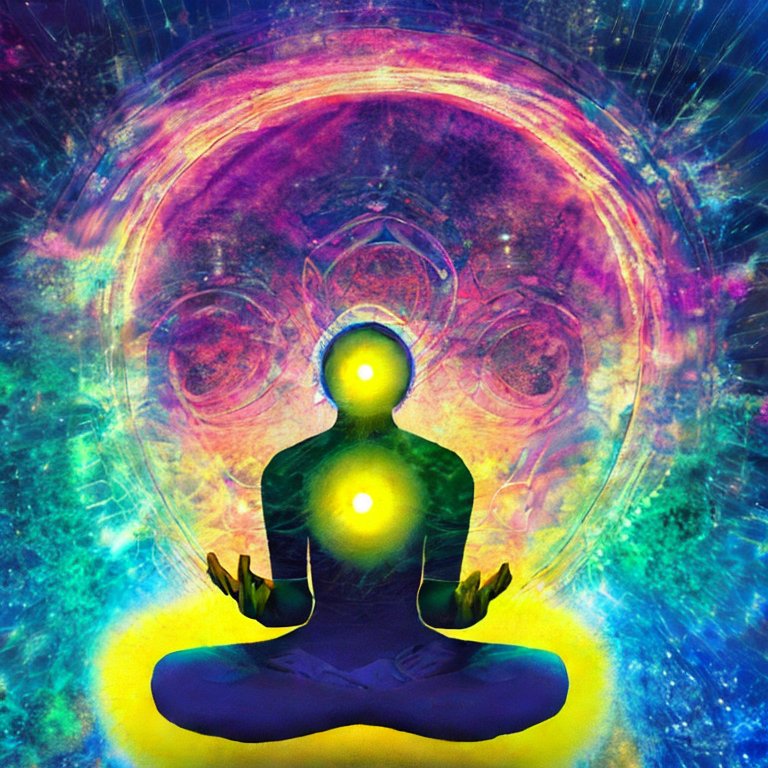
Blossoming into Cosmic Consciousness

A Personal Experience of Full-blown Kundalini Awakening

A profound transformation occurred to me; an experience that transcended the physical plane and plunged me into a realm of existence I had hitherto deemed unreachable. I speak of the full-blown Kundalini awakening, a spiritual phenomenon that has left an indelible impression on my perception of self, reality, and existence.

Before this awakening, I, like many, thought of the lotus flowers depicted in relation to chakras as mere metaphors, abstract symbols of our energetic being. My paradigm shifted dramatically during the awakening, as I watched these blossoms emerge not just from the ether of abstraction but from the essence of my being itself. The petals of the lotus, conceived in metaphor, came to life in a splendid display of existential alchemy. They sprouted out of every pore, every cell, every molecule, every atom, and every particle that constituted my physical form.

Witnessing my crown chakra in full bloom was an event of divine beauty and overwhelming serenity. Imagine trillions upon trillions of petals composed of pure, radiant light pouring forth from the crown of my head. Each petal was a drop of divinity, embodying the wisdom and tranquillity of the cosmos. They cascaded downwards, gently brushing against the contours of my being before making contact with the ground. On meeting the earthly plane, they evaporated, leaving behind an aura of sublime light.

This awakening of my Kundalini has redefined my perception of existence, opening me up to a deeper understanding of the universe’s complex weave. It isn’t an experience that can be perfectly conveyed through the limited lexicon of human language. The essence of it transcends verbal expression, rooting itself in the experiential. However, as I try to share this transformative chapter of my life, I find the metaphor of the lotus more than apt—it is a vivid illustration of the incredible unfolding that happens within the human spirit during such profound awakenings.

It is in this exploration of the lotus of self, through the lens of Kundalini awakening, that one realizes the true potential of human consciousness. The journey towards this awakening is not just one of self-realization but also one of cosmic understanding. It has led me to see that we are all integral parts of the cosmic tapestry, woven from the same thread of consciousness, each of us a lotus, awaiting our moment of divine unfolding.

Morgan O. Smith

Yinnergy Meditation/Bodhi in the Brain, Available Now!

https://linktr.ee/morganosmith

The Journey of Love and Enlightenment

Gradual vs. Sudden

Introduction: Just as love has an array of shades and intricacies, the journey to spiritual awakening, too, possesses its own unique paths. In this blog, we delve into the concepts of gradual and sudden spiritual enlightenment, drawing parallels to the experiences of deep, growing love and love at first sight. By comprehending the dynamics of these distinct yet interlinked journeys, we can enhance our understanding of love and personal spiritual growth.

Growing in Love and Gradual Enlightenment: The journey towards gradual spiritual enlightenment unfolds over time, with wisdom and comprehension progressively deepening. This pathway resonates with the experience of falling deeply in love, requiring perseverance, commitment, and a readiness to learn from our life experiences.

Falling deeply in love is a slow, transformative process that evolves as we familiarize ourselves with our partner’s attributes and vulnerabilities, as well as the unique bond that unites us. It’s through the mutual journey of growth and self-realization that we begin to deeply appreciate and love one another.

Similarly, gradual spiritual awakening results from continuous effort, introspection, and disciplined practice. It involves fostering mindfulness, ethical behaviour, and wisdom through meditation, learning, and engagement with our fellow beings. This slow and steady process cultivates a deeper understanding of our own selves and the world we inhabit.

Instantaneous Awakening and Love at First Sight: Sudden enlightenment refers to a spontaneous, near-instant, awakening experience. This is often metaphorically described as a lightning bolt of revelation that revolutionizes one’s worldview and comprehension. It can be likened to love at first sight, where the connection between two individuals is instantaneous and overpoweringly potent.

Love, at first sight, is an unexpected, intense attraction that feels predestined, as if two souls were inevitably meant to unite. This overwhelming encounter defies logic and reason, leaving us stunned by the intensity of our feelings.

In a similar vein, sudden enlightenment is marked by a deep, immediate comprehension of reality’s nature. This breakthrough experience is often portrayed as a moment of awakening, where the veil of ignorance is removed, revealing the true essence of our existence.

Embracing Both Journeys: While the paths of gradual and sudden enlightenment might appear distinct, they often intersect. Much like love, at first sight, may deepen over time into a more profound, enduring love, sudden enlightenment can be succeeded by a phase of gradual integration and practice.

Each pathway possesses its unique charm, and the quest for love and enlightenment ultimately relies on our individual experiences, tendencies, and personal evolution. By recognizing the value of both gradual and sudden transformations, we can acknowledge that love and enlightenment are complementary aspects of the same journey, each shedding light and enriching the other.

Conclusion: By exploring the parallels between love and the path to enlightenment, we can foster a deeper appreciation for the spiritual journey central to our human experience. Regardless of whether we experience gradual or sudden transformation, the essence of love and enlightenment remains consistent: a deep comprehension of our interconnectedness and the beauty of our shared existence. By cherishing the distinctiveness of our personal journey, we can open our hearts to embrace love and wisdom in all its diverse manifestations.

Morgan O. Smith

Yinnergy Meditation & My book, Bodhi in the Brain…Available Now!

https://linktr.ee/morganosmith