Embracing the Moment of Nondual Suchness

Beyond the Realm of Experience

In the intricate journey of understanding consciousness and existence, we often stumble upon a profound concept: the moment of nondual suchness. This concept, deeply rooted in Eastern philosophies, especially in Zen Buddhism, transcends the conventional boundaries of experience and knowledge. It presents a paradox that challenges our fundamental understanding of reality: at the moment of nondual suchness, direct experience cannot be experienced.

What does this mean, and why is it significant? To explore this, we must delve into the nature of nonduality. Nonduality refers to a state of consciousness where the distinction between the subject and object dissolves. It is a realization that there is no ‘me’ separate from the rest of existence. In this state, the usual dualistic framework of perceiver and perceived, experiencer and experienced, falls away.

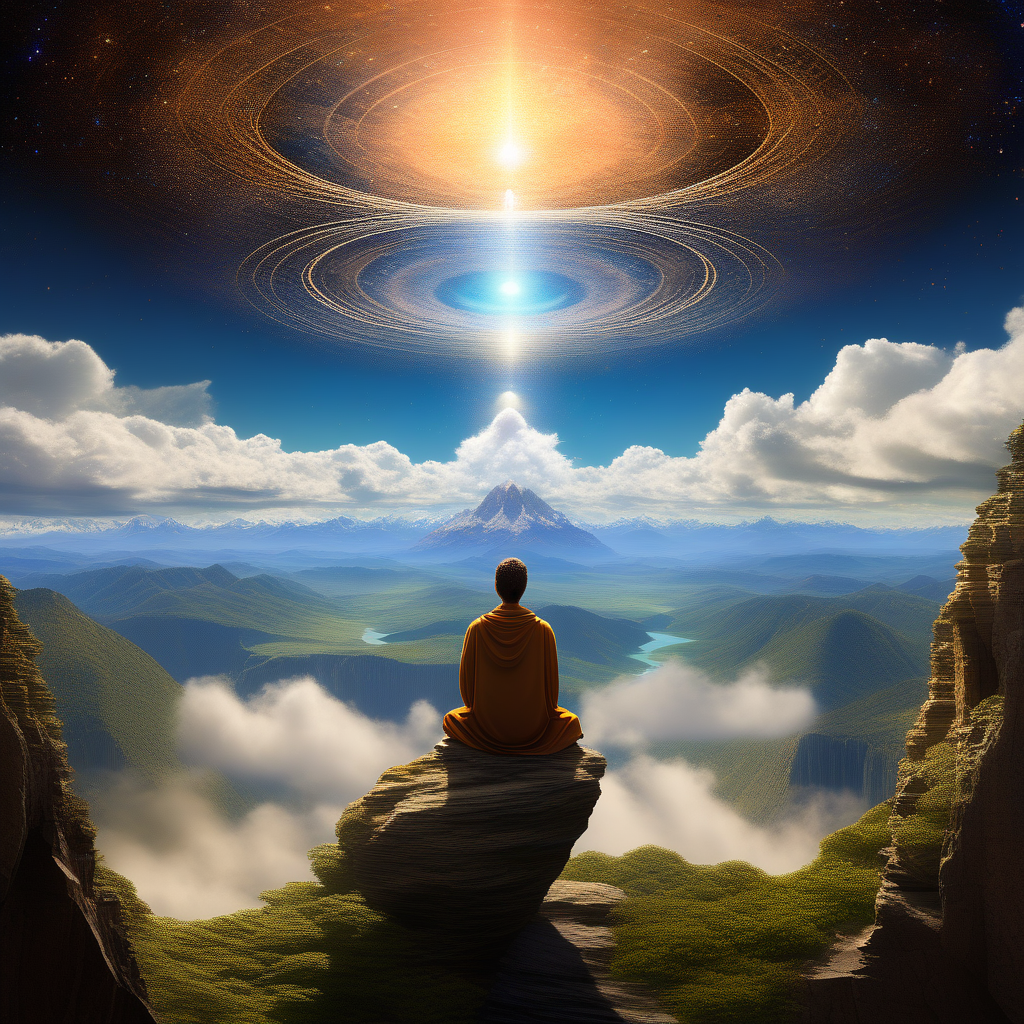
This leads us to the crux: if there is no separation between the experiencer and the experience, can we truly say that an experience is happening? The moment of nondual suchness suggests that in its purest form, experience transcends the dichotomy of subject and object. You do not experience the moment; you become the moment. There is no ‘you’ observing, feeling, or thinking about the experience; there is just the undifferentiated reality of what is.

This notion can be controversial and thought-provoking because it contradicts our everyday experience where we are constantly distinguishing ourselves from our experiences. We are taught to value our perceptions, emotions, and thoughts as what defines us. Yet, the concept of nondual suchness invites us to consider a state of being where these personal distinctions are not just irrelevant, but nonexistent.

Why is this perspective important? It encourages a radical shift in how we perceive ourselves and the world around us. It challenges us to let go of our habitual patterns of thought, our constant categorization, and our deep-seated need to analyze and differentiate. By contemplating nondual suchness, we open ourselves to a more holistic understanding of existence, one that is not confined by the limits of individual perspective.

In practical terms, embracing this concept can lead to a profound sense of peace and connectedness. When the illusion of separateness falls away, so do the conflicts and struggles born from it. What remains is a state of pure being, unburdened by the complexities of dualistic thinking.

To conclude, the moment of nondual suchness presents a radical and transformative viewpoint that challenges our conventional understanding of experience. It invites us to question the very nature of our existence and to explore a realm of consciousness beyond the limitations of individual perception.

Morgan O. Smith

Yinnergy Meditation, Spiritual Life Coaching & My Book, Bodhi in the Brain…Available Now!

https://linktr.ee/morganosmith

Self-Actualization vs. Self-Realization

A Deep Dive into the Psyche and Soul

In the journey of self-discovery and personal growth, two concepts often emerge as beacons: self-actualization and self-realization. While they may appear similar at first glance, each represents a distinct path in the quest for understanding oneself. This post delves into the nuances of these concepts, exploring how they differ and intersect in the human experience.

#### Self-Actualization: The Psyche’s Reflection

Self-actualization is a term popularized by psychologist Abraham Maslow, best known for his hierarchy of needs. It sits at the apex of his pyramid, symbolizing the highest level of psychological development. At its core, self-actualization is about realizing and fulfilling one’s potential and capabilities. It’s a process where the psyche chooses to see its reflection when ready.

This journey is characterized by:

– **Growth-motivated behaviour**: Pursuing goals that lead to personal growth and fulfillment.
– **Realism**: Having an accurate perception of oneself, others, and the external world.
– **Autonomy**: Being independent and resistant to enculturation, but not oblivious to the opinions of others.
– **Peak experiences**: Transcendent moments of joy, creativity, and deep understanding.


#### Self-Realization: The Soul’s Inner Knowing

In contrast, self-realization is often rooted in spiritual or philosophical traditions. It’s about understanding one’s true nature at the deepest level. Unlike self-actualization, which is more about the individual’s capabilities and achievements, self-realization is about the soul choosing to know itself as itself when ready, even when the conscious mind isn’t.

Key aspects include:

– **Inner wisdom**: Tapping into the innermost essence of one’s being.
– **Non-attachment**: Letting go of material and ego-driven desires to focus on spiritual enlightenment.
– **Oneness**: Feeling a profound connection with the universe and all living beings.
– **Intuitive understanding**: Beyond logical reasoning, it’s an intrinsic knowing of one’s true self.

#### Intersecting Paths

While self-actualization and self-realization seem different, they can intersect. Both paths involve a deep understanding of oneself and a commitment to personal growth. They also require readiness – an openness to embark on these transformative journeys.

In practice, one might find elements of self-actualization within their spiritual pursuit of self-realization, or vice versa. It’s a reminder that self-discovery is deeply personal and unique to each individual.


#### Conclusion

Understanding the distinction between self-actualization and self-realization can provide valuable insights into our growth journey. While self-actualization focuses on realizing one’s potential and abilities, self-realization dives into understanding the true essence of one’s soul. Both paths, though different, offer rich opportunities for profound personal transformation.

Morgan O. Smith

Yinnergy Meditation, Spiritual Life Coaching & My Book, Bodhi in the Brain…Available Now!

https://linktr.ee/morganosmith

Embracing the Infinite

Understanding Para Brahman

In the realm of spiritual exploration and philosophical contemplation, the concept of Para Brahman stands as a profound enigma. It is a term that transcends the limits of our typical understanding, pushing us into the depths of what might be considered the ultimate reality.

Para Brahman, in its essence, is the embodiment of the formless and the infinite. It is not confined by the physical dimensions we are accustomed to, such as length, height, depth, or width. This absence of form extends beyond the physical, into the realms of emotion, thought, and even the metaphysical. It is devoid of texture, distance, time, space, feelings, emotions, senses, attachments, desires, thoughts, memories, anticipation, smell, temperature, relationships, distinctions, wants, needs, and regrets. This extensive list, however, is not exhaustive but indicative of the boundless nature of Para Brahman.

What makes this concept both intriguing and challenging is the paradox it presents. Para Brahman, while being beyond all these attributes and perceptions, simultaneously encompasses everything that has been mentioned. It is not just the absence but also the presence of all. This paradox forces us to rethink our understanding of existence and non-existence, presence and absence, form and formlessness.


How can something be everything and nothing at the same time? This question lies at the heart of understanding Para Brahman. It compels us to look beyond the dualities that dominate our everyday experiences. In this sense, Para Brahman is not just a concept but an invitation to experience reality in its most unadulterated form.

This exploration is not just an intellectual exercise but a journey toward self-realization. It challenges our deeply ingrained notions of what is real and what is illusion. By contemplating Para Brahman, we delve into a state of consciousness where the distinctions that define our usual experiences dissolve. In this state, we are neither bound by our desires nor limited by our perceptions.

The understanding of Para Brahman brings us to the cusp of spiritual awakening, where the individual self merges with the universal self. It is a state of being that many spiritual traditions aim to realize – a state of pure consciousness, unmarred by the transient nature of physical existence.


In conclusion, the concept of Para Brahman invites us to embark on a journey beyond the confines of our material and psychological limitations. It encourages us to experience the world not just through our senses and thoughts but through a profound understanding of the interconnectedness and the boundlessness of all existence.

Morgan O. Smith

Yinnergy Meditation, Spiritual Life Coaching & My Book, Bodhi in the Brain…Available Now!

https://linktr.ee/morganosmith

Exploring the Nondual State of Turiyatitta

Beyond the Ego’s Realm

In the journey of spiritual awakening, particularly during the Enlightenment period, we encounter profound concepts that challenge our understanding of self and existence. Among these concepts is the intriguing idea of the nondual state known as Turiyatitta. This state signifies a pivotal transformation where the individual transcends ordinary consciousness, reaching a realm beyond the ego’s grasp.

### The Death of the Ego


At the heart of this transformation lies the “death of the ego.” This term, often shrouded in mysticism, refers to a significant shift in one’s perception of self. In our usual state, we identify strongly with our ego, which is essentially our constructed self-image, replete with our personal history, beliefs, and idiosyncrasies. The ego thrives on differentiation, seeing the self as separate from others and the world at large.


### Turiyatitta: The Nondual Experience

However, in the state of Turiyatitta, this differentiation dissolves. It is a state where the boundaries that separate the individual from the experience are no longer present. In simpler terms, the experiencer (the individual) and the experience become indistinguishable. This is a profound realization, where one no longer views themselves as an isolated entity navigating through an external world, but rather as an integral part of a unified whole.

### Implications of Nonduality

This nondual perspective offers a radical shift in understanding the nature of existence. It challenges the deeply ingrained notion of individualism that pervades many cultures. In Turiyatitta, the sense of separation, which is the root cause of much of our suffering – be it in the form of loneliness, competition, or conflict – dissolves. What remains is a sense of oneness, a deep connection with all that is.


### The Journey to Enlightenment

Reaching this state is often described as the pinnacle of the spiritual journey, a key milestone in the path to Enlightenment. It requires deep introspection, meditation, and often, guidance from spiritual teachings and mentors. It’s not merely an intellectual understanding but a lived, experiential reality.

### Conclusion


The concept of Turiyatitta, and the experience of nondual awareness it describes, presents a fascinating and potentially transformative perspective on life and existence. It invites us to reconsider our relationship with ourselves, others, and the world around us, promising a path toward greater harmony, peace, and understanding.

Morgan O. Smith

Yinnergy Meditation, Spiritual Life Coaching & My Book, Bodhi in the Brain…Available Now!

https://linktr.ee/morganosmith

The Paradox of Understanding

Embracing the Ground of All Being

As we embark on the journey of understanding the essence of our existence, we often find ourselves entangled in a paradoxical quest. The profound pursuit of comprehending the ‘ground of all being’ – the foundational reality that underpins our very existence – is a path treaded by philosophers, mystics, and thinkers alike. Yet, this quest often comes to a halt, not because of a lack of effort, but because of the nature of what we seek to understand.

The ground of all being, by its very definition, transcends the boundaries of human comprehension. It is an entity or a state that exists beyond the limits of our cognitive abilities. We, as beings limited by our perceptions and understanding, often find this concept elusive. It’s akin to asking a fish to describe water; the fish knows it exists within water, but cannot perceive it as something separate from its existence.


However, the journey doesn’t end here. There’s a transformative realization that emerges when we stop trying to intellectually grasp this foundational reality. It’s when we let go of the need to understand and become one with the comprehension itself. This shift in perspective is profound. We move from a state of trying to ‘know’ to a state of ‘being’ in knowledge.

This transformation leads to a profound understanding of ourselves. We are not merely what we appear to be – physical entities navigating through life’s complexities. Instead, we are embodiments of comprehension, part of the vast, interconnected web of existence. We are both the seekers and the embodiment of what is sought.


Upon this realization, the world transforms before our eyes. Everything we perceive becomes imbued with an intrinsic beauty. This beauty is not a superficial aesthetic; it’s a deeper recognition of the interconnectedness and the sacredness of all that is. In comprehending our place in this grand tapestry, we find beauty in the mundane, the ordinary, and even the chaotic.

In conclusion, the quest to comprehend the ground of all being leads us back to ourselves. It’s a journey from seeking understanding outside to finding it within. As we embrace this journey, we find that beauty lies not just in what we see, but in the eyes of the comprehensive – in our newfound ability to perceive the world through the lens of interconnectedness and oneness.

Morgan O. Smith

Yinnergy Meditation, Spiritual Life Coaching & My Book, Bodhi in the Brain…Available Now!

https://linktr.ee/morganosmith

Beyond Duality

Exploring Nondual Experiences and Awakenings

**Introduction**:
In spiritual exploration, nondual experience and nondual awakening emerge as pivotal elements in understanding the nature of consciousness and reality. Often used interchangeably, these terms hold distinct meanings and implications for those on a spiritual path. This blog post aims to unravel the differences and delve deeper into the profound implications of nondual experiences and awakenings.

**Nondual Experience – A Glimpse Beyond the Veil**:
Imagine a moment where all distinctions between you and the world dissolve. This is the essence of a nondual experience. It’s a temporary state where the conventional boundaries of self and other, inside and outside, cease to exist. Such experiences often occur during deep meditation, contemplative practices, or even in spontaneous moments of profound insight. They offer a fleeting yet intense glimpse into a state of unity and interconnectedness, challenging our usual perception of reality. However, as profound as these experiences are, they are transient and do not necessarily result in a permanent shift in understanding or consciousness.

**Nondual Awakening – The Enduring Shift**:
Contrastingly, a nondual awakening is not just a momentary experience but a fundamental transformation. It represents a deep and lasting shift in how one perceives and interacts with reality. In this awakened state, the illusion of a separate self is continuously seen through. This awakening brings about a sustained awareness where separation is transcended, not just in isolated moments, but as a continuous experience in daily life. It marks a paradigm shift from a life experienced through the lens of duality to one of ongoing nondual perception.

**The Journey from Experience to Awakening**:
While a nondual experience can be a catalyst for a nondual awakening, the journey from one to the other is often gradual and requires deep inner work and exploration. The fleeting insights provided by nondual experiences can sow the seeds for the more profound, sustained realization of nondual awakening. This journey involves not only the mind but also the heart and soul, leading to a comprehensive transformation in one’s approach to life and existence.


**Conclusion**:
The exploration of nonduality, whether through transient experiences or enduring awakenings, offers a radical shift in understanding the nature of self and reality. These moments of insight and periods of transformation challenge our conventional perceptions and invite us to experience life beyond the limitations of duality. For those on a spiritual path, understanding and integrating these experiences can be a gateway to a more profound, interconnected existence.

Morgan O. Smith

Yinnergy Meditation, Spiritual Life Coaching & My Book, Bodhi in the Brain…Available Now!

https://linktr.ee/morganosmith

The Souvenir of Spiritual Enlightenment

Beyond the Peak Experience

In the realm of spiritual enlightenment, there lies an experience so profound and transformative that it often defies description. It’s a peak experience, a moment of nondual awareness where the sense of self merges with the universe, transcending the usual barriers of the ego and the mind. Those who attain this state describe it as a moment of absolute clarity, an encounter with the true essence of being. But what happens after this peak experience? How does one integrate this transformative moment into the fabric of everyday life?

The answer lies in the concept of the ‘souvenir’ of spiritual enlightenment. This souvenir is not a physical object, but a subtle, yet profound change within the individual. It’s the lingering essence of the experience, a change in perception and understanding that remains long after the peak moment has passed. This souvenir is a reminder, a glimpse of the infinite that we carry back into our ordinary lives.


This souvenir manifests in various forms. It might be a deepened sense of peace, a newfound ease in dealing with life’s challenges, or a pervasive feeling of connectedness with all things. For some, it’s a shift in values and priorities, leading to a life more aligned with inner truth and compassion. For others, it’s an ongoing journey of self-realization and growth, a path that continuously unfolds with each new insight and understanding.

The phenomenon of spiritual enlightenment itself is vast and incomprehensible, which cannot be fully grasped or retained by the finite human mind. In this light, the souvenir we bring back is not the entirety of the experience, but a fragment, a taste of the infinite that changes us in subtle and profound ways.


To integrate this souvenir into daily life requires patience, awareness, and a willingness to continue the inner journey. It’s about maintaining an openness to the lessons and insights from this transformative experience. It involves embracing the present moment, living with mindfulness and heart, and allowing the essence of the experience to guide and inform our actions and choices.

In conclusion, the nondual peak experience of spiritual enlightenment is a transformative journey that leaves us with a lasting souvenir. This souvenir, though a mere fragment of the vastness of the experience, has the power to profoundly alter our perception, guiding us towards a life of greater awareness, compassion, and connection. As we navigate the complexities of life, this souvenir becomes a beacon, illuminating our path and reminding us of the deeper truths of our existence.

Morgan O. Smith

Yinnergy Meditation, Spiritual Life Coaching & My Book, Bodhi in the Brain…Available Now!

https://linktr.ee/morganosmith

The Imperfection of Spiritual Gurus

Embracing Humanity in the Pursuit of Enlightenment

In the realm of spiritual enlightenment, the figure of the guru often looms large – a beacon of wisdom, a guide towards self-realization. Yet, amidst the reverence and idealization, a fundamental truth often remains unacknowledged: no spiritual guru is perfect. This paradox lies at the heart of a deeper understanding of spiritual growth, where perfection is not a destination, but a journey of constant evolution and self-awareness.

The Dual Nature of the Guru


The guru, in their essence, embodies a unique dualism. On one hand, they are perceived as having attained a state of union with the Self – a transcendental consciousness that surpasses ordinary human experience. This aspect of the guru resonates with a realm beyond the physical, where notions of perfection are redefined in the context of spiritual wholeness.

Conversely, the psychological aspect of the guru is firmly anchored in the human experience. It is a constant reminder that they, too, are subject to the trials and tribulations of the human condition. The guru’s journey is not marked by an escape from humanity but by a deeper immersion into it, embracing its imperfections as part of the broader tapestry of existence.


Perfection is a Process, Not a State

The pursuit of perfection, especially in the spiritual context, is often misconstrued as the attainment of a flawless state. However, this pursuit is more accurately seen as a process – a continual striving for betterment and understanding. The guru, aware of their imperfections, does not seek to eliminate them but to understand and integrate them into their larger spiritual narrative.

This approach demystifies the journey towards enlightenment. It is not about transcending humanity but embracing it in its entirety – with its flaws, contradictions, and challenges. The psychological striving of the guru serves as a powerful reminder that spiritual growth is not about reaching a plateau of perfection but about engaging in an ongoing dialogue with both the self and the universe.

The Metaphor of the Guru

There is something I occasionally mention in my teachings. The saying is that if you hang out with the guru long enough, eventually, the guru will fart. This metaphor, as humorous as it is, holds profound philosophical significance. It symbolizes the inescapable humanity of the spiritual teacher – a reminder that they, too, are bound by the natural laws of existence.

This metaphor serves as a levelling force, bridging the gap between the guru and the seeker. It’s a reminder that spiritual leaders are not infallible deities but fellow travellers on the path of enlightenment. Their wisdom does not stem from their distance from humanity but from their deep engagement with it, warts and all.


Conclusion

In embracing the imperfection of spiritual gurus, we are invited to a more authentic engagement with spirituality. It’s an understanding that enlightenment is not about the erasure of flaws but the acceptance and integration of them into our journey. This perspective fosters a more compassionate and realistic approach to spiritual growth, one that acknowledges the beauty in imperfection and the humanity in the divine.

Morgan O. Smith

Yinnergy Meditation, Spiritual Life Coaching & My Book, Bodhi in the Brain…Available Now!

https://linktr.ee/morganosmith

Surrendering to Nondual Suchness

A Journey Beyond the Self

In spiritual exploration, the concept of surrendering to nondual suchness presents a profound and thought-provoking journey. This journey transcends the confines of the individual self, leading one into the embrace of a universal consciousness.

At the heart of this process is the realization that the sense of a separate ‘you’ is an illusion. In nondual suchness, the distinction between self and other dissolves, revealing a state of being where everything is interconnected and unified. This realization is not an intellectual one; it’s an experiential awakening to the true nature of existence.


When we talk about surrendering in this context, it’s not the conventional notion of giving up or admitting defeat. Instead, it’s a letting go of the ego, the false sense of separateness that keeps us entangled in a web of individuality and personal narratives. It’s a release into the flow of life, an unclenching of the fists that hold tightly to personal identity and desires.

This surrender is not an act done by an individual to something greater. Rather, it’s a recognition that the individual self is an integral part of the greater whole. It’s the ‘all that is’ surrendering to itself. In this space, there’s no doer; there’s just the unfolding of life in its myriad forms, a dance of cosmic consciousness.

This understanding brings about a profound sense of peace and freedom. It’s a liberation from the burdens of the self, a release from the relentless pursuit of personal gain, and an end to the suffering caused by attachment and aversion. In this state, one experiences life in its purest form, unfiltered by the ego’s desires and fears.


Surrendering to nondual suchness is a journey that challenges our deepest-held beliefs and perceptions. It invites us to look beyond the surface of things, to see the interconnectedness of all life, and to experience the world not as a collection of separate entities but as a unified whole.

As we embark on this journey, we find that the path is not always easy. It requires a willingness to let go, to trust in the natural flow of life, and to open ourselves to a reality that transcends the personal. But for those who dare to take this path, the rewards are immeasurable: a sense of oneness with all that is, a deep and abiding peace, and an unshakeable joy that comes from being in harmony with the true nature of existence.

 Morgan O. Smith

Yinnergy Meditation, Spiritual Life Coaching & My Book, Bodhi in the Brain…Available Now!

https://linktr.ee/morganosmith

Brahman as the Ultimate Reality

In the realm of philosophical and spiritual inquiry, the concept of Brahman stands as a profound cornerstone, especially within the nondual traditions of Eastern philosophy. Brahman, as perceived through this lens, is not just an abstract concept but the very essence of reality itself—a reality that transcends the ordinary experiences of separation and duality which dominate our everyday lives.

At the heart of this understanding is the recognition that there is a fundamental oneness underlying all existence. This oneness, Brahman, is the eternal, unchanging truth that pervades every aspect of the universe. It’s an understanding that challenges the notion of individuality, as it posits that the deepest essence of our being, the Atman, is not separate from Brahman. In this view, the individual self and the universal self are not two but one.


This realization brings us to the experience of Sat-Chit-Ananda. These Sanskrit words translate to ‘existence, consciousness, and bliss.’ When one recognizes that their true nature is Brahman, they experience an unshakeable existence that is beyond birth and death, a consciousness that is vast and all-encompassing, and a bliss that transcends all worldly pleasures and pains.

The journey to this realization is deeply personal and transformative. It involves peeling away the layers of illusion or Maya that cause us to see ourselves as separate from the rest of existence. Through various practices such as meditation, self-inquiry, and devotion, one can gradually come to the direct experience of this truth.


The implications of this realization are vast. In seeing all beings and things as expressions of the same ultimate reality, our approach to life, our values, and our interactions with others undergo a profound shift. Compassion, empathy, and a sense of connectedness naturally arise when one sees themselves in others and others in themselves.

In conclusion, the concept of Brahman as the ultimate reality invites us to look beyond the surface of our experiences and question the very nature of existence. It’s a journey that leads us not only to deep philosophical understanding but also to a transformation of our entire being.

Morgan O. Smith

Yinnergy Meditation, Spiritual Life Coaching & My Book, Bodhi in the Brain…Available Now!

https://linktr.ee/morganosmith