Author, Philosopher, Spiritual Teacher, A Lead Facilitator at Sacred Media's Integral Mastery Academy, Founder of Yinnergy Meditation/Neurofeedback, Bodhi Mental Care & Wellness, Co-founder of KeMor Centre for Innovative Development
In the tapestry of human existence, suffering is often perceived as an unwelcome intruder, an aberration in the otherwise serene flow of life. Yet, this perspective overlooks a profound truth: suffering is not just an integral part of life, but it can also be a conduit for deep, transformative growth. The statement, “All life is suffering until we watch our sufferings without bias or judgment,” encapsulates a significant philosophical stance, inviting us to reevaluate our relationship with pain and hardship.
At the core of this idea lies the Buddhist philosophy of Dukkha, which suggests that suffering is inherent in the very fabric of life. This suffering stems from various sources: the pain of change, the anxiety of impermanence, and the dissatisfaction arising from unfulfilled desires. However, the key to alleviating this suffering is not found in the external world but within our perceptions and reactions.
Watching our sufferings without bias or judgment means observing our pains and challenges with a sense of detachment and mindfulness. It’s about recognizing that suffering is a natural part of life and not something to be feared or avoided. This mindful observation allows us to understand the impermanent nature of our experiences, leading to a sense of liberation and peace.
Moreover, this approach transforms suffering from a state of passive endurance to an active process of introspection and learning. It becomes an opportunity to cultivate resilience, empathy, and wisdom. Through this lens, we see that our most challenging moments are often our greatest teachers, guiding us toward a deeper understanding of ourselves and the world around us.
In essence, the path to tranquillity and inner peace is paradoxically paved by accepting and understanding suffering. It is about shifting our perspective from seeing suffering as a curse to embracing it as a catalyst for personal growth and enlightenment.
Morgan O. Smith
Yinnergy Meditation, Spiritual Life Coaching & My Book, Bodhi in the Brain…Available Now!
In a world often driven by divisions and distinctions, the essence of seeing others through a lens of love is a profound step towards transcending the superficial boundaries that separate us. This insightful dialogue between host Steve James and me in this episode “Bodhi in the Brain” on Guru Viking, unveils a perspective that challenges the conventional paradigms of self and other.
The narrative unfolds a journey towards seeing others not as separate entities, but as reflections of our being. It’s a call to embrace a higher perspective, where love becomes the lens through which we perceive the world around us. This perspective is not about blurring the lines but about seeing the inherent unity that binds us all.
As this dialogue delves deeper, the notion of seeing others as we see our children emerges as a metaphor for boundless compassion and unconditional love. It’s about nurturing the seeds of empathy and understanding, allowing us to transcend the habitual tendencies of judgment and separation. This is not merely a philosophical idea, but a transformative practice that has the potential to reshape our interactions and relationships.
The profound statement, “Love thy neighbour as thyself,” is revisited with a fresh understanding. It’s not just a moral injunction but a pointer towards a state of consciousness where self and other are recognized as manifestations of the same divine essence. It’s about realizing that the same life force that animates our being also flows through every other individual, thus creating a bridge of compassion and understanding that transcends the apparent differences.
The journey towards seeing others as we see ourselves is a voyage into the heart of compassion. It’s about dismantling the walls of ego that keep us entrapped in a cycle of separation and conflict. It’s about cultivating a heart that sees not with the eyes of judgment, but with the eyes of love and understanding.
This perspective invites us to reflect on the quality of our interactions and the lens through which we perceive others. It’s a call to step into a space of openness, where love becomes the guiding light illuminating the path towards a more harmonious and compassionate world.
This conversation in “Bodhi in the Brain” is a dialogue with humanity, urging us to awaken to the boundless potential of love and compassion that resides within us. It’s a reminder that in the mirror of compassion, we see not just the reflection of others, but the reflection of our true self, united in the dance of existence.
As we embark on this journey of seeing others through a lens of love, we are not just transforming our perception; we are contributing to a collective shift towards a more compassionate and unified world.
Morgan O. Smith
Watch Bodhi in the Brain, and previous episodes below:
Ep 220: Bodhi in the Brain
Welcome to Episode 220 of our enlightening series, where today we delve into a profound narrative titled “Bodhi in the Brain.” In this episode, we are joined by a spiritual seeker who shares his riveting journey towards higher consciousness. Through a blend of ancient wisdom and modern neuroscience, we explore the realms of mind and spirit, unveiling a path that bridges the tangible with the transcendental. Tune in as we navigate the intricate dance of existence, and uncover the serene space where the mind meets the infinite.
Ep 176: The Awakening of Mista Mo
Embark on a captivating expedition in Episode 176, “The Awakening of Mista Mo.” Today, we unravel the transformative journey of Mista Mo, a soul who found enlightenment in the most unexpected corners of life. His tale is one of resilience, discovery, and awakening to a higher calling amidst the cacophony of worldly chaos. As we traverse through his life’s chapters, we uncover pearls of wisdom that beckon a deeper understanding of self and the universe. Join us in this stirring narrative that echoes the eternal quest for inner peace and enlightenment.
Ep 195: Enlightened Comedian
Laughter is often said to be a divine gift, but can it also be a gateway to a deeper understanding of our existence? In Episode 195, titled “Enlightened Comedian,” we explore the whimsical yet profound journey of a comedian whose quest for laughter led him to the shores of enlightenment. Through a tapestry of humour, insight, and spiritual awakening, we delve into the heart of a narrative that celebrates the confluence of comedy and consciousness. Tune in to this heartwarming episode as we unravel the laughter-laden path to self-realization and the profound wisdom that accompanies it.
🔗 For those yearning for a transformative meditative experience or eager to delve into the philosophical depth of “Bodhi in the Brain”, the gateway awaits https://linktr.ee/morganosmith A friendly reminder for seekers everywhere: Guru Viking continues to unfurl wisdom every Friday on YouTube. Enrich your spiritual palette on Apple, SoundCloud, and Spotify as well. https://www.guruviking.com/
Yinnergy Meditation & My Book, Bodhi in the Brain…Available Now!
The Transformation of Negative Traits Through Spiritual Enlightenment
In the journey of spiritual growth, negative traits often serve as impediments, obscuring the path toward enlightenment. Interestingly, these very traits—anger, envy, impatience, and so forth—harbour within them the seeds of their opposites. It’s through the understanding and maturation of these seeds that we can transcend our internal limitations and witness a splendid reversal: the blossoming of negative into positive.
Consider anger, often erupting unbidden and wielding the potential to unleash chaos within interpersonal relationships. Underneath this fiery emotion may lie suppressed pain or unmet needs. As one treads upon the spiritual path, understanding, and embracing this underlying pain is crucial. The eventual enlightenment brings forth patience and compassion, the antithesis of unrestrained ire, nurturing an environment where harmonious relationships can thrive.
Similarly, envy, a profound discomfort at another’s fortune, can be seen as a distorted reflection of admiration and a hidden desire for growth. Through the mirror of spiritual enlightenment, envy transmutes into inspiration, where another’s success becomes a beacon of possibility and motivation, devoid of malice and bitterness.
This remarkable transition from negative to positive is not automatic but rather a potential waiting to be unlocked through deliberate spiritual practice and mindful self-reflection. The moment of spiritual enlightenment does not merely extinguish negative traits but transforms them, allowing an individual to experience their opposites in their fullest expression.
In the deepest troughs of our negative traits lie hidden the peaks of their opposites, waiting to be scaled and unveiled through spiritual maturation. Enlightenment allows us to perceive and navigate this transformation with wisdom, enabling the innate potential of these traits to fully blossom into their most constructive and uplifting expressions.
Morgan O. Smith
Yinnergy Meditation & My Book, Bodhi in the Brain…Available Now!
The universe is filled with symbols that describe the cyclical nature of existence. One of the most captivating is the concept of ‘Samsara’ from Eastern traditions and ‘Ouroboros’ from ancient civilizations. While they emerge from different cultural contexts, they bear striking resemblances, encapsulating the endless cycle of birth, death, and rebirth and the continuous loop of life-consuming itself.
### Samsara: The Wheel of Existence
Samsara, derived from Sanskrit, signifies the cyclical process of birth, death, and rebirth. It’s a fundamental concept in Buddhism, Hinduism, and Jainism. Many Eastern spiritual practices aim to break free from this relentless cycle and attain enlightenment or Moksha. Why? Because Samsara is not just about rebirth – it’s about suffering. Every birth brings with it aging, sickness, and ultimately, death. The attachments, desires, and ignorance in life lead to actions (karma) that bind us to this wheel, causing endless suffering. ### Ouroboros: The Eternal Circle
The Ouroboros is an ancient symbol depicting a serpent or dragon eating its own tail. Found in many cultures, from ancient Egypt to the indigenous traditions of the Americas, it’s emblematic of the eternal cyclical nature of the universe. Creation out of destruction, life out of death. Just as the snake sheds its skin only to be reborn, life continually renews itself even as it ends. ### Biting One’s Tail: The Self-Caused Suffering
The fascinating aspect of the Ouroboros is the act of the snake biting its own tail. It’s a voluntary act of self-consumption, symbolizing self-reflection and the cyclical nature of things. But what if we viewed this act as a representation of self-inflicted suffering, much like the karmic traps in Samsara?
Every time we hold onto grudges, indulge in harmful habits, or remain ignorant of our true nature, we bite our own tail. We become both the cause and the recipient of our suffering. And just like the snake cannot see beyond its circular path, we often find it challenging to envision a life beyond our self-inflicted pain.
### Breaking the Cycle
While these symbols might paint a bleak picture of existence, they also offer hope. Just as the cycle of Samsara can be broken through enlightenment, the Ouroboros signifies rebirth and renewal. But this requires self-awareness.
By recognizing the patterns of our actions, understanding the roots of our desires, and embracing self-reflection, we can begin to release our grip on our own tails. This doesn’t mean the cessation of life’s challenges, but rather an enlightened approach to them, devoid of self-inflicted suffering.
In conclusion, Samsara and the Ouroboros serve as profound reminders of the cyclical nature of existence and the potential pitfalls of living unconsciously. They beckon us to awaken, to understand our role in our suffering, and to seek paths that transcend these ancient cycles. As we navigate the journey of life, may we always strive to understand the deeper meaning behind these symbols and find the courage to let go of our tail.
Morgan O. Smith
Yinnergy Meditation & My Book, Bodhi in the Brain…Available Now!
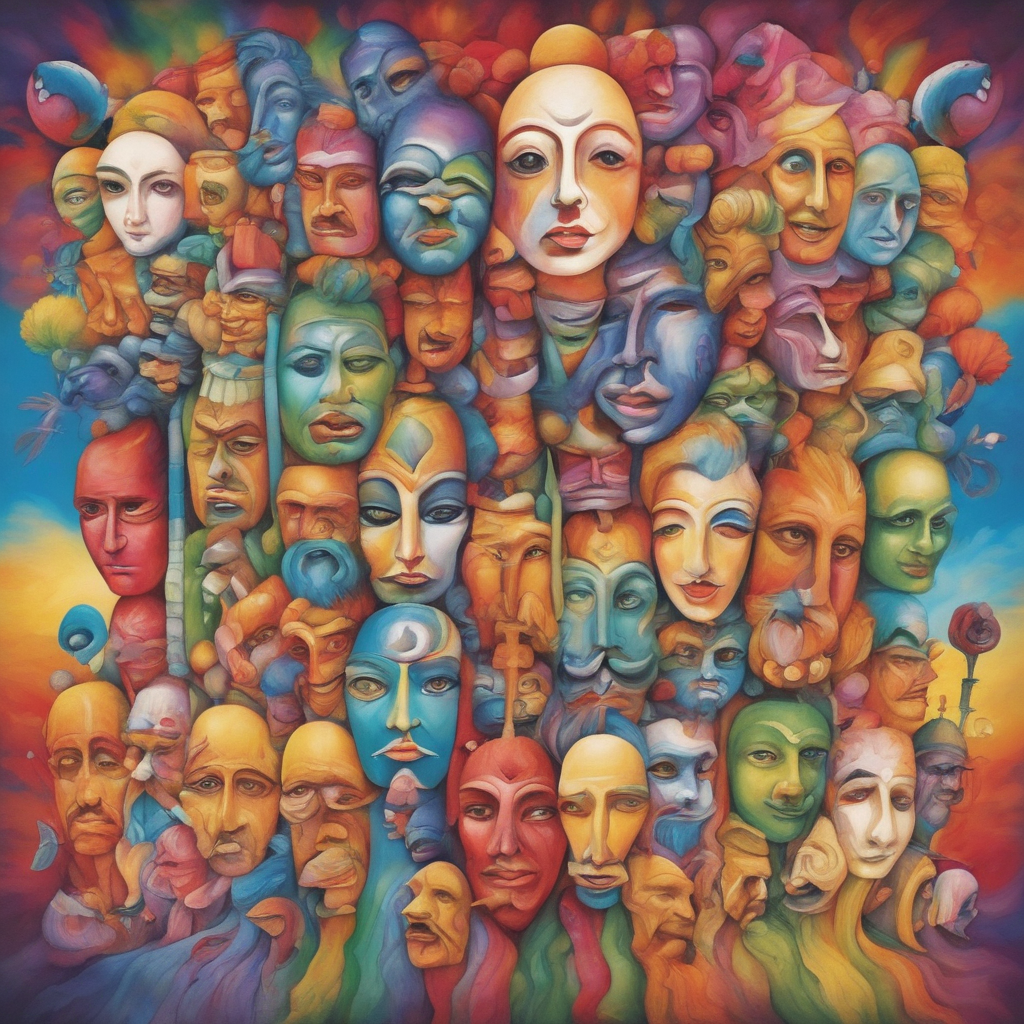
In our quest to understand ourselves, few concepts are as debated, dissected, and deliberated as the ego. Spanning from ancient spiritual scriptures to the modern therapist’s couch, the ego stands as a reflection of our sense of self and our relation to the world. Yet, its definitions vary, painting a multifaceted picture of this central aspect of human existence. ### **1. Ego in Psychoanalysis: The Mediator** Freud’s tripartite model of the psyche introduced us to the ego as the balancing force between the primal urges of the id and the moral compass of the superego. Here, the ego isn’t an adversary but a necessary mediator, guiding our actions in a world of societal norms. It poses the question: Is our ego the voice of reason amidst internal chaos? ### **2. Ego in General Psychology: The Self’s Mirror** When we talk about self-esteem or self-worth, we’re often referring to the ego. This definition paints the ego as a mirror reflecting our perceived value and place in the world. Yet, this raises a thought-provoking inquiry: If our ego is a mirror, who or what determines its reflection?
### **3. Ego in Philosophy: The Conscious Observer** Descartes’ famous dictum “Cogito, ergo sum” (I think, therefore I am) encapsulates the philosophical perspective of the ego as the conscious thinking subject. If our ego is the conscious observer of our experiences, it invites us to ponder: Without this observer, do experiences lose their significance?
### **4. Ego in Spirituality: The Illusory Self** Many spiritual traditions view the ego as a barrier to enlightenment. It’s the illusory sense of separateness that binds us to suffering. The spiritual perspective urges us to ask: If the ego is an illusion, then who indeed are we beneath this veneer?
### **5. Ego in Pop Culture: The Mask of Pride** Everyday parlance often equates a “big ego” with arrogance. It’s seen as a mask, sometimes shielding insecurities, other times amplifying genuine pride. This usage compels us to consider: Is the ego merely a façade, and what lies behind it? ### **6. Ego in Eastern Philosophies: The Creator of “I-ness”** Hindu philosophy introduces Ahamkara, the aspect of us that births the sense of “I.” This ego is neither good nor bad but a natural facet of being human. Reflecting on this, we might wonder: Is the ego, not an enemy but an inevitable companion on our human journey?
**In Conclusion: The Infinite Layers of “I”**
The ego, regardless of its definition, remains at the core of human introspection. Its multifaceted interpretations offer not just explanations but a myriad of questions. As we navigate our understanding of the ego, we’re not just uncovering the layers of this concept but also the layers of our very existence.
In exploring the ego, we’re invited to embark on a profound journey inward, to question, understand, and perhaps even transcend the confines of the “I.” For as varied as its definitions might be, the ego’s ultimate gift is the invitation to self-reflection.
Morgan O. Smith
Yinnergy Meditation & My Book, Bodhi in the Brain…Available Now!
In the spiritual journey towards understanding and living in universal love, or agape, two enlightened beings emerge on parallel paths. They both embrace agape, yet their personalities and the way they manifest this profound love are strikingly different.
The Introverted Universal Love
The first enlightened being, whom we shall call Seraphina, channels agape through introverted universal love. This means her love is directed inward, nurturing the self and radiating outwards in subtle, non-obtrusive ways.
Impact on Others
Seraphina’s love affects others through quiet acts of kindness and a gentle presence. She may not actively seek to spread love, but those who come into contact with her feel a calm, loving energy that often leads to inner transformation. Her love is a tranquil pond, reflecting the beauty of the world without rippling its surface.
The Extroverted Universal Love
On the other hand, we have Gabriel, who embodies extroverted universal love. His love is outward-facing, actively engaging with the world, and seeking to connect with others.
Impact on Others
Gabriel’s love is a dynamic force, touching lives through acts of charity, teachings, and open-hearted connections. His love is a roaring river, sweeping people along in its powerful current and leaving change in its wake.
A Harmonious Dichotomy
While their approaches differ, both Seraphina and Gabriel contribute to the universal energy of love. They show us that love is not a one-size-fits-all concept. It’s a multifaceted gem that can shine through various personalities.
The Introverted Love: A Deep Well
Seraphina teaches us that love does not always have to be loud or grand. It can be a silent force, a deep well that nourishes the soul. Her love invites contemplation and self-reflection, allowing for a profound connection with oneself and the universe.
The Extroverted Love: A Brilliant Flame
Gabriel, on the other hand, shows us that love can be a brilliant flame that illuminates the world. It’s about embracing others, taking action, and spreading joy. His love is a call to action, urging us to engage with the world and make a difference.
Conclusion
The paths of introverted and extroverted universal love, though different, are equally valuable. They teach us that love can be manifested in diverse ways, tailored to our unique personalities and life paths.
In a world torn by division and conflict, the lessons from Seraphina and Gabriel remind us that agape is within everyone’s reach. It’s a love that transcends boundaries and unites us all. Whether you’re drawn to the tranquil pond or the roaring river, the journey toward universal love is an expedition worth embarking on.
Morgan O. Smith
Yinnergy Meditation & My Book, Bodhi in the Brain…Available Now!
Introduction: In an age where spirituality is often a trend, the differentiation between authentic spiritual pursuit and a mere display of piety becomes pivotal. If one merely adopts the garb of spirituality without authenticity, is it spirituality at all? This article seeks to explore the delicate balance between presenting oneself as spiritual and embarking on an authentic spiritual journey. The Allure of Spiritual Image: Social media, popular culture, and sometimes peer pressure portray spirituality as a serene and enlightened state. This depiction can be tantalizing. People are enticed to showcase themselves as spiritual beings, oftentimes to fit into a community, gain admiration or even as a refuge from self-accountability. Defining Authenticity: On the other side lies authenticity, which is the honesty and genuineness in one’s thoughts, actions, and intentions. Authenticity in spirituality means that one’s quest is not for show, but a sincere endeavour to seek meaning, connection, and perhaps even transcendence. Dissecting Inauthentic Spirituality: If spirituality is worn as a mask and not lived, it becomes hollow. For instance, one might engage in spiritual practices in public but live a life contrary to those principles in private. This lack of alignment between external display and internal values questions the very essence of one’s spirituality. Is it spirituality or is it pretense? Authentic Spirituality – A Journey Within: Authentic spirituality, by contrast, is unshackled by the need for external validation. It is a deeply personal journey, irrespective of the eyes that may or may not be watching. This path might be replete with doubts, stumbles, and personal challenges, but it’s real and grounded in honest pursuit.
The Purity Test: So, how can one discern authentic spirituality? A question that individuals must ask themselves is whether their spiritual actions and pursuits would remain the same if there was no one to witness them. The answer can be very telling.
Conclusion: To embrace spirituality is to undertake a journey of profound depth. It’s not just a robe one wears but the very fabric of one’s being. As such, authenticity should be its cornerstone. When spirituality is stripped of pretense, what remains is a raw and real quest – a journey that can be tumultuous, rewarding, and ultimately transformative. Let us aspire to ensure that our spiritual pursuits are rooted in the genuine soil of our being, not just the sands of outward display.
Morgan O. Smith
Yinnergy Meditation & My Book, Bodhi in the Brain…Available Now!
Metaphorical Exploration of the Three Faces of God
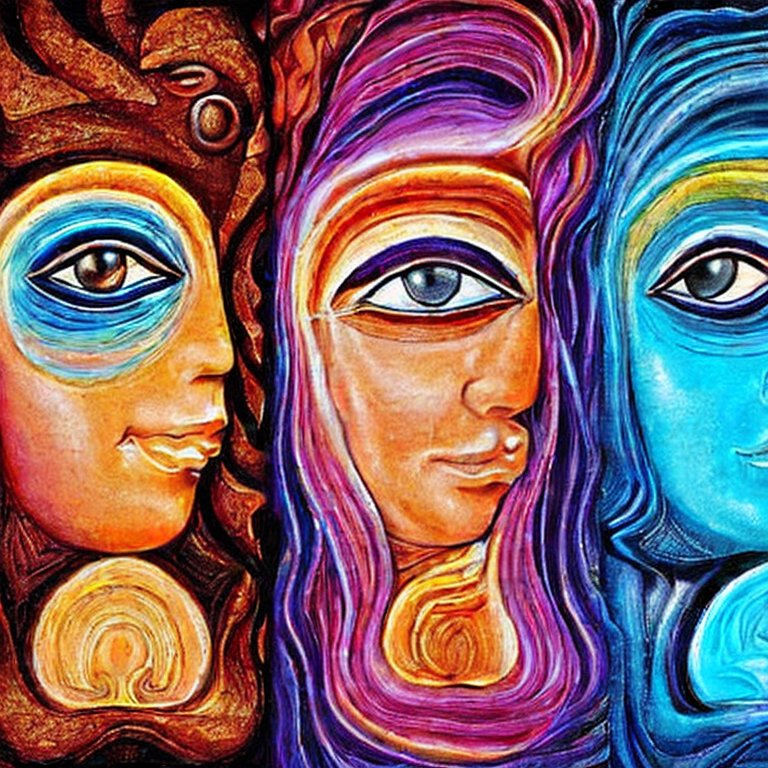
As we endeavour to understand the divine, let’s imagine sketching three different portraits of God, each revealing a unique aspect of the divine. These are the “Three Faces of God,” metaphorically spoken of as “I am That,” “Thou art,” and “It, the Ground of All Being.” Each face provides a different set of facial features, offering a new perspective and experience of the divine.
1. The First Portrait: “I am That”
Envision drawing the first portrait, where you sketch not with your hand, but with your consciousness. This portrait, entitled “I am That,” represents the divine as the reflection of our inner selves. The eyes in this portrait mirror our own, sparkling with the wisdom of unity and oneness. These eyes are windows into the soul, witnessing the divine within us and in everything around us.
The lips are sealed, symbolizing the silence that encapsulates the profound realization of this facet of divinity. It is a silence not born of absence but of completeness, tranquillity that resonates with the essence of existence. The serene countenance of this portrait is a silent affirmation of our inherent divinity.
2. The Second Portrait: “Thou Art”
Now, we turn to the second portrait, “Thou Art.” Here, the divine is perceived as the other, an entity separate from ourselves. In this image, the eyes are compassionate, gazing at us with empathy and understanding, reflecting a personal deity who knows us intimately, one who listens, guides, and protects.
The lips are gently curved into a comforting smile, a symbol of the divine’s eternal love and benevolence. This portrait embodies a divine entity that exists independently of us, yet is deeply connected in a loving and caring relationship.
3. The Third Portrait: “It, the Ground of All Being”
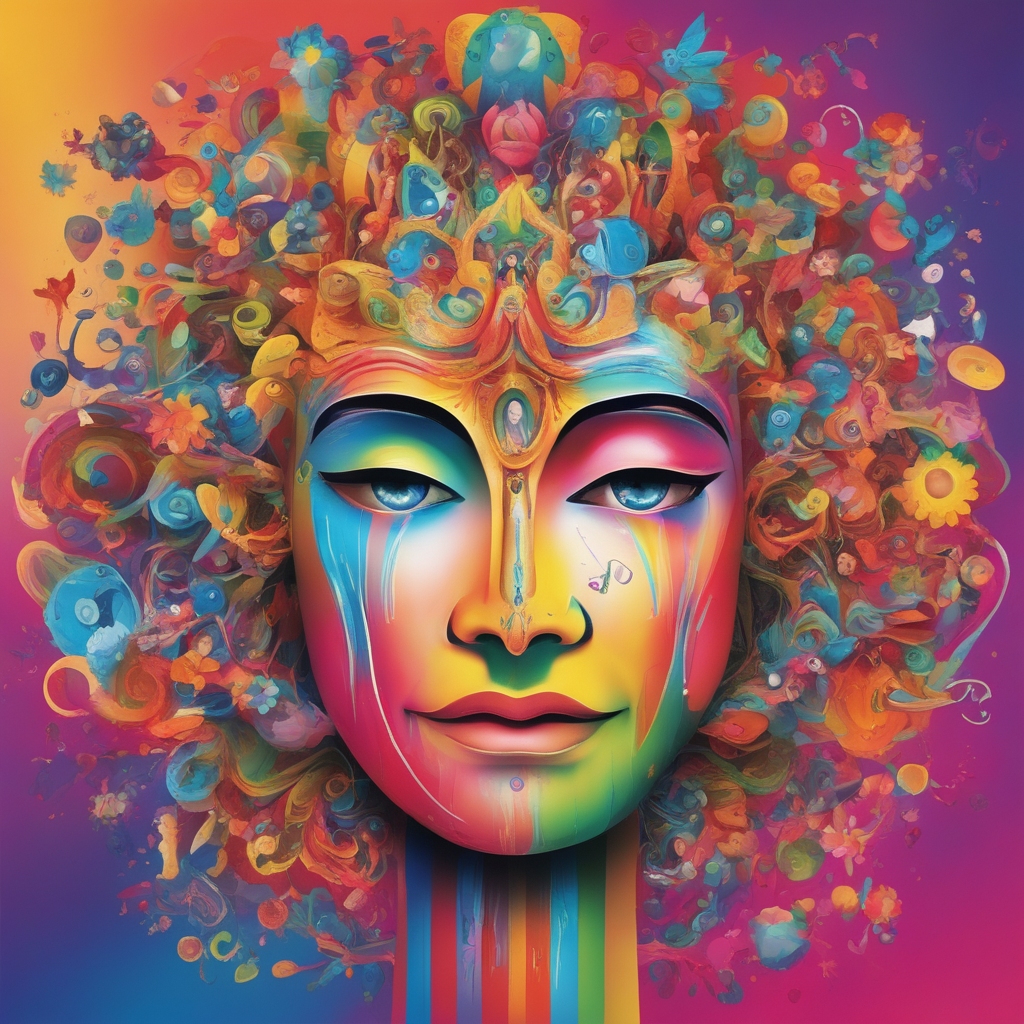
The third portrait, “It, the Ground of All Being,” is an abstract masterpiece. Instead of conventional facial features, it is an evolving canvas of colours, shapes, and patterns, capturing the unfathomable depths and dimensions of the divine as the fundamental essence of existence.
This image lacks eyes and lips because it symbolizes the impersonal aspect of the divine. It is the primordial backdrop from which all forms arise and into which they merge. This face does not interact or engage in the usual sense but is simply there, perpetually present, the immutable reality underlying all of existence.
Wrapping Up
This metaphorical exploration of the “Three Faces of God” is like an artful journey into divinity’s vast and varied landscapes. It encourages us to recognize the divine in our reflections, in a comforting gaze, and in the ever-changing canvas of existence.
Each of these faces, with its unique set of features, invites us to a different experience and understanding of God, enabling us to connect with the divine on multiple levels. It’s a contemplative journey that opens up possibilities for self-discovery and spiritual growth, enhancing our cosmic connection. In these divine portraits, we don’t just see different faces of God; we see reflections of our own quest for spiritual understanding and existential meaning.
Morgan O. Smith
Yinnergy Meditation & My Book, Bodhi in the Brain…Available Now!
Introduction: Deep within the cosmos, lies an interconnected web of creation. Many spiritual traditions and contemporary philosophies propose the notion of Nonduality – the idea that everything in the universe is woven from a single thread. This post delves into an intriguing proposition: that every single thing in the entire universe was, is, and will be created with just one thought.
The Essence of Thought: Thought, in its purest form, is an emanation of consciousness. The ancient sages believed that the universe itself is a manifestation of cosmic consciousness. This single, all-encompassing thought is the seed from which the boundless universe springs forth.
The Nature of Nonduality: Nonduality implies that there is no separation between the observer and the observed, between subject and object. This interconnectedness suggests that the whole of creation is intrinsically linked to our own consciousness. The singular thought that manifests the universe is also the foundation of our individual thoughts and perceptions.
The Scientific Angle: In modern times, the field of quantum physics has begun to echo the ancient wisdom of Nonduality. Particles can be in multiple places at once and are deeply interconnected. Some physicists even posit that consciousness itself may be a fundamental aspect of the universe, interweaving thought with the fabric of reality.
The Ripple Effect: Considering the idea that creation stems from a single thought, our own thoughts take on new significance. Each thought could be seen as a ripple in the cosmic ocean, interacting with and shaping the universe in ways beyond our comprehension. Our thoughts, emotions, and actions might have a more profound impact on the fabric of existence than we realize.
Practical Implications: If we accept the notion of a singular thought behind creation, how does this affect our daily lives? It could be a call to mindfulness; to recognize the power and potential in our own thoughts. By aligning ourselves with the constructive, compassionate aspects of thought, we can contribute to the positive unfolding of the universe.
Conclusion: The idea that everything is born of a single thought is a profound and enchanting concept that bridges ancient wisdom with contemporary science. As we navigate the waves of existence, let us be mindful of the ripples we create. The universe, in all its complexity, might just be the echo of one resounding thought.
Morgan O. Smith
Yinnergy Meditation & My Book, Bodhi in the Brain…Available Now!
In the modern world, where external achievements and material wealth are often the barometers of success, the internal dimensions of human existence are frequently overlooked. However, it is within these depths that the seeds of wisdom and spiritual awakening are sown. At the core of this inner journey lies intrapersonal intelligence, a form of intelligence that can be the key to unlocking profound spiritual insights and transcendental experiences. The Landscape of Intrapersonal Intelligence
Intrapersonal intelligence, as introduced by Howard Gardner, is the capacity to understand and manage one’s emotions, thoughts, and motivations. It is the art of self-reflection and self-awareness. A person adept in intrapersonal intelligence can skilfully navigate the complexities of their internal world.
Transcending to the Transpersonal Realm
When individuals dig deep into their internal reservoirs through intrapersonal intelligence, they often stumble upon questions regarding the very nature of consciousness and existence. This leads them to a spiritual realm that transcends the personal – the realm of transpersonal intelligence. This involves experiences and understandings that go beyond one’s identity, encompassing a connection to something greater.
The Pillars of Transition
**Deep Self-reflection**: Engaging with one’s inner self can trigger an exploration of spiritual dimensions. **Inner Peace and Balance**: Managing emotions and achieving inner harmony often open the doors to higher consciousness. **Intuitive Understanding**: Tuning into one’s intuition can yield insights that transcend personal identity.
Wisdom and Spiritual Awakening through Intrapersonal Intelligence
As the consciousness expands through transpersonal experiences, a new dawn of wisdom and spiritual awakening begins to emerge.
The Blossoming of Wisdom
**Expanded Consciousness**: Perceiving reality in a broader sense opens up new avenues of understanding. **Insight and Enlightenment**: Delving into spiritual dimensions can lead to enlightening insights into the nature of reality.
The Spiritual Awakening
**Unity and Oneness**: Experiencing the interconnectedness of all things fosters a sense of unity with existence. **Compassion and Altruism**: The deep realization and connection with the transpersonal realm evoke compassion and altruism, essential components of spiritual development.
Concluding Thoughts
Intrapersonal intelligence is not just about understanding oneself; it is about embarking on a journey that can lead to the pinnacle of human experience – spiritual awakening. Through self-reflection, managing emotions, and harnessing intuition, one can transcend personal confines and embrace the transpersonal. This not only brings wisdom and insight but also binds us in unity and compassion with the world around us.
Morgan O. Smith
Yinnergy Meditation & My Book, Bodhi in the Brain…Available Now!






 Morgan O. Smith