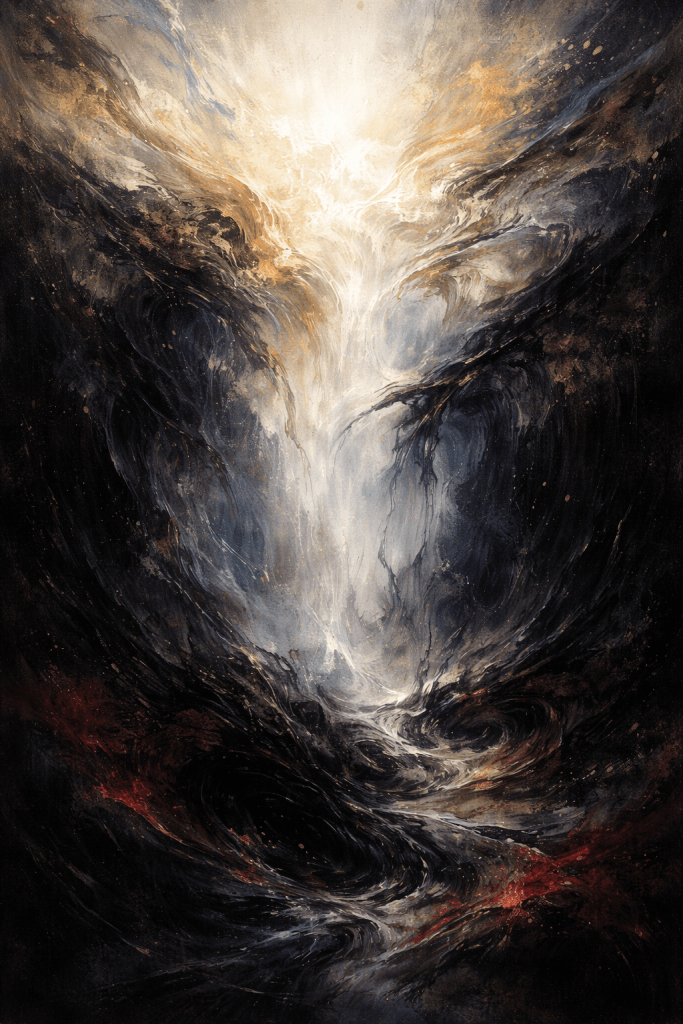
Absolute reality is often imagined as pristine, untouched by fracture or contradiction. Spiritual language tends to elevate the ground of all being into something luminous, serene, and eternally harmonious. Yet such portrayals can become subtle distortions, projecting human preferences onto what cannot be reduced to preference at all.
A paradox emerges the moment one considers totality without exception. That which includes everything cannot exclude darkness. Absolute wholeness does not merely contain light; it also contains the conditions for obscurity, confusion, and dissolution. Darkness is not an error within the whole but a necessary expression of completeness.
Perception recoils from this idea because it challenges the instinct to divide existence into sacred and profane. Thought longs for a purified origin, a source untouched by contradiction. Reality, however, refuses such simplification. A ground that generates multiplicity must also generate polarity. Shadow is not a flaw in the absolute; shadow is the evidence that nothing has been left out.
Mystical insight sometimes reveals a luminous unity, a direct recognition that all forms arise from a single boundless presence. Such experiences carry a sense of purity and peace. Yet stabilization of that recognition requires a deeper maturity: the willingness to acknowledge that the same boundlessness also births terror, ignorance, and fragmentation.
Resistance to this insight often leads to spiritual bypassing. Individuals cling to transcendence while denying the darker textures of existence. Absolute realization does not erase complexity. Genuine awakening expands capacity to embrace the full spectrum of being without retreating into selective idealization.
A universe that manifests stars also manifests collapse. Consciousness that illuminates truth also generates illusion. Absolute reality stands prior to judgment, neither endorsing nor rejecting the movements arising within it. Shadow becomes a teacher rather than an adversary once this is understood.
Human life mirrors this cosmic structure. Personal development frequently involves confronting suppressed aspects of identity. Integration replaces avoidance. Clarity emerges through engagement rather than denial. Recognition of one’s own shadow deepens reverence for the vast intelligence that allows contradiction to coexist.
Absolute reality remains unbroken even while appearing fragmented. Darkness does not diminish the ground of being; it reveals its radical inclusivity. True spiritual maturity rests upon this recognition: wholeness requires nothing less than everything.
Morgan O. Smith
 Morgan O. Smith