The Myth of Perfection

A Reflection on Human Nature and Spirituality

Perfection is a concept that many aspire to, yet one that remains fundamentally unattainable. The allure of becoming flawless is often reinforced by societal expectations, self-help narratives, and spiritual teachings that promise transcendence over our shortcomings. We yearn for mastery, imagining a state where all undesirable traits have been eradicated and every behaviour aligns with some ideal of human perfection. But is that ever truly possible?

No one is perfect. Not even the most enlightened being on the planet. Let’s use pest control as an example.

No matter how meticulously we maintain our homes or how many pest-control methods we employ, insects will inevitably appear. Some will be caught and eliminated, others will hide and multiply. This relentless cycle mirrors our inner world. Despite all efforts—through therapy, shadow work, psychedelics, or spiritual awakening—no one has found a way to remove every negative tendency permanently. As insects are part of the natural ecosystem, our imperfections are part of being human. Attempts to eliminate all flaws are as futile as trying to rid the entire world of pests.

Each trait or behaviour can be seen as a metaphorical bug. Selling a bug-killing spray or device is like an enlightened teacher selling a pathway to liberation or a self-actualized individual motivating others to reach their highest potential. The promise is not false, but the misconception lies in the belief that the bugs—the flaws—will be eradicated forever. The truth is more nuanced. Much like we can control insects to a certain extent, we can address negative traits, but total elimination is beyond reach.

If you’ve ever been to a home that had one visible roach, you likely made a snap judgment about cleanliness, even if the house was otherwise spotless. Contrast that with spotting an ant, and your reaction might be more forgiving. This response isn’t based on logic but on deeply ingrained conditioning. The same holds for how we judge others. One visible flaw can overshadow countless positive qualities, not because the flaw is inherently worse, but because of how we’ve been conditioned to perceive it.

A self-actualized person can be compared to a meticulous homeowner who manages to keep most of the pests at bay. Their house is mostly clean, orderly, and free of unwanted visitors. Yet, even they know that complete eradication is impossible. An enlightened being, on the other hand, goes beyond this mindset. They see every bug as a part of themselves—each flaw, each undesirable trait, is not separate but an expression of the whole. This broader understanding fosters a deeper acceptance. While they might occasionally choose to kill a bug, it’s done without aversion or judgment. There’s no inner conflict because they see that every bug, every flaw, serves a purpose.

Now the enlightened individual sees everything as perfection. Everything that is considered imperfect is happening perfectly. Everything is divine. Even the most imperfect individual or situation or circumstance. The enlightened recognize that what appears as chaos or dysfunction from a limited perspective is simply the perfect unfolding of a greater, unseen order. A roach-infested home, a seemingly flawed person, or an unwelcome circumstance—all are expressions of a divine play. There is no distinction between beauty and ugliness, perfection and imperfection because all dualities dissolve into the same oneness.

So, when an enlightened being enters a home overrun with insects, they do not recoil or judge. They recognize that their own home could, at any moment, be similarly overtaken. There is no attachment to a pristine space or the opinions of others regarding their environment. By accepting that bugs will always be present, the enlightened suffer less—not because their world is free of pests, but because they are no longer bothered by their existence.

The true wisdom here lies in shifting the focus away from trying to perfect oneself and toward seeing all parts of life—including the messiness, the flaws, and the unwanted bugs—as expressions of the same wholeness. The journey is not about eradicating; it’s about embracing. When we see all that is seemingly imperfect as perfectly divine, we move beyond the struggle and enter a space of true inner peace and freedom.

Morgan O. Smith

Yinnergy Meditation, Spiritual Life Coaching & My Book, Bodhi in the Brain…Available Now!

https://linktr.ee/morganosmith

Facing Your Own Shadow

The Gaze of Disowned Shame

There’s a moment in the journey of inner awakening where the light of awareness turns inward. A place often shrouded in secrecy, where the parts of yourself you’ve hidden away become unmasked. What’s revealed can be unsettling — the shame, guilt, and self-rejection that haunt the depths of your psyche. Encountering this inner entity, stripped of its disguise, becomes an intense confrontation: you face your own shadow.

Yet, when you meet this shadow, it does not recoil, flinch, or fade away. It simply observes you, raw and unmoved, reflecting the energy you’ve poured into rejecting it. For many, this experience feels like staring into an unbroken mirror, one that reflects not just the image you’ve created for the world, but the essence of what’s been buried, judged, and cast away.

When people speak of self-acceptance, it’s easy to imagine embracing the pleasant or polished parts of one’s persona. But the journey of true self-integration calls for embracing what is most despised. The parts labelled as unworthy, inadequate, or unforgivable become the gateway to your deepest transformation. Until then, they stare back with unblinking eyes — patiently awaiting recognition.

But why is this encounter necessary?

The disowned aspects of yourself hold immense power. They are reservoirs of energy locked behind the walls of judgment and fear. Every time they’re denied, they exert their influence unconsciously, driving reactions, decisions, and emotional patterns. The paradox is that the more they’re pushed away, the more they define your behaviour.

To stare at your shame is to feel its immensity. But beyond the discomfort, there is a subtle alchemy taking place. Each moment of presence, without rejection or justification, melts the rigidity of these self-imposed barriers. The shame becomes less monstrous. The guilt becomes less consuming. And in its place emerges a profound understanding: these shadows are not enemies but wounded parts of your psyche yearning for reintegration.

Facing your shame isn’t about confronting a malicious force. It’s about witnessing a fragmented self, desperately wanting to be seen and acknowledged. When fully embraced, these darkened corners of the mind cease to resist, and their power transforms into clarity, strength, and authentic self-expression.

This act of presence is not about seeking remorse or forgiveness. It’s about witnessing without the need for resolution. It’s about being so fully present that you pierce through the veil of judgment and glimpse the raw humanity of your being. That which once seemed abhorrent softens under the gaze of true self-compassion.

Ultimately, this process reshapes your sense of identity. No longer chained to a cycle of rejection and self-criticism, you stand free, more whole, and more alive. The shame that once stared back unrelentingly, feeling no remorse, becomes a quiet reminder that every part of you — no matter how dark — serves as a key to your liberation.

Morgan O. Smith

Yinnergy Meditation, Spiritual Life Coaching & My Book, Bodhi in the Brain…Available Now!

https://linktr.ee/morganosmith

Embracing Shadows to Illuminate the Soul

Black History Month and the Spiritual Journey of Iboga

In the heart of Black History Month, we find ourselves not just celebrating the monumental contributions and enduring legacy of Black individuals but also diving deep into the profound spiritual wisdom that African cultures have nurtured across millennia. One such treasure is the sacred use of Iboga, a potent plant medicine originating from the forests of West Africa, revered for its transformative power in spiritual cleansing and self-discovery.

The Iboga root, central to the Bwiti spiritual practices in Gabon and other parts of Central Africa, serves as a gateway to the innermost depths of the psyche, facilitating what many in the spiritual community call “shadow work.” This process involves confronting and integrating the unconscious aspects of oneself—those hidden fears, past traumas, and repressed emotions that often dictate our lives from the shadows.


The significance of Iboga in spiritual exploration cannot be overstated. Its use is a sacred rite, a profound journey undertaken under the guidance of experienced healers known as Ngangas. These healers, deeply versed in the spiritual and medicinal properties of the plant, facilitate a voyage that is as much about encountering the soul’s darkness as it is about emerging into the light of awareness and renewal.

For spiritual seekers, the journey with Iboga is one of confronting the ego, dismantling illusions, and ultimately gaining insights into the nature of self and existence. This aligns with the non-dualistic understanding that light and dark are not opposites but complementary forces. We find the keys to our liberation and enlightenment in the embrace of our shadows.


The knowledge and practices surrounding Iboga are a testament to the rich spiritual heritage of West African cultures. They remind us that Black History Month is not only a time to honour the past but also to acknowledge and learn from the profound spiritual wisdom that African traditions offer to the world. The legacy of Iboga teaches us about resilience, healing, and the journey towards wholeness.

As we celebrate this month, let us also open our hearts and minds to the lessons of Iboga and the shadow work it facilitates. In doing so, we honour the depth of African spirituality and its invaluable contributions to the global quest for enlightenment and inner peace.

Morgan O. Smith

Yinnergy Meditation, Spiritual Life Coaching & My Book, Bodhi in the Brain…Available Now!

https://linktr.ee/morganosmith

The Unleashing of Shadows

A Deep Dive into the Repressed Unconscious Unveiled Through Meditative and Spiritual Pursuits

In the realm of self-discovery and spiritual evolution, often shrouded in an ambiance of tranquillity and enlightenment, lies a less explored, slightly tumultuous terrain: the unleashing of repressed unconscious material. It’s a landscape rarely highlighted in the glossy brochures of spiritual enterprises, yet it forms an intrinsic, undeniable part of the journey inward.

As aspirants embark on meditative and spiritual practices, they’re typically greeted with promises of serenity, self-realization, and transcendental experiences. However, what goes unmentioned is the inevitable encounter with the shadows lurking in the deep recesses of the unconscious mind. This confrontation with repressed material—unusual outbursts, amplified expressions of everyday actions, and unexpected impulsive behaviours—is a testament to the completeness of the inner exploration, albeit less glamorous.

Spirituality, now a multi-million dollar industry, is ironically at risk of mirroring the very worldly traits it proposes to transcend—namely, avoiding uncomfortable truths for the sake of marketability and profitability. There’s a reticence among many spiritual teachers to delve into the discussions about the darker aspects of spiritual awakening. This selective narration not only veils the full spectrum of the experience but also potentially leaves seekers ill-prepared for the confronting realities awaiting them.

Healing and self-realization are not merely about basking in the light of consciousness but also navigating the murky waters of the unconscious abyss. While one may attain a level of healing and understanding on conscious and subconscious levels, the journey doesn’t culminate there. The deep unconscious beckons, with its layers upon layers of repressed material, each layer a gateway to further integration and wholeness.

Furthermore, this exploration extends from the individual unconscious through to the collective and universal collective unconscious, encompassing a continuum of collective human experiences and existential realities. As we traverse from the personal to the universal, the expedition morphs from a solitary quest to a collective endeavour, revealing the interconnected tapestry of individual and collective healing.

The discourse around spiritual practices needs a fuller, more honest narrative that embraces the shadows, encourages preparedness for the unexpected, and fosters a holistic understanding of the path toward self-realization. We hope to attain a truly integrated, authentic spiritual awakening only by acknowledging and navigating through the repressed unconscious material.

Morgan O.  Smith

Yinnergy Meditation & My Book, Bodhi in the Brain…Available Now!

https://linktr.ee/morganosmith

Drugs, Mystical Experience, and the Value of Service

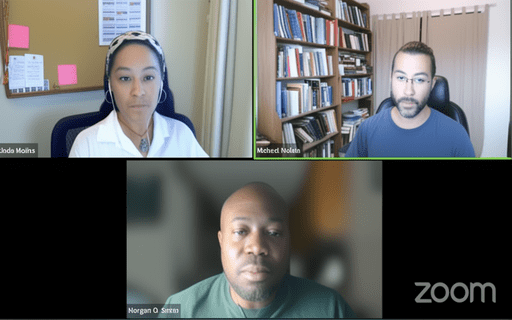
A Conversation with Linda & Michael Molina

First and foremost, I would like to extend my heartfelt gratitude to Linda and Michael Molina for inviting me to share my insights and experiences on their esteemed platform. Our engaging conversation traversed through the realms of spirituality, the use of entheogens, and the profound journey toward self-realization. Here are some of the key points I discussed during our enlightening conversation:

Oneness and Surrender:

One of the pivotal aspects of spiritual growth I emphasized is the practice of surrender and the dissolution of the ego to attain a state of “Oneness” or non-dual awareness. This state transcends the dichotomy of self and other, immersing one into a boundless existence that is the true nature of reality. I posited that the various paths and narratives leading to Oneness are but creations of higher consciousness, serving as a script that guides us through the unfolding drama of self-discovery. The crux of the journey lies in surrendering and opening one’s heart to the myriad experiences that life presents, allowing the essence of Oneness to permeate our being.

Embracing Negative Experiences:

The path toward spiritual enlightenment is not always bathed in light. It often takes us through the dark alleys of our psyche, urging us to confront and embrace our shadows. I shared the importance of welcoming negative experiences or the “dark sides” as integral parts of the spiritual journey. These challenging phases, when navigated with awareness and acceptance, can catalyze profound growth and a deeper understanding of our true nature.

Advice for Spiritual Seekers:

The spiritual expedition is an endless voyage towards the heart of existence. I advised fellow seekers to persevere, even when they stumble upon beautiful or profound experiences. There’s always a deeper level of realization awaiting beyond the apparent zenith. Each step taken on this sacred path unveils a new horizon of understanding, urging us to delve deeper into the mystery of existence.

Philosophical Insight:

Reflecting on the nature of reality, I likened the stories and paths leading to spiritual realization to scripts in a movie, orchestrated by a higher consciousness. These scripts, while seemingly real and consequential, are mere narratives that help make sense of our journey towards Oneness. The ultimate truth lies beyond these scripts, in the boundless realm of pure consciousness where the illusion of separation dissolves, revealing the unadulterated essence of Oneness.

Our conversation was a deep dive into the essence of spirituality, the transformative potential of brainwave entrainment, entheogens, and the boundless journey toward self-realization. I am immensely grateful to Linda and Michael Molina for providing a platform to explore and share these profound truths. Through such enlightening exchanges, we inch closer to unravelling the mystic tapestry of existence and fostering a collective awakening to the inherent unity of all life.

Morgan O.  Smith

Yinnergy Meditation & My Book, Bodhi in the Brain…Available Now!

https://linktr.ee/morganosmith

Watch the episode “Drugs, Mystical Experience, and the Value of Service” below. For more on ESF, check out their channel at https://www.youtube.com/@EmergingSciences

The Dark Night of the Soul vs. The Dark Knight of the Soul

A Spiritual Odyssey

In the labyrinthine corridors of the soul, there lies a path seldom tread, shadowed by mystery and often enveloped by fear. It is a path that leads to a place known as the “dark night of the soul,” a phase of spiritual desolation that has baffled seekers across generations. Yet, within the enigmatic darkness, emerges an unexpected companion – the “dark knight of the soul.”

The Dark Night: A Crisis of Faith

The “dark night of the soul,” a term coined by St. John of the Cross, represents a profound spiritual crisis, a period where the familiar becomes strange, and the divine seems distant. It is a time of purging, where doubts, fears, and the hidden shadows of the soul rise to the surface. The comfort of belief evaporates, replaced by a void that challenges the very core of spiritual identity.

In the “dark night,” one is forced to confront the most profound existential questions. What is the nature of divinity? Why does it seem so elusive? What is the purpose of suffering? The answers are not easily found, and the path becomes obscured.

The Dark Knight: The Warrior Within

In contrast to the disorienting emptiness of the “dark night,” the concept of the “dark knight of the soul” represents a heroic inner archetype. It is the spiritual warrior within, forged not in battles against external foes but in the internal struggles against one’s demons.

The “dark knight” is not a saviour but a guide, a symbol of the courage, resilience, and wisdom needed to navigate through the night. It embodies the willingness to face the darkness, wrestle with doubt, challenge fears, and integrate the shadows rather than shunning them.

The “dark knight” does not vanquish the night but learns to dance with it, finding grace in struggle and meaning in confusion.

The Dance of Darkness and Light

The interplay between the “dark night” and the “dark knight” is a profound spiritual odyssey. One cannot exist without the other. The “dark night” provides the terrain, the challenge, and the abyss that must be crossed. The “dark knight” offers the tools, the strength, and the inner fire that illuminates the way.

In this spiritual dance, the darkness is not something to be feared but embraced. It is a crucible where the false self is burned away, leaving only the authentic soul, raw and unburdened.

The path through the “dark night” is not a path of despair but a journey toward enlightenment. The “dark knight” is not a symbol of battle but a metaphor for inner harmony.

Conclusion

The journey through the “dark night of the soul” and the guidance of the “dark knight of the soul” offers a rich tapestry of spiritual exploration. It reminds us that darkness is not an end but a beginning, a transformation that leads to a deeper connection with the self and the divine.

In embracing both the “dark night” and the “dark knight,” we find a roadmap to authenticity, wisdom, and a spirituality that transcends superficial understanding. The darkness and the knight are not foes but partners, leading us toward a horizon where the soul’s true radiance shines.

The odyssey through the dark night is an invitation, a calling to all who seek. The dark knight awaits, a silent companion ready to guide us through the shadows into the embrace of our luminous essence.

Morgan O. Smith

Yinnergy Meditation & My Book, Bodhi in the Brain…Available Now!

https://linktr.ee/morganosmith

Enlighten Up! w/ Special Guest, Elle de Lyon (Ep 13)

Welcome to Episode 13 of Enlighten Up! Join our hosts, Spiritual Teacher Morgan O. Smith and Comedian Nathan Griffith, with special guest Elle de Lyon from Pretty Dope Art. As a community developer, Elle organizes art events and showcases for emerging artists through RISE (Reaching Intelligent Souls Everywhere). Moreover, she’s a multi-faceted performing artist specializing in spoken word, visual arts, and yoga. In this enlightening episode, our hosts and guest explore the intricate concept of ego death. Listen in as Morgan poses the intriguing question, “What is ego death?” and prompts a discussion about the self, broken down into the id, ego, and super-ego. Delve into the duality of the ego as the false self, and consider the authentic self, free from the persona shaped by our environment. Discover Morgan’s take on the temporary death of the ego vs. the lowering of ego defence mechanisms. Nathan ponders the reason behind the common urge to ‘kill’ one’s ego. Morgan discusses the multifaceted nature of the ego, with each facet embodying its own persona, together forming the sense of self. Get into the psyche’s depths with Morgan’s insights on LSD and its capacity to analyze different aspects of the psyche. Hear about the obligations that lie between serving the group vs serving all of humanity and listen to Elle’s thoughts on personal space. Morgan distinguishes between the dark and golden shadow, leading into a discussion with Elle about the challenges of being a public figure and an entertainer. Share a profound moment with Morgan, Elle, and Nathan as they touch on the disconnection between persona and reality, and the disappointment it often brings. Yinnergy Meditation & Bodhi in the Brain are available now at https://linktr.ee/morganosmith.