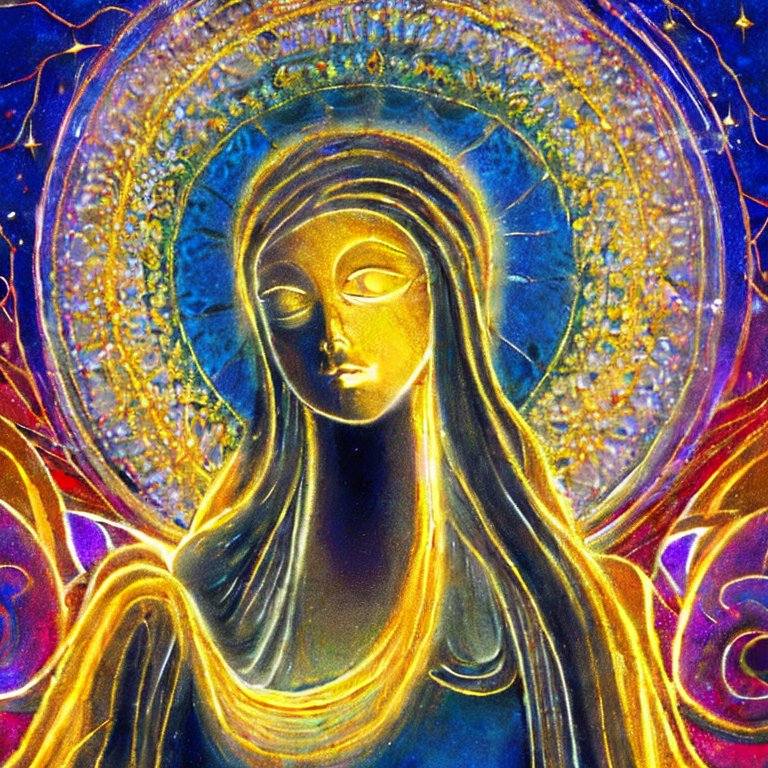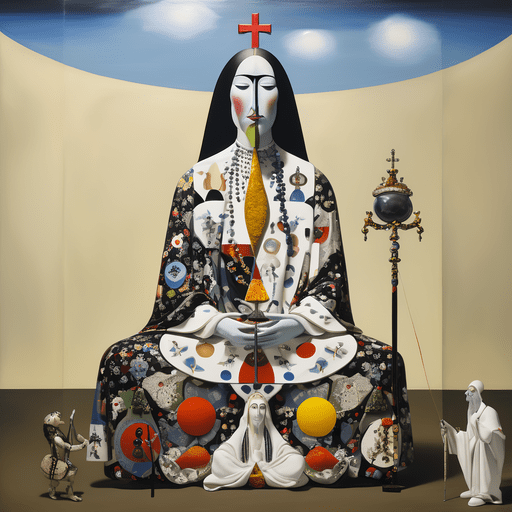
The Divine Fraud

The Hidden Reality Behind Spiritual Leaders

In the realm of spirituality, there exists a profound paradox. We often elevate spiritual gurus, admiring them from afar, or aspiring to emulate them. However, there’s a hidden truth behind these figures, one that challenges our conventional understanding of enlightenment and spiritual wisdom.

At the heart of this paradox lies the notion that these spiritual leaders are not entirely what they appear to be. Rather than being purely enlightened beings, they are, in fact, individuals who have reached a heightened state of awareness but choose to present themselves in a manner that is palatable to the masses. This disguise is not a deception borne out of malice, but rather a necessary adaptation. It stems from the understanding that the true nature of their enlightenment is beyond the grasp of the average individual, whose comprehension is bounded by societal norms and limited perspectives.

These spiritual figures have embraced a role – a caricature of what society accepts as ‘divine’. They mirror the layman’s archetype of enlightenment, embodying concepts of goodness, truth, and beauty that are digestible and appealing to the general public. This role-playing is not a sign of their failure to embody true enlightenment, but rather a testament to their deep understanding of the human psyche and the limitations of societal acceptance.


In this grand act, the enlightened beings find joy. They are not shackled by their roles but rather play them with purpose and hope. Their ultimate aspiration is not to perpetuate the illusion but to guide others to a realization – that enlightenment is not about fitting into a preconceived mould of divinity, but about understanding and transcending the limitations of our perceptions.

The divine fraud, thus, is not a deceit but a necessary guise. It is a bridge between the incomprehensible realm of true enlightenment and the tangible world in which we live. The hope is that one day, each of us will see beyond this facade, not with a sense of betrayal, but with an understanding that enlightenment is a deeply personal journey, one that transcends the need for external validation and societal acceptance.
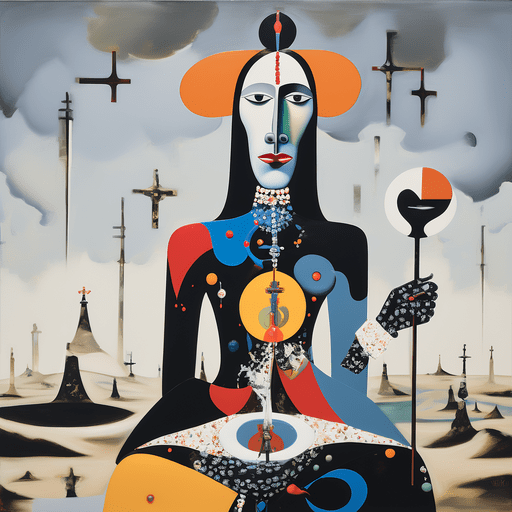

In conclusion, the journey toward spiritual enlightenment is not about emulating a perceived ideal but about realizing the limitations of our understanding. It is about peeling back the layers of societal norms and personal biases to uncover a truth that is uniquely our own. As we navigate this path, we must remember that the spiritual guides we look up to are not just torchbearers of enlightenment but also skilled actors playing a role necessary for our journey.

Morgan O. Smith

Yinnergy Meditation, Spiritual Life Coaching & My Book, Bodhi in the Brain…Available Now!

https://linktr.ee/morganosmith

All Life is Yoga

The Essence of Existence and Awareness
In the grand mosaic of life, the concept of Yoga transcends beyond its commonly perceived boundaries of physical postures and breath control. It is a profound philosophy and a way of living that interweaves through every aspect of our existence. The assertion “All life is Yoga” is not just a statement but a deep realization that unfolds the interconnectedness of everything around us.

Yoga, in its truest sense, is not confined to the mats or the tranquil corners of meditation halls. It is present in every breath, every step, and in the pulsating rhythm of the universe. The situations we encounter, the events that unfold, the actions we undertake, and the interactions we engage in, all embody the essence of Yoga. These elements serve as mirrors, reflecting the principles of unity, balance, and harmony that Yoga espouses.

Moreover, this perspective extends to the wider construct of civilization. Every culture, community, and era holds the essence of Yoga within its core. The way societies operate, the values they cherish, and the progress they pursue are manifestations of Yoga in a collective form. The principles of coexistence, empathy, and understanding that are integral to societal development are, in essence, Yoga in action.

In the broader context, the entire expanse of existence is a form of Yoga. The cosmos, with its infinite galaxies, stars, and planets, follows a celestial dance that echoes the principles of Yoga. The natural world, with its intricate ecosystems and life forms, demonstrates the interdependence and harmony that are central to Yoga.

The practice of Yoga, in its various forms, is a journey towards the full awareness of these truths. It is a path that leads to the recognition of the oneness of all existence, the interconnectivity of life, and the profound wisdom that lies in understanding that “All life is Yoga.”

In embracing this philosophy, we open ourselves to a more mindful, compassionate, and connected way of living. We learn to see Yoga in everything and everyone, realizing that every moment is an opportunity to practice awareness, kindness, and unity. This understanding has the power to transform not only individual lives but also the world at large, steering us toward a more harmonious and enlightened existence.

Morgan O. Smith

Yinnergy Meditation, Spiritual Life Coaching & My Book, Bodhi in the Brain…Available Now!

https://linktr.ee/morganosmith

A Meeting of East and West

Advaita Vedanta and Ken Wilber’s Four Quadrants

As we navigate through life’s labyrinth, we encounter myriad philosophical viewpoints designed to offer us clarity about the nature of reality. Two such perspectives – one rooted in ancient Eastern spirituality, Advaita Vedanta, and the other a more contemporary Western theory, Ken Wilber’s Integral Theory – provide us with intriguing interpretive lenses. While appearing distinct, when juxtaposed, they unfold a captivating dialogue, revealing the interconnectedness of diverse paths of wisdom.

**Non-Duality: The Heart of Advaita Vedanta**

At the core of Advaita Vedanta lies the profound principle of non-duality. The term ‘Advaita’ translates to ‘not two’, pointing towards the notion of unity beneath apparent multiplicity. According to this philosophy, all phenomena – whether perceived as separate entities or diverse experiences – are manifestations of a singular absolute reality known as Brahman.

This philosophy posits that the perceived distinction between the individual self (Atman) and the ultimate reality (Brahman) is an illusion (Maya), born out of ignorance (Avidya). The journey of spiritual awakening in Advaita Vedanta is about transcending this illusion, recognizing the non-dual nature of existence, where the Atman and Brahman are not separate but one.

**Ken Wilber’s Four Quadrants: A Comprehensive Map of Reality**

Ken Wilber’s Integral Theory, particularly the Four Quadrants model, offers a different but complementary perspective. Wilber presents a holistic map of reality, dividing it into four quadrants: Individual Interior (consciousness), Individual Exterior (behaviour), Collective Interior (culture), and Collective Exterior (society). Each quadrant represents an integral part of our existence and must be considered to understand reality holistically.

**The Interplay: Advaita Vedanta and Four Quadrants**

Drawing parallels between Advaita Vedanta and the Four Quadrants can create a fascinating synthesis of Eastern and Western thought.

The Upper Left Quadrant (Individual-Interior) aligns with the individual’s subjective experience, mirroring the Advaita exploration of Atman. The Upper Right Quadrant (Individual-Exterior) encapsulates the physical manifestation of the individual, aligning with the Advaita concept that even our physical existence is a manifestation of Brahman.

The Lower Left Quadrant (Collective-Interior) represents shared beliefs and cultures, resonating with the Advaita perspective that cultural differences are superficial, and at a deeper level, unity prevails. The Lower Right Quadrant (Collective-Exterior) mirrors societal structures, all manifestations of the same non-dual reality.

From the Advaita viewpoint, the division of the four quadrants are themselves expressions of Maya, as they create apparent separations where none ultimately exist. They are valuable tools for understanding and navigating the world but do not represent the deepest truth of non-duality.

**Uniting Perspectives: A Path to Enlightenment**

Exploring the intersection of Advaita Vedanta and Ken Wilber’s Four Quadrants offers a richer understanding of reality, harmonizing subjective and objective, individual and collective, Eastern spirituality and Western theory. As we understand that the lines dividing these quadrants are more porous than they seem, we move closer to the non-dual truth of Advaita – that beneath apparent diversity, unity pervades.

At a time when division and fragmentation are rampant, this synthesis could offer a path toward the kind of transcendental insight that can bridge divides, fostering a deeper sense of interconnectedness and wholeness. After all, as Advaita Vedanta teaches us, beneath the surface of multiplicity, we are ‘not two’ but one. As we embrace the wisdom of the four quadrants, we might just find ourselves taking a step closer to that unity, opening ourselves to a richer, more holistic understanding of the world.

Morgan O. Smith

Yinnergy Meditation & My Book, Bodhi in the Brain…Available Now!

https://linktr.ee/morganosmith

Dancing with Shadows

The Devil as Society’s Dark Projection

Intro:

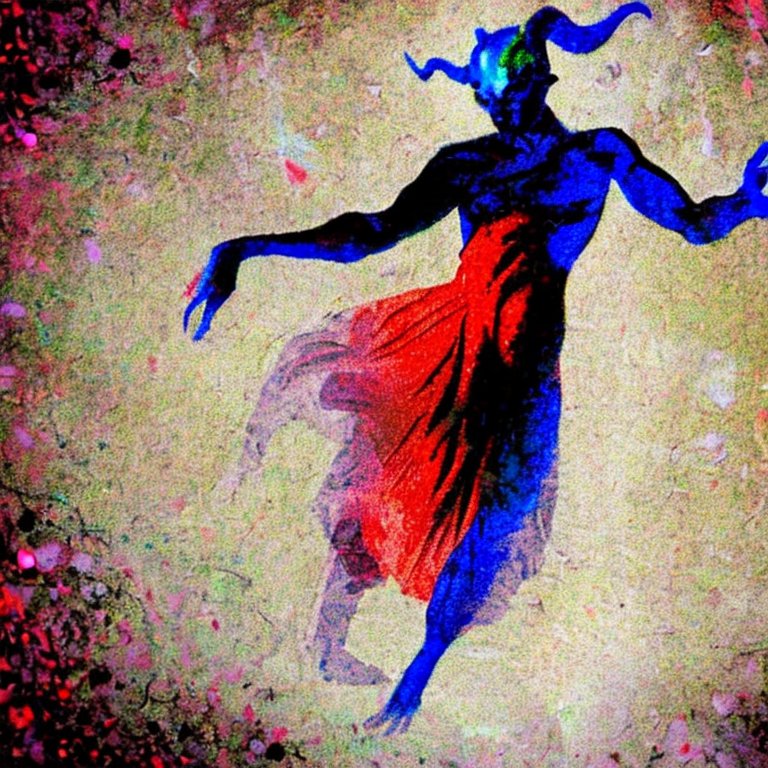
As we sail through the oceans of human consciousness, we often encounter tempests that unveil the darker facets of our nature. If the divine represents society’s golden shadow, virtues, and aspirations, could the devil figure embody society’s dark shadow, a reflection of our collective id and repressed instincts? This article plunges into the depths of this unsettling yet captivating hypothesis.

Understanding the Dark Shadow:

Carl Jung posited the existence of the shadow as a component of the unconscious, housing both positive and negative elements that are not integrated into the conscious self. The dark shadow encompasses the negative aspects – our fears, impulses, and darker instincts.

The Devil as Society’s Dark Shadow:

Across cultures, the devil often symbolizes the epitome of evil, temptation, and the darker aspects of human nature. By projecting these qualities onto a devil figure, society externalizes its inner darkness, creating a ‘scapegoat’ onto which it can cast its sins and unwanted characteristics.

The Collective Unconscious and the Id:

Sigmund Freud’s concept of the id complements Jung’s shadow. The id is the instinctual part of the mind that contains sexual and aggressive drives and desires. Society’s projection of the id onto the devil may represent a form of collective defence mechanism, an attempt to deal with the disconcerting aspects of our nature.

The Devil as an Archetype:

In Jungian terms, the devil can be seen as an archetype, a universal symbol that dwells in the collective unconscious of mankind. This archetype manifests in various forms in different cultures, but its core characteristics usually represent the antithesis of societal norms and moral values.

Facing Our Demons:

Recognizing the devil as a projection of society’s dark shadow calls for the courageous endeavour to face our inner demons. Individuals and societies can work towards a more balanced and authentic existence by accepting and integrating these shadow aspects.

Conclusion:

The notion of the devil as society’s dark shadow casts a new light on the traditional narratives of good and evil. It invites us to reflect upon how the figures of deities and demons are not only external entities but also potent symbols of the complexities of human nature. Through understanding these shadows, society stands on the precipice of deeper self-awareness and a more holistic grasp of the human condition.

Morgan O. Smith

Yinnergy Meditation & My Book, Bodhi in the Brain…Available Now!

https://linktr.ee/morganosmith

In Divine Light

Society’s Golden Shadow 

Intro:

In a world where the quest for meaning continues to stir the human soul, spirituality and reverence for the divine emerge as quintessential human experiences. But what if the collective admiration and worship of God are manifestations of society’s golden shadow – the unexplored, positive aspects of our shared unconscious? This post delves into the notion that the sacred spaces we turn towards in times of despair or joy are indeed reflections of the inherent greatness within ourselves.

Understanding the Golden Shadow:

Drawing from Carl Jung’s concepts, the golden shadow encompasses the positive attributes within our unconscious minds that we might not recognize. When these attributes are exemplified by an external entity, such as a deity, we project our golden shadow upon it.

God as the Epitome of Society’s Golden Shadow:

The divine figures across cultures are often epitomes of virtues – love, compassion, wisdom, and more. Society’s adoration for these figures could be interpreted as an admiration for the virtues themselves. The deities become mirrors, reflecting what individuals and societies aspire to embody.

Religion as a Path to Self-Realization:

One could argue that the rituals, prayers, and moral teachings of religion serve as vehicles for cultivating the qualities represented by the divine within ourselves. In essence, by worshipping or admiring God, individuals are also venerating and nurturing their own latent potential.

The Challenges:

This perspective might not sit well with everyone, especially those who believe in the transcendental nature of God. Moreover, using religious practices solely as tools for self-improvement might seem reductive. It’s essential to approach this hypothesis with respect for the diversity of beliefs and experiences.

Conclusion:

The notion that society’s worship and admiration for God is a projection of its golden shadow is thought-provoking. It offers a lens through which we can perceive religious and spiritual practices as not just pathways to the divine, but also as avenues to recognize and cultivate the virtues within ourselves. Whether or not one subscribes to this idea, it invites reflection on the profound interconnectedness between the human spirit and the sacred.

Morgan O. Smith

Yinnergy Meditation & My Book, Bodhi in the Brain…Available Now!
https://linktr.ee/morganosmith