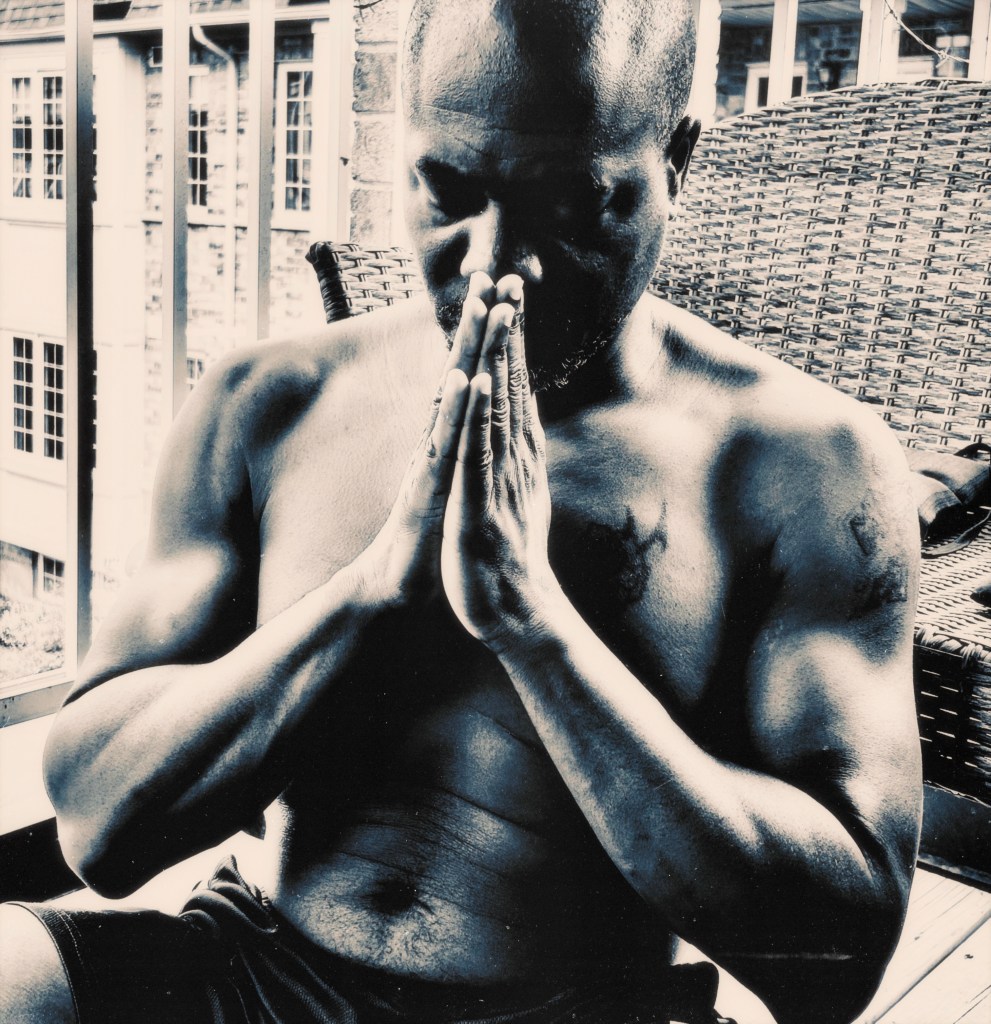
The Dissolution of the “I”

A Journey Beyond Self

In the quiet moments of our existence, we often find ourselves pondering the nature of identity and consciousness. What does it mean to truly know oneself? How can we navigate the complex interplay of ego and essence? These questions have occupied the minds of mystics and philosophers for millennia, yet they remain as relevant today as ever.

At the heart of these inquiries lies a profound realization: the dissolution of the “I.” This moment of enlightenment is not merely an intellectual understanding but a visceral, transformative experience. It is a point where the sense of self, the familiar “I” that anchors our daily lives, dissolves into something far greater and more expansive.

In this state, the boundaries that define our individuality blur and eventually vanish. The distinctions between self and other, inner and outer, become meaningless. This dissolution is not an annihilation but a return to the source—a reabsorption into the universal consciousness from which all things arise.

This experience is often described as a merging with pure awareness, where the perceiver and the perceived become one. It is a space where all dualities collapse, leaving only the pure presence of being. Here, there is no longer a separate observer; the “I” that once clung to its identity dissolves within itself, recognizing that it was never separate from the whole.

Such a realization can be both liberating and disorienting. The dissolution of the “I” challenges our deepest assumptions about who we are and what reality is. It invites us to embrace the paradox that while we appear as individuals, we are simultaneously the entirety of existence experiencing itself. This shift in perception allows for a deeper connection with the world, fostering a sense of unity and compassion that transcends the limited scope of personal concerns.

Yet, this journey is not without its challenges. The ego, with its myriad attachments and identifications, often resists this dissolution. It fears the loss of control, the end of its narrative. But in letting go, we do not lose ourselves; rather, we find our true essence—a boundless, infinite presence that is the very ground of being.

In this realization, life takes on a new dimension. Every moment becomes a manifestation of the infinite, every interaction a dance of the divine. The dissolution of the “I” is not an endpoint but a continuous unfolding, a deepening into the mystery of existence. It is an invitation to live from a place of profound openness and love, to see the world through the eyes of the infinite.

As we navigate this journey, let us remember that the dissolution of the “I” is not an escape from reality but a deeper engagement with it. It is a call to awaken to our true nature and to recognize the sacredness of all life. In this space, we find the freedom to be fully present, fully alive, and fully ourselves—beyond the limitations of the ego, in the infinite expanse of pure being.

Morgan O. Smith

Yinnergy Meditation, Spiritual Life Coaching & My Book, Bodhi in the Brain…Available Now!

https://linktr.ee/morganosmith

The Paradox of the False Self

The “I” is the false self, but this false self is also true. It just doesn’t know it yet. This realization reveals that our perceived separateness is an illusion, guiding us toward the truth of our inherent unity.

Understanding the False Self
The false self, often identified as the ego, is the aspect of our identity constructed from our experiences, beliefs, and societal conditioning. It is the mask we wear, the persona we present to the world. While it serves a functional role in navigating daily life, it is not our ultimate truth.

The Hidden Truth
Within this false self lies a hidden truth. The ego, though seemingly separate, is an expression of the same source that underlies all existence. The journey of self-realization involves peeling away the layers of this constructed identity to uncover the true self—the essence that connects us all.

The Illusion of Separateness
Our perception of being distinct individuals creates the illusion of separateness. This belief in separateness fosters division, conflict, and a sense of isolation. However, when we begin to see through the false self, we recognize that these divisions are illusory. Beneath the surface, we are all interconnected.

Toward Inherent Unity
Realizing the paradox that the false self is also true propels us toward the recognition of our inherent unity. This understanding dissolves the boundaries that the ego creates, allowing us to experience a deeper connection with ourselves and others. We move from a mindset of “me versus you” to one of “us” and “we.”

Living with Awareness
Living with this awareness transforms our approach to life. We become more compassionate, understanding, and empathetic, seeing others as reflections of ourselves. This shift in perception fosters a sense of peace and harmony, as we align with the deeper truth of our shared existence.

The journey of recognizing the false self as also true is a profound step toward spiritual awakening. It illuminates the path to our inherent unity, guiding us to live with greater authenticity and connection. By embracing this paradox, we uncover the deeper reality that binds us all.

Morgan O. Smith

Yinnergy Meditation, Spiritual Life Coaching & My Book, Bodhi in the Brain…Available Now!

https://linktr.ee/morganosmith

Annihilation and Kundalini Awakening

Annihilation is courtesy of Paramount Pictures and Skydance Media

 A Journey Through Transformation

In 2018, Alex Garland’s Annihilation plunged viewers into a surreal and disturbing world, where the familiar dissolves into the unknown, and transformation is inevitable. Watching this movie back then, and rewatching it last night on Netflix, I found myself deeply moved by its haunting imagery and profound symbolism, which echoed my spiritual journey of Kundalini awakening. By delving into the film’s narrative and its vivid scenes, we uncover a rich parallel to the mystical process of awakening dormant energy within.

Spoiler Alert: This post contains spoilers for those who haven’t seen Annihilation.


The Serpent Awakens

One of the most striking and unsettling scenes in Annihilation involves a soldier whose stomach is cut open, and we see his intestines move like a serpent inside him. This visceral image mirrors the ancient depiction of Kundalini energy as a coiled serpent at the base of the spine. In Kundalini traditions, this serpent represents latent spiritual energy, poised to rise and transform the individual. The soldier’s transformation, albeit grotesque, symbolizes the intense and sometimes chaotic nature of this awakening process.

Explosion and Rebirth

In another pivotal moment, the soldier explodes, leaving an intricate and eerie display on the wall. This explosion is reminiscent of the powerful release of Kundalini energy. Such energy can dismantle old patterns and structures, often causing upheaval before a new order can emerge. This scene captures the destructive yet transformative power of Kundalini, which breaks down the old self to pave the way for profound growth and understanding.

Kane’s Ultimate Sacrifice

Kane’s act of sitting cross-legged and detonating a grenade (played by Oscar Isaac) is another profound symbol. His posture suggests meditation or deep introspection, a practice central to awakening Kundalini. The ensuing explosion signifies a profound transformation—an act of self-destruction leading to rebirth. The image left behind symbolizes the remnants of the old self, giving rise to a new state of consciousness. This mirrors the death and rebirth cycle inherent in Kundalini awakening, where the dissolution of the ego precedes the emergence of a higher self.

The Shimmer as the Mystical Realm

The Shimmer, the film’s central enigma, serves as a metaphor for the mystical realm encountered during spiritual awakening. Within the Shimmer, reality bends and mutates, much like the inner landscape experienced during deep meditation and spiritual practices. Here, the boundaries of the self dissolve, and one is confronted with both beauty and terror—reflecting the dual nature of spiritual journeys.

Conclusion

Annihilation offers a hauntingly beautiful exploration of transformation, much like the journey of Kundalini awakening. Through its unsettling imagery and profound symbolism, the film invites viewers to contemplate the nature of change, the dissolution of the old, and the emergence of the new. By examining these parallels, we gain a deeper appreciation of both the cinematic experience and the spiritual process, enriching our understanding of transformation in all its forms.

Despite always wondering if anyone else had made this connection, I haven’t come across mentions of such interpretations. Yet, for me, the resemblance to my own experiences of Kundalini awakening is undeniable, providing a rich array of reflections on inner transformation. Only an individual who has gone through this process would truly understand these connections, as this is an event that must be experienced to be fully comprehended.

Morgan O. Smith

Yinnergy Meditation, Spiritual Life Coaching & My Book, Bodhi in the Brain…Available Now!

https://linktr.ee/morganosmith

The Profound Simplicity of Enlightenment

Transforming Perspective, Not Action

In the spiritual awakening journey, there is a well-known saying: “Before enlightenment, chop wood, carry water. After enlightenment, chop wood, carry water.” This aphorism captures the essence of a profound transformation that occurs not in the realm of actions but in the realm of perception.

Before enlightenment, we engage with the world through a dualistic lens. Wood is simply wood, and water is merely water. Our actions are routine, grounded in the practical necessities of life. We chop wood to build fires, and we carry water to quench our thirst. The world is divided into distinct entities and tasks, each with its purpose and function.

However, with the dawning of enlightenment, a radical shift in perspective occurs. Once seen as separate objects, the wood and water are now perceived as the divine. Every action, whether chopping wood or carrying water, becomes an act of communion with the sacred. The distinction between the doer and the deed dissolves, revealing the inherent unity of all existence.

This newfound vision unveils a profound truth: God is not a distant, separate entity but is every aspect of the universe. The wood we chop, the water we carry, the tools we use, and even the hands that perform these actions are not only expressions of the divine but are the divine. This realization transforms mundane tasks into sacred rituals, imbued with deep reverence, interconnectedness and beyond.


The environment in which these actions take place also becomes a sacred space. The forest where we gather wood, the river from which we draw water, and the air we breathe are all seen as the divine presence. Every element of our surroundings is woven into the fabric of oneness, blurring the lines between the individual and the cosmos.

This shift in perspective does not alter the actions themselves. We still chop wood and carry water, fulfilling the same physical tasks as before. Yet, the awareness that everything is as is infused these actions with a sense of purpose and meaning that transcends the ordinary.

In this enlightened state, the simplicity of life is revealed in its most profound form. Each moment becomes an opportunity to experience the divine, to engage in a continuous dialogue with the universe. The mundane is elevated to the extraordinary, and every action becomes an expression of love and devotion.


Ultimately, enlightenment is not about escaping the world or renouncing our daily responsibilities. It is about transforming our perception, recognizing the sacredness in every aspect of life, and understanding that we are the intricate, divine dance. By embracing this perspective, we find a deeper sense of peace and fulfillment, knowing that every action, no matter how simple, is an act of communion with the divine, as the divine.

Morgan O. Smith

Yinnergy Meditation, Spiritual Life Coaching & My Book, Bodhi in the Brain…Available Now!

https://linktr.ee/morganosmith

A Mind Blown is a Mind Well-Known

Exploring the Expansive Realms of Consciousness

In the quest for self-discovery and enlightenment, the moments when our minds are truly blown—those instants of awe where the familiar boundaries of understanding dissolve—are not just moments of wonder, but gateways to deeper knowing. These transformative experiences, where we glimpse the infinite expanse of consciousness, serve as profound awakenings that redefine our perception of self and universe.

Imagine standing at the edge of a cosmic ocean. Each wave, from the smallest ripple to the towering tsunami, symbolizes the various levels of consciousness we experience. In our daily lives, we paddle near the shore, within the safe confines of routine thoughts and conventional wisdom. Yet, it’s beyond this shoreline where the depth of our being lies. When a thought, insight, or experience—seemingly simple or strikingly profound—blows our mind, it’s akin to a powerful wave that pulls us into deeper waters, into the uncharted territory of our inner selves.

What does it mean to have one’s mind blown? It is to be thrust into the vastness of the unknown, to confront the mysteries of existence head-on without the armour of preconceived notions. This confrontation is not merely intellectual; it is deeply spiritual. It is the raw encounter with the divine dance of creation and destruction, where every held belief is challenged and reformed in the crucible of direct experience.

Such moments are not about losing oneself but rediscovering oneself as part of a grander scheme. They are about touching the essence of the cosmos, feeling the pulse of life that permeates everything. These instances remind us that we are not just isolated beings moving through a static world; we are dynamic participants in a vibrant, evolving universe.

To cultivate a mind that welcomes being blown—a well-known mind—is to foster a state of openness and curiosity. It involves nurturing a fearless approach to the unknown, a willingness to let go of the ego’s desire for certainty and an embrace of the profound mysteries that life offers. It is a journey of constant evolution, where each mind-blowing moment is a call to a deeper exploration of reality, urging us to look beyond the apparent to the underlying oneness that connects all.

In conclusion, the mind that is blown is indeed a mind that is known—not just in the intellectual sense, but in the profound, experiential, and transformative understanding of the self and the universe. As we navigate through these expansive realms of consciousness, let us cherish these mind-blowing moments as precious opportunities for growth and enlightenment.

Morgan O. Smith

Yinnergy Meditation, Spiritual Life Coaching & My Book, Bodhi in the Brain…Available Now!

https://linktr.ee/morganosmith

The Varied Facets of The Absolute

A Unified Whole

In the dance of the cosmos, the Absolute is often perceived through the lens of our individual experiences and understandings. Just as 100 pennies, 20 nickels, 10 dimes, and 4 quarters each represent the same dollar, our paths to understanding the Absolute are varied but ultimately converge upon the same truth. This analogy illuminates the inherent unity within diversity, revealing how different perspectives can harmoniously merge into a singular reality.

We often encounter myriad teachings, practices, and philosophies when we embark on our spiritual journeys. Each one offers a unique perspective on the nature of existence, the self, and the divine. Some may resonate more profoundly with a particular path of devotion, while others might find solace in meditative introspection or the study of ancient texts. Despite these differences, the essence remains unchanged: all paths lead us back to the Absolute.

This concept is beautifully reflected in the Hindu notion of ‘Ekam Sat, Vipra Bahudha Vadanti’—Truth is one; the wise speak of it in many ways. In our quest for spiritual awakening, we may find ourselves drawn to various expressions of this singular truth. Whether through the loving devotion of Bhakti Yoga, the disciplined inquiry of Jnana Yoga, or the selfless service of Karma Yoga, each approach offers a distinct yet complementary understanding of the Absolute.

In nondual philosophy, this unity is further exemplified by the idea that all distinctions are ultimately illusory. The dichotomies we perceive—self and other, subject and object, time and eternity—are merely constructs of the mind. At the deepest level of awareness, these distinctions dissolve, revealing the oneness that underlies all existence. This profound realization transcends the limitations of language and thought, offering a direct experience of the Absolute.

Reflecting on the analogy of different coins making up a dollar, we can see how each perspective, practice, or tradition contributes to a holistic understanding of the Absolute. This understanding invites us to appreciate the diversity of spiritual expressions without diminishing their underlying unity. It encourages us to approach our spiritual paths with openness, recognizing that every sincere effort to understand the divine is a step toward the same ultimate truth.

In embracing this diversity, we cultivate a sense of humility and respect for the myriad ways in which the Absolute can be experienced and understood. We acknowledge that our journeys are but threads in the vast expanse of existence, each contributing to the intricate and beautiful pattern of the whole. This perspective not only enriches our spiritual journeys but also fosters a deeper sense of connection and unity with all beings.


Ultimately, the realization that 100 pennies, 20 nickels, 10 dimes, and 4 quarters all amount to a dollar serves as a powerful metaphor for the unity within diversity that characterizes the Absolute. By recognizing and honouring the varied paths that lead to this ultimate reality, we move closer to experiencing the profound interconnectedness of all existence. This understanding not only deepens our spiritual practice but also inspires us to live with greater compassion, wisdom, and love.

Morgan O. Smith

Yinnergy Meditation, Spiritual Life Coaching & My Book, Bodhi in the Brain…Available Now!

https://linktr.ee/morganosmith

Essence and Existence

The Unseen Unity

In the labyrinth of existence, we often perceive ourselves as isolated entities navigating a myriad of external circumstances. Yet, beneath this surface, lies an essential truth: wherever essence is, you are. And wherever you are, only essence remains. This statement is not merely a poetic abstraction but a profound reflection on the nature of reality and our place within it.

Essence, in this context, refers to the fundamental nature of existence. It is the unchanging, underlying reality that permeates all forms and phenomena. It is the substratum of being, the silent witness to all experiences, and the ultimate source from which everything arises and to which everything returns. We begin to see the world through a different lens when we recognize that essence is our true nature.

Our usual mode of perception is dualistic. We see ourselves as separate from the world, creating a dichotomy between self and other, subject and object. This dualistic perception leads to a sense of isolation and disconnection, fueling a continuous search for meaning and fulfillment in the external world. However, when we shift our awareness to the essence, we realize this separation is illusory.

Wherever essence is, you are. This means that our true identity is not confined to the physical body or the individual mind. It is the essence itself, which is infinite and boundless. This essence is present in every moment, in every experience, and every being. It transcends the limitations of time and space, uniting all existence in a seamless whole.

And wherever you are, only essence remains. This implies that in the ultimate analysis, all distinctions and differences dissolve into the unity of essence. The various forms and phenomena we perceive are simply expressions of this one essence. When we look beyond the surface appearances, we see that everything is interconnected and interdependent, arising from and returning to the same source.

This understanding has profound implications for our daily lives. It invites us to shift our focus from the transient to the eternal, from the superficial to the profound. By recognizing our true nature as essence, we can experience a sense of peace and fulfillment that is not dependent on external circumstances. We become more compassionate and empathetic, seeing ourselves in others and others in ourselves.

Moreover, this recognition of essence can transform our relationship with the world. We begin to see the divine in everything and everyone, honouring the sacredness of all existence. This shift in perception fosters a sense of reverence and gratitude, leading to more harmonious and sustainable ways of living.

In essence, recognizing the unity of essence and existence is a journey of awakening. It is a shift from the fragmented perception of the ego to the holistic vision of the true self. It is an invitation to live in alignment with the deeper reality of our being, experiencing the boundless joy and freedom that comes from knowing that wherever essence is, you are. And wherever you are, only essence remains.

Morgan O. Smith

Yinnergy Meditation, Spiritual Life Coaching & My Book, Bodhi in the Brain…Available Now!

https://linktr.ee/morganosmith

Attaining Enlightenment

As Elusive as Grasping the Wind

The quest for enlightenment, that profound state of ultimate understanding and unity, is often compared to trying to hold onto the wind. This metaphor captures the essence of the journey—a pursuit that defies conventional grasping, one that requires an openness to the intangible and an embrace of the elusive.

The Elusiveness of Enlightenment

In many Eastern philosophies, Enlightenment is not a destination but a state of being. It is a realization that transcends the confines of our dualistic thinking. Much like the wind, it is everywhere and yet nowhere specific. To chase it with a rigid, goal-oriented mindset is to miss its essence.

Enlightenment involves the dissolution of the self and the shedding of layers upon layers of conditioned beliefs and identities. This shedding process can feel like an endless peeling away of illusions, akin to trying to contain the uncontainable wind in your hands. The moment you think you have a firm grasp, it slips through your fingers, revealing the futility of such an endeavour.


The Paradox of Effort and Effortlessness

One of the most challenging aspects of the spiritual path is balancing effort and effortlessness. The seeker must engage in practices, disciplines, and teachings that guide the way, yet true enlightenment often dawns in moments of complete surrender and stillness. It is in these moments that the boundaries of the self dissolve, and one experiences the boundless nature of existence.

This paradox can be frustrating. We are conditioned to believe that hard work and determination yield results. However, in the spiritual realm, striving too hard can create resistance. It is the quieting of the mind, the letting go of effort, that often brings the profound insights we seek.

Embracing the Unknowable

In accepting the elusiveness of enlightenment, we learn to appreciate the journey itself. Every moment of insight, every experience of stillness, is a part of the unfolding realization. The wind may be impossible to grasp, but it can be felt, experienced, and known in its presence.

To truly understand enlightenment, one must embrace the unknowable. It requires a heart open to the mysteries of existence and a mind willing to let go of the need for certainty. This openness allows us to experience glimpses of the infinite, moments where the separation between self and universe disappears, revealing the profound interconnectedness of all things.


Conclusion

Attaining enlightenment is indeed as difficult as grabbing hold of the wind. Yet, in this difficulty lies the beauty of the spiritual journey. It teaches us to let go, to be present, and to embrace the mystery of existence. In the end, the pursuit of enlightenment is not about reaching a final goal but about experiencing the boundless nature of our true selves, flowing effortlessly like the wind.

Morgan O. Smith

Yinnergy Meditation, Spiritual Life Coaching & My Book, Bodhi in the Brain…Available Now!

https://linktr.ee/morganosmith

Are We Truly God? Exploring the Divine Paradox

In the quest for spiritual enlightenment, a profound question often arises: Are we truly God? The answer, paradoxically, is both affirmative and negative. This might seem bewildering, but it encapsulates the essence of our being and the nature of existence itself.

Yes, We Are:

At the core of our being lies a spark of the divine. Every moment of clarity, every act of compassion, every intuitive insight reflects our inherent divinity. In moments of deep meditation or mystical experience, we touch upon a state of unity where the boundaries between self and the universe dissolve. We feel the interconnectedness of all things, experiencing firsthand the truth of our divine nature.

No, We’re Not:

Conversely, we are also distinct from the absolute. Our daily lives, with their trials and tribulations, remind us of our limitations. We experience separation, individuality, and the constraints of physical existence. These experiences ground us in the reality that, while we may embody aspects of the divine, we are not the totality of it. The ego, with its desires and fears, maintains the illusion of separateness.


Maybe We Are, Maybe We’re Not:

The coexistence of these opposing truths leads us to a deeper understanding. This paradox mirrors the dual nature of existence: the finite and the infinite, the known and the unknown. It is within this dynamic interplay that the essence of our being resides. By embracing this paradox, we move beyond binary thinking and open ourselves to the fluidity of existence.

Understanding the Paradox:

To truly grasp this paradox is to recognize that our existence transcends simplistic definitions. We are both the wave and the ocean, distinct yet inseparable. In acknowledging our divine potential while also accepting our human limitations, we embark on a journey of self-discovery that is both humbling and empowering.


Conclusion:

This paradoxical truth—that we are simultaneously divine and not—invites us to embrace the full spectrum of our existence. It challenges us to live with openness, curiosity, and a deep sense of wonder. By doing so, we honour the complexity of our being and the mysterious beauty of the universe.

Morgan O. Smith

Yinnergy Meditation, Spiritual Life Coaching & My Book, Bodhi in the Brain…Available Now!

https://linktr.ee/morganosmith