Author, Philosopher, Spiritual Teacher, A Lead Facilitator at Sacred Media's Integral Mastery Academy, Founder of Yinnergy Meditation/Neurofeedback, Bodhi Mental Care & Wellness, Co-founder of KeMor Centre for Innovative Development
In the vast expanse of human experience, the personal ego often feels like the defining core of our identity. We navigate the world through its lens, believing it to be the essence of who we are. Yet, in the grand scheme of existence, this ego is but a minuscule fragment—a needle in a haystack compared to the vast, boundless nature of our true self.
To truly understand this, we must first explore the nature of the ego. The ego is the part of our consciousness that deals with individuality and separateness. It thrives on comparisons, achievements, and the ceaseless chatter of the mind. It is the voice that says, “I am this” or “I am that,” constantly defining and limiting our experience of reality.
However, as we delve deeper into spiritual inquiry and self-exploration, we encounter moments where the ego’s hold weakens. These are moments of pure being, where the sense of separation dissolves, and we touch upon a more expansive consciousness. This consciousness is our true nature—vast, interconnected, and free from the constraints of the ego.
Imagine the ego as a single grain of sand on the shore of a limitless ocean. While the grain is real and tangible, it is insignificant when compared to the infinite expanse of the ocean. Similarly, our ego, with all its desires, fears, and identities, is but a small aspect of our true, boundless self.
In these moments of expanded awareness, we realize that we are not merely the sum of our thoughts, emotions, and experiences. We are the awareness in which all these arise and dissolve. This realization brings a profound sense of freedom and peace, as we no longer identify with the transient aspects of our existence.
The journey to this realization is not always straightforward. It requires a willingness to question our deeply held beliefs and to look beyond the surface of our everyday experiences. Meditation, self-inquiry, and contemplative practices can be invaluable tools on this path. They help us to quiet the mind and to see beyond the illusions created by the ego.
As we progress, we begin to live more from this place of expanded awareness. Our actions become less driven by egoic desires and more aligned with a deeper sense of purpose and connection. We see ourselves not as isolated individuals but as integral parts of a larger whole. This shift in perspective transforms our relationships, our work, and our approach to life itself.
In essence, recognizing the ego as a mere needle in the haystack of our true self is an invitation to embrace a more profound and expansive understanding of who we are. It is a call to awaken to our true nature and to live from that place of boundless awareness and interconnectedness.
Morgan O. Smith
Yinnergy Meditation, Spiritual Life Coaching & My Book, Bodhi in the Brain…Available Now!
It’s easy to fall into the comparison trap in the vast landscape of spiritual awakening. We witness the profound transformations and mystical experiences of others, and a subtle voice within us begins to whisper: “Why not me?” This whisper can grow into a chorus, overshadowing our path with doubt and impatience. However, understanding that someone else’s enlightenment isn’t the absence of your own can be a liberating revelation on the spiritual journey.
Each soul’s journey is a unique odyssey, carved out of their experiences and inner work. Just as no two fingerprints are the same, no two paths to enlightenment mirror each other perfectly. When we compare our progress with that of others, we risk overlooking the intricacies and nuances of our spiritual growth.
Imagine the spiritual journey as a grand symphony, where each individual’s enlightenment represents a distinct, essential note. The melody of the universe is incomplete without the contribution of each soul’s unique vibration. Another’s moment of illumination doesn’t dim your light; instead, it enriches the collective harmony, elevating the entire symphony to greater heights.
This realization invites us to shift our focus inward, recognizing the profound wisdom and beauty in our own experiences. Every moment of insight, every challenge faced, and every small victory on the path is a testament to the unfolding of our consciousness. When we honour our journey, we embrace the understanding that enlightenment is not a race but a deeply personal and transformative process.
The nature of nonduality teaches us that separation is an illusion. In the realm of pure consciousness, there is no competition or hierarchy. Each individual’s enlightenment contributes to the awakening of the collective, reflecting the interconnectedness of all beings. The enlightenment of one is a spark that ignites the potential within all.
Instead of viewing others’ enlightenment as a benchmark for our own, we can celebrate their milestones as a reflection of what’s possible within us. Their breakthroughs become a source of inspiration, reminding us of the boundless potential that lies within. By cultivating patience and trust in our unique path, we align ourselves with the natural rhythm of our spiritual evolution.
The journey to enlightenment is as diverse as those who embark on it. Embrace your path with gratitude, knowing that every step you take is perfectly purposeful. Remember, the guru’s enlightenment isn’t the absence of your own; it is a testament to the infinite possibilities that exist within the boundless expanse of consciousness.
Morgan O. Smith
Yinnergy Meditation, Spiritual Life Coaching & My Book, Bodhi in the Brain…Available Now!
Atman is identical to Brahman, fundamentally the same. While Atman is often viewed as the individualized aspect of Brahman, it retains its essence as Brahman. Brahman is the ground of all being, and Atman is but a speck of this divine soil. This soil, sharing the same substance as the ground, emphasizes their intrinsic unity.
Atman itself has no location, shape, or form, yet the physical body—the gross body—does. This physical body is also Atman but has shape and form, making it localized and subject to polarity. The physical body, dense and tangible, includes everything that constitutes it: vibrating strings, subatomic particles, atoms, molecules, and cells. Each of these elements, in their individual form, is Atman.
All the subtle bodies are also Atman, spanning from the most subtle to the gross physical body. When the physical body dies, the soul doesn’t leave the body because it is non-local. The soul, as Atman, remains ever-present. Atman offers a more sophisticated explanation of the soul. Remember, Atman doesn’t leave the body because there’s nothing there to leave. This nothing or nothingness is Atman, the empty witness.
The opposite of all shapes and form is indeed all shape and form. Nothingness is non-local, omnipresent, and ubiquitous. In its absolute state, nothingness manifests as everything. This empty witness manifests its individual reality. Every event that occurs from its individual perspective is Atman. Everything that happens, from all perspectives, is Brahman. Atman and Brahman are the same, transcending the ego and the sense of self.
Transcending the ego is an act, part of the cosmic play that Atman/Brahman engages in. The same Atman/Brahman that doesn’t exist yet does. Everything and nothing are the same, merely imagined from two different perspectives.
Morgan O. Smith
Yinnergy Meditation, Spiritual Life Coaching & My Book, Bodhi in the Brain…Available Now!
Nothing I say will ever fully convey what transpired on December 14, 2019. As I sat in my daily meditation, an extraordinary transformation began without effort. In an instant, I was engulfed by an indescribably bright white light, a radiance comparable to a thousand suns. It was so intense it nearly blinded me. As I entered this pure illumination, I faced an ocean of pure consciousness. Gazing at this boundless expanse, I felt myself merging with it until there was no longer a distinction between me and this ocean. At that moment, I fully surrendered. I lost my sense of self as it merged with this ocean of pure consciousness. I had become consciousness itself—a moving body of perfectly still water, free from the properties of wetness.
In this state, I realized I was the Source itself. The Alpha and the Omega, the beginningless beginning and the endless end. I transcended all space and time. I was all shape and form, yet formless. I embodied everything—past, present, and future. I felt as if I were the center of a black hole and the black hole itself. I was pregnant with all possibilities: the possible, the impossible, the probable and the improbable. I was both nothing and everything. As nothing, I was the void, emptiness, Sunyata. As everything, I encompassed all existence and nonexistence.
As all existence, I was the macro and the micro, all dimensions, and all events. I was every action, every noun, and every verb. I was every person, place, and thing. I was every creature, great and small. I was everything subjective and objective. I was everything on this planet, in the solar system, galaxy, and all galaxies. I was the universe itself, including the multiverse. I was every star that ever existed and every particle of stardust. I was every drop of rain, every grain of sand, every blade of grass. I was every microscopic organism, all quantum fields, and vibrating strings. I was every human being that ever lived.
As the entire multiverse, I witnessed my birth and death for eternity, as eternity. I saw myself as every single Big Bang that ever occurred and will occur. I was both life and death, witnessing every birth, death, and rebirth not just of sentient beings, but of the universe itself. I was fully omnipresent, everywhere at once, yet nowhere. I became the everywhere, every when, and everyone. I was all matter and all energy. I was every single particle and every single wave. I was all feelings, emotions, senses, and subtle bodies. I was all peak experiences, all pleasure and pain. I was all realms and dimensions. I was both God and man, both soul and spirit. I was all bliss, consciousness, and existence. I was the entire ground of all being. I was all-knowing God itself. I was the never-born and the never-dying. I was pure manifestation itself.
All of this was experienced simultaneously, in a state of total nondual suchness. It was an experience of absolutely everything and nothing, with no distinctions, yet with all distinctions. At that moment, everything was of the same source. I experienced the beauty of all religions glorified in my name, all philosophy, all fields of knowledge. Every mystery unsolved. Every song ever written and those yet to be written. Every invention. I was the spark of every surprise. I witnessed all of history and all future events. I was infinite. I was the Self. The I Am. The I Am That. I was both Atman and Brahman. I was both the cause and the effect. Yet, I saw nothing. There was nothing to see because nothing existed outside of me. All that existed was The Self. The Absolute of The Absolute. I was eternity. I experienced everything as both diversity and singularity. I was complete. I was whole. I had nothing to lose and nothing to gain. I was free from all suffering, free from all bondage. The only thing experienced was Samsara and Moksha, both Samsara and Nirvana. I was free from my existence, yet I was existence itself. At that moment, I knew and still without a shadow of a doubt who and what I am.
As the nondual experience began to dissipate and I became aware of my physical body, I felt broken. But in a good way. My heart was bent in two as love flowed throughout every artery. All of a sudden, I felt a force from the base of my spine pushing upwards through my spinal column. It felt as if a giant python was forcing its way up my spine, activating all my nerve endings. Every vein, nerve, meridian, and nadi burst with life-force energy. This python of energy surged through my spine and exploded out of the top of my head. It felt as if trillions of lotus petals of pure light were bursting from my crown, pouring out rapidly and dissipating as they hit the ground.
My physical body went into full spasm. At that moment, I lost control of all my bodily functions, but subjectively, my body felt like it was moving like the feminine serpent and every time I moved the entire universe moved with me. And when the universe moved, I moved with it. As I moved in this fashion, I felt like my body was performing every asana and every mudra simultaneously. At that moment, it felt as if my entire body represented different aspects of the universe. As I somehow performed every pose at once, I felt like I was the entire physical universe tied in a single knot. As this single knot, I was non-local. Every single facet of my body occupied the same space. For the first time in all my years of meditative practice, I finally understood the meaning of Yoga with a capital Y. From the outside, I was having a full spasm. I was drooling from my mouth, laughing hysterically from the depths of my gut while crying tears of exceeding joy. As I lay on the ground, my body moving uncontrollably, every atom, every molecule, and every cell blossomed into the most beautiful flowers. And as they bloomed, at once, they all shouted with a loud voice in every single human tongue, “I am Brahman!”
Morgan O. Smith
Yinnergy Meditation, Spiritual Life Coaching & My Book, Bodhi in the Brain…Available Now!
In the pursuit of spiritual understanding, a significant distinction emerges between being spiritually inclined and spiritually awakened. This divergence reveals not just a difference in terms of interest, but in the depth of experience and transformation.
The Spiritually Inclined
Those who are spiritually inclined are often on the periphery of spiritual exploration. Their journey is characterized by a curiosity and fascination with the metaphysical realm. This inclination is the initial spark, a gentle pull towards understanding deeper truths of existence. It involves an appreciation of spiritual concepts, rituals, and practices, often adopted to enhance personal well-being or to find solace in times of distress. Yet, this stage may lack the profound shift in perception that marks true spiritual awakening.
The Spiritually Awakened
In contrast, spiritual awakening is a profound transformation that redefines the essence of one’s being. It is not merely an interest or hobby, but a fundamental change in how one perceives and interacts with the world. This shift often arrives unexpectedly, after intense personal introspection or significant life challenges that push one to question deeper existential truths.
An awakened individual sees beyond the illusions of the self and the material world, recognizing the interconnected nature of all life. Their lives are marked by a deep, intrinsic understanding of non-duality—that there is no separation between the self and the universe, only a unified existence. This realization is not an intellectual exercise but an experiential truth that permeates every aspect of life.
Navigating the Path from Inclination to Awakening
Transitioning from being spiritually inclined to being awakened is not a guaranteed trajectory. It requires more than just passive interest; it demands active engagement, often facilitated by practices such as meditation, contemplative prayer, or profound philosophical inquiry. The catalyst for awakening is deeply personal and can be facilitated by a guide or teacher who can help one embark on the necessary introspective journey. For those seeking to bridge this gap, it is essential to cultivate an environment that encourages deep questioning and vulnerability. It involves letting go of preconceived notions and embracing the unknown with an open heart and mind.
Conclusion
The journey from spiritual inclination to awakening is unique for each individual, filled with challenges and revelations. Recognizing the difference between these states is crucial for anyone on the path of spiritual exploration, as it highlights the depth of commitment and transformation required to move beyond mere interest to profound spiritual realization.
Morgan O. Smith
Yinnergy Meditation, Spiritual Life Coaching & My Book, Bodhi in the Brain…Available Now!
Embracing Our Humanity Through Spiritual Evolution
In the labyrinth of human experience, we often find ourselves at a crossroads between contrasting moral landscapes. This journey, fraught with myriad complexities, guides us through a transformative process—a shift from seeing the world in stark contrasts to embracing the nuanced shades of morality that define our existence. It’s a journey that doesn’t just challenge our perceptions but also enriches our understanding of what it means to be inherently human.
The Evolution of Perception
As we embark on this spiritual and psychological evolution, our initial encounters with morality are often painted in broad strokes of black and white. This dichotomy, while offering clarity, is also a testament to our nascent understanding of the moral universe. However, as we delve deeper into our journey of self-discovery and spiritual awakening, we begin to notice the emergence of grey areas. These are not mere anomalies but signposts of our evolving consciousness.
The Tug of War Within
This recognition ushers in a period of internal conflict—a tug-of-war between the polarities of good and evil, right and wrong. It’s a battle that rages within, pulling us in opposing directions. Yet, it’s through this struggle that we learn the invaluable lesson of acceptance. By integrating these disparate aspects of our being, we unlock a more profound comprehension of our nature and the world around us.
Standing Firm in the Middle
The ultimate aim of this journey is not to choose a side but to find equilibrium amidst the chaos. To stand firm in the middle is to acknowledge our capacity for both the divine and the diabolical. It is in this space that we discover true empathy and compassion, unburdened by bias and judgment. This balanced stance does not signify indifference but a deeper connection to the vast spectrum of human experiences and emotions.
The Gift of Empathy and Compassion
By embracing the grey areas of morality, we cultivate a more empathetic and compassionate perspective. This transformation is not just personal but collective, as our increased understanding and acceptance ripple outwards, influencing our interactions and relationships. In recognizing our complexities, we become more forgiving of others, bridging divides and fostering a sense of shared humanity.
Conclusion: Embracing Our Humanity
The journey through the shades of morality is an integral part of our spiritual evolution. It challenges us to confront and reconcile the complexities within ourselves, leading to a more empathetic, compassionate, and balanced existence. By standing in the middle of our moral landscape, we embrace the full spectrum of our humanity, finding peace in the acceptance of our multifaceted nature.
Morgan O. Smith
Yinnergy Meditation, Spiritual Life Coaching & My Book, Bodhi in the Brain…Available Now!
In the intricate dance of existence, where the lines between the divine and the mundane blur, we encounter a profound paradox that challenges our understanding of life, suffering, and bliss. This paradox lies in the realization that the essence of divinity, or what we might call ‘God’, permeates every aspect of our reality. God is not merely a distant observer or a creator apart from creation but is intimately woven into the fabric of everything that exists. In this realization, we find that God embodies every nuance of existence—every thought, every feeling, every interaction. This divine presence is both the creator and the creation, the experiencer and the experience, and the observer and the observed.
The notion that God experiences pain, and is continually afflicted by it, yet remains unaffected, presents a compelling exploration into the nature of divinity and existence. It suggests that within the divine consciousness, there exists a capacity to encompass all dualities—pain and pleasure, creation and destruction, life and death—without being limited by them. This capacity is not a contradiction but a testament to the boundless nature of the divine. It is within this boundless nature that we find the freedom to experience the full spectrum of existence without attachment, recognizing that pain and pleasure are not opposites but expressions of the same fundamental reality.
The idea that realizing one’s identity as God brings about a deeper experience of pain, yet also a profound experience of pleasure, illuminates the path of spiritual awakening as one of embracing all facets of existence. This awakening is not a transcendence that denies pain or seeks only bliss but an acceptance of the inherent duality of life as expressions of the divine. In this acceptance, we find that pain and pleasure, sorrow and joy, do not merely experience to be endured or sought after but are avenues through which the divine essence reveals itself.
The narrative that God manifests everything into existence to experience the opposite of itself, which always was The Self, invites us into a contemplation of the purpose of creation. It suggests that the unfolding of the universe is a divine play, a cosmic exploration of self-discovery, where every moment of existence is a death and rebirth of the Self. This continual cycle of creation and dissolution, of experiencing all facets of existence, is not a journey towards an end but an eternal expression of the divine nature.
At the heart of this exploration is the understanding that harm, pain, and suffering are integral to the wholeness of existence. To remove them would be to deny the completeness of the divine experience. Yet, in the ultimate realization, we find that the divine essence, the core of our being, transcends the concepts of life and death, pain and pleasure. This essence cannot perish, for it is beyond all dualities, yet it chooses to engage with these dualities as expressions of its infinite potential.
This profound paradox challenges us to look beyond the surface of our experiences and recognize the divine essence within all aspects of existence. It invites us to embrace the complexity of life, to find beauty in the pain, and to see the divine play in every moment. In doing so, we open ourselves to a deeper understanding of our nature and the nature of reality, where pain and pleasure are not merely experiences to be judged but are sacred expressions of the divine dance of existence.
Morgan O. Smith
Yinnergy Meditation, Spiritual Life Coaching & My Book, Bodhi in the Brain…Available Now!
In the realm of spiritual awakening, there exists a profound paradox that challenges the very essence of enlightenment. This enigma revolves around the transformation of spiritually awakened individuals into spiritual gurus. At the heart of this transformation lies a pursuit, a quest not just for the dissemination of wisdom, but for an embodiment of an ideal that, by its nature, remains ever elusive.
Why, then, do some individuals, upon touching the profound depths of spiritual awakening, choose to step into the role of a guru? It’s a question that invites us to explore the intricate dynamics of enlightenment and the human condition.
The Unattainable Ideal
At the core of every spiritual journey lies the pursuit of enlightenment—a state of being that transcends the ordinary confines of human perception and experience. Yet, when this state is conceptualized as an ‘ideal’ to be achieved, it becomes inherently unattainable. The very essence of enlightenment eludes definition or confinement within the boundaries of human ambition. It is not a peak to be scaled but an endless horizon that expands as we journey toward it.
The Guru’s Dilemma
For those who have experienced a profound spiritual awakening, the impulse to share this newfound understanding with others can be overwhelming. In their hearts burns a desire to guide others towards the light they have glimpsed. Yet, herein lies the dilemma: the act of becoming a guru—a spiritual teacher—often entails embodying an idealized version of enlightenment that is, in essence, unattainable.
This paradoxical situation places the guru in a position of navigating the fine line between guiding others on their spiritual journeys and being placed upon a pedestal as an epitome of spiritual perfection. It is a role fraught with challenges, as it demands a continuous dance with the unattainable, a constant striving to live up to an ideal that is both inspiring and impossible.
The Authentic Journey
The true essence of being a guru lies not in achieving or embodying perfection but in embracing one’s humanity, with all its flaws and imperfections. It is about being a beacon of light, not by being flawless, but by being genuine and authentic. The most profound teachings often come not from a place of having reached a destination but from the journey itself, with all its trials, tribulations, and moments of grace.
A genuine spiritual guide understands that enlightenment is not a static state of being but a dynamic process of becoming. They recognize that their role is not to live up to an unattainable ideal but to walk alongside others on the path, sharing insights and wisdom gleaned from their journey, without the pretense of having ‘arrived.’
Conclusion
The transformation of spiritually awakened individuals into spiritual gurus is a reflection of a deeper yearning—a yearning not just to share wisdom but to embody an ideal that, while inspiring, remains fundamentally unattainable. This paradox does not diminish the value of the guru’s role but rather highlights the profound complexity of the spiritual journey. It is a journey that calls for humility, authenticity, and the courage to embrace the endless unfolding of enlightenment.
In stepping into the role of a spiritual guide, one embraces the paradox of striving towards the unattainable, recognizing that the true essence of enlightenment lies not in reaching a destination but in the endless journey of awakening.
Morgan O. Smith
Yinnergy Meditation, Spiritual Life Coaching & My Book, Bodhi in the Brain…Available Now!
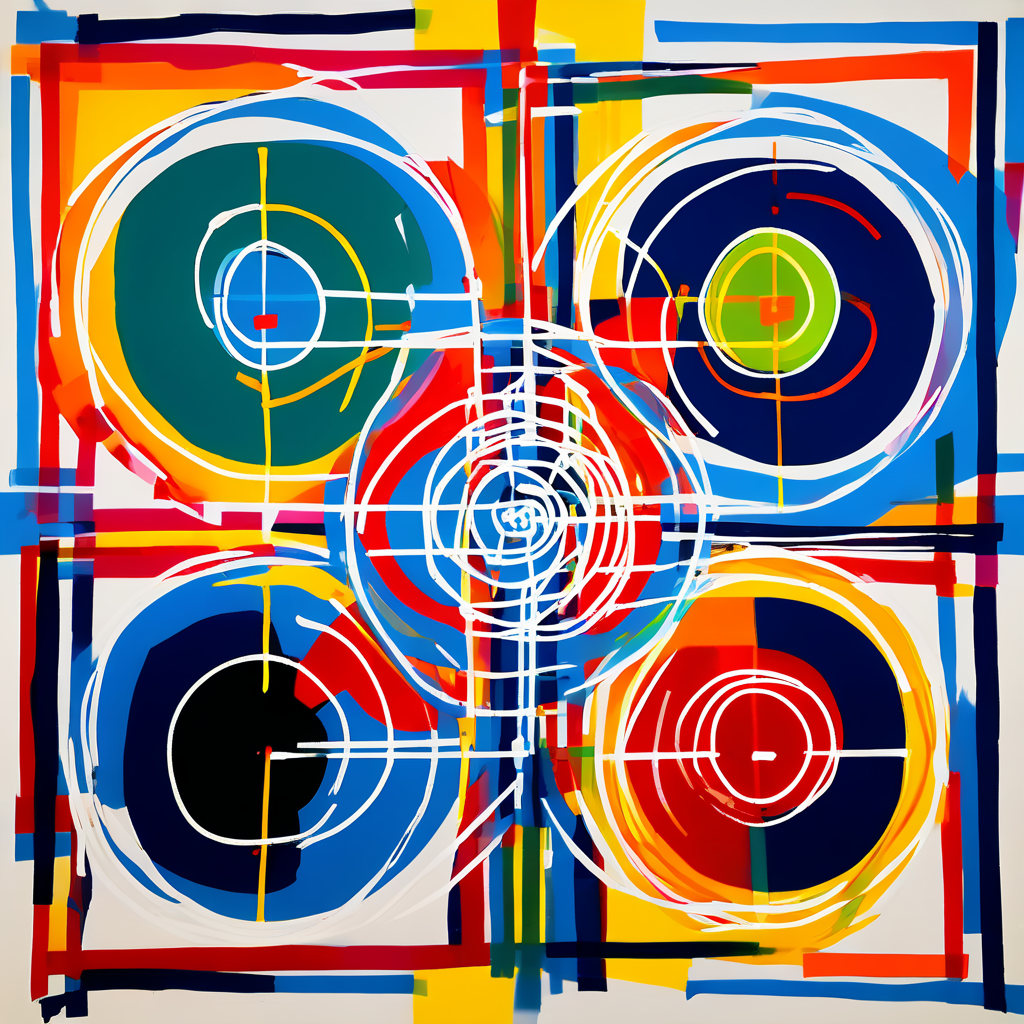
In the realms of Integral Theory, our perception of reality is intricately divided into four primary dimensions or perspectives: the subjective (‘I’), the intersubjective (‘We’), the objective (‘It’), and the interobjective (‘Its’). These perspectives serve as the foundational pillars through which we navigate our relative existence, framing our experiences, relationships, and understanding of the world around us. These quadrants, when represented graphically, are not just abstract concepts but are reflective of the comprehensive ways in which we engage with reality.
However, the journey toward spiritual awakening introduces a profound transformation in this perception. As one advance towards the state of Turiyatitta, a term deeply rooted in Eastern philosophy signifying a state beyond the waking, dreaming, and deep sleep states, a remarkable unification occurs. In Turiyatitta, the boundaries that once separated the ‘I’ from ‘We’, the ‘We’ from ‘It’, and the ‘It’ from ‘Its’, dissolve into a seamless oneness. This state transcends the distinctions between the subjective and the objective, the individual and the collective, and the observer and the observed.
The exploration of Turiyatitta challenges the compartmentalized view of reality presented by Integral Theory. It invites us into a realm where the delineations between the upper-left (I), lower-left (We), upper-right (It), and lower-right (Its) quadrants blur, suggesting that these divisions are merely constructs of a relative reality. In the ultimate reality experienced through Turiyatitta, these quadrants converge, revealing that at the most profound level, there is no distinction between ‘I’ and ‘We’, ‘We’ and ‘It’, ‘It’ and ‘Its’—everything becomes interconnected, a unified whole.
This revelation has significant implications for our spiritual and philosophical journeys. It suggests that the ultimate truth lies not in the separation and analysis of reality into distinct quadrants but in the recognition of the inherent oneness that underlies all existence. The experience of Turiyatitta offers a direct encounter with this oneness, an experiential understanding that transcends intellectual comprehension and invites us into a direct, immediate experience of unity.
Engaging with this perspective does not invalidate the usefulness of the four quadrants in navigating our relative reality. Instead, it enriches our understanding by adding depth to our perception, allowing us to see beyond the surface distinctions and appreciate the underlying unity that connects all aspects of existence. This holistic view fosters a deeper sense of empathy, interconnectedness, and a profound appreciation for the mystery that is life itself.
As we navigate our spiritual path, the exploration of Turiyatitta and the convergence of the four quadrants invite us to reconsider our understanding of reality. It encourages us to look beyond the apparent separations and to embrace the unity that encompasses all aspects of our existence. In doing so, we open ourselves to a more profound, interconnected, and unified experience of reality, one that transcends the limitations of our conventional perspectives and guides us toward a deeper realization of the ultimate truth.
Morgan O. Smith
Yinnergy Meditation, Spiritual Life Coaching & My Book, Bodhi in the Brain…Available Now!
In the realm of our bustling existence, where the cacophony of the outer world often drowns out our inner peace, there lies a simple, yet profoundly powerful tool for returning to a state of serenity: our breath. This elemental act, so often taken for granted, holds the key to unlocking a wellspring of comfort and tranquillity within us.
Consider the breath more than just a biological necessity; envision it as a bridge connecting the seen with the unseen, the material with the spiritual. Each inhalation invites us to draw in the world around us, not just the air, but the very essence of life itself. With every exhalation, we release more than just carbon dioxide; we let go of the stress, the worries, and the relentless speed of life that keeps us from our deeper selves.
The ancient practice of mindful breathing, deeply rooted in Eastern philosophies, offers us a pathway to rediscover the peace that resides within. This is not a peace that must be sought in the external world or through the attainment of material possessions. Rather, it is a peace that is always present, patiently waiting just beneath the surface of our frenetic minds. It is a peace that can be accessed at any moment, with each conscious breath we take.
Engaging in this practice does not require us to abandon our responsibilities or retreat from the world. On the contrary, it empowers us to face life’s challenges with a renewed sense of calm and clarity. By centring ourselves in the breath, we cultivate an inner sanctuary that remains undisturbed by the ever-changing circumstances of our lives.
This understanding invites us to embark on a journey of self-discovery, where the simple act of breathing becomes a profound act of self-empowerment. As we learn to navigate our existence with the breath as our compass, we uncover the boundless potential for personal growth and spiritual awakening.
In this space of breathing and being, we find that the comfort we seek is indeed only one breath away. It is a comfort that does not depend on external validation or fleeting pleasures. It is a comfort that springs from the deep well of our being, offering solace and strength that is both timeless and universal.
Let us then embrace the breath as our most faithful guide on this journey toward inner tranquillity. With each breath, we are reminded of our connection to something greater than ourselves, a reminder that in the simplicity of being, we find the profound answers to the complexities of living.
Morgan O. Smith
Yinnergy Meditation, Spiritual Life Coaching & My Book, Bodhi in the Brain…Available Now!















 Morgan O. Smith