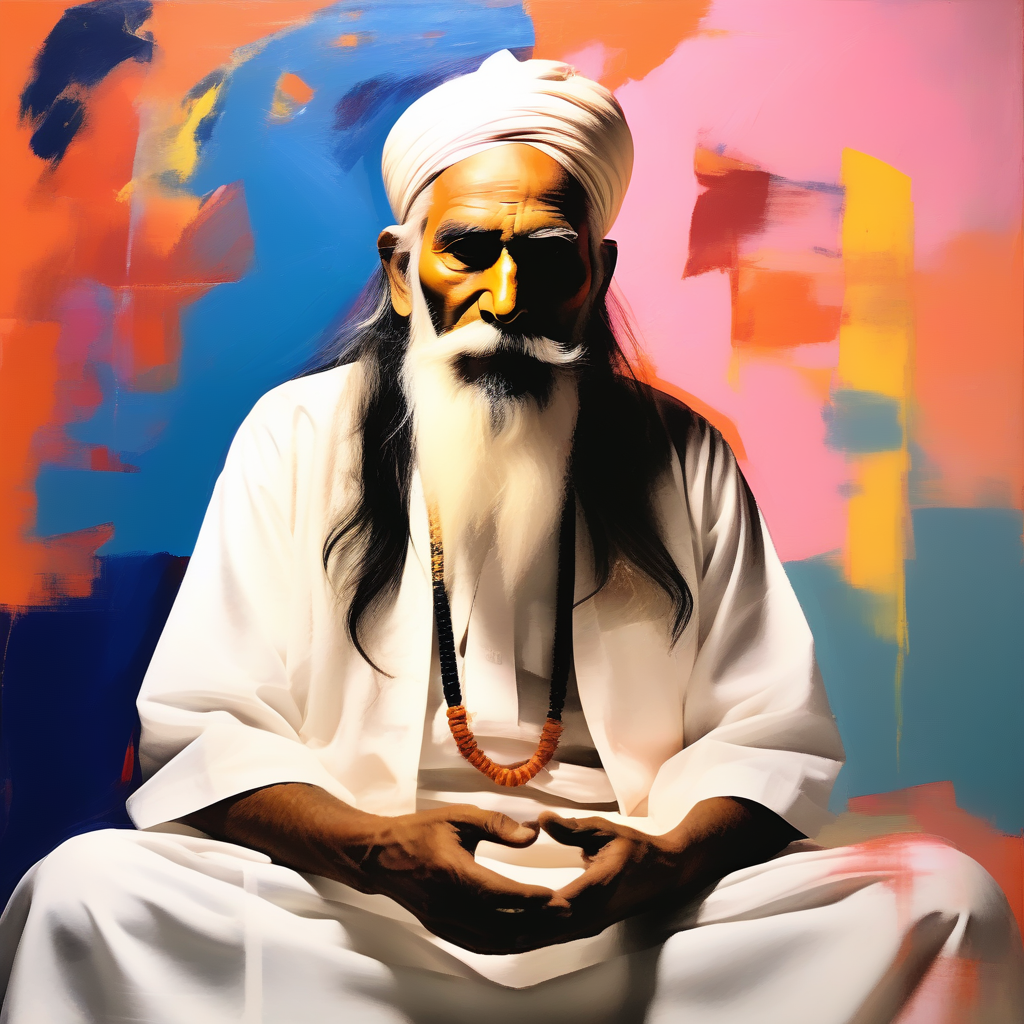
The Profound Journey

Understanding Mystical Experiences and Spiritual Awakenings

**Introduction**:
In the pursuit of understanding life’s profound mysteries, we often come across terms like ‘mystical experience’ and ‘spiritual awakening.’ While these concepts are intertwined in the grand tapestry of spiritual exploration, they hold distinct meanings and implications for the seeker. In this blog post, we delve into the essence of these experiences and how they shape our journey toward enlightenment.

**Mystical Experience – A Moment of Transcendence**:

A mystical experience is like a flash of lightning in the dark night of our existential journey. It’s a transient, profound event that gifts the individual with a sense of unity and oneness with the universe. This experience transcends normal perception and thought, offering a glimpse into a deeper reality that is usually veiled by the mundane aspects of life. Mystical experiences are often described as ineffable – beyond the grasp of language and logic. They can occur spontaneously or be induced through various practices like deep meditation, prayer, or even through profound encounters with nature or art.
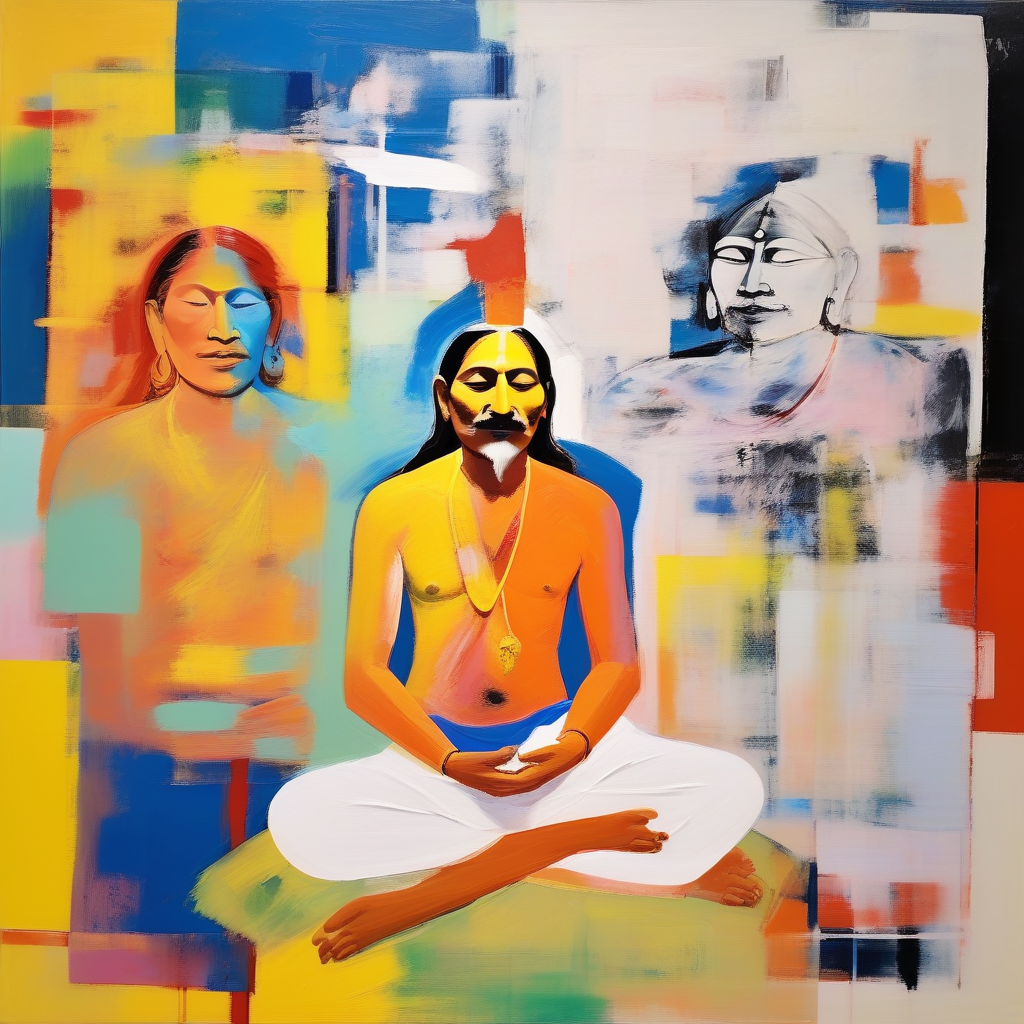

**Spiritual Awakening – The Dawn of Consciousness**:
On the other hand, a spiritual awakening is a gradual, transformative process. It’s not just a fleeting moment of insight but a fundamental shift in consciousness. This awakening alters how an individual perceives themselves and their surroundings. It’s akin to waking up from a deep slumber, where one starts to question and understand the deeper aspects of life, self, and the universe. This transformation often leads to personal growth, an increased sense of empathy, and a deeper connection with others. It signifies a lasting change in one’s worldview and approach to life.

**Interconnection and Differences**:
While both mystical experiences and spiritual awakenings can profoundly impact an individual’s life and worldview, they differ in nature and impact. A mystical experience might catalyze a spiritual awakening, yet it can also occur as a standalone event. The key difference lies in their duration and transformative effects. Mystical experiences are short-lived yet intense, whereas spiritual awakenings are long-term, gradually reshaping one’s consciousness and perspective.
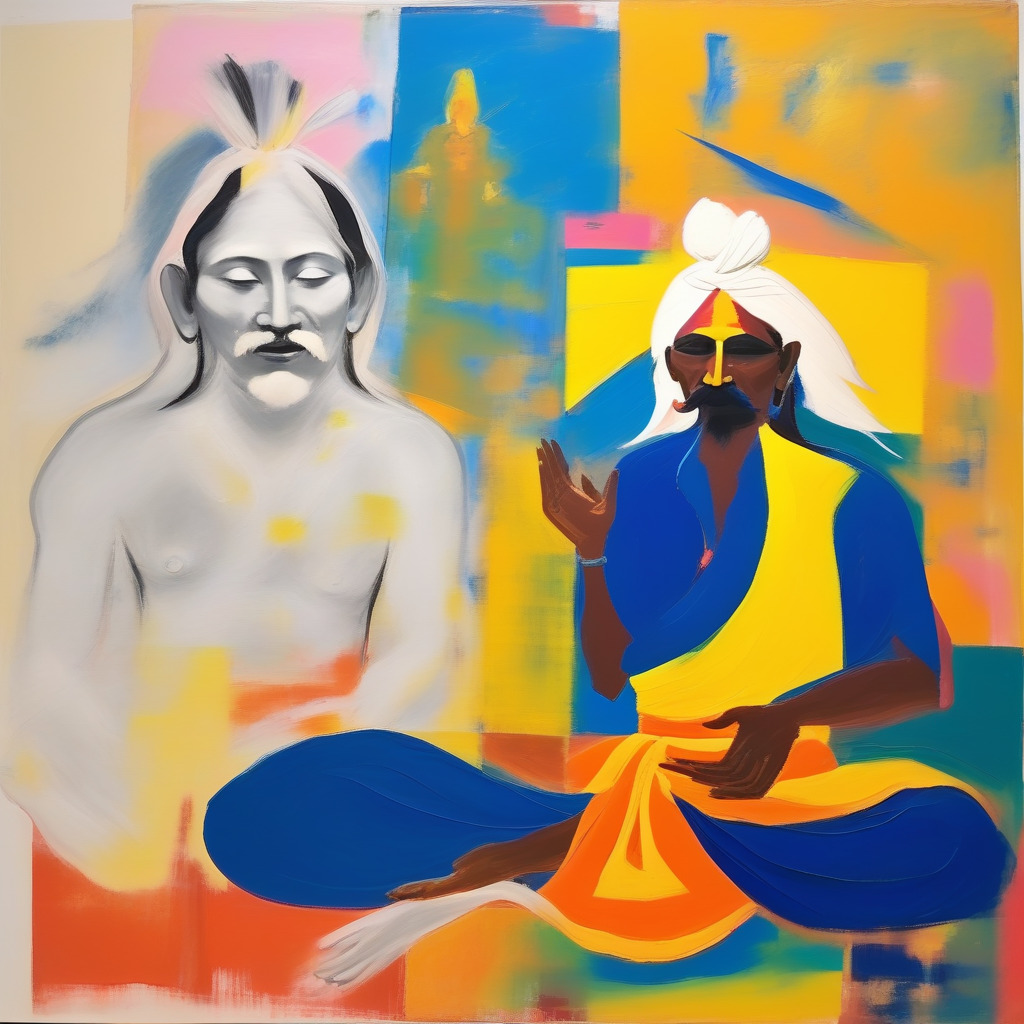

**Conclusion**:
In the journey of self-discovery and spiritual growth, both mystical experiences and spiritual awakenings play vital roles. They offer glimpses into the profound mysteries of existence and guide us toward a deeper understanding of our place in the cosmos. As seekers on this path, embracing these experiences can lead us to a more fulfilled and enlightened existence, marked by a profound connection with the world and a deeper understanding of the self.

Morgan O. Smith

Yinnergy Meditation, Spiritual Life Coaching & My Book, Bodhi in the Brain…Available Now!

https://linktr.ee/morganosmith

Surrendering to Nondual Suchness

A Journey Beyond the Self

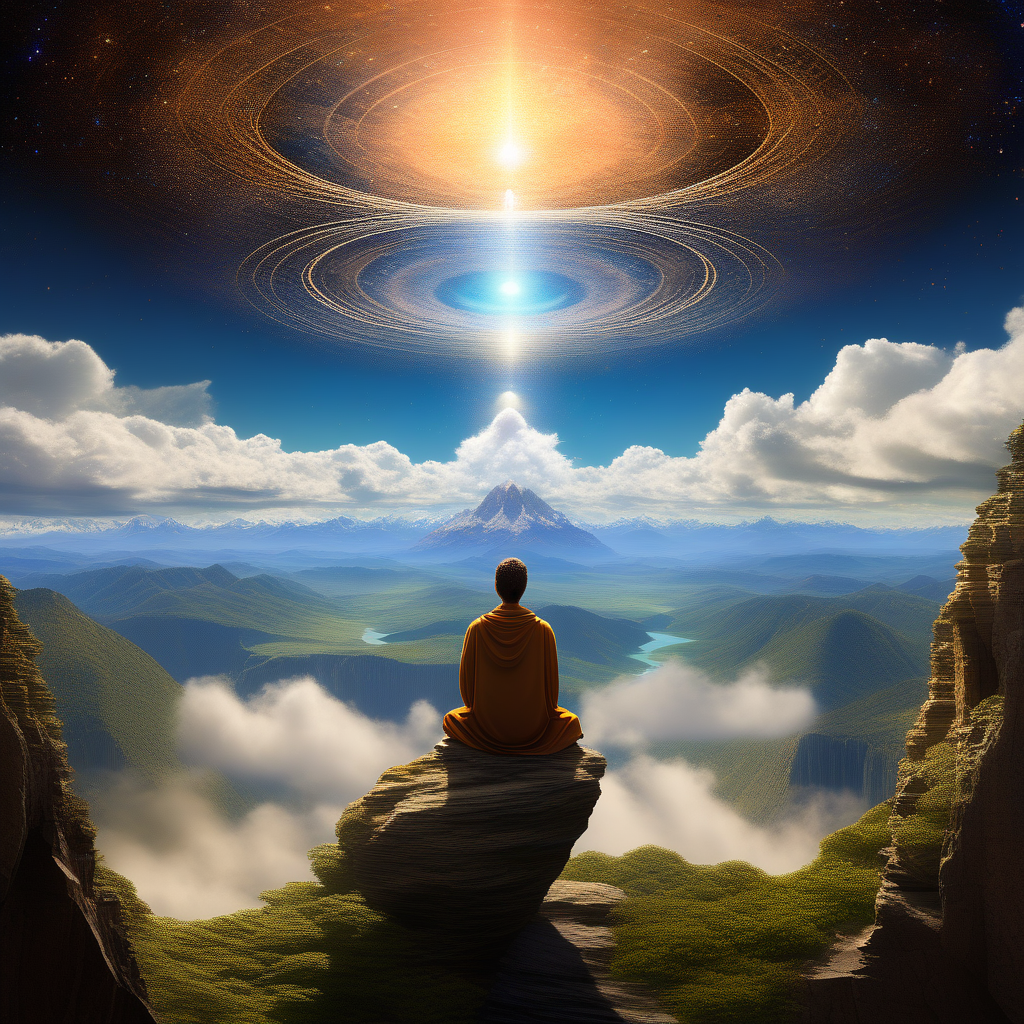
In spiritual exploration, the concept of surrendering to nondual suchness presents a profound and thought-provoking journey. This journey transcends the confines of the individual self, leading one into the embrace of a universal consciousness.

At the heart of this process is the realization that the sense of a separate ‘you’ is an illusion. In nondual suchness, the distinction between self and other dissolves, revealing a state of being where everything is interconnected and unified. This realization is not an intellectual one; it’s an experiential awakening to the true nature of existence.


When we talk about surrendering in this context, it’s not the conventional notion of giving up or admitting defeat. Instead, it’s a letting go of the ego, the false sense of separateness that keeps us entangled in a web of individuality and personal narratives. It’s a release into the flow of life, an unclenching of the fists that hold tightly to personal identity and desires.

This surrender is not an act done by an individual to something greater. Rather, it’s a recognition that the individual self is an integral part of the greater whole. It’s the ‘all that is’ surrendering to itself. In this space, there’s no doer; there’s just the unfolding of life in its myriad forms, a dance of cosmic consciousness.

This understanding brings about a profound sense of peace and freedom. It’s a liberation from the burdens of the self, a release from the relentless pursuit of personal gain, and an end to the suffering caused by attachment and aversion. In this state, one experiences life in its purest form, unfiltered by the ego’s desires and fears.


Surrendering to nondual suchness is a journey that challenges our deepest-held beliefs and perceptions. It invites us to look beyond the surface of things, to see the interconnectedness of all life, and to experience the world not as a collection of separate entities but as a unified whole.

As we embark on this journey, we find that the path is not always easy. It requires a willingness to let go, to trust in the natural flow of life, and to open ourselves to a reality that transcends the personal. But for those who dare to take this path, the rewards are immeasurable: a sense of oneness with all that is, a deep and abiding peace, and an unshakeable joy that comes from being in harmony with the true nature of existence.

 Morgan O. Smith

Yinnergy Meditation, Spiritual Life Coaching & My Book, Bodhi in the Brain…Available Now!
https://linktr.ee/morganosmith

Embracing Fear in the Journey to God-Realization

Finding Harmony in Human and Divine Experiences

Fear, often perceived as a negative emotion, does not simply vanish upon reaching a state of God-realization or profound spiritual awakening. This insight sheds light on a profound truth about our human experience: we are here to embrace the full spectrum of life, including emotions and experiences that seem to contradict our divine nature.

The essence of being human lies in experiencing contrast. We understand light because of darkness, joy due to sorrow, and similarly, the divine by experiencing the non-divine. In this journey of life, fear is just as essential as love or joy. It’s not an obstacle to spiritual growth but a facet of it.


When fear arises, the approach shouldn’t be to suppress or eliminate it but to observe it with neutrality. Watching fear without judgment or bias is a practice of mindfulness. It allows us to understand fear, not as an enemy, but as a part of our human experience. This observation leads to acceptance – accepting fear as it is, not as we wish it to be.

The ultimate goal of spiritual or God-realized living is not about eradicating emotions like fear. It’s about embracing and accepting them. It’s about realizing that our spiritual nature coexists with our human emotions. Acceptance doesn’t mean passive resignation; it means understanding the nature of reality and our reactions to it. It’s about finding peace amid all experiences – both divine and human.


As we embark on this journey, let’s remind ourselves: whatever happens, let it be okay. This acceptance is not a defeat but a victory of understanding over resistance, of peace over turmoil. Embrace your humanity, embrace your divinity, and in the dance of these opposites, find the harmony of existence.

Morgan O. Smith

Yinnergy Meditation, Spiritual Life Coaching & My Book, Bodhi in the Brain…Available Now!

https://linktr.ee/morganosmith

Beyond Belief

Embracing Enlightenment Beyond Philosophical Boundaries

Philosophies, at their core, are a tapestry of beliefs and principles that guide our understanding of the world and our place in it. They offer frameworks for interpreting life’s complexities, from the ancient wisdom of Hinduism and Buddhism to the foundational teachings of Christianity and beyond. Each philosophy, with its unique perspectives and teachings, resonates differently with individuals, often aligning with their inherent values and worldviews.

However, a profound transformation occurs when one experiences a spiritual awakening. This awakening transcends the conventional realm of beliefs and ideologies. It’s a profound realization that our true essence lies beyond the constructs of any philosophy. In this enlightened state, the distinctions between different philosophies blur, as the awakened individual perceives a universal truth that underlies all teachings.

Spiritual awakening brings about a shift in consciousness where the ego, once the center of our universe, becomes an enlightened ego. This enlightened ego no longer clings to rigid belief systems; instead, it navigates the world with a newfound understanding and flexibility. It acknowledges that while philosophies can provide guidance and insight, they are not absolute truths but rather tools that help us make sense of our journey.


In this light, philosophies are not rendered obsolete, but their role in our lives is significantly altered. They become references rather than doctrines, offering insights that complement the inner wisdom gained through spiritual awakening. The enlightened ego uses these philosophies not as definitive answers but as aids in its continuous journey of growth and understanding.

In essence, spiritual awakening marks a transition from seeking truth in external philosophies to discovering it within. It’s an invitation to view the world and its myriad philosophies not as definitive guides but as mirrors, reflecting parts of the universal truth that resides within each of us.


Morgan O. Smith

Yinnergy Meditation & My Book, Bodhi in the Brain…Available Now!

https://linktr.ee/morganosmith

Exploring the Depths of Absolute Monism

And its Relation to Nonduality

In my deep exploration of spiritual teachings, I’ve gained a profound insight into the nature of reality, particularly focusing on Absolute Monism and its relation to nonduality. I understand that Absolute Monism goes beyond nonduality (at least how it’s interpreted here in the West), offering a perspective that is both inclusive and expansive.

At the heart of nonduality is oneness – the interconnectivity of everything and the illusion of separateness. I often discuss this, saying, “There’s something between those two opposing views [of separation and non-separation] that is absolute; something that is neither true nor false…it just is.” This reveals that the truth of our existence lies beyond the dualistic ideas of separateness or oneness, in a realm where these notions are simply aspects of a greater truth.

In my exploration of Absolute Monism, I describe a state that transcends the oneness found in nondual teachings. It’s not about negating duality but about moving beyond the need to categorize existence as either one or many. I believe that the ultimate reality is beyond human comprehension, yet it’s inherently present in every aspect of existence. As I often say, “Everything that has ever happened and every future event that will happen is happening now in the present…but the actual present is only a made-up concept.” This points to a reality where time and space, past and future, existence and nonexistence, are all part of an eternal ‘now’ – a state that is ineffable and boundless.

Furthermore, I suggest that profound spiritual experiences, like the awakening of Kundalini, are manifestations of this absolute reality. I note, “Even kundalini and all its magnificence is only a made-up manifestation of who and what you truly are.” This means that while spiritual experiences can be transformative, they still exist within the manifest universe and aren’t the ultimate reality.

In summary, my teachings offer a unique perspective on Absolute Monism. This view transcends and includes the principles of nonduality, hinting at a reality beyond the dualistic constructs of human understanding. It points to an ultimate truth that encompasses all experiences and concepts, a truth that ‘just is’ – beyond definition, beyond separation, and oneness.

Morgan O. Smith

Yinnergy Meditation & My Book, Bodhi in the Brain…Available Now!

https://linktr.ee/morganosmith

Moksha and Nirvana

Two Sides of the Same Coin in Nondual Suchness

In the realm of spiritual philosophy, the concepts of Moksha and Nirvana often emerge as distinct paths toward spiritual liberation. Moksha, a term deeply rooted in Hindu philosophy, represents liberation from the cycle of birth and rebirth (Samsara), a release from the constraints of worldly existence. On the other hand, Nirvana, central to Buddhist thought, is the state of being free from suffering and the cycle of rebirth, a culmination of enlightenment.

At the surface, these two concepts might appear as separate paths, guiding the individual through distinct spiritual journeys. However, when explored at the ultimate level of nondual suchness, a profound realization emerges: Moksha and Nirvana are, in essence, two sides of the same coin.


Nondual suchness refers to a state of consciousness where dualities and distinctions dissolve. In this state, the separation between self and other, between one spiritual goal and another, ceases to exist. It is here, in this realm of nondual awareness, that Moksha and Nirvana converge, revealing their inherent unity.

This realization transcends the apparent differences imposed by linguistic and cultural contexts. While Moksha speaks a language of liberation from the cycle of rebirth, and Nirvana talks of extinguishing the flames of desire and suffering, at their core, they both aim towards the same ultimate truth – freedom from the limitations of human existence and a reuniting with the absolute, the infinite, or the void.


Understanding Moksha and Nirvana as interconnected aspects of the same spiritual truth offers a more inclusive and comprehensive perspective on the journey toward enlightenment. It encourages a deeper exploration beyond the boundaries of religious doctrines and invites a unifying experience of spiritual awakening.

In this light, the journey towards Moksha or Nirvana is not about choosing one path over the other but about realizing the underlying unity that they both represent. It is about transcending the ego, dissolving the illusions of separation, and embracing the wholeness of existence.

In conclusion, the ultimate level of nondual suchness opens the door to a profound understanding where Moksha and Nirvana are no longer seen as separate goals but as harmonious expressions of the same ultimate reality. This realization is a pivotal moment in the spiritual journey, marking a transition from a path of seeking to a state of being, from a pursuit of liberation to the realization of inherent freedom.

Morgan O. Smith

Yinnergy Meditation & My Book, Bodhi in the Brain…Available Now!

https://linktr.ee/morganosmith

Illumination of the Soul

Spiritual Enlightenment and Moksha

As seekers on the path of inner wisdom, we often encounter the concepts of spiritual enlightenment and moksha. Both are beacons that promise to guide us out of the darkness of ignorance, yet they are not the same.

Spiritual Enlightenment is a term that has found its roots in the West, heavily influenced by the philosophies and meditative practices of the East. It implies an awakening to a reality that transcends our ordinary experience of self and the universe. The enlightened being sees the interconnectivity of all life, perceives the illusion of the ego, and often experiences profound peace and understanding of the present moment. It’s an expansive realization of consciousness, often accompanied by a deep compassion for all beings.

Moksha, on the other hand, is a Sanskrit word that originates from ancient Indian philosophy and is integral to spiritual traditions like Hinduism, Buddhism, and Jainism. Moksha goes beyond the realization of interconnectedness; it represents the ultimate release from the cycle of birth, death, and rebirth — the wheel of samsara. It is not merely an enlightenment of the mind but a liberation of the soul from the karmic ties that bind it to the physical plane.

The distinction lies in their ultimate goals and the pathways to reach them. Spiritual enlightenment is often seen as a milestone, a significant spiritual awakening that may happen time and again, deepening one’s insight and wisdom. Moksha, however, is the final destination — a state of eternal bliss and cessation of all suffering.

To consider enlightenment and moksha is to dance with the profound mysteries of existence. Are they two different peaks or simply different paths up the same mountain? Perhaps the journey is less about the distinctions and more about the profound transformation each individual undergoes in their quest for the ultimate truth.

In our modern age, where the material often overshadows the spiritual, revisiting these ancient concepts might offer a lens to reevaluate our lives purpose. Whether we seek enlightenment or moksha, the essence of our search is a testament to the human spirit’s unyielding quest for the absolute.

And so, we continue to explore, meditate, and live virtuously, with the hope that whether through enlightenment or moksha, we may all find our way to that which we most deeply yearn for — peace, understanding, and liberation.

Morgan O.  Smith

Yinnergy Meditation & My Book, Bodhi in the Brain…Available Now!

https://linktr.ee/morganosmith

The Luminous Path

Shaktipat and Darshan in the Quest for Enlightenment

In the rich tapestry of spiritual traditions, the concepts of Shaktipat and Darshan emerge as profound mechanisms of grace, each offering a unique conduit to the divine. These terms are often encountered in the lexicon of Indian spirituality, particularly within the paths of yoga and tantra, where the pursuit of enlightenment takes a form as varied as the seekers themselves.

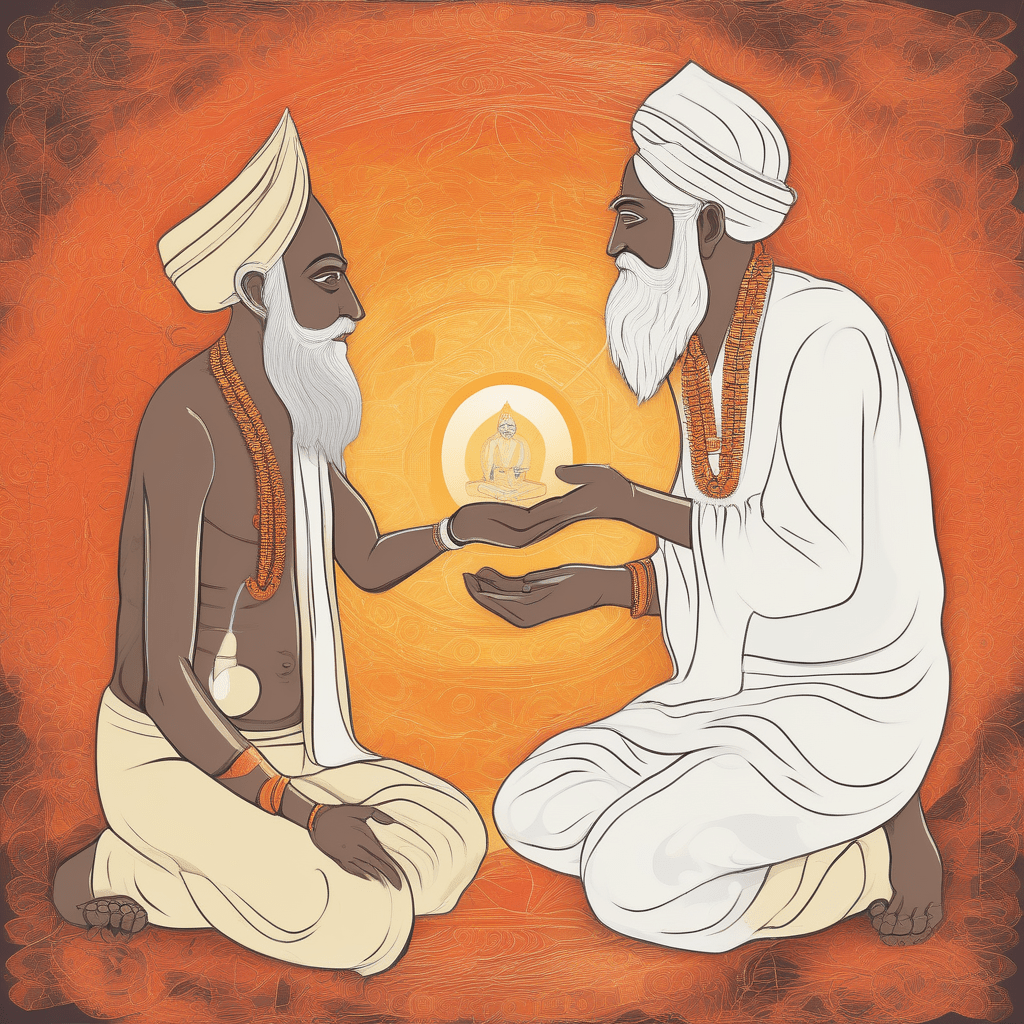
Shaktipat, often translated as the “descent of grace,” is a spiritual act where a guru or enlightened master transmits spiritual energy to a seeker. This transmission can catalyze a profound transformation, initiating or deepening the spiritual awakening process. It is an act of unlocking, a key turned in the lock of latent spiritual potential, often without the necessity of the seeker’s understanding or effort. It is said to be a direct intervention by the divine through the guru, whereby the seeker’s energy is awakened and the journey towards self-realization is accelerated.

Conversely, Darshan translates to “sight” or “a glimpse” in Sanskrit. It refers to the auspicious seeing or beholding of a holy person, deity, or sacred object. Darshan is not merely a passive observation; it is an active engagement, a reciprocal act where the seer is seen, where the act of viewing is saturated with spiritual significance. In darshan, the barriers between the divine and the devotee dissolve in the act of sacred viewing, and it is in this mutual encounter that blessings are believed to flow.

While Shaktipat can be considered an active transmission of spiritual energy, Darshan is a more passive receipt of divine presence. Yet, both hold the common thread of divine grace as central to their efficacy. They differ not in their ultimate aim—liberation and enlightenment—but in their operation. Shaktipat is akin to the wind that stirs the still waters of a lake, while Darshan is like the sun that is reflected upon it.

In contemplating Shaktipat and Darshan, one realizes that they are not mere practices but experiences that lie at the heart of the mystical relationship between the individual and the absolute. They embody the dual aspects of the spiritual journey: Shaktipat represents the inner transformation through direct intervention, and Darshan symbolizes the outer reflection of the divine in the world.

Ultimately, both Shaktipat and Darshan remind us that enlightenment is not a solitary pursuit; it involves a profound interconnectedness with the divine and the world. They encourage the seeker to remain open to the myriad ways grace manifests and recognize that each moment holds the potential for a deeper awakening.

In the spiritual odyssey, Shaktipat and Darshan are not merely destinations or methods; they are living dialogues with the divine, where each seeker is both a witness and a participant in the eternal dance of consciousness. As we embrace the mystery and beauty of these encounters, we find ourselves woven into the very fabric of spiritual unfolding, a journey that is as unique as it is universal.

Morgan O.  Smith

Yinnergy Meditation & My Book, Bodhi in the Brain…Available Now!

https://linktr.ee/morganosmith

Embracing the Shadows

The Transformative Power of the Dark Night of the Soul

In the depths of human experience, where the light of understanding seems but a distant memory, we find ourselves in the midst of what Saint John of the Cross coined the “dark night of the soul.” This phrase has transcended its religious origins to signify a period of profound personal turmoil and existential crisis that, paradoxically, can lead to the most profound spiritual awakening.

The dark night of the soul is not simply a period of trouble or depression. It is a crucible in which the very foundations of identity, belief, and understanding are melted down. It is the unsettling void where the familiar dissolves, and we are left seemingly alone, wrestling with the most fundamental questions of our existence. Why am I here? What is my purpose? Is there any meaning to my suffering?

However, within this darkness lies a peculiar grace. The darkness, dense and impenetrable, confronts us with our deepest fears and insecurities. Stripped of all pretense, the ego is humbled, and the spirit becomes pliable. It is here, in the surrender to the unknown, that the light of awakening begins to seep through. As the Persian poet Rumi once said, “The wound is the place where the Light enters you.” Our wounds and our darkness become the very openings through which a new understanding can emerge.

The transformation that follows is often not one that pulls us out of the dark, but rather one that illuminates the night itself. We find that this darkness was not the absence of light, but the very medium through which a deeper, subtler light could be perceived—a light of truth that the glaring sun of our previously held certainties and convictions could never reveal.

In the embrace of the dark night, the soul learns the language of paradox. The loss of everything that once seemed sure becomes the freedom to explore truth without constraint. In letting go of what we thought we knew, we become open to an entirely new way of being. This is not the light of day with its clear boundaries and definitions, but the soft glow of twilight that admits to mysteries we can never fully grasp or articulate.

This spiritual awakening is not a destination but a continual unfolding. As dawn follows the darkest hour, our awakening is an ever-evolving process where new challenges and understandings emerge. The dark night becomes a passage, a womb of rebirth. Like the phoenix arising from the ashes, our spirits are reborn from the very trials that seemed to threaten our undoing.

And so, the dark night of the soul is not to be feared or avoided but embraced as an essential passage to a deeper, more authentic spiritual life. The darkness is not the end of the journey but a vital, indeed crucial, part of it—a passage that refines, teaches, and ultimately enlightens, granting us wisdom that shines all the brighter for having known the depths of shadow.

Morgan O.  Smith

Yinnergy Meditation & My Book, Bodhi in the Brain…Available Now!

https://linktr.ee/morganosmith

The Convergence of Nonduality and Humility

Walking the Cosmic Mile

When we speak of enlightenment and spiritual awakening, images of radiant beings, wise sages, and ethereal experiences come to mind. Yet, at the heart of these lofty ideals lies a profound simplicity: the understanding that we are all interconnected, and the ability to empathize deeply with every being we encounter.

Consider the enlightened being who, in a flash of realization, experiences the nondual nature of existence. In this state, the boundaries that separate ‘self’ from ‘other’ dissolve. There isn’t just a connection with all there is; there is the profound realization that one *is* everything. Every tree, every star, every laughing child, and every tear shed in solitude — all of it converges into this singular experience. One is no longer an individual peering out at the universe, but the universe itself looking in every conceivable direction.

Yet, juxtapose this with the experience of the humble Saint who, rather than merging with the universe, takes a deep dive into the souls of individuals. This Saint, in their profound spiritual journey, has walked in the shoes of every person they’ve met. They’ve felt the weight of their struggles, the joys of their triumphs, and the mundane moments in between. While the enlightened being sees the forest, the Saint sees every individual tree, every leaf, and every bird that takes flight from its branches.

While these two experiences may seem opposed, they are, in essence, two sides of the same coin. Both perspectives bring about a profound understanding of interconnectedness and unity. Where the enlightened being grasps the vastness of existence, the Saint recognizes the depth of individual experience. And in their unique ways, both lead to compassion, love, and a deeper connection with all of existence.

Perhaps, then, the journey is not about aspiring to one experience over the other, but in recognizing the value in both. For in the vastness of the universe, there is room for both the cosmic dance of everything and the intimate waltz of individual souls.

Morgan O.  Smith

Yinnergy Meditation & My Book, Bodhi in the Brain…Available Now!
https://linktr.ee/morganosmith