A Spiritual Journey with Paramahamsa Vishwananda

Ever since September 3rd, 2019, there has been one figure that repeatedly stands out in my memories, the guiding light that has transformed my life – Paramahamsa Sri Swami Vishwananda.

The journey began at Trinity St. Paul’s in Toronto. On that fateful day, I was fortunate enough to receive darshan from him. For those unfamiliar with this term, darshan is the divine sight – a soul-touching blessing one receives from a spiritually enlightened guru. It’s a deeply personal and transformative moment, where one locks eyes with the guru and dives into an ocean of spiritual energy.

Only a few months after this momentous encounter, in November, I experienced a profound nondual spiritual awakening. This spiritual crescendo further intensified in December when I submerged into a state known as Nirvikalpa Samadhi. This was not just any awakening; it was the death of the ego, a realization of my own Supreme Identity, connecting me to all of existence and beyond.

The reverberations of this awakening persisted. Shortly after, I was swept into a whirlwind of a full kundalini awakening. It was as if every chakra within me came alive, culminating with my crown chakra which unleashed a cascade of radiant lotus petals made out of pure light. To say this was monumental would be an understatement; it was an experience that etched itself deep into my soul.

However, the universe, as always, had its plans. The following year, as the world found itself grappling with a pandemic, physical interactions became a luxury. Undeterred, I, along with several fellow seekers, virtually sought the darshan of Paramahamsa Vishwananda.

Yet, the universe has its rhythm and the circle turned full once again. As the pandemic ebbed, last September, Paramahamsa Vishwananda graced Toronto with his presence. We were fortunate enough to bask in his divine presence, in person. My recent memories bring me to August 26th and then again on September 2nd when a smaller group of us made our way to Elmira, New York, to the serene premises of the Paranitya Narasimha Temple. It was here, in the sacred surroundings, that we received the darshan from Paramahamsa Vishwananda. The gleam in his eyes when he recognized me, the warmth of his smile, and our brief yet impactful conversation – these are memories I cherish. His gratitude towards us for travelling so far was heartwarming. But all I could do was thank him, for the transformation he triggered within me, for allowing me to see myself for who I truly am. It remains the most cherished gift I have ever received.

My spiritual voyage with Paramahamsa Vishwananda is one of love, awakening, and profound transformation. A journey that I hope continues, leading me to further depths and heights of spiritual realizations.

Morgan O. Smith

Yinnergy Meditation & My Book, Bodhi in the Brain…Available Now!

https://linktr.ee/morganosmith

Disciplined Stoners (Episode 155) – Bodhi in the Brain

My Journey with Meditation, Consciousness, and Awakening

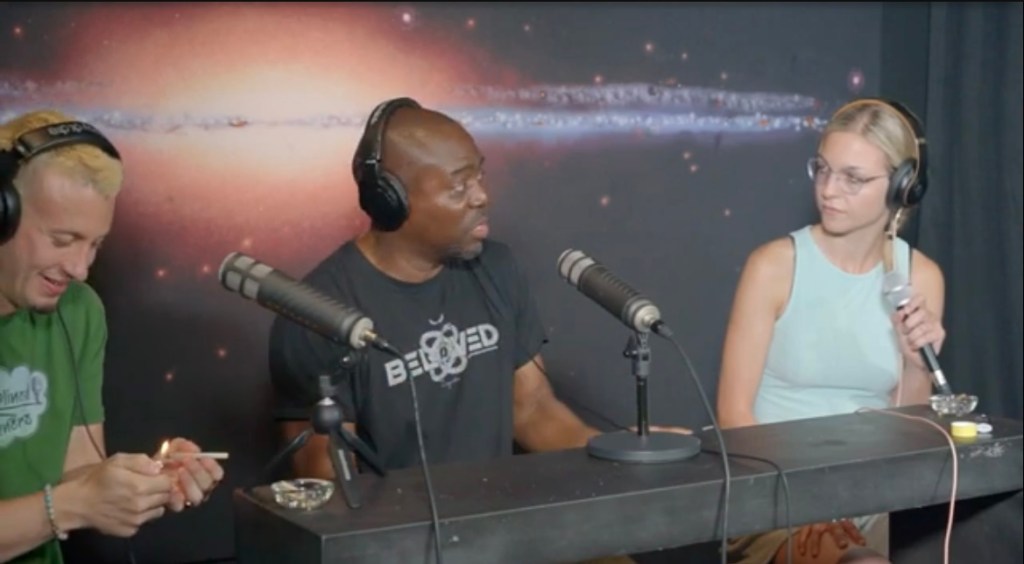
Exploring the intricate facets of consciousness and the enigma of meditation has been a lifelong quest for me. This week, I had the privilege to join Ellevan & Winny Clarke on the “Disciplined Stoners” podcast, sharing my insights, experiences, and discoveries.

I’m not just here as a meditation enthusiast; I introduced them to my creation, Yinnergy, a program born from my years of exploring and understanding the depths of inner peace and mental clarity. We also delved into the themes of my latest book, “Bodhi in the Brain,” embarking on a thrilling discourse on states of consciousness, spiritual awakenings, and the fascinating world of psychological development.

It was a transformative conversation, touching upon the delicate line between mere understanding and direct experience – a distinction that’s been pivotal in my personal and spiritual journey.

For those of you intrigued to dive deeper into my Yinnergy meditation or to navigate the pages of “Bodhi in the Brain,” you can explore them here at https://linktr.ee/morganosmith

Join us in this episode, where we venture beyond mere conversation, stepping into a realm of true transformation!


Exploring the Emotional Spectrum

A Journey Through Plutchik’s Wheel and the Hindu Subtle Body

Introduction

The exploration of human emotion transcends disciplines, cultures, and time. From psychological models such as Plutchik’s Wheel of Emotions to the spiritual teachings within Hinduism concerning the subtle body, the pursuit to understand our emotional selves is as complex as it is enriching. This blog post takes a deep dive into these seemingly disparate concepts, examining the intersection of emotion, spirituality, and subtle awakening.

Plutchik’s Wheel of Emotions

Plutchik’s model identifies eight basic emotions:

1. **Joy** – A sense of happiness and fulfillment.
2. **Trust** – Confidence in something or someone.
3. **Fear** – A response to perceived danger or threat.
4. **Surprise** – A reaction to the unexpected.
5. **Sadness** – A feeling of loss or despair.
6. **Disgust** – A strong aversion or repulsion.
7. **Anger** – A reaction to perceived wrong or injustice.
8. **Anticipation** – Expectation or excitement for what’s to come.

These primary emotions combine to form complex emotions and are mapped in a way that each emotion has an opposite.

The Emotional Subtle Body in Hinduism

Hindu philosophy introduces the concept of the subtle body, an intricate and vital part of our spiritual being, separate from the physical body. Comprised of the mind (Manas), intellect (Buddhi), ego (Ahamkara), and conditioned consciousness (Chitta), the subtle body is responsible for our thoughts, emotions, and consciousness.

Connecting the Dots: Emotions and the Subtle Body

The profound connection between Plutchik’s emotional spectrum and the emotional subtle body within Hinduism lies in the universality of emotions and the depth of human experience. Here’s a breakdown:

– **Joy & Trust**: These positive emotions align with spiritual awakening and the cultivation of inner peace and compassion, reflecting a higher level of consciousness.

– **Fear & Anger**: These emotions can be linked to spiritual blocks or ignorance (Avidya) within Hinduism, which hampers spiritual growth.

– **Surprise & Anticipation**: These emotions speak to our deep connection with the universe and the ever-changing nature of life, echoing the Hindu belief in the transient nature of our physical existence.

– **Sadness & Disgust**: Often seen as negative emotions, they can be channels for growth and understanding of the self, mirroring the Hindu concept of Dharma or righteous living.

Conclusion: Emotions as Pathways to Spiritual Awakening


The emotional spectrum is not merely a psychological construct but a spiritual pathway. By understanding emotions through the lens of both Plutchik’s model and Hindu philosophy, we can embark on a journey toward subtle spiritual awakening.

The nuances of emotions, their combinations, and their reflections within the emotional subtle body offer us tools to navigate our spiritual paths. The profound connection between these concepts suggests that our emotions are not transient or superficial but deeply entwined with our very essence.

This exploration encourages us to recognize emotions as more than reactions to the world around us. They are signposts guiding us toward self-realization and a deeper connection with the divine within.

Morgan O. Smith

Yinnergy Meditation & My Book, Bodhi in the Brain…Available Now!
https://linktr.ee/morganosmith

The Profound Transformation of Realizing Oneself as Brahman

A Journey Beyond the Self

In the boundless tapestry of human existence, few ideas are as profound and transformative as the realization of oneself as Brahman. A central concept in Hindu philosophy, Brahman refers to the ultimate reality or cosmic spirit, a principle that transcends the individual self and unites all living beings.

This blog post explores the many changes an individual might experience upon this realization, a journey that transcends mundane existence and awakens a new consciousness.

### The Loss of Ego and the Embrace of Unity

Perhaps the most radical shift in consciousness comes from losing the individual ego. Recognizing oneself as part of the universal oneness leads to a dissolution of the self, allowing the individual to see beyond the superficial distinctions that often characterize human perception. This leads to a profound sense of unity, empathy, and compassion, transcending barriers like race, nationality, and religion.

### A Shift in Values and Desire

The realization of Brahman changes the very fabric of desire and ambition. Material possessions, social status, and even relationships may lose their significance, replaced by spiritual growth and a deepened understanding of the cosmic order. The individual might pursue selfless service, finding fulfillment in contributing to the well-being of all.

### The Embrace of Paradox and the Transcendent Nature of Existence

This profound awakening allows for a comfortable acceptance of paradoxes and contradictions. Time becomes more fluid, creativity blossoms, and the person might develop an ability to recognize synchronicities, meaningful coincidences that reveal the interconnected web of existence.

### Living in Harmony and Transcending Social Constructs


Living in harmony with nature, respecting all life, and transcending conventional gender roles and social constructs, the enlightened individual moves through life with grace, mindfulness, and effortless action. Their actions are unforced, carried out with a sense of reverence and alignment with universal ethics.

### The Physical and Emotional Manifestations

The journey to realizing oneself as Brahman does not merely affect the mind but also resonates through the body and emotions. The individual may find improved physical well-being, experience deeper states of meditation, and become almost entirely devoid of internal and external conflict.

### The Inspiration to Others

Through this transformation, the individual becomes a living example of peace, love, and wisdom, inspiring others simply through their presence and way of being. They embody a philosophy that sees beyond the limitations of material existence and offers a path to spiritual awakening.

### Conclusion

The realization of oneself as Brahman is a profound spiritual concept that encompasses every aspect of being—mental, physical, emotional, and spiritual. It offers a glimpse into a state of consciousness that transcends the mundane and awakens a new way of perceiving reality.

In a world often driven by material pursuits and divisive ideologies, the teachings surrounding Brahman provide a timeless wisdom that calls for unity, compassion, and a life centred on spiritual truth. Whether viewed as a philosophical concept, a religious belief, or a spiritual experience, the realization of Brahman invites us to look beyond the self and embrace a vision of existence that is all-encompassing, transcendent, and profoundly transformational.

As we navigate the complexities of modern life, may we find inspiration in the ancient wisdom that teaches us to see ourselves not as isolated beings but as part of a grand, interconnected cosmos, guided by a principle that is at once beyond us and within us. It is a journey of discovery, a path to enlightenment, and a call to a deeper, more meaningful existence.

Morgan O. Smith

Yinnergy Meditation & My Book, Bodhi in the Brain…Available Now!

https://linktr.ee/morganosmith

The Profound Journey

Into the Vastness of Nirvikalpa Samadhi

Embarking upon the voyage of self-realization, one might chance upon the profound state of Nirvikalpa Samadhi, a realm where ordinary definitions of consciousness cease to exist. A phenomenon beyond words, it is an experience of unbounded vastness, where the mind expands beyond its limitations, reaching toward the omnipresent truth of totality.

Becoming the Absolute

In this unfathomable dimension, you journey from your everyday self to a radiant wholeness, a unity that echoes in the depths of your being. As your identity dissolves into the absolute, the stark paradox of the universe comes into focus – the reality of nothingness. This is the state where you free yourself from all worldly attachments, transcend your ego and step into a realm of pure awareness. The essence of who you truly are emerges, unrestrained and sovereign. The concept of ‘you’ vanishes, leaving a sea of pure consciousness in its steads.

Realizing the Totality

Nirvikalpa Samadhi takes you beyond yourself, and merges you with the Universe, introducing you to the power of omnipresence. You discover your entire being present everywhere, intertwined with everything, past, present, and future. A profound realization dawns upon you as you feel the universe within you, and yourself within the universe. A beautiful interplay of microcosm and macrocosm emerges, painting a picture of cosmic unity.

Saccidananda: The Triune Reality

The experience deepens further as you ascend to Saccidananda – a Sanskrit term that merges Sat (existence), Chit (consciousness), and Ananda (bliss). In this transcendent state, you attain an all-encompassing awareness, understanding that you are everything that exists, everything that is conscious. You become the embodiment of bliss itself, experiencing an ineffable joy that pervades all creation.

Awakening from the Dream

As you delve deeper into Nirvikalpa Samadhi, you experience an awakening, reminiscent of rousing from a profound slumber. The world as you know it – a construct of your mind, appears as an illusory dream. The illusion of the self fades away, making way for an unfiltered perception of reality. The world, once a confusing labyrinth, the world transforms into a crystal-clear mirror reflecting your true essence.

The Unmanifested Oceanic Field

This ultimate state of consciousness acquaints you with your original face – a radiant, bright light that is the source of all creation. You find yourself in the heart of the unmanifested oceanic field, the Dharmakaya in Buddhist philosophy. A state where all potentials reside, this is the womb of the cosmos where creation unfolds from possibility into existence.

Engaging with Nirvikalpa Samadhi is not merely a philosophical exercise, but a transformative experience that illuminates the path towards self-realization and universal understanding. It is a mystical journey into the depths of consciousness, where one awakens to the fundamental truth of existence – that we are all interconnected, part of a cosmic symphony resonating with the music of the universe.

Morgan O. Smith

Yinnergy Meditation & My Book, Bodhi in the Brain…Available Now!

https://linktr.ee/morganosmith

Embracing Paradox and Nonduality

Exploring the Paths to Spiritual Awakening

Introduction:
In the realm of philosophy and spirituality, two captivating concepts often spark profound contemplation and open doors to expanded understanding: paradox and nonduality. Both concepts challenge our conventional modes of thinking and invite us to explore the nature of reality and consciousness. In this thought-provoking blog, we will delve into the differences and similarities between paradox and nonduality, and delve into their roles in the context of spiritual awakening.

Paradox: Illuminating the Mystery Within
Paradoxes are enigmatic statements or situations that defy our logical expectations and challenge our understanding of reality. They present us with apparent contradictions, forcing us to question our assumptions and explore deeper layers of truth. Paradoxes are often the gateways to expanded consciousness, as they push the boundaries of our thinking and invite us to embrace the complexities and mysteries of existence. They are the mind’s playground, a fertile ground for philosophical inquiry and intellectual growth.

Nonduality: Beyond Duality, Towards Unity

Nonduality, on the other hand, transcends the realm of paradox by recognizing the illusory nature of dualistic distinctions altogether. It is a profound philosophical and spiritual concept that asserts the fundamental unity of all things, beyond conventional boundaries. Nonduality suggests that the apparent separation between self and other, subject and object, is an illusion that obscures the deeper truth of interconnectedness. It invites us to explore the essence of oneness that lies at the heart of existence, beyond the limitations of dualistic thinking.

Differences and Similarities:
While paradox and nonduality are distinct in their approaches, they share some intriguing similarities. Both concepts challenge our preconceived notions and invite us to embrace uncertainty. Paradoxes expose the limitations of linear thinking and expand our intellectual horizons, while nonduality goes beyond the realm of paradox by embracing a holistic view of reality. They both foster an open-mindedness that allows for new perspectives and insights to emerge.

In the realm of spiritual awakening, both paradox and nonduality play crucial roles. Paradoxes serve as catalysts, shaking us out of our complacency and inviting us to question our deeply held beliefs. They disrupt our habitual patterns of thinking and awaken us to the inherent mystery and wonder of existence. Nonduality, on the other hand, offers a framework for understanding the ultimate truth of interconnectedness. It guides us towards a direct experience of unity and helps dissolve the illusory boundaries that separate us from the world and others.

Conclusion:
Paradox and nonduality are two fascinating concepts that contribute to our philosophical and spiritual growth. Paradoxes challenge our intellect and expand our understanding, while nonduality transcends dualistic thinking and reveals the profound interconnectedness of all things. By embracing both paradox and nonduality, we can embark on a transformative journey of self-discovery and spiritual awakening. They invite us to explore the depths of our consciousness and contemplate the profound mysteries of existence. Let us embrace the paradoxes that confront us and open our hearts to the boundless unity that nonduality reveals. In this harmonious dance, we find the keys to unlocking the doors of awakening and embracing the vastness of our being.

Morgan O. Smith

Yinnergy Meditation & My Book, Bodhi in the Brain…Available Now!

https://linktr.ee/morganosmith

Sand Castles of Consciousness

Discovering the Essence Within

Introduction:


In the tranquil tapestry of Eastern philosophy, where contemplation converges with existence, there lies a profound revelation – Everything in existence is composed of Pure Consciousness. Here, Consciousness is not merely an attribute; it is capitalized, symbolizing its omnipresence as the very fabric that weaves through the cosmos. It is akin to an ancient tale of a castle crafted from sand, reflecting that though it may don the guise of a majestic structure, it remains, in essence, sand.

The Sand and the Castle:

Visualize a child meticulously building a sand castle on the shore. The grains of sand, amassed and sculpted, assume the shape of a castle. Does the sand cease to be sand when shaped into a castle? Certainly not. This allegory mirrors the realization that while the myriad forms around us may appear different, they are all permutations of the same unyielding Consciousness.

The Essence of Consciousness:

Consciousness is akin to Brahman in Hinduism or the Tao in Taoism in the Eastern philosophical context. The unchanging, infinite, immanent, and transcendent reality is the Divine Ground of all matter, energy, time, space, being, and everything beyond. Our ephemeral existence is a mere reflection, a ripple in the vast ocean of Consciousness.

Flow of Forms:


Just as a sand castle is subjected to the whims of waves and winds, forms in the material world are in a constant state of flux. The ancient Hindu text, the Bhagavad Gita, illustrates this with the concept of ‘Lila’, depicting the world as a divine play of forms. The Taoist philosophy also reverberates with this thought through the Tao, which flows through and is the inherent nature of all things.

The Inner Alchemy:

One might inquire, how does this realization benefit our daily lives? Understanding that we are not just isolated entities, but integral threads woven into the fabric of Consciousness, can be transformative. It helps us transcend the illusion of separateness and cultivates compassion, humility, and interconnectedness with all beings and the natural world.

Conclusion:


As we embrace the wisdom of Eastern philosophy, let us be mindful of the sand castles we build and the sands that shape them. Let us embark on a spiritual odyssey to unearth the Consciousness within and around us, recognizing that the essence is unchanging, infinite and all-encompassing. Like the sand castles by the sea, our forms are transient, but the Consciousness that shapes us is eternal.

Morgan O. Smith

Yinnergy Meditation & My Book, Bodhi in the Brain…Available Now!

https://linktr.ee/morganosmith

The Dawn of Syncretic Souls

A Harmonious Unveiling of Eastern and Western Spirituality

Introduction:
In the transcendent tapestry of human spirituality, East and West have often been seen as disparate threads. The West, with its logical rigour and scientific orientation, seems worlds apart from the East’s mystical, inward-focused spiritual traditions. However, in the heart of a spiritual awakening, a resplendent horizon emerges, revealing the unity and complementary nature of these spiritual worlds. This article explores this enigmatic integration, delving into how the confluence of Eastern and Western spirituality can offer a comprehensive and profound spiritual experience.

The Philosophical Underpinnings:
Eastern spirituality, rooted in traditions such as Hinduism, Buddhism, and Taoism, often emphasizes the notions of unity, interdependence, and the cyclical nature of existence. In contrast, Western spirituality, particularly in Abrahamic religions, has been more inclined toward linear progression, individual salvation, and a personal God. Notwithstanding these differences, both sides seek to understand the fundamental nature of existence and the path toward greater fulfillment and enlightenment.

The Awakening Confluence:
The moment of spiritual awakening can be likened to the dawn; the dark night of ignorance recedes as the sun of wisdom rises. In this pivotal moment, the dichotomies of East and West dissipate, as one comprehends the interwoven complexities of existence. The Eastern idea of interconnectedness suddenly harmonizes with the Western emphasis on individual worth, signifying that our individual journey has cosmic interconnected consequences.

Science and Mysticism:

One of the key avenues through which this integration is taking place is the dialogue between science (often associated with the West) and mysticism (a domain of the East). Through disciplines like quantum physics, Western science is beginning to echo Eastern concepts of interdependence and non-duality. The parallels between quantum entanglement and the interconnectedness emphasized in Eastern philosophies are a testament to this evolving synthesis.

A More Comprehensive Path:
By integrating Eastern and Western spirituality, individuals may find a more comprehensive and balanced path. For instance, the Western emphasis on social justice and activism can bolster the Eastern focus on inner peace and equanimity. Conversely, the Eastern practices of meditation and mindfulness can bring a sense of inner clarity and purpose to the Western pursuit of external achievements.

Conclusion:
As the human spirit continues to evolve, the integration of Eastern and Western spiritual perspectives offers a more holistic and enriched path. This synthesis, fully realized in the moment of spiritual awakening, acts as a bridge between dualities, fostering a deeper understanding of the self and the universe. Through this harmonious integration, humanity has the potential to weave a more intricate, compassionate, and enlightened tapestry of existence.

Morgan O. Smith

Yinnergy Meditation & My Book, Bodhi in the Brain…Available Now!

https://linktr.ee/morganosmith

The Universal Tapestry

Revelations From The Pinnacle of Spiritual Perception

Introduction:
Imagine for a moment transcending the confines of your individual self and embracing the consciousness of all life forms across the universe. This peak spiritual experience, where one sees from every possible perspective, holds transformative potential. But what exactly happens, and why is this beneficial?

The Tapestry of Existence:
Within this peak experience, one witnesses the intricate fabric of life woven through space and time. As humans, we usually observe life through the lens of our limited experiences, but as the collective consciousness, you realize the delicate balance and interdependence that sustains life in its myriad forms.

Empathy on a Cosmic Scale:
In this state, the empathy experienced is unparalleled. You are not just understanding someone else’s viewpoint; you ARE them. The barriers that divide humans – race, religion, nationality – become inconsequential. This heightened empathy can promote peace, as individuals who have undergone such a transcendental experience may return with an inherent sense of the unity of all beings.

Stewardship of Earth and Beyond:
Seeing the interconnectedness of all life forms generates a sense of responsibility. The recognition that our actions affect not just our immediate environment but ripple across ecosystems and even planets can lead to more conscious stewardship of Earth and potentially other habitats throughout the universe.

Innovation Through Diverse Perspectives:

In a state where one can tap into the consciousness of different life forms, the pool of knowledge and experiences becomes vast. This can foster innovative solutions to longstanding problems as insights from different life forms provide new angles and approaches previously unthought of.

Deepening Self-Understanding:
While experiencing the universality of consciousness, one’s self-concept undergoes a profound transformation. Understanding that your essence is intertwined with the cosmos helps in comprehending the self not as an isolated entity, but as an integral part of a larger whole.

Ethical Evolution:
With the awareness of the interconnected tapestry of life, ethics evolve. Actions are evaluated not just based on their impact on individual lives but on the entirety of the cosmic fabric. This shift can lead to an ethical framework that values preservation, cooperation, and symbiosis.

Conclusion:
A peak spiritual experience of perceiving existence from all perspectives is more than just an awe-inspiring phenomenon; it’s a revelation that has the potential to alter the very fabric of human society. By instilling a sense of interconnectedness, fostering empathy, driving innovation, and evolving our ethical compass, such experiences can pave the way for a more harmonious and sustainable coexistence with all life throughout the universe.

Morgan O. Smith

Yinnergy Meditation & My Book, Bodhi in the Brain…Available Now!

https://linktr.ee/morganosmith

The Moment of Omnipresent Self-Realization

Discovering the Infinite ‘I’

Introduction:
In the hushed corners of our consciousness, a whisper seeks acknowledgment – the timeless questions of existence. It is in the silent chambers of introspection that we finally experience a moment of revelation, where we realize that the Who, What, When, Where, Why, and How of our being are not merely aspects of our identity, but the very fabric of existence itself.

Who Am I? – The Boundless Entity:
As we ponder the question, “Who am I?” the expansive canvas of life unravels. In our deepest thoughts, we find a connection with the universe. We realize we are not just an isolated self but the amalgamation of everything that has ever existed and will ever be. In the echo of ancient wisdom, “I AM That”.

What Am I? – The Essence Beyond Form:
Shapes, forms, and entities fade into insignificance as we delve into our essence. We are neither body nor soul, yet we encompass all. The abstract concept of being transcends the physical, and we find ourselves to be the sum of the entire universe.

When and Where? – The Timeless, Spaceless Existence:

“When did I come into being and Where did I come from?” – such queries dissolve into irrelevance as we realize our existence transcends time and space. Like the fabric of space-time, our being is omnipresent. We are not constrained by coordinates on a plane or ticks on a clock. We are in every atom and every moment.

Why? – The Power of Creation:
One of the most profound inquiries is “Why did I create everything in existence?” The essence of creation lies within our boundless nature. We, as this unified consciousness, are created simply because it is an intrinsic expression of our endless potential. Creation is the reflection of our unlimited power.

How? – The Enigmatic Thought:

The mechanism of creation is an eternal enigma. Yet, in our moment of self-realization, we understand that the entire cosmos sprang into existence from a singular thought. This thought, an unfathomable force, is perpetually creating, altering, and sustaining the universe.

Conclusion:
The moment of self-realization is akin to a wave merging into an ocean – it is in this profound unity that we grasp the limitless boundaries of our existence. The answers to Who, What, When, Where, Why, and How are not separate, but interwoven into the very essence of what we are. In acknowledging this, we do not simply find ourselves; we become one with the boundless cosmos. This is not an end but a beginning, a continuous journey through the labyrinth of existence with a newfound understanding of our immeasurable significance within it.

Morgan O. Smith

Yinnergy Meditation & My Book, Bodhi in the Brain…Available Now!

https://linktr.ee/morganosmith