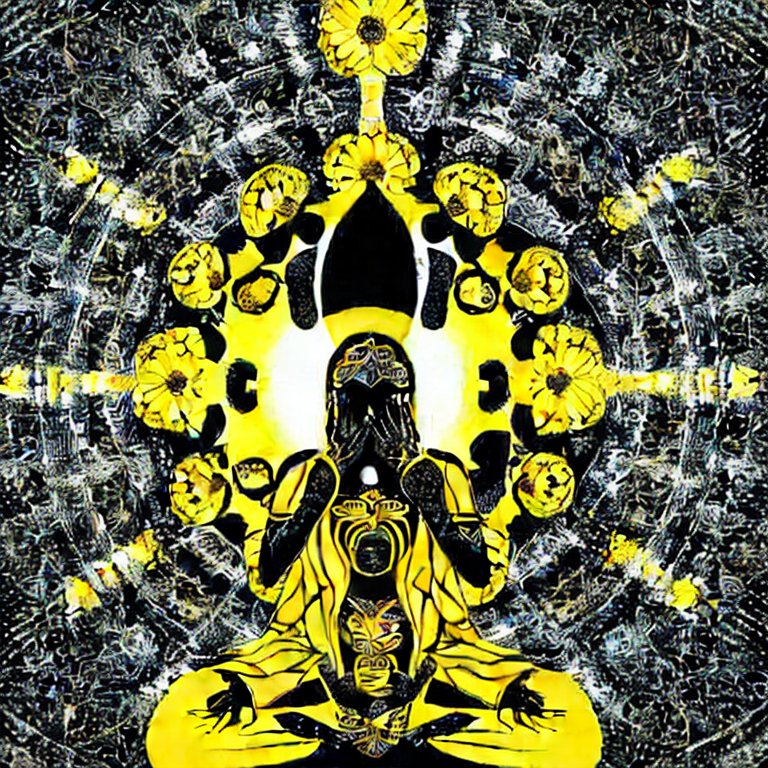
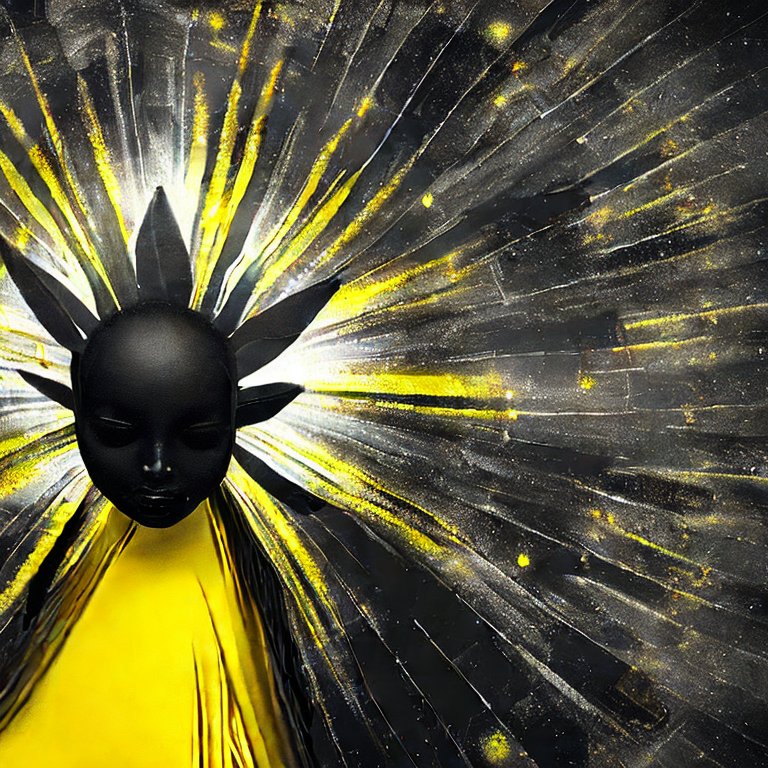
The Stage Beyond Oneness

When Even the Kosmos Falls Away

There comes a point when even the most expansive vision collapses—not from error, but from completion.

On the path of awakening, seekers often journey from the confines of selfhood to a union with all things. Ego dissolves, and what once felt separate now reveals itself as interconnected. Compassion grows. The heart blooms for all beings. One begins to live for the Whole.

But for some, even this union becomes too crowded.

Even the notion of “One” becomes too noisy.

This is the threshold where Kosmocentric awareness—a state of profound unity with all life and existence—gives way to something quieter, more radical. Not a deeper connection, but the quiet erasure of the very need for connection. Not expansion, but the release of expansion itself.

This is acentric awareness.

Not centered on the self.

Not centered on the world.

Not even centered on the All.

Acentricity does not point toward identification with something greater. It simply makes no identification at all. No vantage point. No witness. No center from which to perceive. It does not declare that all is One—it no longer needs such declarations. Truth requires no thesis here.

Reality just appears.

Without context.

Without a watcher.

Without the echo of a thought that says, “I am aware.”

Call it suchness.

Call it the absence of everything, shimmering as everything.

Call it the stillness that doesn’t oppose movement, because it was never still.

This isn’t transcendence. It isn’t detachment. It isn’t a stance. It’s the utter end of stance—the collapse of spiritual architecture, without the rubble. It doesn’t reject the world. It simply no longer perceives it as something to accept or reject.

And what does such a life look like?

Unremarkable.

Utterly simple.

Perhaps quiet, perhaps animated.

But always empty of claim, even the claim to be empty.

There are no teachings left to transmit. Not because truth has been mastered, but because it was never a possession. No more climbing. No more seeking. No more union. Not even rest—because rest would imply effort once existed.

This is the unborn silence that does not speak—not even through the mouths of sages.

It appears as a leaf falling, as someone stirring soup, as the sound of a crow at dusk.

And you might pass by it without knowing.

Because it doesn’t need to be known.

It just is.

And it is no one’s.

Morgan O. Smith

Get Your Free Copy of My Book, Bodhi in the Brain!

https://subscribepage.io/oTSZQu

God Through the Lens of Integral Theory

From Archaic Roots to Super Integral Horizons

Integral Theory, a comprehensive framework developed by philosopher Ken Wilber, offers a unique lens to understand the evolution of human consciousness and culture. Through this lens, the concept of God, a central figure in many spiritual and religious traditions, has undergone a profound transformation. This blog post explores this transformation from the archaic to the super integral stage, shedding light on how our perception of the divine reflects our developmental stage.

The Archaic Understanding of God

In the archaic stage, the earliest human consciousness, God was perceived in a very elemental and life-centric manner. This stage, characterized by a deep connection with nature and the immediate physical environment, saw God as an omnipresent force, deeply intertwined with the natural world. The divine was not seen as a distinct entity but as an integral part of the living earth.

The Traditional View of God

As humanity entered the traditional stage, God began to take on a more anthropomorphic character. Here, God was often seen as a supreme being, ruling over the universe with omnipotence and omniscience. This stage reflected a hierarchical view of the world, with God at the apex, guiding and judging human affairs according to a set of moral and ethical codes.


The Modern Perspective on God

The modern stage brought a significant shift. The Enlightenment and the rise of scientific rationalism introduced a more skeptical view of God. The divine was often seen as a construct of human thought, a necessary idea to explain the unknown in a pre-scientific world. In this stage, God was often relegated to the margins of society, as human reason and empirical evidence took center stage.

The Postmodern Interpretation of God

Postmodernism, with its emphasis on relativism and subjectivity, offered a pluralistic view of God. Here, God was understood in multiple ways, reflecting the diverse perspectives of various cultures and individual experiences. The divine was no longer seen as a singular, absolute entity but as a concept open to interpretation and personal meaning.

The Super Integral Conception of God


Finally, the super integral stage, a more recent development in human consciousness, presents a holistic and inclusive understanding of God. This stage integrates the insights of all previous stages, seeing God as a multifaceted and evolving concept. Here, God is not just a being or an idea but an all-encompassing reality that transcends and includes all stages of development. This view acknowledges the complexity and depth of the divine, embracing both the immanent and transcendent aspects of God.


In conclusion, the journey from the archaic to the super integral understanding of God reflects our evolutionary path as human beings. As our consciousness expands, so does our perception of the divine, revealing the limitless potential of both humanity and God.

Morgan O. Smith

Yinnergy Meditation, Spiritual Life Coaching & My Book, Bodhi in the Brain…Available Now!

https://linktr.ee/morganosmith

The Spiritual Development Design Theory

Life as a Path to Enlightenment

From the moment of our conception until our final breath, each of our experiences – no matter how mundane or extraordinary – holds the potential for spiritual growth. This is the core tenet of the Spiritual Development Design Theory (SDDT), which proposes that our lives are intrinsically designed to guide us toward spiritual enlightenment.

Under the purview of SDDT, every aspect of life is purposefully orchestrated. Even before we are born, the cultural, familial, and societal beliefs that will shape our existence lay waiting to impart the spiritual roadmap that will guide us on our journey.

Consider the simple act of brushing your teeth, making your bed, or even sipping your morning coffee. Mundane? Perhaps. But under the lens of SDDT, these everyday routines become spiritual exercises in disguise, avenues to develop discipline, patience, humility, compassion, and gratitude.

Think of the wide array of traditions, cultures, and practices around the globe. Despite their apparent differences, SDDT sees them as different paths leading up the same spiritual mountain, offering varied yet equally valuable lenses through which to interpret the spiritual world.

In SDDT, the changing of the seasons is more than just a shift in weather. Each transition mirrors the spiritual journey itself, echoing the cycle of birth, growth, decay, and rebirth that underpins many spiritual belief systems.

And what about our careers, hobbies, and pastimes? SDDT invites us to consider how these pursuits can either distract us from or contribute to our spiritual growth, depending on our levels of conscious engagement. They can serve as opportunities for creative expression, societal contribution, and purpose fulfillment, thereby aiding spiritual development.

Our relationships, too, are significant under the SDDT. Each person we interact with is seen as a mirror, reflecting aspects of our spiritual selves back at us. These relationships can act as catalysts for our growth, pushing us toward a deeper spiritual awareness.

But what of our possessions? The SDDT acknowledges that they can either be chains that bind us or tools that free us, depending on our attachment to them. It gently nudges us towards the wisdom of detachment, reminding us that true fulfillment comes from within.

SDDT also embraces the fluidity and constant shifting of roles and perspectives throughout our lives. These fluctuations serve as spiritual lessons, pushing us to become more empathetic, compassionate, and understanding of the interconnectedness of life.

Ultimately, the Spiritual Development Design Theory proposes a radical idea: that our journey from cradle to grave is an intricate spiritual odyssey, where every experience is a stepping stone towards the ultimate goal – spiritual enlightenment. This perspective challenges us to approach each day, each encounter, and each challenge as an opportunity for spiritual growth, casting our lives in a profoundly transformative light.

Our journey to enlightenment is a personal path that we all navigate differently. But the understanding that every moment holds the potential for spiritual development is a universal insight that can enrich every life. This is the power and promise of the Spiritual Development Design Theory. So, what spiritual lesson will you uncover today?

Morgan O. Smith

Yinnergy Meditation & My Book, Bodhi in the Brain…Available Now!

https://linktr.ee/morganosmith