Meditative Practices and the Illusory Nature of the False Self

A Journey Towards Self-Realization

Introduction:
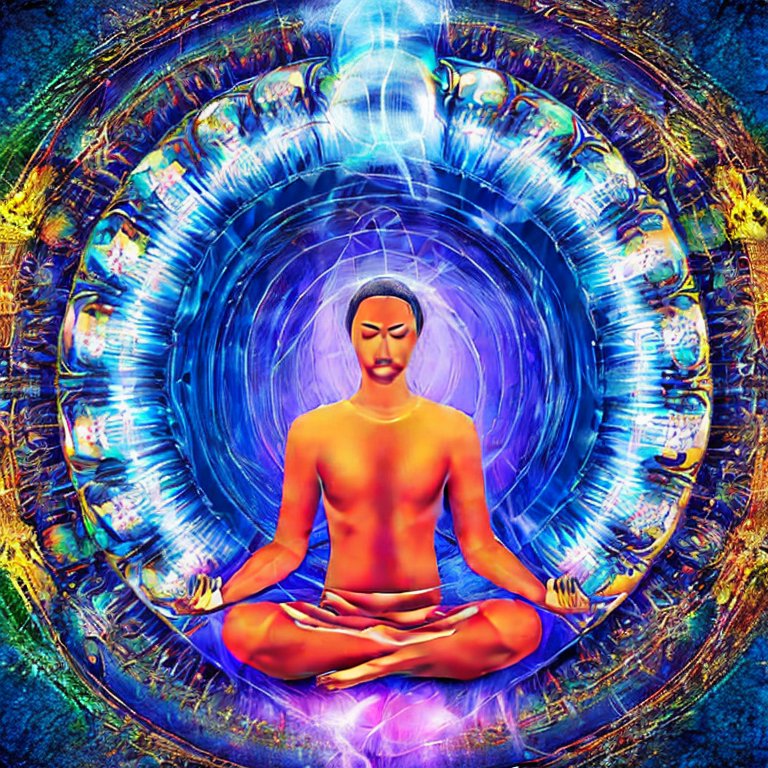
Meditative practices have long been revered as transformative tools in the realm of self-discovery and spiritual growth. They offer a profound pathway for individuals to explore the depths of their consciousness, seeking truth, peace, and liberation. However, beneath the surface lies a fascinating paradox—the false self, which appears as the practitioner, ultimately leads to the revelation of the Ultimate Self, the Ground of All Being.

The Illusion of the False Self:
Within the tapestry of various spiritual traditions, the notion of the false self arises—a deceptive construct born out of our attachments to external roles, labels, and conditioned beliefs. This illusory identity emerges from our tendency to assign significance to transient aspects of our existence, such as social standing, material possessions, and superficial identities. Meditative practices, in their diverse forms, serve as illuminating mirrors, enabling us to perceive the transient nature of the false self and transcend its illusory grasp.

Meditation as a Mirror:
Meditation acts as a reflective surface, offering a clear reflection of the illusory nature of the false self. By turning inward and observing our thoughts, emotions, and sensations without judgment or attachment, we gain a heightened awareness of the ever-changing nature of our experiences. Regular practice nurtures a profound realization—an understanding that our thoughts come and go, emotions rise and subside, and identities shift fluidly. This awakening brings us closer to recognizing that the false self is not a fixed entity but a construct that can be deconstructed through the power of self-inquiry.

The Ultimate Self:
While meditative practices may originate from the false self, they hold within them the potential to reveal the Ultimate Self—the very essence of our being, the Ground of All Being. As we delve deeper into our meditative journey, we begin to touch upon an interconnectedness and unity with the vast cosmos. The boundaries that once separated our individual selves from the external world begin to dissolve, and we catch glimpses of the inherent oneness that permeates all existence. In this expanded state of awareness, the false self loses its grip, and we realize that our essential nature transcends the limitations of individual identity.

Integration and Transformation:
The true essence of meditative practices lies in the interplay between the false self and the Ultimate Self. The false self, while illusory, acts as a vehicle for the exploration and transformation of consciousness. Engaging with meditative practices allows us to intimately observe the patterns and tendencies of the false self, ultimately leading us to transcend its limitations. By embracing the false self as a catalyst for growth, we integrate its lessons and move closer to the realization of our true nature—the Ultimate Self.

Conclusion:
In the realm of meditative practices, the interconnection between the false self and the Ultimate Self invites profound contemplation. While the false self may present itself as real and compelling, it is merely a construct that can be unravelled through the transformative power of meditation. Engaging in these practices propels us on a journey of self-realization, unveiling the essence of our being—the Ground of All Being. Meditative practices serve as bridges, guiding us from the illusion of the false self to the profound truth of our interconnected existence. Embrace these practices, embrace the false self, and embark on the path toward ultimate liberation and self-realization.

Morgan O. Smith

Yinnergy Meditation & My Book, Bodhi in the Brain…Available Now!
https://linktr.ee/morganosmith

Cosmic Whispers

Deciphering the Divine Blueprint of Creation

Introduction:


In the quiet moments when our minds wander into the realm of the cosmic, we may find ourselves pondering a question that has beguiled philosophers and theologians for centuries: Why did God manifest everything into being? What could be the purpose behind the sprawling tapestry of stars, planets, and life? My answer is that God created everything to become, and to experience the total opposite of itself. However, like threads in a tapestry, there are numerous perspectives woven into this enigmatic question. Let’s unravel a few.

1. **The Divine Artist: Self-Expression and Creativity**

Imagine an artist, brush in hand, dipping into an infinite palette. Some believe that God, the Divine Artist, created the universe as an ongoing expression of self-expression and creativity. Here, the universe is a canvas and God’s creations are brushstrokes – intricate, boundless, and ever-evolving.

2. **Lila: The Cosmic Dance of Divine Play**

Within Hinduism, creation is seen as ‘Lila’ or divine play. Picture God as a dancer, whose movements give birth to galaxies and life. These movements are not driven by need or desire but are spontaneous expressions of joy. Lila suggests that the universe is God’s dance floor, where the Divine revels in the ecstasy of creation.

3. **Harbor of Love: Creation for Relationship**

What if the universe is a love letter? In Christianity and other religious traditions, it is suggested that God created the cosmos and sentient beings for the purpose of relationship and love. The creation is God’s way of extending an invitation to share in divine love and companionship.

4. **Divine Reflection: Creation as Self-Discovery**

Ponder a God yearning for self-knowledge. By manifesting a multitude of beings, each with unique experiences and perspectives, God gazes into a living, cosmic mirror. This mirror reflects different facets of the Divine, allowing God to explore and understand its own infinite nature.

5. **Kabbalah’s Divine Constriction: Creating Space for Others**


Envision a sea retracting to form a shore. Kabbalistic tradition posits that God underwent a self-constriction, known as Tzimtzum, to create space for an independent reality. This act of withdrawal was one of ultimate generosity, allowing for free will and a two-way relationship between creation and the Divine.

6. **The Soul’s Crucible: Testing and Spiritual Growth**

Is the universe a crucible for refining souls? Some belief systems suggest that God created the universe as a testing ground. Through challenges and experiences, souls are purified, tempered, and progress along a spiritual path.

7. **A Purposeless Creation: Philosophical Nihilism**

Not all threads are woven with intention. Some philosophical perspectives maintain that creation has no purpose. It posits that existence is simply a natural by-product of God’s existence and devoid of any inherent meaning.

8. **Pantheism: The Universe as God’s Identity**

Picture a universe where every atom is a fragment of divinity. Pantheism posits that God and the universe are identical. Nature is not a separate creation but a part of the Divine. Through the vastness of space, we witness the body of God.

Conclusion:

As we stand before this intricate tapestry of creation, it becomes clear that the question of why God manifested the universe is as multifaceted as the cosmos itself. Each thread—whether woven with intention, love, curiosity, or even ambiguity—adds depth to this cosmic masterpiece. In examining these threads, we engage not just with the mysteries of creation, but with the essence of our own search for meaning and connection in an unfathomably vast universe.

Morgan O. Smith

Yinnergy Meditation & My Book, Bodhi in the Brain…Available Now!
https://linktr.ee/morganosmith

Embracing the Octopus Within

The Path of the Saint and the Bodhisattva

In the boundless depths of the ocean, a remarkable creature flourishes – the octopus. With its eight arms and three hearts, the octopus presents a fascinating analogy for a life dedicated to compassion and altruism. What if I told you that by embracing the wisdom of the octopus, you could walk the path of a saint or a bodhisattva?

Three Hearts, One Soul

The octopus’s three hearts are not just intriguing biological features; they symbolize a trinity that is central to a life of selflessness – compassion, wisdom, and courage. These three tenets are the lifeblood that sustains the spirit of those who strive to benefit others. Just as the octopus’s hearts pump vitality through its body, these principles energize and direct our moral compass.

Compassion is the first heart. It moves us to alleviate the suffering of others. Wisdom, the second heart, grants the discernment to understand the complexities of life and the interconnectedness of all beings. The third heart, courage, gives us the strength to act upon our compassion and wisdom even in the face of adversity.

Arms That Give

Now, imagine your capabilities and resources as the arms of an octopus. These are the conduits through which the heart’s intent flows into action. With its eight arms, an octopus can achieve an astonishing level of multitasking and adaptability. Likewise, when we apply our varied talents and strengths in the service of others, we, too, can touch many lives. The octopus doesn’t discriminate as to which of its arms is more worthy; similarly, no act of kindness, however small, is ever wasted.

The Saint and the Bodhisattva: A Singular Journey

To “be like the saint” is to embrace a life of purity, humility, and service. This aligns closely with the path of the bodhisattva in Buddhism, who seeks enlightenment not for personal gain but for the benefit of all sentient beings.

A true saint, like a bodhisattva, doesn’t keep score. The concept of giving without expecting anything in return is deeply rooted in this path. This is not to be confused with self-neglect; rather, it’s the understanding that in the giving, we receive. We receive growth, fulfillment, and connection – treasures that cannot be quantified.

An Octopus’s Embrace

So, let’s learn from our wise friend, the octopus. Let our three hearts be full of compassion, wisdom, and courage. Let our arms be open and giving. And may we swim through the currents of life with grace, as saints or bodhisattvas, serving as guardians and guides for all those navigating the tempestuous oceans of existence.

In embracing the octopus within, we embark on a journey that ripples through the waters of our communities and touches the shores of every heart. In this sacred odyssey, we do not merely live; we become vessels of immeasurable, boundless love.

Morgan O. Smith

Yinnergy Meditation & My Book, Bodhi in the Brain…Available Now!
https://linktr.ee/morganosmith

The Spiritual Development Design Theory

Life as a Path to Enlightenment

From the moment of our conception until our final breath, each of our experiences – no matter how mundane or extraordinary – holds the potential for spiritual growth. This is the core tenet of the Spiritual Development Design Theory (SDDT), which proposes that our lives are intrinsically designed to guide us toward spiritual enlightenment.

Under the purview of SDDT, every aspect of life is purposefully orchestrated. Even before we are born, the cultural, familial, and societal beliefs that will shape our existence lay waiting to impart the spiritual roadmap that will guide us on our journey.

Consider the simple act of brushing your teeth, making your bed, or even sipping your morning coffee. Mundane? Perhaps. But under the lens of SDDT, these everyday routines become spiritual exercises in disguise, avenues to develop discipline, patience, humility, compassion, and gratitude.

Think of the wide array of traditions, cultures, and practices around the globe. Despite their apparent differences, SDDT sees them as different paths leading up the same spiritual mountain, offering varied yet equally valuable lenses through which to interpret the spiritual world.

In SDDT, the changing of the seasons is more than just a shift in weather. Each transition mirrors the spiritual journey itself, echoing the cycle of birth, growth, decay, and rebirth that underpins many spiritual belief systems.

And what about our careers, hobbies, and pastimes? SDDT invites us to consider how these pursuits can either distract us from or contribute to our spiritual growth, depending on our levels of conscious engagement. They can serve as opportunities for creative expression, societal contribution, and purpose fulfillment, thereby aiding spiritual development.

Our relationships, too, are significant under the SDDT. Each person we interact with is seen as a mirror, reflecting aspects of our spiritual selves back at us. These relationships can act as catalysts for our growth, pushing us toward a deeper spiritual awareness.

But what of our possessions? The SDDT acknowledges that they can either be chains that bind us or tools that free us, depending on our attachment to them. It gently nudges us towards the wisdom of detachment, reminding us that true fulfillment comes from within.

SDDT also embraces the fluidity and constant shifting of roles and perspectives throughout our lives. These fluctuations serve as spiritual lessons, pushing us to become more empathetic, compassionate, and understanding of the interconnectedness of life.

Ultimately, the Spiritual Development Design Theory proposes a radical idea: that our journey from cradle to grave is an intricate spiritual odyssey, where every experience is a stepping stone towards the ultimate goal – spiritual enlightenment. This perspective challenges us to approach each day, each encounter, and each challenge as an opportunity for spiritual growth, casting our lives in a profoundly transformative light.

Our journey to enlightenment is a personal path that we all navigate differently. But the understanding that every moment holds the potential for spiritual development is a universal insight that can enrich every life. This is the power and promise of the Spiritual Development Design Theory. So, what spiritual lesson will you uncover today?

Morgan O. Smith

Yinnergy Meditation & My Book, Bodhi in the Brain…Available Now!

https://linktr.ee/morganosmith

The Role of Spiritual Enlightenment and Its Impact on Society

An Analogy with Butterfly Metamorphosis

Today’s discourse touches upon the intricate question, “What’s the value of spiritual enlightenment, and how do enlightened individuals impact society?” This complex query is made digestible through a beautiful analogy to nature—the transformation of a caterpillar into a butterfly.

Spiritual awakening, like the caterpillar’s metamorphosis, symbolizes a significant change. A caterpillar’s transformation is physical—it morphs into a chrysalis, then ultimately blossoms into a stunning butterfly. The journey of spiritual enlightenment, meanwhile, represents a mental and emotional metamorphosis—a profound shift in consciousness and perception.

Butterfly Metamorphosis: A Significant Impact on the Ecosystem

A caterpillar, after morphing into a butterfly, plays essential roles in nature. These colourful insects, driven by their need for nectar, act as crucial pollinators, supporting plant biodiversity and survival.

Moreover, butterflies form a link in the food chain, becoming a source of nutrition for various species. They are also valuable environmental indicators; a decline in butterfly populations can signal ecological change requiring our attention.

The Enlightened: A Butterfly’s Equivalent in Society

How does the butterfly’s role resonate with those on a spiritual path in society?

Firstly, enlightened beings, much like butterflies, can be perceived as pollinators of wisdom and compassion. They disseminate their profound insights, igniting the spark of enlightenment in others and contributing to a society steeped in empathy and understanding.

Secondly, mirroring butterflies’ role as environmental indicators, individuals experiencing spiritual awakening serve as societal moral compasses. Their lives, rooted in non-violence, truth, and peace, can guide societies back to these vital principles when they’ve veered off course.

Lastly, analogous to butterflies in the food chain, enlightened beings feed the intellectual and spiritual appetites of society. They offer guidance and clarity for those seeking answers, satiating the quest for spiritual growth and inner peace.

Conclusion: The Butterfly Effect of Transformation and Contribution

Ultimately, the metamorphosis of a caterpillar to a butterfly and an individual’s journey to spiritual enlightenment are transformative processes impacting their respective environments subtly but significantly. As butterflies maintain ecological balance, enlightened individuals preserve the spiritual and moral balance in society.

Therefore, the journey to spiritual enlightenment, paralleled with a caterpillar’s transformation, isn’t merely about the transformation—it’s about how the change contributes to a larger ecosystem. Enlightened beings, akin to butterflies, may not bring about monumental societal shifts, but they bring about change in small yet profound ways. Their actions, much like ripples in a pond, spread and affect the world, contributing to the well-being and balance of our societal ecosystem.

Morgan O. Smith

Yinnergy Meditation, and my new book, Bodhi in the Brain…Available Now!

https://linktr.ee/morganosmith

Transform Your Life with Yinnergy

The Pinnacle of Meditation Technology

In the pursuit of a transformative meditation program to ignite latent energy, energize your brain, and revitalize your nervous system? Your search ends with Yinnergy, the embodiment of the latest advancements in meditation technology.

This groundbreaking meditation system leverages a sophisticated network of 12 distinct multi-layered audio tones. These tones work seamlessly to guide users, whether novices or seasoned practitioners, into a deep state of meditation.

A New Approach to Enhanced Health and Wellness

Yinnergy transcends the typical boundaries of stress reduction and relaxation. This novel approach offers a comprehensive wellness program aimed at enhancing your physical and mental health and unfolding mystical states of consciousness.

Look forward to a spectrum of benefits including accelerated emotional, mental, and spiritual growth, fortified by increased self-awareness, focus, intellect, and perception. Yinnergy’s influence on sleep quality and energy levels can bring a new zest to your everyday life, enriching relationships, improving communication skills, and boosting overall life contentment.

Ignite Your Innate Creativity and Decision-making Skills

Yinnergy is engineered not only for relaxation but also for unlocking your creative and problem-solving prowess. By stimulating different brain areas and enhancing your intuition, this revolutionary meditation program lays the foundation for improved decision-making and innovative thought processes.

Embark on a Home-based Evolutionary Journey

Yinnergy Purge, the heart of the program, requires a commitment of 16 to 24 weeks. This period of self-evolution propels your bio-system to evolve into a more intricate structure, thus amplifying your emotional and mental resilience. The beauty of this home-based meditation program lies in its convenience, allowing you to journey towards personal development at your own pace, in your own sanctuary.

Embrace Your Full Potential Today

Why postpone your transformation? Embark on your Yinnergy journey now, tap into the profound potential of deep meditation, and uncover your true capabilities. This path of deep self-discovery and evolution promises an augmented sense of purpose and fulfillment – a change that will redefine your life.

Morgan O. Smith

Yinnergy Meditation & My book, Bodhi in the Brain… Available Now!

https://linktr.ee/morganosmith

Essence Unbound

Unleashing Our Cosmic Consciousness

Across the infinite, immeasurable canvas of the universe, there echoes a profound cosmic truth: “Your authentic self lacks a definitive shape or form, yet it is capable of embracing all shapes and forms.” As cosmic beings traversing the fleeting plane of human existence, we may find comfort in this wisdom, a call to venture into the core of our authentic nature, the quintessence of our very existence.

Our temporal existence is nothing but a kaleidoscope of experiences, a tableau on which the diverse hues of life enact their complex ballet. The physical forms we occupy, the personas we adopt, the emotions we convey – these are ephemeral representations of our limitless potential. The human body, as it matures and alters with time, merely serves as a vessel, a channel for the quintessence of our existence to express itself.

Yet, transcending the boundaries of our physical form, lies an ineffable, formless essence. This essence, eternally omnipresent, permeates each fragment of our existence, tethering us to the cosmos. Recognizing this truth propels us to understand that our authentic self is not confined by the fleeting appearances of our individual lives. Rather, we are integral to a larger entity, a universal consciousness that encapsulates the entirety of existence.

This epiphany transcends the capacities of our intellect, propelling us into a dimension of infinite wisdom and compassion. We start to perceive that every shape and form – from the intricate crevices of a mountain range, the rhythmic rise and fall of the ocean tides, to the limitless spread of a starlit sky – mirrors our intrinsic nature. The forms may metamorphose, yet the essence remains untouched, an everlasting, unaltered presence that pervades the cosmos.

As we set sail on this voyage of self-realization, we are inspired to disentangle ourselves from the illusions that tie us to our fleeting forms. The attachments we cherish, the desires that blur our perspective, the fears that stunt our evolution – these are mere diversions, impeding our recognition of our true potential. By shedding these illusions, we reveal the radiant brilliance of our innermost essence, a glowing beacon directing us toward enlightenment.

In this enlightened state, we comprehend that our intrinsic nature is not disjointed from the world around us. Instead, we are intricately interwoven with every organism, every atom, every quark in the universe. As we accept this interconnectivity, we nurture a profound sense of compassion, a limitless love that includes all creation.

In this ballet of shapes and forms, let’s constantly remember that the essence of our existence remains immutable, timeless, and all-embracing. As the mystic poet Rumi philosophically stated, “You are not a drop in the ocean. You are the entire ocean in a drop.” Equipped with this understanding, we are poised to surpass our perceived constraints, unlock our boundless potential, and illumine the world with the radiant light of our authentic nature.

Morgan O. Smith

Yinnergy Meditation & My book, Bodhi in the Brain…Available Now!

https://linktr.ee/morganosmith

The Role of Harsh Environments

In the Advancement of Spirituality and Eastern Philosophy

Introduction: As we delve into the realm of spiritual growth and philosophical evolution, we find ourselves drawn to the profound teachings of Eastern wisdom traditions like Hinduism, Buddhism, and Taoism. These knowledge traditions have birthed deep-seated understandings about the existential fabric of reality, the dimensions of human consciousness, and the varied contours of the human condition. This blog piece, filled with spiritual development insights and philosophy exploration, will unearth the significance of harsh environments in moulding these spiritual and philosophical systems. We’ll explore how survival instincts in tough circumstances could have been the catalyst for their evolution.

The Resource Scarcity Hypothesis and Cultural Adaptation Hypothesis: Unraveling the link between harsh environments and the growth of spirituality and philosophical thought, we can turn to theories like the “resource scarcity hypothesis” and the “cultural adaptation hypothesis.” The resource scarcity hypothesis highlights how societies living in resource-depleted environments tend to develop advanced technologies and intricate social organizations to manage the challenges they face. Similarly, the cultural adaptation hypothesis explains how groups foster distinctive knowledge, skills, and practices to adjust to their unique environments.

When we apply these concepts to spirituality and Eastern philosophy, it becomes evident that many of these traditions trace their origin back to regions with severe conditions – be it the arid landscapes of India, the rugged mountains of Tibet, or the isolated valleys of China. These environments may have acted as crucibles, fostering the emergence of complex spiritual and philosophical systems that provide solace amidst the hardships of everyday life, while offering a sense of purpose in adversity.

The Interplay of Spiritual Enlightenment and Survival Instincts: Survival instincts in the face of harsh environments could have played a pivotal role in the conceptualization of spiritual and philosophical doctrines like spiritual enlightenment. In Eastern philosophy, enlightenment often symbolizes the transcendence of suffering, heralding a state of inner peace, equilibrium, and liberation from the shackles of mundane existence.

In environments that test human endurance, the quest for spiritual enlightenment can be viewed as an answer to the physical and psychological trials faced by individuals and communities. In the quest to understand and overcome suffering, individuals can unearth the inner strength and resilience necessary to endure and flourish under severe circumstances.

Furthermore, practices that facilitate spiritual enlightenment – meditation, mindfulness, ethical living – are also effective stress management tools, which enhance personal well-being and nurture social unity during tough times.

Conclusion: While it’s crucial to avoid oversimplification of the intricate factors that nurture the growth of spirituality and Eastern philosophy, it’s undeniable that severe environments and survival instincts have significantly influenced these traditions. By offering a coping mechanism to life’s challenges and a route to inner peace and transcendence, spiritual enlightenment has served as a beacon of hope and inspiration for countless individuals across the epochs. As we navigate the trials of our era, the timeless wisdom of these ancient traditions offers invaluable lessons for our spiritual and philosophical growth.

Morgan O. Smith

Yinnergy Meditation & My book, Bodhi in the Brain…Available Now!
Exploring Consciousness

Expanding Consciousness through Yoga & Meditation Practices

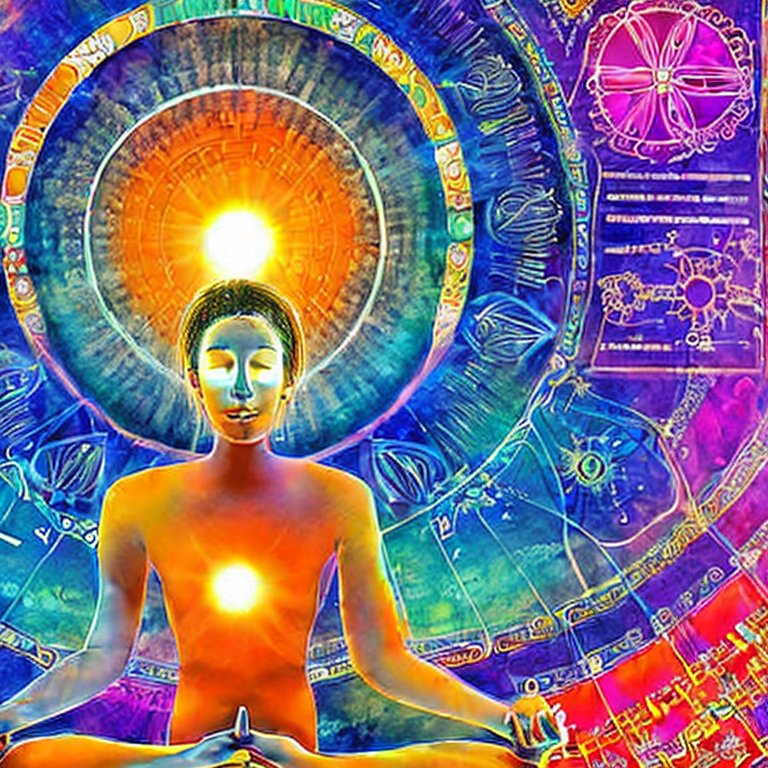
Yoga and meditation present an array of practices that facilitate the exploration of diverse states of consciousness, enhancing individuals’ mindfulness and self-awareness. This blog is dedicated to examining multiple practices associated with gross, subtle, causal, turiya, and turiyatita states of consciousness, illustrating the intertwined nature of these practices in guiding practitioners toward multiple states of awareness.

Gross Consciousness: Exploring the Physical Dimension

The gross state of consciousness, typically associated with waking life, is distinguished by physical and sensory experiences. Practices that emphasize the gross state involve:

Hatha Yoga: With a focus on physical postures (asanas), breath regulation (pranayama), and meditation, this practice supports overall physical and mental health.
Vinyasa Yoga: Offering a dynamic fusion of movement and breath, this style of yoga aids practitioners in maintaining mindfulness and presence.

Subtle Consciousness: Journeying into Dreams & Emotions

The dream state, characterized by emotional and mental experiences, reflects the subtle state of consciousness. Techniques concentrating on the subtle state include:

Yoga Nidra: This guided meditation facilitates a state of deep relaxation, mirroring the dream state, and fostering increased awareness.
Lucid Dreaming: This practice involves consciously recognizing that you’re dreaming, providing an opportunity to delve into the subconscious mind.

Causal Consciousness: Merging with the Universal Source

The deep sleep state, denoted by unity and an absence of individual identity, resonates with the causal state of consciousness. Techniques accessing the causal state include:

Advaita Vedanta: This non-dual philosophy promotes self-inquiry and contemplation, guiding toward the realization of the ultimate reality beyond individual identity.
Shambhavi Mudra: This meditative technique, focusing on the “third eye” or the space between the eyebrows, cultivates internal tranquillity and unlocks the causal state.

Turiya: The Realm of Pure Consciousness

Turiya, the fourth state, is marked by pure consciousness beyond the states of waking, dreaming, and deep sleep. Practices aiming for turiya encompass:

Transcendental Meditation (TM): Utilizing mantras, this meditation technique aims to transcend mental activities and experience pure consciousness.
Dzogchen/Mahamudra: These Tibetan Buddhist practices emphasize direct recognition of the mind’s nature, leading to a non-dual experience of reality.

Turiyatita: Surpassing Boundaries and Embracing Integration

Turiyatita, transcending the fourth state, symbolizes the amalgamation of all consciousness states. Techniques fostering turiyatita are:

Sahaja Yoga: Centered on the spontaneous awakening of Kundalini energy, this practice leads to a thoughtless awareness state surpassing all other states.
Jnana Yoga: The path of wisdom and self-inquiry dissolves the perceived separation between the individual self and ultimate reality, leading to the turiyatita experience.

Conclusion: Embarking on Your Unique Path

Every individual’s journey to elevated states of consciousness is distinctive. Discovering practices that align with your personal growth and self-exploration is crucial. As you delve into diverse yoga and meditation techniques, maintain an open mindset that your path may comprise various practices and experiences. Cherish the transformative journey and the profound power these age-old disciplines offer.

Morgan O. Smith

Yinnergy Meditation & My book, Bodhi in the Brain…Available Now!
https://linktr.ee/morganosmith

The Cosmic Womb

A Journey Through Samsara and the Spiritual Peak Experience

Introduction:

Join us on a profound exploration into the deep reaches of the cosmic womb, where the universe perpetually recreates itself, moment by moment, hosting the limitless potentiality of creation. Our journey uncovers the spiritual apex of awareness, illuminating the eternal cycle of death and rebirth that defines the universe, referred to as Samsara. We draw a significant parallel between the process, pain, and labour involved in physical childbirth and this infinite cosmic evolution.

The Cosmic Pregnancy: The Dormant Potential of the Universe

The cosmic womb, in its vast, pregnant stillness, cradles all potential, representing the dormant stage of all shapes and forms. It is a condition of profound tranquillity preceding creation. Within this womb, the boundaries of possible and impossible blur, the probable and improbable coexist harmoniously. This cosmic pregnancy symbolizes the universe’s infinite potential, perpetually prepared to materialize into existence.

The Spiritual Apex: Understanding the Eternal Cycle of Samsara

The spiritual apex is a transcendent episode of profound realization when one becomes deeply aware of Samsara – the universal cycle of death and rebirth. This heightened consciousness provides a sneak peek into the cosmic womb and the incessant birthing process of the universe. At this pivotal moment, the seeker aligns with the intricate rhythm of creation and dissolution, recognizing the inherent interconnectedness of all entities.

The Pain and Labor: Cosmic Childbirth Mirroring the Dance of Samsara

Mirroring the agony and labour that a prospective mother endures during childbirth, the universe undergoes a similar process in cosmic birth. This cosmic labour reflects Samsara’s cycle, where the universe constantly perishes and revives. The suffering inherent in this process is integral to creation, enabling the universe’s continuous evolution and transformation.

The Moment of Birth: The Universe Taking Form

Each moment, the cosmic womb nurtures a new version of the universe. This manifestation is a divine act of creation, translating the dormant into the tangible, and the limitless potential of cosmic pregnancy into reality. This perpetual birth is an ongoing process, with the universe consistently unfolding and expanding into new dimensions and expressions.

Integrating the Spiritual Apex: Nurturing an Awareness of Samsara

To authentically incorporate the spiritual apex, the seeker must foster an awareness of Samsara’s eternal cycle. This involves acknowledging the transient nature of all entities and accepting the constant process of death and rebirth pervading the universe. Through this, the seeker can develop profound compassion, understanding, and connection with the entire existence.

Conclusion: Celebrating the Cosmic Rhythm of Samsara

The exploration into the cosmic womb and understanding of the perpetual cycle of Samsara endow the seeker with profound comprehension of the universe’s nature. By welcoming the spiritual apex and incorporating this consciousness into daily life, one can harmonize with the cosmic rhythm of creation and dissolution. In this state of interconnectedness, we can genuinely marvel at the universe’s beauty and mystery, actively participating in the infinite cycle of death and rebirth that shapes our existence.

Morgan O. Smith

Yinnergy Meditation & My book, Bodhi in the Brain…Available Now!