Ego Death vs. Super-Ego Death

When individuality dissolves—and when the collective mask collapses

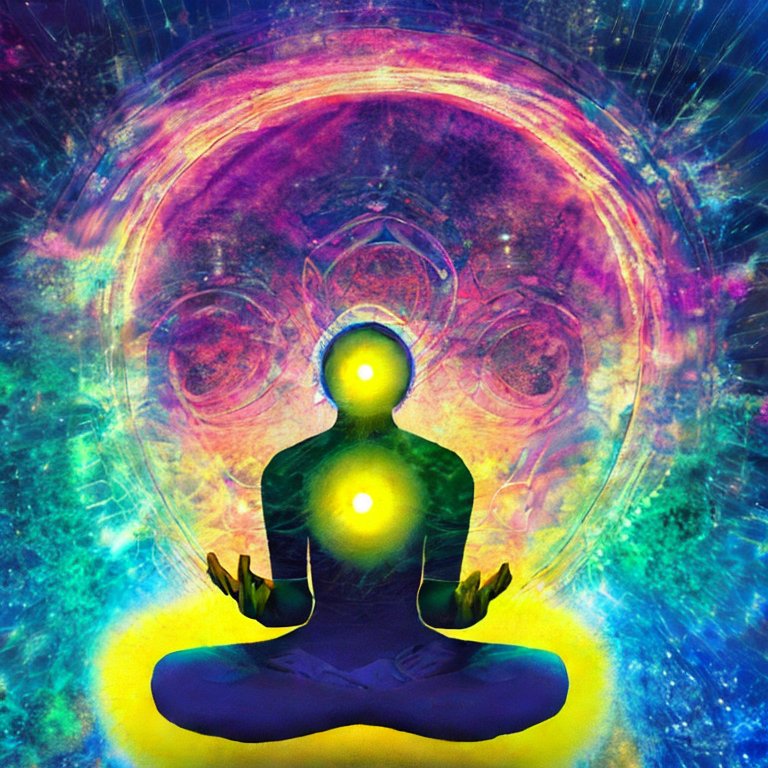
Ego death has become familiar language within spiritual circles. It often refers to the collapse of the personal story; the felt sense of “me” as a separate centre of control, identity, and continuity. Thoughts still arise, sensations still move, yet the claim of ownership quietly disappears. Experience continues without a narrator insisting it belongs to someone.

This event can feel absolute. Many report vastness, silence, love without an object, or a direct recognition of being awareness itself. The personal mask falls away, and with it the emotional gravity of self-protection, shame, pride, and comparison. Life continues, yet it is no longer filtered through the need to defend or improve a fictional self.

Still, something subtle often remains.

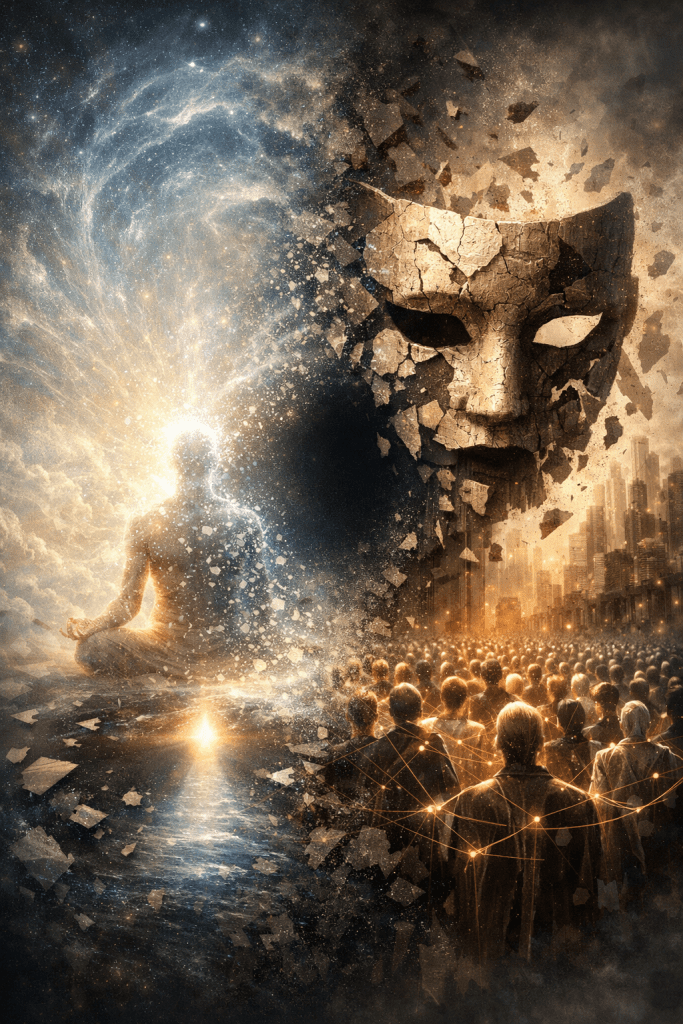
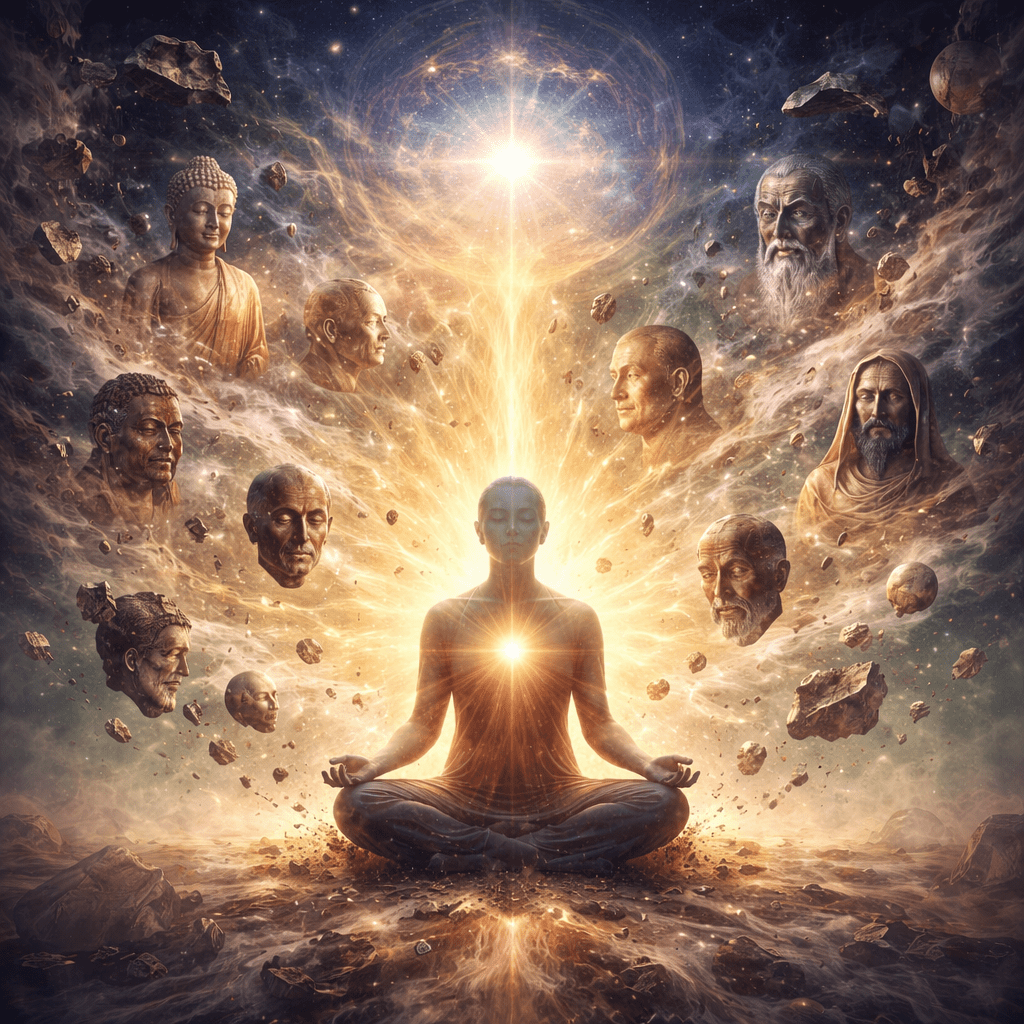
Beneath the personal ego sits another structure, far less discussed and far more persistent: the super-ego of the collective. This is not merely morality or social conditioning. It is the internalized voice of humanity itself; the inherited myths, hierarchies, spiritual ideals, political narratives, and cultural agreements that define what counts as real, good, awakened, successful, or worthy.

Ego death removes the personal actor. Super-ego death removes the stage.

Super-ego death is not about becoming rebellious or rejecting society. It is the dissolution of the unseen authority that claims reality must conform to shared agreements. This includes spiritual identities just as much as material ones. The enlightened persona, the wise teacher, the healed one, the awakened exemplar, all of these belong to the collective ego, even when the personal ego has already fallen.

This is why some awakenings still feel constrained. Freedom is tasted, yet behavior unconsciously bends to invisible rules. One no longer needs approval as an individual, yet still seeks legitimacy through lineage, doctrine, community, or role. Silence is known, yet language is chosen carefully to avoid exile from the group.

Super-ego death arrives when even the collective lens loses its authority.

No tradition holds the final word. No framework owns truth. No spiritual map is mistaken for the territory it points toward. Morality is no longer outsourced to consensus. Meaning no longer depends on agreement. What remains is not isolation, but radical intimacy; life meeting itself without mediation.

This does not produce chaos. It produces clarity.

Action becomes responsive rather than obedient. Compassion arises without ideology. Ethics emerge organically, shaped by direct contact rather than inherited commandments. One may still participate in society, teach, lead, love, and create, but without the invisible pressure to represent anything.

Personal ego death says, “I am not who I thought I was.”
Super-ego death says, “Reality is not what we collectively agreed it must be.”

Very few speak from this territory because it offers no badge. Nothing can be claimed. No position can be stabilized. Language points, then dissolves. Authority evaporates.

What remains cannot be organized, branded, or defended.

Life continues, unowned, unruled, uncontained, expressing itself freely, without asking permission from the individual or the crowd.

Morgan O. Smith

Get Your Free Copy of My Book, Bodhi in the Brain!

https://subscribepage.io/oTSZQu

Liberate Yourself from Everything…

This Includes Spirituality

What if even the sacred must be left behind?

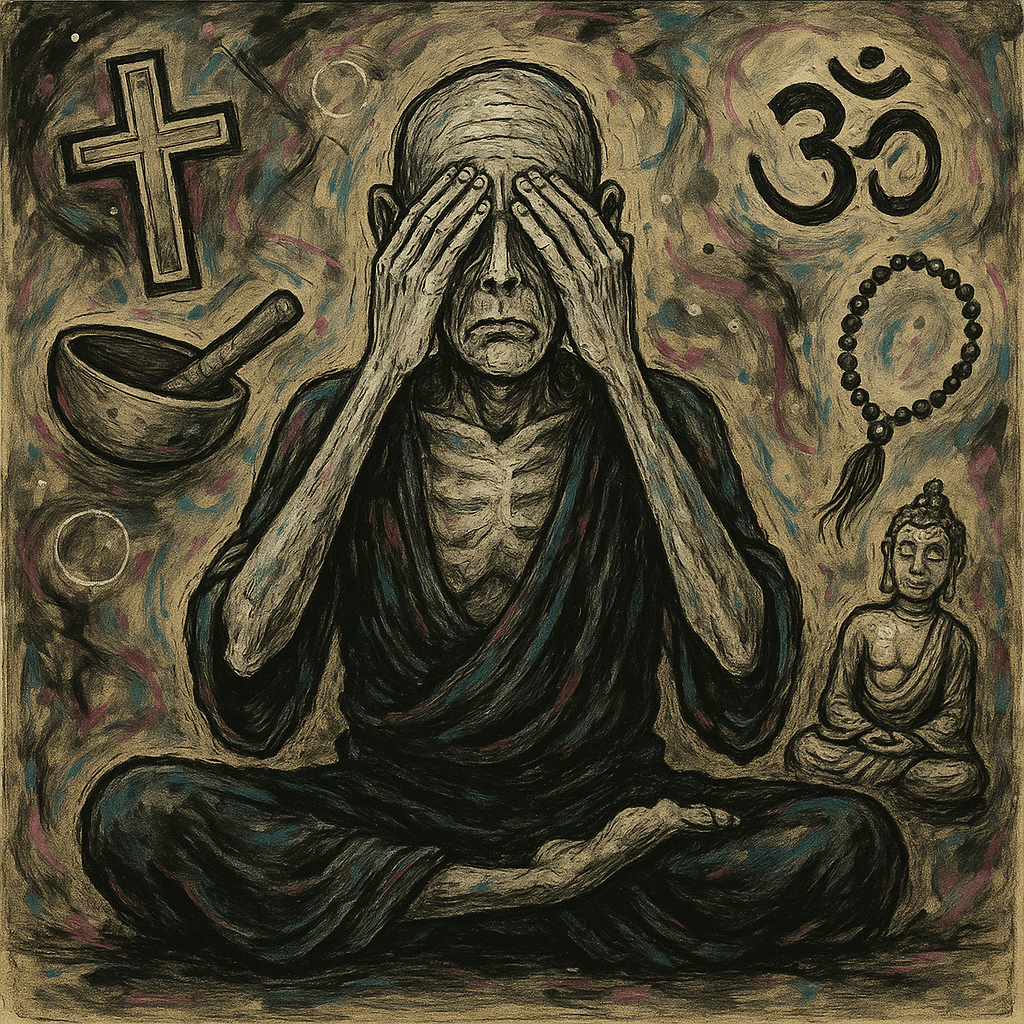
Not discarded with resentment, but dissolved with reverence—like incense that’s burned its final curl into still air. Every pursuit, no matter how noble or transcendent, clings to a subtle promise. It whispers, “Just a little further. Just a little more.” Spirituality—the path of paths—can become the gilded cage.

This isn’t a rejection of the sacred. It’s a call to recognize its shadow. When devotion becomes identity, and awakening becomes performance, the ground of true being quietly slips away. What remains is the effort of wearing a spiritual mask.

You meditate, fast, chant, and read the masters, and for a while, the momentum feels pure. But pause. Breathe. Look again.

Has the seeker been quietly resurrected each time insight arrives?

One of the final illusions is believing that freedom lies within the refinement of spiritual effort. Yet effort, no matter how subtle, arises within duality. There’s still a “me” reaching toward something else. Even the concept of enlightenment can act as a veil, because where there is something to reach, there remains something separate from what already is.

That’s the irony: the very thing that once cracked open your sense of reality may now be the weight tethering you to it.

There is no one to become. No final truth to grip. Liberation doesn’t crown the seeker—it dissolves them. It’s not what you attain through discipline. It’s what remains when every layer of becoming has been seen through.

God doesn’t need your spiritual journey.

Silence doesn’t demand your reverence.

Truth doesn’t require your understanding.

And being doesn’t wait for your arrival.

Strip it all away. Stand utterly exposed. Not as a soul, a student, or a sacred archetype—but as this unnamable presence you’ve never not been. This is where all paths terminate. Not with a bang. Not with celestial fireworks. But with a soft, undeniable recognition: nothing is missing. Nothing ever was.

To cling to spirituality, even subtly, is to delay this.

So let it all go—not to be less, but to finally see what you are without it.

Morgan O. Smith

Get Your Free Copy of My Book, Bodhi in the Brain!

https://subscribepage.io/oTSZQu

Unveiling Infinity

The Journey Beyond Spiritual Constructs

In the pursuit of spiritual enlightenment, a paradox often emerges: the journey toward liberation can inadvertently become a new form of bondage. It’s an intricate dance where the very tools and practices designed to free us can subtly entangle us in a new web of spiritual identity and attachment. This realization beckons a profound question: how do we liberate ourselves, not just from worldly entrapments, but from the constructs of spirituality itself?

**The Illusion of Spiritual Identity**

Spirituality, in its essence, is a quest for understanding, a search for the absolute truth. However, in this quest, there is a risk of creating a ‘spiritual identity’. This identity, though seemingly elevating, can become a subtle trap. It fosters a sense of separateness – the ‘enlightened’ versus the ‘unenlightened’, the ‘seeker’ versus the ‘found’. To truly transcend, one must recognize this dichotomy as an illusion.

**Dissolving the Constructs**

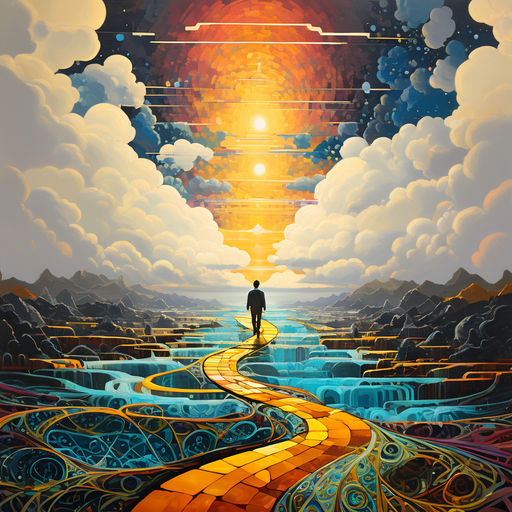
The path to true liberation involves dissolving these constructs. It’s about transcending not only material attachments but also the conceptual frameworks that spirituality often constructs. This includes letting go of labels, practices, and even the concept of enlightenment itself. It’s a journey into the uncharted territory of pure being, where the mind’s compulsive need to categorize and define is relinquished.


**The Freedom of No Identity**

In this space of ‘no identity’, true freedom is found. It’s a state of existence where one is not defined by spiritual accomplishments, knowledge, or experiences. Here, the individual merges with the totality of existence, experiencing a nondualistic state where the observer and the observed are one. This is the pinnacle of spiritual liberation – a state beyond states, a presence beyond identities.

**Embracing the Void**

Embracing this void, this absence of identity and construct may initially seem daunting. Yet, it’s in this emptiness that the fullness of life is experienced. It’s a paradox where the absence of everything is the presence of the absolute. In this space, there is no ‘you’ that needs to be enlightened, no path that needs to be followed. There is just the pure, unbounded essence of being.


**Conclusion**

Liberating oneself from everything, including spirituality, is not about discarding spiritual practices or insights. It’s about transcending them, recognizing that they are but signposts to a destination beyond any path’s confines. It’s a journey from form to the formless, from identity to the boundless.

In this liberation, one discovers that the ultimate truth is not something to be attained but realized – the truth that you are not just a part of the universe; you are the universe. This realization is not the end but a new beginning, an invitation to live in the fullness of absolute freedom.

Morgan O. Smith

Yinnergy Meditation, Spiritual Life Coaching & My Book, Bodhi in the Brain…Available Now!

https://linktr.ee/morganosmith


The Moment of Omnipresent Self-Realization

Discovering the Infinite ‘I’

Introduction:
In the hushed corners of our consciousness, a whisper seeks acknowledgment – the timeless questions of existence. It is in the silent chambers of introspection that we finally experience a moment of revelation, where we realize that the Who, What, When, Where, Why, and How of our being are not merely aspects of our identity, but the very fabric of existence itself.

Who Am I? – The Boundless Entity:
As we ponder the question, “Who am I?” the expansive canvas of life unravels. In our deepest thoughts, we find a connection with the universe. We realize we are not just an isolated self but the amalgamation of everything that has ever existed and will ever be. In the echo of ancient wisdom, “I AM That”.

What Am I? – The Essence Beyond Form:
Shapes, forms, and entities fade into insignificance as we delve into our essence. We are neither body nor soul, yet we encompass all. The abstract concept of being transcends the physical, and we find ourselves to be the sum of the entire universe.

When and Where? – The Timeless, Spaceless Existence:

“When did I come into being and Where did I come from?” – such queries dissolve into irrelevance as we realize our existence transcends time and space. Like the fabric of space-time, our being is omnipresent. We are not constrained by coordinates on a plane or ticks on a clock. We are in every atom and every moment.

Why? – The Power of Creation:
One of the most profound inquiries is “Why did I create everything in existence?” The essence of creation lies within our boundless nature. We, as this unified consciousness, are created simply because it is an intrinsic expression of our endless potential. Creation is the reflection of our unlimited power.

How? – The Enigmatic Thought:

The mechanism of creation is an eternal enigma. Yet, in our moment of self-realization, we understand that the entire cosmos sprang into existence from a singular thought. This thought, an unfathomable force, is perpetually creating, altering, and sustaining the universe.

Conclusion:
The moment of self-realization is akin to a wave merging into an ocean – it is in this profound unity that we grasp the limitless boundaries of our existence. The answers to Who, What, When, Where, Why, and How are not separate, but interwoven into the very essence of what we are. In acknowledging this, we do not simply find ourselves; we become one with the boundless cosmos. This is not an end but a beginning, a continuous journey through the labyrinth of existence with a newfound understanding of our immeasurable significance within it.

Morgan O. Smith

Yinnergy Meditation & My Book, Bodhi in the Brain…Available Now!

https://linktr.ee/morganosmith