Don’t Mistake Spiritual Persona for Spiritual Attainment

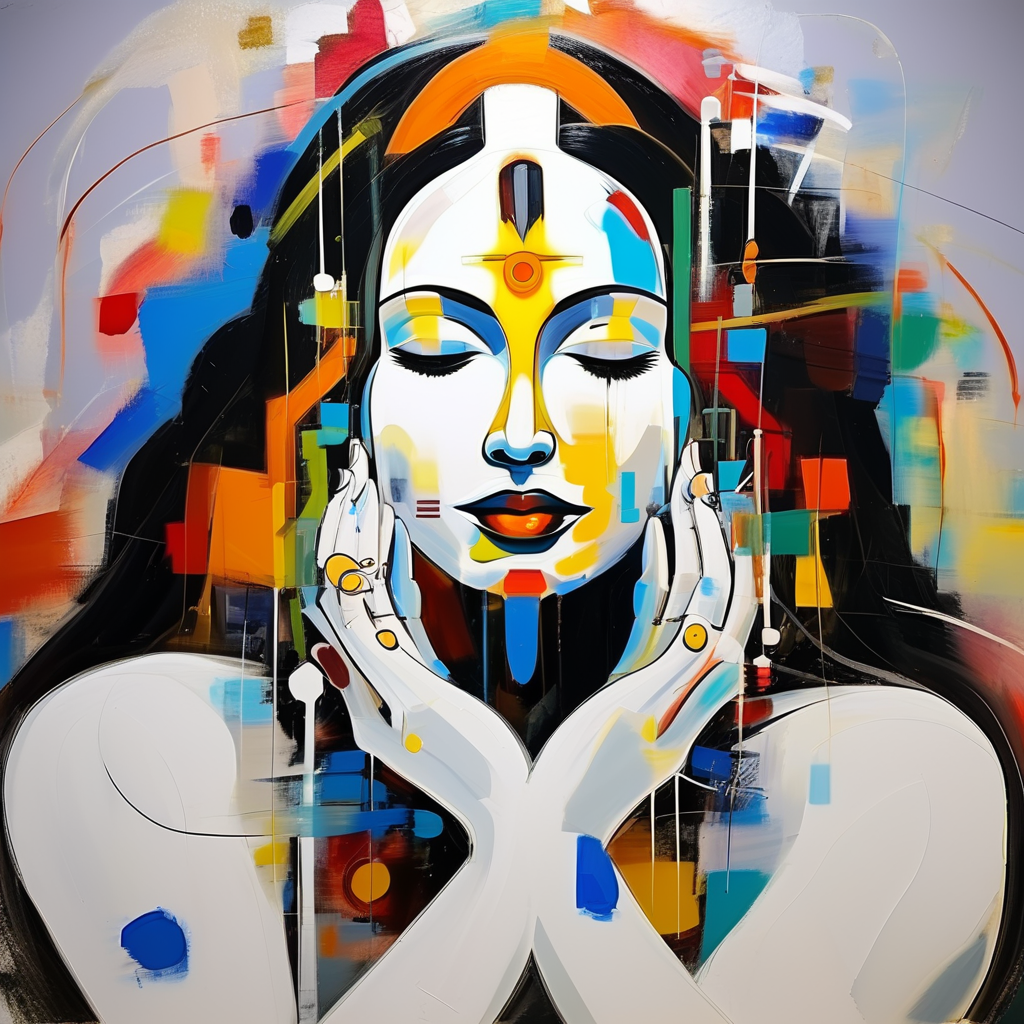
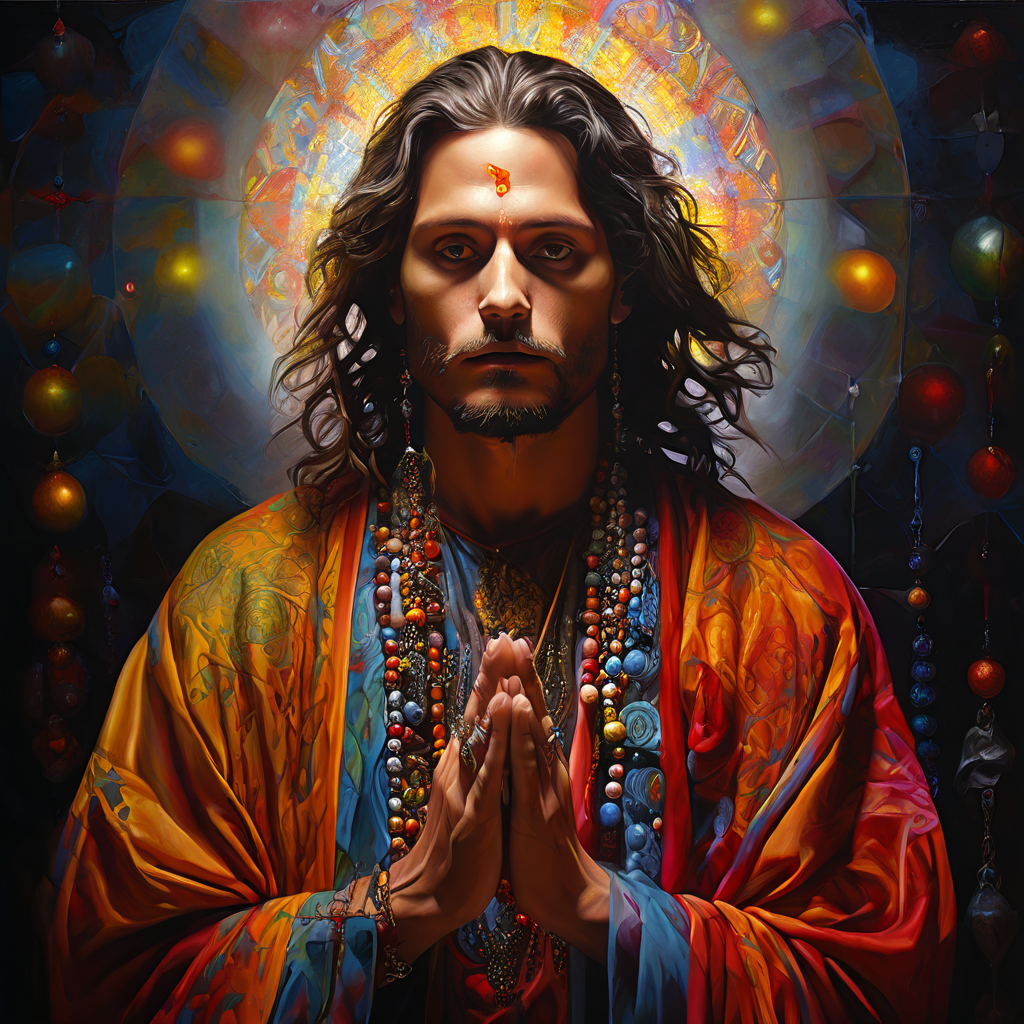
In the quest for spiritual enlightenment, it is easy to fall into the trap of equating outward appearances with inner transformation. The spiritual marketplace is brimming with individuals adorned in the symbols of enlightenment—beads, robes, and serene smiles. But beneath these carefully cultivated images, what lies? Are these symbols true reflections of deep spiritual attainment, or merely the trappings of a spiritual persona?

The essence of genuine spiritual attainment transcends outward appearances. It is an internal metamorphosis that reconfigures one’s very being. True spiritual growth dismantles the ego, dissolves the illusion of separation, and fosters a profound sense of unity with all existence. This journey is deeply personal and often invisible to the outside world. It is marked by humility, compassion, and an unwavering commitment to truth.

A spiritual persona, on the other hand, can be a carefully constructed mask. It seeks validation from the external world by adopting symbols and behaviours associated with spirituality. This persona can be seductive, as it offers the semblance of wisdom and enlightenment without necessitating the arduous inner work required for genuine transformation. It may garner admiration and respect, but it does not hold the essence of true spiritual attainment.

To discern the difference, one must look beyond appearances. True spiritual attainment manifests in actions, choices, and the quality of one’s presence. It is reflected in the ability to remain centred in the face of life’s challenges, to act with compassion even in difficult circumstances, and to embrace the inherent uncertainty of existence with equanimity.

It is a state of being that radiates from within, often silently, without needing external validation or recognition. It is characterized by a deep sense of peace, a boundless capacity for love, and an unwavering connection to the present moment.

The path to spiritual attainment requires courage—the courage to face one’s deepest fears, to dismantle long-held beliefs, and to surrender the ego’s need for control and validation. It demands an authentic engagement with the present moment, a willingness to embrace discomfort, and a commitment to the inner journey, no matter how solitary or challenging.

As you navigate your spiritual journey, remember that the true markers of spiritual attainment are not found in external symbols or personas. They are found in the quiet moments of insight, the depths of your heart, and the transformative power of authentic presence. Embrace the journey inward, for it is there that the true treasures of spiritual awakening are discovered.

Morgan O. Smith

Yinnergy Meditation, Spiritual Life Coaching & My Book, Bodhi in the Brain…Available Now!

https://linktr.ee/morganosmith

The Mosaic of Interpretations

Navigating the Perception of Ultimate Truth

In the vast landscape of human consciousness, the concept of Ultimate Truth stands as an immutable beacon, untouched by time and the flux of subjective experience. It is not the Truth itself that intrigues me, but rather the myriad ways in which individuals interpret and express it. This divergence in interpretation is where the true beauty and complexity of human experience lie.

The pursuit of Ultimate Truth is a journey that transcends the boundaries of culture, religion, and philosophy. It calls upon us to look beyond the surface of our conditioned beliefs and to delve into the depths of our consciousness. However, this journey is often clouded by personal biases, societal influences, and the limitations of language. Each individual’s interpretation of Truth becomes a reflection of their inner landscape, shaped by their unique experiences, perceptions, and spiritual inclinations.

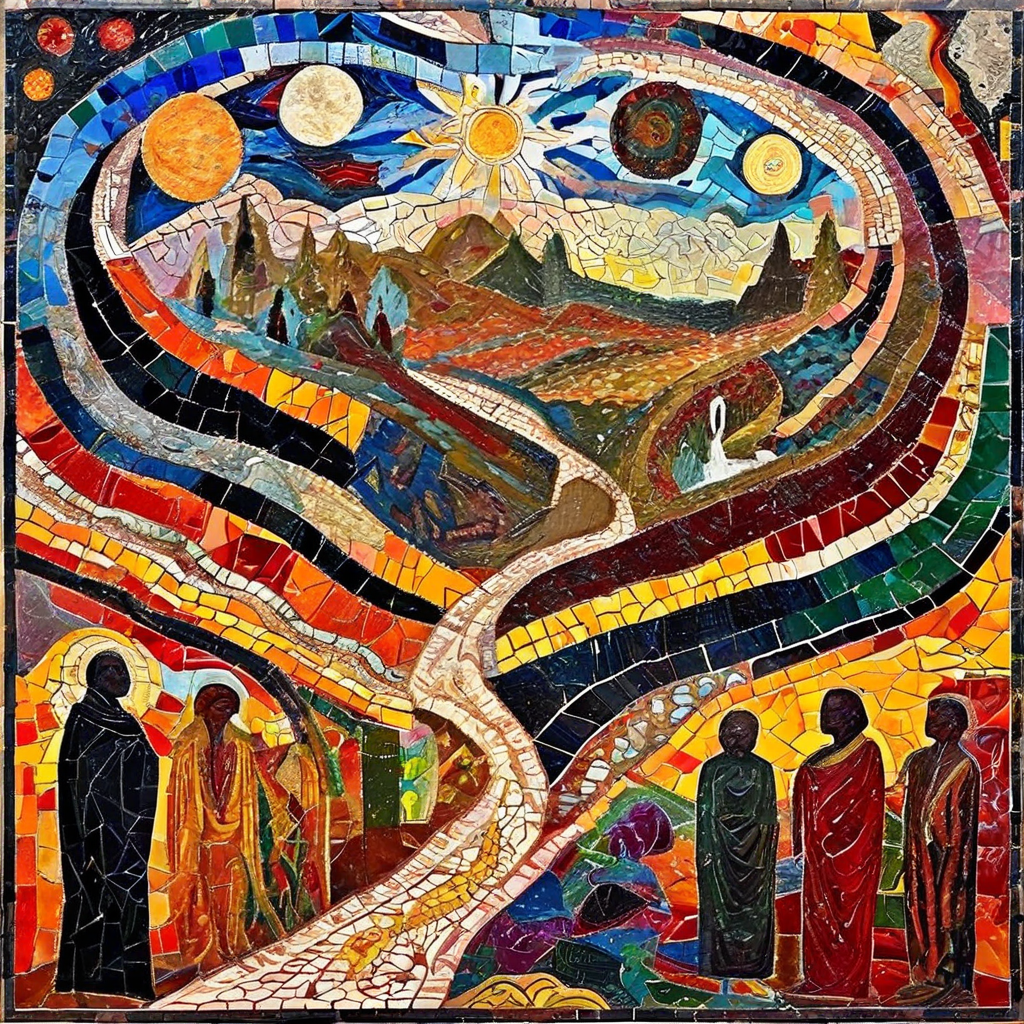
In questioning these interpretations, we are not seeking to undermine the sincerity of one’s spiritual journey. Rather, we are engaging in a deeper exploration of the nuances that colour our understanding of reality. It is an invitation to recognize that our interpretations, no matter how profound, are still filtered through the lens of our perception. They are, in essence, a part of the grand mosaic of human consciousness, where each piece offers a distinct yet incomplete glimpse of the Whole.

This exploration invites a profound humility and openness. It encourages us to listen to the diverse voices that speak of Truth, not as competing claims, but as different facets of a shared journey toward understanding. By embracing this diversity, we move closer to an authentic dialogue that transcends dogma and opens the door to a more inclusive and compassionate worldview.

Moreover, this inquiry into the interpretations of Truth can lead us to a deeper appreciation of the paradoxical nature of existence. As we peel back the layers of our conditioned beliefs, we find that the Ultimate Truth is not something to be grasped or owned, but rather experienced as a living, dynamic presence that defies conventional categorization. It is in this space of not knowing, of embracing the mystery, that we find the most profound revelations.


In conclusion, the questioning of interpretations is not an act of skepticism, but of reverence for the ineffable nature of Ultimate Truth. It is a reminder that the journey is ongoing and that each step along the path is a vital part of the unfolding process. By engaging in this exploration, we honour the richness of the human experience and the boundless potential for growth and transformation that lies within us all.

Morgan O. Smith

Yinnergy Meditation, Spiritual Life Coaching & My Book, Bodhi in the Brain…Available Now!
https://linktr.ee/morganosmith

The Dance of Awareness

Contextual vs. Content Enlightenment

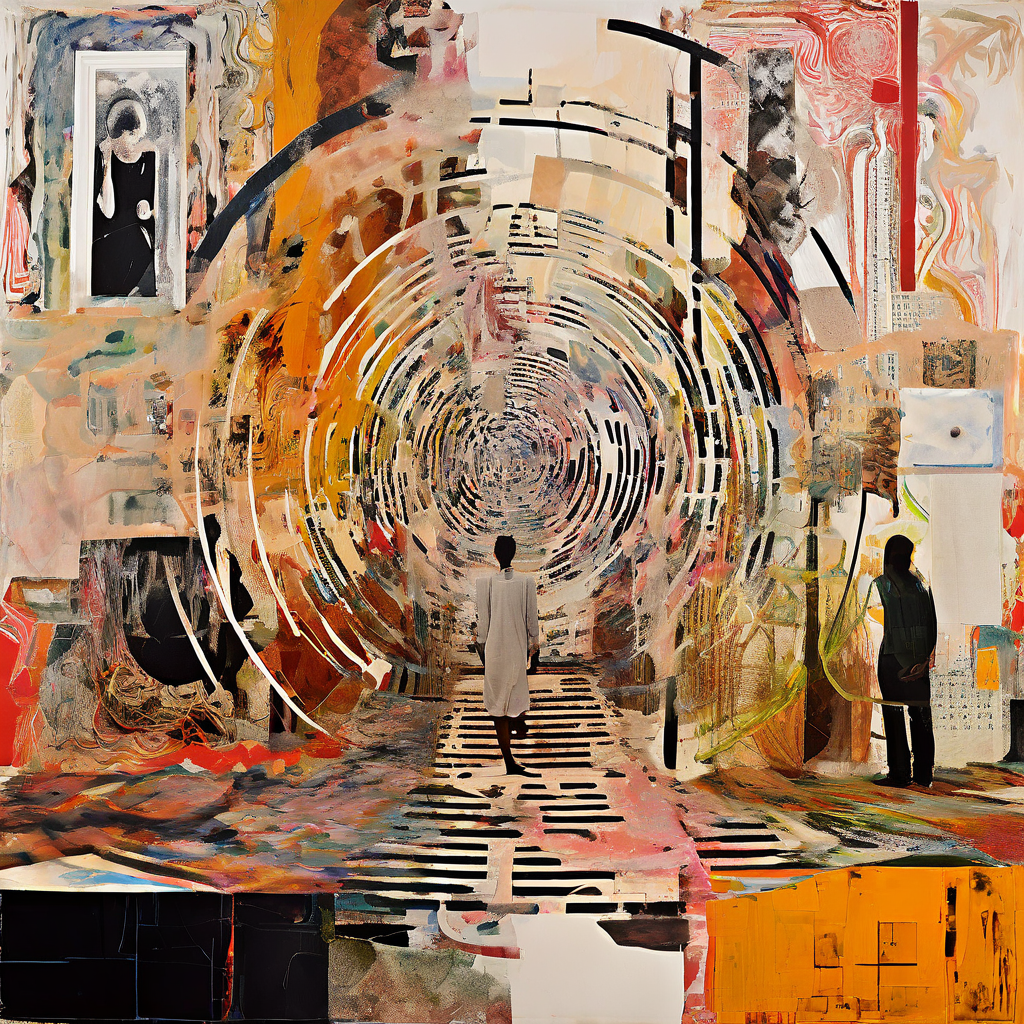
In the labyrinth of spiritual exploration, the nuanced differences between contextual and content enlightenment invite us to delve deeper into our understanding of consciousness. These dimensions, though intertwined, offer distinct perspectives on our journey toward self-realization. Let us explore the intricate play between whole and detailed awareness, qualities and their absence, and the dichotomy of shape and form versus the formless.

Contextual Enlightenment: Embracing the Whole

Contextual enlightenment transcends the specifics, inviting us to embrace the entire spectrum of existence as a unified whole. It is akin to perceiving the vast, boundless ocean rather than focusing on individual waves. This level of awareness envelops all experiences, thoughts, and sensations, recognizing their interconnectedness and the underlying unity.

In this sense, whole awareness is the recognition of the seamless fabric of reality. It dissolves the boundaries that separate the observer from the observed, the thinker from the thought. It is an expansive, inclusive state where everything is perceived as part of a larger, harmonious cosmic dance.

Content Enlightenment: The Beauty of Details

In contrast, content enlightenment delves into the specifics, illuminating each moment’s unique qualities and characteristics. It is the meticulous study of individual waves within the ocean, appreciating their distinct forms and patterns. This awareness sharpens our focus on the particulars, allowing us to see the intricacies and subtleties that compose the whole.

Detailed awareness is the keen observation of the myriad expressions of existence. It celebrates the diversity of forms, experiences, and sensations, recognizing their intrinsic value and beauty. This level of enlightenment encourages us to engage deeply with the present moment, savouring each nuance and detail.

Qualities vs. Without Qualities: The Essence of Being

The dichotomy of qualities versus the absence of qualities highlights another layer of our spiritual journey. Qualities refer to the attributes and characteristics that define our experiences and perceptions. They are the colours, textures, and flavours of our existence, shaping our understanding of reality.

Without qualities, however, points to a deeper, more subtle aspect of being. It is the state of pure awareness, devoid of any specific attributes or characteristics. This formless essence transcends the dualities of good and bad, pleasure and pain, presence and absence. It is the unmanifest potential from which all qualities arise and dissolve.

Shape and Form vs. The Formless: The Ultimate Paradox

Finally, the interplay between shape and form versus the formless presents the ultimate paradox of our spiritual exploration. Shape and form represent the tangible, perceivable aspects of existence. They are the visible, audible, and tactile manifestations of the underlying reality.

The formless, on the other hand, is the primordial ground of being. It is the unchanging, eternal essence that transcends all forms and shapes. This paradox invites us to see beyond the apparent duality, recognizing that shape and form are but temporary expressions of the formless. In this realization, we find the unity of all existence, the seamless flow between the manifest and the unmanifest.

Conclusion

In our quest for enlightenment, we are called to navigate these intricate dimensions of awareness. Contextual enlightenment invites us to embrace the whole, while content enlightenment beckons us to appreciate the details. The play of qualities and their absence, and the dance between shape, form, and the formless, guide us toward a deeper understanding of our true nature.

By holding these perspectives in balance, we can cultivate a holistic, integrated awareness that honours both the unity and diversity of existence.

Morgan O. Smith

Yinnergy Meditation, Spiritual Life Coaching & My Book, Bodhi in the Brain…Available Now!
https://linktr.ee/morganosmith

The Grand Cycle of Cosmic Renewal

The universe, a magnificent dance of birth, death, and rebirth, mirrors the cycles of life from the smallest of organisms to the grandest of galaxies. At the heart of this cosmic rhythm lies a profound phenomenon: the black hole. Here, in these enigmatic cosmic centres, the renewal of the universe unfolds, echoing the ancient concept of Samsara.

In the vast expanse of the cosmos, our universe is perpetually in flux, ceaselessly evolving through cycles of creation and dissolution. Each iteration of this cosmic cycle marks a step towards a higher state of development. As the universe experiences these cycles, it evolves, fostering more sustainable life forms with each rebirth. This evolutionary process is not merely an incidental aspect of the universe but an intrinsic feature of its very nature.

The concept of Samsara, the cycle of birth, death, and rebirth, is as ancient as the stars themselves. It is a cycle that propels the human soul and the cosmos toward greater levels of consciousness and existence. Every cycle brings the universe closer to a state where life can flourish in every corner, where the seeds of existence can take root and blossom.

This journey towards universal vitality is a profound one. As the universe evolves, the black holes, often perceived as destructive forces, serve as catalysts for this grand transformation. They are the crucibles where the old is dismantled to give way to the new, where the remnants of dying stars are recycled into the building blocks of new celestial bodies.

The black hole, however, is only one part of this cosmic equation. Its counterpart, the white hole, is believed to be responsible for the Big Bang—the ever-continuous moment of awakening. The white hole represents the cosmic breath of creation, the outpouring of energy and matter that initiates the birth of the universe. This interplay between black and white holes symbolizes the dynamic balance of destruction and creation, contraction and expansion.

Once the universe reaches a state where life is omnipresent and self-sustaining, it will strive towards moksha—a liberation from the cyclical nature of Samsara. This state of cosmic enlightenment is not an end but a new beginning. The universe, now free from attachments and the perpetual cycle of renewal, will embark on a journey of liberation, perpetuating a cycle of existence that is free, whole, and unbound.

Interestingly, this grand cosmic cycle is not confined to the universe at large. It is echoed in the myriad smaller black holes scattered throughout the cosmos. Each black hole, in its domain, participates in this dance of renewal and liberation, contributing to the overall evolution of the universe.

In this way, the universe mirrors the spiritual journey of the soul. It evolves, seeks liberation, and strives towards a state of higher consciousness and freedom. This cosmic dance invites us to reflect on our journeys of growth and liberation, encouraging us to embrace the cycles of life with a sense of awe and reverence.

Morgan O. Smith

Yinnergy Meditation, Spiritual Life Coaching & My Book, Bodhi in the Brain…Available Now!

https://linktr.ee/morganosmith

Attaining Enlightenment

As Elusive as Grasping the Wind

The quest for enlightenment, that profound state of ultimate understanding and unity, is often compared to trying to hold onto the wind. This metaphor captures the essence of the journey—a pursuit that defies conventional grasping, one that requires an openness to the intangible and an embrace of the elusive.

The Elusiveness of Enlightenment

In many Eastern philosophies, Enlightenment is not a destination but a state of being. It is a realization that transcends the confines of our dualistic thinking. Much like the wind, it is everywhere and yet nowhere specific. To chase it with a rigid, goal-oriented mindset is to miss its essence.

Enlightenment involves the dissolution of the self and the shedding of layers upon layers of conditioned beliefs and identities. This shedding process can feel like an endless peeling away of illusions, akin to trying to contain the uncontainable wind in your hands. The moment you think you have a firm grasp, it slips through your fingers, revealing the futility of such an endeavour.


The Paradox of Effort and Effortlessness

One of the most challenging aspects of the spiritual path is balancing effort and effortlessness. The seeker must engage in practices, disciplines, and teachings that guide the way, yet true enlightenment often dawns in moments of complete surrender and stillness. It is in these moments that the boundaries of the self dissolve, and one experiences the boundless nature of existence.

This paradox can be frustrating. We are conditioned to believe that hard work and determination yield results. However, in the spiritual realm, striving too hard can create resistance. It is the quieting of the mind, the letting go of effort, that often brings the profound insights we seek.

Embracing the Unknowable

In accepting the elusiveness of enlightenment, we learn to appreciate the journey itself. Every moment of insight, every experience of stillness, is a part of the unfolding realization. The wind may be impossible to grasp, but it can be felt, experienced, and known in its presence.

To truly understand enlightenment, one must embrace the unknowable. It requires a heart open to the mysteries of existence and a mind willing to let go of the need for certainty. This openness allows us to experience glimpses of the infinite, moments where the separation between self and universe disappears, revealing the profound interconnectedness of all things.


Conclusion

Attaining enlightenment is indeed as difficult as grabbing hold of the wind. Yet, in this difficulty lies the beauty of the spiritual journey. It teaches us to let go, to be present, and to embrace the mystery of existence. In the end, the pursuit of enlightenment is not about reaching a final goal but about experiencing the boundless nature of our true selves, flowing effortlessly like the wind.

Morgan O. Smith

Yinnergy Meditation, Spiritual Life Coaching & My Book, Bodhi in the Brain…Available Now!

https://linktr.ee/morganosmith

The Absolute and the Illusion of Time

In our journey towards spiritual awakening, we often encounter the perplexing notion of time. Our minds are conditioned to perceive time linearly: past, present, and future. This perception is deeply ingrained in our consciousness, shaping our understanding of reality. However, the Absolute— the ultimate reality—exists beyond this linear framework. In the realm of the Absolute, everything that has ever happened, is happening now, and will happen in the future, all coexist in a timeless continuum.

Imagine a vast, infinite expanse where every moment in time is accessible simultaneously. This is not a mere concept but a profound truth that beckons us to transcend our limited perceptions. In the Absolute, the past, present, and future are not distinct entities but facets of a singular, eternal moment. Our conventional understanding of time dissolves, revealing a state of being that is unbounded and ever-present.

To grasp this concept, we must first recognize that our perception of time is an illusion created by the mind. The mind, with its incessant chatter and constant need to categorize experiences, imposes a linear structure on reality. This structure is useful for navigating the physical world, but it also confines us within a limited framework. The spiritual journey involves breaking free from these mental constructs and experiencing reality as it truly is—timeless and infinite.


Consider the implications of this timeless reality on our lives. Every event, every experience, every thought and emotion, is part of an eternal now. The suffering we endure, the joys we cherish, the lessons we learn, all exist simultaneously within this grand mosaic of existence. This understanding can bring a profound sense of peace and acceptance. When we realize that everything is happening as it should, in its own perfect time, we can let go of our fears and anxieties about the future and our regrets about the past.

Moreover, this realization can transform our approach to life. If we understand that every moment is imbued with the entirety of existence, we can cultivate a deeper presence in our daily lives. Each action, no matter how mundane, becomes an expression of the eternal now. Each interaction, no matter how fleeting, holds the potential for profound connection. In this way, we begin to live in harmony with the flow of the universe, attuned to the rhythm of the Absolute.

Embracing the timeless nature of reality also invites us to explore the depths of our consciousness. Meditation, contemplation, and other spiritual practices become portals to experiencing the eternal now. As we quiet the mind and delve into the silence within, we can touch the essence of the Absolute. In these moments of stillness, we glimpse the truth of our being—that we are not separate entities bound by time but expressions of the infinite consciousness that pervades all existence.


In conclusion, the Absolute transcends our limited perception of time, inviting us to experience reality as an eternal now. By recognizing the illusory nature of linear time, we can cultivate a deeper presence in our lives and align ourselves with the flow of the universe. This understanding brings peace, acceptance, and a profound sense of interconnectedness, guiding us on our journey toward spiritual awakening.

Morgan O. Smith

Yinnergy Meditation, Spiritual Life Coaching & My Book, Bodhi in the Brain…Available Now!
https://linktr.ee/morganosmith

The Multilayered Journey of Ego Dissolution

In the intricate dance of spiritual awakening, the ego stands as both a necessary companion and a formidable obstacle. Our journey to self-realization often involves peeling away the layers of this multifaceted construct, each layer representing a different aspect of our perceived identity.

The ego, much like an onion, is composed of multiple layers. These layers symbolize the various roles, beliefs, and attachments we accumulate throughout our lives. Initially, shedding these layers can be a liberating experience. We feel lighter, more connected to our true selves, and less bound by societal expectations and personal fears. Each removed layer brings us closer to a state of purity and clarity.

However, the concept of ego death transcends the gradual shedding of these layers. Ego death is not merely about peeling back the onion to its core; it is about transcending the very existence of the onion itself. It is the profound realization that the core was an illusion all along, a construct of the mind designed to give us a sense of separateness and control.

Imagine reaching a point where even the scent of the onion no longer lingers. This metaphor captures the essence of true ego death—a state where not only the layers but the very notion of an individual self dissolve into the infinite. It is the ultimate surrender, where the boundaries between the self and the cosmos blur into non-existence, revealing the underlying oneness of all.


This experience can be both terrifying and liberating. The fear of losing our identity is a natural response, as the ego is deeply ingrained in our sense of self-preservation. Yet, the liberation that follows is unparalleled. Without the confines of the ego, we experience reality in its purest form, untainted by personal biases or desires. We become conduits for the divine flow of life, embracing the totality of existence with an open heart and mind.

Ego death is not a one-time event but an ongoing process of dissolution and rebirth. Each moment of awareness, each act of surrender, contributes to the gradual dismantling of the ego’s hold. In this continuous journey, we learn to embrace the paradox of being both nothing and everything simultaneously. We recognize that our true essence is not defined by our identity but by our intrinsic connection to the universal consciousness.

As we navigate this path, it is essential to cultivate compassion and patience for ourselves. The layers of the ego are intricate and deeply rooted, and their dissolution requires gentle persistence. By embracing the journey with humility and openness, we allow the process to unfold naturally, guided by the inner wisdom that transcends the ego’s limitations.


In conclusion, the journey of ego dissolution is a profound exploration of our true nature. It invites us to move beyond the superficial layers of identity and experience the boundless reality of our interconnected existence. Through this journey, we discover that true freedom lies not in the absence of identity but in the realization of our inherent oneness with all that is.

Morgan O. Smith

Yinnergy Meditation, Spiritual Life Coaching & My Book, Bodhi in the Brain…Available Now!

https://linktr.ee/morganosmith

The Illusion of the Ego

Beyond the Needle in the Haystack

In the vast expanse of human experience, the personal ego often feels like the defining core of our identity. We navigate the world through its lens, believing it to be the essence of who we are. Yet, in the grand scheme of existence, this ego is but a minuscule fragment—a needle in a haystack compared to the vast, boundless nature of our true self.

To truly understand this, we must first explore the nature of the ego. The ego is the part of our consciousness that deals with individuality and separateness. It thrives on comparisons, achievements, and the ceaseless chatter of the mind. It is the voice that says, “I am this” or “I am that,” constantly defining and limiting our experience of reality.

However, as we delve deeper into spiritual inquiry and self-exploration, we encounter moments where the ego’s hold weakens. These are moments of pure being, where the sense of separation dissolves, and we touch upon a more expansive consciousness. This consciousness is our true nature—vast, interconnected, and free from the constraints of the ego.

Imagine the ego as a single grain of sand on the shore of a limitless ocean. While the grain is real and tangible, it is insignificant when compared to the infinite expanse of the ocean. Similarly, our ego, with all its desires, fears, and identities, is but a small aspect of our true, boundless self.


In these moments of expanded awareness, we realize that we are not merely the sum of our thoughts, emotions, and experiences. We are the awareness in which all these arise and dissolve. This realization brings a profound sense of freedom and peace, as we no longer identify with the transient aspects of our existence.

The journey to this realization is not always straightforward. It requires a willingness to question our deeply held beliefs and to look beyond the surface of our everyday experiences. Meditation, self-inquiry, and contemplative practices can be invaluable tools on this path. They help us to quiet the mind and to see beyond the illusions created by the ego.

As we progress, we begin to live more from this place of expanded awareness. Our actions become less driven by egoic desires and more aligned with a deeper sense of purpose and connection. We see ourselves not as isolated individuals but as integral parts of a larger whole. This shift in perspective transforms our relationships, our work, and our approach to life itself.


In essence, recognizing the ego as a mere needle in the haystack of our true self is an invitation to embrace a more profound and expansive understanding of who we are. It is a call to awaken to our true nature and to live from that place of boundless awareness and interconnectedness.

Morgan O. Smith

Yinnergy Meditation, Spiritual Life Coaching & My Book, Bodhi in the Brain…Available Now!

https://linktr.ee/morganosmith

The Unseen Path

Embracing the Unknown in Spiritual Growth

In the realm of spiritual discovery, what we do not know far outweighs the fragments of wisdom we hold. The vast expanse of the unknown represents not just a void awaiting illumination but a dynamic space brimming with potential for profound transformation. This concept—embracing the unknown—challenges us to reconsider our approach to knowledge and enlightenment.

Often, we tread the well-worn path of accumulated knowledge, relying on established philosophies and spiritual teachings. However, true spiritual growth beckons us to venture beyond the comfort of what is known. It invites us to surrender to the uncertainty that surrounds the uncharted territories of our consciousness.

The unknown is fertile ground for spiritual rebirth. It is in the spaces between our thoughts, in the silence that follows our meditations, that the seeds of enlightenment are sown. By welcoming what we do not know, we open ourselves to new perceptions, unexplored dimensions of our being, and the subtle yet profound voices of our inner truth.


How, then, do we cultivate a relationship with the unknown? It begins with the acceptance that we do not, and cannot, know everything. This humility is not a resignation to ignorance but an open door to endless possibilities. It is about shifting from a seeker of knowledge to an explorer of experience.

Mindfulness practices can ground us in the present moment—a realm where the past, with all its knowns, and the future, with its unforeseen possibilities, converge. Here, in the now, the unknown is not a threat but a companion on our journey. Each moment becomes a fresh encounter with an aspect of the universe waiting to reveal itself to us.

Moreover, exploring the unknown requires courage—the courage to question, to doubt, and to test the boundaries of our existing beliefs. It is about allowing ourselves to be vulnerable, to face the vastness of the unknown with curiosity rather than fear.


In embracing what we do not know, we find that our spiritual path is not linear but a spiral, deeper and ever-expanding. It is a journey that continually invites us to evolve, to shed outdated understandings, and to embrace the boundless mysteries of existence.

Morgan O. Smith

Yinnergy Meditation, Spiritual Life Coaching & My Book, Bodhi in the Brain…Available Now!

https://linktr.ee/morganosmith